Head West For A Desert Adventure
by Laura Lieff
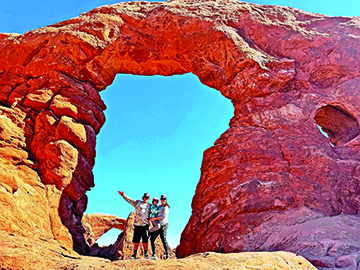
View From The Top: The Fleming family enjoys visiting Arches National Park, which is known for its natural stone arches, towering pinnacles, and massive balanced rocks.
Spring is the time of year when everything and everyone emerges — flowers bloom, spring cleaning starts, and Cherry Creek Valley residents begin looking for places to visit outside of the city. One exciting destination, which is just over the Colorado border in Utah, is Moab. Known for its many outdoor adventure options — including mountain biking, hiking, off-roading, and fossil hunting — Moab is also a gateway to the magnificent Arches and Canyonlands National Parks.
One way to enjoy Moab is on wheels — just ask the hardcore gearheads who love off-roading and are looking forward to the 60th Annual Easter Jeep Safari event which takes place March 28 through April 5. Additionally, Cruise Moab, an annual event that began in 1996, is happening April 15 through 19 this year. Those who prefer riding mountain bikes, dirt bikes, and motorcycles usually journey to Slickrock Bike Trail as it features just over 10 miles of scenic and rugged terrain and is located approximately three miles from town. Founded by Dick Wilson in 1969, Slickrock was originally meant for motorcycles. Over five decades later, nothing has changed as a variety of aficionados flock to the area to spend time on their preferred wheels.
Longtime motorcycle mechanic and enthusiast, Dan “The Wrench” Rolfe, has been enjoying Moab for the last 12 years — both on his mountain bike and on his CT-90 motorcycle. “I like Slickrock because it’s a ‘cycle’ trail with great views and terrain that is easy to maneuver,” Rolfe explains. “Also, the traction it provides allows you to go up and down steep landscapes and traverse laterally in places whe
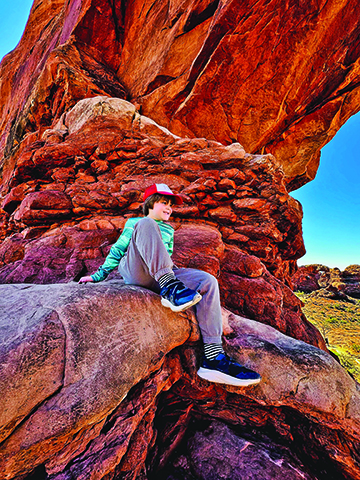
Red Rock View: Fleet Fleming stays cool in the desert heat while climbing around Arches National Park.
re you would normally slip out.” Rolfe is featured in the 2019 documentary film, 50 Years of Slickrock, which chronicles the history and development of the trail that arguably put Moab on the map.
Family Trip
While many Colorado residents head to Moab for camping and mountain biking, there are other ways to enjoy a weekend in the desert and make a family vacation out of it. Depending on where you live in Denver, and the number of stops made while driving, the journey to Moab is about five and a half hours. If that sounds like a trek, keep in mind that the panoramic views along the way are likely to make the time go by quickly.
“We started going to Moab because it is an ideal overnight stopping point when we travel to and from Arizona,” says Boulder native Nicole Ford. “After doing that a few times, we realized that it’s worth spending the weekend there because of all the kid-friendly restaurants and activities offered. Also, we found a dog-friendly hotel with a great pool which is the place to be after a day of exploring in the sun.” Some of the Ford family’s favorite Moab restaurants include Tai Bella, The Sultan, and Antica Forma and her hotel of choice is the Element.
Moab History
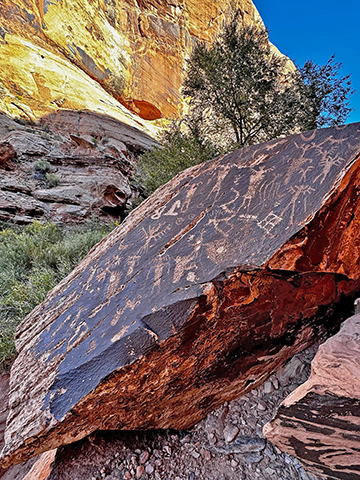
Ancient Artwork: While hiking through Mill Creek Canyon, keep an eye out for pictographs and petroglyphs that show detailed figures, animals, and shapes.
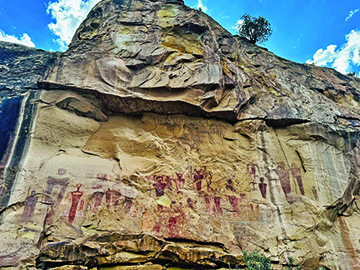
Because there is an abundance of history to explore in Moab — including petroglyphs (pecked/carved art), pictographs (painted art), dinosaur fossils, and dinosaur footprints — a weekend might not be enough to see everything. On the way into town, stop at Sego Canyon to see rock art that reflects three cultural styles: Ute, Fremont, and Barrier Canyon. The petroglyphs and pictographs left behind on the sandstone walls depict humanlike figures, abstract shapes, horses, and shields, among other types of rock art. “Sego Canyon is always our first stop when we travel to Moab because seeing that type of history is always exciting for me, my wife, and our son,” says 30-year Colorado resident Brian Fleming. “Checking out rock art that has been there for such a long time is our favorite way to begin the weekend.”
Another place to see pictographs and petroglyphs is Mill Creek Canyon where the hike along the creek features panels that show detailed figures, animals, and shapes that stand out the most on the black rocks. The trail’s “finale” is a picturesque waterfall that offers a memorable destination point before turning back to the trailhead. For those looking for dinosaur tracks, the Mill Canyon Dinosaur Bone and Track Sites are highlights. Accessible via a short pathway, the Track Site displays footprints from theropods, sauropods, ornithopods, ankylosaurs, birds, and crocodilians. The Bone Trail, located about a mile from the Track Site, has fossilized dinosaur bones embedded in rock along a family-friendly hiking path with educational panels.
Additional family-friendly spots include Moab Giants and the Moab Rock Shop. Since 2015, Moab Giants has offered various exhibits and experiences for people of all ages. The indoor/outdoor dinosaur museum showcases state-of the art, life-size land and sea dinosaurs that roamed the area. Another stop for fossil hunters and rockhounds is the Moab Rock Shop. Founded in 1960 by Lin Ottinger, this family owned and operated store has been a staple for over 50 years. In fact, many of Ottinger’s discoveries were donated to museums and universities and he discovered at least four species of dinosaurs.
Magic In The Desert
The two most well-known attractions near Moab are the national parks — Arches and Canyonlands. For those staying in the heart of town, Arches is a much closer option (five miles away). It’s also a smaller park which is ideal for families with young kids or for people who prefer to spend a shorter amount of time walking around the park. Known for its legendary red rock topography, Arches boasts over 2,000 natural stone arches, hundreds of towering pinnacles, and massive balanced rocks that can be seen while hiking or driving. The Windows Section is a favorite destination within the park as it contains some of the most iconic views.
Conversely, Canyonlands is best-suited for visitors looking for an all-day adventure. Shaped by the Colorado and Green Rivers, Canyonlands is divided into three districts that have dramatic buttes, spires, canyons, and desert landscapes: Island in the Sky (40 minutes from Moab), The Needles (90 minutes away), and The Maze (the most remote and challenging as its ranger station is accessible by 46 miles of dirt road).
If visiting national parks is not part of your agenda, keep in mind that the magic of Moab is the variety of ways to experience the desert. Whether you are camping, staying in a hotel, off-roading, hiking, mountain biking, or fossil hunting, it is a breathtaking destination for all ages and all types of adventure-seekers. Discovering historical petroglyphs and pictographs, finding dinosaur bones, and then cooling off at the pool are definitely memorable ways to spend time. Regardless of
Desert History: Sego Canyon’s rock art dates back thousands of years and features multiple cultural styles.
your chosen itinerary, spring is an ideal season to head west into the desert and see different landscapes and wildlife, enjoy diverse cuisine, explore new terrain, and participate in unique activities.
Pro Tips:
- Check the weather before you leave because you’re going to Moab to be outside.
- Pack a cooler — no matter what your accommodations are — because having water and snacks ready for consumption is essential in the desert.
- Make sure to pack layers and plan for the daytime versus nighttime temperature changes.
- Hats, sunglasses, sunscreen, a bathing suit, and comfortable walking shoes are crucial.
- Arches National Park requires timed entry reservations so plan ahead by booking online.