
Blasting with Boyles
OPINION
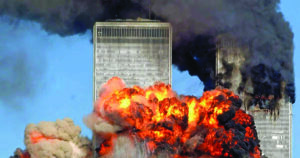 After 9/11, during the George W. Bush presidency, the unity in this country was amazing. Americans rallied around Bush and the government. Bush’s approval rating went from 51% before to 86% within weeks. Seventy-eight percent of Democrats approved of W’s performance. There was bipartisan support for going after Al-Qaeda and the Taliban. Pew Research Center describes the response as initially characterized by national unity. And then it starts to fall apart.
Bush signed the Patriot Act; the Senate voted 98 to 1. Bush, Cheney, and company emphasized fighting terrorism and somehow protecting you.
But Iraq became the Bush administration’s used car. They told us of the danger posed by Saddam Hussein, Iraq, and his involvement in 9/11. The decision to invade Iraq in 2003 begins the total downfall of it all.
The political divide widened. By January 2003, fewer than 4 in 10 Americans thought Bush had made his case for an Iraq invasion.
There was no justification for this war. Think back. As casualties accumulated and the occupation became prolonged, by the end of W’s presidency only 24% approved of his job performance. The unity that we all felt in those terrible days was destroyed by Bush and Cheney. The post-9/11 rally faded and ordinary politics returned.
Iraq was the major catalyst. Pew’s retrospective assessment specifically identified the Iraq war that followed 9/11. Also, the schizophrenic behavior. For example, George Bush went to the Islamic Center in Washington, D.C., and explicitly defended Muslims. We know Saddam was not a religious man. That makes his claims of Muslim terrorism more complicated than just saying Bush abandoned unity.
Bush/Cheney claimed Saddam Hussein and Iraq possessed chemical, biological, and nuclear weapons. In December 2002, Bush/Cheney claimed disarming Iraq was the central commitment of the war on terror. And we all know now what total lies they were. On March 17, 2003, Bush told Americans that Iraq had failed to disarm after 12 years of demands and efforts that failed. And, of course, it came as no surprise that after the invasion, investigators did not find any stockpiles of chemical, biological, or nuclear weapons. Iraq was not responsible for 9/11, and by this time all unity and love for one another had totally faded.
Saddam never cooperated with Al-Qaeda to attack our country. And when the weapons were not found, it didn’t seem to matter to Bush, Cheney, and Rumsfeld. They said that Saddam needed to be removed from office regardless. Senate Intelligence later concluded the intelligence community openly lied.
There was no certainty with the intelligence that was presented to go on to lose more than 4,400 American lives. No one will ever know the number wounded, both physically and emotionally. No one knows how many Iraqis suffered the same. Or Afghans, or anything that was to come our way.
I’ve read the Senate Intelligence Committee report. There was nothing that supported Bush/Cheney/Rumsfeld claims about underground WMD facilities. Bush lied. There were no weapons.
In the immediate aftermath of 9/11, the basic message was: We’ve been attacked, so find the people responsible. Turns out, a handful of American-hating, by-and-large Saudis hiding in the caves of Tora Bora. They were the ones.
Now we’re left with two separate historical questions: the intelligence community, and the need for clarity before any president takes this nation into war.
Had Bush/Cheney policies been in place, the headline would be December 7, 1941: “The Japanese attack Pearl Harbor.” December 8, 1941: “FDR invades Mexico.” We now know 14 of the 19 murderers on that terrible morning were Saudis. And the trail leads back to many prominent Saudi Arabians as funders of the killers.
And I leave you with this: We gotta stop these people from getting a nuclear weapon, so let’s go to war. Where have we heard this before? History is a study of not what we want to remember, but rather what we need to remember.
— Peter Boyles