
Blasting With Boyles
OPINION
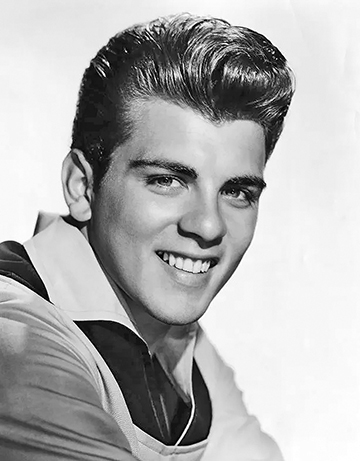
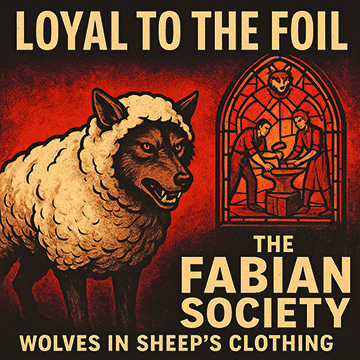 Most people my age remember Fabian, the handsome young singer from South Philadelphia who couldn’t sing “Happy Birthday” on Dick Clark’s after-school television show. For many of us, he was the only Fabian we ever knew.
But there was another Fabian — or, more accurately, the Fabian Society.
The Fabian Society played an important role in the history of modern socialism. In fact, it helped shape Britain’s Labour Party and influenced political thinking around the world.
And there are some very interesting similarities between the original Fabians and the young democratic socialists winning elections in America today.
The Fabian Society included such famous names as playwright George Bernard Shaw and socialist thinkers Sidney and Beatrice Webb. Its objective was to transform society through socialism. But the Fabians did not believe socialism had to come through violent revolution.
Instead, they believed they could accomplish their goals through elections, influencing political parties, educating the public, expanding government services, increasing public ownership, and involving government more deeply in the economy. They wanted to change laws and institutions gradually, over time.
Sound familiar?
The name Fabian comes from the Roman general Fabius, who believed in patience and wearing down an enemy rather than rushing into battle.
The influence of socialism was perhaps most dramatically demonstrated in Britain’s 1945 election, when Winston Churchill was turned out of office and Clement Attlee’s Labour Party came to power.
Now, here in Colorado, voters in the First Congressional District have elected a self-described democratic socialist, Melat Kiros.
Ask yourself this question: Is this the end of the beginning or, as Winston Churchill famously said, the beginning of the end?
The comparison is particularly interesting to amateur historians because the traditions of the Fabians are still with us nearly 150 years later.
We had all better watch our step.
The biggest similarity between the original Fabians and today’s democratic socialists is that both believe government can be used as an instrument to reshape economic and social conditions.
The biggest difference is that the original Fabians were largely an intellectual and political organization, while today’s young democratic socialists are directly campaigning for office and advocating specific policies.
One important qualification: Not every modern socialist necessarily has a clue who the Fabians were. And there is no evidence, for instance, that Zohran Mamdani’s political program in New York is being directed by the Fabian Society.
But the similarities are difficult to ignore.
The Fabian Society’s strategy was not simply to win an election and declare socialism. It was to gradually influence the institutions that govern society through education, political parties, public administration, labor organizations, and government policy.
My question is how much of today’s democratic socialist movement comes from that old European socialist tradition. And has the Democratic Party itself become a national movement toward socialism?
Look at Bernie Sanders and Alexandria Ocasio-Cortez. The comparison is particularly interesting because they embrace the same general proposition advanced by the original Fabians: Society can be transformed gradually, through political action, without firing a shot.
Consider Mamdani’s platform in New York City: universal childcare, rent freezes, free bus service, higher taxes on wealthy residents to finance public programs, and government-run grocery stores.
It brings to mind that old line about the most frightening words in the English language: “I’m from the government, and I’m here to help.”
And the movement is growing.
Reports of six newly elected Democratic Socialists of America members joining two returning members in the House of Representatives would bring their numbers to eight. If those figures hold, that represents a fourfold expansion of their congressional presence.
Melat Kiros would not be going to Washington alone.
Can you imagine what the State of the Union is going to sound like?
The election of a new generation of democratic socialists raises questions about the future direction of the Democratic Party and the country itself. Are we watching the gradual transformation of American politics along the lines envisioned by the Fabians more than a century ago?
History has a way of repeating itself.
And here’s the trouble with what the Fabians proposed and what today’s democratic socialists continue to advocate: What happens when they run out of other people’s money?
What happens when the promised prosperity becomes the equal sharing of misery rather than the unequal sharing of wealth?
Those are questions worth asking before we discover just how far down this road we’re willing to go.
— Peter Boyles
Fabian