by Jeff Shultz
The South Metro Fire and Rescue will seek voter approval for a 3 mill property tax increase in hopes the increase will help the emergency agency overcome a huge anticipated budget shortfall in 2026 and beyond.
The proposed ballot question will appear on the November 4 general election ballot for voters in Arapahoe, Douglas, and Jefferson counties.
Currently the district has a property tax rate of 9.25 mills but changes in the law has created a potential budget shortfall for the fire and rescue district.
The SMFR Board of Directors discovered the budget shortfall when the board met last year to plan its 2025 budget.
“That timing followed the passage of HB 24B-1001 in the special session, which significantly reduced property tax revenues for fire protection districts like ours,” said Jim Albee, SMFR Board Chairman.
“As we reviewed our long-term financial projections, it became clear that without action, South Metro would face a $16 million shortfall by 2026 and a projected $270 million gap over the next decade.”
In addition to the budget shortfall created by HB 24B-100, SMFR would need an extra $34 million annually to maintain its level of service to communities and retain staff.
Albee has served on the SMFR Board for five years and has been the board chairman for the same amount of time.
“My commitment has been driven by a deep belief in the importance of the life-saving services we provide and a responsibility to ensure we remain financially sustainable for the future,” he said.
According to Albee, the property tax increase would provide the needed $50 million to give SMFR the needed funds to maintain its current levels of service while also giving SMFR additional funds to operate from.
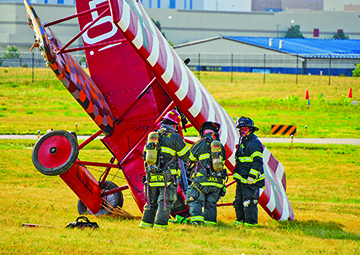
Plane Crash: On Friday, August 22, 2025, South Metro Fire Rescue and the Arapahoe County Sheriff’s Office responded to a single-engine biplane crash at Centennial Airport. The pilot safely evacuated the plane.
“While a portion would cover necessary administrative functions that support public safety, the majority would go toward critical service delivery, equipment, apparatus, maintenance, and facilities to ensure we can meet our community’s expectations.”
Albee said the district’s staffing and equipment costs are the district’s two highest budget items.
“Over 80 percent of our budget is tied to personnel,” Albee said, noting that if additional funding is not secured staff reductions would be “unavoidable.”
“Reductions could impact personnel, which would directly affect response times and service delivery, and programs.”
Equipment costs and maintenance would have to be prioritized, he added
“Over the past few years, we’ve seen cost increases ranging from 40 percent to nearly 80 percent on critical gear and apparatus.”
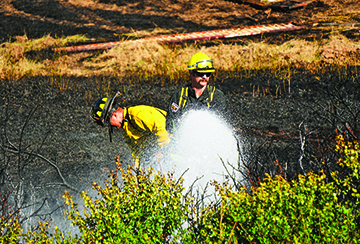
Grass Fire: On August 12, 2025, South Metro Fire Rescue and Douglas County Sheriff’s Deputies responded to a vegetation fire near 11032 Cottontail Lane in unincorporated Douglas County.
The rising costs for equipment is one of the biggest reasons for SMFR seeking additional funding. Some equipment cost increases include:
- The cost of a new fire engine has risen from approximately $725,000 in 2019 to $1.3 million today. Our fire engines, medic units, and other apparatus are replaced according to our Fleet Capital Replacement Schedule that looks at useful service life and the age of our fleet to determine the appropriate time for replacement.
- A 100-foot hose has increased from about $660 to nearly $930.
- Bunker gear, which includes a helmet, jacket, protective pants, boots, and gloves, is essential to protect our firefighters from carcinogens encountered during emergency responses.
“Each firefighter is required to have two full sets of bunker gear, and these must be replaced every five years for safety compliance,” Albee noted.
“The cost of one set has risen from $3,660 six years ago to over $5,120 today — a 40 percent increase.”
“Ensuring our teams have the proper protective equipment, reliable apparatus, and advanced medical tools is fundamental to maintaining safety for both our personnel and the public.”
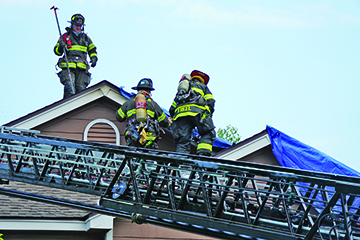
House Fire: South Metro Fire Rescue and Douglas County Sheriff’s Deputies recently responded to a single-family residential house fire on Eagle Valley Way in Highlands Ranch. Engine 20 arrived to find smoke coming from the roof and quickly pulled a hose line to extinguish the fire.
As part of their long-term planning, the SMFR board is identifying areas of growing populations within the district for possible new stations. “We anticipate adding two new stations over the next five to 10 years to help maintain appropriate response times and meet community needs,” Albee said.
Meanwhile, Albee says there are no expansion plans by the district. “Our immediate priority with any new revenue is to stabilize and sustain current services for the communities we serve today.
“While future expansion could always be considered, it is not in our current plans and would only be done with careful planning, ensuring we can maintain our high standards of service without compromising financial sustainability.”
Albee and the board see the property tax increase as an investment in the three counties (Arapahoe, Douglas, and Jefferson) the district serves.
Currently, the fire district’s ISO rating, which is used in determining property insurance premiums, is at its best level and passage of the property tax increase will ensure the rating to stay where it is at now.
“Our current ISO rating is Class 1, the highest possible, which reflects the strength of our operations. “Additional funding will provide the best opportunity to maintain this rating through continued investment in staffing, training, equipment, and facilities.
“Maintaining a strong ISO rating helps keep insurance costs lower for residents and businesses and reinforces our commitment to excellence.”
If the ballot measure fails this November, then the board will have some difficult decisions to face.
“Those difficult decisions could include slower response times due to fewer firefighters on crews, potential delays in station openings, and closure of some existing stations.”
Further cost cutting measures could include a reduction in specialty services such as wildfire, water rescue, hazmat, and technical rescue
photos courtesy of SMFR