Jobs, Housing, And Redevelopment Form City’s Strategy For Reviving Urban Core
by Mark Smiley
 Denver leaders are confronting a downtown economy that looks markedly different from the one that existed before the pandemic. Office towers remain partially empty as hybrid work continues to reshape the workplace. Restaurants and retailers have had to adjust to reduced weekday foot traffic, while declining commercial property values have created additional concerns for property owners, lenders, and city government.
The Johnston administration’s response is an ambitious combination of job creation, business recruitment, housing development, and public investment designed to help downtown adapt to those changes. In July, Mayor Mike Johnston unveiled the Denver Jobs Agenda, a $100 million economic development initiative with a goal of creating 10,000 jobs over three years. The program includes workforce development, incentives for businesses, and a $40 million effort to attract major employers to Denver or encourage existing companies to expand.
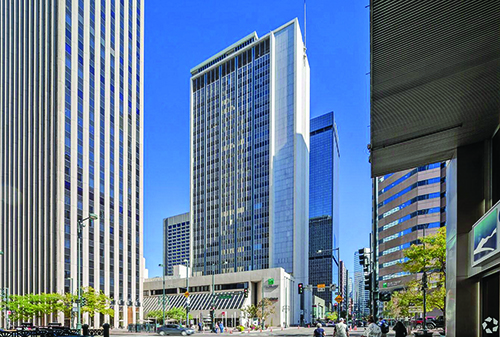
At the same time, Denver is supporting efforts to give obsolete or underused office buildings a second life as housing. One of the most prominent examples is High Fidelity Plaza, where the Downtown Denver Development Authority approved a $63 million low-interest loan toward the redevelopment of two largely vacant office towers at 621 and 633 17th Street. Plans call for the buildings to be converted into a mixe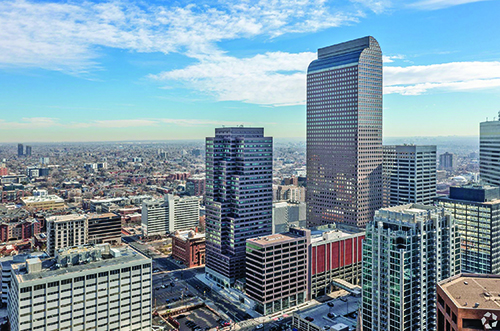 d-use development containing more than 700 apartments as well as restaurants, retail, childcare, and other amenities.
The two initiatives illustrate Denver’s broader strategy: attract more employers and workers while simultaneously creating a larger residential population downtown. City officials believe those goals can complement rather than contradict each other. More employers could increase daytime activity and support downtown businesses, while additional residents could create demand for restaurants, stores, and services during evenings and weekends. A more diverse mixture of workers, residents, and visitors could also make downtown less dependent upon the traditional five-day-a-week office population.
That dependence became a significant weakness after 2020. Denver’s downtown office market continues to struggle with elevated vacancies as employers reconsider how much space they need in an era of hybrid work. Properties that once commanded significant prices have changed hands at substantially lower valuations, creating challenges for building owners and lenders and potentially affecting the city’s commercial property tax base.
The situation has left Denver facing a question confronting downtowns throughout the country: What should a central business district become if office workers no longer fill its buildings five days a week?
The Johnston administration has chosen to take an active role in answering that question. Rather than relying exclusively on private investment and market forces, the city is using incentives, loans, and economic development programs to encourage both employment growth and redevelopment.
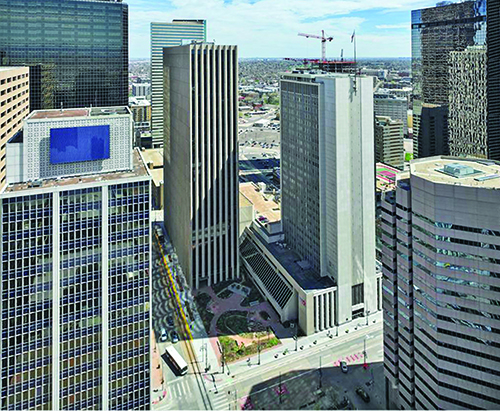
Office values in downtown Denver have fallen dramatically since the pandemic, with some properties selling for a fraction of their previous value. City officials hope redevelopment incentives and office to residential conversions will help reverse the trend.
Supporters argue that government involvement is warranted because allowing large portions of downtown to deteriorate could have consequences extending well beyond individual property owners. Vacant buildings can reduce surrounding property values, weaken nearby restaurants and retailers, and diminish tax revenue. Those conditions, supporters contend, can discourage additional private investment and create a cycle that becomes increasingly difficult and expensive to reverse. From that perspective, public investment today could help protect a much larger economic asset over the long term.
The strategy nevertheless raises legitimate questions about how much financial risk taxpayers should assume. Critics question whether public money should be used to provide incentives to corporations or financing for privately owned real estate developments, particularly when Denver faces other demands on city resources. Homelessness, public safety, aging infrastructure, and neighborhood services remain significant concerns throughout the city.
There is also debate over whether office-to-residential conversions will meaningfully address Denver’s housing affordability problem. Many apartments created through such projects are expected to rent at market rates rather than being dedicated primarily to lower-income residents. Supporters of the conversion strategy counter that adding residents at a range of income levels can still strengthen downtown by increasing the number of people patronizing businesses and using the area outside traditional office hours.
The debate therefore extends beyond whether individual projects are worthwhile. It centers on what role city government should play in reshaping downtown during a period of unusually rapid economic change.
At first glance, spending money to attract office employers while simultaneously helping convert offices into apartments can appear contradictory. The city’s approach, however, reflects an acknowledgment that downtown Denver will probably need both. Not every office tower is obsolete, and employers will continue to require office space. At the same time, the pre-pandemic model in which tens of thousands of commuters arrived downtown each morning and departed each evening appears unlikely to return in exactly the same form.
A successful downtown of the future may therefore need a broader mixture of employment, housing, entertainment, restaurants, retail, and public spaces. The Denver Jobs Agenda represents an effort to strengthen the employment side of that equation, while office conversions such as High Fidelity Plaza are intended to strengthen the residential side.
Whether those investments will generate enough private development and economic activity to justify their cost remains uncertain. That makes accountability and measurable results particularly important.

Mayor Mike Johnston has made downtown revitalization a major focus of his administration, combining job-creation programs, business incentives, and redevelopment financing in an effort to attract employers, residents, and investment to Denver’s urban core.
The Denver Jobs Agenda comes with a clearly stated target of creating 10,000 jobs over three years. Redevelopment projects can likewise be evaluated by the housing they produce, private investment they attract, occupancy they achieve, and economic activity they generate. Other measurements will take longer to assess, including commercial property values, retail occupancy, downtown foot traffic, and tax revenue.
Those benchmarks should eventually provide a clearer picture of whether Denver’s strategy is producing a lasting recovery and whether the public investments are encouraging economic activity that otherwise would not have occurred.
Denver’s leaders are betting that a combination of jobs, residents, and private investment can create a downtown that is less dependent on the traditional office economy. Supporters see public involvement as necessary to accelerate that transition and prevent further deterioration. Critics question whether taxpayers are assuming too much of the cost and risk for projects involving private businesses and property owners.
Both sides agree on at least one point: downtown Denver remains an important economic and civic center whose future will affect far more than the property owners and businesses located within its boundaries.
What is clear is that Denver is no longer waiting for downtown to return to its pre-pandemic form. City leaders are committing significant public resources to help shape what comes next. The next several years should determine whether that investment succeeds in creating a more active and resilient downtown, and whether Denver taxpayers receive an adequate return on one of the city’s most ambitious economic development efforts in years.
The 28-story office tower at 621 17th Street is one of two historic downtown buildings slated for conversion into housing as Denver attempts to revive its struggling central business district after years of elevated office vacancies.