by Jeff Shultz
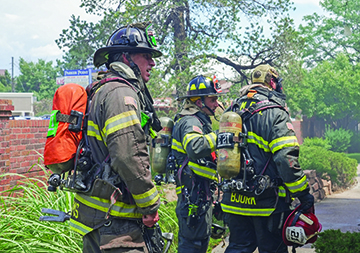
South Metro firefighters prepare to battle a Parker Road vegetation fire on July 7, 2025. Emergency calls such as this one to SMFR have grown, placing a heavier demand on SMFR as funding for the large south Denver area fire and rescue department is in dire straits.
The organization dedicated to providing fire and rescue services to a three-county area south of Denver is sounding the alarm that a funding crisis is imminent, threatening the emergency services offered by the group. South Metro Fire Rescue (South Metro) provides a full-service firefighting and medical emergency service to portions of Arapahoe, Douglas, and Jefferson counties.
Recently the organization announced on its website that unless a new source of revenue is found by 2026 the department “will not be able to maintain the high level of fire and emergency services our residents expect and rely on.” According to South Metro, a Colorado House bill passed in 2024 signaled the beginning of South Metro’s funding woes.
House Bill 24B-1001 lowered property taxes throughout Colorado, crucially diminishing funding for fire protection districts such as South Metro. South Metro is predicting a $16 million shortfall next year and close to $270 million in revenue losses over the next 10 years.
Meanwhile, the demand for emergency resources in the South Metro service area are rising higher since 2019, the South Metro website states.
“Demand for our services has grown 20%, and it’s not slowing down,” the website alleges.
Some of the more notable past service calls include:
- 2003 Cherokee Ranch Fire – This was the first wildfire in the South Metro service area. The blaze burned 1,000 acres and forced the evacuation of Castle Pines.
- 2017 I-25 Tanker Crash – When the truck crashed its diesel saddle tank ruptured and ignited, requiring a 10 hour South Metro suppression and hazmat operation.
- 2019 STEM School Shooting – South Metro was one of several agencies responding to the ra
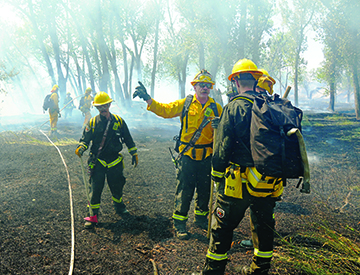
South Metro firefighters prepare to battle a Parker Road vegetation fire on July 7, 2025. Emergency calls such as this one to SMFR have grown, placing a heavier demand on SMFR as funding for the large south Denver area fire and rescue department is in dire straits.
re two shooter incident where one person was killed and eight others were injured.
- 2021 Marshall Fire – South Metro was one of several agencies responding to the fire that killed two and destroyed over 1,000 structures.
- 2025 Assisted Living Facility Fire – This single-family residence was converted to an assisted living home. The fire, which was caused by improper disposal of smoking materials, killed two residents and South Metro transported five people to the hospital.
A revenue shortfall could mean severe reductions for fire and medical response times and a slash in staffing and capital investments such as vehicles, stations, and equipment. Other cuts could be in health prevention programs and wildfire preparedness and response times.
These cuts would affect the 571,000 residents South Metro serves, including 12 municipalities, Centennial Airport, Highlands Ranch, and the Pinery.
South Metro is eyeing three possible solutions to ward off predicted funding shortfalls.
- Cuts to Essential Services
Currently South Metro touts a world class fire and EMS service with a patient transport, 4-firefighter staffing for maximum response times, the ability to respond to all hazard emergencies, and a constant expansion of public health programs.
South Metro states the organization prioritizes public safety from the time a call comes into the dispatch center to the reply given by highly trained responders. If South Metro doesn’t find additional revenues the organization will be forced to cut important services.
“Response times for fires, medical emergencies, and accidents could be impacted,” their website says. Slower response times would be the tip of the iceberg if South Metro is forced to make budget cuts, South Metro alleges. Budget cuts would also mean a reduction in firefighting crews, compromising public safety, and patient care during emergencies.
Additionally, budget cuts would mean a reduction in wildfire, water rescue and hazardous materials responses. Funding shortfalls would also threaten airport firefighting units.
“In extreme budget scenarios, fire station closures and delays in adding new stations that would serve our growing community are possible,” South Metro alleges on their website.
- Increase in Property Taxes
South Metro is considering a ballot measure that would increase property taxes district wide by three mills. Voters, according to South Metro, haven’t been asked to approve a property tax increase in 20 years, except when some districts increased their mill levy to merge with South Metro.
South Metro says an average homeowner with a $750,000 home would have to pay $11.72 more a month if the ballot measure passes. A district wide property tax would generate approximately $50 million a year for South Metro.
- Passage of a Dedicated Sales Tax
A second possible ballot measure would be a proposed district wide half-cent sales tax to fund emergency services. Noting that for the first time state law allows fire districts to collect sales taxes to fund emergency services, a half-cent sales tax would provide approximately $50 million annually for South Metro.
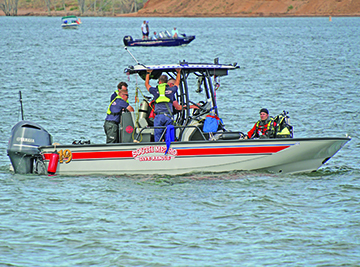
SMFR Water Rescuers conduct a search of the lake at Chatfield State Park on July 7, 2025. SMFR were called to the park after a paddle-boarder had fallen off his paddleboard. The call came in just after 4 p.m. and after an extensive grid search, divers were able to recover the victim shortly after 7 p.m. Photo courtesy of SMFR
A dedicated sales tax for firefighting services is gaining popularity in other states as a funding mechanism for fire departments. In Garvin County, Oklahoma, voters in 2012 passed a county wide quarter-cent sales tax earmarked for firefighting services.
Twelve fire departments in the county receive an equal portion of the tax funds, after 4 percent of the money generated goes to the county 911 center. While Garvin County is much smaller than South Metro’s service area (26,656 population verses 571,000) the small Oklahoma county can understand South Metro’s dilemma, according to Garvin County Clerk Lori Fulks.
Prior to the passage of the sales tax all 12 fire departments were in dire straits due to funding shortfalls caused by declining city sales tax collections.
“They couldn’t purchase proper equipment and gear. A couple of fire departments were worried their trucks would break down on them on the way to a fire or, worse yet, while they were fighting a fire,” said Fulks. Since passage of the sales tax, Fulks said all 12 fire departments have purchased new fire trucks and essential gear.
According to Fulks, the quarter-cent sales tax generated over $1.2 million in 2024.
Fulks said the dedicated sales tax was the fairest solution to the funding shortfalls.
“Not only do the county residents pay the tax when they purchase goods and services in the county but also travelers when they stop to eat, get gas, or stay the night,” she added.
South Metro’s Board of Directors will decide soon whether or not to place a property tax increase or sales tax question on the November ballot.
Before then they are seeking the public’s input on the three proposals. Residents in South Metro’s service area can seek information by visiting the website Engagesouth metro.org.
Information on South Metro’s funding needs, a FAQ fact sheet, and information on public hearings being held in the district can be found on the website.
According to South Metro, representatives from the organization have presented or met with 1,820 individuals at 40-plus events or meetings since April 1.