As Many As 240 Police Department Vehicles Are Out For Service Or Repair At Any One Time
by Glen Richardson
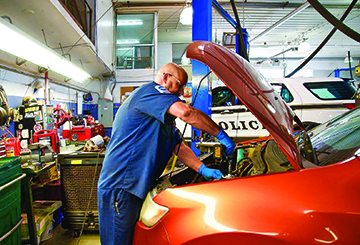
Under The Hoodie: Mechanic at Denver Police Management facility looks under the hood of a police vehicle. Photo: Denver Police Department
Echoing words of the TV sitcom “Car 54 where are you?” the Denver Police Department is facing a vehicle shortage. The problem stems from too many broken vehicles and not enough fleet mechanics to fix them.
Furthermore, the Denver Police Department has added more officers to meet Mayor Mike Johnston’s pledge to “deliver a vibrant, and safe city.”
The concern and challenge: There aren’t always enough working patrol cars to put the new cops on the street.
Vehicle Shortage
The shortage spotlights the operational trade-offs Denver Police Department officials face as they and other city departments prepare for what is anticipated to be a “flat budget” in 2027.
Upshot: Denver Police Chief Ron Thomas will have to maintain aging equipment, replace worn vehicles, and control department overtime spending, all without expecting added city funds to cover rising costs.
Staff 10 Shy
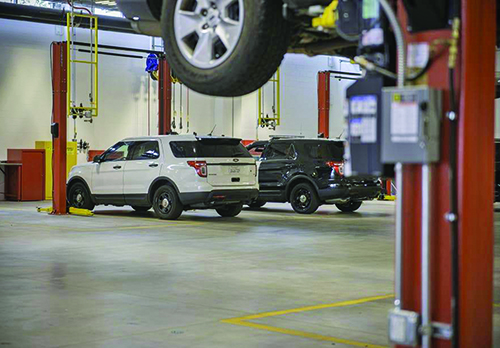
Cop Car Lift: Police vehicles rest atop repair racks at one of city’s repair facilities. A maintenance worker shortage has created a work backlog. Photo: Denver Police Department
The Police Department has added roughly 70 to 75 sworn officers over the last two years. Nevertheless, Thomas says there’s not always enough serviceable vehicles for each officer to operate independently.
Vehicle shortages require placing two officers in one patrol car, which Thomas emphasizes, “kind of defeats the purpose of having more cops.”
As it stands, the Police Department’s fleet maintenance facility is staffed at roughly 72%, about 10 people shy of its authorized level of 36, contributing to the backlog of vehicles needing attention.
Response Impact
“Our department has hundreds of vehicles, from patrol cars to SUVs, motorcycles, plus specialized units that we use to respond to emergencies or conduct enforcement throughout the city,” Thomas told the city’s health and safety committee this summer.
In Denver, police officers are dispatched to calls “per unit,” Thomas explains. His point: The patrol car goes to the call regardless of how many officers are in the unit.
“So, if we’re only able to cover one call with a two-officer call car” it can impact our response times, Thomas explains.
Margins Tight
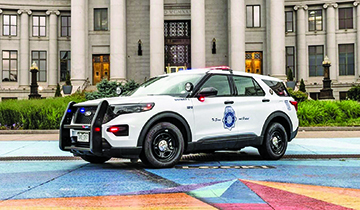
Roadworthy Cars: Denver Police Department doesn’t always have enough serviceable vehicles for each officer to operate independently.
“The Police Department is fully capable of meeting daily emergency response and public safety needs,” he adds. “However, maintenance delays mean our operational margin is tight,” admits Police Department spokesperson Doug Schepman.
Currently, there are 1,236 vehicles assigned to the department. As of Aug. 14, officials said 192 of those vehicles fleetwide are out of service for mechanical repairs and another 49 are out due to collision-related repairs.
In 2021, about 120 police cars or 8% of its fleet were out of service waiting for repairs. To make matters worse, since August 2020, reports show the department lost 40% of its mechanics and body shop workers, many of whom left for higher-paying jobs.
Three Facilities
“With current staffing levels, our technicians are working to complete as many repairs as possible within the confines of the staffing challenge and the Police Department budget,” Schepman enlightens. “Because of the varied service and repair needs of each vehicle, it is impossible to determine with any degree of certainty how long it would take to clear the backlog.”
When fully staffed, the city’s three facilities — the main garage, service center, and body shop — operate Monday through Friday from 6 a.m. to 4:30 p.m.
However, due to limited staffing, the service center and body shop are each closed one day per workweek and, at times, have reduced hours, Schepman adds.
City records show that Denver has authorized the purchase of nearly 140 replacement vehicles for the police fleet since 2025, although it is unclear how many have been delivered and put into service.
Funds For SUVs
This year, the Denver City Council authorized $575,245 for 11 four-wheel-drive SUVs for the department’s operational fleet. The 2026-model vehicles are intended to replace vehicles dating from 2013 through 2019.
These purchases are part of Police Department’s routine replacement plan for high-mileage or heavily worn vehicles and are not a response to the maintenance backlogs. While federal guidelines recommend replacing gasoline-powered fleet vehicles after seven years or 65,000 miles, Denver targets its patrol cars for replacement at five years or 75,000 miles.
The average mileage for the marked patrol fleet assigned to the Police Department’s districts is 54,904 miles. Schepman also notes that there are 117 district patrol vehicles with 80,000 miles or more.