It’s common to want to make sure there is plenty of food in the house, especially in light of recent times. Still, no matter what’s going on in society, it’s also common to not know exactly what you should stock up on — especially when you want to make healthy decisions and provide nutritious options for your family. Focusing on foods in these three main categories can help.
Assortment of fruits and vegetables
Whole Grains
Whole grains are a type of complex carbohydrate that are important because they contain fiber, which can decrease the risk for heart disease, diabetes, and cancer. Grains that aren’t whole, such as white bread, white rice, white pasta, and sugary cereals, are a type of simple carbohydrates. Simple carbohydrates can raise blood sugar and insulin levels quickly and then crash, leading to decreased energy and hunger. Foods that are full of fiber will increase fullness and slow down the release of blood sugar, giving us sustained energy throughout the day.
Examples of whole grains are foods that have 100% whole wheat, including cereals, breads and pastas, steel-cut oats, waffles with whole grains, whole grain pancake mixes, whole grain tortillas, quinoa, and brown rice. Be sure to read labels and look for 100% whole wheat.
Sweet potatoes are a complex carbohydrate that is another great choice from this category.
Fruits And Vegetables
Fruits and vegetables are super important because they are full of fiber, plus vitamins, minerals, and antioxidants that boost the immune system. It can be challenging to stock up on fresh vegetables and fruits, but frozen and canned vegetables work just as well. These options are usually picked at their peak of freshness and then frozen or canned, so they can actually be higher in vitamin and mineral content than fresh varieties.
Fresh produce that tends to have a longer shelf life are: apples, oranges, grapefruit, cabbage, beets, potatoes, spaghetti squash, onions and garlic.
Frozen berries can be thawed and added to cereals and whole wheat muffin mixes, or used frozen to put in smoothies. Extra fresh spinach, kale and overripe bananas are great to bag up and freeze for future smoothies.
Dried fruit can be a good option as long as it does not contain added sugar. When looking for canned fruit, check that it’s not packed in heavy syrup. For canned vegetables, look for “no salt added” or be sure to rinse veggies first before cooking. Canned pumpkin is a fun way to get more vegetables by adding it to soups, chilis and pancake/waffle mixes.
Protein
The last category is protein, which helps build and maintain muscle. Protein helps us feel full after meals and build antibodies, which is very important in fighting off infections. There are many sources of protein that you can stock up on in your pantry, fridge and freezer. Great sources of protein are chicken breasts, fish, turkey, eggs, Greek yogurt with no sugar added, and canned chicken or tuna packed in water and not oil.
Plant-based sources are beans (look for no-salt-added or rinse beans before cooking), edamame, lentils, nuts and seeds. When making good nutrition choices for your family, it’s easy to feel overwhelmed. Narrowing your focus to these three areas can help eliminate the confusion and keep your nutrition on the right track. To learn more tips for eating right, contact the nutrition experts at your local YMCA.
A former pediatric nurse, Liz Bravman, RN, is a cycling instructor, nutrition educator and personal trainer at the Susan M. Duncan Family YMCA in Arvada. She has a Bachelor of Science degree in nursing and a Master’s degree in nutrition education.
Up and down the Front Range and around the world people are beseeching the heavens. How could this great medical crisis befall the most refined, politically correct, loving generation of all times?
People are asking isn’t there some sort of medical breakthrough that could have us all returning to get haircuts, playing tennis at the park, and getting together for a few drinks after work at Elway’s? How dare this strike down God’s favorite people, the Front Range yuppie puppies?
Well folks, I know this is a tough go for many of you who, on Easter Sunday, turned on TV and watched what my Grandma used to view, Mass for Shut-ins, and searching the internet for a visit from Bishop Fulton Sheen appearing in his cape, little red hat and a blackboard.
People ask what medical advances could be made so they can play pickleball again with their inner circle of friends?
You know guys, I spent a couple of evenings reading about medical advances in our country. The one that stands out in my slightly diminished memory is 1954 when a remarkable scientist-physician named Jonas Salk defeated a far more deadly disease, polio. Why don’t I remember my mother, father and grandfather blaming Harry Truman and Dwight Eisenhower for polio?
Because, as you know, this current virus carries heavy politics, known on most media outlets as Trump’s virus. When almost every other major disease or plague rips through humanity it is rare that it picks up politics like this disease has. I recommend everyone read Randy Shilts’s book “And The Band Played On,” about how the horrible disease of HIV/AIDS became politicized.
Spend a little time reading about 1846 anesthesia. 1861 germ theory. 1895 medical imaging. 1928 penicillin. 1954 organ transplants. Stem cell therapy and immunology in the 1970s. Artificial intelligence in the 21st century and my personal favorite of all, birth control pills. Now that folks is a medical breakthrough.
Our nation has come through, in my father’s generation, the Great American Depression. No one was ever quite sure of the total cost of the Great Depression in 1929 when the stock market crashed, the roaring twenties came to an end, the life toll, the destructiveness, and as many historians believe, really doesn’t end until Pearl Harbor. How, oh my God, did families survive all of that? Then comes December 7, 1941. Our nation spent more than $4 trillion, more than 400,000 U.S. troops’ lives were lost . Then comes the Cold War. How many snuck up and covered up, rolled up and kissed our behinds goodbye under a desktop. That was fear factor.
This nation has gone to the moon, this nation has helped cure AIDS, polio and incredible lists of diseases. As a grandparent I no longer fear that my grandson or anyone’s grandson will contract polio.
There is a great line through history, life finds a way. Find one. Let’s get the lights back on. Compare men and women who came through the Great Depression in America, took on the Axis, returned to build a country and do all these wonderful things we listed to the young people today that require a soft warm puppy and a quiet place to go to because
they heard a discouraging word. Who now pick up telephones and rat out neighbors, who become social scolds on neighborhood networks? My God, that’s the kind of stuff that made the old Europeans proud.
I ask you, as my father would ask, what the hell is wrong with you? This is a virus folks. It’s nasty and it does kill people. But civilizations, nation states and individuals need to be challenged in order to grow and mature. These people claim they want to make a difference in our society. I wonder if the young kid who went down to the Marine Corps on December 8, had the same mindset?
I leave you with this. Are we good enough, are we tough enough, do we care enough to come through this? My answer is yes and the history of our nation makes the case.
(BPT) – The sounds of birds chirping, longer daylight hours, and budding trees and flowers are early signs that warmer weather and spring are on the way. That means more time outside to enjoy nature, but it’s also a sign it might be time for a little spring cleaning.
“Cold temperatures, snowfall and winter rains can have a big effect on houses and landscaping, so now’s the time to check for potential home repairs and maintenance,” said Christopher O’Rourke, Mercury Insurance vice president of property claims. “Spring cleaning isn’t just about getting rid of belongings you no longer want or need – it’s also a time to get your home in tip-top shape so you can enjoy it throughout the rest of the year.”
Here are four tips O’Rourke recommends to welcome the new season and save some money down the road.
Clean your gutters.
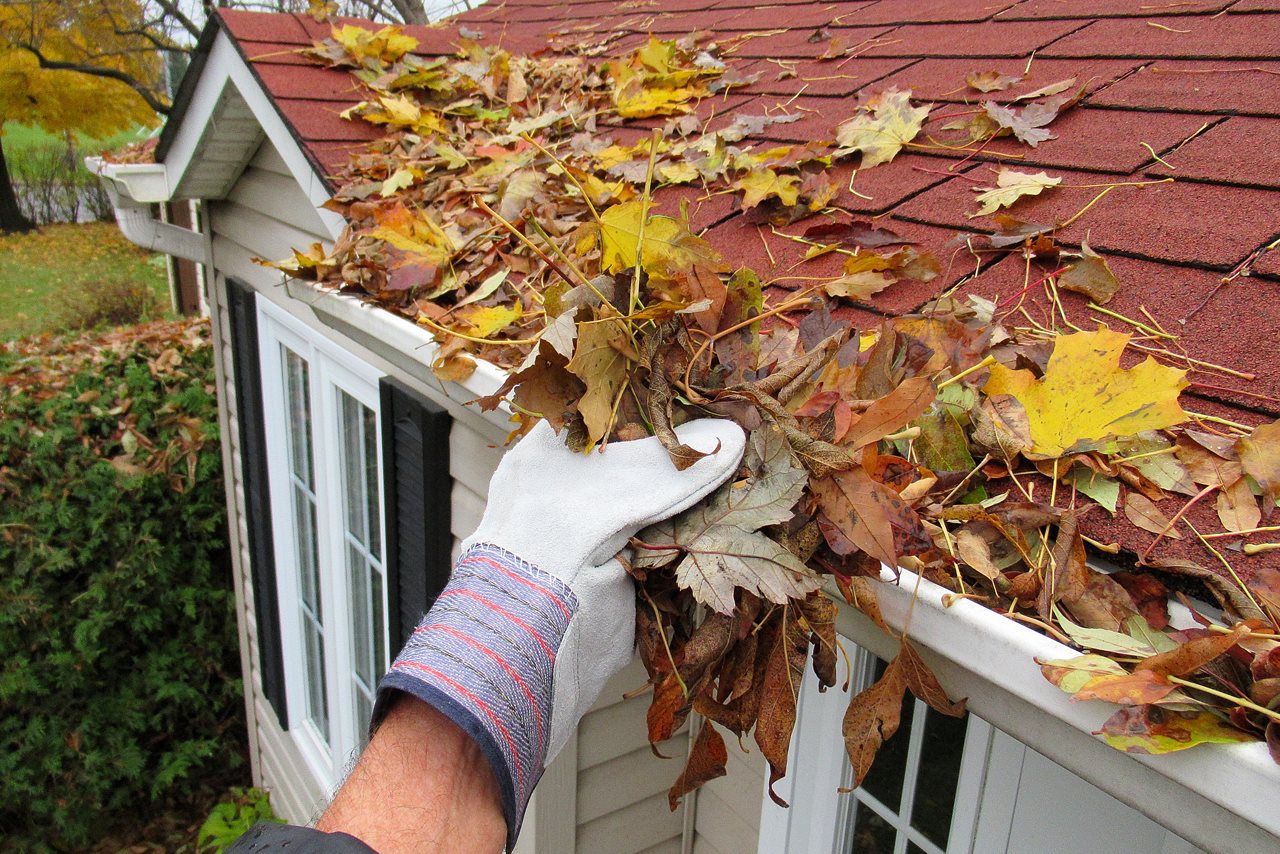
Gutters collect debris over time, especially when rain, snow and wind causes twigs, pine needles and leaves to settle on your roof and in your rain gutters. Accumulated debris can create blockages that direct water into the home or, in areas without much precipitation, can act as kindling in the event of a fire. Buildup also allows mildew and mold to develop, which can slowly decay a home’s exterior and roof.
“Preventable damage like mold or mildew that develops and rots a home’s exterior isn’t covered by homeowners insurance,” said O’Rourke. “It’s important to routinely clean out gutters – even if you have gutter guards installed, they don’t completely protect against debris building up eventually. An hour or two spent cleaning or checking your gutters is time well spent compared to the alternative.”
Trim branches and remove dangerous trees.
Thunderstorm frequency picks up in summer months, and high winds can occur year round, so it’s best to get a jump on tree maintenance in early spring. Regularly trimming tree branches reduces their chance of breaking during a storm, which could cause power outages or property damage.
“Properly trimmed branches present a lower risk of falling onto your home, power lines or possibly injuring someone on your property,” said O’Rourke. “Also, in areas that are prone to wildfires, trimmed trees create a buffer zone to help lower the chances of flames easily jumping onto your roof.”
Consider having the trees on your property inspected by an arborist to determine their health and have diseased trees removed before they topple over unexpectedly. Removal costs vary depending on height and difficulty, but range from $100 to around $1,800. These preventative costs are not covered by your homeowners policy, but can be a wise investment that saves you time, money and anxiety.
Watch out for service lines.
Homeowners who want to plant gardens, trees or install additional landscape features to enhance their outdoor living space should be aware of potential underground utility lines. Most service lines – a network of exterior, underground utility lines or pipes that supply a home with electricity, gas, water and sewer functions – are only buried a few inches beneath the ground. Accidentally hitting one when digging can result in loss of service, expensive repairs or a serious injury.
If a break to a service line happens on a homeowner’s property, special machinery may be needed to excavate pipes from beneath the ground, which may require digging under your home, garden or driveway. The homeowner is responsible for repair or replacement costs, and this damage can be inconvenient, expensive and isn’t covered by a standard homeowners insurance policy.
“The average cost to repair a break to a service line is about $5,000 and most Americans wouldn’t welcome such a large surprise bill,” said O’Rourke. “Homeowners should definitely consider purchasing an endorsement to their insurance policy to protect against losses of this nature. Mercury offers this coverage as an addition to our home insurance policy and it costs as little as $8 a year, depending on the home’s age.”
To be safe, homeowners should call 811 before digging so the utility companies can send a locator to mark the approximate locations of underground service lines.
Service your air conditioning unit.
Regular maintenance of heating, ventilation and air conditioning (HVAC) systems is essential to ensure the equipment is in proper working order, which can save money on energy bills, as well as protect against expensive repair and replacement costs.
“No one wants to unexpectedly find themselves living in a sauna during the dog days of summer, so the start of spring is a great time to have your air conditioner inspected,” said O’Rourke. “You should also change your air filter to make sure it’s operating at its highest efficiency, so when that heat wave hits you’ll be nice and cool inside your home.”
Have a professional inspect your HVAC unit to make sure its exterior condenser coil and compressor are clean and free from blockages – the average cost for an inspection is about $300.
Your home will bring you security and joy for many years to come. Taking the time to maintain it is well worth the investment.
(BPT) – It could be due to a car accident. It might be attributed to an injury at work. It might be the result of a simple fall. Traumatic brain injury can happen to anyone of any age, and it’s probably more common than you think.
March is Traumatic Brain Injury (TBI) awareness month.
What is traumatic brain injury (TBI)?
A TBI is often caused by a bump, blow or jolt to the head that disrupts the normal function of the brain, according to the Centers for Disease Control and Prevention. Severity of TBI can be mild and temporary or severe and life altering. In the worst cases, a person can die from a TBI.
The number of TBI-related emergency department visits, hospitalizations and deaths has increased by 53% and an average of 155 people in the U.S. die every day from injuries that include a TBI, according to CDC data from 2006-2014. There is an estimated $80 billion in lifetime costs within the U.S. alone related to TBI.
“People who experience and survive a TBI often suffer from numerous other health conditions as a result, including headaches, memory loss, anxiety and depression, sleep deprivation, epilepsy and even alcohol or drug abuse,” said Dr. Ramon Diaz-Arrastia, Professor of Neurology and Director of Clinical TBI Research at the University of Pennsylvania. “Concussions in sports have helped bring the frequency of TBIs to light, but there’s still so much work to do because everyone is impacted by this condition either directly or indirectly.”
Who is impacted most by TBIs?
Research shows TBI disproportionately affects vulnerable populations. For example, recent peer reviewed research shows that 53% of homeless people have suffered from TBI, according to health journal “The Lancet Public Health.” Additionally, more than 65% of prisoners and 75% of women experiencing domestic violence have suffered from TBI, according to the “Journal of Neurotrauma.”
People in the military are more susceptible to TBI. Concussions have been capturing headlines for athletes, who also are at high risk of experiencing a TBI. It’s a leading cause of disability and death in children. When someone experiences this type of injury, their life can be forever altered. It also impacts their family as well as society as a whole, as some cannot continue to work, care for a home or even properly care for themselves without assistance.
The need for research and new treatments
“To better address this public health issue, we must create a national registry that will provide critical information to help move forward the medical treatment of individuals with TBI so we can improve their care and research new treatments,” said Dr. Stephanie Kolakowsky-Hayner, President Elect, American Congress of Rehabilitation Medicine.
She is joined by leading TBI organizations like the Brain Injury Association of America and the Congressional Brain Injury Task Force to call for action from The Department of Health and Human Services (HHS) to create this type of national registry. The current system is decentralized and relies on states and regions to construct their own registries, leaving millions of people without resources to manage their TBI. The goal is to develop a single, standardized level of care for individuals living with TBI nationwide.
A comprehensive registry would also facilitate more clinical trials, which could advance the treatment of people with TBI. One treatment showing promising initial results is a regenerative cell medicine (SB623) composed of stem cells that are implanted around the injured area. Focused on improving chronic motor deficiency, the Phase II data last year reported the effectiveness of the treatment that may regenerate brain cells following a TBI.
To learn more about TBI visit www.cdc.gov. To learn about research and efforts being made to advance a national registry, visit www.biausa.org.