In the two years since Mayor Michael Hancock’s administration implemented Denver’s Vision Zero Action Plan, the city appears no closer to making its streets safe for pedestrians and multimodal transportation than when it began.
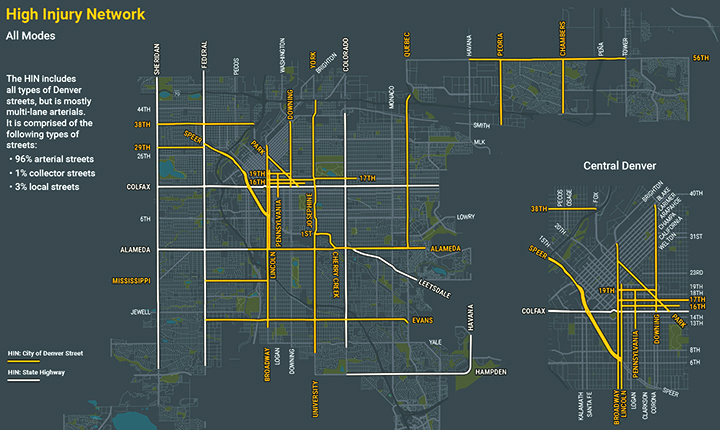
HIN: Reducing crashes on Colorado’s High Injury Network (HIN) of roads is a goal that seems unreachable given current traffic trends.
Even though nearly 70 percent of Denver residents still support Vision Zero, according to a survey conducted by the Denver Streets Partnership, the results of the program, critics claim, are hard to justify.
According to the 2019 Vision Zero Report, traffic-related fatalities increased by 15 percent from 2018 while serious bodily injury resulting from crashes also increased. In contrast, Denver cited several case studies purporting to show that Vision Zero has made a positive impact. Those include setting up automated speed and distracted driving enforcement at the intersection of 6th and Lincoln, adding 24-hour transit-only lanes on 15th and 17th streets downtown, and improving signage at the 20th street and I-25 interchange.
However, these case studies show that Denver is focusing on solving only one side of a double-edged problem. While Vision Zero aims to eliminate traffic deaths by 2030 by focusing on infrastructure improvements and behavioral causes affecting Denver’s traffic-related deaths and serious injuries, Denver is only focusing on the infrastructure.
As an example, the report says the presence of a photo radar van at 6th and Lincoln for five days reduced excessive speeding (10+ mph) by 21 percent. But, reducing the number of overall speeding tickets has not influenced the frequency of accidents occurring at that intersection. Denver still lists the intersection as a hotspot for fatal accidents on its Vision Zero Data & Trends website.
Denver’s case studies also do not address the fact that most accidents do not occur at intersections and are not caused by speeding. In fact, over 40 percent of Denver’s accidents occur because of distracted driving, according to the Colorado Department of Transportation (CDOT). The Vision Zero Data & Trends website also shows that most accidents occur in neighborhoods and on arterial streets.
Low-Hanging Fruit
The mixed messaging around Vision Zero has also caused some residents to believe the city is just going after low-hanging fruit to make it seem like it is doing more to protect pedestrians.
In May 2019, Mayor Hancock lamented that not enough was being done to protect Denver’s pedestrians during a memorial ceremony for those who lost their lives in traffic crashes.
“Every one of those lives lost is unacceptable and preventable,” Hancock said before listing the safety improvement projects the city is undertaking. Those include adding 19 miles of bicycle lanes and 12 new traffic signals.
One of the ceremony’s attendants, Michelle Roche, who lost her son after a reckless driver hit him in 2014, told Streets Blog Denver that the ceremony itself seemed like a propaganda campaign to make the city seem like it’s doing more to prevent traffic-related deaths.
“If you ask me, that little trickle of dollars that they’re putting towards the action plan … it’s like in marketing, we would call that greenwashing,” she said.
In its 2019 budget, Denver allocated just $2.6 million to implementing the recommendations of the Vision Zero Action Plan, accounting for less than 10 percent of funds allocated for transportation improvement projects. In 2020, Denver allocated just $1.65 million for the same cause.
Since the ceremony, Denver announced it will add up to 124 miles of bicycle lanes throughout the city and is upgrading 15 intersections across Colfax Avenue, one of Denver’s busiest streets. The Department of Transportation and Infrastructure (DOTI) announced the upgrades consist of adding “bollards and paint to shorten crossing distances for people on foot and to carve out places where pedestrians can stop in the middle of the street.”
But, residents living along Colfax aren’t impressed with the upgrades. The bollards will cost $120,000 alone, and there is no guarantee they will improve safety.
One resident who walks Colfax regularly told The Denver Channel that he worries about his safety because drivers on Colfax don’t watch out for pedestrians.
“My neighbor got hit by a car down the street, I’ve yelled at several drivers because they’re not looking when I’m crossing over, they’re making turns without looking both ways,” he said.
Colfax is one of several streets listed on the High Injury Network (HIN) — the corridors in Denver with the highest number of fatal and injury crashes. HIN roads account for just five percent of the total roads in the city but have seen more than 40 percent of the crashes since 2013. Other HIN roads include Broadway, University and Evans.
Federal Intervention
Denver’s problems with Vision Zero haven’t gone unnoticed by people living outside the Centennial State.
In December 2019, the US Department of Transportation (DOT) sent officials to meet with CDOT, DOTI, and the Denver Police Department to discuss means of improving Denver’s Vision Zero plan.
Among the concerns raised by DOT officials during the meeting was increasing rates of fatalities among pedestrians and bicyclists and other vulnerable road users. DOT found this fatality rate increased by 23 percent from 2018.
DOT’s nationwide data also showed that 76 percent of pedestrian fatalities occurred overwhelmingly after dark, 38 percent occurred when many pedestrians had some alcohol in their systems, and 74 percent occurred when they were outside of intersections. Half of accidents involving bicyclist fatalities occurred after dark, while only 26 percent of such accidents occurred with some alcohol in their systems.
“We clearly have more work to do to ensure that Denver’s transportation safety needs are met,” said James Owens, acting administrator of DOT’s National Highway Traffic Safety Administration (NHTSA). “I’m confident that with the help of our safety partners, we can make the Denver area one of the safest in America for pedestrians, bicyclists, and motorists.”
In the past three years, NHTSA awarded Colorado $46 million to address its road safety concerns. Even so, nearly 600 people across the state were killed in traffic-related incidents in 2019, according to statistics from CDOT.
So far in 2020, 57 people have been killed in crashes.
Project Expansion
While Denver struggles to achieve its Vision Zero goals, the Denver Regional Council of Governments (DRCOG) plans to expand the program to become more regionally focused. DRCOG claims this approach will help cities and communities in the metro area deal with increasing traffic deaths.
“Vision Zero switches safety from being solely the responsibility of roadway users to a shared responsibility of system designers and roadway users,” the agency said in its announcement of the plan. “It is inevitable that roadway users will make mistakes, so roads should be designed to ensure these mistakes do not result in severe injuries or fatalities.”
However, the principles of Vision Zero and the implementation seem to be out of line with each other. Last year, DRCOG reported 242 fatalities resulting from crashes across DRCOG’s service area which includes Adams, Arapahoe, Boulder, Broomfield, Denver, Clear Creek, Douglas, Gilpin and Jefferson counties. This total is more than one-third of traffic-related fatalities reported in the state.
Denver admits there is still work to be done and plans to focus on improving the HIN in 2020. But, residents are still waiting for the program to make an impact.
The Denver Public School system is seemingly hell-bent on embedding a sense of irony into its students.
skills of children and the awareness of the world in which they live are systematically countering those efforts by exposing kids to potentially toxic levels of lead.
A Well-documented Threat
It is known throughout the developed world that lead can be harmful and even fatal to human beings — especially children. Yet, its presence remains in the water flowing into many schools (and homes) in Denver, across Colorado and throughout most urban sectors of the United States.
Old Buildings: Long standing buildings, like Denver’s East High School built in 1924, sit atop buried poison.
According to a recently published “key facts” page on the World Health Organization (WHO) website: “Young children are particularly vulnerable to lead poisoning because they absorb 4–5 times as much ingested lead as adults from a given source.” The report goes on to describe a series of effects exposure to lead can have on kids, stating “… lead can affect children’s brain development resulting in reduced intelligence quotient (IQ), behavioral changes such as reduced attention span and increased antisocial behavior, and reduced educational attainment.” Further, the WHO states that lead exposure causes renal impairment, anemia, hypertension, immunotoxicity and damage to reproductive organs and that all effects — be they behavioral or neurological — are irreversible.
The Underlying Problem
The primary source of lead-tainted water that is being pumped into drinking fountains, sinks and kitchen areas in schools lies hidden. It does not come from the municipal source, rather, it is picked up in the service lines running from the main municipal water conduit and into a network of pipes made of — you guessed it — lead. Most buildings erected (approximately) between the late 1940s and the early 1980s are serviced by lead pipes. While proactive measures in places like Madison, Wisconsin, and Lansing, Michigan, have completely removed lead pipes from beneath homes and schools, the American Water Works Association estimates that six million lead service lines remain in use nationwide — affecting anywhere from 15 to 22 million people. Additionally, the presence of lead in school drinking water can come from pipe fittings, fixtures and the soldering in brass pipe joints.
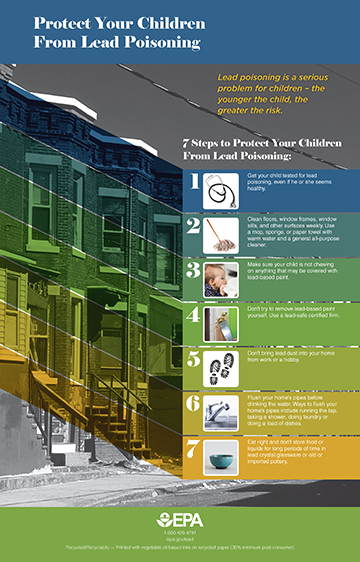
Tainted Water: Retrofitted filters can temporarily block tainted water.
As far as Colorado is concerned and Denver in particular, many schools in current operation were built between the “lead window” cited above and contain some if not all of the lead-leaching components mentioned thereafter. The WHO and the Centers for Disease Control (CDC) both contend that no level of lead in drinking water is safe for children. Similarly, Zeke Campbell, Denver Water Director of Water Quality and Treatment, states on the DPS Takes Proactive Approach to Lead Testing Video that: “There is no safe level of lead. The most important thing you can do is have a test done.” Visit the following website to view the video: https://facilities.dpsk12.org/ 2016/11/21/leadtesting2017/.
Meanwhile, the EPA claims that water containing any measure that is at or below 15 parts per billion (PPB) is safe for human consumption — even children. Recently, Denver Water conducted a comprehensive testing initiative of all drinking water fixtures across the entire Denver Public School system. Over 3,300 samples from 160 schools were tested which revealed that most facilities have traces of lead in the majority of their faucets, drinking fountains and kitchen fixtures — some revealing levels of lead near or past the 15 PPB minimum set by the EPA. Water fountains and bottle filling stations testing near 15 PPB were partitioned off and retrofitted with filters which, while offering a temporary solution, do not remove the fact that there are lead pipes beneath the school structure. Ironically (once again), the EPA is the government agency which must grant Denver Water permission to dig up, remove and replace the underground pipes — a project with a price tag in the hundreds of millions.
An Ambitious Plan
Recently, Colorado Public Radio and The Denver Post cited article have reported that Denver Water has presented a plan to the EPA for doing exactly that. Beginning sometime in 2020 (theoretically) the plan would “issue tens of thousands of water filters … make adjustments to water chemistry, increasing the pH value from 7.8 to 8.8 and replace all lead lines in all areas served by Denver Water.” While this initiative undoubtedly springs from good intentions, none of the above measures can commence without pending EPA approval.
Standards: The EPA sets the standards, yet hinders progress
A precursor to this solution was proposed last year by the Colorado Department of Health and Environment. The proposal has been criticized because it called for Denver Water adding orthophosphate to the entire municipal water supply. While this element is an algae growth-promoting nutrient, it can also be harmful in high doses. The measure is already in use in Philadelphia, New York City, and Washington, D.C., and has reduced lead levels because orthophosphate clings to the inside of lead pipes — forming a sort of barrier between the water and the would-be leaching lead. However, it has been determined that it would cost a fortune to purchase, treat the water, then extract it from the effluent before adding it all over again — far more than simply replacing the lead pipes.
The plan was scrapped for the current strategy of testing fixtures and installing filters while Denver Water waits for the EPA to approve the pending proposal. Meanwhile, students and teachers hope the water filters are being changed at the appropriate intervals. Any student or teacher who does not bring pre-filtered water from home risks absorbing an unhealthy or even dangerous level of lead.
Under the current Denver Zoning Code 11.12.2.1.B.2 (DZC), the number of people who can live together as a household (who are not related by blood) is limited to just two. While this does not include blood relatives or persons under 18, it places tangible parameters on what is commonly known as a “single-family home.”
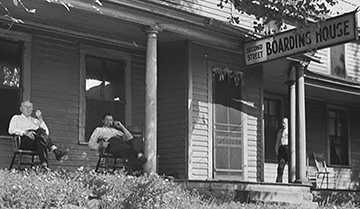
Flop Houses Of Yesteryear: Rooming house dynamics of yore have come to the fore.
After a series of public hearings about how to best accommodate growth in Denver over the next 20 years, residents in several neighborhoods are voicing their displeasure with City Council’s proposal to update its residential use rules in order to increase density in neighborhoods.
A Civic Dilemma
As the housing crunch continues to tighten, community leaders and other influencers are looking for ways to address the needs of vulnerable populations who face difficulty finding viable housing but does not cost the city any government money. These include persons at risk of becoming homeless, college students, people overcoming addiction and special needs individuals who must reside near service facilities — among others.
The Group Living Project (a City of Denver initiative) seeks to update the DZC’s definition of “household” and regulatory policies which would extend from single family homes to assisted living facilities, shelters and group homes. This initiative aims to amend the current Group Living Code to “increase flexibility and housing options for residents, to streamline permitting processes for providers while fostering good relationships with neighbors, and to make it easier for those experiencing homelessness, trying to get sober or who have other special needs [to] access services with dignity.”
Proponents argue that the plan would allow Denver to address its affordability problem by building non-traditional housing. Critics say that while the city does have an affordability problem, fixing it should not come at the expense of current homeowners.
This policy proposal is a key element of Blueprint Denver 2019, a 300-page document that outlines the city’s plans to accommodate growth through 2040. While it is not regulatory in nature, the hefty document serves as a supplement to a similar plan passed in 2002 and is meant to guide local government decision making into the future.
A Significant Change
The proposed amendment would increase the number of unrelated adults who can live together from two to eight in a property of up to 1,600 square feet in size. The provision would also allow another adult for every additional 200 square feet of finished floor area in larger properties. The breadth of proposed revisions to the DZC include more conservative recommendations of just four to six unrelated adults per property, yet all proponents of the amendment are championing the impending positive impact.
If the above parameters of eight adults in one home were amended into law, the new “household” definition would be applicable to 42% of single and two-unit properties. Similarly, nearly 58% of detached residences and duplexes could house up to nine unrelated adults and approximately 41% could house 11 or more adults unrelated by blood. While the new parameters would mildly affect “household” living in single-unit and multi-unit properties, they would greatly expand the potential for group living facilities — the number of which could rapidly increase — seemingly overnight. These could include properties that, after a quick remodel, could be repurposed into homeless
shelters, community corrections facilities (halfway houses), special care facilities, transitional housing, assisted living, nursing and hospice, co-ops, sober living, elderly care and student housing.
Questionable Motives
The Group Living Code Amendment is being proposed and supported by the Group Living Advisory Committee (GLAC). An insider of the group (wishing to remain unnamed) recently divulged that, curiously, over 75% of members and stakeholders in the GLAC have ties to for-profit group living businesses and organizations. Aside from household living, the above list of group living distinctions does one thing: it opens residential districts to dynamic, overlapping sectors of highly lucrative commerce. While increasing the number of people landlords can legally charge rent to, the amendments could potentially make Denver a prime target for corporate investors and foreign interests. The changes could cause yet another spike in residential property values, but then, as the rooming houses fill up, values could quickly decline due to lack of parking, noise, overcrowding, safety issues and sanitation concerns.
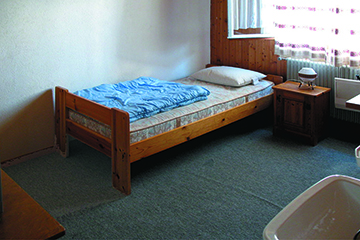
Tight Quarters: Would you pay $140 a week for this?
In recent years, measures similar to what the GLAC is proposing for Denver have been passed in Seattle, Atlanta, and Chicago. While Seattle’s housing crunch is well documented, perhaps it is not common knowledge that many homes in the city were bought by investors who divided up living rooms and garages to turn multi-bedroom homes into dormitory-like dwellings for up to 12 renters. In Atlanta, the loose definition of “household” is being exploited by outside and foreign investors who are turning neighborhoods into districts full of by-the-room renters with little stability and no protections. These units go for an average of $140 per week in properties with scant common areas and in many cases — one bathroom for the entire domicile. Meanwhile, a similar trend in Chicago dubbed “upzoning” has rendered an opposite effect city planners hoped it would have. In January of last year, Citylab .com reported: “A new study of zoning changes in Chicago finds that they led to higher, not lower, local home prices, while having no discernible impact on local housing supply.”
Follow The Money
Critics of GLAC assert that the GLAC’s plan was conceived via tunnel vision, because it contains various glaring instances of considerable oversight. The critics point out that the amendment includes no measures ensuring that new facilities are evenly spread throughout the city. It does not limit the opening of more facilities in communities that already have a concentration of such. It includes no stipulations for specific distances between facilities and it does not restrict for-profit homes in neighborhoods where no demand exists. For opponents, the bottom line remains that rental income on a single- family household unit could go from charging one family, to collecting week-to-week and month-to-month rent from eight to 12 residents. That’s a hefty incentive for landlords and investors in for-profit group living organizations.
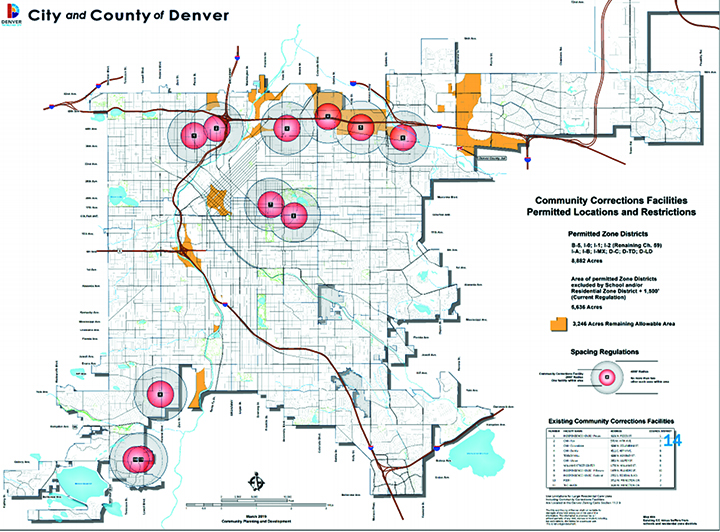
Rules: Residential Use rules have pushed many low-income service providers to the outskirts of Denver.
“I just don’t see any positive things about it whatsoever,” said longtime Denver resident Jerry Doerksen. “There are already several houses in our area where four or more unrelated individuals are living together and the appearance of the home and yard reflects the lack of personal interest,” Doerksen said. “Four inhabitants, four cars. There is no enforcement of current code regulations, and it seems improbable that there would be any enforcement of regulations under the proposed plan.”
“Denver is a diverse city and the planners should take account of all the different characteristics of each neighborhood and the wishes of the residents,” one Washington Park resident who wished to remain anonymous told the Glendale Cherry Creek Chronicle in an emailed statement. “Further, Denver needs to assess all related impacts of such zoning changes.”
While Denver’s affordability issues live on, some homeowners see themselves as stuck in a no-win situation. They’re going to be forced to give up ownership of their property or their stake in a neighborhood, or both.
“Yes, there is a problem with the high cost of housing in Denver but it’s certainly not fair or appropriate to place the solution of the problem on the backs of homeowners who have chosen to live where they do in order to avert the very situations this proposal would create,” said Doerksen.
Whether the proposed amendment to the DZC will work is still a matter of speculation. At best, it could offer relief to the lack of affordable housing and at worst, it could convince reasonable people to not want to live In Denver at all. Either way, the GLAC is pushing to make group living property investors a lot of money.
Advice On Testing, Seeing A Medical Provider From Home; Tips To Stop Mass Anxiety And Panicky Behavior From Spreading
by Glen Richardson
Seemingly facing a widening coronavirus pandemic tagged as COVID-19, dark spirits are transfixing Valley residents as authorized restrictions have ignited a near-shutdown of all activity and is upending daily life. The contagion is the perfect storm of an unknown threat mixing in with social media and news channels to generate hysteria.
World Unravels: The coronavirus is an unknown threat that is spreading mass anxiety and panicky behavior at home and worldwide.
Like everyone, the Chronicle takes the virus seriously but also recognizes it should be seen in perspective. Consider these facts: As of March 18 there had been 154 coronavirus deaths nationwide. During the same period there were 2,900 flu deaths in the U.S. The number of COVID-19 cases nationwide was over 10,000 compared to between 30 and 40 million flu cases with 30,000-50,000 hospitalizations. In Colorado there have been 216 coronavirus cases compared to 3,391 hospitalized flu cases.
Despite reports coronavirus is a greater threat to the elderly, Colorado’s new COVID-19 website reveals as of March 18 that 44.34% of cases were age 50 and above versus 55.66% under 50 years of age.
What To Do?
The virus outbreak should, of course, be taken seriously. Nevertheless, the exaggerated response created by the current panic is having negative consequences for our health and the health of community businesses. To get answers, we turn to UCHealth medical providers for information and guidance. Moreover, is this mass anxiety and panicky behavior real and what should we do about it?
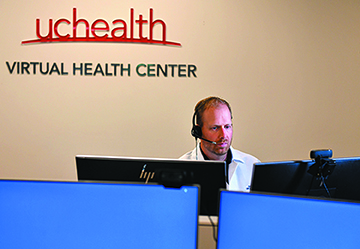
Virtual Health: Medical providers at UCHealth’s Virtual Urgent Care are trained to help you figure out if you need additional help or tests for symptoms of coronavirus. Photo: Cyrus McCrimmon for UCHealth
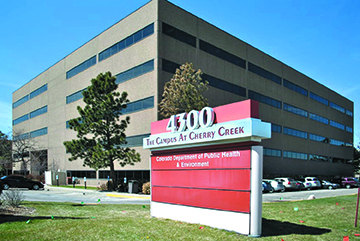
Foremost, medical providers can help you figure out if you need to be tested for coronavirus. UCHealth’s Virtual Urgent Care is open to anyone in Colorado including those who don’t have insurance. What should you do if you have symptoms like a fever, cough or shortness of breath? For those who have general questions about coronavirus, or want information about testing, the best place to get help is through Glendale-based Colorado Department of Public Health & Environment at 303-389-1687 or email cohelp@rmpdc.org. For patients who want to see a medical provider from the privacy of home, an online visit through UC-Health’s Virtual Urgent Care can be one of the easiest, safest ways to get help.
“COVID-19 is quite infectious, so if you can stay home and get medical advice, that gives you two advantages. First, if you’re sick, you’re not going to be bringing your illness into a doctor’s office or a hospital. Second, you won’t be exposed to other patients,” explains Dr. Chris Davis, an expert in emergency medicine and infectious diseases, and Medical Director for UCHealth’s Virtual Urgent Care.
Is A Test Needed?
“If you’re worried and you have any risk factors, you can see a provider. If you need a test, then we can tell you what to do and the closest place to get tested,” Davis adds.
Terror Testing: Fearing they needed to be tested for coronavirus caused long lines of cars at drive-through labs. This initial site was in the Lowry neighborhood. The National Guard was called-up to direct traffic.
Patients using Virtual Urgent Care do not need to be a current UCHealth patient and don’t need insurance. Anyone in Colorado, including visitors to the state, can use the service. Insurance typically covers the visit, but for those who don’t have insurance,
there’s a $49 flat fee. Moreover, the Virtual Urgent Care providers are now trained on how to help patients determine if they are at risk for COVID-19.
“We’re looking for symptoms and also for a travel history. Have you recently been to the five countries where the outbreaks are the worst: China, Italy, Iran, South Korea or Japan? Or, have you been to California, Washington State, Florida, New York, places that have ongoing cases of community transmission?” Davis states.
Same Day Appointment
Many patients won’t need additional care beyond their online visit, Davis indicates. But for those who do need to be tested for COVID-19 or to go to an ER for immediate follow-up care, the fee for the Virtual Urgent Care appointment will be waived. Davis points out that it’s reassuring for patients to get same-day appointments with Colorado health experts.
“This is a pretty fast-moving situation. It’s nice to have a dedicated group of providers who are keeping track of this coronavirus outbreak on a daily basis,” Davis continues. There’s no referral necessary.
Anyone in Colorado can create an account through My Health Connect and request an appointment online for an appointment. “What makes this so great and convenient is the setting. When you’re dealing with a pandemic, you can get your questions answered without having to leave your home,” Davis continues. “If you’re worried about being exposed or exposing others, this is a great option.”
Anxiety Attack
Coronavirus anxiety has spurred people to hoard everything from toilet paper to canned tuna. Hand sanitizer has been sold out for weeks, spurring nervous neighbors to share tips on Nextdoor about how to make their own sanitizer, only to discover on fruitless trips to the pharmacy that the key ingredient — alcohol — is also sold out. Add worries about the tanking stock market to spookily empty store shelves and we are witnessing a full-blown case of coronavirus anxiety.
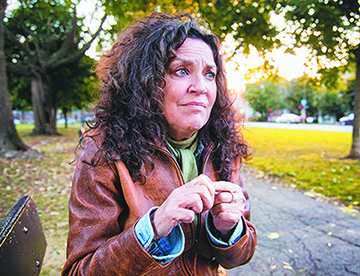
Anxiety Attack: UCHealth Psychologist Justin Ross says the coronavirus outbreak is feeding the three key ingredients that cause anxiety: Unpredictability, lack of control plus it’s a threat to the people or things we value. Photo: Getty Images
According to Psychologist Justin Ross, it’s no surprise that mass anxiety and panicky behavior are spreading. Ross, who has a doctorate in psychology and practices at the UCHealth Integrative Medicine Center in Stapleton says anxiety is a natural response now because the coronavirus outbreak is feeding the three key ingredients that cause anxiety: Unpredictability, Lack of control, plus it’s a threat to the people or things we value.
Ross said anxiety can be a healthy response during times of stress. “In many ways anxiety serves an adaptive, healthy response when something we value dearly is threatened or perceived to be threatened,” Ross explains. “The problem is when the anxiety response runs amok and spins out of control. That’s when it can cause a lot of problems for people.”
Simple Stress Steps
Ross says it’s clear that anxiety about the coronavirus outbreak is causing problems for many. “The current level of uncertainty and a felt sense of lacking control with this virus has led us to buy things unnecessarily and excessively checking news and social media. We want to feel like we have the ability to control our lives. We want information and we want products that align with our vision for safety and control,” he explains.
While it’s not very helpful during legitimate times of stress to give people pat responses like: “calm down, don’t panic,” or “don’t worry,” Ross suggests these simple steps: Limit
your exposure to news and social media. Plan to check your news sources or social media feeds just twice a day. Ross strongly recommends limiting exposure to social media since a friend’s post — which may not even be accurate — can trigger worries for you. Anxiety essentially can be contagious. Reduce the contagion by skipping the updates.
Focus on controlling what you can control, he urges. A person cannot control how widely the coronavirus outbreak will spread. We can’t control if our child’s school will close or if an important work conference will get canceled or if our 401K retirement savings shrinks. So, he advises people to focus on the simple powers we do have. “We can wash our hands. We can take precautions,” he says. “We can give ourselves the best chance of staying healthy.”