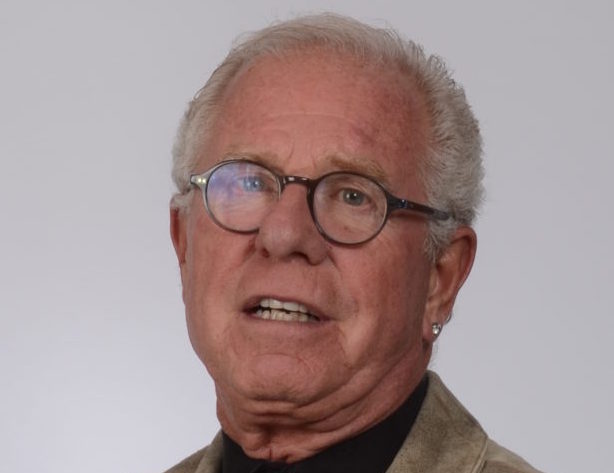
Jon Caldara who has been a longtime friend, pretty fair country talk show host and The Denver Post’s most read columnist, got unceremoniously canned from the ever shrinking Denver Post because he dared to say there are no more than two birth sex categories. Jon, who has had tremendous life struggles himself was deemed insensitive to people and their place in life. Unbelievably absurd but political correctness will destroy much more than just Jon’s career as a Post columnist.
In the news recently, the families of three
female high school athletes have filed a federal lawsuit seeking to block
transgender athletes in Connecticut, from participating in girls’ sports. The
issue is coming up in other arenas as well.
I’m a huge fan of MMA, professional prize
fighting and, of course, the only real legitimate sport left, professional
wrestling. Now I have a question for the editorial board at the Post, the
politically correct of Colorado, and anybody that believes there are more than
two true sexes.
My example is MMA fighter Fallon Fox.
Fallon Fox was born biologically male and he beat two biologically born women
half to death in the MMA cage. The first woman that he beat is Erika Newsome in
Coral Gables, Florida. With Fallon’s hands gripping the back of Newsome’s skull
“she” delivered a massive knee, bringing her knee up and down while pulling
Erika’s head down. The blow landed on Newsome’s chin, dropped her unconscious,
face first and that was Erika’s last professional fight. The next woman that he
beat was Tamikka Brents, also giving her a concussion and breaking several
orbital bones.
Now the website Outsports, which proclaims
it focuses mostly on LGBTQ issues named Fallon Fox their “bravest athlete in history.”
Now remember, Fox is a biological male fighting physically weaker females and
inflicting life altering harm. That qualifies as brave?
So, let me ask you — how brave is it for a
man to beat up a woman? Here’s the hard part. A man who has his penis removed,
has surgery to create a false vagina, takes hormone shots and gets fake breasts
is just a man that cut off his penis, has a fake vagina, takes hormone shots
and got fake breasts.
How, politically correct fans of this
column, can a biological male beating up a biological woman become brave and a
hero? As I’ve said many times, you can’t make this stuff up. The argument that
trans women are full women and should be allowed to compete against biological
females — is this another form of toxic masculinity? The male competitor will
almost always win and have the advantage over the female. Men have now claimed
for themselves the opportunities that were the domain of women’s sports. Are
women’s rights now officially dead with respect to athletic competitions? You
all better come to the dance.
A man identifying as a woman almost kills
his opponent in the ring. Remember that’s an actual woman in the octagon. And
this is applauded? Where are the Mile High feminists on this? This should have
never been allowed. If a traditional man got into the ring and beat a woman
unconscious what would they say? An act of hate? But a guy gets a few hormone
shots, changes his appearance to look like a female and it’s okay? You’ve come
a long way baby. You take care of yourselves you guys. Ring the bell.
— Peter Boyles
P.S. If I was at The Denver Post this would
have cost me my job.
International Expert Warns ‘There Is No Safe Level Of Lead Exposure’
by Julie Hayden
The Hancock Administration’s aggressive
development projects don’t just endanger the City’s parks, open spaces and
quality of life in its neighborhoods. Some worry they also put the health of
the City’s most vulnerable residents — children and the elderly — at risk.
“Denver has a lead problem,” says community
activist Bridget Walsh. “Just like in other cities like Flint, Michigan, the
lead in Denver’s water in homes and schools, in our air and soil, has been
quietly poisoning our children and us for decades.” Walsh is co-founder of CATE
— Colorado Advocates for Toxin Education, a not-for-profit group of concerned
citizens focusing on promoting education about toxins in our air, water and
environment, and engaging in collaborative efforts to reduce the impact of
toxins on Colorado residents.
To help get the word out and educate the
community, CATE partnered with the Vasquez/I-70 Superfund Site Community
Advisory Group (CAG) and sponsored a series of events featuring Dr. Bruce
Lanphear. He is an internationally recognized expert on the destructive ,
cumulative impacts of even low levels of environmental contaminants and
pollutants on all of us.
Forget everything you thought you knew
about lead exposure and poisoning. Dr. Lanphear emphasizes, “There is no safe
level of lead exposure.” He says 20 years ago, doctors mistakenly believed that
low levels of toxins found in the blood were safe. But he says all of the
current research makes it clear that “low levels of toxins cause irreparable
harm and long-term effects.” He notes even the CDC, Centers for Disease
Control, now states there is no safe level of lead in children’s blood.
Lanphear explains lead has been linked to
physical and cognitive problems in children and impacts IQ. Lanphear cites
studies that show even tiny doses of toxins like lead cause irreversible damage
to children’s brains and bodies. It’s not just children who are harmed. Lead
exposure is also linked to heart disease. Lanphear points out the common
mythology is to blame everything on the individual and focus on lifestyle
choices like smoking, obesity and exercise. But the truth is, Lanphear says
science shows there is an undeniable connection between low level lead exposure
and premature death from cardiovascular disease. Yet, he says, we aren’t doing
enough to hold our institutions accountable for cleaning up lead and other
toxic pollutants.
Walsh points to a study released in 2018
that revealed almost all Denver Public Schools tested positive for lead in the
water. The District addressed the issue when the levels hit a high or
“actionable” level but Lanphear notes again, “No level of lead exposure can be
considered ‘safe.’”
CATE members additionally worry about lead
impacting tens of thousands of Denver residents whose homes still have old lead
water pipes.
The I-70 expansion is also stirring up the
lead issue. Lanphear addressed the Globeville community about that. The I-70
expansion includes a drainage project involving the I-70/Vasquez Superfund
site. Lead and other toxins have been found in the soil there. Neighbors and
others like Walsh fear the development will stir up lead, metals and other
contaminants. “Lead and other toxins like air pollution impact all of us,”
Walsh says, “especially residents who live in heavily industrialized sections
of Denver, close to highways and around big construction projects.”
CATE and CAG members hope Dr. Lanphear’s
message about the cumulative impacts of toxins on our children will encourage
policy makers to adopt what Lanphear calls population strategies that target
lead and other pollutants. “We and our children are being exposed to unhealthy
levels of lead and other toxins in our environment,” Walsh asserts. “It’s time
for Denver residents to arm themselves with the latest scientific facts and
demand that Mayor Michael Hancock and Governor Jared Polis not only recognize
this public health emergency but immediately allocate sufficient funds to define
the extent of the problems and clean it up.
No Safe Level Of Lead In A Child’s Body:
International expert Dr. Bruce Lanphear addresses Globeville residents about
the dangers of even low levels of lead exposure to children and others in the
community.
Chronicle’s annual Valentine courier gives you the ins and outs of when, where, and how to celebrate the month of love. You’ll discover movies, parties, dining and themed events to enjoy with your love and the family you love.
Prom Prompts: Mercury Café again hosts a Valentine’s Day prom benefiting Flyers for Kids. This year’s event is at the California St. café on Feb. 1, 8 p.m. to 1:30 a.m.
For better or worse, this is the month the
Cherry Creek Valley becomes Venus, the Goddess of Love. It’s the sweetest time
of year though it can occasionally be a stormy, swooning affair.
But fear not guys and girls, love conquers
all. The Chronicle has dimmed the lights and lit candles to help young and old
alike make it through all 29 days of partying to commemorate cupid’s holiday.
From Singing Valentine serenades, to a
night of dancing and cocktails at a Valentine Prom and scrumptious dining
specials, the Valley is definitely spreading love this February.
Here’s our annual lover’s guide to the ins
and outs of when, where and how to celebrate:
Art Of Love
Hearts For Art — Show your love for fine
art by placing a paper heart on the floor in front of your “artwork crush” at
the Denver Art Museum. Dates last year were Feb. 11-15. This year’s dates are
to be announced. Information: 720-865-5000.
V Day D’art Reception — Santa Fe art
district gallery hosts a reception for two artist exhibition titled Elements
Feb. 14, 6-9 p.m. Information: 720-486-7736.
Entertaining Romance
Haflet Hobb Love Party — Sing and dance as
talented musicians play a set list of Middle Eastern and North African songs at
the Mercury Café Feb. 8, 7:30-9 p.m. Information: 303-294-9258.
Love Letters — Enjoy Vintage Theatre’s
Pulitzer Prize nominated play with coffee cocktails and dessert at Cherokee
Ranch (6133 Daniels Park Rd. in Sedalia) Feb. 15, 7 p.m. Information:
720-627-7175.
Party & Movie — Theresa Mercado hosts
the 35mm film Hell On Wheels (1996) at the Sie FilmCenter on Colfax Feb. 14,
9:30 p.m. Event begins with a “Vicious Valentine Party” prior to the film
Information: 720-381-0813.
Tequila Lovers Festival — Winter Tequila
Festival connects tequila lovers with great tequila at the Blake Street Tavern
Feb. 22, 3-6 p.m. Information: 303-675-0505.
Valentine Prom — Enjoy a night of dancing
and cocktails at Mercury Café’s annual prom downtown on California St. Feb. 1,
8 p.m.-1:30 a.m. The event is a benefit for Flyers for Kids. Information:
303-294-9258.
Valentine’s Weekend With Phil Hanley — Love
becomes a laughing matter as you watch the stand-up comedian perform at the
Comedy Works in Larimer Square, Feb. 13-16.
Flower Power
Colorado Garden & Home Show — You and
your love will enjoy the multitude of fragrances as you stroll through more
than an acre of professionally landscaped gardens (11 in all) at the Colorado
Convention Center, Feb. 22-March 1. Information: 303-932-8100.
Dishing Out Love: Take your love to Date Night Valentine Cooking Class at Park Coworking on Old South Gaylord Feb. 5, 6-9 p.m.
Love Potions From The Vine — Celebrate the
month of love with a captivating tour of exotic tropical plants that have
inspired myths and tease the senses at the Denver Botanic Gardens 3-4 p.m.
Dates are Feb. 7, 8, 9 & 13, 14, 15. Information: 720-865-3500.
Orchid Showcase — Love blossoms as you
stroll with your love viewing hundreds of colorful orchid blooms in the
Orangery & Marnie’s Pavilion at the Denver Botanic Gardens, Feb. 1-16.
Information: 720-865-3500.
Valentine’s Day Blooms — Grab your love and
participate in a fun afternoon of flower arranging at Kingman Estates Winery
Feb. 9, 1 p.m. Information: 720-560-7270.
Love Bites
BE Loved Dinner — Enjoy a three course
Valentine meal for two at the BE Kitchen located at 2364 15th St. Feb. 14, 7-10
p.m. Information: 303-284-6652.
Coohills’ Valentine’s Day Celebration —
Restaurant across the creek from the Pepsi Center at 1400 Wewatta St. is
offering a six course cupid New York Strip dinner Feb. 14-16, 5 p.m. to close.
Information: 303-623-5700.
Date Night Valentine Cooking Class — Sip on
vino as you and your sweetie shake up classic Italian cocktails and create a
sensual Italian menu together. Cupid event is at Park Coworking on Old South
Gaylord Feb. 5, 6-9 p.m. Information: 303-726-6054.
Edge Prix Fixe Dinner — Join Edge Restaurant
in the Four Seasons Hotel downtown of a dinner to fill your heart. Eatery is
featuring a three course Prix Fixe menu Feb. 14th alongside the regular dinner
menu. Information: 303-389-3050.
Greek & American Specials — In the
Greek language cupid is known as Eros, an ancient St. Valentine symbol. The
Monaco Inn Restaurant south of Leetsdale on Monaco is offering a menu of Greek
(Lamb Shank & Lamb Chops) and American (Prime Rib, Filet Mignon &
Lobster Tail) specials Feb. 14, 4 to 9:30 p.m. Information: 303-320-1104.
Rave Series Valentine’s Day Edition — Enjoy
a candlelit four-course dinner and cocktail pairing as live band serenades you
at LIBERATI Restaurant & Brewery on Champa St. Feb. 15, 6-9 p.m.
Information: 303-862-5652.
Swanky Surprise — The New York French
bistro Le Bilboquet in Cherry Creek North’s luxury St. Paul Collection on St.
Paul St. is offering a prix-fix V Day menu. The swanky spot will post the
surprise special on their website three weeks prior to Valentine’s Day.
Information: 303-835-9999.
Valentine Dining Double — Charcoal Bistro
on Old South Gaylord is offering their second annual Vegan Valentine’s Day
Dinner Feb. 13. They then followed it up with a special price-fixed menu by
Executive Chef Amy Brown Feb. 14. Information: 303-953-8718.
Jax Fish House & Oyster Bar — The
eatery in Glendale’s CitySet is offering a four-course menu with optional wine
pairing Feb. 14 beginning at 3 p.m. The happy hour menu will be offered from
3-6 p.m. Raw bar menu with oysters and crab will be available all night.
Information: 303-756-6449.
Musical Romance
A Symphonic Valentine — The Colorado
Symphony plays the most romantic music in the orchestral repertoire at
Boettcher Concert Hall, Feb. 14, 7:30 p.m. Information: 303-623-7876.
Irresistibly Delicious: Monaco Inn Restaurant is serving Greek and American specials Feb. 14, 4 to 9:30 p.m. Lamb Shank slowly braised in a Greek sauce with spices and red wine is one of specials. Eatery features an extensive wine list.
From Venice With Love — Venetian songstress
Giada Valenti sings songs from the ’60s, ’70s, ’80s and ’90s at the Lone Tree
Arts Center Feb. 15, 8 p.m. Information: 720-509-1000.
Oysterhead Valentine Jam — Jam-band
supergroup composed of guitarist Trey Anastasio (Phish), bassist Les Claypool
(Primus) and drummer Stewart Copeland (The Police) entertain at Broomfield’s
FirstBank Center Feb. 14-15, 8 p.m. Information: 303-410-8497.
Valentine’s Day With The Eli Young Band —
One of country music’s most exciting bands with hit singles like “Even If It
Breaks Your Heart” and “Love Ain’t” plays the Fillmore Auditorium Feb. 14, 7
p.m. Information: 303-837-0360.
Valentine Serenade — The Sound of the
Rockies Chorus will deliver a Singing Valentine to serenade your love by
quartets from the local chorus. Information: 303-335-0825.
Runaway Love
The Course Of Love — Couples run together
at the 5K, 10K and mile LeCourse de l’Amour at Denver City Park Feb. 8, 8-11
a.m. Information: feetonthestreet.com.
Valentine’s Day 4-Mile — Dress up as your
favorite couple for the annual RunDenver Series at Wash Park Feb. 9, 9-11 a.m.
Information:runningdenver.com.
V Day Hook-up
Marriage Ceremony — Denver Clerk & Recorder’s Office at 201 W. Colfax Ave. has judges and clergy on hand to perform free marriage ceremonies Feb. 14, 8 a.m. to 4:30 p.m. Information: 720-913-1311.
Walmart Stores, Inc., the parent company of
retail behemoth Walmart, is suing half the counties in Colorado to lower its
property tax bills based on a shady legal idea known simply as the “Dark Store
Theory.”
Largest Retailer: Walmart has 96 locations throughout Colorado, making it the largest retailer in the state.
The theory says that the property value of
a closed down big-box retailer store should be tied to the traditional real
estate sales approach, where valuation is determined by the stores surrounding
it. Under this theory, a Walmart store that is listed for sale for $11 million
while a Hobby Lobby nearby is on the market for $5 million would be overvalued.
But assessors argue that this theory
completely misconstrues what gives a property its value: location. Walmart has
a long history of opening stores in areas that are strategically important to
the company, whether it provides logistical efficiency or a larger labor pool.
This strategy makes the company’s property more valuable because of the
web-like network that comes with it.
Walmart contends that its business
practices should not weigh into the valuation of its stores, and that argument
has gained little traction recently. In July, Colorado’s Board of Equalization
(BOE), the agency that sets property tax values across the state, denied
Walmart’s property tax complaint. This rejection prompted the retailer to issue
its lawsuits in county courts.
In August, a judge in Pulaski County,
Arkansas, rebuked Walmart’s argument that the company should pay fewer property
taxes because their stores are retrofitted to the company’s specific needs and,
therefore, cannot fetch a fair price on the open market.
The case in Pulaski County concerned a 2017
tax assessment of $145 million between Walmart, Sam’s Club, and Neighborhood
Market. Walmart tried to reduce the total assessed property value to $93.8
million, and then slashed the value to $74.3 million, a 48 percent drop.
Opponents argue that if Walmart prevails in
this argument, then the value of an empty store would be set by a vacant lot in
a different state.
Walmart’s Littleton-based attorney Brian
Huebsch tried to find a way around this impasse by arguing that Colorado county
assessors did not account for the store’s 24-hour operability into their
valuations. This causes the company to replace items such as cash registers and
furniture used in daily operations more frequently than other businesses.
Huebsch declined requests to comment on
this story, saying that he doesn’t comment on open cases.
The lawsuit also argues that Walmart is
experiencing difficulty reselling these items because other retailers are
closing, thereby reducing demand and value of the goods.
La Plata County’s assessor Carrie Woodson
told The Durango Herald that she and her staff have not seen evidence of
Walmart reselling its property, despite monitoring the company’s operations for
several years. In fact, Woodson asserts, she believes Walmart is actually just
throwing away their damaged products, making them fully exposed to being taxed.
Over $4.5 million in school district
funding was at stake in the Pulaski case while only $20,000 is at stake in La
Plata.
In Arapahoe County, Walmart sought to
recoup nearly $29 million in property taxes on eight stores located in Aurora,
Centennial, and Englewood. The company argued that “economic depression” of its
furniture and point of sale systems (POS) warranted a 25 percent reduction in
its tax value. Arapahoe County ended up settling the case with Walmart for a
12.8 percent reduction in its tax assessment, essentially handing the company
$14 million.
Other assessors, both in and out of
Colorado, are saying that this tactic is a symptom of a larger disease
spreading throughout corporate America. Namely, that megacorporations are
attempting to use their financial might to beat small counties into submission
in order to lower their property taxes.
One study by CityLab found that over 230
similar property tax claims have been filed across the U.S. since 2015, most of
which ask for a 50 percent reduction in tax assessments. However, a majority of
the claims were settled for 15 percent reductions because counties simply
cannot afford the cost of litigating the claims for as long as corporations
can.
Smaller counties typically feel the brunt
of this argument because of their fiscal constraints. However, all 32 Colorado
counties currently have plans to defend each other when the lawsuits are
brought before a judge.
Walmart brought in over $514 billion in total revenue, and employed over 2.2 million people across the country in 2019. The company earned a gross profit of $126 billion from its revenue. This represents a two-percent increase in profit from 2018. Walmart’s gross profits have increased every year since 1995.