by Ashe in America | Feb 18, 2026 | Feature Story Bottom Left
ASHE IN AMERICA — OPINION
Election years bring out the worst in our community, as people show their true colors and drop the mask in the pursuit of the win. This year is particularly pronounced because the Executive is up for grabs, and the Colorado ruling junta is less popular than it’s ever been.
Despite that fact — that Democrats have turned Colorado into a national punchline and they should roundly lose — Republicans can’t get out of their own way. The biggest story in CO GOP politics right now is the campaign of Victor Marx who, despite outraising all other candidates, appears apprehensive to face voters directly.
Marx has a habit of avoiding — and even bailing — on local candidate forums in favor of allegedly elitist out-of-state events, and he recently made headlines for a few cancellations that indicate a low level of comfort among the people.
For example, Marx was scheduled to appear with other gubernatorial candidates in Elbert County on January 31st, but he bowed out at the last minute.
“We are not going to spend our time responding to provocation, participating in sideshows, or lending credibility to distractions designed to pull focus away from the real work ahead,” Marx said in a statement, adding, “That is why I will not be participating in events or forums that devolve into personal attacks or grievance-driven theatrics, including the recently scheduled forum on the 31st. Our time, energy, and resources are finite — and we choose to invest them where they matter: with the people of Colorado.”
Strange approach to insult and attack local grassroots groups on behalf of “the people of Colorado,” but Marx appears to only want to speak to low information voters — as a matter of strategy.
“The less certain people think they know about me right now, the stronger position we’re in when it matters most,” Marx stated in a separate post on Facebook.
On February 4th, Marx was supposed to attend a Parker Conservatives event, where many of his opponents in the race have already spoken and answered unvetted questions from that group’s highly engaged audience.
This event was weird from the outset. Mark Hampton, who leads the group with his wife, first announced that the questions for Marx had to be submitted in advance.
“During the evening, we will not be taking live questions from the audience,” Hampton wrote in his event email. “Instead, we will conduct a focused interview with Victor Marx. If you would like to submit a question for consideration, please use the link below to send it in advance.”
Hampton framed this development as his own idea, and he appeared to blame his highly engaged audience for needing to change the rules for Marx. “If people could reliably ask a clear, direct question, we wouldn’t need this format, but after five years of doing these events, hope has been replaced by experience,” Hampton said in the same email.
Notably, when I attended the Parker Conservatives event with Scott Bottoms earlier in this campaign, no one vetted my questions.
In the end, it doesn’t matter. The Parker Conservatives event was cancelled, and replaced by a Victor Marx campaign event at the same time and location. I called Hampton to ask what happened, and he told me that his organization had received a volume of threats that made them uncomfortable proceeding with the event, but that the Marx campaign was reluctant to cancel — so Hampton turned over his event space and audience to the campaign.
When I asked Hampton about the nature and volume of threats, he said it was “enough.”
Apparently, I’m not the only skeptic of the storytelling around this event. Hampton posted on Facebook on January 31st, “But when you make a decision rooted in your values and principles that doesn’t neatly align with others’ preferences. That’s when the masks come off.”
Yikes. The statement continued, “I have been working diligently to provide a venue for gubernatorial candidates, the most recent being Victor Marks [sic]. Not the first candidate. Not the only one. Just one more in a long line of candidates running for governor. You’d think this would be the least controversial thing in a conservative movement…”
He declined to share that the other candidates had different rules on Q&A.
Then he compared himself to Job, “The people most convinced of their own righteousness are often the quickest to condemn others. Job learned that from his friends, full of certainty, empty of wisdom.”
Two days later, on February 2, Hampton changed his Facebook banner photo to a Victor Marx 2026 campaign image.
Now the Marx campaign is in control of the attendees and the questions, and once again the “dangerous gentleman” avoids facing the people he claims to want to serve.
In summary, in his short time campaigning, Marx has alienated the Colorado voters that are most likely to knock doors and make phone calls and get out the vote.
Curious strategy…
Then again, if his target audience is low information voters, Marx can just buy a ground game with all that out of state donor money.
I bet Parker Conservatives will help.
Ashe in America is an independent writer, host, and activist in Colorado. Learn more at linktree.com/asheinamerica.
by Valley Gadfly | Feb 18, 2026 | Main Articles
Denver’s Luck Of The Irish Kicks Off March 14 With The Largest Parade West Of The Mississippi Turning Streets Green
by Glen Richardson
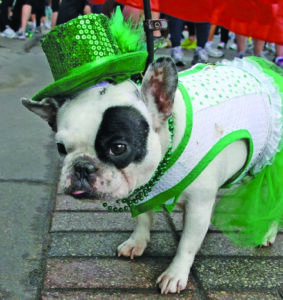
Pets Participate: Dress your four-legged furry friend in green for the annual Green Street St. Paddy’s Day Pet Parade on March 14.
As luck would have it, St. Patrick’s Day in Denver centers around the huge annual parade set to start March 14 on Wynkoop Street at 9:30 a.m. and weave through downtown. The actual holiday is Tuesday, March 17.
Presented by Bellco Credit Union, the 2026 theme is Stars, Stripes, and Shamrocks. It is known as the largest St. Patrick’s Day parade west of the Mississippi. Legend has it that the modern-day parade started when pub-goers at the now-defunct Duffy’s Shamrock Bar took to the streets in 1962.
Running for more than 60 years, nearly half a million people are expected to attend the downtown parade. You’ll want to get a good spot in advance since some people arrive at 6 a.m. to find a prime place for spectating. The parade happens regardless of the weather.
Floats, Dancers
Every year the spirit of the Irish seems to dance its way into town and transform the Mile High City into a vibrant sea of green. Downtown overflows with Irish jig leprechauns, four-leaf clover wearers, Irish lovers, plus those with green clothes, and an affection for green beer.
The parade celebrates Irish culture with vibrant floats, dancers, and bagpipers. It has been a hallmark of The Mile High City since 1962, celebrating a deep love for Irish culture. Whether you’re proudly Irish, or just embracing the luck of the Irish for the day, this family-friendly event is a must attend. Gather your friends, bring the whole family, and don’t forget to wear you best green attire.
More than a parade, it’s a celebration of culture, community, and camaraderie that you won’t want to miss!
Uncertain Weather

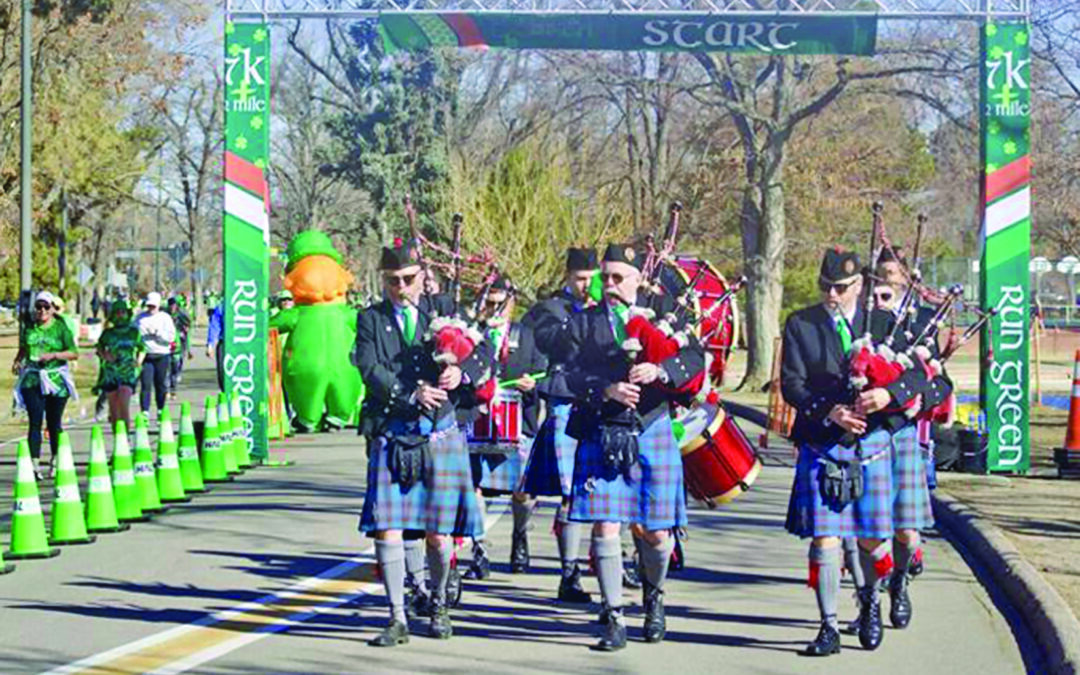
Runnin’ of the Green: Bagpipe group plays Irish music as runners compete in the classic Irish jog in Washington Park. This year’s event is March 8, 10 a.m. to noon.
March is known for wildly varying weather. The last time measurable snow occurred on St. Patrick’s Day was in 1922. It might be cold, hot, who knows? Dress in layers and bring plenty of water.
To catch the parade entries’ full performance — dancing, full music sets, etc. — the best spot is south of 20th Ave. on Blake St., which will be renamed Tooley St. for the parade. This is one of the most crowded areas of the parade and is standing room only. Folks arrive as early as 6 a.m. to stake out a spot.
During the parade, you can expect to see floats, dancing, live bands, charities, and local celebrities. Attendees can easily find some green beer to drink at one of downtown Denver’s many bars. The parade itself does not provide food or drink, so if you need to grab a snack or use the bathroom, you’ll have to find a restaurant or bar to do so.
Runnin’ Of The Green
To get in shape for this year’s St. Paddy’s Day activities, participate in the 38th annual Runnin’ of the Green in Washington Park, March 8, 10 a.m. to noon. The Classic Irish jog will have live Irish music, Irish dancers, bagpipes, and a beer garden.
The luck o’ the Irish event is a family- friendly 7K and 2 Mile run-walk celebrating Irish traditions, Saint Patrick’s Day, and Spring. The event includes professional timing and online results. Awards will be presented to the top three finishers in each age category.
The awards ceremony is at 10 a.m. The event promises to be a day filled with Irish fun, live music, awards, plus cold beer. Don’t forget your bagpipes!
State’s 150 Birthday
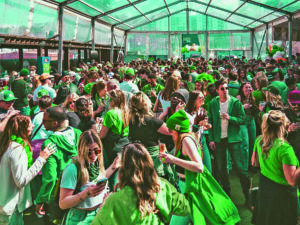
Keggs & Eggs: ViewHouse has a four-day lineup of food and fun beginning with Keggs & Eggs on March 14.
The biggest and best St. Patrick’s Day Parade west of the Mississippi, this year celebrates Colorado’s 150th and the Nation’s 250th Anniversaries.
Arrive early to stake out your favorite spot. The best place for families is at the end of the parade on Blake St. from 23rd to 27th Avenues.
Celebrated around the world, many cities offer unique events to mark the occasion. From the green-lit landmarks of Dublin, to Denver’s festive parade, St Patrick’s Day is a global celebration of Irish culture and heritage. The first St. Patrick’s Day Parade was in 1889, but the event has modernized since the days of gas lamps and the Gilded Age.
Bagpipes, Jigs, Fun
Whether you’re sporting your lucky-charms and shamrocks, or searching for a pint of the finest Irish stout, downtown on parade day is a journey through one of the most celebrated events in Denver. It is a day full of jigs, bagpipes, and fun.
The City of Denver annually paints a green strip down the Blake Street parade path in honor of St. Patrick.
Another custom is the annual changing of the sign, which is when Blake Street is changed to Tooley Street in honor of Dale Tooley, Denver’s former district attorney in the 1970s and 1980s.
Chasing Abbey
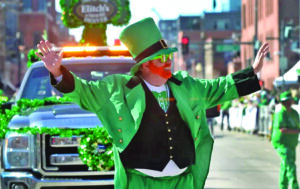
Denver’s Dublin Days: The annual parade celebrates Irish culture with vibrant floats, dancers, and bagpipers.
Chasing Abbey, the award-winning trio from Tullamore, Ireland, plays their long-awaited U.S. debut at Globe Hall Bar-B-Q on Logan St. March 6, 8 p.m. With hits like Aris is Airs and Oh My Johnny, the group has earned multiple platinum singles and packed venues across Ireland and the world. Information: 393-296-1003.
Dress your four-legged furry friend in green for the 2nd annual Green Street St. Paddy’s Day Pet Parade on March 14, 2 p.m. The pet parade route runs from 590 29th Street, proceeding down Welton Street, and concluding at Sonny Lawson Park.
The parade will be led by the Denver Brass Band. After the parade, the celebration ends with a bar crawl featuring local establishments, live DJs, performers, and spoken-word artists.
Irishfest Follows

Irishfest Follows: Following the parade, head to the ballpark neighborhood for Irishfest. Dates are March 14 from 8 a.m. to 8 p.m., and March 15 10 a.m. to 5 p.m.
Following the parade, head to the ballpark neighborhood for Irishfest. Dates are March 14 from 8 a.m. to 8 p.m., and March 15, 10 a.m. to 5 p.m. It is a community Irish festival featuring local businesses, community partners, sponsors, vendors, and entertainment.
Event is in Denver’s Ballpark District at 21st Street & Blake in the Rockies parking lot, providing an outlet for parade goers to join the community to keep the festivities going after the last float goes by.
Irishfest will be serving up Irish coffee, other libations, refreshments, and local food starting at 8 a.m. on the corner of 21st and Blake. An all-age Irish festival, it features local food and drink vendors, music, silent discos. Proceeds benefit Ballpark Collective RNO.

by Valley Gadfly | Feb 18, 2026 | Valley Gadfly
Valley Gadfly
Time marches on: We’ve arrived in the no-man’s-land month of March. Indeed, this is the month when we spring ahead and lose an hour of sleep. The month is all about transitions.
March in Denver is known for high variability; it can be sunny and 70°F one day, and drop to 10°F the next. It’s Denver’s snowiest month, averaging 8.5 to 11.5 inches of snowfall.
In March of last year (2025), Denver recorded a warmer-than-average mean temperature of 45.8°F. Here is our fall in and count off choices for shopping, dining, and entertainment:
There’s trouble in River City, and you won’t want to miss Meredith Wilson’s six-time, Tony Award-winning musical comedy The Music Man. Production is in DCPA’s Buell Theatre, March 1, 1 p.m. and 6 p.m. Information: 720-865-4220.
Catch Israeli-born jazz guitarist Christian Loffer — with 10 award-winning albums —playing at the Bluebird Theater March 8, 8 p.m. Information: 303-377-1666.
Are you ready to rock & roll? Kentucky country-rock band Ole 60 plays folk and country in the Mission Ballroom March 12, 8 p.m. Information: 303-377-1666.
Looking for a platter of shellfish for lunch or dinner? Cherry Creek’s Blue Island Oyster Bar & Seafood on 2nd Ave. is a neighborhood favorite. Try the yummy and unique lobster stuffed Knuckle Sandwich. Information: 303-333-2462.
Thinking about sending your kids to summer camp? Iliff’s Summer Adventure Day Camp — kindergarteners through age 12 — includes field trips, organized sports, arts-crafts, along with STEM activities. Information: 303-757-3551.
Mexican-born stand-up comedian Felipe Esparza who won Last Comic Standing plays the Paramount Theatre March 14, 7 p.m. Information: 303-623-0106.
DJ-electronic music producer Crankdat — whose remixes have earned millions of plays — entertains at Red Rocks March 27, 7 p.m. Information: 720-865-2494.
Milan’s Italian gothic metal band Lacuna Coil, with guitarist Marco Coti-Zelati, plays Summit Music Hall, March 31, 7:30 p.m. Information: 303-487-0111.
Attend the St. Baldrick’s Cancer Foundation fundraiser at Chopper’s Sports Grill on South Madison St. in Cherry Creek March 7, 1 to 5 p.m. In its 25th year, funding gives hope to babies, toddlers, children, teens, and young adults diagnosed with cancer. Contact Ryan Leopando for information: 720-277-8082.
March has glorious days of 60-degree weather. But alas, the accompanying wind will blow your winter coat off. Still, the sunshine will make you think of crisp mountain air.
Blossom by blossom, spring is beginning. March on, it’s a command. Do not tarry, spring growth and warmer weather means Spring fever’s restlessness and daydreaming.
Why is spring such a great time to start a gardening business? Because you can rake in the cash. Do you know why the computer went to the beach on spring break? To surf the net!
— Glen Richardson
The Valley Gadfly can be reached at newspaper@glendalecherrycreek.com.
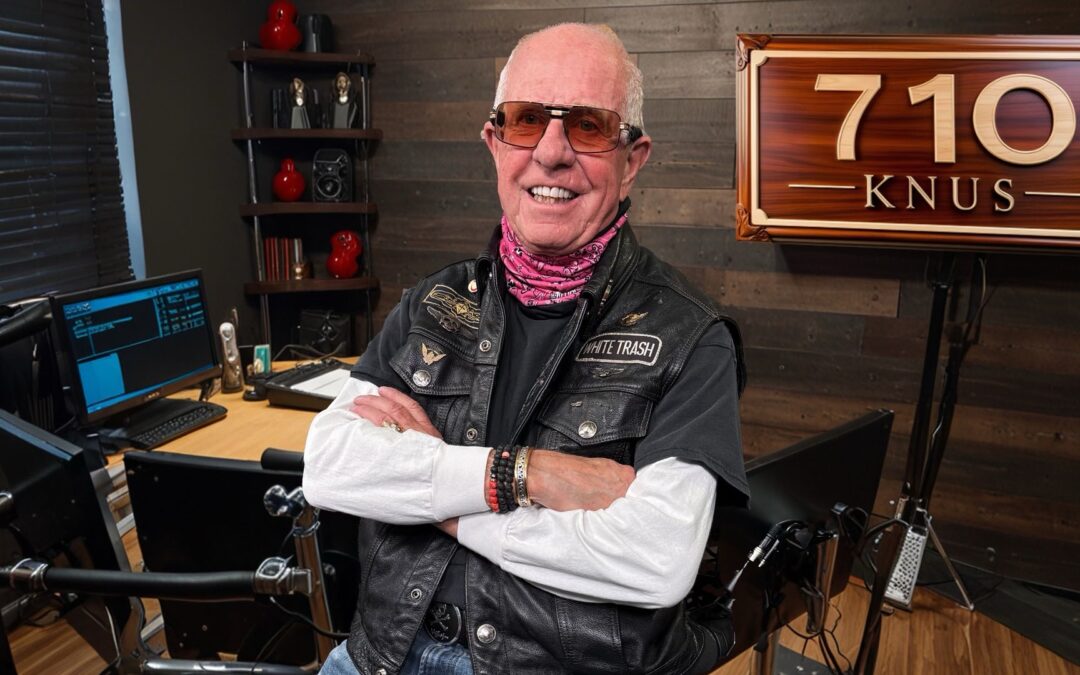
by Peter Boyles | Feb 13, 2026 | Blasting with Boyles
OPINION
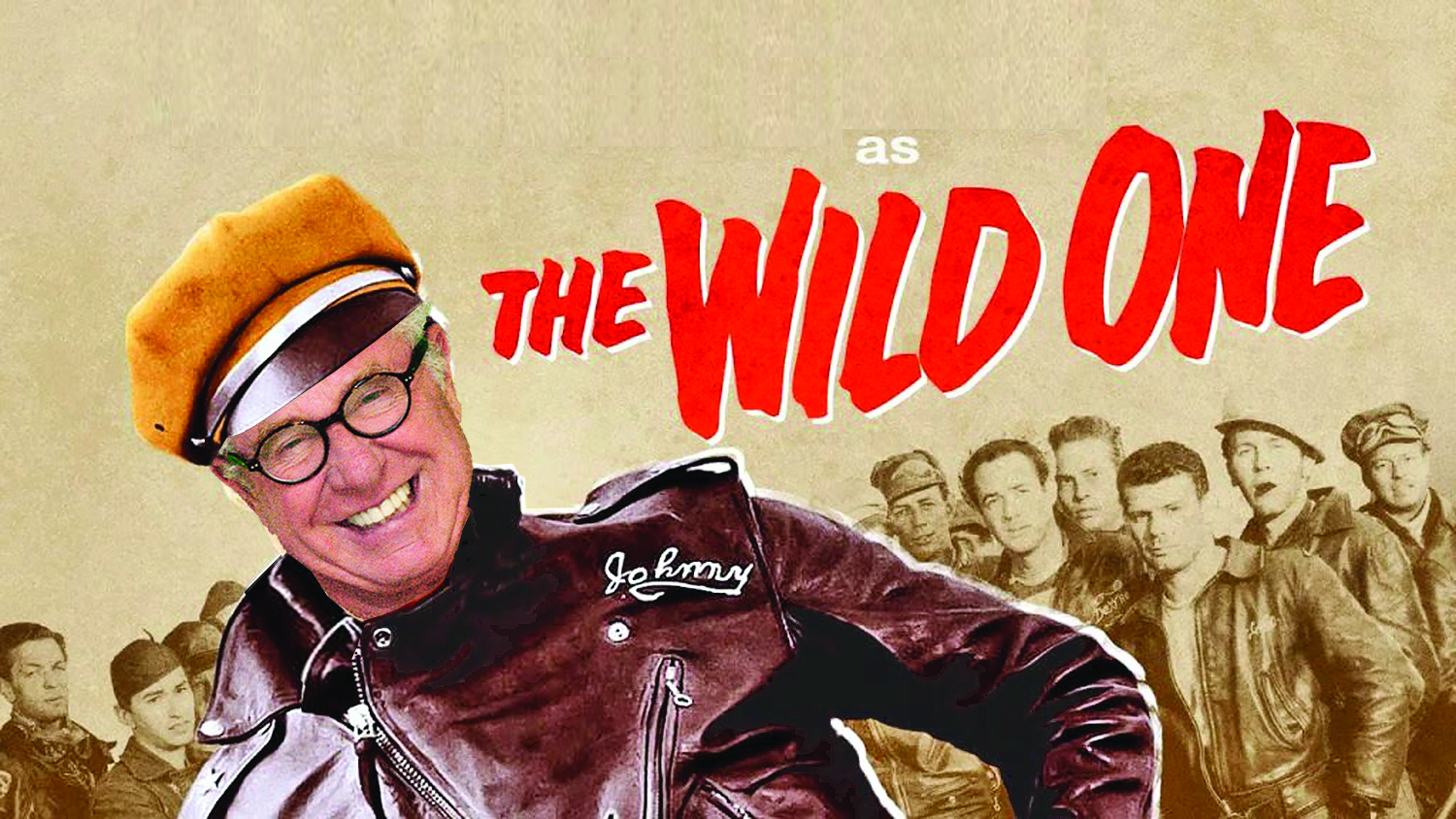 I’m now 82 years old. Since I was a little boy, I’ve always loved motorcycles. I grew up in a little steel mill town, Verona, Pennsylvania, on the Allegheny River.
Across the river was another steel mill town called Harmarville and there was a motorcycle club there. This was the era of Marlon Brando and The Wild One. The name of their club was the Harmar Villains. I loved it and they would come across the river and go to a diner called the TV Diner, named in that era because they had a television set where you could watch TV. They brought their girlfriends, aka “Mamas,” and watched TV inside and made a lot of noise with their motorcycles outside in the parking lot. The owner of the diner put up a sign on the parking lot wall that said “No Motorcycles Allowed.” Immediately the Villains returned telling the cops they thought it meant they weren’t allowed to be on the wall. At that point in my little Irish rebel mind I thought this makes sense.
And then in our neighborhood one still unnamed guy I grew up with bought a Harley Hummer, it was a very small motorcycle, I think 125 cc, two cycle Harley Davidson.
Hard for anyone to believe but I suspect he had stolen it. And I was about 13 when I got to ride my first motorcycle. After that I was hooked.
The first time I saw outlaw motorcyclists I was on the Nimitz Freeway and passed by two members of a one percent motorcycle club. The term one percent came from an event in California in Hollister and that was the famous Life magazine staged picture of the drunk, rowdy biker, and Stanley Kubrick picked up the story and made the motion picture The Wild One with Marlon Brando. One of the actresses asked, “What are you rebelling against?” and Brando, in the character of Johnny retorts, “What do you got.” I saw that and something went off in my head.
Much later having gone through a number of motorcycles including Hondas and following bypass surgery I said, what am I missing? And the answer was motorcycles.
And I went to Vinnie Terranova’s shop, Rocky Mountain Harley Davidson. The first time I went into the original dealership it resembled the bar scene in Star Wars. I was hooked again.
My first Harley was a Deuce, and I immediately graduated up to big motorcycles and then I got a chopper.
Then I had two motorcycles and when somebody said how many are enough the answer always was — the next one.
I am now a member of the Ugly Brothers Motorcycle Club. I’ve had a very lengthy conversation with the late Peter Fonda, another milestone, Easy Rider. I found out the title came from New Orleans and a place called Storyville where Louis Armstrong was born. It was shut down by the American military in the First World War, and it was full of gambling, drugs, and prostitution. The easy rider was the man who lived with the prostitute. He didn’t pay her and he didn’t make money from her. He was not her pimp, he was the easy rider.
What was explained to me was we are easy riding freedoms. If there’s one thing that motorcycles are, it’s freedom. I’ve ridden up and back to Sturgis 25 times. I hang out with some individuals that I respect and love that would not be accepted by the general population. And they are some of the best.
Now, I’m an old man. Several years ago, I had a minor stroke. And was having a very difficult time riding two wheels. My response? Get a trike. I have become the ice cream man from hell. The trike is like a motorcycle except it has two back wheels. I can’t drop it.
This column appears in the March issue. The weather is changing. Leaves are going to be green pretty soon and you’ll see a lot more motorcycles out there.
Louis Armstrong — he hated being called “Louie” when asked about jazz — said if I have to explain it to you, you won’t get it.
I’ve learned to say the same thing about motorcycles and motorcycling. If I have to explain it, you won’t get it. There are certain kinds of girls that always want to go with you and others who won’t get on for all the tea in China.
I recently even started wearing a helmet and I hope I have a couple more years in me before we go to the big biker rally in the sky.
We know that these kinds of clubs and thought processes had their beginnings after the Second World War. The original Hells Angels were a bomber crew. People like the Top Hatters, and the Boozefighters, and the early outlaws, and now I see these young men back from Iraq and Afghanistan with tattoos on their bodies that say they’re Infidels doing the same thing the men in the ’40s did after the Second World War. It’s hard to think of another product that people will tattoo the corporate logo on their body.
If you have to explain it nobody’s going to get it.
I got the trike as tricked up as I could thanks to Devil’s Head Choppers in Castle Rock. It’s won three awards in motorcycle shows. I take great pride in that.
One day I won’t be able to do it anymore but until that time, get your chin in the wind, get your knees in the breeze. Live to ride. Ride to live.
Thank you.
— Peter Boyles