
by Mark Smiley | Oct 21, 2016 | Editorials
 The intrepid and resourceful everyday citizens from Humboldt Street Neighborhood Association and Curtis Park Neighbors (some of which are pictured below) were, of course, greatly disappointed when the Denver Board of Adjustment for Zoning turned down their appeal of the decision from the Denver Planning Department by a 4-1 margin. The project will help destroy their neighborhoods by permitting high density micro apartments without any parking.
The vote was 4 to 1 rather than unanimous because the Board did not want to appear to be what they are — lackeys for the mayor and the real estate developers who control him. It is known in the trade as the “gentleman’s dissenting vote.”
What’s next? Well, they can exercise their rights as Americans and Coloradans and appeal the decision to the Denver District Court for the State of Colorado. The only problem is, of course, that the average Denver citizen never wins in the Denver District Court when suing the City and County of Denver when it relates to the destruction of their neighborhoods. Never, ever.
Just to review a few of the more egregious recent cases:
- Friends of Denver Parks v. the City and County of Denver et al. In September of 2013 Denver District Court Judge Herbert L. Stern III dismissed each and every claim of the citizens concerning the sale for development of a portion Hentzell Park in Denver.
- Residents of West Highland v. The Denver City Council et al. In September of 2013 Denver District Court Judge Robert C. McGahey dismissed each and every claim of the citizens regarding the rezoning of property in the Highlands area of Denver.
- Sloans Lake Neighborhood Association v. Denver City Council et al. In March of 2016 Judge J. Eric Eliff dismissed each and every claim on the rezoning of the former St. Anthony’s Central Hospital site.
- Residents of Crestmoor Park v. Denver City Council et al. In May of 2016 Denver District Court Judge Shelly I. Gilman not only dismissed each and every claim of the citizens over the rezoning of the Mt. Gilead Church property but she appeared to mock and taunt the citizens for even bothering to bring claims in her courtroom and made it abundantly clear that she would never rule in their favor.
Then there was the infamous case of Ballpark Neighborhood Association, Inc. v. City and County of Denver et al in September of 2015. There Denver District Court Judge R. Michael Mullins actually ruled, in a six page opinion, in favor of the citizens declaring that the City and County of Denver and the Board of Adjustment for Zoning had “abused their discretion and exceeded their jurisdiction in agreeing to allow the Denver Rescue Mission to expand.
Never accused of being the “brightest crayon in the box” Judge Mullins apparently had not been informed that the citizens of Denver are never allowed to win such cases. Calls were apparently made and Mullins was given, directly or indirectly, a talking to. Several weeks later Judge Mullins reversed himself and ruled in favor of the City and County of Denver on all claims. Judge Mullins, in disgrace, announced his retirement several months later.
There is a time honored idiom in American politics — “You Can’t Fight City Hall.” The saying is not “You Can’t Sue City Hall” because you clearly can. It means, inter alia, simply that you won’t win your lawsuit. Why? Because the concept of an “independent judiciary” is a myth, or more accurately, something of a cruel hoax as it pertains the Denver District Courts.
It is not that Denver judges are bribed. Why bother? Bribery would be so gauche and totally unnecessary. The 23 Denver District Court judges are, in reality, state government employees in black robes who plan to retire as state government employees on state government pension plans. They roam the hallways and eat in the cafeteria at the City and County Building with other government employees whether they are elected officials or government bureaucrats in the form of city attorneys and district attorneys, etc. They go to the same American Bar Association and Colorado Bar Association meetings. They attend the same parties and events. They were able to become judges in part because of their political connections and they do not intend to upset the applecart.
It is an unwritten rule in Denver whereby the unelected judges agree they will not play in the elected officials’ sandbox so long as elected officials don’t interfere with their spoils. Everybody in state and municipal government gets their healthy serving of the taxpayer funded pie all in the name of old fashioned “public service.”
So is all lost for Denver’s brave and intrepid neighborhood groups like the Humboldt Street Neighborhood Association and Curtis Park Neighbors? The answer is surprisingly, no, at least for the future. Of course the Mayor, the City Council, the Denver Planning Department, the Board of Adjustment, Barry Hirschfeld and the Denver District Court system will have raped and partially destroyed their neighborhoods for fun and profit, but things can and will continue to get worse and worse unless citizens start fighting for the future of their city.
The election system in Denver is, in fact, not rigged unlike some large cities in the United States. There is no Daley machine or a modern day Tammany Hall in Denver. Regular citizens can and have won elections if they are willing to fight hard enough, as demonstrated by the victories of City Auditor O’Brien and Councilmen New, Kashmann and Espinoza. You can even beat incumbents like Councilwoman Susan K. Shepherd.
Do citizens need to wait until the next municipal election finally rolls around? Of course not. Progressives in the early 20th century knew the only way to hold elected officials actually accountable was for citizens to be able to recall them, and provided for such in the Colorado Constitution and the Denver City Charter. Progressives in the 21st century are somehow extremely squeamish about holding elected officials, and therefore the entire system, accountable by filing recall petitions. Fill one petition against one of the numerous real estate developer owned City Council persons and suddenly — win, lose or draw — the whole political landscape changes and the citizens of Denver can now in fact “fight Denver City Hall.”
The time is a-wasting. Let us begin the fight to take back the City and County of Denver from real estate developers like Pat Hamill and his crony capitalist enablers at the loathsome Colorado Concern organization. You owe it to your children and grandchildren.
— Editorial Board
by Mark Smiley | Oct 5, 2016 | Editorials
With the daylight hours shortening and the leaves beginning to fall, the large group of young so-called “travelers” will begin their annual migration to cities with warmer weather, leaving the 16th Street Mall to Denver’s more “traditional” homeless who are older and, generally speaking, a great deal less violent with marijuana and alcohol being the drugs of choice rather than the heroin and meth preferred by some of the young travelers.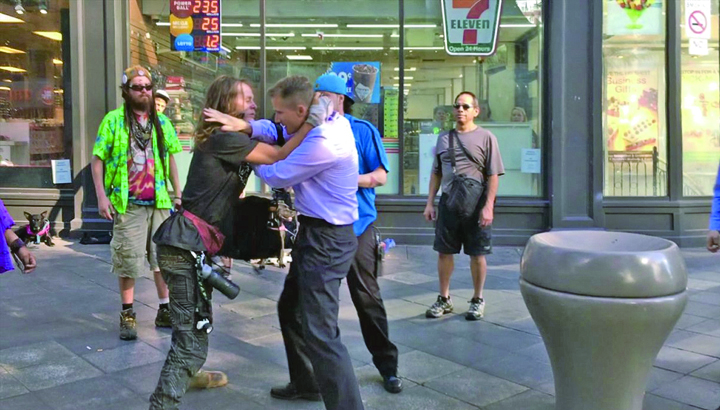
It has been an in-teresting summer down at the Mall which was originally envisioned as a mecca for tourists coming to Colorado, and in particular Denver. Walking down the Mall this summer one could enjoy the fresh, pungent odor of urine while being accosted by highly aggressive young panhandlers and even physically assaulted by individuals carrying pipes. If you were eating on one of the patios or restaurants adjoining the Mall you stood a chance of your food literally being taken off your plate by a traveler. It got so bad that even the older Denver homeless were demanding that Denver do “something” about the chaotic situation.
The situation got worse and worse until some of the violence was captured by a KDVR camera crew and a reporter and broadcast on the nightly local news. Other news outlets soon began covering the story and a call went out to the mayor of Denver (who was on a mission in Rio De Janeiro to find out about what was involved in holding the Olympics) to tell him trouble was brewing back in River City.
To his credit when Mayor Hancock returned he held a press conference at which he made it clear that he found the situation untenable and he intended to take action. No wonder. The problem has been festering for a long time on the 16th Street Mall.
In 2015 the Denver City Council was presented with a report from Visit Denver, the official marketing arm of The Convention & Visitors Bureau, which noted how visitors complained about the “homeless, youth, panhandling, safety, cleanliness, and drugs, including marijuana consumption.” In one communication to the bureau a visitor noted: “I’m sorry but I would never consider putting attendees in danger by holding a convention in your city. We were staying at Embassy Suites downtown on 16th and last night witnessed a group of about 30 teenagers attack a man walking along 16th Street.”
Part of the problem are the somewhat spineless downtown business groups such as the Downtown Partnership whose spokeswoman asserted amazingly to a television reporter that the violence and assaults on the Mall are part of the wonderful “urban experience” that Denver provides to visitors.
The mayor did significantly increase the police presence on the 16th Street Mall which caused many of the travelers to move to the Cherry Creek bike path resulting in a massive increase of used heroin needles on the bike path. Denver Parks and Recreation issued a temporary directive allowing police to give 90-day suspensions from park use for persons caught dealing or using drugs in the parks, but suspensions could be appealed.
Even that tepid response was, of course, too much for the highly sensitive Editorial Board of The Denver Post whose main job is to make as Denver thoroughly miserable as possible for the residents, while generally being in the back pocket of the Administration and the high density real estate developers that control the city. (See The Denver Post September 7, 2016 lead editorial.)
The dispute highlights a decayed society that no longer can protect itself or its children. Parasites like John Parvensky, President of the Colorado Coalition for the Homeless since 1986, have exploited the massively government funded Coalition for his own enrichment, with the goal appearing to be to attract as many homeless to Denver as physically possible in order to increase the funding for the Coalition and Parvensky’s scandalous salary.
Visitors to Denver are often shocked by the number of panhandlers and beggars throughout the city. You often hear city officials assert that begging is a constitutional right for which they can do nothing. In actual fact the United States Supreme Court has never asserted that public panhandling is somehow protected by the 1st Amendment but simply that governments cannot prevent organized charities from soliciting funds as stated in Riley v. National Federation of the Blind of Carolina.
Of course the ACLU will sue Denver if it even attempts to prevent even aggressive panhandling, but Denver gets sued all the time anyway. The ACLU is infamous for cowering when government actually attempts to quash citizens’ real 1st Amendment and other rights as when Roosevelt issued an executive order interning Japanese-American citizens during World War II or when the U.S. government in the 1950s went after individuals for simply being a member of or having been a member of the Communist Party of America. The ACLU is a gutless organization when the rubber really meets the road, but in in the meantime it’s great for suing small municipalities with limited budgets for having inoffensive Christmas displays.
In between the endless ACLU lawsuits, the young heroin chic travelers would stop coming to Denver as they look for cities with great weather that are easy marks. Stop being an easy mark and they go away. But, of course, Denver would risk, as the spokeswoman for the Downtown Partnership indicated, visitors being deprived of the wonderful “urban experience” of being physically assaulted on the 16th Street Mall and the opportunity of starting their own collection of used heroin needles from the Cherry Creek bike path. But as the old saying goes “you can’t have it all.” Will Denver muster the courage to fight the good fight? Don’t count on it. The Administration is too busy destroying neighborhoods with excessive density and no parking.
— Editorial Board
by Mark Smiley | Aug 29, 2016 | Editorials
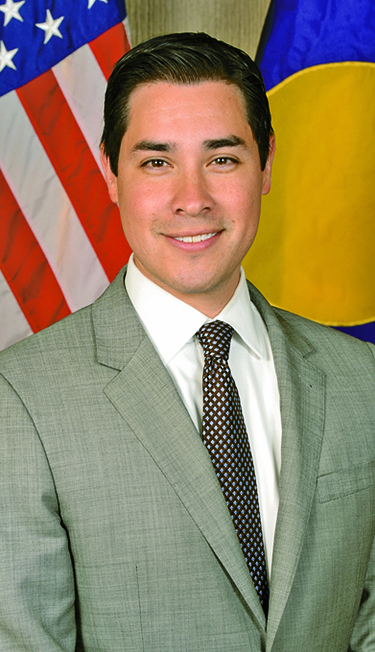 The Denver City Attorney’s Office is an enormous operation employing over 100 attorneys and hundreds of paralegals and staff personnel. It not only advises the Mayor and all City Department agencies as well as the City Council but also the City Auditor. It also represents and defends the City in all legal matters including initiating and defending lawsuits.
In recent years the job of City Attorney, which is considered a great political plum, has attracted the good, the bad and the ugly. Cole Finegan broke the record for hutzpah in office by claiming that the City Attorney position was not really a full-time job and so he became City Attorney and Chief of Staff simultaneously for then Mayor John Hickenlooper. His successor Larry Manzanares committed suicide after being charged with stealing a government computer and putting pornography on it.
In 2014 Mayor Hancock appointed 34-year-old Scott Martinez to the position. We noted that he had little or no qualifications for the job and the people who knew him called him a “legal lightweight” and “a political hack.” His appointment was apparently due to political pressure put on the Mayor by the Colorado Latino Forum which claimed, probably validly, that Hancock had appointed very few Hispanics to important positions in his administration.
For pointing out Martinez’s lack of qualifications we received a scalding, if not unintentionally hilarious letter, from the Board of Directors of the Colorado Latino Forum Denver Chapter accusing the Chronicle of all types of political incorrectness including racism, ageism and anti-nativism.
Since our story wherein we criticized Mr. Martinez concerned Hentzell Park, the Board of the Colorado Latino Forum Denver Chapter for good measure also severely castigated those individuals and neighborhood groups opposing the park being traded away for development. The Board specifically excoriated the everyday citizens for failing “to ask permission of those tribes that have historical claim to the land, the C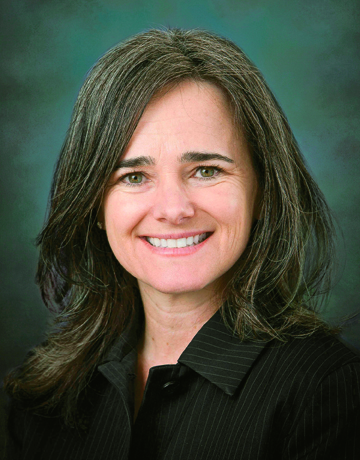 heyenne and Arapaho Nations, and explain how their homeland will be used for the good of the people.” Ostensibly any person challenging any land use decision or rezoning in the City and County Denver would be subject to the same criticism. Wow, as if opposing the entire city bureaucracy and the all-powerful real estate developers isn’t bad enough.
The Board then went on to declare that they were standing up for Mr. Martinez and others like him who they knew have “earned their leadership positions” and that they would take their “rightful places in history.” The Board extensively publicized its letter throughout the Internet.
Well Mr. Martinez has taken his “rightful place in history” after being forced to resign in disgrace after two and half disastrous years as City Attorney. He is under criminal investigation by the District Attorney for destroying his letter terminating Assistant City Attorney Stuart Shapiro that was being sought by investigative reporter Brian Maass of Channel 4 News pursuant to a Colorado Open Records Act request.
Related thereto the Denver City Council has just approved paying Mr. Shapiro a $660,000 settlement of claims that he was “scapegoated by higher ups” (read Scott Martinez and his deputies) regarding his suspension for his apparent unethical actions during the investigation of the Sheriff’s Deputies abuse of Jamal Hunter, who the city paid $3.25 million. No one appears to doubt that Shapiro engaged in unethical conduct as highlighted by Federal Judge John Kane, but instead it appears he did so so on the instructions of Scott Martinez and his deputies.
Why that entitles Shapiro to $660,000 of the taxpayers’ money is a little unclear, but as the headline to the lead Denver Post editorial declared, “Something stinks about Denver’s Shapiro settlement.” Thanks to an obsequious and secretive Denver City Council we will, in fact, probably never find out what really happened.
We, along with neighborhood groups like Friends of Hentzell Park, are anxiously awaiting the heartfelt apology to us from the entire Board of the Colorado Latino Forum Denver Chapter acknowledging that we were correct and they were wrong about Mr. Martinez’s fitness to be City Attorney, but somehow we get the feeling it will never come.
So out with the incompetent and apparently ethically challenged City Attorney Scott Martinez and in with the new one Kristin M. Bronson from the national law firm Lewis Roca Rothgerber Christie, LLP. She too is a virtually unknown and by all appearances is not much more than a mediocre attorney stuck in a huge firm with little or no qualifications for municipal legal work, but her predecessor had a similar background.
How did our esteemed mayor find her? That is easy — he didn’t. She was found by Pat Hamill and/or his real estate development buddies who knew her from the fact that a significant part of her legal work, according to her law firm’s website, was representing “lender, developer and property management clients in all facets of real estate, construction, and banking law.” No reason for the mayor to kowtow to the Colorado Latino Forum any longer when the real estate developers can have their gal put in place who will undoubtedly “do as instructed.”
Will she be as inept, incompetent and ethically challenged as Scott Martinez? We doubt it, but that is a very low bar to hurdle. Will she represent the interests and concerns of the citizens of the City and County of Denver? You have got to be kidding. She knows who got her appointed — real estate developers — and that is who will give the necessary marching orders.
So, the beat goes on in Mayor Michael Hancock’s Mile High City.
— Editorial Board

by Mark Smiley | Jul 22, 2016 | Editorials
by Mark Smiley

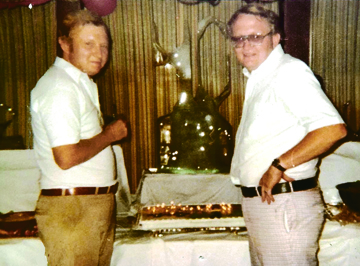 The Bull & Bush opened its doors in 1971, and ever since they have been at the forefront of the microbrew business. August marks their 45th year in business and they are celebrating with a series of limited release beers inspired by local bands. Each limited edition bottle will include a special music sampler download for each band. Those bands will perform at the Bull & Bush Brewery Saturdays in August.
The Bull & Bush started brewing their own beer in January 1997. The first beer brewed was Extra Special Bitter (ESB) and it is still on tap today joining 39 other rotating flavors. The seven-barrel system allows the Bull & Bush to produce 30 kegs of beer at a time to keep up with demand.
The brewpub’s first 26 years in business featured beers that were difficult to obtain. Anchor Steam was offered at the Bull & Bush in 1974 to lukewarm reviews. “We were on the cutting edge back then even before we were making beer,” said David Peterson, co-owner of the Bull & Bush Brewery. “He [Dale Peterson] convinced Fritz Maytag [owner of Anchor Steam] to send the distributor 50 kegs of Anchor Steam all at once.”
Customers were not accustomed to beers other than Miller, Coors, and Budweiser so they felt this brand was “too dark.” The same held true for Boulder Beer which had their own beer on tap in the 1970s as well.
Eventually, curiosity prevailed and customers flocked to the Bull & Bush. “Glendale was the hotspot in the ’70s and ’80s and there was nothing else around our pub,” said Peterson. “People’s curiosity lured them into the Bull & Bush.”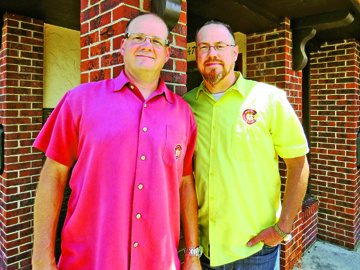
Wynkoop Brewery started the brewpub craze in 1988 and brewpubs popped up all across the metro area and the state. By 2005, most had disappeared. Now microbreweries, without kitchens that feature craft beer, have lower overhead and a better product.
The Bull & Bush has weathered all of these storms relying on their kitchen and tasty craft beer. They have also changed with the times by adding a patio, remodeling their kitchen, installing new carpeting, bottling their beer, and distributing their bottled beer throughout the state. All of these major developments took place in the last 10 years.
Bull & Bush enthusiasts can find the beer in close to 80 bars and restaurants across the state and in most major liquor stores. At first, the Bull & Bush distributed their bottled beer within a 10-15 mile radius. With demand so high, co-owners and brothers David and Erik Peterson hired a distributor to send the beer across the state.
 Amidst all of the changes and improvements, David Peterson notes that one thing will never change at the Bull & Bush — the green chile it has been serving since 1971 will never be compromised. “We will never change the recipe,” said Peterson. “A lot of people would be upset if we did.”
Aside from modern televisions, new carpeting, and more taps for beer, the Bull & Bush looks very much the same as it did in 1971. That is just the way the Petersons and their guests want it. The Bull & Bush has been a Glendale tradition for close to half a century with no signs of stopping.
Tickets to the concerts in August are $19.71 each. Visit bullandbush.com/collec tions/45th-anniversary for more information and to purchase tickets.
by Mark Smiley | Jul 22, 2016 | Editorials, Feature Story Middle Left
by Bob Gardner
Coloradans: Would you like all your health care decisions for the next three years to be made by 15 unelected government bureaucrats? That’s what Amendment 69, which has qualified for this fall’s ballot, would mandate.
Before you answer, here’s a few additional facts to help you decide.
These 15 “trustees” — a fancier word for bureaucrats, by the way — would get to say which procedures and which drugs would be covered by insurance and which ones wouldn’t from 2017 until 2020. How would they get that power? Amendment 69 makes it illegal for any other health insurance company to do business in the state of Colorado. And when those companies are all gone, all decisions about any kind of payment to anyone in the health care system fall under the thumb of those unelected trustees.
They’d get to decide how long you should have to wait in the emergency room, how many months your elderly mother should have to wait for hip replacement surgery, and what treatments for your kids will and won’t be paid for.
If you don’t like the sound of that system, you should know there’ll be no opting out. If you’re wealthy, you could pay for health care from your pocket. Otherwise, your family’s care exists solely at the whim of the 15 bureaucrats.
Don’t like it? Move to Nebraska if it’s enacted. Because if we Coloradans go down this road, there’ll be no appeals, no flexibility and no choice in health care in our state.
It gets worse.
In 2020 at the latest, Amendment 69 says we’ll hold statewide elections to replace the 15 appointed bureaucrats with 21 elected bureaucrats.
That’s right — we’ll have giant campaigns across Colorado every other year to pick new health care czars. “A vote for me is a vote for liver transplants!” or “Two nose jobs in every house — vote for me!” An unending buzz of negative TV ads about how the trustee candidate’s evil opponent is trying to take away childbirth reimbursement or how their vote backed up back surgeries.
Sounds ridiculously unappealing, doesn’t it?
Obamacare’s been bad enough — its promised savings cruelly turning into a 13.4 percent average rate increase this year — but Amendment 69 will make things much worse. Its ironclad regime of single-payer health care for every resident of the state, without exception, would almost double Colorado’s state taxes overnight. It imposes an immediate 10 percent across-the-board payroll tax that would cost Coloradans a jaw-dropping $25 billion in additional taxes on top of the $27 billion the state already levies. And the whole system is specifically designed to exist outside of TABOR limits that control state and local government taxation in Colorado.
So who’s behind this nonsense?
Great question. Colorado State Sen. Irene Aguilar has been identified as one of the “leaders” of the campaign, but the funding sources are much more shadowy, with a Boulder psychologist, a Littleton physician, a Denver attorney, and a Fort Collins retiree being identified as collectively donating more than $140,000 to the cause.
Why those four people would have such a burning passion to control our health care isn’t clear to me.
What is clear is that we shouldn’t let them.
The net effect of this disastrous plan would be to drive state taxes through the roof, kill job creation (and likely most economic growth) in Colorado, and institute health care rationing for all Coloradans. All at the hands of a mysterious group of health care ideologues who’ll do their bidding through a shadow “health care Legislature” with literal power over life and death decisions.
Even Gov. John Hickenlooper was caught on tape saying he “can’t imagine there’s any chance (Amendment 69) will pass,” and noting that some large companies considering moving their headquarters to Colorado have put their plans on hold with Amendment 69 even on the ballot. It would make our state singularly economically uncompetitive and hurt the very people it claims it would help.
Just like Obamacare before it, Amendment 69 is an attempt to sell a bill of goods — sweet-sounding words about universal coverage, better benefits, and cost savings from efficiencies driven by an all-seeing, all-knowing government.
And it will turn out just as badly in the end. The difference is that Amendment 69 is a disaster we can all prevent from happening this fall at the ballot box.
Bob Gardner is a Colorado Springs attorney and former Colorado state representative.
This editorial was originally printed in the Colorado Springs Gazette.

by Mark Smiley | Jun 24, 2016 | Editorials
Super Heroes And Comic Book Characters Filled The Convention Center
by Megan Carthel

 While over 100,000 attendees found some of their favorite celebrities and characters, a handful of goers found love at the 5th Annual Denver Comic Con. This year the event paired with PrideFest, as both took place over the same weekend. LGBTQ programming took place on Friday and included panels such as LGBT Comics you should be reading and topics like how young adult literature with queer themes can disrupt norms, and how to add diversity to comics, sci-fi and fantasy. The main event was on Sunday, when a group wedding ceremony, open to couples of all backgrounds, took place. Sam Fuqua, executive director of Pop Culture Classroom, the non-profit that puts on Denver Comic Con, said the ceremony was the perfect way to end the three-day celebration of geeky fun.
“I just think it was beautiful. It represents everything we try to promote at Denver Comic Con and in our year-round work — diversity, pop culture, creating a welcoming space for personal expression of many kinds,” Fuqua said. “Whoever we are, whatever we do, wherever we come from, whoever we love, we can just be ourselves and be together with people who like what we like. I think that’s a lovely thing.”
Ten couples promised their vows in front of an audience in the Bellco T heatre as Wonder Woman’s rope united their hands. The ceremony was ordained by Andy Mangels, author and co-author of over 20 fiction and non-fiction books including Star Trek, Roswell, Iron Man and Star Wars. Mangels is also an activist in the gay community. He said being the minister for 10 couples from all backgrounds was an amazing feeling.
“In today’s world, we have only recently been able to have LGBT marriages, and to have a marriage that reflected all parts of all couples — that reflected their passions in life, and their passions for each other, it didn’t matter if those passions were for same-sex or opposite-sex, love is love,” Mangels said.
The geek-themed ceremony was Star Trek punny and genuinely touching as each couple said their written vows to their partners. The couples were as diverse as their costumes.
Tonya Smith found her “perfect player” over five years ago. With Rachel, the Ruby to her Sapphire, by her side, the two expressed their love for each other. Rachel and Tonya dressed as characters from the cartoon Steven Universe, a show about a boy who uses his magic gem powers with other super heroes. In the show, Ruby and Sapphire are fused together, much like Rachel and Tonya.
The Smiths have been married for five years, but wanted to renew their vows.
“We’ve been wanting to have a real ceremony for a long time, and it’s just been an issue of having the money to do that. When this came up, it seemed perfect because not only could we have the ceremony, but it could be the way we wanted it to be — chock full of all the nerdiness we could ever hope for,” Tonya said.
Tonya and Rachel, who is transgender, wanted to renew their vows with Rachel as her true self, something Mangels believes to be the cornerstone of any marriage.
“I think that with any marriage, it’s about knowing to not look to change the person you’re with. You didn’t fall in love with them to change them. You fell in love with them because you liked what they were,” Mangels said. “So for any marriage to be a good long-term marriage, is to be supportive of who each of us is.”
Tonya said this time around, the ceremony was much more meaningful. When they were married five years ago, the couple went to the court house without a ceremony — something they say is more like just going to the DMV, not very ro mantic.
“This felt so much more real,” Tonya said.
“It was pretty good,” Rachel said. “Just to know that it was more formally acknowledged in that respect.”
The couple has struggled in the last few years, from Rachel’s transition, to being homeless and living out of a hotel, and going through a discrimination lawsuit — all with two young boys. Rachel and Tonya were looking to rent an apartment in Golden Hill, but were denied by Deepika Avanti, the landlord.
Avanti allegedly wrote in an email to the couple stating the reason for denial of housing was the “uniqueness” of their relationship.
“Your unique relationship would become the town focus, in small towns everyone talks and gossips, all of us would be the most popular subject of town, in this way I could not be a low profile,” Avanti wrote.
Tom Warnke, media relations director at Lambda Legal, the law firm handling Rachel and Tonya’s case, said no court date has been set yet. In the Motion for Summary Judgment submitted on June 16 to the U.S. District Court for the District of Colorado, Lambda Legal cited the series of emails Avanti sent Tonya and Rachel reiterating her concerns about how their “uniqueness” would impact her reputation. In a press release by Lambda Legal, the firm states the emails are “clear evidence” Avanti discriminated against Rachel and Tonya on the basis of sex and familial status, in violation of the federal Fair Housing Act and Colorado Anti-Discrimination Act, and on the basis of sexual orientation and transgender status, in violation of the Colorado Anti-Discrimination Act.
Despite of their struggles, the couple has fought their way to get to the loving and stable place they are now, much like their characters Sapphire and Ruby.
“Things were so unsure and so chaotic for so long and so unstable, that now we have stability in our housing and financially, and with each other, with my identity and all that stuff and it’s just like black and white, day and night.”
Rachel describes the past few years as the scene from Pirates of the Carribean when Johnny Depp’s Character Jack Sparrow steps onto land as his ship is slowly sinking to the bottom of the ocean. Tonya, Rachel and their two sons, K evin and Isaac, are now on land and have a solid foundation with jobs they love, housing, and each other — and a geeky wedding was the icing on the cake.
“This was a good way to acknowledge that, yes we’ve gone through a lot of crap together and come out the other side better for it and because of each other,” Rachel said.