by Mark Smiley | May 27, 2016 | General Featured
Major Change To Virginia Village Neighborhood If Sold
by Megan Carthel
 Some big changes may be on the way for the intersection at Arkansas and Colorado Boulevard.
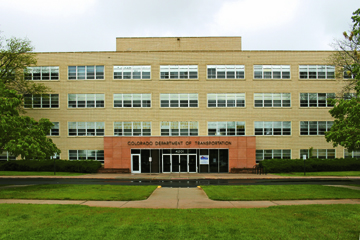
Currently, the Denver headquarters for the Colorado Department of Transportation (CDOT) offices are housed in the residential area. In an old 1955 building over 500 state employees walk the halls every day. Spokesperson for CDOT Amy Ford says mice and asbestos are issues in the current building, along with toilets fitted for elementary students, not adults.
The carpets are a faded blue and tan and green tiles lead visitors and staff through the hallways. Not everything is outdated though. Computers, large TV screens and seemingly nice, modern chairs accommodate employees with their everyday tasks. However, by as soon as early 2018, these state employees could have a new office. David Fox, property management deputy program manager, said moving locations and building a new office is a good business decision.
“I think with every business decision, there’s some idea of ‘let’s get more efficient,’” Fox said. “We can do a lot more things with amenity spaces to make things nicer for employees, but yet get more efficient with our building footprint.”
In May 2013, CDOT completed a building evaluation of four campuses, the Denver HQ, Region Four HQ, Region Two HQ and Old Aurora R1 HQ. The Region Four HQ in Greeley was recently rebuilt and relocated. The $9.9 million offices opened in November 2015.
The plan is to combine both the CDOT headquarters on Arkansas and the Region One office on South Holly. The new building design has a target of 200 square feet per employee, aimed to house around 700 employees, that’s nearly 100 square feet less per employee than the current situation. While nothing is set in stone yet, the numbers CDOT is currently working with, estimate the total cost of building a new office space at a different location at over $44 million.
“It is a class B building that we will be doing,” Ford said. “And when I say class B, this is not the Taj Mahal. This is not designed to be a monument to state employees. This is designed to be a working building where we can most effectively attract and retain our employees and do very good work.”
Ford said the funding for the project comes from a capital budget to maintain assets, which has $20 million annual, state-wide budget. CDOT would also be issuing bonds against that budget to help pay for the new building.
“This is money that would not go to fixing your pot hole or that kind of thing. This is money that’s already dedicated to keeping these assets up,” Ford said.
The other option for CDOT is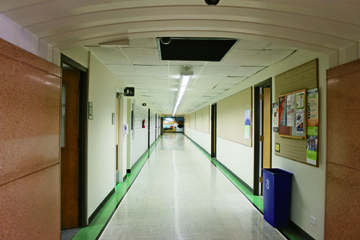 to renovate the existing building. According to a financial comparison analysis conducted by CDOT and Jones Lang LaSalle in 2014, the total cost for renovation would be just over $16 million. The same analysis showed the total net cost over a 20-year period to renovate and maintain the Arkansas location would cost around $56 million.
“We strongly believe that, ‘A,’ it’s a good business decision,” Ford said. “‘B,’ that it benefits our capacity to deliver more for the state.”
Fox and Ford said the ideal location for the new office would be within five miles of the State Capitol, visible to the traveling public and near light rail, bus and bike transportation. According to the analysis done in 2014, some potential relocation sites include the Federal Center Station, Decatur and Federal Station and I-25 and Broadway. Ford said the final location selection has not been decided, and that CDOT is keeping that information “close to the chest.”
“We’re not done yet by any stretch,” Ford said. “Nor is it a sure thing we are moving.”
For the new building to be approved, CDOT must present their guaranteed maximum price, what the land can be sold for and the price estimate to build a new office, to the Transportation Commission. The commission will hear CDOT’s case and make the final assessment later this summer. According to Transportation Commissioner District 1 Representative Shannon Gifford CDOT is negotiating with the owners of more than one possible site. The location is expected to be finalized in June. Gifford seems to be in favor of the relocation project.
“The new building is projected to save CDOT $6 million over a 20-year analysis period when compared with updating existing buildings that are past their useful life,” Gifford said. “The savings are attributable to multiple factors, including more efficient plans (reducing the gross square feet per employee); reducing the total number of buildings; using more efficient mechanical systems, windows, and insulation; and, selling 20 acres of land while acquiring only approximately three acres.”
So what would happen to the current site if it’s sold? CDOT is working with Jones Lang LaSalle, a brokerage firm, to sell the property estimated at just over $11 million according to the 2014 memorandum. Jones Lang LaSalle had no comment when the Chronicle reached out to the firm. Fox, however, said developers were interested in the land before talks about a relocation began back in 2011.
The Arkansas site is currently zoned as a CMP-EI2, or campus, educational/institutional site. This zoning allows a maximum height of 150 feet, but any part of the site within 175 feet of a protected area, usually single family homes, is limited to 75 feet. Residential, educational use and office space are allowed. The 1.16-acre parcel of land closest to Colorado Boulevard, is zoned as a S-MX-5 area, allowing for mixed use facilities and up to five stories. The communications tower that sits on the property would remain on site as it is owned by the Governor’s Office of Information Technology, and would not be sold as part of the CDOT space.
As for the Region One office site, the location is zoned as a MX-3 site. This allows buildings as high as three stories or 45 feet, and can be used in a variety of ways from single family or multi-unit housing, community centers, daycares, open space, schools, restaurants and retail, hotels and more. Of course the Denver Planning Board and certain members of the Denver City Council have proven they are happily willing to rezone properties for powerful developers with high powered lobbyists.
Paul Kashmann, the City Councilman for District 6 where the present facility is located, said if the properties were redeveloped, he would like to see the spaces used for residential developments or green space.
“I would love to see affordable residential be a part of the package on both sites. The surrounding communities have not yet gentrified, and I’d like whatever comes to support, rather than degrade the affordability of the community,” Kashmann said. “I’d love to see some additional green space. Mainly I’d hope the Arkansas development would not add big congestion to the already crowded Colorado Boulevard corridor, and I’d love for the South Holly Street site to complement both South Holly Street’s commercial opportunities as well as East Evans Avenue.”
Some residents near the Arkansas property oppose the redevelopment as worries over traffic congestion, noise and construction might disrupt their relatively quiet neighborhood.
Skylar Ocheltree and Kristen Kinnaird live together in a house across the street from the current CDOT headquarters. While they don’t mind the current building situation, they fear another large building would be put in place, bringing more traffic and congestion. Their neighbor a few houses down and closer to the building, Blake Crawford, feels just about the same, unless something can add property value to his house.
“Any additional [infrastructure], unless it raised the value of my house, is non-beneficial,” Crawford said.
Kashmann hopes to work with his constituents to determine what could go in the space of the current CDOT headquarters if the land is sold.
“Mainly folks are anxious to know what will go in on the property and are anxious to have a voice in determining the impacts on their neighborhood from whatever development does go into these large parcels. I want the community to have real impact on crafting the eventual outcome,” Kashmann said. “It would be my goal to involve the community as much as possible in future redevelopment on these sites. Whatever projects end up taking place will have some degree of impact on the community. Building in an urban environment cannot be hermetically sealed. But, as we do on a near daily basis, we will work with builders and developers to minimize the impacts as much as possible.”
by Mark Smiley | Apr 25, 2016 | General Featured
Four New Members To Represent The City
by Mark Smiley
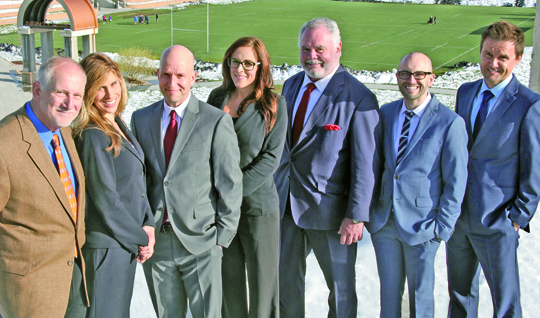
The Glendale City Council experienced a dramatic shakeup in 2016 from just a year ago. For its first regularly scheduled council meeting in April, four of the six regular councilmembers that represented the city one year ago have exited and four new members have entered. Jeff Allen, who served for eight years was term limited, Paula Bovo and Scott Franssen resigned having moved from the city, and Joe Gigglio opted not to run for another term. Mike Dunafon was re-elected as Mayor of Glendale in April for a second four year term.
Lindsey Mintz (appointed in January 2016), Scott Norquist (appointed in March 2016), Storm Gloor, and Scott Brock joined the Glendale City Council on April 12, 2016. Doris Rigoni and Dario Katardzic were the only carryovers with Rigoni appointed Mayor Pro Tem.
Glendale was founded in 1859 and is the second oldest town in Colorado, formally incorporating in 1952. One of the challenges facing Glendale is it is difficult to recruit persons to run for City Council. As the residents are often on the go, few individuals are willing to make a four year commitment to stay in the city as a councilperson.
In December 2015 an anonymous flyer was sent out titled “Glendale Needs You. Be a Hero” declaring it was “Easy to run for Mayor or City Council” and “Earn $1,000 per month for attending a few monthly meetings and get free health care.” Many assumed it was sent out by the city itself but it was not as it contained numerous misstatements of fact.
It is, of course, never “easy to run” for public office no matter where you are and it can be expensive. As a councilmember you are expected to do far more than just attend a “few council meetings.” You are expected to attend council meetings, study sessions and represent the city on various local and regional committees and boards as well as representing the city at various important county and state functions. One can expect to spend significant hours studying the issues facing the city as well as regularly meeting with and answering questions from constituents who tend to call at all different times and throughout weekends.
Councilmembers have the same health insurance as any other employee of the city, meaning they have to pay for spouses and other family members, and like any other health insurance plan these days employees are responsible for significant co-pays for medical services provided.
When the Chronicle investigated who had, in fact, sent the flyer it was traced back to Kyle Miller of the public relations firm of Stratton-Carpenter & Associates that represents Mohammad Ali Kheirkhahi and Authentic Persian & Oriental Rugs. When contacted by phone by the Chronicle on why he sent out an anonymous flyer to all Glendale residents, Kyle Miller sounded stunned that he had been found out. He declined to answer any questions. A few days later the Chronicle received an e-mail from Stratton-Carpenter & Associates asserting that the flyer was that of Authentic Persian & Oriental Rugs and other “individuals and businesses” to “ensure [the people of Glendale] have factual, truthful information about running for elected office in the City.” It did not address why the names of the persons who were behind it had not been revealed.
Former Glendale Councilman Jeff Allen opined, “It’s the usual phony, underhanded misinformation that Kheirkhahi seems to specialize in.”
Notwithstanding the misinformation in the anonymous flyer, Mayor Mike Dunafon strongly adopted the concept of getting more people to run for City Council or even mayor as he was having difficulty recruiting people willing to serve on the City Council. “It is a significant investment of time and energy to be a councilmember, and if you do not do what people like Kheirkhahi want, you can be expected to be screamed at and attempted to be intimidated.”
While several of the new members have been active in the Glendale community, none have ever served in elective office.
Storm Gloor is an Assistant Professor in the Department of Music and Entertainment Industry Studies at the University of Colorado Denver. He holds an MBA degree from West Texas A&M University. Gloor spent 13 years in music retail and wholesale, most of them as Director of Music Operations for Hastings Entertainment, based in Amarillo, Texas. He has served on several committees and participated in panels for  NARM (National Association of Recording Merchandisers), and is a member of MEIEA (Music and Entertainment Industry Educators Association), as well as the Americana Music Association.
“I’ve been a Glendale resident for almost 10 years and have enjoyed all of the great things about living here,” said Gloor. “There’s so much to do and enjoy, and such a rich diversity. I’m anxious to ‘give back,’ in a sense, by serving and representing the citizens of Glendale. I hope to help assure that Glendale remains a great place to live and/or work as we all pursue our life and career goals.” In addition to his duties as Glendale Councilmember, Gloor serves as the Chairman of the Glendale YMCA Board of Advisors.
Scott Norquist elevated to the City Council from the Planning Commission where he had served since February 2013, when Mayor Pro Tem Paula Bovo resigned after moving out of Glendale. Norquist is the Tax Manager for Hanson & Co. Certified Public Accountants in Denver. Norquist is experienced in many aspects of individual, corporate, partnership, trust and gift tax compliance and planning. He graduated with a Master’s degree in Taxation from the Sturm College of Law at the University of Denver and has worked at Hanson & Co. since 2006.
His undergraduate work was at California Polytechnic State University-San Luis Obispo where he earned a B.S. in Business Administration and Public Accounting.
Norquist serves on many boards including the Glendale YMCA Boa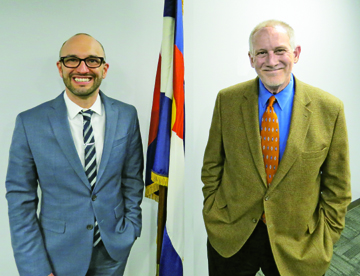 rd of Advisors and the Davis Contemporary Dance Company.
“As a council member, my goal is to represent the interest of Glendale’s citizens, and to fairly, accurately, and confidently convey their interests to my fellow council members. As a long-term Glendale resident I know where we have been, I know where we can go, and I know what it will take for us to get there.” Norquist said.
Scott Brock is another business owner in Glendale and is equally as excited to join the council. He owns Custom Executive Security whose main client is SmokinGun Apothecary. Brock served in the Air Force from 1979 to 1988 and has used his military experience in his endeavors since.
“I am happy and honored to be able to serve as a city councilman in our wonderful city,” said Brock. “It is my goal for our citizens to be able to enjoy all the benefits and opportunities the city has to offer, and to further and strengthen the business growth of Glendale in projects such as our [Glendale] 180.”
Lindsey Mintz has been part of the Glendale community for over nine years. After attending Villanova University and the University of San Diego on academic scholarships, she found herself moving to Colorado and establishing her roots in Glendale. Lindsey opened her first business in Glendale, the T-Bar, in July 2014.
Since opening, Mintz has worked diligently with the Greater Glendale Chamber of Commerce, the Glendale Police Department, and other local business owners to prepare the city for its urban revival — the G180 Project.
“I am truly blessed to have been chosen to represent the citizens of Glendale and their values and ideas,” said Mintz. I look forward to spending the next four years representing and serving them and being their voice. This is an incredibly exciting time in Glendale’s history. The G180 project has been the vision of Glendaleans for many years and I am honored to be a part of helping that vision come to fruition. Along with Rugb ytown USA, the G180 project will make Glendale an international entertainment destination.”
Mintz was unanimously appointed to the City Council in January 2016. Her current responsibilities include representing Glendale on the Denver Regional Council of Governments and the RTD Committee. In her free time, Lindsey loves to enjoy the outdoors — doing everything from biking, running, climbing Colorado’s infamous “Fourteeners,” backpacking, hunting, and finding the craziest obstacles races she can compete in.
The city council meets at Glendale City Hall at 950 S. Birch Street the first Tuesday of every month at 7 p.m. For more information, visit www.glendale.co.us.
by Mark Smiley | Mar 25, 2016 | General Featured
by Mark Smiley
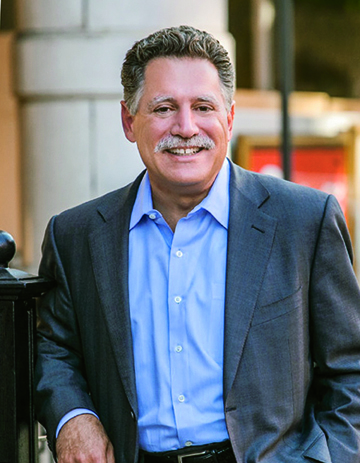 The annual Cherry Creek Chamber luncheon was held on Wednesday, March 2, 2016, at the JW Marriott Hotel in Cherry Creek North. The well attended luncheon had back by popular demand Brian Voight, CEO of Denver Botanic Gardens, as the master of ceremonies, whose quick wit and charm once again enlivened the event.
Walter Isenberg, the CEO and co-founder of Sage Hospitality Resources, was the keynote speaker. He told about his humble beginnings and attending Cornell University where he obtained a degree in hospitality management. He decided he wanted to go to Cornell based on a strong recommendation from a fellow dishwasher who had never even graduated from high school. Today Sage Hospitality operates over 60 hotels and 10 independent restaurants in over 20 different states. Among the hotels it operates is the JW Marriott in Cherry Creek where the event was held.
Isenberg emphasized that in the hospitality business, like many other commercial ventures, the attitude and enthusiasm of the employees is everything. He relayed a story about going into a competing hotel which had a sign above the check-in desk which indicated that the customer was king, but, in fact, the staff treated you like you were an annoyance. He knew from that experience he did not have to worry too much about that hotel as a competitor.
Saying that employee attitude and enthusiasm is key is one thing, Isenberg noted, but actually creating an atmosphere where employees can thrive is another. He stressed that it takes hard work and actually caring about it yourself as CEO, along with others in top management, to help make it happen.
The Sage Hospitality CEO also delved into the fact that the country has had 72 months of growth as modest as it might be and the law of business cycles had not been made obsolete as the 2008 financial crash painfully demonstrated. He also remarked that the hospitality industry is something of a canary in a coal mine in that a downturn in the hospitality business often presages a dramatic downturn in the economy as a whole. After his remarks Isenberg received a standing ovation from  the appreciative audience.
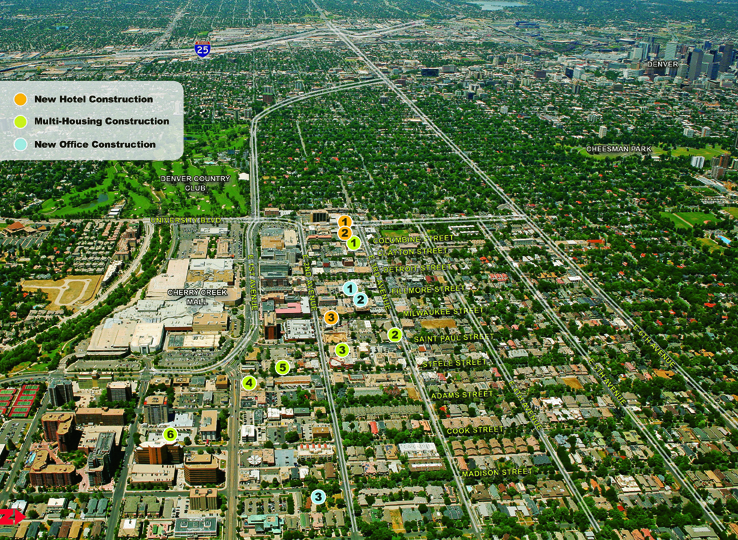
Another hit was the presentation from Chamber Executive Director Christine Des Enfant who gave a detailed overview of the growth, or some would say overgrowth, of the Cherry Creek North area with information provided by, inter alia, Peter Staab, Senior Managing Director of Newmark Grubb Knight Frank who produces a quarterly Cherry Creek Market Overview. (See detailed map of Cherry Creek Projects Underway on Pages 16-17.) Included in Des Enfant’s presentation, for levity, was an official Cherry Creek Area Monopoly Board.
Des Enfant noted that there are at least three new office buildings being built and three new hotels including the Halcyon at 245 Columbine which will be seven stories high and contain 133 rooms. The hotel is being developed by Insenberg’s Sage Hospitality.
What was amazing to many in the audience was the number of new apartment and condominium buildings being constructed including the 12-story CODA at 100 Steele Street containing 185 units scheduled to be finished this summer.
In the gift bag provided to attendees was a handy color coded “Your Easy Guide to Parking” in Cherry Creek North just in case you were feeling a “perceived lack of parking” in the area.
Capping off the luncheon were the annual awards. Jessica Bachus, founder of Dolls for Daughters accepted the award for Nonprofit of the Year. Dolls for Daughters and Kenzi’s Kidz work to support underprivileged children and their families in Colorado by providing toys, food, and more during the holidays, school supplies and clothing during the scho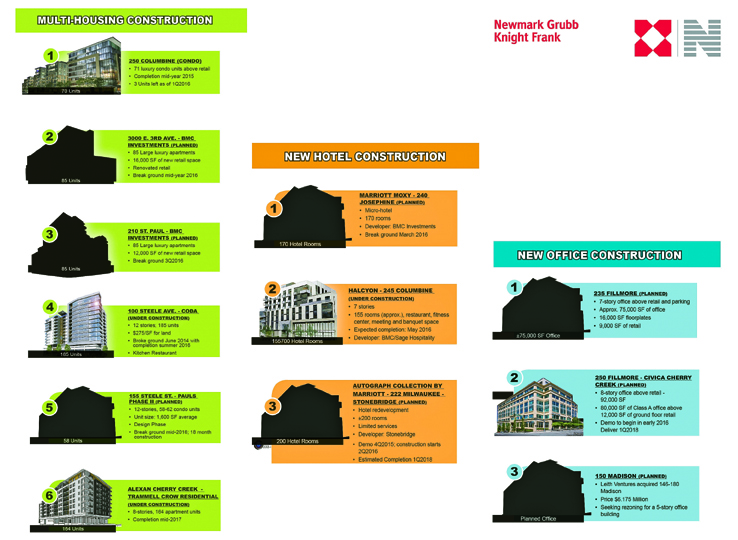
 ol
ol
year, and assisting families through community outreach, financial planning and professional support.
Fascination St. Fine Art at 3rd and Detroit took home the hardware for Business of the Year. The gallery features original paintings, sculpture and limited edition artwork by the finest regional, national and international artists.
The Community Leader of the Year went to Cindy Patton, the Parking and Planning Manager of Denver Public Works. An attendee who had been stuck in traffic throughout last summer by Ms. Patton’s handy work in Cherry Creek North, jokingly wondered out loud whether the other nominees for this particular award were Hays Griswold, the EPA’s on-scene coordinator for the Gold King Mine spill, or Lois Lerner of the IRS.
Finally, the Chamber’s Director’s Award went to Anna Spalding from Regus. In an emotional acceptance speech, Spalding lauded the Chamber as an incredible place to network and make long lasting friendships. For more on the Cherry Creek Chamber of Commerce, visit www.cherrycreekchamber.org.
The map, above, and legend were reprinted with the permission of Pete Staab, Senior Managing Director of Newmark Grubb Knight Frank. It was originally presented as the 4th Quarter 2015 Cherry Creek Market Overview at the Cherry Creek Chamber luncheon.
Newmark Grubb Knight Frank, a Global Leader in Commercial Real Estate, is one of the world’s leading commercial real estate advisory firms. They provide a fully integrated platform of services to prominent multinational corporations and institutional investors across the globe, as well as to occupiers, owners and developers of real estate on a local, regional and national level.
Pete Staab’s experience includes Office Leasing and Sales, Landlord and Tenant Representation, New Construction Development, and Corporate Real Estate Services. Mr. Staab can be reached at 303-260-4346, pstaab@ngkf.com, or www.ngkf.com.

by Mark Smiley | Feb 29, 2016 | General Featured
Could Crash Home Values, Create Safety Concern
by Glen Richardson
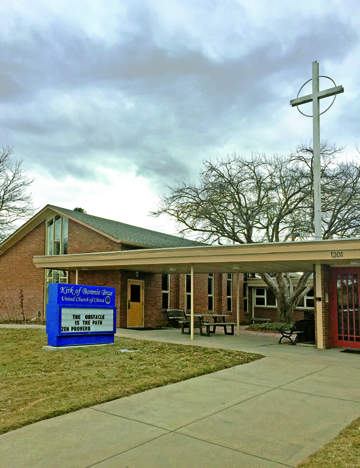
Homeowners in Denver’s Cory Merrill neighborhood are all charged up about Verizon Wireless putting up a 50-foot cell phone tower on the Kirk of Bonnie Brae Church property at 1201 S. Steele St. Verizon and the church are in negotiations to put the tower above a preschool and less than 20 feet from residences.
United in numbers, fuming homeowners in this neighborhood of winding streets and mature trees say it would lower property values and decrease school funding. Even more worrisome they say is that the church does not have a large enough property site to ensure a properly engineered “fall zone” for the tower. A fall zone is the necessary distance a tower needs to be from residences, schools and other structures should the tower collapse. Minimally the distance is considered to be 110% of the height of the tower, or in the case of Kirk of Bonnie Brae a setback of 55 feet.
Area residences point out that if constructed the tower’s setback at Kirk wouldn’t be close. “It would sit within 10 feet of existing power lines and an alley, 20 feet from adjacent homes, the day care center and church. Everything and everyone living and working within a 55 foot distance from the tower will be at risk,” they warn. Furthermore, they articulate that in the event of an accident Steele St. and Arizona would be blocked, inhibiting first responders and impacting evacuation routes.
What’s At Stake?
Developed in the 1940s and ’50s, homes in Cory Merrill range from small but unique original houses, to multi-million dollar custom built dwellings. The neighborhood is east of University, North of I-25, West of Colorado Blvd. and South of Mississippi. Kirk of Bonnie Brae was founded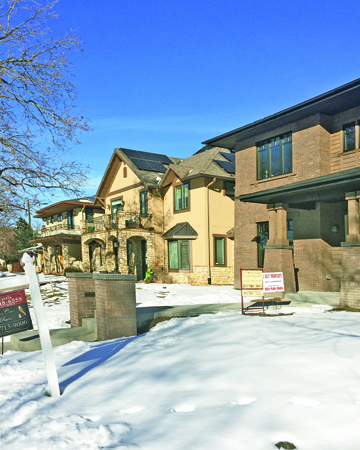 as a Congregational Church in 1947 and is affiliated with the United Church of Christ, a mainline Protestant denomination. The name Kirk is the Scottish word for Church, fitting for the neighborhood whose name also has Scottish origin (Bonnie Brae means beautiful hill).
Current real estate studies show that proximity to cell towers reduces the value of a home by 20.7% to 21%. Approximately 130 homes were sold in the Cory Merrill neighborhood within the last 12 months. Furthermore, real estate values have appreciated 4.1% since Feb. 2015. Prices for homes ranged from $286,900 (least expensive) to $1,633,000 (most expensive). Neighborhood leaders say they are concerned that, “The ability to build any real increase in value within the neighborhood would be irreparably harmed.”
Verizon says the area is in need of a new wireless tower site, “based on zoning areas and how it will affect the area network, and would enhance coverage in the neighborhood.” The tower would be a 50-foot canister pole that would look like a flagpole and house all wiring and antennas inside a 4 ft. x 4 ft. footprint. Verizon also admits it could do a “monopine” design (that would make it look like a tree) but suggests, “The light pole design would work better and better integrate into the neighborhood and environment.” Verizon also has an option to add other carriers to the tower if they are approached. Construction could start as early as March-April and would take approximately 90 days.
Residents Speak Up
Once again it’s business as usual in Denver, suggests resident George Mayl who lives on South Garfield St. “Tear down this to build bigger and bigger. Let’s place a 50 ft. monolith smack dab in the middle of a residential neighborhood,” he fumes. He notes the church site is right across the street from the John Paul II Center. Many — he thinks maybe all of the 2,250 residents in Cory Merrill — believe this is a bad idea and will be unsightly too boot. “I would tell Chronicle readers where Verizon can ‘stick’ their tower but then you couldn’t print it,” Mayl says of the plan. “Want reception? Place it in Mayor Hancock’s backyard and see the reception it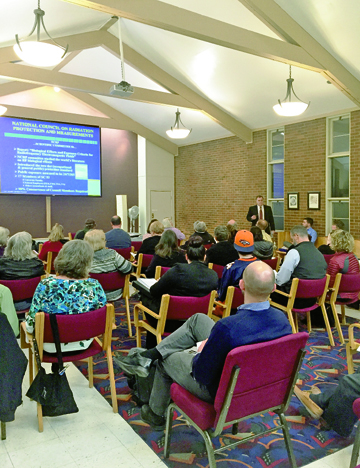 will receive,” he urges.
Marti Freeman, President of the Cory Merrill Neighborhood Association notes, “What is most interesting about this situation is that the Denver zoning code does not entirely protect residential areas, such as a neighborhood like Cory Merrill, from a 50 foot Tower Structure being placed less than 35 feet from residents property lines.” She wants residents to know that the Kirk of Bonnie Brae Church is zoned residential. Thus Freeman strongly suggests, “Engaging in this negotiation with Verizon is irresponsible and inconsiderate on behalf of the church.” Furthermore she believe the tower on their property in such proximity to neighbors’ homes and backyards, a preschool with a playground plus a major throughway “will create a nuisance for our neighborhood, potential danger, and be aesthetically unappealing potentially diminishing property values in this highly desirable and rapidly developing neighborhood.”
As a final point she tells the Chronicle, “Denver zoning laws should be updated to reflect and meet the needs for great telecommunications services in our residential areas, but not at the expense of our neighborhoods and citizens.” The City of Denver, of course, will review the Verizon request internally and administratively albeit that seldom means a good deal. Approval by the neighborhood association is not required.
Deaf Ear?
Resident Trish Kinkel is even more resolute and adamant: “I do not believe anyone should have the right to construct anything on their property that detrimentally affects the safety, quality of life, and property values of their neighbors.”
She believes the Kirk of Bonnie Brae has turned a deaf ear to their neighbors concerns and continues to negotiate with Verizon. “Come on, a 50 ft tower without an adequate engineered fall zone next to a day care center and existing homes and their own church? It’s all about the money for the church. They don’t care about us,” she concludes.
Area residents haven’t been told and the church isn’t saying what Verizon is offering the Kirk to lease the space. Speculation is that the figure is around $1,500 per month. A report by AirWave Cell Tower Consultants reveals that in 2015, “we saw cell sites paying between $100 per year to over $156,000 yearly.” According to the consulting firm, all lease rates regardless of carrier or cell tower developer are site specific and vary from location to location and are based on the demand for coverage and the availability of potential locations to lease ground space, tower space or rooftop space. What is the risk to property owners such as Kirk of Bonnie Brae? “With the possibility of cell phone technology changing (to satellite or other technology), the cell tower company could simply stops paying, they suggest.
by Mark Smiley | Jan 29, 2016 | General Featured
by Mark Smiley
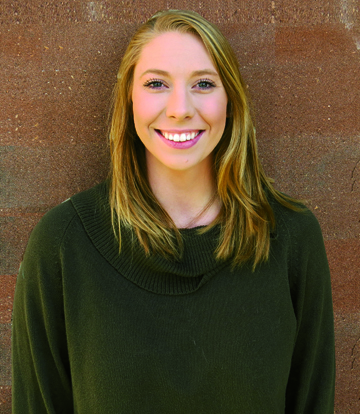
The Glendale Cherry Creek Chronicle welcomed its newest member of their team of reporters, 22-year-old Glendale resident Megan Carthel. Carthel moved to Glendale last August from Texas, and has been reporting on local stories for the Chronicle since October. Her stories, including “Hal Weber Makes Kids’ Birthdays Special” and “Tiny Houses Pull Into The Valley,” have sparked a positive response from the community.
Carthel decided to move to Colorado because she needed a change. “I moved to the state after skiing in Colorado and I enjoyed my experience immensely,” said Carthel. “Denver reminded me of Austin, Texas.” She chose Glendale because it had affordable apartments to rent, was centrally located, and filled with younger people.
Carthel graduated from Texas State University-San Marcos with a B.A. in Electronic Media and a Political Science minor. As far as politics goes, she is more interested in the theory of politics. She believes that modern day politics is a PR stunt and theatrical.
Carthel has enjoyed numerous internships and other experience throughout her young career. Most of her experience was in Texas working as a sports marketing intern, news reporter, and even as a member of the Wings Team for Red Bull promotions.
Carthel was born and raised in Lubbock, Texas, and has many friends and family back home. Her passion for writing sparked early. She always wrote stories as a young girl. “I used to write these horrible stories as a child, but that’s where my passion for writing started,” said Carthel. “In college it developed into journalistic writing as I became more aware of the world around me.”
Now, she gets to write for a living. Carthel loves to work with and meet new people and never wants to stop learning. “Writing has always been a passion of mine,” said Carthel. “Doing this, I get to meet so many different kinds of people and see different parts of the community through their eyes. With journalism, and with writing, there’s always something new. A new story; a new angle; a new person to meet. It’s like a non-stop adventure, and I thin k that’s very exciting.”
In addition to her duties as a reporter, Carthel has taken on full responsibility for the Chronicle’s social media sites including a brand new Facebook page. Visit the Chronicle’s new Facebook page at www.facebook.com /GCCChronicle.
In her spare time, Carthel enjoys spending time with her boyfriend, whom she met within two weeks of moving to Colorado, staying active, riding, running, reading, and sky diving. Carthel realizes she has an incredible opportunity working for the Chronicle. “I feel lucky that I get to do what I love and hopefully make a difference in the community.”

by Mark Smiley | Dec 17, 2015 | General Featured
by Phil Kummer
2015 has been called the year of the “unmanned aerial vehicle” better known as “drones.” One of President Obama’s primary weapons in the Middle East to fight jihadists is a veritable army of military drones. Delivery firms and retailers like Federal Express and Amazon are going through final tests to use commercial drones to make deliveries. Moreover, this Christmas and holiday season drones are one of the most sought after toys/recreation devices on the market.
A top FAA official said as many as one million small unmanned aerial vehicles (UAVs) could be sold during the upcoming U.S. holiday season. “The talking point is that there will be a million drones under people’s Christmas trees this year,” FAA assistant administrator-policy, international affairs and 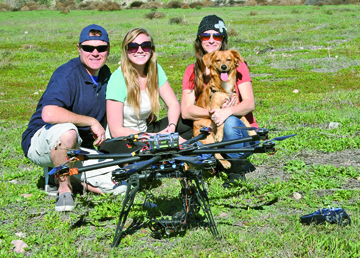 environment Rich Swayze said, adding that he has heard the one-million figure “from several sources.”
The range of cost and sophistication of drones is amazing. For as little as $30 you can get a low-end drone, but don’t ask it to do much, or you can spend up to $3,000 or more for a top of the line recreational drone which will have an impressive array of capabilities.
One of the leading stores for recreational drones in metropolitan Denver is Colpar’s HobbyTown USA located at 1915 S. Havana St., Aurora, CO 80014, as well as 3355 S. Wadsworth Boulevard, Lakewood, CO 80227. The owner of Colpar’s, Fred Beardslee, recommends among the best of th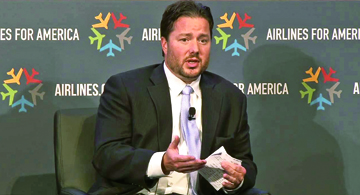 e beginner level drones is the Eothos QX130 which goes for about $100. It is fun to fly around and is a sturdy unit.
On the more sophisticated end Beardslee likes, among other units, the Blade Chroma which sells fully loaded for about $1,300. It will provide an HD quality camera platform and will even return to home base once it detects that its battery is low.
Accessories, which are purchased separately, include a winch, camera — both video and still, squirt gun, rocket and bubble machine — obviously an assortment that would keep both youngsters and oldsters busy for a long time.
Although drones have become more sophisticated and have much more capabilities than previously they are not just for the technoids or geeks any more. The vast majority of drones have very efficient electric motors and lightweight batteries, which make them very flight worthy.
They go further, higher, have more stability, use more technology such as GPS systems and can carry larger payloads than ever before. They have become much more durable than earlier versions but due to crashes and wear and tear chances are your drone will need either some parts replaced or be repaired over time. Having a store like Colpar’s HobbyTown to help out will be critical in keeping your drone flying.
Although drones can be flown both indoors and out, you might want to consider who is the pilot when indoors. They are restricted from some areas such as airports and high security areas. Just recently the FAA announced they now consider operators of drones weighing between .55 lbs and 55lbs to be aviators and therefore all drones that meet those specs need to be registered with the FAA starting December 21, 2015. Registration is mandatory for all aircraft. More information: www.faa.gov/uas.
As drones become more popular, both commercially and recreationally, it is inevitable that new regulations will play an important role in drone use. Colorado recently defeated a bill that would have restricted police use of drones because of privacy concerns. Privately owned drones equipped with advanced cameras could be a threat to everyone’s privacy if used by unscrupulous individuals or businesses. Privacy concerns will definitely be considered as drones are used more.
Safety is another concern that will cause regulations to proliferate as more drones take to the sky. Between June and November of 2015 air-traffic controllers and pilots reported at least 25 episodes in which drones interfered or came close to interfering with larger aircraft during takeoff and landings. If there is ever a major incident between a drone and a plane we can expect to have a thorough r eview of drone use. If a drone were ever used in a terrorist attack and especially if that attack were successful, we could expect a lot more government rules and regulations as to how one can use a drone.
In the meantime, here are a few safety tips to follow: fly below 400 feet and remain clear of surrounding obstacles like telephone lines and poles; keep your drone in sight at all times; stay well clear of and do not interfere with manned aircraft operations; don’t fly near people or stadiums and don’t be careless or reckless. Remember you can be fined for endangering people or other aircraft. By following some basic common sense rules of the road, as it were, you and your family can have hours of fun and entertainment.
Colpar’s HobbyTown USA is located at 1915 S. Havana St., 303-341-0414, and 3355 S. Wadsworth Blvd., 303-988-5157.
If you have any interesting, creepy, scary, exciting drone stories you can email the Chronicle website at newspaper@glendale cherrycreek.com.