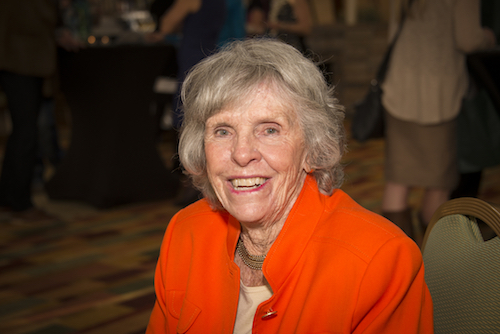
Funeral services were held for Joan Packard Birkland who
passed away on June 15, 2019. She was described as one of the greatest (if not
the greatest) female athletes in the history of the State of Colorado. She was
inducted into the Colorado Sports Hall of Fame, Colorado Women’s Sports Hall of
Fame and the Colorado Golf Hall of Fame. The Joan Birkland Pavilion at the
Gates Tennis Center in Denver, headquarters of USTA Colorado, is named in her
honor.
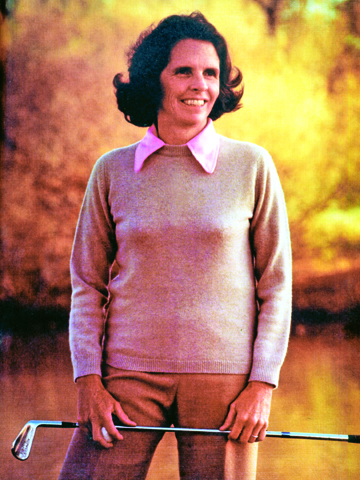
Athlete Extraordinaire: Joan Birkland was for many years a top amateur golfer in all of Colorado, one of many sports where she excelled.
She was born on August 17, 1928, in Denver to well-known
surgeon Dr. George Packard and his wife. She was one of three sisters. With no
organized sports for girls she played baseball, football, basketball and tennis
with other children (mostly boys) at City Park near her home. After graduating
from East High School she went on to the University of Colorado in Boulder
where she met Ormand Birkland Jr., whom she married in 1948. The marriage
lasted over 50 years until his death in 1999.
The marriage, by all accounts, was a happy one,
notwithstanding (or perhaps because of) the fact Ormand was every bit as
mediocre in sports as she was outstanding. She took up golf as it was the one
sport he played and she was soon regularly beating him. She joined an AAU
basketball team (the Denver Viners) while at the University of Colorado where
she played with tennis great Phyllis Lockwood. They became an almost unbeatable
women’s tennis doubles team in Colorado. She competed on the Denver Vipers team
for eight years, becoming honorable mention All-American in the sport of
basketball.
The Birklands joined the Denver Country Club (DCC) in 1953
and she began to concentrate her athletic endeavors on golf and tennis. She
described her activities at the time as: “A typical day for me would be to hit
and shag balls, take a lesson from a DCC golf pro, play nine or eighteen holes
with Dorothy Major at Willis Case or meet Phyllis Lockwood and play tennis with
her in Boulder, and then we would shoot a few hoops at CU.”
Later in her career she generously gave her time and talents
to children with handicaps, including teaching golf at an amputee program at
Children’s Hospital, bowling with children with cerebral palsy and coaching
basketball for asthmatic kids.
She was also active with many women’s and sporting organizations including the United States Golf Association. Birkland co-founded Sportswomen of Colorado and served as that organization’s executive director for 40 years.
In 1957 she took on the number one female player in the
world Althea Gibson at the Colorado Open which, at the time, attracted many of
the world’s greatest tennis players. To the shock of the press and the gallery
Birkland began beating the world’s number one player. A reporter for The Denver
Post called in to his paper to hold the afternoon press as he might be
reporting “one of the greatest sporting upsets in the history of Colorado.” In
the end, however Gibson prevailed 8-6, 6-4.
By the 1960s she excelled at the highest levels at both golf
and tennis simultaneously, an athletic feat that is almost unheard of in the
annals of Colorado sports. She won the Denver amateur tennis title in 1960,
1962 and 1966 and the Colorado state tennis title in 1960, 1962 and 1966. She
garnered six singles and 15 doubles titles in Colorado and Intermountain tennis
tournaments.
On a friend’s dare Birkland in 1962 competed in and won both
the state tennis and golf championships in the same summer and repeated this
feat again in 1966. She was awarded the Robert Russell Prize for Colorado
Amateur Athlete of the Year in 1962.
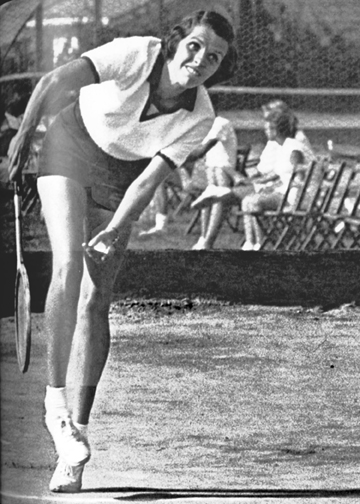
Upset In The Making? Joan Birkland is shown here serving against the number one female tennis player in the world at the time, Althea Gibson, in an attempt to win a historic match.
She took the state women’s golf title seven times. At the
Denver Country Club she won 30 straight Ladies Country Club Championships from
1955 to 1984. Many of the victories were anything but easy sometimes winning at
the 18th hole or in sudden death in the match play format. She attempted to
retire from the competition several times but her competitors, some of whom
were themselves state golf champions, would hear nothing of it. As one of her
competitors said: “As far as I was concerned, no Joanie — no tournament.”
Even in her 90s Birkland could regularly be found on the
golf range at the Denver Country Club working on her swing while interacting
with golfers around her and trying to pick up tips to improve her game. Fellow
inductee to the Colorado Golf Hall of Fame, Gary Potter, stated: “She was
amazing. She cheerfully accepted the fact that the ravages of time severely
restricted her playing abilities, but she simply wanted to be the best she
could be with whatever limitations God had provided that day. She happily
picked up whatever tips or advice you may provide and incorporated them into
her play if they made sense to her. She was an extraordinary and truly
wonderful human being.”
Joan Birkland
While she never had any children herself Birkland is
survived by an extended family including her sister Evelyn McLagan, her
brother-in-law Neil McLagan, nephew Hugh Birkland and nieces and nephews, Tracy
Tempest, George Tempest, Scott McLagan, Tom McLagan and Ken McLagan and their
families.
Pitmasters From Around The Country Showcase Their
Award-Winning BBQ
by Mark Smiley and Richard Colaizzi
The Second Annual Denver BBQ Festival was held over Father’s Day weekend at Broncos Stadium at Mile High. Pitmasters from around the country were on hand to smoke meat and serve their barbecue to thousands of attendees in search of good barbecue. “The energy that’s going on at this event is twice as good as it was last year,” said John David Wheeler, Pitmaster for Memphis Barbecue Co. “Denver is starving for great barbecue. They’re wanting it. Hopefully we can bring it to them.”
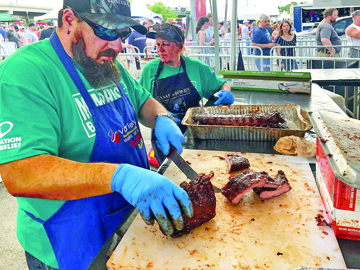
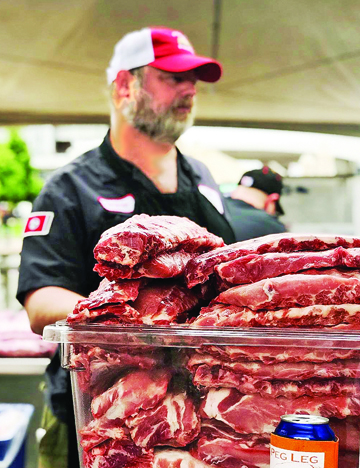
Time To Slice: Ribs were on the menu at Memphis Barbecue Co., Pappy’s Smokehouse, and Peg Leg Porker at the 2nd Annual Denver BBQ Festival held at Broncos Stadium at Mile High over Father’s Day Weekend. Mark your calendars for next year as it promises to return to Denver.
The event featured not only award-winning barbecue but also live music throughout the three-day fest. And, Tito’s Vodka sponsored the VIP Lounge and a dog lounge. The VIP experience cost $85 and also allowed for unlimited barbecue tastings for a two-and-a-half-hour period.
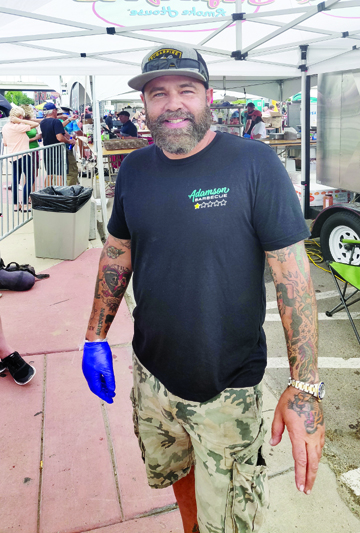
BBQ Ninja: Craig Verhage also known as The BBQ Ninja is a brand ambassador and consultant for Ole Hickory Pits, Royal Oak, and Ubons. Follow him on Twitter @The_BBQ_Ninja for recipes, videos, and more.
Pitmasters from six states lined up and cooked meat from the time they arrived until the time they pulled out. The three-day festival featured a total of over 19,000 pounds of meat and almost 3,000 pounds of sides. “You have to cook volume here,” said Craig Verhage, The BBQ Ninja. “You have to feed the people, feed the masses. If anything here, each team is helping each other. If somebody needs something we get it to them. We all have the same goal here and that is to cook as much as we possibly can and sell as much as we possibly can and make everybody that comes through the gate happy.”
This fraternity of pitmasters is evident with how much respect they have for each other and how much they like each other. “We do these events all over the world, said Mike Johnson, owner of Sugarfire Smokehouse in St. Louis, MO. “I’m in South America and Europe all the time. I’m in Australia a few times a year for events. I tell everyone this is one of my favorite events. It’s classy and the food is great. It has the most talent of any event I have ever done. I’m not bragging about myself. These are all my heroes. Salt Lick and The Shed, Memphis Barbecue Co. and Peg Leg are awesome. Ubon’s. They’re all really good friends of ours. They have great food.”
Sugarfire: Mike Johnson, pitmaster for Sugarfire Smokehouse, served leg of lamb, smoked salmon, and watermelon & feta salad at the Denver BBQ Festival. He credits the other pitmasters at the fest as his heroes. The pitmaster circle is a fraternity of people helping one another and serving great barbecue.
It’s not just the love of great food that they share. They
also have friendships that have hatched as a direct result of doing the festivals
together for so many years. “I’ve been overseas with all these guys,” said
Johnson. “We spend tons of time. We’ve been together for birthdays and
funerals. We do a lot of stuff together.”
“He’s a genius (Mike Johnson),” said Wheeler. “What a
talent. If you’re out here on this block right now, you can do it and the
people of Denver don’t know what a treat it is to have these guys. I wish we
could do this everywhere and let people share our passion with barbecue.”
This passion for barbecue and the desire to give back to the community is what sparked Wheeler to start Operation BBQ Relief. “Operation BBQ Relief started about eight years ago when a group of guys just like us got together after a tornado in Joplin, Missouri, destroyed the whole town,” said Wheeler. “They wanted to do something so everybody who had meat in their freezers or refrigerators took their meat out and started cooking. 117,000 meals later and three and a half weeks, they were done.”
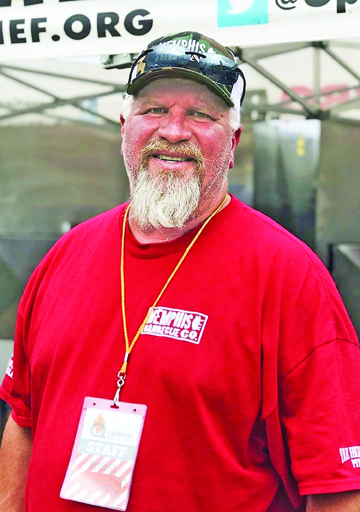
Disaster Relief: John David Wheeler is the founder of Operation BBQ Relief which provides meals to displaced residents and emergency personnel during times of natural and other disasters. Wheeler is also the pitmaster for Memphis Barbecue Co. heralded as one of the best barbecue joints in the country.
That was the birth of Operation BBQ Relief and since then, they are 45,000 meals away from serving three million meals. “We do what we can to help people out and when people walk up, they walk up like a deer in the headlights asking why we are doing this,” said Wheeler. “My answer is I would hope you would do the same for me.” Wheeler and a team of 300-500 volunteers set up five smokers that can hold 1,000 pounds of meat each. That allows them to feed between 25,000 and 50,000 people. “Being around people who give their time to volunteer to help other people are the kind of guys I want to hang out with,” said Wheeler.
Wheeler is a full-time home builder and full-time pitmaster
and jokes: “It wasn’t the smartest thing I’ve ever done.” As far as Memphis
Barbecue Co., they served their ribs and baked beans at the festival and the
fast-moving line always had guests waiting for some of the best ribs in the
country.
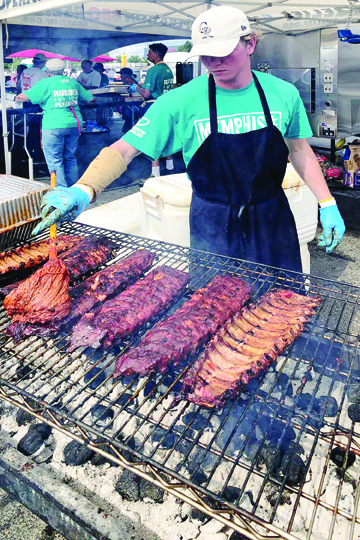
Don’t Forget The Sauce: A volunteer puts the final layer of barbecue sauce on the ribs from Memphis Barbecue Co. Their ribs are regarded as some of the best in the country.
Wheeler’s friend Mike Emerson, Pitmaster for Pappy’s Smokehouse in St. Louis, also served ribs and some guests commented that it was the best they have ever had. What started as Emerson, his business partner John Matthews, and three employees, has now grown into a 50-plus person operation based in St. Louis. “We actually sat in a bar one day and drew Pappy’s on a bar napkin and 11 years later, here we are,” said Emerson.
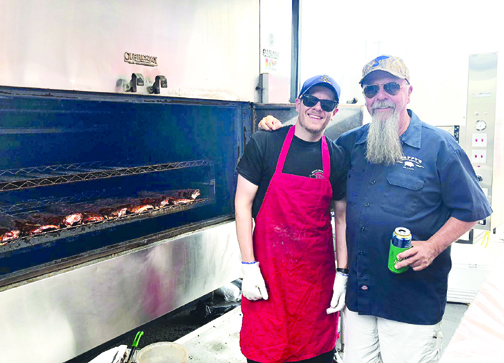
Pappy’s: Mike Emerson, right, and his son Brian from Pappy’s Smokehouse were among the pitmasters serving barbecue at the 2nd Annual Denver BBQ Festival over Father’s Day weekend.
Emerson, who is a seventh generation Missourian grew up
loving the outdoors and cooking outdoors. It has always been a part of his
life. Now, Pappy’s runs their smokers 24 hours per day and 7 days per week. “We
run six smokers that will do about 500 pounds on each smoker,” said Emerson.
“We can go as high as five to six thousand pounds per day. Most days we’ll do
about three to four thousand pounds.” It is estimated that his son cooks 400
slabs of ribs per day to total one million since opening.
“We hit St. Louis at a good time, said Emerson. “We’re the
only city that’s got a rib named after it. We do know a little bit about
barbecue. I always tell everybody first the neighborhood embraced us and then
the city embraced us and then America embraced us. Now we actually have people
from all over the world that make trips to Pappy’s so we’ve been very
fortunate. It’s been a great ride.”
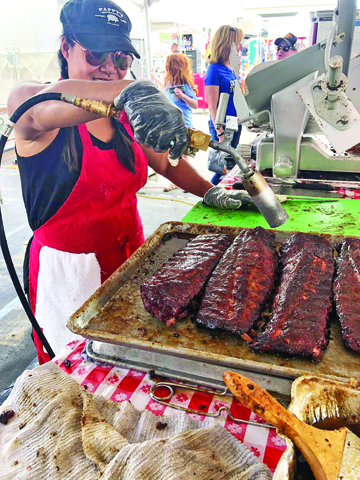
Caramelized Finish: Pappy’s Smokehouse ribs gets hit with a blowtorch to give them a caramelized finish. Pappy’s ribs were named “Best Ribs in America by the Food Network.” They are dry-rubbed and slow smoked for up to 24 hours over apple and cherry wood.
That ride has brought them to Denver the last two years with
a nice partnership with the City of Denver and the Denver Broncos. “To make one
of these really successful, you’ve got to have the city buy in with what the
people here are trying to do,” said Verhage. “Between the city and the Broncos
and what we are trying to accomplish here, everybody’s on the same page, you
don’t have somebody that is causing any friction to not make this a huge
successful event.” “I moved West of here (Maui) and this is one of the few
places I’ll come back to the mainland to come visit,” said Emerson. “You guys
are wonderful.”
For more information about Denver BBQ Fest, visit www.denverbbqfest.com. Operation BBQ Relief is located at www.operationbbqrelief.org; Pappy’s Smokehouse at www.pappyssmokehouse.com; Sugarfire Smokehouse at www.sugarfiresmokehouse.com; Memphis Barbecue Co. at www.memphisbbqco.com; and follow The BBQ Ninja on Twitter @The_BBQ_Ninja. If you crave barbecue from one of the vendors from the Festival, Sugarfire has a location in Westminster, and GQue BBQ has locations in Lone Tree and Westminster. For the rest, visit them online to purchase sauces and rubs or wait until next year for the Third Annual Denver BBQ Festival.
Your Father’s Day Feast Finder Filled With Fun Things To Do, Places To Go With Your Dad This Year
Father’s Day is June 16, will it be a special one for your
dad? Dads are the steady but less sentimentalized parent — the sun in our sky
that warms and gives life but isn’t thought about as often. Nonetheless, the
presence of a loving father increases a child’s chances for success, confidence
and resilience plus a sense of humor. In 1924, President Calvin Coolidge showed
support for it becoming a national holiday. However, it wasn’t until 1966 that
President Lyndon Johnson officially proclaimed Fathers’ Day a national holiday
to be celebrated on the third Sunday in June.
Barbecue Blast
No Bones About It: Denver hosts its 2nd Annual Father’s Day BBQ Festival at Mile High Stadium June 14-16. Event serves up ribs, brisket, chicken and sausage with live band music.
Denver’s Father’s Day BBQ Festival returns to Mile High
Stadium June 14-16. Admission is free, but VIP tickets are also offered.
Legendary pitmasters from Denver and around the nation serve BBQ along with
live music from bands like the Hazel Miller Band, the Rick Lewis Project and My
Blue Sky, a tribute to the music of the Allman Brothers. In addition attendees
can enjoy cold beer and drinks, BBQ tutorials and demonstrations plus games and
activities for the whole family. Last year’s event used 8,000 lbs. of ribs
(3,500 slabs), 5,000 lbs. of brisket, 3,000 lbs. each of chicken and sausage.
In addition, 600 lbs. of potato salad and 2,000 lbs. of beans were served. The
2nd annual event is adding new pitmasters from Kansas City, San Antonio, and
New York City. Times are Friday, 5-8:30 p.m., Saturday 11 a.m.-8 p.m. and
Sunday 11 a.m.-6 p.m. Information:dbbqfest.com.
Dine-Drink With Dad
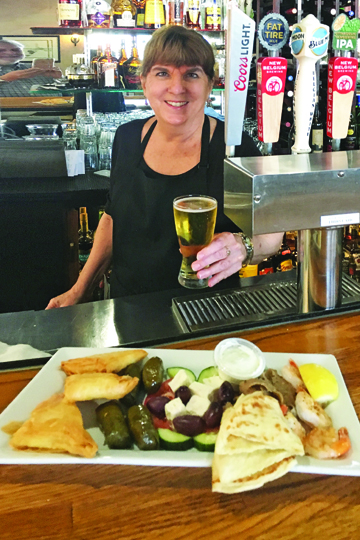
Feast With Father: Eateries such as the Monaco Inn Restaurant offer lunch and dinner specials plus appetizers and beer. Here Marie Ezman serves draft beer with one of restaurant’s eight appetizers.
The Monaco Inn Restaurant — the Valley’s favorite family
gathering place on major holidays — is an easy choice for dad’s day serving
classic and comfort food with indoor and patio seating. This informal
family-run eatery with reasonable prices is the perfect spot to kick back with
dad, the kids and grandkids. Featuring a Baby Back Rib Father’s Day Special
plus a full bar serving creative cocktails and a large selection of wine and
beer, it has been a lunch-dinner and watering hole hot spot for generations of
residents. Under the direction of chef and co-owner Terry Vaidis, patrons can
choose from traditional Greek fare plus American and Mexican specialties all
weekend long. Information:303-320-1104.
Jax Fish House & Oyster Bar with locations in Glendale’s
CitySet off Colorado Blvd. and downtown in LoDo annually offer Father’s Day
specials. Expect loaded Bloodies, Mimosas, Shrimp & Grits plus Crab Cake
Benedicts. Crawfish Broils are also often offered at the LoDo spot.
Information: 303-756-6449, LoDo 303-292-5767.
Café Marmotte, the classic French Bistro on S. Downing in
Wash Park is one of the Valley’s best brunch spots, making it a great place to
take dad on Father’s Day. This year’s Dad’s Day special hadn’t yet been
released but one was offered last year. Information: 303-999-0395.
Hot Dad Music
Musical Magic: Pop and R&B star Ashanti is this year’s headliner at the Juneteenth Music Festival, one of several musical events on Father’s Day Weekend.
The Juneteenth Music Festival on Father’s Day weekend in the
historic Five Points neighborhood will be one for the books, June 14-16. Pop
and R&B star Ashanti is this year’s headliner. She is the first female
artist to occupy the top two positions on the U.S. Billboard Hot 100 chart
simultaneously when Foolish and What’s Luv were at number one and two
respectively.
The Jacob Jollif Band — the next generation of bluegrass
supergroups led by one of the country’s premier bluegrass mandolinists — plays
Daniels Hall at Swallow Hill on Sat., June 15. Featuring some of the most
virtuosic and innovative pickers in the country, it is a rare, not to be missed
performance.
Another musical blast for dad is Empire of the Sun playing
at the Ogden Theatre on Colfax Sat.-Sun., 8 p.m. The Australian electronic
music duo is a collaboration between Luke Steele of the alternative rock band
The Sleepy Jackson and Nick Littlemore of the electronic dance band Pnau.
Bits & Brews
Take dad on a three-hour food and beer adventure in the RiNo
Arts District on Father’s Day, 2-5 p.m. Tour begins and ends from the Denver
Central Market at 2669 Larimer St. You’ll visit five restaurants and try tasty
local dishes with optional beer pairings. Dad can try wood-fired pizza, beer
sausage, sushi-grade poke with ahi tuna and Mexican tacos from some of Denver’s
top chefs.
Keep Track Of Dad
Get dad off to a great start at the Father’s Day Run in
Stapleton’s Central Park Sun. June 16, 6 a.m.-noon. The 5K and 1-mile kick off
at 7 a.m., the half marathon, 10 mile and 10K starts at 8 a.m.
Cars Drive Dad
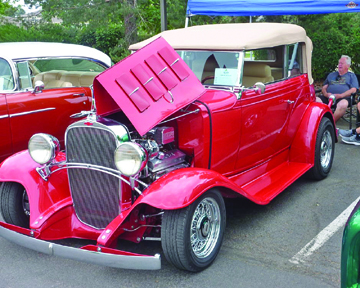
Road Rage: If your dad has an auto obsession, consider taking him to the 15th annual Father’s Day Car Show at the Apex Center in Arvada.
Guys love cars and if your dad is one of those with an
automobile obsession, consider taking him to the 15th annual Father’s Day Car
Show at the Apex Center on W. 72nd Ave. in Arvada, 9 a.m.-3 p.m. This event,
free to spectators, is a perfect outing for dad with cars, music, antiques,
family activities and refreshments. Information: 303-467-5525.
More Dad Doings
Dad’s Special Day: With June 16 approaching, will it be a special one for your dad? From dining out to a BBQ Festival and a Rockies game there are lots of ways to entertain dear old dad.
Need more things to do with dad? Here are more options to
consider for Father’s Day weekend:
• This year’s
Stapleton Fresh Market kickoff is on Father’s Day, 8:30 a.m. to 12:30 p.m. on
Founders Green. It would be a fun way of spending the morning picking fruit,
vegetables and melons with pop.
• If dad’s a
baseball fan, you’ll be a big hit taking him to the Colorado Rockies vs. San
Diego Padres game at Coors Field. Game time is 1:10 p.m.
• Start the
weekend with dad early by taking him to the Free Day At Four Mile Historic Park
on Friday June 14. There are historic demos, a tour of the Four Mile House
Museum plus Hay Bales & Tall Tales, noon-1 p.m.
‘DaVinci & Michelangelo Battle Of The Titans’ Celebrates
Both Men AND Their Times
by Charles C. Bonniwell
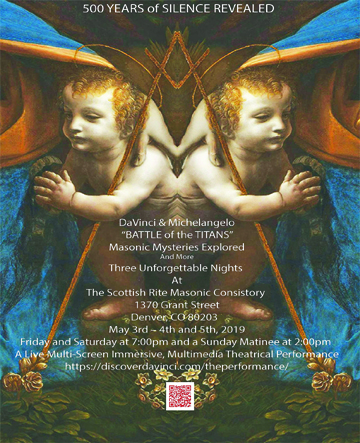
Not To Be Missed: DaVinci & Michelangelo — Battle of the Titans comes to Denver with performances at the Mayan Theater, Scottish Rite Masonic Temple, and Park Hill Masonic Temple Theater. Visit www.discoverdavinci.com for more information or tickets.
2019 is the 500th anniversary of the death of Leonardo
DaVinci which is being noted in Italy and around the world. Denver Museum of
Nature and Science started on March 1 as a much heralded sensory experience
celebrating DaVinci’s “500 Years of Genius.” But another event is starting to
gather equal notoriety, that being a one man play starring Mark Rodgers titled
DaVinci & Michelangelo — Battle of the Titans which will be held
consecutively at two Masonic Temples in Denver, following an opening night of
May 2 at the Mayan Theater on Broadway.
DaVinci’s and Michelangelo’s lives overlapped in 16th and
17th Renaissance Italy with DaVinci being 25 years the senior of the two men.
Mark Rodgers’ play compares and contrasts the genius of each man whose lives
changed the world, and whose influence is still a vibrant force today. Audio
visual wizard Matt Boggs created for Rodgers’ play three screens of high/tech,
high definition laser images that are intended to explode before the viewing
audience.
Producer: Matt Boggs is the Content Producer\Editor\Event Designer for DaVinci & Michelangelo — Battle of the Titans. He has been creating and managing immersive environments in Denver for over 20 years.
Boggs explained, “I wanted to provide a one-of-a-kind,
non-stop, multi-media event featuring movies, videos, 3-D; animations, and
images of DaVinci’s and Michelangelo’s inventions, machines, sketches, codices,
paintings and sculptures.”
“It is a shamanic experience . . . not to be missed,”
exclaimed Anthony Arguello. He goes on to note, “It will change your life.”
Venture capitalist and the show’s producer Fritz Voelker stated, “People will
be amazed. The show is designed to overwhelm your senses while enlightening
anyone who comes about the lives of these two extraordinary men.”
An additional element to the play is that it will be held on
May 3-5 at the landmark Scottish Rite Masonic Temple (14th and Grant), and then
May 9-12 at the Park Hill Masonic Temple Theater at 4819 Montview Boulevard.
Both men were, according to some, Masons and incorporated Masonic symbolism
throughout their work. Rodgers explores often missed Masonic mysteries
contained in the works of both men.
“The performance is so unique, and I am sure most theater
patrons have never seen anything like it,” states Rodgers. Voelker noted that
“you get to see and experience Renaissance Italy through these two men while
being surrounded by the images of the art, sculpture and machines that the men
created thanks to visual genius of Matthew Boggs.”
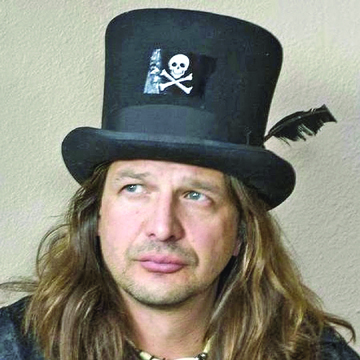
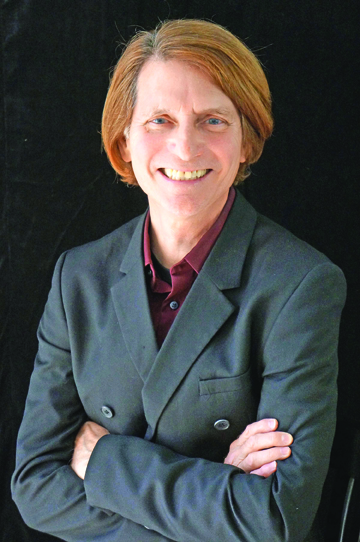
Director: Mark Rodgers is the Director of the DaVinci Machines and Michelangelo Exhibitions for North America. In this “tour de force” performance … DaVinci & Michelangelo The Titans Experience, Rodgers will take the audience on a fantastic, awe-inspiring journey through the Italian Renaissance as seen through the eyes of these two monumental geniuses.
A version of the play debuted at the Pabst Theater in
Milwaukee, Wisconsin. Paul Ann Water exclaimed, “I left [the performance] with
only one word … WOW!” Riley Redpath agreed, “Mark Rodgers is a tour de force.”
The show runs two hours with a 15-minute intermission. Tickets are $35 general admission and for students with a valid I.D. admission is $20. For tickets and information go to www.discoverdavinci.com or call 720-504-9408.
On March 16, 2019, Two Parts hosted the 6th Annual
Collaboration Beer Fest at the Hyatt Regency in Denver. This creative beer
festival featured 100+ beer projects with over 200 participating breweries. How
does a beer project happen? Two or more breweries come together to brew
something special with one or both being a member of the Colorado Brewers
Guild. The result? Some of the most exciting, rare, and delicious beer tappings
you’ll find anywhere.
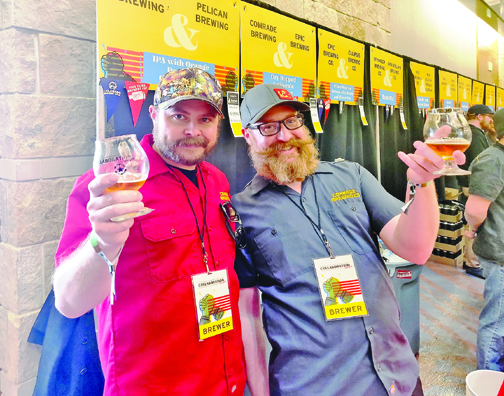
Comrade Brewing: Benjamin Housman, left, and Andrew Lester from Comrade Brewing were among the breweries that collaborated with other breweries to make unique beers. Comrade, located at 7667 E. Iliff Avenue in Denver, worked with Pelican Brewing and Epic Brewing.
Many good beers filled the exhibit hall of the Hyatt
Regency. Some standouts were Comrade Brewing and Epic Brewing (Denver) who
combined to make a Dry-Hopped California Common. Comrade Brewing also
collaborated with Pelican Brewing (Pacific City, OR) to brew an IPA with Orange
Peel and Citrusy Hops.
The longest lines were at the booth reserved for Cerebral
Brewing (Denver) and WeldWerks Brewing Company (Greeley) who collaborated to
make a New England-style Double IPA Brewed with Nelson Sauvin, Sabro, and Citra
Hops.
New Terrain Brewing Company (Golden) and Molly’s Spirits
(Lakeside) also had a crowd for their Desert Berliner Weisse with Yogurt. It
was one of the most unusual beers found at the fest and was a hit among
attendees. Stop by Molly’s Spirits in Lakeside for this and other collaboration
beers while supplies last.
Milkshake IPAs were at a few booths and one collaboration
that stood out was from Launch Pad Brewery (Aurora) and Bent Barley Brewing
(Aurora). This beer was brewed with fresh carrots, walnuts, lactose, vanilla
beans, and spices.
Fiction Beer (Denver) and Calicraft Brewing (Walnut Creek,
CA) brought a single malt grain bill to set the stage for the combination of
yeast, hops, and fruit. Peaches and Viognier Grapes made up 25% of this beer. A
custom blend of bretttanomyces and champagne yeast were used to ferment this
beer dry with almost no residual sugar. Only whirlpool hops and huge dry hops
add to the complexity. The bright aroma of citrus, tropical and stone fruit
from the hops are the perfect complement to the sweet nectar and herbal aroma
from the fruit and our blend of yeast. The flavor is enhanced by the incredibly
dry finish. Crisp, bright, and complex.
Collaboration Fest: The 6th Annual Collaboration Fest was held on March 16, 2019, at the Hyatt Regency in Denver.
Visit www.collaborationfest.com for more information and a full list of all collaborations. Stay tuned for next year’s event as Two Parts always puts on a high quality and well-organized event.
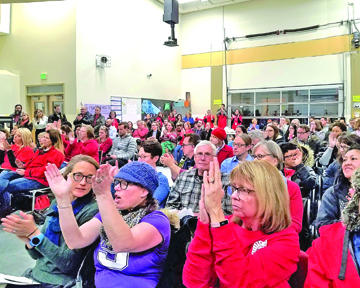
Deeper Issues: Many teachers believe the issues bargained in the strike were emblematic of deeper issues, central philosophical beliefs about education.
The Denver teacher strike made national headlines as the latest district to join the Red4Ed movement on February 11. The strike ended three days later when the Denver Classroom Teachers Association (DCTA) and officials representing the Denver public school system (DPS) signed a tentative agreement. Denver wasn’t the longest strike — Los Angeles held out for five days, West Virginia for nine — but it stood out in another way. “You are a little bit unique here in Denver,” said National Education Association President Lily Eskelsen Garcia, alluding to the controversial pay system known as ProComp. Why ProComp, originally liked by teachers, now caused teachers such distress — why the once-popular pay-for-performance system caused Denver teachers to upend the lives of 72,000 students, put their own livelihoods at risk and enter the first strike in 25 years — is a layered story that goes back 15 years.
Disrespected
Denver educators were also protesting the same issues that caused red-shirted educators to stand up in Oklahoma and Arizona: excessive emphasis on standardized testing, smaller class size, and pay they considered a living wage. At demonstrations, many teachers carried this sign: “When we can’t afford to strike, that’s when we have to strike.”
Newly appointed DPS Superintendent Susana Cordova let her feelings be known: the strike could be avoided if “we sat down and engaged in a discussion that found our common values and beliefs.” But the 93% of DCTA educators who voted on January 22 to strike disagreed. They believed that each succeeding proposal the district offered showed they weren’t really hearing teachers’ demands, or feelings.
And the way DPS prepared for the strike — hiring more substitute teachers, arranging to pay subs twice their usual rate, spending $137,000 on lesson plans for those subs — revealed teachers’ main concern, that DPS does not regard classroom teachers as valuable professionals. That concern was amplified when a week before the strike, a leaked document, posted online, showed how top heavy the DPS payroll was with administrative positions and how many administrators received bonuses on top of six-figure salaries.
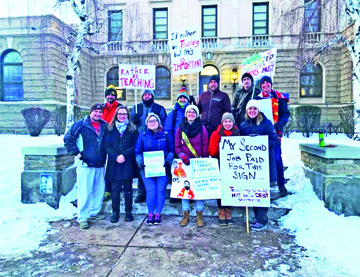
Joining The Picket Line: Dr. Carrie Olsen, first row, second from left, longtime teacher, was elected to Denver’s Board of Education in 2017. She could not continue teaching, the board said, due to “conflict of interest.” Board members, however, are not required to be neutral, so Olsen joined teachers on the picket lines on the third day of strike.
DPS hoped Colorado’s new governor, Jared Polis, would accede to their request and intervene. But on February 7, Polis announced the two sides should work it out themselves, seeing as how their differences were “minor, small … limited.”
Negotiations for those “minor” differences could be seen online. Residents following the bargaining talks on Saturday, February 9 and Sunday, February 10, heard hours of haggling about what a PDU (Professional Development Unit) would be worth — but the talks always circled back to ProComp.
What Exactly Is ProComp?
ProComp — Professional Compensation — is a system that came into being in November 2005, when voters approved a $25 million mill levy override to provide incentives to teachers who worked in “hard to serve” schools. DCTA and DPS jointly designed the system, which was implemented in January 2006, with a stipulation that both parties could revisit the contract in 2007.
Late in 2007, DPS did want to make changes; reluctantly, teachers came to the bargaining table. But after months of fruitless discussions, then DPS Superintendent Michael Bennet issued an ultimatum: teachers should accept the district proposal — higher bonuses and lower base pay — or DPS would no longer honor the master agreement. The ProComp contract was revised early in 2008.
When the ProComp agreement expired in 2013, DPS asked teachers to put off negotiating a new one; they were about to conduct studies on ProComp’s efficacy. Between 2013 and 2017, DPS made changes to ProComp that teachers did not like: “Hard to serve” schools shifting categories; teacher evaluations based on students’ standardized scores; how paychecks had become impenetrably confusing and distressingly unpredictable. “I never know how much money I’ll have for the month,” said a high school English teacher.
DCTA President Henry Roman kept saying that the short-term bonuses were “shortchanging our students. … Teachers deserve a professional career salary.”
What Lies Underneath
The shape ProComp took reflected the reform educational measures DPS Superintendent Tom Boasberg (2008-2018) installed. But ProComp’s changing parameters mostly stemmed from something that happened 15 years before, when Michael Bennet was DPS Superintendent and Boasberg his Chief Operating Officer.
Both men came from the business world and were considered to be financial wizards. Together, they developed a plan to purportedly save DPS millions. They would borrow $750 million for DPS’s outstanding pension debt. Three hundred million would go to pay back already existing pension debt; $400 million would go to fully fund the DPS retirement fund and $50 million would pay banker and lawyer fees.
And although there were indications something was happening in the world financial markets at that time, Bennet and Boasberg went ahead with their plan, which ultimately included institutions such as Goldman Sachs, JPMorgan, Citibank, Wells Fargo and Bank of America, in April 2008. DPS hoped this plan would allow their retirement fund to join the statewide retirement fund, which would in turn allow DPS employees to easily move in and out of the system, which would reduce DPS’s retirement debt — which would provide more money for classrooms. Win/win, right?
Pensions And ProComp
By 2018, that $750 million loan had doubled. DPS now owed $1.8 billion.
Boasberg and Bennet were able to convince the Colorado legislature that DPS should get the equivalent of “pre-payment” credit to deduct the ProComp’s fees and interest from what would have been their normal pension contributions,” explains Jeannie Kaplan, BOE member at that time and unofficial DPS historian. “Because of these actions DPS employees saw their pension fund drop from fully funded on January 1, 2010, to a little under 80% funded in June 30, 2018.”
How the above connects to 2019 teacher strike: base salaries — which ProComp was originally designed to boost — are pensionable. In 2008, the ProComp “bonus” went from a base building system to bonus-based — and since these bonuses do not contribute to a teacher’s pensionable income, this diminishes the amount a teacher has in retirement, and makes smaller demands on a dwindling pension fund.
By 2019, many educators were fed up with ProComp. As the district offered proposals that didn’t address their demands, many wondered who was making decisions for DPS. “Cordova is not the full boss but she definitely has a say,” said one teacher, while educational activists cited DPS Chief Financial Officer Mark Ferrendino and BOE President Anne Rowe, long affiliated with reform groups such as A+ Colorado — and they were heard to say during a closed-door session, “Do not give in to the teachers — as influential.”
Agreement
In the end, DPS did “give in to the teachers.”
“This [February 14] agreement is a win, pure and simple,” said DCTA President Roman. To get that win, Rob Gould, chief union negotiator, said, “I had to use the last tool in my toolbelt.” The agreement provides a more traditional pay system, significant pay raises, a transparent 20-step salary schedule including a 7 to 11 percent increase in base pay — and still keeps incentives for teachers at high poverty schools. Part of the money for teacher raises, said CFO Ferrandino, will come from cutting administrative costs, including 150 central office positions.
For well over a year, DCTA had been trying to negotiate the above points. “For 15 months, the district chose to ignore us,” said Denver teacher Rachel Sandoval. “Can you hear us now?”