by Mark Smiley | Aug 29, 2016 | Main Articles
5,800 Parking Spaces Will No Longer Be Free
by Glen Richardson
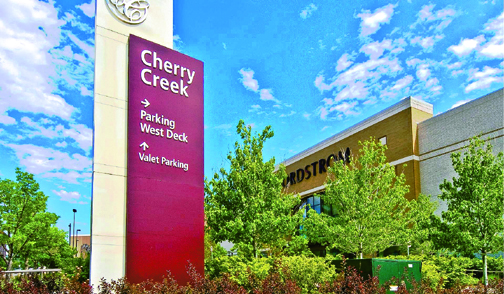
The dreaded “no parking space” syndrome is about to come back and roost on the doorstep of Cherry Creek North. Until now when city officials, developers and retailers were asked about the lack of parking spaces in Cherry Creek North, they would point to the excess of parking spaces available at the Cherry Creek Shopping Center. No longer.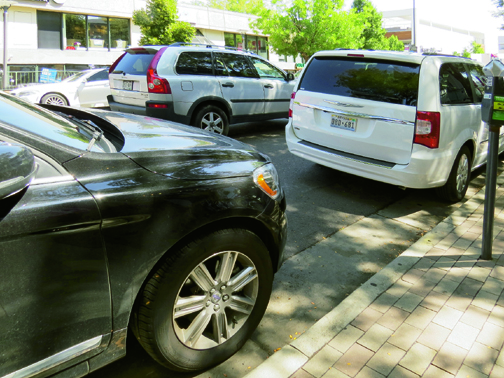
The Shopping Center announced that starting in January it will start to charge for parking. The Shopping Center had little choice in the matter. The City and County of Denver has been requiring less and less mandatory parking spaces at new apartment houses, condominiums and hotels. As a result, employees at retail establishments in Cherry Creek North, owners of second cars who lived in the new condominiums and apartment houses which provided for only one car, visitors to the new hotels, and even everyday shoppers to stores in Cherry Creek North were using the excess parking at Cherry Creek Shopping Center. In addition, the amount of parking spaces at the Shopping Center was being adjusted downward to accommodate the RN interior design building on 1st Ave., and a proposed hotel on the east side of the Shopping Center will further cut into parking.
The Shopping Center, of course, needs to meet the concerns of the 16 million people who visit the mall annually. Furthermore, there are more than 140 indivi dual retailers roosting within the mall.
More than two-dozen new projects have been completed, are under construction or announced in the district in the last year. Developments being completed are resulting in an increase in new businesses, retailers, and restaurants opening their doors almost weekly. All of these new offices, retail and hotels “have put greater pressure than ever on parking here,” declares the shopping center’s longtime general manager Nick LeMasters. Yet of total parking spaces available in Cherry Creek North, the 5,800 spaces in the shopping center account for 70 percent. There are roughly only 500 parking meters in the 16-block business district, another 500 off-street spaces and just over 1,000 in public garages.
Ruffled Nest Feathers
What has increasingly been happening, according to LeMasters, is that a lot of people who do not work or shop at the mall, but apparently work in the area, are parking in the center and leaving their cars parked all day. “This has created a dynamic that is not favorable to our employees at the shopping center or to our paying customers,” he says.
A new state-of-the-art parking system is currently being installed. It will be tested in the fourth quarter of this year and rolled out in January so it won’t disrupt the holiday shopping season. Parking during the first hour will be complimentary. The second hour will cost $3. An extra dollar will be added upon hour three, raising it to $4. There will be an additional $2 each hour afterward, for a daily maximum of $16.
This parking fee at the Shopping Center will be slightly more than Cherry Creek North street parking, but customers will not have to move their cars like they do on the street. Cost will be less than most other enclosed parking garages in the district, LeMasters says. The purpose of paid parking is not to raise money, but to provide a better experience for paying customers, he emphasizes. Initially, he suspects there will be some “pushback” from customers who have long been accustomed to free parking.
Brooding Of Cost
As shoppers become accustomed to paid parking LeMasters thinks they will find it is “more than worth it.” For one thing, the state-of-the-art system by Park Assist will make it easier to park and exit the mall. Signs will tell motorists where parking is available and which parking levels are filled. Each parking space will have either a green or red light, telling customers whether an individual space is filled.
If a customer forgets where they parked, by typing their license plate into a kiosk display it will tell them where they are parked.
Increased security is expected to be a secondary benefit. “We will be adding several hundred more cameras, so that will provide an additional measure of safety and security,” LeMasters reveals. Fortunately, he adds, safety has never been a significant problem, but with many new cameras and an integrated guidance system, it is nice to have more security and an added level of safety.”
The movie theater in the Shopping Center will validate parking and other merchants can also choose to validate parking tickets. The approximately 3,000 employees at the mall will not pay for parking. Also, during special events such as the Cherry Creek Farmers Market and Cherry Creek Sneak parking will be free.
Hatching Reaction
Feedback from shoppers and those living in the neighborhood to the announcement of the parking change has been mixed. Here’s some of the first feedback from Yelpers:
“I have seen the parking situation become increasingly competitive in CCN, mostly because the construction and other workers have taken over the free two-hour spots in the neighborhood. Basically people park all day in the two-hour zone, which means that residents will ask for even more draconian constraints, i.e. permit parking only.” A totally different response: “Huh. Maybe I’ll go to the mall more if there are fewer teenagers lounging around. That’s pretty selfish, I guess.”
Summed up others: “Parking is a PITA [Pain In The A**] more and more in Denver. As densities continue to increase throughout the city, expect more charges to park your buggy in popular areas.” Added yet another: “What a bummer. As if brick and mortar retail needs another reason to be less enticing.”
Surrounded by new high-rise developments on three corners, Jason Rudofsky of Zaidy’s Deli at 1st Ave. and Adams simply says of the growth and parking, “Parking has always been a problem in Cherry Creek, this won’t make it any better.”
Gavin Berry, the General Manager of Del Frisco’s Grille at 100 St. Paul, noted, “Cherry Creek North has always had this stigma attached to it that parking is difficult. So when we came in we knew right away we wanted complimentary valet no matter what the cost might be.” He however understood that the Shopping Center “had to do what they had to do to protect their business.”
When the Chronicle inquired of Christine Des Enfants, Executive Director of the Cherry Creek Chamber, of what effect the Mall’s decision would have on Cherry Creek North, she pleasantly stated “no comment.”
Corrections & Clarifications
In the above feature on Paid Parking at the Cherry Creek Shopping Center, contrary to the article the footprint of Restoration Hardware in the former Saks Fifth Avenue space did not adjust downward the number of parking spaces. Furthermore there currently are no development plans on the east side of the mall that would further cut into parking. “The 5,800 parking spaces at the mall will remain unchanged,” emphasizes General Manager Nick LeMasters.
by Mark Smiley | Jul 22, 2016 | Main Articles
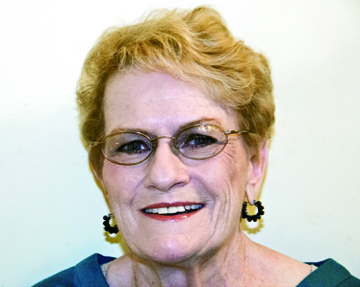
Former Denver City Council President Cathy Donohue:
by Cathy Donohue
I have witnessed or was a part of Denver’s political scene, especially the Denver City Council, for over 40 years. Along the way many neighbors, friends and curiosity seekers have asked me how long zoning decisions in the City and County of Denver have been less than above board and whether it is worse today than in the past.
For the past several months the Glendale Cherry Creek Chronicle has been publishing in-depth articles about the manner in which land use decisions are made by some members of council.
The articles have prompted me to tell the citizens what “really” happens before and after the final votes are taken. I believe that Denver citizens need to know the truth from someone who was present when the decision was made and is still able to tell this story.
First it should be acknowledged that the Denver government has a long history of shady characters. By way of example Denver’s 20th mayor, Wolfe Londoner, won the office by 77 votes in 1889, thanks to friends stuffing the ballot box and having operatives, including legendary lawman Bat Masterson and con man “Soapy” Smith, exchanging votes at bars for drinks. In turn Londoner, with the help of the City Council, rewarded saloon owners by ignoring the local zoning laws and residential ordinances on where new drinking establishments could be located as well as reducing fees and cost of licenses for saloon owners. There is still a tunnel under Bannock street that allows people to cross over to the Carnegie Library. It was used to take money to city politicians before the rules of campaign contribution disclosure were established.
Londoner’s level of corruption was so extreme that the courts removed him from office. He later became the President of the Colorado State Press Association. If you substitute today’s “real estate developers” for “saloon owners” and “campaign contributions” for “drinks” you can see that over the years not much has really changed regarding zoning decisio ns in Denver.
The Rise Of “Courtesy Zoning”
When I was elected to City Council in 1975, I was joined by two other new councilmembers, Sal Carpio and Sam Sandos (think new Denver City Council members Rafael Espinoza, Paul Kashmann and Wayne New from the 2015 Denver municipal election). The three newcomers did not come from the ranks of “party” politics or any other of the usual paths into elective office. We were “unknown” to the Denver political establishment and we did not receive the normal campaign contributions from Denver’s development community. The entire cost of my 1975 election was $3,000. My opponent spent $4,000 — quite a change from today’s campaigns where office seekers spend $100,000 to be elected to the Denver City Council.
In 1975, Sal, Sam and I were shocked to find out after several months in office that we were powerless to represent those who elected us to office regarding rezoning of private property and parkland. Seven council members (out of a total of 13) had formed a cabal and agreed to vote in lockstep with each other and as their developer co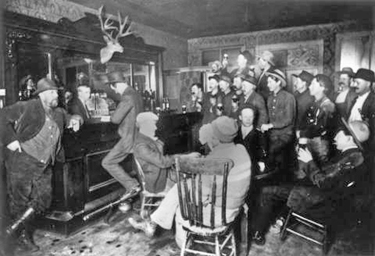 ntributors wanted.
Elvin Caldwell, the leader of the 7-vote cabal that worked for the development community, resigned from council because Mayor McNichols appointed him to be the Manager of Safety. His replacement, King Trimble, was not cut from the same cloth as Mr. Caldwell, and voted with the newcomers. As the Caldwell-led coalition shrunk, we devised a new system to challenge the cabal.
The new system allowed each councilmember to decide what would be appropriate in his or her district and the other councilmembers would respect that decision and “not mess in another councilperson’s district.” (These were the words used at the time).
For more than 20 years beginning in 1975, this system worke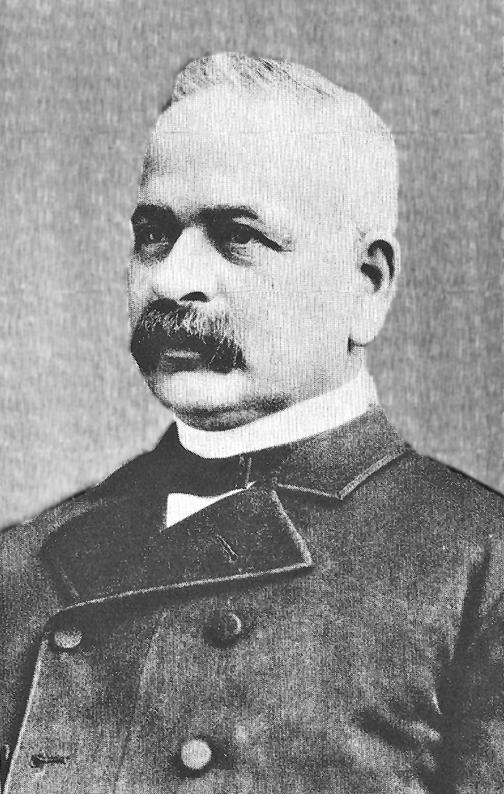 d. We did not have developer-controlled zoning. Land use in parks and private property was under the control of the council person of each district. After 2003, the development community gradually found seven politicians who would accept their contributions. There are now seven Council votes that will put the developers back into their old position of power over council members. They have reverted back to the pre-1975 system.
Long after Sam, Sal and I left council, someone decided to give a name to the phenomenon. They called it “Courtesy Zoning.” Sal Carpio, Sam Sandos or I never heard the words “Courtesy Zoning” until long after we left elective office. In those districts in which the developers gave lots of campaign contributions, they controlled the city council person in question. The voters in each district know which councilmember is responsible for any questionable rezoning or “Parks” decisions. The voters can put pressure on their representatives if they vote irresponsibly, or they can find a replacement.
The Effect Of Term Limits
In 2003, 12-year term limits were imposed by the voters on all of 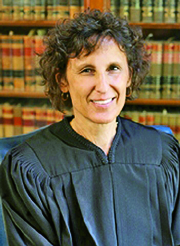 Colorado’s elected officials. While term limits can have salubrious effects, in Denver the law of unintended consequences occurred.
It was an opening that developers and elected officials could exploit. Anyone considering running for Denver City Council simply waits until an existing member becomes term limited instead of going through the hassle of challenging an incumbent. Once elected, a councilmember, barring extraordinary circumstances, does not have to worry about being re-elected until the term limit has been served. Thus, maximum density developers only have to invest heavily in the first term-limited campaign and keep the contributions flowing for the two remaining terms. It usually takes only one election cycle (and quite a few campaign dollars) for developers to regain control of a councilmember.
After 2003, a dramatic and unfortunate reversal began. Slowly, but surely, Councilmembers began to vote against their constituents’ wishes and ultimately the 20-year hiatus from the developers’ hold on councilmembers ended.
Councilwoman Marcia Johnson was the first member to reverse the historical purpose of Courtesy Zoning by voting “yes” on a controversial zoning in her District called Lowry Vista.
Councilwoman Johnson represents District 5. She ignored 87 percent of the residents who opposed the rezoning from open space to high density mixed use. The land had once been used as a waste dump for all the toxic materials generated at Lowry Air Force Base. Quite naturally, Johnson’s constituents worried about contamination, but Johnson simply paid no attention to their pleas. Fortunately, the rezoning is being re-heard in the courts and no one has shown an interest in buying this highly toxic piece of land.
The City Council hearing on the Lowry Vista matter lasted until 2 a.m. Windsor Gardens, whose residents had previously supported the rezoning application, sent a representative to the hearing at midnight to tell Johnson they had rescinded their support from “yes” to a unanimous “no.”
Instead of voting as her constituents requested, Johnson voted with the developers and their lobbyists. In doing so she betrayed the voters. Repercussions followed. When she attended meetings in her district, she was met by angry voters. She decided to hold an “Ice Cream Social” to re-establish herself. Her constituents stayed away. A short time later she announced she would not seek her third term so that she could spend time with her family. Johnson is the only City Council member that has abandoned the 12-year term which began in 2003. Johnson was succeeded as the council member from District 5 by Mary Beth Susman, who promised she would listen to and respect the opinions of her constituents.
Parks In The Crosshairs
Several years ago Denver City Council gave up its right to control Denver parks to the Mayor’s office. It was a strange decision, since under Denver’s “strong mayor” form of government the City Council historically has been envious of the powers of the Administration. Soon, the mayor and his developer friends began looking to Denver’s parks as a source of revenue and development.
The Administration began looking for parkland and open space that had perhaps, by accident, not been designated as a park by an ordinance passed by Council. They found a portion of Hentzell Park that had inadvertently failed to be officially designated as a park. Mayor Hancock quickly prepared to exchange the land for a downtown office building owned by Denver Public Schools. Despite adamant neighborhood opposition Councilwoman Peggy Lehman, who was also term limited, voted “Yes” on removing this land from the parks system. The rest of the Council supported her as if it were a “Courtesy” matter. It should be noted that zoning matters concern “privately owned” land and are requested by the owner. Parks belong to the citizens of Denver. Peggy Lehman’s duties did not include the removal of any parks from the citizens who own them without their approval. She should not have been the “decider” in the matter of publicly owned parkland.
We should also question the wisdom of any public body that believes it is good government policy to put a public school in that part of Hentzell Park that is in a flood plain. Council members then extended the “Courtesy” vote to parkland — a new addition that clearly violates Denver’s charter.
The Death Of “Courtesy Zoning”
By the time the 2015 municipal election took place, neighborhood groups and private citizens throughout the city demanded that all candidates for City Council pledge to abandon “courtesy zoning.” The “Johnson” reversal of Courtesy Zoning left a very bad taste in the mouths of the citizens. Most politicians took the pledge. Voters did not want “courtesy” to ever be used as Johnson had done at Lowry Vista, or as Lehman did with Hentzell Park.
Little did we know that maximum density developers and their minions had figured out a way to pervert the vote of council. When a maximum density developer wanted to rezone the Mt. Gilead Church property on Crestmoor Park he assumed he knew just how to accomplish his mission. Although Susman thought the matter was settled, this rezoning also had to be settled by the courts.
Johnson’s replacement on City Council, Mary Beth Susman, had seen what happened to her predecessor when the vast number of her constituents opposed her vote on the Lowry Vista rezoning. The Mt. Gilead Church property on Crestmoor Park had an equal if not more fierce neighborhood opposition. Susman in fact voted “No” on the rezoning but she let her colleagues know it was just a phony “show” vote. The Council as a whole voted “Yes” to the rezoning. “Courtesy voting” was not honored. Several Denver councilmembers even mocked neighborhood groups at the hearing telling them that, “You wanted us to get rid of ‘courtesy zoning’ and you have been granted your wish.” The councilmembers knew that “courtesy zoning” was a great gift to the citizens, not to the maximum density developers.
Call To Action
Today, voting patterns have come full circle. We have returned to the place we were prior to 1975 — seven votes solidly in the pockets of the Mayor Michael Hancock and the maximum density crowd. Fortunately, the voters elected four new councilmembers last spring that are not controlled by the pro-maximum density crowd –- Rafael Espinoza, Kevin Flynn, Paul Kashmann and Wayne New. They vote their consciences. Two veterans, Debbie Ortega and Paul Lopez, often join them.
Seven other councilmembers, the Denver Community Planning Development Agency under Brad Buchanan, and Mayor Hancock promote bad land use decisions. As demonstrated by the revolting conduct of the infamous “Pro Corruption” Denver District Court Judge Shelly I. Gilman in the Crestmoor Park case, the local court system in Denver may well be as venal as the majority of the members of the Denver City Council. The Denver courts apparently refuse to pretend to be neutral arbiters of disputes between the citizenry and their municipal government and cannot be trusted, based on the judges’ rulings on Crestmoor and Hentzell Park.
Thus, as Denver continues to grow, we need to shine a bright light on the voting of our city’s politicians. We need a “performance audit” to track the land use voting records of Council. The Auditor, the Mayor and the City Council should not be forced to use the same attorneys, as is the rule according to Denver’s Charter. It is morally reprehensible to use the same attorney to represent opposing sides of an issue. At least the Council and the Auditor should have separate legal representation. In the city of Denver, the Mayor is the only elected official with proper legal representation. A number of times in the past, Council has hired its own legal representation.
Applications for rezoning property are believed to make land more valuable — at least that is the common understanding. Private property bordering a city park is even more valuable. Denver citizens need to be made fully aware of the outcome of all “Courtesy” voting, whether it is for zoning changes or loss of land in city parks. If the way in which our city politicians perform their duties does not pass the smell test, we need to replace them and those parts of the city’s constitution that permit this behavior.
Neither do we have to wait 12 years to replace a politician who has sold his or her vote to the highest bidder. Even replacing one council member at a time will cause the others to shiver and quake. They may even begin to care about Denver. We owe it to our children and grandchildren to try to keep our city safe and livable for the future. Council is currently approving highly questionable decisions.
by Mark Smiley | Jul 22, 2016 | Main Articles
New Hotel Adding Fuel To Fire Of Beltway Boom
by Glen Richardson
South Colorado Boulevard is heading into summer with explosive momentum: Three new retail redevelopments are getting underway plus two towers along the thoroughfare have sold to a Middle East investment firm for $62 million. Furthermore, at the Colorado Center — the southernmost dense pocket on the corridor — where Lincoln Properties currently has a 15-story office-retail building and 189-unit apartment complex under construction the developer is also planning to build a hotel.
Once the business backwater to flashier projects in Cherry Creek and downtown, a potent mix of fierce market demand, older properties ripe for redevelopment, plus high traffic volume is fueling a race to rebuild. The muscle behind the boulevard’s new driving power is Glendale’s $175 million entertainment and retail venue planned between Colorado Boulevard and Cherry Street, and Virginia Avenue and Cherry Creek Drive North. Creating added horsepower and torque to the business breakaway are the two $50 million Sonic Automotive car dealerships (Mercedes-Benz and BMW) under construction on the east side of Colorado Boulevard in Glendale.
Colorado Blvd. real estate market watchers remind the Chronicle that North Carolina-based Sonic originally swapped its Cadillac dealership in Lone Tree to John Elway Automotive Group for the Colorado Blvd. Chevy site. Initially Sonic planned to continue running the Chevy dealership but later came to the conclusion, “the real estate was more valuable than the Chevy business.” Moreover, both the BMW and Mercedes dealerships now under construction will have two-story showrooms. Insiders note the property has to be very valuable to go vertical because it’s very expensive.
Buying Binge
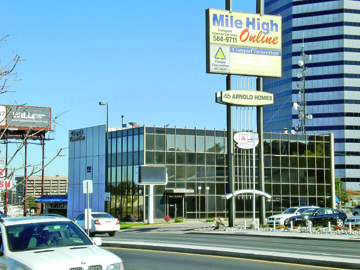
Directly across Colorado Blvd. from the Mercedes-Benz dealership under construction, Florida real estate investor and car dealer Ira Lang has purchased the site that once housed language-learning center BridgeEnglish. The two buildings on the site at 915-925 S. Colorado Blvd. will be redeveloped into 7,020 square feet of new retail space. The Miami Beach investor who already owns more than a half dozen properties on Colorado Blvd., paid $3.275 million for the prime property on the corner of Colorado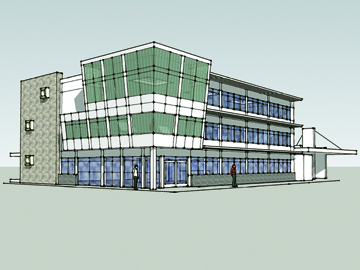 Blvd. and Kentucky. Longtime Lang associate Gary Glusman — who manages all of Lang’s Denver properties — says, “we simply ran out of buildings to buy as investments along Colorado Blvd. so we are buying older properties that can be redeveloped.”
Lang Development has also purchased a parcel of land at Colorado Blvd. and Arizona for $3.2 million. A three-story, 17,706-square-foot office building sits on the three-quarters of an acre site. The 52-year-old building will be partially demolish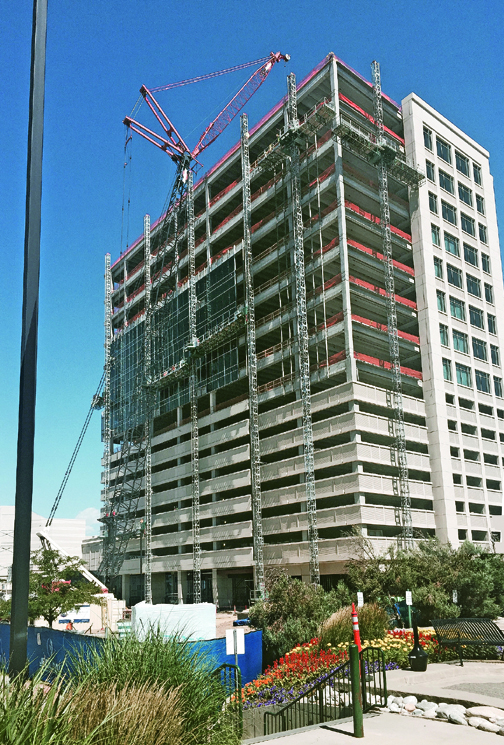 ed and remodeled. The building is being redeveloped with 70 off-street parking spaces.
Further south at 2865 S. Colorado Blvd. Lang is redeveloping a 15,000-square-foot, three-story office building near one of Denver’s busiest thoroughfares. Located just north of Hampden Ave. with easy access to I-25, Lang paid $825,000 for the property in an area that already has several office and retail new construction and redevelopment projects. G3 Architecture is designing all three of Lang’s retail redevelopments.
Greenbacks Buy
Investcor, an active investor in U.S. real estate based in the Middle East island country of Bahrain on the western shores of the Persian Gulf, has purchased the two Centerpoint Towers on Colorado Blvd. for $62 million. Built in the early 1980s, the Centerpoint 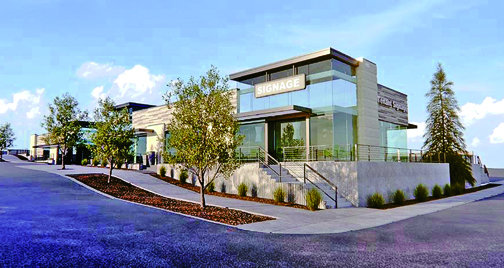 complex is comprised of two office towers located at 3900 E. Mexico Ave. and 1777 S. Harrison St.
Seattle-based Unico — owner of a cluster of Cherry Creek North buildings — was the seller. Back in 2006 and 2012 Unico paid a total of just more than $38 million for the two buildings.
Centerpoint II made up the majority of the sale price at $32.7 million. The tower is a 17 story building with 205,000 rentable square feet. At 14 stories Centerpoi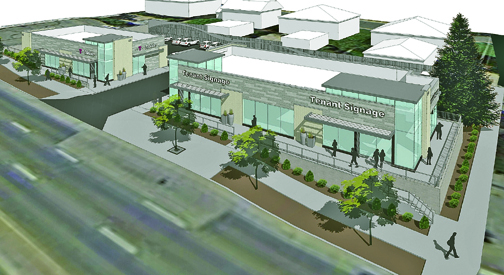 nt I is the smaller tower and has 168,000 rentable square feet, accounting for $29 million of the sale price.
Full Tilt Ahead
The Colorado Center — where new residential and retail components are under construction near Colorado Blvd. and Evans — has been ripe for growth since the light rail station opened. With 35 stations across five lines, the existing light rail system allows for fast and easy metro area travel.
More than one million square feet of development is currently underway on the 13-acre office, retail and entertainment complex. Tower III construction began in August of 2015. The Main Street and the Residential Tower construction got underway this June.
Buildings featuring 269 apartment units and 40,000 square feet of retail space are being built closest to the transit station. Already featuring three Class-A  office buildings, a Dave & Busters plus United Artists Colorado Center Stadium 9 and IMAX, a hotel is the logical next addition to the Center’s portfolio. Although shown in Denver’s Tryba Architects master plan, the firm has yet to release a rendering of the proposed hotel.

by Mark Smiley | Jun 24, 2016 | Main Articles
This Time Regarding Park Hill Golf Course
by Glen Richardson
 Notwithstanding the fact that Denver District Court judges appear to many to view themselves as little more than employees of Mayor Michael Hancock’s administration, former Colorado Attorney General J.D. McFarlane has filed suit to attempt to prevent the Hancock administration from turning a significant portion of Park Hill Golf Club into a stormwater detention facility. McFarlane is represented by attorney Aaron Goldhamer of the law firm of Jones & Keller P.C. Goldhamer is a candidate for the position of representative for State House District 8. He is a Yale undergraduate and obtained his law degree from Georgetown University.
The lawsuit is brought against the city, Denver Mayor Michael Hancock, Parks Executive Director “Happy Haynes” and Jose Cornejo, the manager of Public Works. The lawsuit charges that the city engaged in a corrupt scheme to place an industrial-level stormwater detention facility on the Park Hill golf course in furtherance of the I-70 expansion which violates the Denver City Charter and common law governing municipal use of the public parkland.
The 14-page “Complaint” lays out in plain and stark language a fraudulent scheme by the City of Denver and its offi-
cers and officials to aid private developers and landowners adjoining the proposed I-70 expansion and undergrounding at the expense of Denver neighborhoods and Park Hill Golf Club.
The Complaint exposes that the City lied to the public and the neighborhoods in its assertion that it was attempting to protect the Cole and Montclair neighborhoods from potential stormwater and drainage harm due to severe flooding. The complaint notes that it suddenly changed from the normal five-year protection to 100-year protection which only applies to federal highway projects and which is cost prohibitive and unneeded for cities like Denver which are located in a semi-arid environment.
The Complaint reveals the city attempted to fool the public by showing pictures of Katrina-type flooding in areas unrelated to the drainage. Denver further failed to make clear that significant flooding in northeast Denver will still occur according to the Complaint even after tens of millions are spent.
The Complaint also asserts that the funding for the project also appears to violate Article X Sec. 20 of the Colorado Constitution (the Tabor Amendment) and while no claims regarding the same were asserted in the Complaint, McFarlane “reserves the right to amend this Complaint to assert such a claim.”
The Complaint seeks declaratory and injunctive relief preventing the partial destruction of City Park Golf Course.
The Denver District Court Judge hearing the case is Michael J. Vallejos, a University of Colorado graduate for both his undergraduate and legal degrees, who before coming to the bench, served as a Deputy State Public Defender. His qualifications to some seem in part to mirror those of Denver District Court Judge Shelley I. Gilman, known as the so-called “Pro Corruption Judge,” whose alleged disgraceful behavior at the hearing on April 22 caused many attendees to give up all hope that a Denver District Court judge could be a fair and impartial arbiter of any dispute regarding the Hancock Administration which appears to some to wholly control what is supposed to be an independent judiciary within the City and County of Denver.
by Mark Smiley | Jun 24, 2016 | Main Articles
by Charles C. Bonniwell
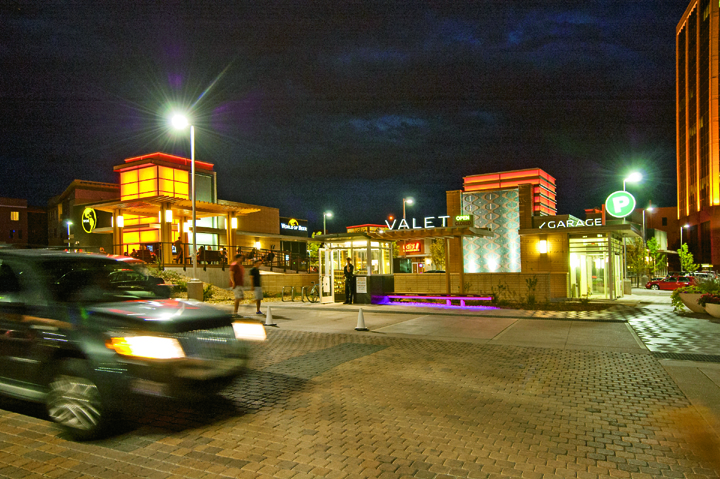
The CitySet hotel/dining development in Glendale at the southeast corner of Colorado Boulevard and Cherry Creek Drive South has been an extraordinary success. An open plaza anchored by two major hotels (Residence Inn Cherry Creek and the Hilton Garden Inn Cherry Creek) and features eight different dining options ranging from Jax Fish House and Silvi’s Kitchen to Platform T and Big Smoke Burger.
The development has but one major drawback — lack of sufficient parking. According to documents obtained though the Colorado Open Records Act, Stonebridge Companies headed by Navin Dimond, convinced the City of Glendale and its head of planning, Deputy City Manager Chuck Line, into reducing the parking requirements by 20 percent from 663 spaces to 553. The project was heavily promoted by then mayor Larry Harte according to Line. But the city and CitySet were fortunate that Line refused to lower the number of spaces down even more to 482 as originally demanded by Dimond and his experts in his filings with the city.
Why Damage Your Own Project?
Why would a developer want to hurt his own project with insufficient parking? First of all because the type of needed underground parking costs approximately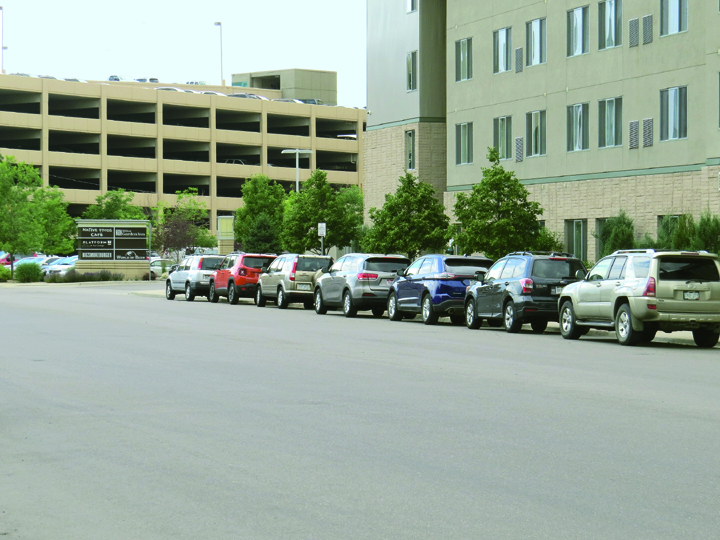 $40,000 per space. In CitySet’s case the reduction saved the developer Dimond over $4,000,000. Secondly, and most importantly, savvy developers like Dimond know after bamboozling a city they can later come back and force the public to pay for all the parking they need and that is exactly what happened in Glendale.
Once the project was started, Dimond, through his affiliated companies, howled that CitySet did not, in fact, have adequate parking for all of its customers. How much additional parking was needed? It was almost exactly the 112 spaces Dimond convinced Glendale not to require in the first place.
Once a city like Glendale has approved a project with an under supply of parking it has little choice but to later provide a solution at the expense of the taxpayer. CitySet is a major producer of municipal revenue for Glendale, not only providing sales and property taxes but also the considerable hotel room tax. Moreover, if a major development like CitySet should fail due to lack of sufficient parking it would cast a pall on development throughout the city and threaten the viability of future developments, like the proposed Glendale 180 development across Cherry Creek on East Virginia Avenue.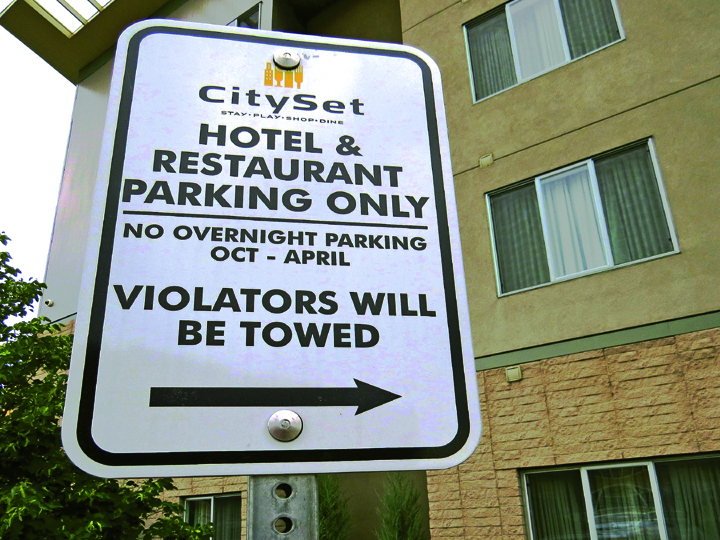
Glendale also does not wish to hurt valuable tenants who had no idea Dimond purposely demanded that the city parking requirements be reduced for his own financial benefit. Cameron Tune, owner of Big Smoke Burger at CitySet, makes it clear that for his business “making sure parking is convenient is a top priority,” and he strongly urged Glendale to find additional parking for customers. He notes customers to CitySet can also take advantage of the existing free valet parking, between the two hotels, offered Tuesdays through Saturdays.
New City Ordinance
So rather than limit the viability of the CitySet project, the City of Glendale passed an ordinance taking the adjoining streets of South Exposition Avenue and South Ash Street and converting them from broad boulevards without on-street parking into much narrower driving lanes and parallel parking on both sides of the street.
The ordinance did not establish just ordinary street parking but the spaces that are restricted to only customers of CitySet. This was accomplished by util izing a purported competitive bidding process with the successful bidder being a charged a small monthly maintenance fee of $20 to $30. While anyone could have theoretically bid on the special parking, the only realistic likely bidder was, of course, Navin Dimond through his affiliated companies. Line did refuse to give CitySet a long term commitment as wanted by Dimond and limited the reserved on street parking to a yearly term.
The special parking ordinance does not solve all of CitySet’s parking problems as it provides about half of the 112 parking space shortfall, but everyone expects Dimond to return in the not too distant future and expect the city’s taxpayers to pay for rest of his parking needs.
Mistake Conceded
Deputy City Manager Chuck Line concedes, “Yes, I made a major error. I never should have recommended to the Planning Commission and the City Council a major reduction in parking for CitySet. Every time you let a developer and their experts convince you that they do not need the required parking I have regretted it, and I do regret it in the case of CitySet. But now we do need to make it work for everyone’s sake.”
One would have thought Glendale had learned the hard way, that not providing adequate parking always creates  major problems in the future.
North Glendale adjoining Leetsdale Drive and anchored by Mir Park is going through a residential renaissance. The apartment buildings built there in the 1960s are becoming highly sought after when renovated to modern standards. But when the buildings were constructed the city had little or no required on-site parking believing that on-street parking would be sufficient. But with development in the area the applicable on-street parking is now woefully inadequate. The city is now desperately trying to find a solution to allow the area to prosper.
Similarly Glendale did not require sufficient parking at the Skyline retail development on Colorado Boulevard featuring Chili’s, AFC Urgent Care, Noodles Fresh,World Market, Mile High Comics, and other successful stores and eating establishments. Parking wars consistently break out with those controlling the parking, hiring towing companies to take away cars of individuals shopping at stores without adequate parking for their customers.
Developers Need And Want Municipal Concessions
The key to the success of any developer is obtaining monetary and other concessions from the applicable jurisdiction. For example, Dimond for his CitySet project got Glendale to pay almost $16 million of his development costs through tax rebates, covering everything from his cost of acquiring land to paying for landscaping and even public art. The modification to the Glendale Zoning Code regarding parking made him an additional $4,000,000 that comes out of the pocket of every man, woman, and child in Glendale.
This is why real estate experts shake their heads when watching Mohammad Ali Kheirkhahi and Authentic Persian and Oriental Rugs demand Glendale never even consider acquiring their land and forcing Glendale to exclude their property from the Glendale 180 project and the applicable special districts. But forcing the city to do so, through threats and lawsuits, they made monetary concessions legally impossible to grant for their property, thereby greatly devaluing any project on their land. As one expert noted (who did not want to be quoted by name for fear of possible retaliation from Kheirkhahi): “It is a truism in real estate development that ‘pigs get fat while hogs get slaughtered.’ By being the most brutal, vicious hogs possible they have monetarily slaughtered themselves. Not exactly terribly bright.”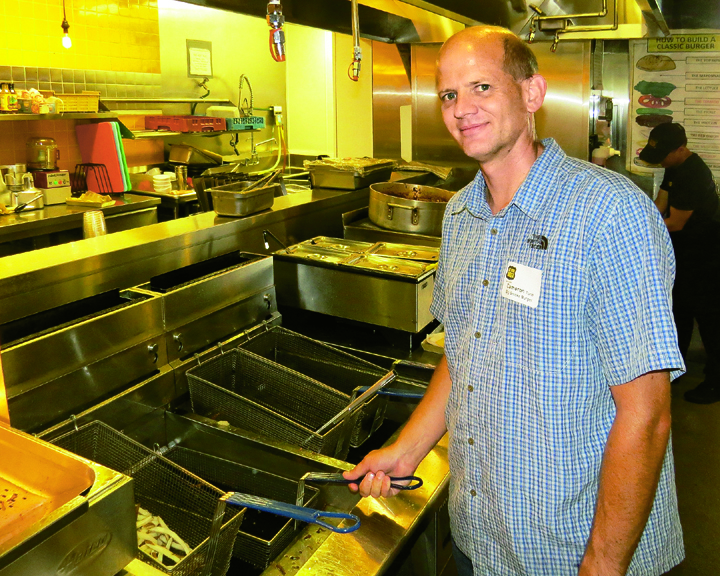
by Mark Smiley | May 27, 2016 | Main Articles
All Charges Dismissed
Is Agent Ravenelle Another Schlaff Or Even Connolly?
by Charles C. Bonniwell
Just when people thought the Authentic Persian & Oriental Rug development controversy could not get any stranger, it has. The Federal Bureau of Investigation (FBI) demanded that the Office of Arapahoe County District Attorney George Brauchler dismiss all charges and quash all warrants against the phony private investigator from Tennessee, Charles Johnson “for reasons that cannot be disclosed.” (See FBI letter on page 4.)
FBI Viewing Average Citizens As Criminals
Johnson allegedly stalked, harassed and intimidated the City of Glendale City Clerk and anyone who had made comments or sent a letter to the Glendale Cherry Creek Chronicle critical of Mohammad Ali Kheirkhahi or his M.A.K. Investment Group, LLC’s redevelopment of 3.8 acres of land along Colorado Boulevard. Johnson had never registered as a private investigator in Colorado nor in his home state of Tennessee. Failure to obtain a private investigator license in Colorado is a Class 2 misdemeanor. Police found on Johnson current driver’s licenses from three different states — Florida, Hawaii and Tennessee — which is a crime in many jurisdictions.
Bizarrely, after being arrested Johnson called back the arresting officers and taunted them and asserted that he was going to file a civil rights complaint with the FBI. Days later the Glendale Police Department received a call from the FBI saying that a complaint had been filed and they were immediately going to begin an investigation and not even wait to see if Johnson was, in fact, found guilty. The FBI did not say what the complaint was based on and never disputed that Johnson appeared to have engaged in criminal conduct.
Strange FBI Interviews
FBI Special Agent Kimberly Milka then starting contacting persons who filed complaints against Johnson including Glendale City Clerk Sherry Frame and Richard Witholder who wrote a letter modestly critical of Kheirkhahi’s proposed development to the Chronicle. Milka insisted that they provide an interview with the FBI. Apparently the interviews were strange affairs having nothing to do with Johnson but instead the interviewee’s opinion on whether Johnson’s arrest should have been on the front page of the Chronicle and whether the articles concerning the proposed development were fair and balanced.
Milka apparently asked Witholder, did he know who the “secret buyer” Glendale had for the M.A.K. property was, which confused Witholder since his only connection with Glendale was he wrote a letter to the Glendale Cherry Creek Chronicle in opposition to the proposed development.
Deputy City Manager Chuck Line was shocked to learn from the Chronicle that the FBI was spreading a false claim from the wealthy rug merchants that there was a “secret buyer” associated with Glendale for their land. “There is no secret buyer and never has been,” stated Line, and “we are no longer interested in buying their land and have told them so.”
City Clerk Sherry Frame stated in a telephone interview with Fox31 News that Special Agent Milka said that the FBI was regularly monitoring The Peter Boyles Show on 710 KNUS Radio. The Special Agent wanted to know why the show falsely claimed that Johnson had broken into Frame’s residence. Frame corrected the government agent saying she had recently listened to a podcast of the show and what was said was correct, i.e. that Johnson had repeatedly attempted to gain entry into the apartment complex where she lived by incessantly ringing her apartment complex number that transferred to her cell phone.
Legal experts indicate that both Frame and Witholder were both potential key witnesses in the Arapahoe County case, and if anyone else had engaged in the conduct of Special Agent Milka, that such person would likely be charged with obstruction of justice and witness tampering by the D.A.
District Attorney Brauchler Praised
Civil libertarians have praised Brauchler for demanding that the FBI produce a letter from the Denver Special Agent in Charge, Thomas P. Ravenelle, and attach the letter to the Motion to Dismiss to the court which made it public record. A district attorney has almost total discretion in such matters and could have hidden the FBI’s invo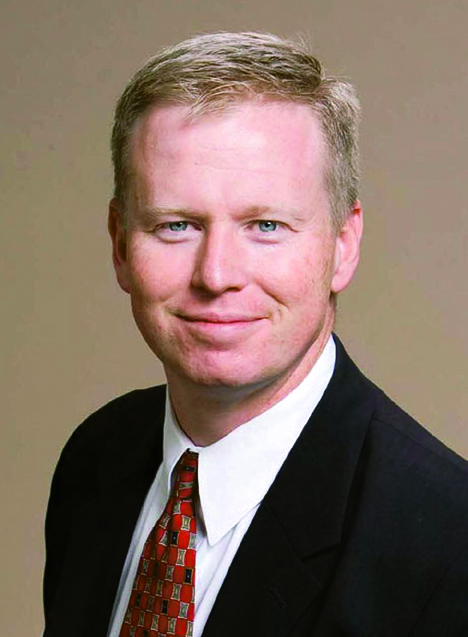
lvement in the matter.
More concerning to some is the fact that apparent FBI informant Charles Johnson and FBI Special Agent Milka were clearly violating the 1st Amendment rights of the citizens like Witholder who simply wrote letters to a newspaper on a matter of public concern. Some of the victims of the FBI’s actions have wondered when it is the FBI violating your rights, who do you get to complain to?
Free To Kill
For experienced Cherry Creek Valley hands the case seemed to have echoes of the Scott Lee Kimball debacle of seven years ago involving the Denver FBI which effectively destroyed its reputation locally. While the Chronicle wrote extensively on the case, perhaps the best full summarization of the case is located on the Boulder Daily Camera website under the title “Scott Lee Kimball — Free to Kill.”
In December 2002 Kimball was released from jail for various crimes, including forgery, to be an active informant on a drug bust. Instead he went on a four year killing spree murdering at least four women and his uncle with the active assistance or criminal negligence of FBI Special Agent Carle Schlaff.
Kimball was only caught due to the incredible persistence of family members of the women probably tortured and murdered by Kimball and the work of Lafayette Police Officer Gary Thatcher.
“The Cleaner”
Schlaff was replaced on the case by Jonathan Grusing when it became clear that local law enforcement was on to the fact that Kimball was murdering people with the aid and assistance of the FBI. Most of the victims’ families viewed Grusing
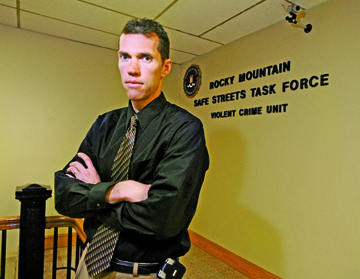
Jonathan Grusing, a special agent with the FBI, poses at the Safe Streets Task Force office in Denver.
Photo by Marty Caivano/Camera/Feb. 19, 2010
as a hero, at least as compared to Schlaff, but others dubbed him “The Cleaner” after the Harvey Keitel character in the movie Pulp Fiction. The Cleaner in the movie was sent in to erase all indicia of the crimes and any connection to the Mob. Some viewed Grusing in a similar manner, erasing all evidence of FBI crimes as related to the murders by Scott Lee Kimball.
If that was the role of Grusing, he was very successful as no actions were brought against any person in the Denver FBI office for the murders, unlike the case in Boston where the Whitey Bulger murders resulted in FBI agent John Connolly being sent to prison for 40 years.
Incredibly, Special Agent Grusing is apparently also involved in the Glendale matter with knowledgeable individuals saying that Grusing and Mohammad Ali Kheirkhahi are “thick as thieves” and are in regular contact with each other.
The Ribeau Analysis
Some have surmised that Kheirkhahi may be a federal confidential informant himself against the Islamic Republic of Iran where he often travels and has extensive business contacts. In addition, Mike Ribeau, a former Homeland Security agent who heads up ISL Consultants and was at one time embedded with the FBI, believes that the FBI is engaged in a bigger investigation, and that the Johnson affair is causing problems. He surmises that the FBI is attempting to claim that Glendale officials, by not automatically approving the vague and inchoate development suggestions of Kheirkhahi, are violating the civil rights of the rug merchants.
He points to the Obama Administration’s recent effort to override local zoning laws in suburban communities to provide a massive influx of low income individuals and foreign born immigrants. The mere fact that Glendale residents and neighborhood groups throughout Denver are opposed to the massive condo project on Colorado Boulevard is perhaps, for the FBI, proof positive that Glendale officials are engaging in criminal Islamophobia notwithstanding the fact that oppo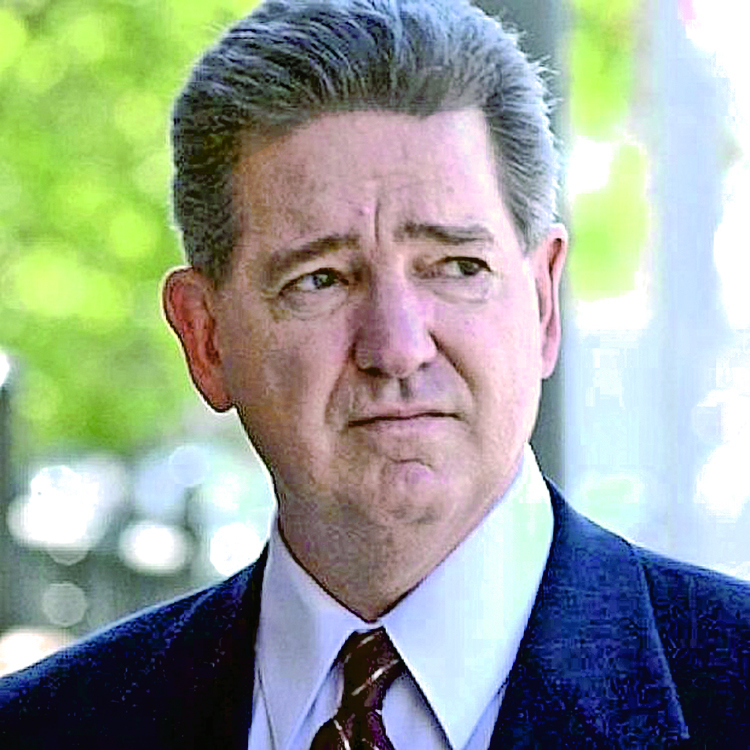 sition has nothing to do with religion.
Other experts consulted by the Chronicle found Ribeau’s analysis “highly plausible.” If the Ribeau analysis is correct, then Glendale and surrounding Denver neighborhoods are in for a long, hot summer with the incredibly wealthy rug merchants with potentially unlimited funds coming in from Iran and their expensive, high-powered law firms teaming up with the power of the U.S. federal government to quash any and all local opposition to anything that Mohammad Ali Kheirkhahi wishes to impose directly or indirectly. For some, it could be a scary time to be a resident of the Cherry Creek Valley where the normal rights of American citizens may potentially no longer be of very much importance to the Federal Bureau of Investigation.