by Mark Smiley | Feb 26, 2015 | Main Articles
by Glen Richardson
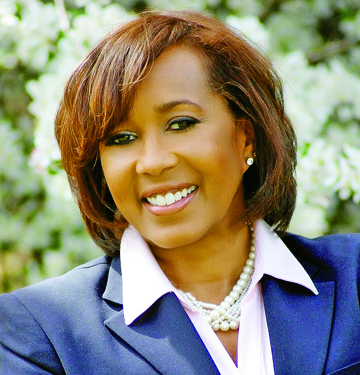
Perhaps the biggest fight in the upcoming Denver municipal election is in the 4th Council District where Councilwoman Peggy Lehman is term limited. While there are five candidates for the council seat, it appears to be coming down between two women, Halisi Vinson and Kendra Black, who represent dramatically different interests. To date the other candidates have not raised sufficient funds to get a strong political message out.
The 4th District is the southeast portion of the city from East IIiff Avenue on the north down to Belleview Avenue, and includes the neighborhoods of Wellshire, University Hills, Goldsmith, Hampden, Hampden South, Kennedy and Southmoor Park. (See map on Page 19.)
Black is viewed by Webb supporters as a candidate being wholly under the control of real estate developers and initiators of the destruction of the Hentzell Park natural area in the District that raised an uproar by citizens.
Halisi Vinson on the other hand is being backed by park advocates including former Denver Mayor Wellington Webb. The former mayor sent a blistering e-mail to interested parties throughout the 4th District and elsewhere declaring in the opening sentence: “First they took our park and now they want to buy a council seat.” (See the full letter on Page 3.)
He goes on to note, “What residents of District 4 need to be aware of is that Halisi’s opponent is taking thousands for her campaign from those who took the park. They even rejected your signatures calling for a public vote on taking the park land, which has been officially called a park since 1955.”
The e-mail has set off a firestorm of debate not only in the 4th District but across the city.
Black was the co-chair of the highly controversial 15 member oversight committee appointed to oversee the funds of the $466 million bond issue approved by voters in November 2012. Critics accused Black and her fellow committee members as being little more than “a rubber stamp for the district’s spending plans” according to the website Chalkbeat Colorado.
Among Black’s numerous endorsers and money contributors are Lisa Dannemiller, the disgraced Denver Park Manager who orchestrated the destruction of the Hentzell Park Natural Area for Mayor Michael Hancock. She oversaw the removal of longtime park advocates from the Park Advisory Board who opposed the mayor’s plans.
Another higher controversial contributor is Marcus Pachner. A lobbyist and political fixture, Pachner was paid by the International Risk Group to help smooth over the selling of 80 acres of Lowry Vista open space to the developer for $10 for massive mixed use development that outraged citizens in the 5th District. The appearance of Pachner on the money donation list of Black has drawn the ire of park advocates in the 5th District.
Additional endorsers include wealthy attorney Steve Farber whose law firm Brownstein Hyatt Farber Schreck LLP is widely despised by good government advocates but represents many of Colorado’s most powerful real estate developers, and CRL Associates another influential Denver lobbying firm for developers.
Webb admirer and park advocate Trish Abbott said, “Ms. Black’s endorsers include a rogue’s gallery of some of the greediest individuals in all of Denver. If she gets in office she will let them destroy the district so it will be unrecognizable in four years.” Webb noted in his e-mail, “ïf they get away with this, the rich and powerful will try to take other parks and buy our council seats.”
Another park advocate Richard Witholder urged District voters to go to Black’s website and review the Issues section where she refers to herself in the third person as in “We are fiscally responsible.” The fact she uses the royal “We” tells you everything you need to know about her.
She went on to note, “With Kendra Black you can say goodbye to any parks and open space in the District that the developers can grab along with massive high rises in local residential neighborhoods. Just look what they have done to Cherry Creek North, Lowry and Crestmoor. These fat cats and neighborhood busters are not giving her all this money for nothing.”
Other Vinson supporters note that Black appears to have little or no business experience other than her assertion of “witnessing my husband’s 25 years in small business.”
Webb in turn noted that Vinson is a fierce advocate for parks who has an MBA and 30 years of corporate and venture capital experience. Vinson states, “I will be dedicated to making sure that we maintain what we love about Denver, like our open spaces and parks, in the midst of change.” She is a member of the Hampden Heights Civic Association. She is married to Ric Crawley a former firefighter and city employee.
A review of the Candidate Financial Dis-closure Statements for “Halisi Vinson for Denver” show the largest contributors to her campaign to date are Christopher Dinkel, a Denver immigration lawyer, for $940; The Holt Group, a Denver law firm, for $1,000 as well as Mary Holt for $1,000 and Ty Holt for $500. Keith Kegley a Los Angeles IT entrepreneur for $1,000; Arthur Suazo a principal in Hudson Pacific, a commercial real estate firm in Los Angeles, for $1,000; and Crews of California, an airport gift shop in Las Vegas, for $1,000.
Black graduated from Thomas Jefferson High School, as did Vinson’s son.
The supporters of Black, including Jeff Allen the COO of the Greater Glendale Chamber of Commerce, argue that Black has broad support and “she represents many diverse interests and she wants to represent all Denverites to make the city a better place to live in and work.”
Another supporter of Black, former Denver City Councilman Ed Thomas, noted that “real estate developers are important stakeholders in Denver and they deserve advocates like Kendra Black on the City Council to represent theirs as well as other business interests.”
A third supporter who did not want to be identified by name went on to declare, “What right does Wellington Webb have to tell us in the 4th District how to vote? Black has lived in this district most of her life and Webb has never lived within the District’s boundaries ever. He just wants to control everything.”
Both Black and Vinson have sought the endorsement of the AFL-CIO labor union which has not endorsed any candidate in the 4th District to date.
Given the wealth and influence of supporters of Kendra Black observers view her as the odds-on favorite for the council seat, but Vinson appears to be gaining a surprising amount of grassroots support according to activists in the 4th District who see a possible upset in the making.
The first round of the Denver municipal election is scheduled for May 5 and if no candidate gets a majority of the votes a runoff between the top two candidates will be held on June 2.

by Mark Smiley | Feb 2, 2015 | Main Articles
Residents Vow To Keep Up The Fight Against Denver’s Reputed Corrupt Planning Process
by Glen Richardson
Citizens fighting what many consider a corrupt and crooked zoning and development system in the City and County of Denver suffered another setback at the hands of the Denver District Court in this case by Judge Kandace Gerdes. The Court dismissed, on procedural grounds, a lawsuit brought on behalf of citizens questioning the legality of what the complaint called a “corrupt consultant-dominated unlawful process.”
High Density Forced On
Quiet Neighborhoods
Buckley Annex is the last remaining undeveloped portion of the former Lowry Air Force Base comprised of approximately 76 acres located at Quebec Street and 1st Avenue. The City’s attempt to bring in extremely high density in an otherwise low density residential neighborhood brought stiff citizen resistance as it has across the Denver metro area.
The citizens brought suit against the Denver Planning Board, its executive director Brad Buchanan, individual members of the Planning Board and the City itself asserting that the high density zoning changes violated the Denver Zoning Code and City plans. But Gerdes ruled that since notice under the Denver Zoning Code requires notice of Planning Board Public Hearings to City Council members and registered neighborhood organizations within 200 feet of the application area citizens have no right to protest the actions of the Planning Board unless they are directly adjacent to the application area. Moreover Gerdes ruled that citizens could not challenge Planning Board decisions but must wait until the City Council has adopted a decision by the Planning Board.
In a press release the plaintiffs noted: “The Court’s decision highlights the fact that Denver residents currently have no ability to effectively challenge the land use and the development process in Denver. The playing field is tilted in favor of developers throughout the planning and entitlement process, despite the illusion of ‘outreach’ to the residents and Registered Neighborhood Organizations. As anyone with experience trying to shape their neighborhood knows, the land use process is primarily a collaboration between planning staff and consultants for the developers, who cherry-pick language from Denver’s Plans and the Code to achieve their goals.”
The plaintiffs go on to note that “until Denver has city leadership willing to stop the charade that currently passes for ‘land use planning, Denver’s neighbors and neighborhoods will continue to be the losers.”
Are Denver’s Courts
Actually Independent?
The Buckley Annex case is the third separate litigation Denver residents have lost in their fight against real estate developers and what many believe is a dishonest and corrupt land planning process. Denver District Court Judge Robert McGahey Jr. ruled against citizen plaintiffs, some of whom belonged to a neighborhood group titled “No High rises in West Highlands,” ruling the City’s Comprehensive Plan and Blueprint Denver are merely advisory in nature and could be violated at will by the Denver City Council.
Denver District Judge Herbert L. Stern III dismissed, on the eve of trial, a lawsuit brought by Friends of Denver Parks in the Hentzell Park neighborhood whereby a portion of the park was traded away for a downtown office building after the natural area was declared purportedly “blighted” by Mayor Michael Hancock. Stern denied the ability of the citizens to prove to a jury that the land in question was dedicated or common law park by issuing a summary judgment in favor of the City. He also refused to let the plaintiffs bring the matter to the voters as part of a referendum saying it was an administrative matter and not a legislative one.
Resident Richard Witholder noted, “Citizens are being repeatedly thwarted from bringing any matter to a jury or to the voters of Denver by Denver District Court judges. The old saying ‘You Can’t Fight City Hall’ comes from the fact that judges in places like Denver are not really independent but instead part of the political class that rules the city. They are appointed because they are politically connected and are never replaced no matter how biased they are in favor of the powers that be. The whole system has a stench to it whereby everyday citizens can never win no matter how valid their claims are.”
Another resident Trish Abbott noted, “Denver District court judges never did anything to interrupt the incredibly corrupt Denver Jail shenanigans. Only by going to the federal court system was the corruption and brutality exposed. The question becomes are Denver citizens forever locked into Denver courts where they have little or no chance of ever prevailing or even getting to a jury when fighting directly or indirectly the real estate developers who control the city government.”
Not Giving Up
The plaintiffs in the Buckley Annex case are not, however, giving up. “We will be back,” said Christine O’Connor. “This ruling will delay us, but will not divide us. Neighborhoods are going to take back our city from developers and the city officials who have been beholden to them. Denver residents want sustainable, sensible neighborhoods, not multi-story, high-density apartment buildings that choke our streets. Our city’s residential neighborhoods have no way to accommodate this density.”
Attorney Greg Kerwin of the law firm of Gibson, Dunn & Crutcher who is representing the plaintiffs indicates that he will ask the court to reconsider a portion of its ruling and appeal the rest.
Christine O’Connor also indicated that citizens are intending to continue to challenge zoning proposals that “do not match surrounding neighborhoods, are not linked to transportation and to require adequate off-street parking.” She added, “Neighborhoods do care and don’t want developers running roughshod over established communities that have been thriving for decades.”
by Mark Smiley | Feb 2, 2015 | Main Articles
Closure Signals Clayton Lane Redo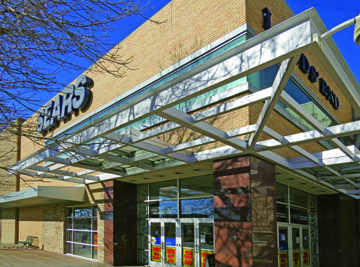
Rebuild To Include Eight-Story Buildings; Columbine Street Will Be Extended To 1st Ave.
by Glen Richardson
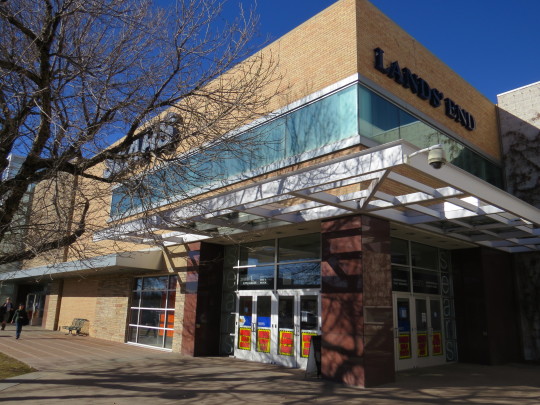
Announcement last month that the 60-year-old Sears store in Cherry Creek North is closing signals the beginning of a rebuild for the Clayton Lane retail district as first reported by the Chronicle last October. The Cherry Creek location opened in the summer of 1954 after Sears closed its store in downtown Denver.
Sears dates back much further in history. Sears, Roebuck and Co. was officially formed in 1893. The company dates its history back to 1886 when Richard W. Sears, a railroad agent in Minnesota, received a box of errant watches and then sold them to other agents.
The Cherry Creek Sears is one of 235 stores closing nationwide due to declining sales and posting a $548 million loss in the third quarter of 2014. In addition, on Tuesday, January 27, 100 employees were notified their positions had been eliminated effective immediately at the corporate headquarters in Hoffman Estates, IL. Fifteen more were eliminated at other corporate support locations. “These decisions are never taken lightly, but they are a necessary part of our efforts to transform the company and return it to profitability,” Sears said in a statement. Sears Holdings has lost money for 10 consecutive quarters.
The closure will speed up redevelopment options for the 9.5 acres first developed by the Nichols Partnership 15 years ago. The Cherry Creek North Sears store occupies 133,493 square feet, while the auto center takes up another 18,769 square feet. The 66 employees of both Sears and the Auto Center will be able to apply for positions at nearby Sears and Kmart stores which include Aurora, Lakewood, Centennial, Thornton and Littleton.
David Tryba — the original architect for Clayton Lane who has been retained to develop new options for the site — says the store and adjacent parking garage will be demolished and replaced with residential units plus commercial and retail space. Residential units would be built on top of one- or two-story retail spaces, while commercial office space would be in adjacent buildings. Working with AmCap Inc, the Stamford, Conn., developer of Clayton Lane, initial plans call for the construction of two to perhaps four new buildings on the site and moving the parking underground.
Sears says it expects to close the store by the end of next month (March). In a statement, Sears said, “Store closures are part of a series of actions we’re taking to reduce ongoing expenses, adjust our asset base, and accelerate the transformation of our business model. These actions will better enable us to focus our investments on serving our customers and members through integrated retail — at the store, online and in the home.”
The liquidation sale has started and there are discounts at this early stage. Currently, all inventory, including home appliances, is “priced to sell,” with 30% off all clothing and footwear and 60% off all fine gold, silver, diamond and gemstone jewelry. Plus, if you join Sears Shop Your Way loyalty club (it’s free), you will save an extra 5% off general merchandise and an extra 25% off fine jewelry.
Once closed, Tryba Architects and AmCap are expected to finalize development plans for the property. After knocking down the parking garage the architect says those plans will entail the extension of Columbine Street from East 2nd Ave. to East 1st. Ave.
Sears Site Plans
The initial spiff up of the four-block area at the intersection of 1st Ave. and University was designed to generate new tax revenue for the City and improve traffic flow. Observers now anticipate the redevelopment will be designed to make the site —the area’s largest single parcel in the district — into what is being envisioned as Denver’s Rodeo Drive.
Many also believe that construction of a new and bigger Whole Foods will be included in the future Clayton Lane improvement strategy. Additional eight-story or larger buildings may be a part of the redevelopment. Zoning currently allows for buildings in the district to be eight stories tall.
It will be later this year before the Sears building and parking garage are razed and construction of the street extension at Columbine started. The bottom line for Cherry Creek shoppers and residents is that they will have to endure additional construction projects and traffic tie-ups in Cherry Creek for at least two to three more years. When eventually completed, the new Clayton Lane will be a mixed-use development with retail, office and residential but not another hotel. The hotel (JW Marriott) portion of the original development was sold and is not part of Clayton Lane. Furthermore, three hotels are in line to be built in Cherry Creek with construction of the 150-room hotel at 250 Columbine now underway. AmCap has hired Newmark Grubb Knight Frank to provide marketing and leasing services for the retail and office components of the planned redevelopment.

by Mark Smiley | Dec 22, 2014 | Main Articles
As Ohio And Other States Seek Ban
by Glen Richardson
Various members of the Denver City Council are reportedly pressuring the police to expand the city’s photo radar camera operation in light of the city raking in over $34 million in less than five years from citizens. The city has red light cameras at four intersections and five roaming vans to ticket speeders.
The push is being made notwithstanding various states are considering banning their use including Ohio which would require officers to witness any violation first-hand. The bill passed the Ohio House 58-31 and is expected to pass the Senate and be signed by Governor John Kasich. A similar statewide ban was passed by the Colorado State Senate last year only to die in the State House due to pressure from Denver Mayor Michael Hancock and Governor John Hickenlooper, a former mayor of Denver. The State of Missouri may put a ban to a statewide vote pursuant to bill introduced to the Missouri General Assembly.
At the same time the so-called “bagman” for red light camera company Redflex Traffic Systems, pleaded guilty to bribing a city worker to rig a $124 million contract in return for kickbacks. It is expected he will testify against Redflex CEO Karen Finlay on bribery charges. Redflex operated in Denver and other cities in Colorado in the past and the possibility of bribery charges being brought in Colorado is still purportedly a possibility.
Changing The Rules
The rise in revenues was in part generated when the red light camera, Xerox State and Local Solutions, was allowed to redefine what was running a red light from actually entering the intersection to touching any part of the preceding white crosswalk. Denver remains the only jurisdiction in Colorado that defines running a red light as just touching a white crosswalk. In Florida and other jurisdictions red light companies discovered that by shortening yellow lights by small amounts they could dramatically increase revenues although it also dramatically increased accidents.
Denver never adopted this technique due to the fact that the shortened yellow light gambit became a national scandal in places it was secretly implemented. The Denver Police Department claimed the four locations where red light cameras were installed, cut down accidents by 65 percent. But ABC Channel 7 News discovered the real reasons accidents were down is that at the same time, they increased yellow lights. In four other intersections in which longer yellow lights were also implemented, but no red light cameras installed, accidents were down 57 percent.
Denver also has five photo radar vans that bring in the majority of funds for the city. In theory the vans can be moved anywhere in the city, but are not. One van is almost incessantly parked on Speer Boulevard/1st Avenue across from the Denver Country Club. The reason is readily apparent — the six lane road does not appear to be a road where the speed limit would logically reduce from the standard 35 mph to 30 mph. Motorists often travel at what they believe is a reasonable 40 mph and get regularly ticketed providing literally hundreds of thousands of dollars in revenues to the city. It has been noted that if the city had one of its photometric speed display trailers, which informs the motorist how fast he or she is traveling above the posted limit, it would be much more effective, but would provide no money to the city coffers.
Chief Of Police White
Destroys Personal Credibility
City Auditor Dennis Gallagher’s office reviewed the city’s photo radar in 2011 and found that it had done little to clearly show any purpose other than bringing in revenues. The report declared, “Unfortunately, DPD [Denver Police Department] has not demonstrated that the photo radar program has a positive impact on public safety. Because these programs were sold as public safety enhancements, but are widely viewed as a cash grab, it undermines public trust to maintain photo enforcement programs that are profitable, but whose safety impact has not been conclusively shown. If this situation persists, then the photo enforcement programs should be shut down.”
In response DPD refused to provide any studies and simply claimed no study could be conducted that would satisfy the auditor’s concerns.
Notwithstanding Chief White’s claim, the Chicago Tribune on December 19 in a front page story reported that a scientific study was in fact just performed on the country’s largest red light camera program in Chicago. It found, despite Mayor Rahm Emanuel’s claims to the contrary, red light cameras did not reduce injury-related crashes overall, but simply resulted in more rear-end accidents, while reducing so-called “T-bone” crashes.
As the photo radar enforcement program is highly unpopular among some voters, elected officials in Denver have generally refused to go on camera to try to justify its retention. The task has been delegated to Chief of Police Robert White who is appointed by the mayor. He has gone on Channel 7 and other stations and claimed the sole and only purpose of the program is “public safety.” Since such an assertion appears on its face wholly or at least partially untrue, he has lost credibility with some citizens at a time when police are under fire across the country.
“White is clearly lying. We know that at least part of the rationale is money and for him to claim otherwise is pathetic,” stated Denver resident Trish Abbott. She also noted, “White goes on Channel 7 and gives a bald lie right to the camera. In an age of ‘you can keep your doctor, if you like your doctor’ and the ‘United States doesn’t torture’ we are sick and tired of lying politicians and bureaucrats. At a time when the police department badly needs to build public trust, he throws it all away for nothing to provide cover for Hancock and members of the City Council.”
Citizen Revolt
Denver citizens are increasingly refusing to pay the photo radar enforcement tickets they receive in the mail as only 65 percent of the tickets are now paid. Under the applicable statute, Denver tickets must be sent by certified mail or personally served within 90 days of issuance and if not the ticket must be expunged. The Gallagher report suggested the law be changed, but to date it has not been.
City Council Extends
On December 15 the Denver City Council approved by a vote of 12 to 1 the extension of the existing contract, in theory, to allow competitive bidding for an expanded program with more red light cameras and more photo radar vans. The only dissenting vote was that of Jeanne Faatz who pointed out the absurdity of the crosswalk violation and the lack of any conclusive evidence on public safety. “Some people love them, I don’t,” City Councilwoman Faatz said. “…my feeling is that issuing tickets for people who cross the white line is knit picking. It’s more of a revenue raiser than a safety measure.” On December 16, City Auditor Gallagher sent out a letter in which he noted at the public hearing that “I never heard any talk about proving that these two programs actually improve public safety.”

by Mark Smiley | Dec 22, 2014 | Main Articles
Will RNOs Weigh In On Election May 5?
by Mark Smiley
Denver’s municipal election is set for May 5 which includes the mayor and the entire 13 member City Council. While there is dissatisfaction with Mayor Michael Hancock in some neighborhoods throughout the city, he has not drawn any serious election opposition. Thus all the attention and funding has shifted to the Denver City Council races. Five present City Council members are term limited and Chris Nevitt has decided to run for the city auditor position.
RNOs
Denver has over 100 registered neighborhood organizations (RNOs) as well as an umbrella group called the Inter-Neighborhood Cooperation or INC. Average citizens interact with the government of the City and County of Denver through their neighborhood organizations or direct contact with their city councilmember or the member’s staff. During election season council members tend to be very solicitous of the neighborhood groups and are happy to attend their meetings. Following the election and for the next four years many council members want nothing to do with neighborhood groups and often privately disparage them.
Many Denver council members between elections also refuse to interact with average citizens except in highly orchestrated group meetings arranged by their respective staff. Citizens who attend city council meetings to oppose an action the city wants to take are often ignored or even harangued or laughed at by some city council members. The reason is simple. Incumbent Denver City Council members virtually never lose re-election no matter how incompetent or corrupt they may be. Thus what citizens and neighborhood groups think of their city representative is generally irrelevant.
Who Controls Denver And Courtesy Zoning
The people who do matter are real estate developers and unions who are the overwhelming source of campaign funds. Only they would have the resources to challenge an incumbent. The primary power that a city council member has is control of all zoning revisions and development in his or her district. City Council has informally adopted the practice of “courtesy zoning” whereby the councilmember in whose district a development is located will be deferred to. Thus when citizens attend a Denver City Council member to oppose a development they are literally wasting their time.
If a rezoning or a development is before the City Council it means the city council member has indicated that he or she approves of it and it will pass by an overwhelming margin regardless of the merits or citizen opposition. Since Denver City Council members are required by law not to decide on so-called quasi-judicial matters until after all of the public input the concept of courtesy zoning would appear to be illegal or even criminal according to some municipal experts. Nonetheless, the practice of courtesy zoning continues unabated in 21st century Denver. The practice allows a real estate developer to grease the pocket of only the city councilmember in whose district his development is located, saving a great deal of time, money and effort.
Labor Union Controlled
Two of Denver’s 13 council members are elected at large and do not have defined districts. Thus developers are uninterested in these at-large seats leaving the positions to be controlled by the labor unions, particularly SEIU. At-large elections can be very expensive since they cover the whole city. A challenge to an incumbent at-large councilmember who has remained in the good graces with the unions is generally considered an almost impossibility. Denver’s two at-large members, Robin Kneich and Debbie Ortega, are generally considered in the back pocket of the labor unions and are viewed by some as poorly informed council members. Nonetheless they are running unopposed this election.
There are however potentially highly competitive races for many of the remaining 11 seats. In addition to the six open seats there may be additional competitive races due to redistricting. According to Denver law, the city must be redistricted at least once every 10 years to ensure that each Council member is representing a similar number of residents so that the concept of “one person, one vote” is maintained. In 2011, City Council reconfigured the boundaries for Denver’s 11 City Council districts creating a great deal of controversy. These new boundaries will take effect this coming election, May 5, 2015.
While it is generally held that a viable candidate needs to be engaged by the beginning of the new year, legally speaking March 11, 2015, is the deadline to submit petitions which need at least 100 signatures for council and 300 for auditor, mayor, and at-large seats.
District 10
One of the most interesting races is in District 10, located in central Denver. Jeanne Robb is completing her third and final term in office which will leave her seat available for a viable candidate. Recently, Roger Sherman, an executive at the public affairs firm CRL Associates announced he was withdrawing from the race. His initial candidacy papers were filed in March 2013 and he was considered to be a strong candidate for developers.
Wayne New, a former president of the Cherry Creek North Neighborhood Association, is now the only declared candidate, at press time. Two other individuals have revealed an interest in running. Anna Jones, a Congress Park resident and a community development consultant who is vice president at Progressive Urban Management Associates, says she plans to launch a campaign. Alicia Economos, vice president of outreach and development for the group Democrats for Education Reform, also indicated plans to file her paperwork, but apparently has recently changed her mind.
Wayne New’s message focuses on what he sees as the over-development of Cherry Creek and a disregard for neighborhood interests in city planning decisions. “For years, our neighborhood voices have not been respected or even welcomed in City planning and decision-making,” said New. “I have a proven record of almost 15 years of strongly advocating the need for “balance” to protect our neighborhoods from excessive traffic, inadequate parking, and over-development that adversely impacts our quality of life. I will help lead us toward a more responsive, more accountable City government.”
District 6
Another district of note to Chronicle readers is District 6 in Southeast Denver. The owner of the Washington Park Profile Paul Kashmann faces Elizabeth Adams to succeed term limited Councilmember Charlie Brown who has served on the council since 2001. The redrawn District 6 will now represent the following neighborhoods: Harvard Gulch/Rosedale, Washington Park, University, Bonnie Brae, Cory-Merrill, University Park, Virginia Village/Ellis, Virginia Vale, Cook Park and Indian Creek. Portions of the new District 6 stretch as far west as Broadway, east past Quebec Street, as far north as Speer Blvd., and south to Dartmouth Ave.
Best Of The Rest
Six candidates have stepped forward to take over Chris Nevitt’s vacated seat in District 7, located in South-Central Denver. Luchia Ann Brown, Jolon Clark, Aaron Greco, Ian Harwick, Mickki Langston and Jacob Hunter Viano have declared their candidacy.
Far Southwest District 2 is vacated by term limited councilmember Jeanne Faatz. Five individuals have declared their candidacy: Nathaniel Cole, Fran Coleman, Kevin Flynn, Corrie Houck and John E. Kidd Jr. Far Southeast District 4 has been represented by Peggy Lehman since 2003. Four candidates have declared: Kendra Alexis Valis Black, Jeffrey Allen Garcia, William George McMullen and Halisi Vinson.
Judy Montero from District 9 has served on the council since 2003 and is term limited. Albus Brooks, who currently represents District 8, is now running in the new District 9. He is faced by Michael Borcherding, the founder of a sport and social club called Mile High Gives.
With Chris Herndon now running for a council seat in District 8, District 11 has five challengers: Sean Bradley, Shelli Brown, Samaria J. Crews, Stacie Gilmore, and Tea Schook.
Potentially the most endangered incumbent is District 1’s Susan Shepherd running against challenger Rafael Espinoza. Shepherd was elected as a labor union candidate but once in office quickly also became the friend of real estate developers. When she supported a massive redevelopment of a portion of the West Highlands citizens protested and eventually sued the city. While the lawsuit was ultimately dismissed her and her husband’s thuggish behavior toward neighborhood activists enraged the district.
Espinoza emphasizes that he is an architect and community activist who has fought the city administration before and running on a platform putting constitutes first. Shepherd will have the strong financial backers of the labor unions and the real estate developers which have successful rebuffed citizen-backed candidates many times before.
Role For Neighborhoods?
The question is what role RNOs and INC will play in the election as a possible counterbalance to the labor unions and real estate developers. It is not expected they will have an overt role since they are not per se political entities, but individual members of the groups are organizing to fight what they see as a corrupt and dishonest zoning and development process.
Moreover, INC has developed a platform for allowing neighborhoods to have a bigger role in developments across the city. The platform would prohibit higher density developments where the same would worsen traffic and parking. A city council candidate’s support or refusal to support the platform will help inform voters of where that person stands on reasonable growth in Denver’s neighborhoods.
Will 2015 be the year of citizens and neighborhood groups or the usual formidable duo of labor unions and real estate developers? For the first time in many a year the answer to that question is not clear, which should make this spring’s Denver municipal election an interesting one.
by Mark Smiley | Nov 21, 2014 | Main Articles
by Mark Smiley
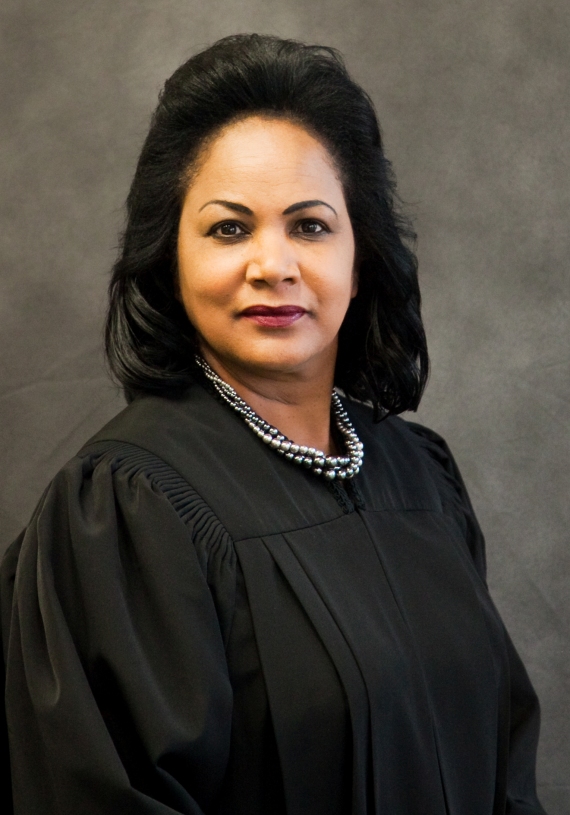
Prominent Denver trial lawyer Danny Foster has had a contempt citation issued by Arapahoe County Judge Cheryl Rowles-Stokes that landed him in jail for a day overturned by a higher court who declared that Rowles-Stokes actions “were an abuse of discretion and in excess of her jurisdiction as a judge of the Arapahoe County Court.”
The case had become something of a cause-célèbre concerning abusive and incompetent judges in the Colorado judicial system. The jailing of Foster was subject of a scathing article by The Denver Post Editorial Page Editor Vincent Carroll.
F oster had come to the defense of Jonathan Ogungbenle (see front page story of the September 2013 issue of the Chronicle) a substitute teacher and nurses aid who was wrongfully criminally charged with indecent exposure while working at a school in Aurora, Colorado. Without waiting to see whether Mr. Ogungbenle was in fact guilty of any charges, his state nursing-aid certification was summarily revoked.
In the civil case Foster obtained through discovery from the Aurora Public School system the files of the two student accusers. When he gave notice that he intended to introduce them in the criminal case, Rowles-Stokes, a former Arapahoe County prosecutor, became outraged. She demanded that Foster surrender to her all copies of the records although it was unclear how she could suppress the documents in the civil case which she had no jurisdiction over. Foster nonetheless provided all written copies in his possession.
In a subsequent hearing Foster noted that an electronic version existed in his computer which he could not turn over except by giving her the computer’s hard drive. Rowles-Stokes became unhinged and hissed, “When a Court orders you to turn over all of your records, that means all of yours in no matter what format they are in.” Foster apologized saying he did not understand that to have been her previous order.
Rowles-Stokes then planned her revenge. To the surprise of Foster she handed back the physical copies and then recused herself from the criminal trial. Ten days later Foster obtained a full acquittal for his client with the jury deliberating for only 20 minutes. But the celebration following the not guilty verdict was cut short when sheriff deputies barged into the court room and physically took Foster across the hall to another court room where Rowles-Stokes was waiting.
Without conducting a hearing Rowles-Stokes declared Foster’s conduct “s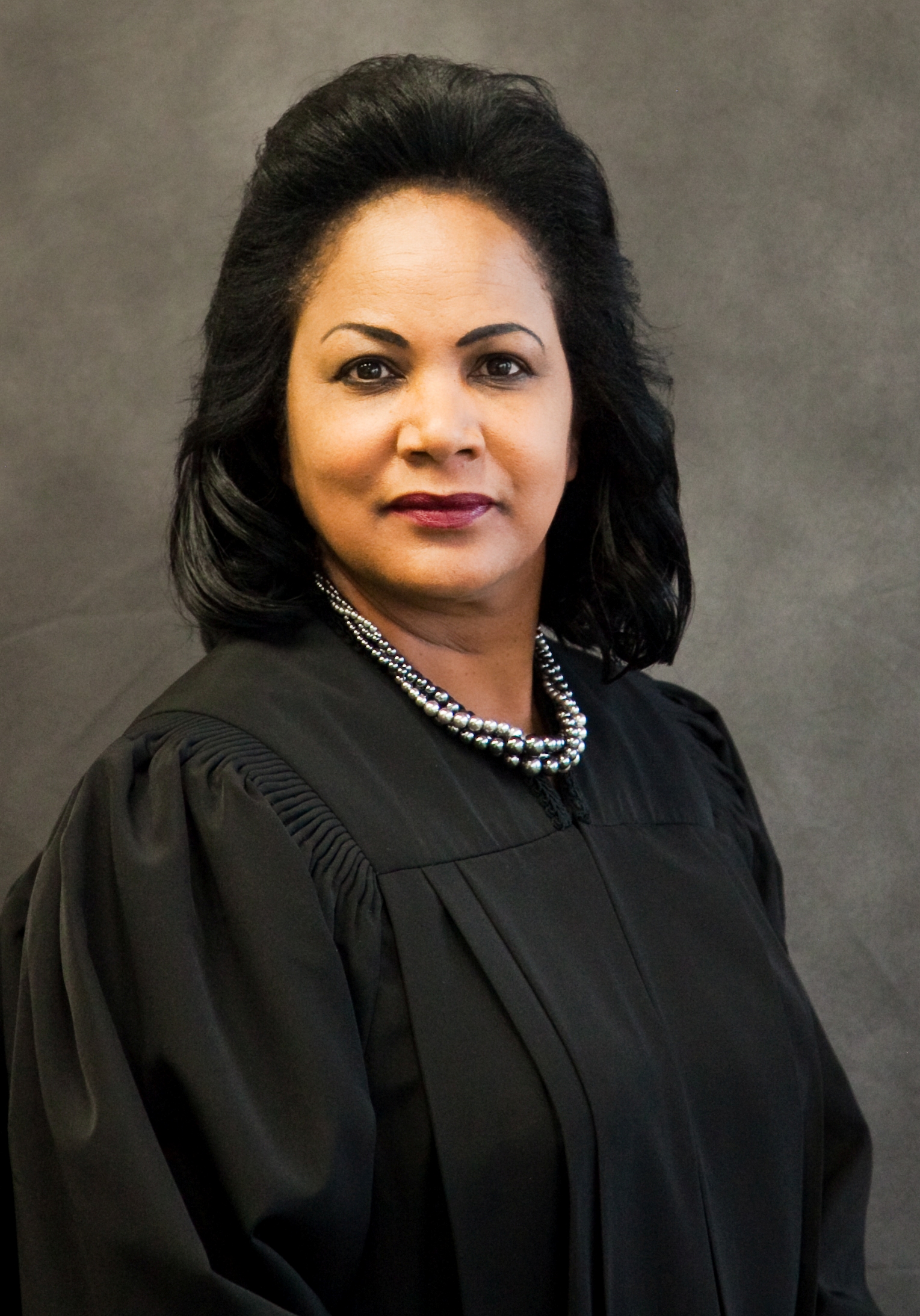 o extreme that no warning was necessary.” She then found him in contempt and ordered him to jail immediately for one day. To the shock of his client Foster was handcuffed by the sheriff deputies and hauled to jail.
Following his day in jail Foster appealed Rowles-Stokes’ finding of contempt. While up on appeal Rowles-Stokes continued what some viewed as her highly unprofessional conduct. Under the applicable judicial ethics rules a judge is not to hear a case where one of the lawyers or his firm is an adversary party to the judge in an outstanding case. Nonetheless Rowles-Stokes refused to disqualify herself in another case where a man was represented by Foster’s law firm. Only when it became obvious that her conduct would once again be appealed to a higher court did she reluctantly relent.
On appeal Rowles-Stokes’ attorney admitted that she had violated the applicable law by not providing a warning or a hearing but argued that the case should be remanded back to her to conduct what would be a sham hearing and the possible imposition of even more jail time. The District Court on October 22 shot down Rowles-Stokes’ arguments finding that she had not conducted “a fair and proper hearing in the sense contemplated by our system of justice” and that “Mr. Foster’s due process rights have been violated by Judge Rowles-Stokes.” The court also refused to remand the case and vacated the finding of contempt.
While Foster is now in the clear, the problem is what some are calling a rogue and unfit judge remains on bench. As pointed out by The Denver Post’s Vincent Carroll the state’s checks and balances on bad judges do not work. Rowles-Stokes was appointed to the bench in 2012 for a provisionary two year term and was subject to a retention election this past November. But as predicted by Carroll she was retained despite two-thirds of the attorneys who appeared before her telling the Commission on Judicial Performance she was unfit.
The reason for her retention as Carroll pointed out is that citizens often vote to retain judges many know nothing about and they are only ousted when a concerted campaign is carried by citizens. Observers point out some of the worst judges in the Colorado judicial system are former prosecutors appointed directly to the bench like Rowles-Stokes since prosecutors’ sense of entitlement is only exacerbated by joining the judiciary. The Commission on Judicial Performance indicates that over the last 20 years, 99.3 percent of all judges subject to a vote have been retained including two-thirds of the judges the Commission found wholly unfit to serve on the bench. For the 2014 election the Commission found only three judges to be unfit to be retained and two of those were just like Rowles-Stokes, former district attorneys appointed to county court positions. Like Rowles-Stokes, both were retained by the voters.
Carroll noted that the citizens will regret having Rowles-Stokes on the bench “given her vengeful lack of perspective in Foster’s case.”
The victorious Danny Foster in turn hopes the decision will have a broader significance. “I am very happy about the decision,” said Danny Foster. “I hope it will teach Judge Rowles-Stokes, and others like her, to understand that they need to treat all people with respect, professionalism and courtesy, whether they be lawyers, witnesses or parties to a case. A courtroom is no place for intolerance and a judge, above all else, needs to protect our constitutional rights, not violate them out of anger or spite.”
Unfortunately, according to critics, Rowles-Stokes is but the tip of an iceberg that will continue to grow unless reforms are instituted regarding how judges are retained in Colorado.