by Heather Brecl
A growing group of residents in Cherry Creek North (CCN) is voicing strong opposition to a proposed General Improvement District (GID) that would impose a new mill levy on local homeowners. While the initiative is framed as a way to fund neighborhood enhancements, many residents argue it lacks transparency, introduces unnecessary financial risks, and does not reflect their needs or desires.
City’s Perspective vs. Community Reality
According to Councilwoman Amanda Sawyer — who represents Denver’s District 5, which includes Cherry Creek North:
“It is entirely up to the community if they would like to create a GID and, if so, what the cost structure of the GID would be, what the governance structure would look like, and what investments they would like to fund and implement.
A GID was first contemplated in the 2012 Cherry Creek Area Plan, which is a document born out of several years of community conversation. Over the past two years, Cherry Creek residents have expressed a desire for things that the City will not fund — such as security patrols, pedestrian-scale lighting, a neighborhood transit circulator, and beautification features. A GID is the best tool to achieve those goals, but only if residents want it. The Council Office is simply facilitating the conversation.”
However, many CCN homeowners say these statements do not reflect their experience with the process. Instead of inclusive, transparent community dialogue, they describe a rollout that has felt top-down, vague, and rushed.
Flawed Outreach And A Lack Of Transparency
The GID initiative first came to light for many residents through a postcard survey — one that numerous neighbors have described as deeply flawed. While the survey asked about preferences for amenities, it failed to clearly disclose that all improvements would be funded through a new residential property tax.
“There was no upfront question that said, ‘Do you want a permanent tax to pay for these things?’” said homeowner Dana Busch, one of more than 100 CCN residents voicing concerns. “It felt more like a marketing exercise than an effort to genuinely understand the community.”
The survey was also not restricted to verified voters or property owners within the proposed GID boundaries. It could be taken multiple times and shared broadly, with no identity verification. Councilmember Sawyer’s office promoted it via her District 5 platform — even though her district extends far beyond the proposed GID footprint. This has raised questions about the integrity of the data collected and who the survey responses actually represent.
Inclusion Without Consent
Residents were particularly surprised to learn that Cherry Creek North’s residential core — bounded roughly by University Boulevard to Colorado Boulevard, 6th Avenue to 1st Avenue, and between Adams and Steele from 3rd to 6th — was included in the GID proposal without prior input or notification. Many feel blindsided by the initiative and argue that the commercial and residential zones are fundamentally different in both needs and character.
“We were never asked if we wanted to be part of this,” said Busch. “Now we’re being told we may be taxed to support projects that don’t directly benefit our neighborhood.”
Opponents are also concerned that, under current rules, the GID could be approved by voters who don’t live in the residential blocks most affected. There was no verification system in the survey to confirm that respondents had a legal stake in the outcome, further eroding trust in the process.
Unclear Use Of Funds
Residents have repeatedly asked for clarity: What specific projects would be funded? What would the cost be per household? How would spending be allocated across zones? So far, there have been no detailed answers. Instead, responses have suggested that details would be worked out after the GID is formed.
“The answer we’re hearing is basically, ‘Pass it first, then we’ll figure it out,’” said one neighbor. “That’s not how responsible planning works.”
There’s also concern that the GID could be used to issue bonds or take on long-term debt. Given Denver’s current financial challenges, some residents believe this may be a workaround to shift infrastructure costs onto neighborhoods without broader public oversight.
Neighborhood Board Concerns And Leadership Conflict
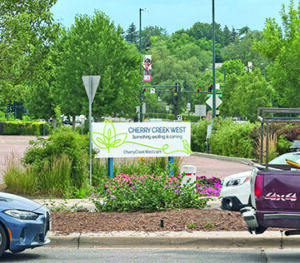
Why should long-established Cherry Creek North be taxed to support major developments like Cherry Creek West? Residents say: It’s not our responsibility and propose being excluded from the GID.
Efforts to raise concerns at the neighborhood level have also proven difficult. Residents say their requests for public forums have been declined or redirected to websites and Facebook pages. This limited access to real-time dialogue has left many feeling excluded from decisions that could impact their property taxes for decades.
Some residents have also pointed to potential conflicts of interest involving two members of the neighborhood association board — both of whom sit on the GID steering committee. In a recent meeting, one committee member reportedly acknowledged the limitations of the survey, noting it might not yield meaningful insights. Despite this, the process appears to be moving forward without pause.
Mismatch Between Neighborhood Needs And GID Goals
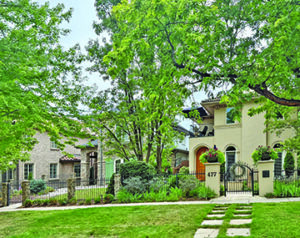
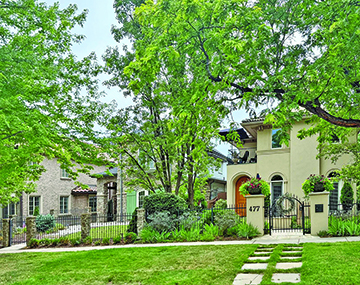
Well-established, well-loved, and well-maintained — Cherry Creek North residents are pushing back against a GID they didn’t ask for and don’t need.
Residents of CCN stress that their low-density, residential neighborhood is not comparable to the high-density, mixed-use commercial zones elsewhere in the GID boundary. Most say they do not require major capital improvements and could handle smaller projects — like sidewalk repairs, lighting upgrades, or landscaping — through existing mechanisms.
Wayne New, former Denver City Councilmember and past president of the Cherry Creek North Homeowners’ Association, shares these concerns:
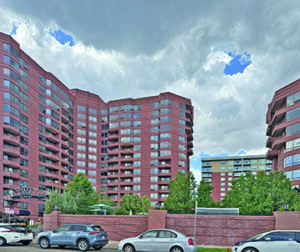
Imagine voting to raise someone else’s taxes — with no responsibility to pay them. That’s the concern CCN homeowners have with the proposed GID process. Under current rules, renters — who won’t pay the tax — can still vote on it. Homeowners are asking for a more equitable and transparent system.
“Without additional communication with all of our residents, this GID will not understand and represent the improvements needed in our neighborhood. To many the mandatory tax increase funding by residents will be pushed forward without clear communication. In addition, the life of the GID may extend for 10 or more years, creating mandatory additional tax revenue without indicating how the funds would be used. Residents paying for services that were previously funded by our City tax dollars is a major concern.”
Preliminary financial reviews suggest that residential tax contributions would significantly outpace any direct benefits returned to the neighborhood. Many believe their dollars would be used to subsidize larger commercial or infrastructure investments elsewhere in the district.
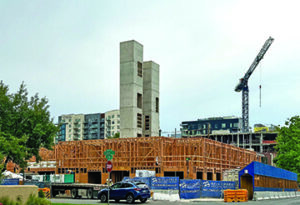
New development, vague plans, and a tax bill for homeowners. The City’s GID proposal raises more questions than answers — especially about where the money goes and who it really helps.
“We’re not against investing in our neighborhood,” added Busch. “We’re just against doing it through a process that lacks clarity and fairness.”
What Residents Are Asking For
The opposition group is not against improvement — but they are asking for a better process. Their main request is simple: remove the Cherry Creek North residential neighborhood from the proposed GID.
“We want to see thoughtful enhancements in our neighborhood too,” said Busch. “But not through a process where our voices are diluted, our questions are unanswered, and the financial implications are uncertain.”
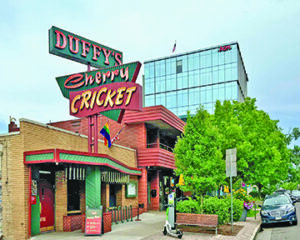 To stay informed, share concerns, and coordinate local outreach, residents have launched StopTheGIDinCCN.com. The site includes resources, updates, public records, and ways for neighbors to get involved in shaping the future of their community