by Mark Smiley

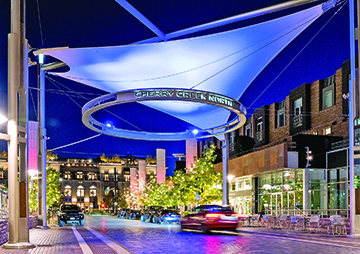 Cherry Creek continues to solidify its position as one of Denver’s strongest economic engines, according to a newly released State of Cherry Creek report highlighting continued growth in development, retail, tourism, office space, and small business activity throughout the district.
Released May 15 by the Cherry Creek Alliance, the report paints a picture of a thriving mixed-use neighborhood that continues to outperform many national and regional trends despite broader economic uncertainty in commercial real estate and retail sectors.
The report found that Cherry Creek welcomed more than 16.8 million visitors annually and currently supports 1,694 businesses and more than 16,800 workers, reinforcing its reputation as one of Denver’s premier destinations for shopping, dining, business, and tourism.
One of the most notable findings involved office space performance. While office vacancies remain a challenge nationwide, Cherry Creek’s office market continued to outperform many competing urban districts. Cherry Creek North’s office vacancy rate dropped to just 1.3% in 2025, while the broader Cherry Creek office market posted a 10.5% vacancy rate — figures significantly stronger than many major U.S. markets.
Retail performance also remained exceptionally strong. The report cited a retail vacancy rate of just 1.9% along with average lease rates of $36.05 per square foot triple net, demonstrating continued demand from retailers seeking a presence in the high-traffic district.
Development activity throughout Cherry Creek also continues at a rapid pace. According to the report, eight projects are currently under construction while another eight developments have been announced. Major projects include the highly anticipated Cherry Creek West development, the Waldorf Astoria Residences, and Cherry Lane, all of which are expected to further reshape the neighborhood in the coming years.
The district also generated more than $119.3 million in tax revenue for the City and County of Denver in 2025, including $62.1 million in retail sales tax revenue, $44.7 million in property taxes, $7 million in lodger’s tax revenue, and $4.9 million from parking revenue.
Small businesses remain a major component of Cherry Creek’s economic identity. The report found that the district supports more than 462 ground-level retail and service businesses, with 87% classified as small businesses and 60% qualifying as micro businesses with fewer than 10 employees. More than half of the area’s small businesses are locally owned.
Employment and wages also continued to rise in 2025, with Cherry Creek posting 1.7% employment growth and 3% wage growth. Professional and office sectors contributed significantly to the gains, while the average annual wage in the district reached $102,266.
Tourism and hospitality indicators also remained strong. Hotels within the Cherry Creek North Business Improvement District posted a 72.78% occupancy rate with an average daily room rate of $295.51 and revenue per available room reaching $216.61, outperforming citywide and statewide averages.
“Cherry Creek continues to prove that it is a vibrant, walkable mixed-use district and a powerful driver of economic growth and community vitality,” said Nick LeMasters, president of the Cherry Creek North Business Improvement District, in the report. “The momentum we’re seeing today reflects years of thoughtful collaboration between businesses, developers, residents, and community leaders.”
The Cherry Creek Alliance said the findings underscore the district’s continued role as a major contributor to Metro Denver’s economic growth and long-term development strategy.
Photos courtesy of Cherry Creek North