Denver’s RTD Ranked 13th Transit Friendly City; Bus Ridership Booming As Rail Tries To Get On Track
by Glen Richardson
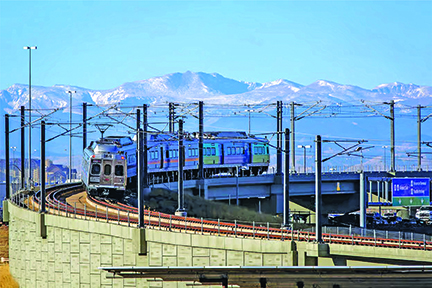
Airport A Line: RTD’s A Line, which opened in 2016, whisks travelers to and from downtown to DIA.
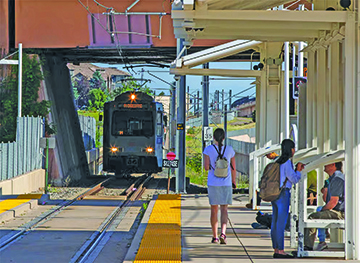
Decline In Rail Rider: A possible signal of waning public confidence in city’s rail system, light rail ridership has dropped 12%.
Denver’s public transportation by bus or rail known as RTD — expected to cost $1.2 billion in 2025 — claims to be “easy, inexpensive, and convenient,” but continues to report serious safety and security challenges.
Despite increased security, better reporting tools, and facility improvements, there were 112 “Criminal Incidents Reports” in May 2025, up from 56 in April.
In May, RTD received 3,058 security-related calls to the dispatch center. During that same month, RTD had approximately 5.4 million customer boardings, or approximately one-security-related call for every 1,800 boardings. That includes everything from graffiti and drug-activity, to noise complaints and unattended bags.
Risky Routes
There continues to be reports of drug use, fights, and threats of violence on RTD trains and buses, particularly on routes along major throughfares. Colfax Avenue, Broadway, and Federal Boulevard are among the highest.
Last year (2024), there were 177 physical assaults and 194 non-physical assaults of the system’s transit workers. Physical assaults were flat at 182. Non-physical assaults, however, jumped to 314. That’s an increase of about 62%, but likely relates to RTD’s efforts to encourage employees to make reports. New federal reporting standards also impacted the numbers.
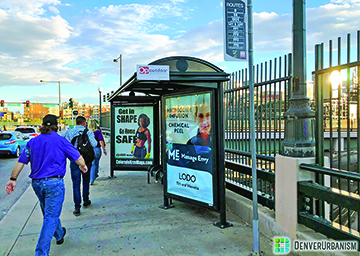
Bus Stop Coverup: Of RTD’s 9,700 public bus stops, less than half have a bench or any form of seating.
During a three-year period — 2022 to 2024 — riders contacted dispatchers for police help a whopping 130,280 times. The highest was in 2023 at 45,847 versus 41,327 in 2022. That figures out to 3,592 “help calls” per month. For security issues riders can contact RTD by phone at 303-299-2911. To text issues use the 303-434-9100 phone number. Better yet, acquire and use RTD’s Transit Watch app so you never ride alone. Those without a smart phone can use the emergency telephones located on “rail platforms” or at bus “Park-n-Rides.”
Bus Boom
RTD’s ridership in 2024 increased by just 1%, from 65.17 million in 2023 to 65.23 in 2024. That’s due to a huge 12% drop in light rail ridership, as customers increasingly relied on the bus system. The system’s bus boardings were 42,689,708 versus rail boardings of 19,493,133.
A key reason for the popularity of buses:
RTD’s bus system exceeded the national average in 16 of 16 comparative service categories. Furthermore, there are over 100 area bus routes, versus 10 rail lines providing 113 miles of rail service.
RTD, however, claims “customer satisfaction” for both bus and rail service. They assert rider satisfaction “with both bus and rail safety and security, cleanliness, on-time performance, plus frequency of service.”
Live-Look Cameras
One of the reasons for the popularity of buses is the “live-look” surveillance camera and response system installed on buses in 2024. Those systems let bus drivers push a silent alarm button to activate surveillance. As a result, RTD dispatchers can see inside and quickly r
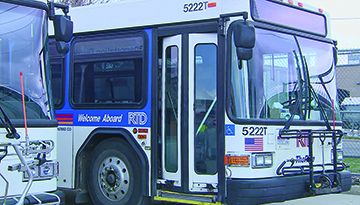
Best By Bus: There are more than 100 bus routes in Denver, versus 10 rail lines. Bus system exceeds the national average in 16 categories.
etrieve images for police. State regulators want the system installed on trains by mid-2027.
There are currently 421 weekly bus service stops in Glendale. The closest bus stop to Cherry Creek North is 1st Ave. and Madison St., about a three-minute walk to-from the central district. There are also bus stops at Steele St. and Ellsworth Ave. and at Colorado Blvd. and 3rd Ave., about a 10 minute walk. In addition, the RTD bus fleet provides a slew of special rides. They include services for people with limited mobility, plus free rides for active-duty military.
As bus ridership grows, the system hopes to upgrade more than half of the region’s approximately 4,000 bus stops. Moreover, RTD wants to double the bus service in the city’s core areas. Another goal is to more than double the number of frequent bus routes that run every 15 minutes or less. That would jump the number of miles of frequent bus service from 490 miles to 1,139 miles.
Union Station U-Turn
Once known for crime and open drug use, Denver’s Union Station — the terminal had a $11 million restoration in 2024 — has made a dramatic turnaround. Overall, RTD says there has been a 52% drop in security calls between February 2024 and February of this year.
The about-face for the beaux arts-style transportation hub is good news for both travelers and the city of Denver. Union Station incorporates light rail and commuter rail lines, Amtrak rail service, plus regional buses, taxis, and shuttles. The site features an eight-track commuter rail station, plus a 22-bay underground bus facility.
Today Union Station is once again the city’s destination for LoDo events ranging from live music, and local festivals, to farmer’s markets. It also features cool places to eat and drink, including restaurants Ultreia, The Kitchen Next Door, Mercantile Dining & Provisios, and Snooze.
Budget Upswings
RTD’s budget is expected to jump 4.2% in 2025. Fares will only provide about 4% of RTD’s total budget. Sales and use tax revenue comprises 67% of the budget, with the remaining 29% coming from grants and other revenue sources.
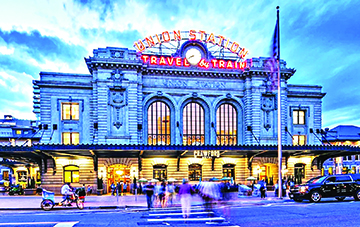
Hub & Great Hall: Denver’s rail and bus hub, Union Station features towering ceilings, elegant archways, and glittering chandeliers.
Grant revenue looks likely to be lower this year due to the $150 million pass-through grant received for the East Colfax Bus Rapid Transit Project in 2024.
Increase in the agency’s 2025 budget is due to year-over-year increases in salaries, wages and benefits, materials and supplies, and purchased transportation.
Rail Rebuild
This year (2025), RTD resumed its multi-phased “Downtown Rail Reconstruction Project,” while also adding to its Transit Police Department.
Between May and August, RTD completed the first phase of its downtown rail reconstruction. Workers restored the 30-year-old portion of the agency’s original light rail alignment to protect the network’s long-term integrity. Moreover, crews completed the work weeks ahead of schedule. Additional phases are planned through this fall-winter.
The system is also launching an updated operational analysis. That update is designed to create new standards for transit service.