Flowers Are Blooming Early, And Trees Are Starved For Water As The Mile High City Endures Historic Drought
by Glen Richardson
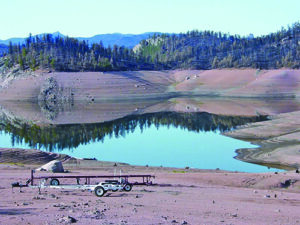
Dry Spells: Drought is not new to city, as shown in this photo of Denver Water’s Cheesman Reservoir during the 2002 drought.
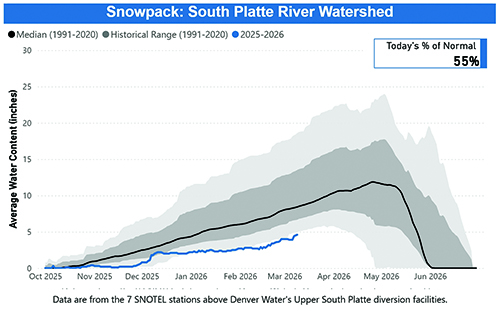
Snowpack as of early March 2026, was at or near record lows: The Colorado River Basin within Denver Water’s collection system was at 71% of normal. The South Platte River Basin within Denver Water’s collection area was 55% of normal.
In Denver Water’s decades of records for its watershed collection areas, as of March 9, Colorado River snowpack ranked the fourth-worst on record, and the South Platte River snowpack remained ranked as the worst. The wet overnight March 15 snowstorm — 3.2 inches in metro Denver — was welcome, however, our hot and dry weather pattern will limit those gains and keep Denver’s water supply situation challenging.
Why it matters: Denver Water depends on mountain snowpack for 90% of its water supply, which serves 1.5 million people in Denver and the surrounding suburbs.
Concern Rising
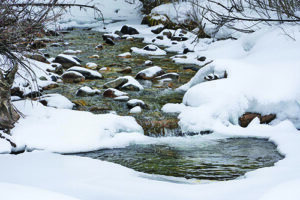
North Fork Of The Snake River: Melted snow is the primary source of drinking water for the 1.5 million people who rely on Denver Water every day. Photo: Denver Water
Nearly 80% of the county’s landmass is in severe drought, a dramatic increase. Denver hasn’t been free of drought since July. Portions of Weld, Arapahoe, Adams, Douglas, and Jefferson counties are also experiencing severe drought.
Since 2000, Denver Water’s response to dry conditions in previous years included issuing a Drought Watch (voluntary restrictions) in 2002, 2003, 2004, 2012, and 2013. In some of those years (2002, 2003, 2004, 2013), Denver Water levied additional drought restrictions as part of declaring a Stage 1 level response, which required mandatory reductions in outdoor water use.
Conditions remain highly concerning. Poor snowfall combined with warm temperatures have left us roughly 4 feet to 5 feet of snow short of where we’d prefer to be in the Denver Water collection area at this time of year. To reach the normal spring snowpack peak — which typically occurs in April — we need to see an additional 7 feet to 8 feet of snow this spring.
Water Restrictions?
Reservoir storage conditions are below average, but in reasonably good shape. As of March 9, 2026, the reservoirs were 80% full versus an average of 85% full at this time of year. Those levels are also temporarily affected by the need to keep Gross Reservoir low during construction to raise the dam, a project designed to increase the storage capacity of the reservoir.
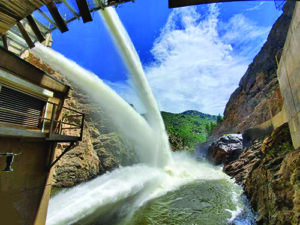
Reservoir Release: Water is released from Strontia Springs Reservoir located 6 miles up Waterton Canyon southwest of Denver. Photo: Denver Water
As we enter spring. We ask our customers not to get lulled into thinking they should turn on irrigation systems with the warming weather,” says Greg Fisher, Planning & Efficiency Manager for Denver Water.
“Customers need to prepare for outdoor watering restrictions this year and plan on waiting until late May or June to activate irrigation systems. In fact, it’s a good time to consider landscape changes to your yard, with plants and grasses that require far less water and are far more adapted to Colorado’s dry stretches.”
Finding Balance
For Mile High residents, there’s a fine balance between keeping trees and plants alive through the dry winter conditions Denver has experienced this year, and conserving water. Both are important, and both can cause potential ripple effects.
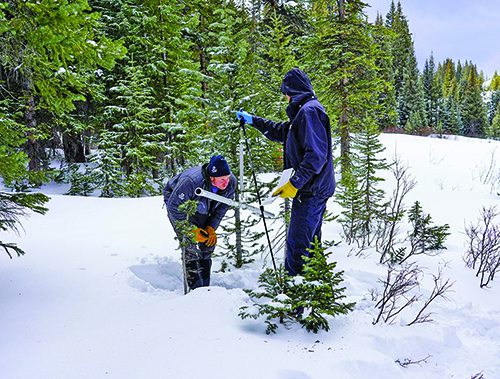
Snow Samples: Ben Morgan and Rick Geise take snow samples on Shrine Pass Feb. 25. The snow depth averaged 34 inches. In 2025, the snow depth averaged 61 inches at this site. Photo: Denver Water
“We’re still experiencing the worst snowpack that we’ve ever seen on record,” says Greg Fisher, the Manager for Planning & Efficiency at Denver Water. “So, we’re actively preparing for supplies that won’t fill our reservoirs and ready to start conserving.”
It’s something that’s been said all season long. But you don’t need to hear it from the experts; Denver has been feeling the effects of dry conditions for months.
Effect On Trees
“March and April tend to be some of our wettest months,” Fisher notes. “So, we’re going to keep watching, but we are preparing for a drought response.”
That makes the likelihood of water restrictions in Denver in the coming months nearly inevitable. However, the effects on trees can’t be ignored, and therefore, Denver’s tree canopy.
“It’s really important that we continue to increase our tree canopy in Denver,” Fisher says. “At least parts of Denver have a low tree canopy. So that’s the thing that keeps us cooler, shades us.” That means the dry conditions could be the start of a ripple effect, making it important to keep them watered, while still conserving water.
May For Sprinklers
National Drought Mitigation Center Drought Map: The U.S. Drought Monitor Map in mid-January with Denver Water’s collection system outlined in green.
“The lack of precipitation in the form of rain or snow is resulting in a lot of our trees coming out of winter with not enough water,” warns Karim Gharbi, a horticulture specialist with Colorado State University. So, they’re going to be coming out of winter already drought-stressed, and that can lead to a variety of bad things, like increased pest pressure. These trees may be leafing out, not as quickly, maybe producing smaller leaves. If they bloom, maybe they’ll bloom for a short time.
“While the recent wet snowstorm was welcome, our hot and dry weather pattern will limit those gains and keep our water supply situation challenging as we enter spring. We ask our customers not to get lulled into thinking they should turn on irrigation systems with the warming weather,” warns Greg Fisher, Planning & Efficiency Manager for Denver Water. “Keep sprinklers off and limit hand watering. This recent storm provided trees and plants with a good dose of moisture.”
Additional drought restrictions, voluntary or mandatory, will depend in part on how the rest of the snow season shapes up and will be aimed at preserving water supplies in case this unusually dry stretch deepens into a multiyear drought.