Wellness of the spirit, mind and body of course calls for
balanced nutrition and regular exercise. But there’s one more thing you could
be doing to improve your health. Here’s a hint: You’re doing it right now.
Breathing!
While we can survive without food and water, we cannot live
without regular intake of oxygen — it’s the single most important function of
the body. We may assume breathing is automatic and something we don’t have to
think about. But actually, proper breathing can promote relaxation and
self-awareness and improve your overall health. Here are two points to keep in
mind to make sure you’re taking your best breaths.
Rule #1: Use Your Nose
Take a few minutes and focus on your breathing. When doing
this, note that you should be breathing in and out of your nose. This is
important for several reasons.
When we breathe in through the nose, our nose hairs filter
incoming particles and pollution. Then, when we exhale, the nose expels debris.
This added resistance makes the lungs work harder, increasing oxygen flow.
Through the nose passage we also regulate the temperature of the air we breathe
as it enters our body. The nose warms the air to prevent drying in the lungs
and bronchial tubes.
If you find yourself breathing through your mouth, it could
be because your nose is clogged due to allergies, a sinus infection, or stress
and anxiety. Talk to your doctor, and then make a consistent, conscious effort
to breathe through your nose. Keep in mind that using your mouth regularly for
breathing — instead of your nose — can result in periodontal disease, throat
and ear infections and halitosis (bad breath.)
The exception to this best practice? During strenuous
exercise, you should focus on breathing in quickly and deeply through your nose
and then exhaling through your mouth.
Rule #2: Take Complete Breaths
Another thing to note about breathing is that breaths should
be slow, deep and complete.
This is important because deep breathing increases
cardiovascular capacity and the amount of oxygen that gets sent to our cells.
Deep breathing expels toxins from the lungs that have been picked up through
the circulatory process. And, as you breathe deeply, the diaphragm moves and
massages and stimulates the organs. Moreover, taking complete breaths promotes
relaxation, reduces stress and increases mental clarity.
For breaths to be complete, every inhale should fill your
lungs and every exhale should empty your lungs. Doing this engages your entire
torso. Start with your low torso, breathing in as your belly expands. Continue
taking in the breath slowly until your ribs expand and your chest and shoulders
lift.
Practice taking 10 complete nose breaths feeling the breath
work up through your torso. This is considered essential breath meditation, and
it can do wonders in improving wellbeing of the spirit, mind and body.
About Nicholas Auger: Nicholas found fitness through his BFA
in sculpture. Now, instead of metal and wood, he focuses on enriching
communities through creating programs that sculpt spirit, mind and body. Ten
years of teaching yoga, kids Yoga, group exercise, and personal fitness
training has led him to the role of Health and Wellness Director at the
Downtown Denver YMCA.
Blossom by blossom spring is beginning in the Cherry Creek
Valley. This is the month Peter Cottontail romps into town along with Easter
and Passover. Ladies show off their spring finery as the streets begin bursting
with flowers, luscious and pulsating in gorgeous colors. Spring seems to add
new life and beauty to everything around us.
It is the time of year when we can count on Denver’s climate
to constantly change, bringing dozens of different kinds of weather within any
24-hour time period.
Here are our refreshing, entertaining Easter choices for
shopping, dining and entertainment to throw caution to the wind and put all
your eggs in one basket:
3 Ring into
spring at Children’s Diabetes Spring Brass Ring Luncheon at the Hilton City
Center April 4, 10 a.m. Enjoy a tasty lunch and fashion show by renowned
designer Rebecca Minkoff. Information: 303-628-5110.
3 Catch Ballet
MasterWorks opening in the Ellie April 5-14 as Carmina Burana gives first
performance in 20 years. Information: 303-837-8888.
3 Watch men’s
basketball semifinals at Broncos Stadium, United Club Level April 6 and score
big for National Jewish Health, 3:30 p.m. Information: 303-728-6576.
3 Enjoy Opera
Colorado’s “A Night in Monte Carlo” benefit dinner-dance at the Four Seasons
Hotel April 12, 6:30 p.m. Information: 303-778-1500.
3 Spring back
to sports by catching the Major League Rugby home games for your Glendale
Raptors this month. Games are April 13 against San Diego and April 26 against
New York. Information: glendaleraptors.com.
3 Warm up with
Easter Brunch at Fire, the restaurant in Golden Triangle’s Art Hotel. The
buffet features a raw bar, herb crusted leg of lamb and whole smoked salmon
plus Easter desserts. Information: 303-572-8000.
3 Lauren
Casteel gives Lowry Speaker Series monthly lecture in the Eisenhower Chapel
April 23, 7 p.m. Information: 303-344-0481.
3 Attend
Central City Opera’s Theatre of Dreams dinner at Stanley Marketplace April 26,
6:30-11 p.m. Information: 303-292-6500.
3 Hop into
spring at the family-friendly Glendale Sports Center’s annual Easter
Eggstravaganza at the Infinity Park Sports Field April 15, 10 a.m. sharp. The
event is divided into three age groups: 0 to 3, 4 to 6 and 7-19, all with the
same start time. The Easter Bunny will be available for photos so be sure to
bring a camera or phone to create great memories. Also remember to bring an
Easter basket. Information: 303-639-4711.
Ah, the sweet smell of spring. It’s such a refreshing time!
The warm sunshine feels so good on our skin as it melts away those winter
blues. Colorful blooms are popping up everywhere, and it’s the perfect time to
start planting the garden. Check out Country Fair’s big selection at the corner
of Leetsdale & Quebec. The Valley’s average daily maximum temperature
ranges between 56-66 degrees Fahrenheit.
It’s the season when we feel like whistling, even with a
shoe full of slush. April sets up her green traffic lights, and everyone in the
Cherry Creek Valley thinks, Go!
Like the Energizer bunny I’m into the Easter game of hide
& seek. I’ve already found 1,000 Easter eggs. Now I’m trying to explain to
security that’s it’s not my fault the Whole Foods store did a bad job hiding
eggs. Spring has sprung. Here’s hoping this month’s Easter-Passover season is
as beautiful as the flowers in bloom.
— Glen Richardson
The Valley Gadfly can be reached at
newspaper@glendalecherrycreek.com.
The line allegedly comes from one of the earliest handlers
of Richard Nixon, when he first entered politics to run for Congress. These
early hucksters today are called campaign managers and spin masters. When
speaking about Nixon’s personality he said, “With enough money I could make
tuberculosis popular.”
So now you’re witnessing progressive politics in the State
of Colorado — they managed with a tremendous amount of money from a small
number of individuals — to make tuberculosis popular.
There is a rebellion brewing. In the book “The Andromeda
Strain” when they knock on the doors of the men and women on the designated
response team the agent would say, “There’s been a fire.” That was the signal
for the team to gather to begin to investigate.
To all of us, there’s been a fire. Our small but powerful
710 KNUS radio station and audience were able to change the course of a mighty
river and defeat the buffoons who wanted to bring in heroin injection sites.
It’s not missed by me that the appointed Colorado Civil Rights Commission ends
all of its attacks on a very decent man, Jack Phillips. Hard to believe that
one morning they all wake up and unanimously vote to leave Jack alone at the
same moment John Hickenlooper throws his hat in the ring to be president.
There’s a fire.
Next is the Red Flag Bill. Sheriffs, County Commissioners,
and town councils are rejecting a bill which could give the government the right to come and
take your firearms, a proceeding where you don’t even get to face your accuser
as they come for your guns. The rebellion is brewing in 34 of 64 Colorado
counties.
There’s a line that runs through history — “When coming for
my guns make sure you bring yours.” What’s going to happen in Weld County when
the Sheriff refuses to abide by an anti-second amendment judge? Will Jared
Polis bring in the National Guard or will he assign the young men and women of
the Colorado State Patrol to go after you?
These same people want to tax people to babysit other
people’s children. They also want to show third graders how to put a
prophylactic on a banana. And seal up gas wells and fracking points. For the
first time since the late 1950s our country is no longer reliant on the tyrants
of the Middle East for our gas and oil needs. That’s exactly the time now for
General Polis and the axis of the evil Boulder and Denver to plug those wells.
This is a clarion call. On its heels comes the right to
squat, where some homeless person or persons can seize the land adjacent to any
public greenbelt and occupy it. Just wait. These people will have people with
substance abuse, unemployment, and poverty have the right to go to parks,
sidewalks and lawns, pitch a tent, put up a box and be allowed to stay
indefinitely. And it bounces back on you if you dare open your big fat mouth
and say this car has four flat tires and God knows how many people in there and
I would at least like a welfare check. When that happens, someone will dub you
as crazy and the next day they’re going to come seize your guns. There are
recall efforts.
There are angry people that no longer want this kind of
nonsense handed out to them. But said and done this speaks to the Colorado
State Republican Party. This insipidness began with the Owens Administration and
these are the people that brought you the gubernatorial hopefuls like Bruce
Benson, Both Ways Bob Beauprez and the pasta resistance (but our piéce de
résistance), Walker Stapleton. If the Republican Party could get its collective
poop in a group, you may see some different outcomes. In the meantime, watch
the skies.
Meetings To Explain Plan’s Impact Haven’t Occurred; Lowry’s Christine O’Connor Named Person Of The Year
by Glen Richardson
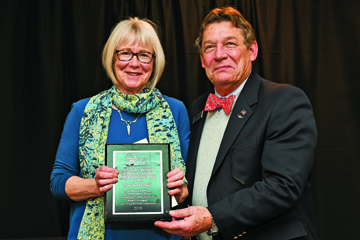
Community Advocate: Christine O’Connor who has led the Lowry United Neighborhoods for a decade was named INC’s Person of the Year.
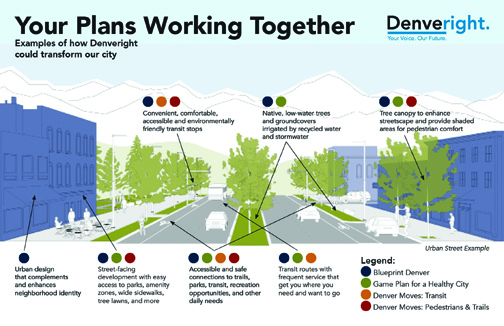
Denver’s Inter-Neighborhood Cooperation or INC passed a resolution Feb. 8 to postpone bringing the city’s “Denveright Plan” to a City Council vote until after the upcoming city elections. Little more than a couple of weeks earlier on Jan. 23, the organization named Christine O’Connor INC’s Person of the Year.
The voluntary coalition of registered neighborhood organizations representing two-thirds of Denver households urged the delay because the next City Council shouldn’t be accountable for a plan voted in by a prior council. Furthermore they say that, “the process did not include all neighborhood voices.” The Plan is currently scheduled for a City Council vote on April 15.
Delay Demanded: Denver’s Department of Community Planning & Development is behind the Denveright campaign that INC wants stopped until after the upcoming city elections.
O’Connor received the Virginia Oredson Memorial Award during the 33rd Annual Awards Dinner held at the Holiday Inn Denver-Cherry Creek. For over a decade, she has led Lowry United Neighborhoods and worked with the broader east Denver neighborhoods on environmental and development issues on the former Lowry Air Force base property. In presenting the award the organization described her as, “An amazing and courageous community advocate and friend to so many.”
Daunting Documents
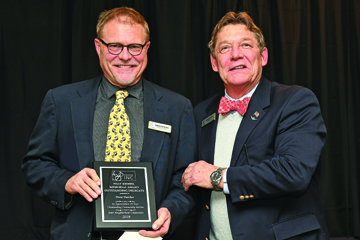
Delegate Dutcher: Elyria-Swansea neighborhood’s Drew Dutcher was named Outstanding Delegate of the Year.
INC declared at its February Delegate Meeting that the sheer volume of the “Denveright” plan documents has been daunting for most neighborhood organizations and interested citizens to respond to thoroughly and intelligently by City-set deadlines. The documents total more than 1,000 pages, with over 100 goals, nearly 300 policies and recommendations, and more than 450 strategies addressing development through 2040 as Denver’s population increases.
The resolution also alleges, “meetings with neighborhoods to explain impacts of the documents have not occurred throughout the city; further, the city’s official website listing information received through citizen and neighborhood comments is missing many individual comments that were formally submitted.”
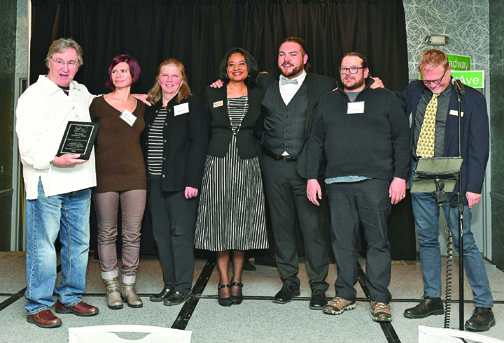
Public Safety Winners: This groups’ legal win for a public health study related to environment health connected to the I-70 expansion won them INC’s Public Safety honors. They are from left: Lloyd Burton, Colorado Sierra Club; Ava Farouch from Earthjustice, an environmental law firm. Also, Becky English from the Colorado Sierra Club; Lisa Calderon and Ean Tafoya from the Colorado Latino Forum; Chaffee Park Neighborhood’s Lucas Merrigen; and Drew Dutcher from Elyria-Swansea.
Also, the group asserts, “Information identifying changes made to the plan documents for the second draft are divorced from the materials listing specific requests for changes and additions received from the public.” Finally, according to INC, plan documents continue to be incomplete and vague in terms of addressing impacts on the city’s budget and work program, especially with the more than 450 proposed strategies.
Fights For Citizens
Person of the Year O’Connor has worked tirelessly to support the needs and desires of some of Denver’s most burdened neighborhoods, such as Cole, Globeville and Elyria/ Swansea. She currently serves as INC’s representative to the Citizens Action Group to the I-70 Superfund Site.
She worked with neighbors across north Denver, and participated in litigation regarding the Platte to Park Hill Drainage Project and Denver’s taking of City Park Golf Course to support expansion of I-70.
More recently, O’Connor became one of the leaders in initiating a 2019 ballot measure called “Let Denver Vote.” This ballot measure, if approved, will allow Denver to pursue a future Winter Olympics’ bid only if spending is first approved by Denver voters. What Christine says she values most about INC is “the powerful link it provides among neighbors citywide and the opportunity to work on issues that go beyond one neighborhood.” Her hope for INC is that the “newer members will take the helm and pour their hearts and souls into bettering our City in the decades to come!”
City Wide Awards
Drew Dutcher of the Elyria-Swansea neighborhood was named Outstanding Delegate of the Year. The honor credits him “for his outstanding representation from his neighborhood and representation on behalf of INC to Citizen Advisory Boards connected to city endeavors.”
Public Safety honors were given to four groups for their, “legal win for a public health study related to environment health connected to the I-70 expansion.” They were the Chaffee Neighborhood, Elyria-Swansea Neighborhood, Colorado Latino Forum and the Colorado Sierra Club.
Ronnie Crawford from the Overland Park Neighborhood was presented with the Sustainability Award for his efforts to work with the city to sustain the environment connected to river ways, specifically the Platte River.
Sundial Star
Sundial Star Sanderson: INC presented 10 Neighborhood Star Awards including one to Hilltop’s Denise Sanderson for her fundraising efforts to renovate the Cranmer Park Sundial & Plaza.
Hilltop resident Denise Sanderson received a Neighborhood Star Award for her leadership of the Save the Sundial Committee and the significant fundraising efforts that were necessary to complete renovation of the Sundial & Plaza.
She was instrumental in getting the Sundial & Plaza put on Colorado’s “Most Endangered Places” list, giving the fundraising project more visibility and a sense of urgency. After years of raising awareness and funding to save this historic landmark, in early 2014, the Committee turned to The Park People, who adopted the project, taking the outreach and fundraising to another level.
It took nearly a decade, but the effort came to a celebratory close last year on Oct 3 when the Cranmer Park Sundial & Plaza officially reopened after completing nine months of restoration work. Now the Denver neighborhood park with a sweeping view of the Front Range has a solid foundation for generations to come.
More Valley Stars
Nine other residents were also given Neighborhood Star Awards for their work on specific projects that impacted the community. They are in alphabetical order:
Anne Callison, Winston Downs’s neighborhood, for her balanced leadership regarding information and education for a liquor-cabaret dance license at a cemetery.
Glenn Harper of the Sun Valley neighborhood for opening his restaurant to support a food bank and education to future chefs in his neighborhood.
John Robinson in the Harvey Park neighborhood for work on the Loretto Heights redesign and neighborhood festival fundraiser.
Greater Park Hill’s Blair Taylor for her activism in representing all neighborhood voices in projects that impact her area.
Diane Travis, Uptown on the Hill (Swallow Hill) for her education of residents and city on how to efficiently save historic flagstone sidewalks and for getting her suggestions adopted into city sidewalk planning.
Michelle Valeri from the Colfax Business Improvement District for her success with the Colfax Works program that employs the homeless.
Phyllis Ward of the University Park Community for her dedication to ensuring the neighborhood newsletter was distributed.
Brooke Webb in the Virginia Village-Ellis area for her efforts to improve the public image of the Ellis Elementary School and PTA.
Ann White of Montbello 20/20 for her leadership in health awareness and representing Montbello on the WorkNow program.