
by Mark Smiley | Oct 3, 2016 | Main Articles
Mayor Dunafon And Former Councilman Jeff Allen Fully Exonerated
by Mark Smiley
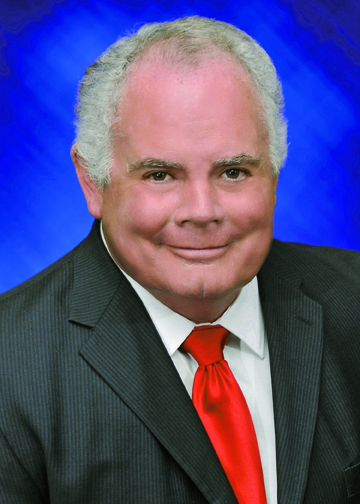 In a startling reversal of fortune Russell Kemp of the law firm of Ireland, Stapleton, Pryor & Pascoe, PC has had an ethics grievance lodged against him with the Colorado Supreme Court’s Office of Attorney Regulation. The complaint against Kemp (Case No. 16-7526) alleges that he violated Rule 4.5 of the Colorado Rules of Professional Conduct when he filed what was found by the Glendale City Council to be a frivolous complaint against former Glendale City Councilman Jeff Allen for voting to approve the City’s general 2016 budget.
Rule 4.5 prohibits attorneys from presenting administrative charges “solely to obtain an advantage in a civil matter.” Kemp is the attorney for M.A.K. Investment Group, LLC whose principals own Authentic Persian & Oriental Rugs. He and his firm have brought two lawsuits in state court and one in federal court in Colorado against the City of Glendale relating to the Glendale 180 project which involves building an entertainment district on East Virginia Avenue where MAK owns land. Kemp and his firm have also filed over 15 separate open record requests resulting in almost 100,000 city documents being produced.
Allen indicated that “MAK and its attorneys and agents have been at war with Glendale for several years which includes filing frivolous ethics complaints against myself and Glendale Mayor Mike Dunafon. Ireland Stapleton through its litigation has cost its client hundreds of thousands of dollars for no discernable purpose or gain other than greatly enriching the law firm. The ethics complaint against me was a joke and this type of litigation tactic by Kemp simply should not be tolerated by the Colorado Supreme Court or the legal community as a whole.”
On March 18 Kemp and Ireland Stapleton filed a complaint against Allen that by voting along with a unanimous City Council to approve the 2016 City Budget, Allen violated the Glendale Code of Ethics Section 2.14.040(B) by performing “official act directly or substantially affecting to its economic benefit.” It was purported by Kemp since Allen works for the Chamber of Commerce and the Chamber of Commerce gets funds from the City he could not vote on the general budget. But City Attorney Jeff Springer pointed out that the budget does not break out anything for the Chamber but simply has a line for possible allocation to non-profits and further any money to the Chamber comes from a pre-existing 2004 Ordinance. The City Attorney indicated that the complaint was so obviously meritless that he did not deem it worthy of even referring it out to an outside independent council.
MAK is also alleged to have gotten Colorado Ethics Watch to file an ethics complaint against Glendale Mayor Mike Dunafon claiming he should not have voted to approve a site plan of a company one of whose shareholders was his wife Debra Matthews for a marijuana dispensary. Colorado Ethics Watch has been accused by some of being a “left-wing litigation machine” that has a “pay for play” model whereby it will file complaints against targets proposed by those who fund Ethics Watch’s 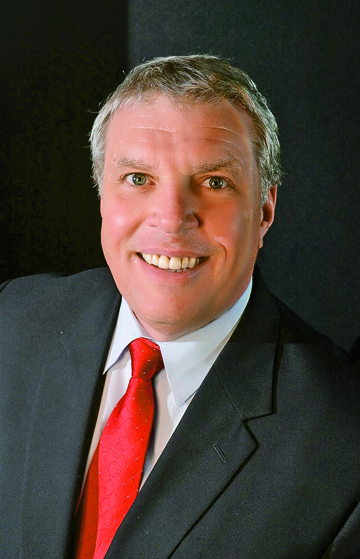 activities.
The complaint of Ethics Watch was dismissed as “frivolous” by a unanimous City Council after outside legal counsel Nathan Chambers pointed out that Ethics Watch didn’t even bother to check whether Dunafon and Matthews were in fact married at the time of vote. Chambers noted that he had checked the applicable records and had confirmed that they were not married and therefore there was absolutely no basis for the complaint in the first place.
Dunafon stated, however, that the frivolous filing had its intended effect. “MAK and its attorneys and publicity agents had the complaint splashed all over the local and even regional press. The finding that the complaint had no merit and was frivolous got absolutely no publicity. They knew what they were doing and it’s repugnant.”
Allen concluded, “It is sad and pathetic what Mohammad Ali Kheirkhahi, Nasrin Kholghy and the rest of the vicious crew will do to people in order to try to force a rezoning of a parcel of land that is opposed by almost everyone in Glendale and all the surrounding Denver neighborhoods. People like Russell Kemp are the reason why Americans have such an incredibly low opinion of lawyers and their ethics. He should not be practicing law.”
by Mark Smiley | Oct 3, 2016 | Main Articles
Highly Esteemed Hirschfeld Wants To Build 108 No Parking Micro-Units On Historic Street
by Charles C. Bonniwell
The Humboldt Street Neighborhood Association was formed in 1992 during the summer of violence to fight gangs, drugs and frequent gunfire on the block of central Denver running between Park Avenue and Franklin Street. The block  was designated a Historic District in 2004. But the neighborhood is now facing one of its greatest threats from powerful, well-regarded and politically connected developer Barry Hirschfeld, who wishes to build on two small lots five-story micro-unit apartments which will have an incredible 108 units as well as a restaurant while not providing a single parking place.
The residents of Humboldt Street and the surrounding restaurants and commercial establishments believe the project will create a parking nightmare, lower property values and badly hurt businesses in the area.
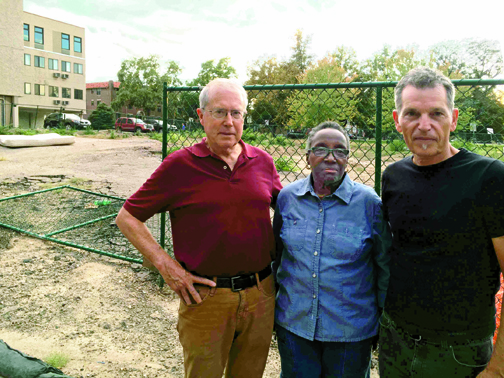
The Humboldt Association joined forces with Curtis Park Neighbors to fight Hirschfeld. Curtis Park also faces no parking micro unit projects including one believed to be associated with Hirschfeld. David Engelken from the Humboldt Street Neighborhood Association stated, “We would like to sit down with Mr. Hirschfeld to try to work out a ‘win-win’ scenario, but after one meeting, he has totally stonewalled the neighborhood groups on this matter.”
Millennials Never Own Cars?
Hirschfeld and other similar developers have claimed that millennials who will live in the extremely small units will not own cars and therefore their projects will not result in an endless fight over a very limited number of on street parking spaces. That claim has been refuted by, among others, Denver Councilwoman Debbie Ortega who went on a fact-finding mission to Seattle concerning micro unit projects several years back. She noted in a letter dated January 27, 2016, that: “The developer claimed that tenants did not own cars, but we met some of the tenants who were car owners and they described their frustrations of having to park blocks away to carry groceries home.”
UCLA urban planning professor Donald Shoup has also noted the inner city traffic congestion is often caused “by people who have gotten where they want to be, but are cruising around looking for a place to park.”
Zoning Loophole
Several years ago high density real estate developers discovered what they believed was a loophole in the Denver zoning code which was revised in 2010 to permit lots equal or smaller than 6,250 square feet to be exempt from any and all parking requirements. The amendment was apparently envisioned to allow redevelopment of small commercial spaces such as exist in the Washington Park area and on South Pearl Street.
But it turns out there are over 4,000 such lots all over the city from downtown to the Country Club area. Horrified what such developments would do to the parking in many residential neighborhoods, the City Council placed a moratorium on such developments and appointed a task force to see how the code could be modified but quixotically grandfathered in some 12 existing projects including three from the highly connected Hirschfeld’s. Since the 2010 exception already exists in the Code, no City Council approval is needed for any proposed micro-unit project without parking, including Hirschfeld’s projects. Only a simple building permit is required from the Community Planning and Development Department.
Hirschfeld had a no parking micro-unit project planned for 135 Adams Street in Cherry Creek North which he had made public but had to retreat from, due to overwhelming neighborhood opposition.
However in 2015 Hirschfeld, through an entity titled Pando Holdings Inc., acquired two small lots of 6,250 square feet each at 1570 and 1578 Humboldt Street that housed two small, historically significant, medical buildings. The opposition to Hirschfeld points out that his project is on what is in effect a 12,500 square foot lot and once again is in violation of the spirit if not the language of the 2010 amendment.
Ethically Challenged Brad Buchanan
Denver’s Community Planning and Development Department, however, is generally deemed to be controlled by high density developers through Executive Director Brad Buchanan, a developer himself. The Department apparently gave the go-ahead for the micro units on the Humboldt lots and Hirschfeld quickly mowed down any trees in the area and leveled the buildings which finally gave the alert to the neighborhood association of the project. While a demolition notice would be required by law to be posted on the properties none was ever noticed by any resident of the neighborhood.
The granting of the permit to construct the micro units has been appealed to the Denver Board of Zoning Adjustments on the basis that the no parking exemption was for small, commercial developments and existing buildings. While the Board of Adjustment was intended to act as a check and balance on the Community Development Department, in recent years it has acted as little more than a rubber stamp. It is not known when, if ever, the present Board has overturned the granting of a building permit.
Moreover, like the Board of the Community Planning itself, all of the members of the Zoning Adjustment Board have been appointed by Mayor Hancock, making it highly unlikely they will vote to overturn anything deemed important to the mayor. Mayor Hancock has a strong reputation for removing anyone who acts independently from the wishes of his office on boards throughout the city.
Hope Springs
The opposition to the Hirschfeld project was headed up by Dave Engelken and Bob Hickman from Humboldt Street and Matina Soutsos and Kim Nytes from Curtis Park organization. While successfully challenging Mr. Hirschfeld is deemed by many to be a difficult proposition, even obtaining a moratorium itself was originally considered a long shot. The representatives of the Humboldt Street and Curtis Park organizations approached Councilman Albus Brooks (who represents the Humboldt Street area on City Council) with a complete draft of a proposed moratorium. Brooks is generally deemed to be highly pro developer, but also desires to succeed Michael Hancock as mayor of Denver.
While initially resistant, Brooks suddenly acquiesced to carry a moratorium resolution and in fact set it for first reading without notifying the proponent neighborhood groups that their proposal was being considered by the City Council. The Denver Post on July 20 came out with an editorial supporting the moratorium without speaking with anyone in the neighborhood groups. The City approved the same by a unanimous 12-0 vote. Councilwoman Mary Beth Susman who had vocally indicated her likely opposition to such a moratorium strangely was not present for the vote.
While the moratorium would never have occurred absent the hard work and diligence of the Humboldt and Curtis Park members, observers of the City Council have surmised that a fix must have been in for a 12-0 vote to occur putting a moratorium on any type of real estate development in the City and County of Denver. Larger developers may have been upset that small micro unit projects would take up most of the on-street parking in many neighborhoods making their larger developments with some, but inadequate, parking commercially unviable.
Pat Hamill, the Chairman and CEO of Oakwood Homes, LLC, who alle gedly controls the mayor and the city, would have had to approve the same. Hamill is the co-chair of Colorado Concern a group of business leaders whose critics accuse them of being a little more than high powered crony capitalists claiming to be looking out for the public interest.
Hirschfeld serves with Hamill on the Board of Directors for Colorado Concern and it is assumed that it would have been easy for him to arrange with Hamill to exempt out his projects from the proposed moratorium. Logically if the parking exemption was for traditional small business commercial projects and not residential units there would be no purpose in grandfathering in Hirschfeld’s and the other projects.
Hirschfeld’s Sterling Reputation
Hirschfeld’s family owned for generations A.B. Hirschfeld Press, one of the largest commercial printers in the Rocky Mountain region, which closed its doors in 2009 after operating for 102 years. Unlike Denver developers such as Peter Kudla of Metropolitan Homes who are viewed by some as the dregs of humanity, Barry Hirschfeld himself has a strong reputation for philanthropy in the community and is held in high regard throughout Denver.
But the Humboldt micro unit project has damaged that reputation for some. He is accused of rank hypocrisy for going on community television adamantly opposing any high residential density for the church property located at Colorado Boulevard and Bayaud near his Hilltop home while pushing massive density with no parking in other neighborhoods in the city for his own profit.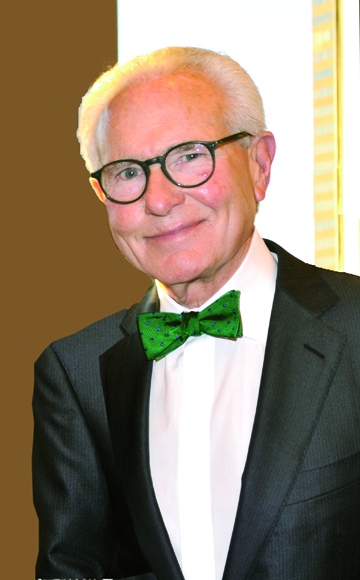
Andrew Gutshall of Denver perhaps typified the disappointment in Hirschfeld felt by many when he commented on the website featuring a petition opposing the project:
“I live in the area and will be negatively impacted by this development’s lack of parking for cars or bicycles. Obviously Mr. Hirschfeld won’t be impacted as he lives in a much more affluent neighborhood. I’m disappointed that a member of a family (4th Gen) of Denver would have such little regard for his fellow citizens all for the love of profit. Mr. Hirschfeld is an example of what is wrong with our economy and how developers are raping Denver in this latest ‘growth’ spurt. Deplorable!”
Mr. Hirschfeld did return the call from the Chronicle to get his perspective on the dispute, but politely indicated that he did not believe any useful purpose would be served in publicly commenting on the matter.

by Mark Smiley | Oct 3, 2016 | Glendale City News
by Kurt Woock
Writer for and on behalf of the City of Glendale
Advertising in sports has a long tradition. For more than 100 years, Goodyear’s iconic blimp has been floating over sporting events. Wheaties has been stamping the image of top athletes on its famous orange boxes since the 1930s (Lou Gehrig was the first). Ohio University unveiled a first-of-its kind degree in sports marketing in 1966, and plenty of other schools have followed.
Bits of trivia like those are fun, but the reality of advertising and sports is serious business. Connecting businesses to customers and potential customers through sports is a juggernaut industry, worth tens of billions of dollars annually. People partner with sports teams and stadiums to become part of the fabric of the sporting experience. Sports fans are loyal, and they respect loyalty. The in-game experience is a community event filled with excitement and memories in the making. These are exactly the types of situations businesses want to be part of. Glendale Raptors and Infinity Park have been working with companies large and small since 2007. The perspectives of some of these sponsors illustrate the various ways sports can serve a key role in a marketing strategy.
Establishing and maintaining visibility is a crucial, ongoing task. Terri Fisher is president of 5 Star Talent and Entertainment, Inc., which produces and organizes entertainment, from musical acts to ice sculptors to magicians to comedians and more. Fisher works to ensure that 5 Star’s advertising does more than plug the company name. She said it’s important to make people curious about what your business offers and then demonstrate to customers that they have shared interests with your business. Advertising with the Raptors “Is a form of advertising 5 Star without making a hard sell,” Fisher said. In a way, sports teams serve the role of a party host introducing guests to other guests; the team is something everyone knows and trusts. Instead of starting with skepticism or awkward conversation, guests begin with a mutual connection.
But not just any mutual connection will do. It’s key that the particular traits of that “mutual friend” jibe with the traits you’re looking to identify with. Jill Farschman, publisher of Denver Metro Media, said “rugby is a fast-growing sport, and Infinity Park is a world-class facility. Being associated with rugby and what’s happening with the sport means you’re innovative, leading edge.” She added that the Raptors consist of both a men’s and women’s team, a plus when trying to reach a broad demographic. Broad reach is important to Farschman, who publishes Washington Park Profile, Life on Capitol Hill, and Neighborhood Life.
Farschman is not alone in her assessment. Kirsten Kreiling manages marketing and communications for the Raptors. The diversity of rugby fans is a major selling point for many businesses. “Some people are surprised to find out that our fans are almost an even split between men and women.” The age range really varies widely: The family-friendly atmosphere and affordable tickets means that the rows of Infinity Park fill up with everyone from kids to grandparents.
Sports teams are adept at drawing a broad audience because they serve as a community touchstone — something everyone can rally around, talk about, and root for. Laura Nord, district manager for Potbelly Sandwich Shops, said that it was this role that stuck out to her when choosing to sponsor the Raptors. “Partnering with a neighborhood organization is most ideal for us, and the Glendale Raptors team is located closely to two of our sandwich shops and is a prominent attraction in the area. I hope our sponsorship reflects our passion behind connecting with the neighborhoods in which we are located.” Tiphane Gumpper, assistant community manager at Solana Cherry Creek, has similar aims as she builds the name recognition of Solana’s apartment complex. “We are trying to build awareness and increase exposure to our new community in the area, and this was a great opportunity with the amount of people who attend events at Infinity Park.”
The various aims and goals sponsors have range from debuting a business for the first time to thanking longtime patrons of a cherished community institution. Partnering with a young, quickly growing team provides a level of personability and flexibility. Kreiling said she has several “pre-packaged” sponsorship levels as beginning points, however she added that “they are really just a starting point and a rough guideline for us to follow.” She said she strives to customize sponsorship packages in a way that will best position sponsors to achieve their goals. For example, “some sponsors, may not have much of a social media following, so offering them social media tagging really isn’t helpful to them. In cases like that, we look at some other types of fulfillment we can offer that will benefit the sponsor most.” For those companies for whom web presence is important, the Raptors can deliver that crucial element. Kreiling said the team’s various social channels have reached more than 3 million people. All the matches played in the stadium are live webcast; in addition to local fans not at Infinity Park, fans throughout the country and around the world are watching.
Reaching customers is not always easy. Despite a historic number of mediums through which to reach people it’s easy to get crowded out. It takes creativity to break through. Finding forums of memorable experiences, like sports stadiums, is a start. Match that with an organization who will work with you to get your message across, and you have a winning formula.

by Mark Smiley | Aug 29, 2016 | Featured Stories & Advertisers
Click below for the email exchange between The Chronicle and Mr. John Sadwith:


by Mark Smiley | Aug 29, 2016 | Travel
Neighborhood, City Council Okay Garfield Plans; Milwaukee Development Looms
Given the shadows cast by an ever-increasing rash of skyscrapers from the nearby business district, residents in Cherry Creek North’s tony residential neighborhood north of 3rd Ave. become exceptionally nervous with regard to potential changes to its character. These are the residents, after all, that urged, “Smart development, not overdevelopment” for the Cherry Creek’s business district.
Thus when the two largest remaining parcels within the residential neighborhood — a rare corner with six contiguous lots at 2nd Ave. and Garfield, the other a five-lot plot between 320-260 Milwaukee, and both zoned G-RH-3 — became potential development sites residents quickly became skittish. The Cherry Creek North Neighborhood Association (CCNNA) and Councilman Wayne New reached an agreement for the Garfield development that was approved at the August 22 City Council meeting. Sale of the Milwaukee property just closed and information isn’t yet available on plans for development at that location.
When initially learning that the family that owned the Garfield property was planning to build garden court style apartments, neighbors objected declaring they would look like “army barracks.” They requested the city review the intent of the code and listen to their concerns. City Councilman Wayne New — a past president of the CCNNA — along with colleague Councilman Rafael Espinoza then asked for a one-year city-wide moratorium on the garden court concept so the zoning code could be corrected or clarified. Other council members, however, expressed concern that the yearlong moratorium could halt other city projects.
Silver Lining
There is a silver lining to the development cloud, at least for the Garfield property. Paula Newberry-Arnold and her son Kien whose family have owned the property for nearly 70 years finalized an agreement with the CCNNA led by president Bob Vogel that proved acceptable to both the neighborhood and the family. Under the agreement, the number of units in the development was decreased from 30 down to 26, with no stacked units. Moreover, the courtyard space between buildings was expanded to 33 feet versus the original 16 feet.
Furthermore there will actually be gardens within the development not just doors, notes Councilman New. He says his review of the plan gave him the assurance he needed to amend the moratorium. On August 22 the Denver City Council agreed, lifting the moratorium on current projects including Garfield, but approved the year-long halt for new projects city-wide..
The neighborhood is just beginning to learn about the five-lot plot located between 320-360 Milwaukee. It just sold for $7,600,000, unofficially a record price of $1,520,000 per lot. Neither the buyer nor plans for development of that property have yet been disclosed. However, up to 10 units — condos, flats or townhomes — could be built, potentially including the garden court designs.
Flowering Since WWII
Weldon Newberry and two of his brothers originally purchased a greenhouse at the Garfield location in Cherry Creek just after WWII and began growing famed Colorado Carnations, the first trademarked flower in the U.S. A few years later, Weldon and his wife Elizabeth purchased full ownership from the remaining brother. With fuel prices skyrocketing, carnations were being shipped into the states cheaper than they could be grown in the greenhouse. At this point, the greenhouses were used to grow a large variety of flowers and plants and Elizabeth Newberry focused on developi ng the wedding and floral side of the business.
The daughter of Weldon and Elizabeth Newberry, Paula Newberry-Arnold now co-owns the business with her son Kien Arnold. The business has developed into one of Denver’s top floral and décor shops specializing in large themed events and custom floral design. Earlier this year they relocated the business into the former Natural Grocers property on Leetsdale Drive (Chronicle, January 2016).
Originally 500 Cherry Creek North neighborhood homeowners signed a petition protesting the proposed Garfield development. Now, however, many say they look forward to it being built believing it will be an improvement over the greenhouses that weren’t exactly an asset to the neighborhood.