
Primrose School at Colorado Station




A Plea For A Bicycle-Friendly Denver
by Phil Kummer
 After a slow start to the biking season, due to very wet weather, bikers are being seen more and more in Denver and throughout the Metro area. As you ride around and talk with fellow bikers you can’t help but notice that bikers, bike routes and bike transport are treated as second-class, second-rate citizens in Denver and the surrounding area.
Recently radio personality Mike Rosen wrote a column for The Denver Post about the comments of Denver City Council members Mary Beth Susman and Albus Brooks who propose to discourage driving in Denver and make it more convenient for bikers. He states that “bicyclists are junior partners” when it comes to transportation in Denver. Most bikers, though, would say that bike transport is barely a partner and more like a “Johnny come lately” and not given its due in the transportation scheme of things.
Bicycles are the transportation stepchild that nobody wants to commit to yet but are necessary to acknowledge because there are, and will be, more issues with moving a lot of people through cities. Rosen’s point that the primary purpose of a road system is “to move a high volume of traffic and people quickly and efficiently…” is partially correct. It fails though to consider issues such as car/bicycle crashes, freedom of mobility, parking, congestion, costs involved in maintaining a street for an automobile vs. a bicycle, air pollution, pedestrian safety, safety in general and neighborhoods.
As far as being efficient, it seems odd that one would consider commuting by a vehicle with generally one occupant, the driver, and having 25 percent occupancy as being efficient. Rosen’s article is a celebration of mindlessness and dogma that has 20/20 vision concerning what has worked for the past 60 years but has nothing to offer that might address the above issues.
The perception that bike transport is an unwanted stepchild is reinforced by the recent auditor’s report that shows a serious underfunding of the Denver Moves plan. Denver Moves is a citywide plan approved in 2011 that “expands the vision for the non-motorized transportation and recreation system in Denver.” Denver Bikes and the Mayor’s Bicycle Advisory Committee are both doing yeoman’s work as far as promoting and overseeing the construction of bike friendly infrastructure as specified by Denver Moves, yet it seems an uphill battle.
The plan “focuses on integrating the existing off-street and on-street networks to create safe, comfortable corridors that link neighborhoods, parks, employment centers, business districts, transit hubs … in all parts of Denver.” Unfortunately, since 2013, the city has dedicated only $2.8 million for bike lanes and pedestrian-oriented projects from the capital improvements budget, a tiny fraction of the estimated overall cost of $119 million.
Although budget concerns are important, the bigger picture concerning bike transport is how to retrofit an entire city to produce a safe, convenient, efficient and effective way to travel that will be used by the multitudes. Denver, as most cities, is trying to fit a bike system into a preexisting system designed for cars, trucks and motorcycles so no matter how much sense it makes to promote bikes and other alternative modes of transportation it will always be difficult to retrofit a 60-year-old system to meet new and different transport goals.
Even though Vincent Carroll in a recent Denver Post column, sees this effort by the city as “a methodical, long-term effort to frustrate the use of the personal auto,” it is actually an effort to counteract the years  of neglect and disrespect that bike transport has suffered by a society that is in love with motor vehicles. Our government, Federal, State and local, has long supported low density housing and the transport systems designed for that lifestyle. In the marketplace of transport alternatives we’ve been given one realistic choice — get a car and be happy.
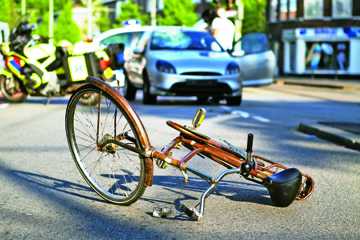
In planning to retrofit a bike system the biggest factor is safety and how comfortable riders feel on the road or bikeway. In 2013, Michael Andersen of People for Bikes in his article “Selling Biking: Perceived Safety, The Barrier That Still Matters,” cited studies and surveys in Portland and San Francisco that indicate the vast majority of cyclists are concerned for their safety while on the road, and they especially feared a collision with an auto. On a national level 743 cyclists were killed and about 48,000 were injured in motor vehicle traffic crashes in 2013. The average age for those killed is 44 and of those injured the average is 32 so it would seem that is not a young and reckless group. Colorado suffered 12 biker fatalities in 2013.
Bike to Work Day, an event promoted by Bike Denver and the Mayor’s Bike Advisory Committee, was held June 24 and drew approximately 32,800 bikers who rode an average of 9.2 miles one way to work. On a daily basis Denver has generally fewer than 7,000 bike commuters or about 2 percent of the total number of commuters. Although this is a small number, it is actually very significant given the difficulties and dangers that bikers have to put up with while riding on Denver streets.
This suggests that if Denver streets were actually biker friendly we could reduce the number of vehicles and congestion, make parking easier and spend less money on road maintenance. But the bigger question for the biking community is, “how do we make biking a general form of transportation and not just for a small number of hard core bikers?” Mobility freedom then should be promoted for all Denver citizens not just those who have a motor vehicle or who brave the mean streets on a bike.
An interesting solution to mobility freedom was highlighted in the April 2015 Glendale Cherry Creek Chronicle in a front page article by Heather Brecl, “The Sunny Side to An Eco-Friendly Revolution: the ELF.” The article describes a new, high tech vehicle that is powered by both the rider with pedals and a solar powered motor. Neither Bike Denver nor the Mayor’s Bicycle Advisory Committee have addressed new technologies such as three- or four-wheeled bicycles that are part human powered and part motor driven. The ELF, which is 9 feet long, over 4 feet wide and 5 feet tall, is larger than your standard two-wheeled bike. It is attractive as a commuter vehicle but there does not seem to be a place for it on Denver streets. This type of vehicle, which is technically a bike, has the potential to be a transportation game changer but will there be a place where the multitudes can use a vehicle such as this?
One solution that has yet to be discussed is to have bike only streets that welcome a variety of human powered or combo-powered bikes. A few strategic, long streets in Denver could be selected that would lend themselves to a different type of commuting and biking experience. Only then, will we as a city be able to say that we did our best to solve the transportation and parking issues that dog us every day.
Part II Of City’s Attack On Its Own Neighborhoods?
by Glen Richardson
 Denver has been known for its highly livable neighborhoods which contain more single family homes than almost any comparable city in the United States. But single family homes have been deemed by some progressive urbanists as a villain in the fight against urban sprawl and the cause of much hated suburbia.
There has been a call for ever more density in Denver by individuals such as Denver Planning Executive Director Brad Buchanan (who lives on a 1,500 acre ranch outside of Denver) and former councilman and failed auditor candidate Chris Nevitt. Nevitt demanded in a speech explaining why he was voting for high density rezoning of Mount Gilead Church property that every neighborhood in Denver must do its share to absorb high density. His views were condemned by neighborhood groups and even by The Denver Post in a scathing editorial. But his views are believed to be supported by a significant majority on the Denver City Council.
 But building high-rise apartments on former park and church land has been deemed by Nevitt and others as not sufficient to destroy the single family neighborhood character of neighborhoods like Washington Park, Hilltop, Crestmoor, Congress Park and Cherry Creek North. Thus some members of the Denver City Council have turned to doing away with concept of “single family” homes at all. By pushing the idea of “short-term rentals” where every former single family home can be turned into a mini apartment house, high density can also be obtained.
What were once sleepy streets throughout the city are suddenly waking up to the fact that the Valley’s homes-as-lodging trend is growing fast albeit not without controversy.
Neighborhood advocates say the trend is creating parking, trash and noise issues plus in a few instances disruptive or illegal activities. Furthermore, they argue these rentals detract from the peaceful and quiet enjoyment of neighborhood homes and property.
Despite currently being illegal (City’s Zoning Code requires month-to-month or longer tenancy), Denver’s short-term rental market is among the hottest in the nation. Airbnb alone has 1,000 Denver properties listed, according to Denver City Councilwoman Mary Beth Susman, the Council’s task-force chair. In fact Zillow — the online real estate database company — ranks Denver fifth among the country’s 50 top markets. Zillow also puts Denver as the eighth most expensive rental market in the U.S. and the most expensive between the two coasts.
Tech, Money Driven
Technology startups have emerged to encourage home rentals and host short-term retail platforms such as Airbnb, VRB O, HomeAway and others. These new and suddenly proliferating hospitality services are helping propel local property owners into the home rental business by providing hotel-type services from simple key exchanges to full rental management. A startup — known as the Key Exchange — gives homeowners the opportunity to store their property keys at a neighborhood restaurant and be notified when they are picked up or dropped off by renters.
Pillow — a full-service online short-term rental service — handles listings and price optimization, bookings, guest screening and communications, key exchange plus laundry. Currently, it works with Airbnb, VRBO and HomeAway. Pillow recently raised $2.65 million and is planning to expand its full service into 10 U.S. cities.
A key reason short-term rentals are becoming common is because these renters are paying top dollar. Furthermore, more money can often be made by renting homes to tourists for a few days at a time compared to renting to local families on a monthly or yearly basis. Additionally, a new type of property buyer is entering the local housing market exploiting the sudden popularity of short-term rentals with an eye on quick profits. A Florida firm, for example, recently purchased a Capitol Hill building and is renting all of the units on a short-term basis, upsetting local residents. Finally, a growing number of tourists are seeking vacation destinations that offer something more than simply a hotel room.
Grappling Wit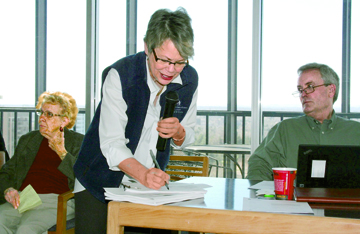 h Issues
Issues regarding short-term rentals are coming to a head in Valley neighborhoods plus the Denver City Council is looking at length at the issues. What they are finding out is that there are a lot of problems. Recognizing that vacation rentals are not a passing trend, nearly every Valley neighborhood is grappling with regulations to help mitigate their impact.
Neighborhood organization INC — the Inter-Neighborhood Cooperation — has passed a resolution urging both the Denver City Council and Mayor Michael Hancock to enforce the provisions of the Denver Zoning Code prohibiting short-term rentals. The organization is also calling for a range of regulations that would include taxation, licensing and limitations based on density and location.
When the City Council’s Shared Economy Task Force began studying short-term rentals, resident George Mayl asked, “Why on such an important citywide topic have the meetings by Councilwoman Susman not been televised?” This April her Task Force became part of the Council’s Neighborhood & Planning Committee and is now televised on the fourth Wednesday of each month. Mayl told the Chronicle, “It is time for the City to protect its residential neighborhoods from commercial encroachment.” He observes that more and more cease and desist orders are being brought to Board of Adjustment hearings as residents learn they do not have to put up with motel type activities in their neighborhoods.
Close To Home
Short-term rentals drew special interest from attendees at the West Wash Park Neighborhood Assn. (WWPNA) meeting on April 22. The attention was due to the fact a neighborhood home owned by a Florida investor was listing the home for rent as cannabis-friendly. The owner withdrew her appeal of a cease and desist order after her properties in Congress Park were closed down.
“The members at this meeting were quite concerned that these short-term rentals can be disruptive, the lodging taxes aren’t paid, they remove housing — particularly affordable housing — from an already squeezed market and violate the zoning code and commercialize residential zoning,” resident Charlotte Winzenburg tells the Chronicle.
She adds that when the Denver Zoning Code was being re-written, “WWPNA was an active participant in all the public meetings and had an ad hoc committee that spent many hours over many months studying the proposed code, commenting on proposals and lobbying for the zoning that our neighbors told us they wanted.”
Neighborhood Risks
The INC Zoning & Planning Committee known as ZAP has analyzed the potential impact to Denver’s neighborhoods and identified significant risks. “Our assessment includes the effect it will have on affordable housing, key enforcement agencies and Denver governmental departments. The Committee has grave concerns about the real possibilities of unforeseen and unintended consequences of permitting short-term rentals in residential neighborhoods. This is not a problem for another day. The decisions we make today will determine the future of Denver’s neighborhoods,” says the ZAP Committee co-chaired by Margie Valdez and Greg Kerwin.
Among the issues Denver City Council must address is the argument by proponents that private property rights must be protected. Advocates also contend regulations could harm the economy. Furthermore, if regulations are adopted, how many short-term rentals should be allowed in a neighborhood and how would the number be determined? Should registration and/or licensing be required in order to provide notice to neighborhoods (needs and desires hearings)?
The City must also consider what new City Ordinances should be required for short-term rentals. Possibilities include public nuisance, noise limits, property maintenance standards and nighttime curfews. Other considerations include parking restrictions, inspections, and emergency access. Finally, will new trespassing and disturbing the peace regulations be necessary?
What’s At Stake?
INC estimates that any change to regulations that would allow short-term rentals could result in 10,000 or even 20,000 or more added neighborhood rentals to Denver. “How many of these will be in violation of what change might be made to the zoning code?” the organization asks. Another question: “How will Denver’s Neighborhood Inspection Services possibly be able to monitor a greater number than they currently cannot monitor, particularly when other cities have been unable to do so?”
Lenders and insurers of properties must be included as stakeholders to ensure loan and insurance documents are in compliance, INC believes. Homeowners insurance, they note, does not include short-term rental damages. They also worry that a lack of premise health and safety inspection would endanger visitors and tourists.
Turning neighborhoods into areas for motels and hotels destroys the integrity of the neighborhood and, more importantly, the expectations of the property owners who purchased the property with the intention of a neighborhood remaining a residential neighborhood, INC says. Wrapping up, the citywide advocate representing Denver neighborhood association members concludes: “This is a city we call home. Is City Council propounding legislation that benefits a few residents and shared economy entrepreneurs-opportunists at the expense to the quality of life of most Denver residents? We hope not.”

by Marco Cummings
Writer for and on behalf of the City of Glendale
GLENDALE, CO – AUGUST 16: Denver vs Serevi Selects during the Serevi RugbyTown 7s tournament at Infinity Park in Glendale, Colorado on August 16, 2015. (Photo by Seth McConnell)
In his nearly two decades of playing the game of rugby, Fiji international Waisale Serevi became known around the globe as the “King of Sevens” for his prowess in the fast paced, seven-a-side version of the game.
Therefore, it’s fittingly appropriate that the tournament which bears his namesake, the Serevi RugbyTown Sevens (SRS) has become the crown jewel of sevens tournaments in North America.
For the fourth-straight year, Glendale, Colorado, the city that’s become synonymous with the moniker RugbyTown USA, hosted the three-day event (Aug. 14-16) and with 17 teams from around the world once again competing for a $10,000 cash purse, the event proved to be as enticing as ever for players and fans alike.
“This is all we’ve waited for. This is as good as it gets in North America and it’s some of the best rugby around the globe,” Glendale Mayor Mike Dunafon said of this year’s competition. “It’s what makes the Serevi RugbyTown Sevens such an important tournament. It is the essence of the future of the game of rugby.”
Following a disappointing campaign in which the Raptors fell short of their goal of qualification for this year’s Men’s Club 7s Nationals, the local club entered the tournament with something to prove not only to fans and opponents, but to themselves. By the weekend’s end, the team felt they had proved their point, stringing together competitive showings and results en-route to a fourth place finish in the field of 17.
“It was a great show of character. For us to be a local club side and to take fourth place, I’m happy with that,” Glendale Raptors head coach Andre Snyman said. “We’re disappointed but holding our heads high. I’m very proud of them for the way we played.”
It was a quarterfinal loss to eventual tournament champions and crosstown rivals, the Denver 7s, on the final day of the tournament which would derail the Raptors’ chances to win this year’s SRS Cup and the prize money that went with it.
Denver defeated a team which also bore the Serevi name, the Serevi Selects, 28-24 in an exciting final match, which proved to be an emotional win for Denver captain Maximo DeAchaval.
“We stuck together, we played together, and we finished together. We did everything together. My boys did it,” Denver captain Maximo DeAchaval said postgame. “[Serevi Selects] have great players and are great guys. We love playing them, hate playing them but it’s always a pleasure. We’re pretty happy.”
This year’s edition of the tournament also featured a new element. An inaugural high school tournament alongside the senior action, with the Glendale Raptors U-18s competing for the first time with seven other junior teams. The junior Raptors fared decently, with three wins and 12 points in the table. But it was visitors Atlantis who would win the High School Championship, defeating the Utah Lions 31-26 in the final.
Opportunities to watch local rugby sides compete against all-star and select sides from around the country and international locals wasn’t the only draw for fans to come out to Infinity Park. The Military Championship, which pits teams from each branch of the U.S. Military, has always been a fan favorite and staple of SRS.
Teams from each branch of the armed forces competed for positioning in Pool A, and after Day 1 of the tournament, Army and Air Force rose to the top. On Day 2, Army would defeat Air Force twice, 22-12 to win the pool and 43-12 to win the Military Final, marking the Black Knight’s third Military Championship in the four years of the tournament.
“It’s definitely our goal to win the Armed Forces Championship. Every year it’s a new team and a new competition so it’s just about 12 guys coming together as part of the All-Army family and getting the result that we wanted,” said Army team captain Andrew Locke.
The awards didn’t stop there. In addition to the SRS Cup, $10,000 purse, High School and Military Championships, teams also fought for the SRS Plate, Bowl and Shield awards.
Northeast Academy defeated Negro Y Azul 26-19 to win the Plate. Atlantis surprised the USA Collegiate All-Americans to win the Bowl by a score of 22-17. In the Shield Final, dark horse Bermuda also put on a show to beat Mexico Serpientes by a score of 19-15.
“It’s wonderful to have this kind of talent brought together for us to play against,” Atlantis coach Chris Ryan said. “The tournament is fantastic.”
That particular match was one  for seventh place in the tournament, but it was a true indication of the field’s quality from top to bottom, pitting the tournament newcomers against the 2013 SRS Champions.
“When you play a group like that, you’re playing the best of the best,” Ryan said of the All-Americans. “There’s a lot of future USA Eagles in that group and it was an honor to play against them.”
And with the competition becoming better and better each year, the anticipation will only grow stronger in the coming months while fans of rugby in North America anxiously await the fifth edition of the Serevi RugbyTown Sevens.