
by Editorial Board | Sep 29, 2026 | Editorials
Editorial —

Voter’s hand holding a YES vote ballot, inserting the vote card into the ballot box. Concept image of democracy and the election process for corporate election, board election, and governmental or business policy decisions. Voters making their selection and voting through a proxy ballot. Photographed in horizontal format.
The 2026 ballot will be arriving in registered voters’ mailboxes in a few weeks and a “beast” of a ballot it is. Voters will have many elective offices to fill from governor, attorney general, secretary of state, etc., to state house and state senate seats. Voters must also choose whether or not to retain various judges. In some jurisdictions there will be municipal and county offices to fill.
After completing the section on political and judicial offices the voter will have just begun his or her voting task. There are a record number (14) of ballot measures, 13 of which were proposed by citizen initiatives, as well as, one placed on the ballot by the state legislature.
The Colorado Blue Book is sent out to voters which is supposed to be an official, nonpartisan guide on ballot measures, purportedly to give voters neutral and clear information. But like all things involving humans, it has been corrupted over time, but what else is new?
The bilingual version (English/Spanish) of the Blue Book runs 260 pages. It looks more like a paperback version of the 19th century novel War and Peace than a concise voters’ guide.
We are not fans of ballot elections, but we feel sorry for any voter who goes to the polls to vote in person who isn’t already sure of how he or she is going to vote.
Partisan-oriented voters have, in the past, often simply voted all “Yes” if they are Democrats, as ballot measure in the past have tended to grow government and its revenues, while Republicans have voted “No” hoping for the opposite.
No such luck this year. Both liberals and conservatives have placed measures on the ballot including ones that are in effect mirror opposites.
Denver voters will be voting on a proposed mil levy increase for area schools, placed on the ballot by the dysfunctional Denver Board of Education, which tax is opposed even by The Denver Post. Both Denver and Glendale residents will vote whether to have a sales tax increase to support Colorado Front Range’s “train to nowhere” known as CoCo.
Who knows what mood voters will be in by the time they get to the energy measures (2K in Denver and 2B in Glendale) asking voters in those two municipalities to approve 20-year franchises with Xcel Energy to use municipal rights of way and streets for energy lines.
There is almost no opposition to either measure in either town. Glendale’s City Council voted unanimously to send the measure to its voters while Denver City Council passed theirs by an overwhelming 10-2 margin. Both city councils fought hard to extract concessions from Xcel on issues important to their citizens. Both cities will, over the terms of the agreements, receive millions of dollars they can use to underground power lines, upgrade parks and open space, and various other important city programs.
We suggest that once you get your ballot you turn to the municipal section and vote “Yes” on 2K in Denver and 2B in Glendale. You can then begin the long slough through the rest of the ballot.
Here’s hoping that the two measures that virtually everyone agrees should pass, do in fact pass.
— Editorial Board
by Editorial Board | Jun 29, 2026 | Editorials
Editorial —
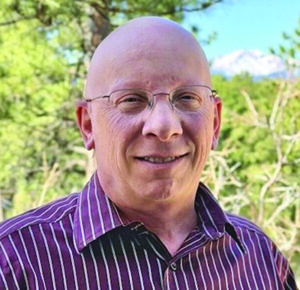
New Colorado Republican Party Chairman Craig Steiner
As everyone is aware, Colorado is a one-party state (i.e., the Democratic Party), much like California and New York, but even more so. There are no Republicans holding any statewide office and there haven’t been since ballot harvesting was legalized in 2016. Democrats have overwhelming majorities in the State House and Senate. There is not a single judge at any level in the state who is not a Democrat.
But the state’s top Democrats recognize that for Colorado to be literally a single-party state like the Stalinist U.S.S.R. is not really a good look. Better for the Democrats to be like the old Harlem Globetrotters and the Republican Party to be like the plucky Washington Generals. The Generals almost never won a game, but it was, in theory, possible.
The Republican Party at the end of May elected a new chair, Craig Steiner of Douglas County. The position had become available due to the resignation of Brita Horn, the former Routt County Treasurer. She is almost universally recognized as the worst party chair in the 150 years since Colorado became a state in 1876.
The present Colorado Republican Party is split into two factions, and the essential battle is over how the party should pick its candidates for the general election. In 2016, the Democrats, with money from so-called independent Kent Thiry, put Proposition 108 on the ballot. It overturned past precedent and forced both parties to have semi-open primaries.
Under this scheme, unaffiliated voters were mailed primary ballots from both parties, and they could choose which party’s primary they wanted to vote in. It greatly weakened the rationale for a person to be affiliated with a party.
Today, approximately 54% of all registered voters are unaffiliated, swamping the Democrats at 24% and Republicans at 22%. Because Democrats, far more than Republicans, generally do not have contested primaries (with this year being an exception), many Democratic-leaning unaffiliated voters cast ballots in Republican primaries, choosing the more moderate or liberal candidate. As a result, many Republicans in the State House and Senate are little more than Democrat-lite politically.
For example, Cleave Simpson, the Republican leader in the Senate, has an “F” rating from the Liberty Scorecard, a leading conservative rating organization. His colleague in the State Senate and leading candidate for the Republican gubernatorial nomination, Barb Kirkmeyer, has a similarly dismal (from a conservative perspective) “F” rating. If you are a conservative Republican, there is often little reason to vote in a general election in Colorado.
Proposition 108 barely passed in Colorado, with a majority of Republicans believed to have voted against it. To pass constitutional muster, Proposition 108 provided that a party could opt out of the semi-open primary system only if an impossibly high percentage of its governing committee (75% of all members) approved. A federal district court judge recently ruled that the threshold was unconstitutionally high.
While the moderate/liberal wing of the party is in the minority, it does constitute more than 25% of the membership and has therefore been successful in keeping the Republican Party in the highly disadvantageous semi-open primary system that greatly favors moderate/liberal Republicans.
They have been able to do so by playing a deception game in which they pretend to support opting out while doing everything they can to prevent it. Every Republican chair since 2018 has played that game except one, Dave Williams (chair from 2023 to 2025), who is now in Washington, D.C.
The newest chair got elected by pretending he was for the opt-out, but since being elected has shown himself to be what they call a “DeceptiCon.”
The previous chair, Brita Horn, had to resign when it was discovered that she had allowed her attorney to loot the party of all its funds. Craig Steiner, since becoming chair, has done nothing to prevent all cash funds from being scooped up by the attorney, making it impossible to raise new funds.
Why in the world would Republican chairs like Horn and Steiner want to destroy the organization they head? It’s simple. The big donors to the Republican Party, who long propped up the moderate/liberal wing, no longer want a Republican Party to choose candidates at all. They and Kent Thiry want Colorado to move to jungle primaries, where candidates petition and/or pay to get on the ballot and the top two vote-getters, regardless of party affiliation or lack thereof, advance to the general election, just like California.
It is a system dominated by multi-millionaires and billionaires, and no one else need apply.
Perhaps it is all for the best. Instead of the present one-party state, we will become a no-party state where the very wealthy control all.
— Editorial Board

by Editorial Board | May 19, 2026 | Uncategorized
Guest Editorial —
by Matt Nicodemus, Founder & Coordinator, Sworn to Refuse (StR)
 Matt Nicodemus, a recent transplant from Boulder to Glendale, is an activist-organizer who works at the intersection of social-environmental responsibility and people’s personal and professional choices.
Imagine you’re a public servant in Colorado government. When you began your employment, you proudly took this required oath of office: “I [name], do [select swear, affirm, or swear by the everliving God] that I will support the constitution of the United States, the constitution of the state of Colorado, and the laws of the state of Colorado, and will faithfully perform the duties of the office of [name of office or position] upon which I am about to enter to the best of my ability.”
One day at the office, you receive from your boss a request or an order to do something which you know, or have good reason to believe, would be illegal. What do you do? If you follow the directive, you’ll be violating the law — which you certainly don’t want or plan to do — and could face investigation, firing, and possibly career-ending indictment and conviction. But if you don’t obey your boss, your job and career in public service could end almost as soon as they began.
When you were sworn in, you took that oath, promising to support and follow the laws of your employer, the state of Colorado, and you’ve kept that promise. Yet here you are, facing the possible end of your career because you’re not willing to break the laws you’ve committed to follow. No public servant should have to struggle with such an impossible choice.
In fact, as increasing numbers of Americans have been learning in recent years, it is very important — often necessary — for public servants to say “no” to bosses who direct them to do things that would violate the law and potentially do great damage to our society, its democracy and rule of law, and, through the world’s interconnectedness, our continued existence.
Most recently, much to his displeasure, Donald Trump learned from six members of Congress who had careers in our nation’s military or intelligence agencies that those organizations have “duty to disobey” requirements: they must refuse any and all illegal orders. The Commander in Chief was enraged that his dictates could — and had to — be disobeyed if they violated the law. He had no knowledge about the origins of that requirement, including the post–World War II Nuremberg Principles and the 1968 war crime known as the My Lai massacre, in which more than 500 unarmed Vietnamese civilians were gunned down in and around their village by American GIs.
In 2017, after watching on TV a nationally broadcast public hearing in Washington, D.C., in which leaders of America’s military and intelligence organizations made clear that, in opposition to Donald Trump’s recent suggestions, they would not follow orders that violated the law — including the use of torture on terrorism suspects or taking Iraq’s oil following the downfall of Saddam Hussein “because that would be against the law” — I came up with the core concepts of Sworn to Refuse (StR). This is a nonpartisan project to see enacted nationwide, starting at state and federal levels, “refuser protection” (RP) statutes that would prevent the firing and other retaliatory punishment of conscientious, oath-taking government employees and contracted workers who refuse a superiors’ illegal orders.
Having founded StR, and understanding that RP laws are needed throughout America, I and a small but dedicated and growing group of Denver-area residents began campaigning for the introduction of RP legislation in both the Colorado Statehouse and Congress. Our outreach efforts are having an impact as people recognize how much RP is needed.
In conversations with fellow citizens, we point out how RP fills gaps that whistleblower protection laws leave. When a whistleblower files a report, damage could already be in process or already done. But in the refuser protection context, when a public servant is asked by a boss to do something illegal, their refusal means the law is not broken in the first place. And when that employee’s colleagues see their example of principled public service, they may realize their own responsibility — and ability — to do right by refusing to do wrong.
Sworn to Refuse is now focused on finding supportive Colorado state legislators who are willing to sponsor and co-sponsor refuser protection legislation. We are also preparing to promote RP to federal lawmakers.
We welcome inquiries and support as we move forward in our campaign. For more information, email sworntorefuse.info@gmail.com, and see StR’s Facebook page for additional details.
by Editorial Board | Apr 17, 2026 | Editorials
Editorial —
Increasingly progressive Westword recently declared “good riddance” to Colorado’s largest company (based on market capitalization), Palantir Technologies, after announcing it was moving to Miami. The data-processing giant moved to Denver in 2020 from Silicon Valley in California.
With the company and its highly paid employees — including co-founder Alex Karp — leaving town for the Sunshine State, Westword informs us that “we” won’t miss them. Why? Apparently because the company does work for the federal “military-industrial complex,” including the hated ICE and Department of Homeland Security.
By similar logic, “we” are lucky that the relatively recently formed federal Space Force was moved by Trump from Colorado Springs to Huntsville, Alabama, with the loss of hundreds of jobs. In the same vein, hopefully any remaining mining and oil and gas operations in Colorado can be quashed in the name of saving the planet from climate change.
It is not clear whether or not Westword is equally happy about Trump shutting down and dismantling the National Center for Atmospheric Research (NCAR) in Boulder, with the likely loss of 800 well-paying jobs. NCAR is part of the now-hated federal government under Trump but is not, per se, part of the military-industrial complex.
Exactly what jobs in Colorado Westword does deem acceptable is also unclear, but it is no secret that Westword itself is up for sale, with titular head Patty Calhoun leaving a post she has occupied since 1978.
Westword has its share of challenges, like most print publications in Colorado. The staff, however, is being proactive in ensuring that the publication does not go to the wrong kind of person. It recently featured an article by Hanna Metzger with the headline “Racist, Abusive Son of Former Broncos Owner Offers to Buy Westword.”
It is assumed that John Bowlen was being facetious about an offer, but the publication went out of its way to delineate all of Bowlen’s many faults and failures, with the article’s writer declaring at the end that “Westword is not interested.”
Of course, that leaves open whether someone with the right pedigree is willing to buy the publication and keep the staff employed. Westword, like most publications, is largely dependent on advertising revenue. That revenue is, in turn, dependent on successful private businesses looking for customers they hope ads in the publication will bring them.
Westword’s staffers may be “happy” that various companies are leaving Denver but may find, to their chagrin, that some of the departing jobs may include their own. In case they are not aware, good jobs in journalism these days are very scarce. Perhaps Westword will one day find that Colorado’s largest company leaving Denver was not necessarily a cause for “celebration.”
— Editorial Board
by Editorial Board | Dec 15, 2025 | Editorials
Editorial —

Two adjacent skyscraper office buildings in downtown Denver located at 621 and 633 17th Street recently sold for $3.2 million. The buildings have nearly a million square feet of office space combined. Six years ago, the buildings were valued at $200 million – a 98% drop in value.
The purchase indicates the buildings were essentially worthless as office space. With a cost basis of $3.2 million, the buyer, Los Angeles developer Asher Luzzatto, could rent office space at extremely low rates and seemingly make a great deal of profit. But no, apparently there is almost no major market for rental offices downtown at virtually any price. Instead, the buyer is going to spend tens of millions to turn the buildings into 700 residences.
This developer is not the first one in Denver to come up with this idea. It was announced recently that the historic Petroleum Building will be converted from office space into residential units. The building was given its name as it was housing a myriad of businesses in the oil and gas business. No need to worry about such use as Governor Polis and the legislature have killed the oil and gas industry in Colorado in the name of preventing global climate change.
The problem is that there is no data out there indicating that people are dying to move to downtown Denver for residential purposes. In fact, Channel 7 in Denver recently ran a story entitled “Data shows people are actively avoiding moving to Denver” citing data from a MoveBuddha study. Moreover, as our front-page story indicates that apartment rental rates in Denver are going down reflecting lowering of demand.
At one time Denver could count on an influx of monied people from California but no longer. Why move from misgoverned Los Angeles and California to misgoverned Denver and Colorado. They are heading to red states such as Texas and Idaho.
So what in the world is the developer Asher Luzzatto thinking? Back in the Chronicle’s May 2024 edition we prognosticated in an editorial titled “No Mr. Mayor, the Woes Of Downtown Denver Will Not Be Saved By A Half Billion Dollar Retrofit Boondoggle” that proposed new Downtown Denver BID assessments would end up in the pockets of downtown office owners to help convert their buildings into residential properties. Rest assured that some of the bond proceeds from the just passed “Vibrant Denver” bonds will end up in the same pockets.
We assume that Asher Luzzatto is nobody’s fool. Most of the money to convert the two office buildings will come from governmental entities. If the project fails, the developer will lose very little money but if it succeeds the developer will very handsomely profit.
But what does the super bargain basement sale say about Denver’s economy? At a minimum the city’s budget will soon be in major trouble. Assessments for commercial property in downtown Denver will plummet, which will lead to a commiserate drop in property tax revenues.
Similarly, revenues from the head tax that Denver imposes on people who work in Denver will similarly drop.
Perhaps the proposed Burnham Yard redevelopment that includes a new Broncos Stadium will create some economic growth along with short-term boost from the newly approved Vibrant Denver bonds.
Ultimately reading the tea leaves, Mayor Johnston’s administration is betting on the farm downtown Denver becoming a residential hub through the conversion of office building into residences paid for by the government. If that bet fails hard times will likely await the Queen City of the Plains.
— Editorial Board