by Jeff Shultz | Nov 17, 2025 | General Featured
by Jeff Shultz
 A south Denver health care charity is preparing for a pending health care crisis. The passing of HR-1 on July 4, 2025, threatens Affordable Care Act subsidies that made health care affordable for hundreds of thousands of Colorado residents, according to Doctors Care Development and Marketing Director Elizabeth Hockaday.
“A plan that used to have a $100 deductible and $1 monthly premium payments will soon become a $5,000 deductible and $1,200 monthly premium,” says Hockaday. “That’s highly unaffordable for those struggling financially.”
Doctors Care, a nonprofit medical clinic in South Metro Denver, is doing what they can to help reduce the financial barriers. “Doctors Care is an integrated primary care clinic. In addition to well and sick visits, the organization has behavioral and women’s health services onsite and provides programs to help address social determinants of health, and health insurance navigation and enrollment,” Hockaday said.
“Doctors Care is located in Littleton and mainly serves Arapahoe County,” says Hockaday, “but our reach is much larger, extending to Denver, Douglas, and Jefferson Counties to name a few.”
Doctors Care serves over 3,000 people annually through their integrated primary care clinic. “Our patients primarily consist of uninsured individuals and Medicaid-eligible working families who face significant challenges in accessing health care.”
Financially, 90% of DC’s clients are below 250% of the Federal Poverty Level, according to Hockaday. This means a family of four makes around $80,000 annually.
“Seventy percent of our clients are on Medicaid or Child Health Plan Plus (CHP+), with 28 percent uninsured and the remaining two percent privately insured.”
Doctors Care’s financial strategy consists of earned income (copays and medical reimbursements from Medicaid and private insurance), volunteerism, and charitable giving. “In the past, the organization often showed a larger amount coming from earned income than donations, around a 60/40 split.
“With state and federal policy changes affecting reimbursement rates and health insurance availability to Doctors Care’s population shifting, the organization has seen that percentage flip.
“Charitable giving has become more crucial to the sustainability of the organization and its operations.”
According to Hockaday, changes looming from the federal spending bill is creating a “blast from the past” for Doctors Care’s financial landscape.“The bill is recreating a time when health insurance was less accessible due to cost and eligibility,” Hockaday explained.
According to The Kaiser Family Foundation, the federal bill creates a significant gap in healthcare access for hundreds of thousands of Coloradans.
“The foundation estimates the bill will cause approximately 130,000 Coloradans to become uninsured due to changes in the Medicaid program,” she said. “An additional 18,000 state residents will lose insurance to changes to Affordable Care Act (ACA) and around 6,000 from changes to Medicare and policy interactions.”
The foundation also estimates an additional 38,000 could lose their insurance because of the administration’s ACA Marketplace Integrity and Affordability rule finalized earlier this year. In total, Hockaday said 190,000 Coloradans’ coverage is and will be threatened.
“When you add the total impact to Doctors Care, the numbers are stark,” she added. “Since the Public Health Emergency’s Continuous Coverage Unwind that began in 2023, Doctors Care has watched its uninsured populations significantly grow from 8 percent to 23 percent. Doctors Care is expecting that number to rise again in 2026 to 30-40 percent.”
According to Hockaday, it costs DC $785 per visit to conduct uncompensated care for these populations.
“While that creates a significant financial loss for the organization, it is no match to the access barriers that uninsured individuals are now facing,” added Hockaday. “Cost continues to be a barrier for Coloradans when it comes to accessing the healthcare system.”
“The Colorado Health Institute’s Colorado Health Access Survey consistently reports that 1 in 5 Coloradans skip needed care due to cost. This leads to an increase in mortality rates, communities suffering from increased illness, and more.”
Hockaday has a solution to this new health care crisis for Coloradans. “Invest in your community,” she said.“Early giving for Colorado Gives Day began November 1 and continues through December 9.” Hockaday says giving to Doctors Care, or organizations that support food security or housing stability, helps people stay healthy.
“If cost is a barrier, then investing in nonprofits that help to alleviate said barriers will have an amazing impact on our communities.”
For more information on Doctors Care visit www.doctorscare.org.

by Jeff Shultz | Sep 22, 2025 | Travel
by Jeff Shultz
The South Metro Fire and Rescue will seek voter approval for a 3 mill property tax increase in hopes the increase will help the emergency agency overcome a huge anticipated budget shortfall in 2026 and beyond.
The proposed ballot question will appear on the November 4 general election ballot for voters in Arapahoe, Douglas, and Jefferson counties.
Currently the district has a property tax rate of 9.25 mills but changes in the law has created a potential budget shortfall for the fire and rescue district.
The SMFR Board of Directors discovered the budget shortfall when the board met last year to plan its 2025 budget.
“That timing followed the passage of HB 24B-1001 in the special session, which significantly reduced property tax revenues for fire protection districts like ours,” said Jim Albee, SMFR Board Chairman.
“As we reviewed our long-term financial projections, it became clear that without action, South Metro would face a $16 million shortfall by 2026 and a projected $270 million gap over the next decade.”
In addition to the budget shortfall created by HB 24B-100, SMFR would need an extra $34 million annually to maintain its level of service to communities and retain staff.
Albee has served on the SMFR Board for five years and has been the board chairman for the same amount of time.
“My commitment has been driven by a deep belief in the importance of the life-saving services we provide and a responsibility to ensure we remain financially sustainable for the future,” he said.
According to Albee, the property tax increase would provide the needed $50 million to give SMFR the needed funds to maintain its current levels of service while also giving SMFR additional funds to operate from.
Plane Crash: On Friday, August 22, 2025, South Metro Fire Rescue and the Arapahoe County Sheriff’s Office responded to a single-engine biplane crash at Centennial Airport. The pilot safely evacuated the plane.
“While a portion would cover necessary administrative functions that support public safety, the majority would go toward critical service delivery, equipment, apparatus, maintenance, and facilities to ensure we can meet our community’s expectations.”
Albee said the district’s staffing and equipment costs are the district’s two highest budget items.
“Over 80 percent of our budget is tied to personnel,” Albee said, noting that if additional funding is not secured staff reductions would be “unavoidable.”
“Reductions could impact personnel, which would directly affect response times and service delivery, and programs.”
Equipment costs and maintenance would have to be prioritized, he added
“Over the past few years, we’ve seen cost increases ranging from 40 percent to nearly 80 percent on critical gear and apparatus.”
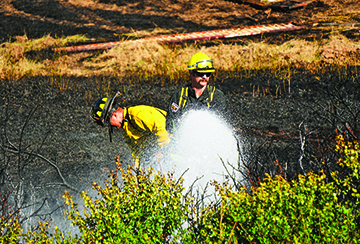
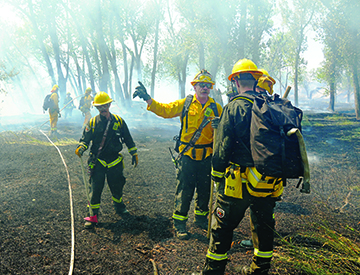
Grass Fire: On August 12, 2025, South Metro Fire Rescue and Douglas County Sheriff’s Deputies responded to a vegetation fire near 11032 Cottontail Lane in unincorporated Douglas County.
The rising costs for equipment is one of the biggest reasons for SMFR seeking additional funding. Some equipment cost increases include:
- The cost of a new fire engine has risen from approximately $725,000 in 2019 to $1.3 million today. Our fire engines, medic units, and other apparatus are replaced according to our Fleet Capital Replacement Schedule that looks at useful service life and the age of our fleet to determine the appropriate time for replacement.
- A 100-foot hose has increased from about $660 to nearly $930.
- Bunker gear, which includes a helmet, jacket, protective pants, boots, and gloves, is essential to protect our firefighters from carcinogens encountered during emergency responses.
“Each firefighter is required to have two full sets of bunker gear, and these must be replaced every five years for safety compliance,” Albee noted.
“The cost of one set has risen from $3,660 six years ago to over $5,120 today — a 40 percent increase.”
“Ensuring our teams have the proper protective equipment, reliable apparatus, and advanced medical tools is fundamental to maintaining safety for both our personnel and the public.”
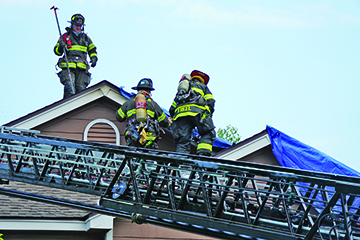
House Fire: South Metro Fire Rescue and Douglas County Sheriff’s Deputies recently responded to a single-family residential house fire on Eagle Valley Way in Highlands Ranch. Engine 20 arrived to find smoke coming from the roof and quickly pulled a hose line to extinguish the fire.
As part of their long-term planning, the SMFR board is identifying areas of growing populations within the district for possible new stations. “We anticipate adding two new stations over the next five to 10 years to help maintain appropriate response times and meet community needs,” Albee said.
Meanwhile, Albee says there are no expansion plans by the district. “Our immediate priority with any new revenue is to stabilize and sustain current services for the communities we serve today.
“While future expansion could always be considered, it is not in our current plans and would only be done with careful planning, ensuring we can maintain our high standards of service without compromising financial sustainability.”
Albee and the board see the property tax increase as an investment in the three counties (Arapahoe, Douglas, and Jefferson) the district serves.
Currently, the fire district’s ISO rating, which is used in determining property insurance premiums, is at its best level and passage of the property tax increase will ensure the rating to stay where it is at now.
“Our current ISO rating is Class 1, the highest possible, which reflects the strength of our operations. “Additional funding will provide the best opportunity to maintain this rating through continued investment in staffing, training, equipment, and facilities.
“Maintaining a strong ISO rating helps keep insurance costs lower for residents and businesses and reinforces our commitment to excellence.”
If the ballot measure fails this November, then the board will have some difficult decisions to face.
“Those difficult decisions could include slower response times due to fewer firefighters on crews, potential delays in station openings, and closure of some existing stations.”
Further cost cutting measures could include a reduction in specialty services such as wildfire, water rescue, hazmat, and technical rescue
photos courtesy of SMFR
by Jeff Shultz | Sep 22, 2025 | General Featured
by Jeff Shultz
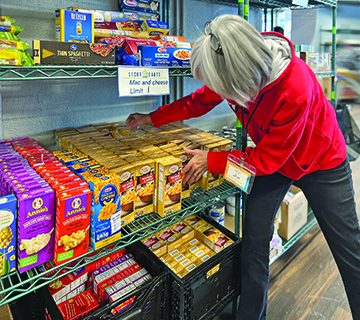
A volunteer at SECORCares works at restocking shelves at the food bank’s Free Food Market, located in Parker. The market serves approximately 450 families per week.
Depending on what side of the aisle you sit on, the bill known as “One Big Beautiful Bill” is either good for Colorado or will have a negative impact on the state. According to the House Ways and Means Office the bill will help families across the nation, including Colorado.
The typical family will get up to $10,900 in additional take-home pay and workers will see increased wages up to $7,200. According to the House and Ways Means Office, households earning less than $100,000 will benefit from a potential 12 percent tax cut.
However, rural Colorado families may not see all of the benefits of The BBB.
According to The Bell Policy Center, a non-profit group who monitors economic mobility in Colorado, the bill will have a devastating impact on Colorado’s rural communities.
According to BPC, rural areas in Colorado, especially those in southeast Colorado, are some of the poorest in Colorado.
“It’s important to recognize that income is not equally distributed across Colorado,” BPC said.
BPC reports that urban, suburban, and mountain resort communities have high concentrations of upper income families. To pay for the tax cuts in the BBB, according to Bell, the bill makes huge cuts to long-standing social safety net programs such as Medicaid and Supplemental Nutrition Assistance Program (SNAP).
SNAP is an important revenue source for one Douglas County area food bank.
SECORCares is a food bank service that reaches approximately 3,000 families per week through its three free food programs in Arapahoe, Douglas, and Elbert counties.
“At our brick-and-mortar Free Food Market, we currently serve about 450 families each week,” according to Brie Dilley, Executive Director of SECORCares.
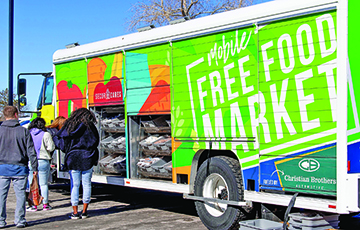
“Beyond the Market, we extend our reach through two additional programs: our Mobile Market, which brings food directly into neighborhoods, and Food for Thought, our backpack program providing school-aged children with nutritious food to take home for the weekend,” she said.
SECOR’s Mobile Market delivers food directly into neighborhoods. SECORCares is a food bank service that reaches approximately 3,000 families per week through its three free food programs in Arapahoe, Douglas, and Elbert counties.
The backpack program is a partnership with 35 schools in the three county region SECOR serves.
Dilley added the proposed changes to programs like SNAP may cause some families to push the panic button. “The greatest impact of these changes is felt by the people we serve. Reductions in social safety nets often push families from ‘barely scraping by’ into full-blown crisis.”
“Unfortunately, reducing and/or complicating SNAP benefits does not diminish food insecurity, it shifts the burden from the government to the nonprofit sector,” Dilley added.
Proposed changes to such programs are coming at a bad time for SECOR, as the demand for SECOR’s services has increased over the past three years.
Dilley said between 2022 and 2023 SECOR experienced a 200 percent increase in helping area families.
“We attribute this dramatic rise to the trifecta of inflation and economic instability, the Denver-area migrant crisis, and the end of COVID-19 emergency allotments,” she said
Dilley added that the demand has remained so high it has forced SECOR to place a cap on its services.
“While it’s difficult to project exactly how many more families we would serve if we expanded appointment slots, our best estimate is an increase to around 600 families each week in our Free Food Market — about 150 more than we currently serve,” she said.
Sadly, SECOR is seeing a troubling trend, Dilley added.
“We are also seeing a growing number of returning guests — families who had once relied on us, found stability for a few years, and are now back.”
Dilley said SECOR welcomes them back with “open arms” but their stories are heartbreaking.
“Many believed they had reached steady ground, only to find that stability wasn’t quite enough to withstand today’s economic challenges,” she said.
SECOR is primarily dependent on private donors and local grocers through SECOR’s grocery rescue program.
According to Dilley, both sources provided more than 1.2 million pounds of food for guests last year. “Sadly, we are now seeing a decline in both of these critical areas. Grocery rescue donations are down significantly, and we’re hearing from more and more donors who — because of the same economic pressures our guests face — must scale back their giving,” Dilley said.
“One of our favorite stories to share has always been about former guests becoming donors. Unfortunately, in this season, we are also seeing the reverse.”
For more information on SECOR visit www.secorcares.com.
Photos courtesy of SECORCares
by Jeff Shultz | Jul 24, 2025 | Travel
by Jeff Shultz
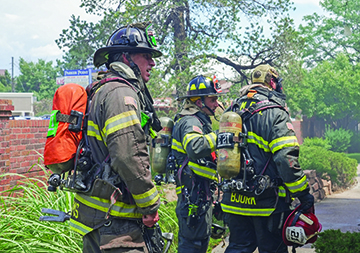
South Metro firefighters prepare to battle a Parker Road vegetation fire on July 7, 2025. Emergency calls such as this one to SMFR have grown, placing a heavier demand on SMFR as funding for the large south Denver area fire and rescue department is in dire straits.
The organization dedicated to providing fire and rescue services to a three-county area south of Denver is sounding the alarm that a funding crisis is imminent, threatening the emergency services offered by the group. South Metro Fire Rescue (South Metro) provides a full-service firefighting and medical emergency service to portions of Arapahoe, Douglas, and Jefferson counties.
Recently the organization announced on its website that unless a new source of revenue is found by 2026 the department “will not be able to maintain the high level of fire and emergency services our residents expect and rely on.” According to South Metro, a Colorado House bill passed in 2024 signaled the beginning of South Metro’s funding woes.
House Bill 24B-1001 lowered property taxes throughout Colorado, crucially diminishing funding for fire protection districts such as South Metro. South Metro is predicting a $16 million shortfall next year and close to $270 million in revenue losses over the next 10 years.
Meanwhile, the demand for emergency resources in the South Metro service area are rising higher since 2019, the South Metro website states.
“Demand for our services has grown 20%, and it’s not slowing down,” the website alleges.
Some of the more notable past service calls include:
A revenue shortfall could mean severe reductions for fire and medical response times and a slash in staffing and capital investments such as vehicles, stations, and equipment. Other cuts could be in health prevention programs and wildfire preparedness and response times.
These cuts would affect the 571,000 residents South Metro serves, including 12 municipalities, Centennial Airport, Highlands Ranch, and the Pinery.
South Metro is eyeing three possible solutions to ward off predicted funding shortfalls.
- Cuts to Essential Services
Currently South Metro touts a world class fire and EMS service with a patient transport, 4-firefighter staffing for maximum response times, the ability to respond to all hazard emergencies, and a constant expansion of public health programs.
South Metro states the organization prioritizes public safety from the time a call comes into the dispatch center to the reply given by highly trained responders. If South Metro doesn’t find additional revenues the organization will be forced to cut important services.
“Response times for fires, medical emergencies, and accidents could be impacted,” their website says. Slower response times would be the tip of the iceberg if South Metro is forced to make budget cuts, South Metro alleges. Budget cuts would also mean a reduction in firefighting crews, compromising public safety, and patient care during emergencies.
Additionally, budget cuts would mean a reduction in wildfire, water rescue and hazardous materials responses. Funding shortfalls would also threaten airport firefighting units.
“In extreme budget scenarios, fire station closures and delays in adding new stations that would serve our growing community are possible,” South Metro alleges on their website.
- Increase in Property Taxes
South Metro is considering a ballot measure that would increase property taxes district wide by three mills. Voters, according to South Metro, haven’t been asked to approve a property tax increase in 20 years, except when some districts increased their mill levy to merge with South Metro.
South Metro says an average homeowner with a $750,000 home would have to pay $11.72 more a month if the ballot measure passes. A district wide property tax would generate approximately $50 million a year for South Metro.
- Passage of a Dedicated Sales Tax
A second possible ballot measure would be a proposed district wide half-cent sales tax to fund emergency services. Noting that for the first time state law allows fire districts to collect sales taxes to fund emergency services, a half-cent sales tax would provide approximately $50 million annually for South Metro.

SMFR Water Rescuers conduct a search of the lake at Chatfield State Park on July 7, 2025. SMFR were called to the park after a paddle-boarder had fallen off his paddleboard. The call came in just after 4 p.m. and after an extensive grid search, divers were able to recover the victim shortly after 7 p.m. Photo courtesy of SMFR
A dedicated sales tax for firefighting services is gaining popularity in other states as a funding mechanism for fire departments. In Garvin County, Oklahoma, voters in 2012 passed a county wide quarter-cent sales tax earmarked for firefighting services.
Twelve fire departments in the county receive an equal portion of the tax funds, after 4 percent of the money generated goes to the county 911 center. While Garvin County is much smaller than South Metro’s service area (26,656 population verses 571,000) the small Oklahoma county can understand South Metro’s dilemma, according to Garvin County Clerk Lori Fulks.
Prior to the passage of the sales tax all 12 fire departments were in dire straits due to funding shortfalls caused by declining city sales tax collections.
“They couldn’t purchase proper equipment and gear. A couple of fire departments were worried their trucks would break down on them on the way to a fire or, worse yet, while they were fighting a fire,” said Fulks. Since passage of the sales tax, Fulks said all 12 fire departments have purchased new fire trucks and essential gear.
According to Fulks, the quarter-cent sales tax generated over $1.2 million in 2024.
Fulks said the dedicated sales tax was the fairest solution to the funding shortfalls.
“Not only do the county residents pay the tax when they purchase goods and services in the county but also travelers when they stop to eat, get gas, or stay the night,” she added.
South Metro’s Board of Directors will decide soon whether or not to place a property tax increase or sales tax question on the November ballot.
Before then they are seeking the public’s input on the three proposals. Residents in South Metro’s service area can seek information by visiting the website Engagesouth metro.org.
Information on South Metro’s funding needs, a FAQ fact sheet, and information on public hearings being held in the district can be found on the website.
According to South Metro, representatives from the organization have presented or met with 1,820 individuals at 40-plus events or meetings since April 1.