by Mark Smiley | Mar 18, 2024 | Uncategorized
by Mark Smiley
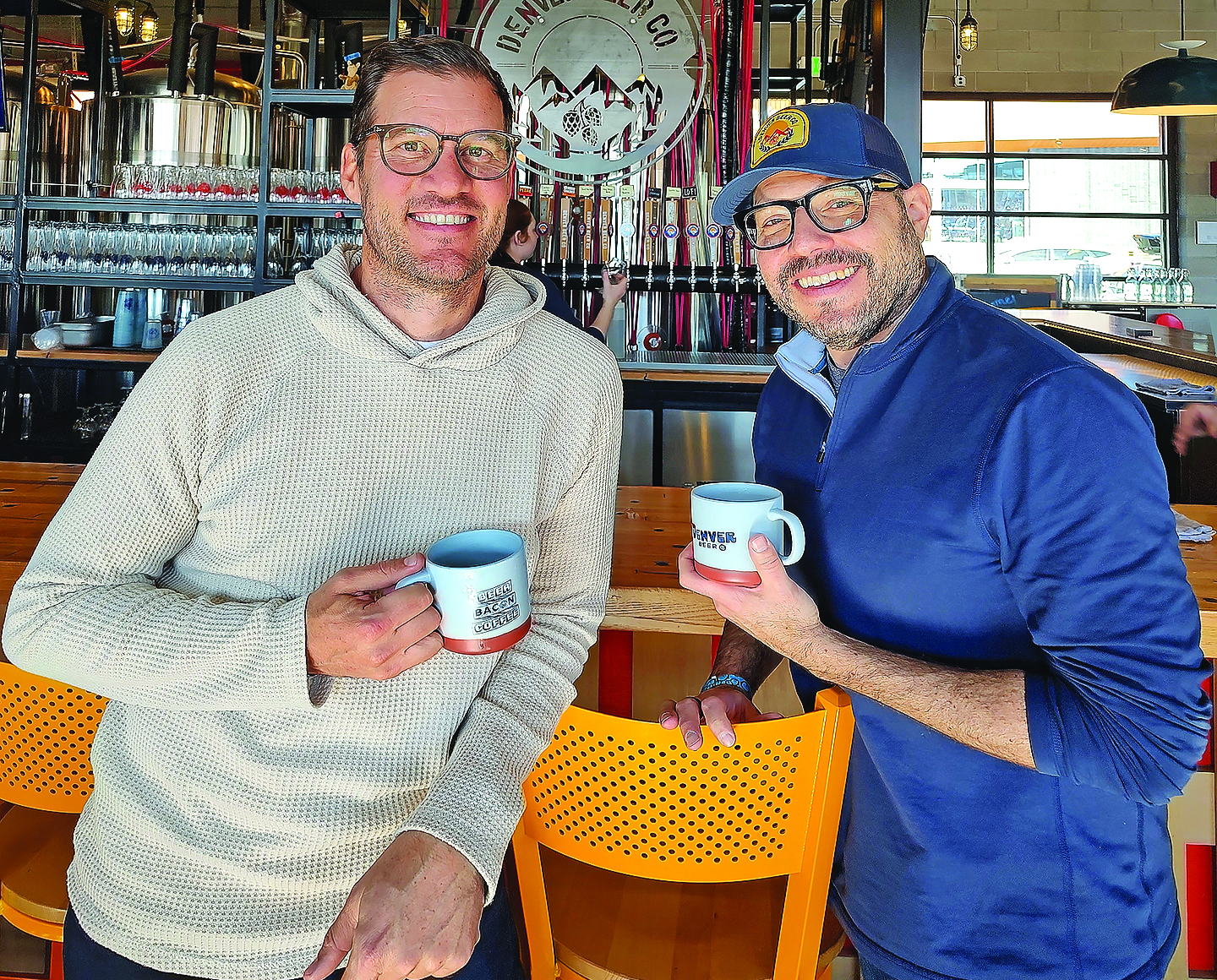
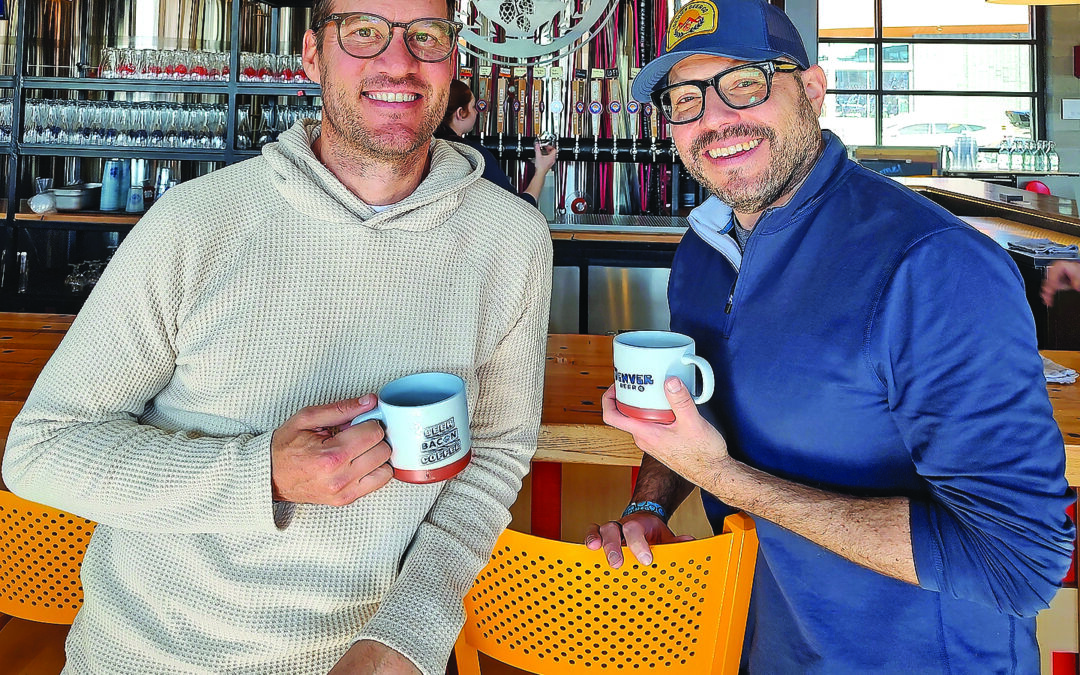
Jared Riggs (left) and Dan Rimland were among the attendees at the 2024 Beer, Bacon, and Coffee Fest at Denver Beer Co. in Lowry.
 On Saturday, February 24, and Sunday, February 25, from 8:30 a.m. to 11 a.m., Denver Beer Co. held its Beer, Bacon, and Coffee Fest at all locations. The Lowry location, at 7070 E. Lowry Blvd., was one location on the warm Sunday morning in late February.
Attendees were treated to a breakfast burrito, a souvenir mug, trays of bacon, and unlimited coffee and beers. The coffee was brewed by Huckleberry Roasters which has five locations in Denver.
According to Denver Beer Co, it is their biggest taproom event of the year. In addition to the coffee, they featured some breakfast inspired brews including: Captain Crunch Cereal, Milkshake IPA , Flat White Stout, Sunrise Sour, Honey Smacks Cereal Blonde, Donut Time Porter, ¡Que Buena! Lime Lager Micheladas, and Poggy Freak IPA.
For more information on Huckleberry Roasters, visit www.huckleberryroasters.com. For more on Denver Beer Co, visit www.denverbeerco.com.
by Ashe in America | Mar 18, 2024 | Feature Story Bottom Left
ASHE IN AMERICA — OPINION
 In 2016, Trump said, “We’re gonna win so much you may even get tired of winning, and you’ll say ‘Please, please, it’s too much winning. We can’t take it anymore. Mr. President, it’s too much.’ And I’ll say ‘No it isn’t. We have to keep winning. We have to win more.’”
He was roundly mocked for this statement over the years, as the war with the deep state played out before our eyes.
Who’s doing the mocking now?
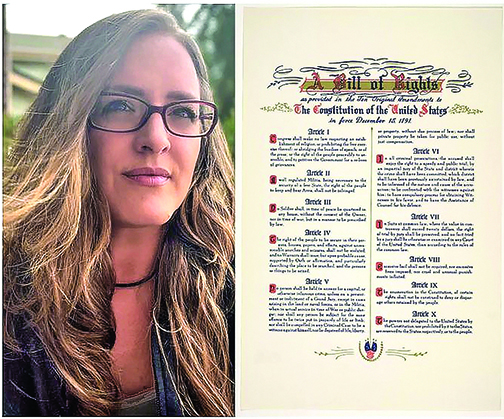
On Monday, March 4, in a stunning rebuke of the Colorado Supreme Court, the Trump-deranged petitioners, and our crazy-eyed Secretary of State, the U.S. Supreme Court decided 9-0 to reverse the decision removing President Trump from the ballot.
The national reaction was glorious. Marc Elias was apoplectic that the court cut off additional lawfare angles for election interference. Keith Olbermann immediately cried out to dissolve the Supreme Court. Shenna Bellows of Maine immediately withdrew her unilateral “Trump ban,” and all other legal challenges on the 14A grounds were rendered moot.
Locally, Jena Griswold did a press circuit with zero self awareness about how embarrassed she should be and, in the days that followed, she tried to pretend like she wasn’t colluding with the petitioners to bring the case. In an interview with ABC News, Griswold stated:
“To be very clear on two issues: I did not bring this lawsuit. Actually, Republican and unaffiliated voters in the state of Colorado filed this lawsuit” — LOL — “because they believed it is not a good thing to have a disqualified candidate on a ballot that could lead to the disenfranchisement of unaffiliated and Republican voters. Second, I also think it’s noteworthy that I have always said that I will follow the Supreme Court’s decision. Fighting for democracy is never the wrong thing to do.”
It’s true that Griswold was the respondent, not the petitioner, in the case, but it’s hilarious that she thinks anyone believes she wasn’t in on the strategy. Also, “democracy” is newspeak for despotism.
The court ruled that the Congress requires implementing legislation to remove a Presidential candidate on 14th Amendment grounds — a move that was criticized by the four female justices in their concurring opinions. Rep. Jamie Raskin (D-MD) and Rep. Eric Swalwell (D-CA) immediately began working on such legislation. It’s doubtful Speaker Johnson would ever allow such a bill to hit the floor, so this is really just (another) coping mechanism for Democrats and other TDS sufferers.
The best part of the ruling is that the American People can clearly see the election interference.
How do I know that?
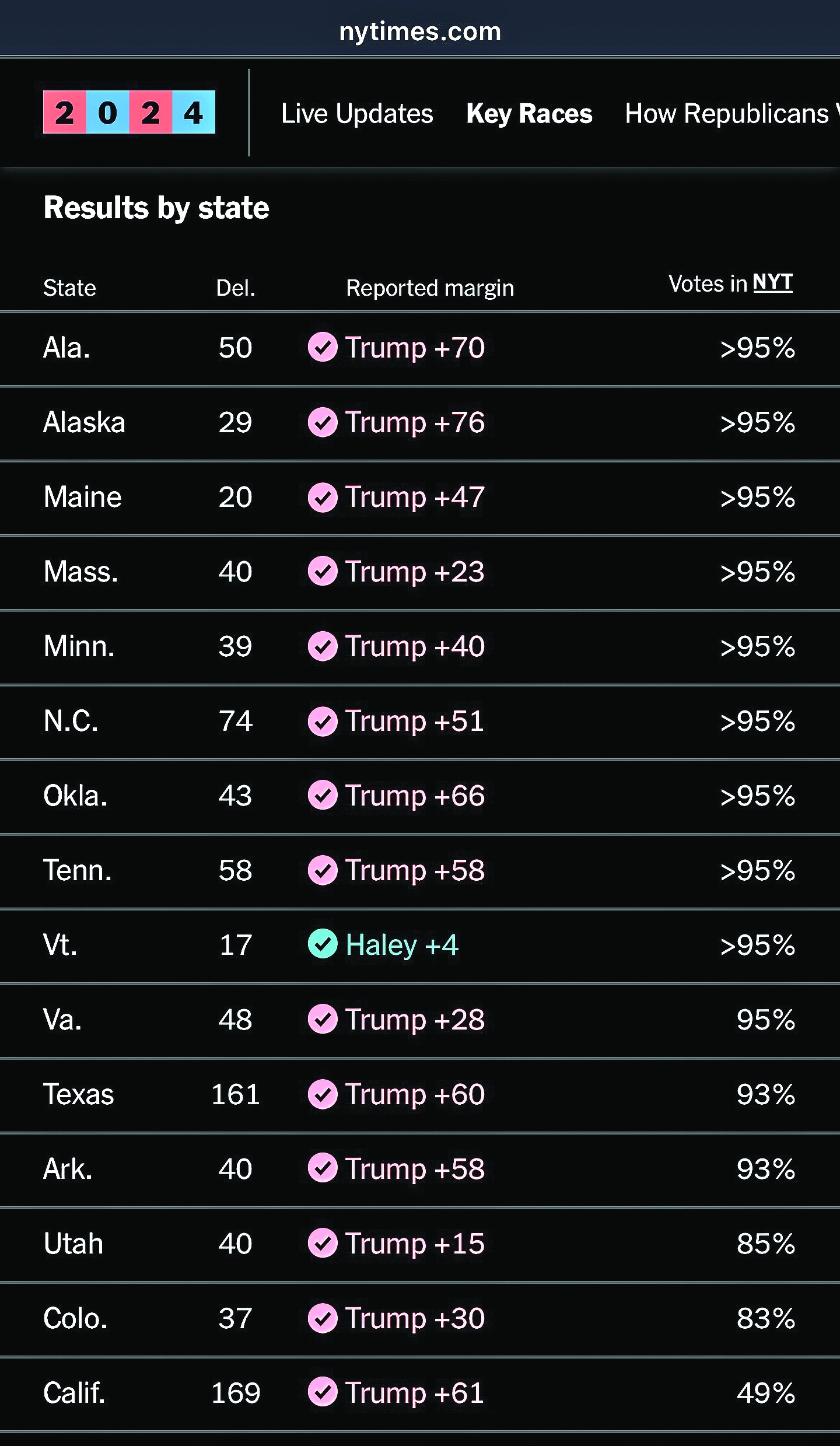
Well, the very next day, March 5, voters in 16 states, including ours, cast their ballots in Super Tuesday primary elections, and it was an absolute blow out. Trump took Colorado by 30 points, proving why the regime, via the petitioners, tried so hard to disqualify him.
Nikki Haley dropped out the next day.
Another highlight of Super Tuesday was the role that “uncommitted” voters played in the Democrat Primary. These totals passed 10% in some states, and, here in Colorado, totaled 47,640 voters, or 8.6%.
The “vote uncommitted” movement, a protest vote led by Rashida Tlaib, the first Palestinian-American Congresswoman, to show numbers and push Biden on Palestine. The uncommitted coalition’s numbers are problematic for Biden, especially considering RFK, Jr. will erode his support in November.
Primary turnout was 828,769 for the Republican ballot, and 540,481 for the Democrats, but many of those Republican votes may actually be Democrat voters crossing over for the open primary. That said, there is no shortage of Trump-deranged voters in the Colorado GOP.
Still, Trump may still win the Colorado electoral votes.
You will recall that, in 2020, the safest and most secure election ever — obviously — Colorado voters allegedly agreed to enter the National Popular Vote Compact (NPVC). The NPVC is an agreement by several (16) states to award their state’s electoral college votes to the candidate that wins the popular vote.
President Trump may well win the popular vote in November. Trump had 47% of the popular vote in 2020 (allegedly), and this year there is a third party candidate. Despite what the Democrat pundits tell you, Trump has not lost support. That’s a very silly assertion that is not based in fact.
If Trump wins the popular vote, then Colorado — after fighting so hard to keep Trump off the ballot — will have to award their electoral votes to President Trump. Can you imagine?
So much winning.
Ashe Epp is a writer and activist. You can find all her work at Linktree.com/asheinamerica.

by Laura Lieff | Mar 18, 2024 | Main Articles
by Laura Lieff

Home Team Support: Infinity Park has become a destination that people of all ages look forward to visiting as they enjoy cheering on their home team.
Since opening its gates in 2007, Infinity Park has welcomed tens of thousands of visitors. The first and only municipally-owned rugby-specific stadium in the United States, Infinity Park spans 16 acres (including an eight-acre green open space), features a state-of-the-art gym, a full-sized outdoor training pitch, and a stadium with a seating capacity of 4,000. It is also home to a recreation center and an event center, as well as the American Raptors rugby team.
Located in the heart of Glendale, Infinity Park was built on a bold vision to center the future of the city around the growing sport of rugby. Featuring a multi-purpose indoor/outdoor sports complex, Infinity Park has earned the designation of RugbyTown USA. Along with serving as the American Raptors’ headquarters, Infinity Park has hosted several different international men’s and women’s rugby matches including the 2008 North America 4, the 2009 and 2010 Churchill Cups, the 2009 Americas Rugby Championship, the 2019 Pacific Nations Cup, and all three 2023 Rugby World Cup Qualifiers for the United States men’s national rugby team. The venue was also the United States stop on the 2018- 2019 World Rugby Women’s Sevens Series and is home to the annual RugbyTown 7s tournament.
Local Destination
Beyond rugby, Infinity Park has become a destination that people of all ages look forward to visiting. “We see families, groups of friends, rugby fans, and community members who want to spend time outside and cheer on their home team on a beautiful weekend afternoon,” says Glendale City Manager Chuck Line. “Watching Infinity Park become the heart of our city has been very rewarding.”
Another aspect that sets Infinity Park apart is the local feel it brings to hosted events and provides for the community. Because of the park’s expansive space and Glendale’s welcoming mindset, local recreational leagues, youth leagues, and residents always have a place to practice and compete, gather and interact, or simply hang out.
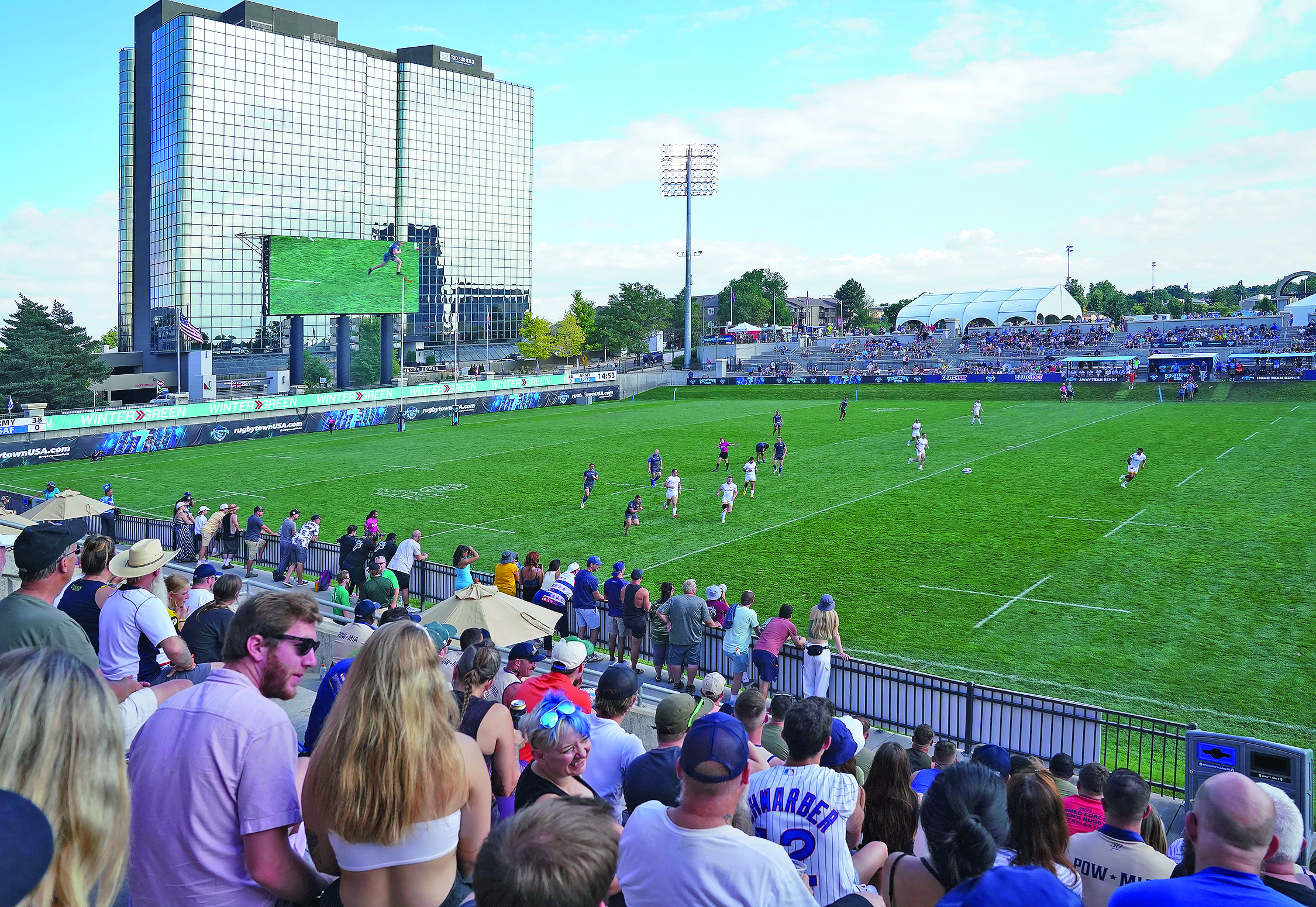
Local Destination: With a seating capacity of 4,000, Infinity Park continues to draw large crowds for all types of events.
“Infinity Park serves as an entertainment anchor for Glendale and offers the community and beyond the opportunity to enjoy sporting events, movies, and music,” says Director of Infinity Park Operations, Kieran Nelson. “Also, since its inception, the park has garnered a reputation among the international rugby community as a world-class venue, and we could not be prouder to have earned that distinction.”
In addition to the family-friendly environment and welcoming staff, spending time at Infinity Park is affordable as adult tickets for rugby games are $10 and admission for kids 12 and under is free. This spring, Glendale residents are looking forward to watching their home team return from South America to play in the professional SRA league.
Upcoming games will feature the following theme days:
April 7
For Military Appreciation Day, Glendale will show gratitude to our armed forces by offering camo koozies at the gate and opportunities to engage with various on-site military branches. Additionally, fans can nominate a hero to be honored during the match, making it a day to celebrate and recognize our military heroes.
April 14
In recognition of Mental Health Awareness Day, Infinity Park is partnering with Howzit — a mental health awareness brand founded by former rugby players — by offering a gate giveaway of stress balls. Engage with representatives from All Health Network, the Glendale Police Department, and Canine Partners of the Rockies, as Glendale promotes mental well-being and support within the community.
April 21

Social Spot: Spending a spring afternoon outside socializing with friends has become part of the park’s legacy.
Celebrate Colorado Day at Infinity Park with exciting promotions including a complimentary American Raptors Colorado keychain, opportunities to interact with mascots from local college and sports teams, and delicious Colorado-themed food from our on-site food trucks, among other festivities.
April 28
For Autism Awareness Day, Firefly Autism will provide valuable resources and information at Infinity Park. Receive a complimentary fidget spinner at the gate, and meet the adorable service dogs in training from Canine Partners of the Rockies. There will also be a quiet room for those needing a sensory break. Additionally, thanks to KultureCity, sensory bags will be available at all Infinity Park events, ensuring inclusivity and support for individuals with sensory sensitivities.
More events happening this summer include:
May 11: 2024 High School Boys and Girls Rugby Championships
June 10: Movie Night — Teenage Mutant Ninja Turtles: Mutant Mayhem
June 24: Movie Night — The Marvels
July 2: Glendale Fireworks
July 8: Movie Night — Trolls Band Together
July 22: Movie Night — Barbie
August 23-25: RugbyTown 7s
For more information, or to view the Raptors’ schedule and ticket information, visit www.americanraptors.com/schedule-and-tickets.
by Editorial Board | Mar 18, 2024 | Editorials
Editorial —
 The residents of the Queen City of the Plains are facing a Brave New World with our indomitable Mayor Mike Johnston at the helm of our ship of state. The helmsman has spent the first few months of his term finding sites for his homeless micro-communities and recently began opening them over the strenuous objections of the affected residents.
The largest homeless ‘micro-community’ has just opened in Overland Park, the future homes of 47 homeless people and if all goes well, expanded to 120 units.
The assurances of government have not impressed Craig Arfsten the head of “Safe and Clean Denver.” Arfsten told the Denver Gazette: “Today may be a win for the mayor, but it’s not for the residents of the Overland Park neighborhood. Yes, the pallet sheds are in place, but the safeguards to protect the surrounding neighborhood are not.”
Of course, it has been quite a while since a mayor of Denver has actually cared what the residents think or want. The problems of the 4,000 plus homeless facing Mayor Johnston seem almost quaint when compared to the avalanche of 40,00 penniless “newcomers” descending into Denver from the Texas border thanks to the Governor of Texas and the federal government.
Johnston’s largess to the newcomers is two weeks of shelter and food and then they are supposed to be kicked to the curb. It is not clear what they are to do after that. Johnston has tried to move the newcomers to Denver into neighboring municipalities but other than Lakewood, the surrounding cities don’t seem very accommodating to the project.
Across Denver some of the newcomers are appearing as squeegee men who will clean your car windshield whether you want them to or not. The last time squeegee men were prominent in America was in New York City under Mayor David Dinkins in the early 1990s. They were credited with helping to get Dinkens thrown out of office in favor of Rudy Giuliani in 1993.
Denver’s newcomer squeegee men do not appear to be a danger to our new progressive Mayor. To help pay for the newcomers’ cost to the city Johnston closed Motor Vehicle Offices and recreation centers every other week. This effort of course greatly inconvenienced many residents, but we know that Denverites are gluttons for punishment.
As more newcomers arrive from the Texas border we suggest Johnston start closing down garbage pickup followed by providing water only on alternative days. As a sociological experiment Denverites need to find out exactly how much punishment they can handle until they finally rise in revolt. Based on what has happened over the last 13 years, residents can undergo a great deal more punishment and we trust in Mayor Johnston to ladle it out in hefty doses.
— Editorial Board