The new school year is fast approaching. And with the new
classes comes a whole new season of packing lunches and making sure kids are
fueled for success. You may find yourself facing the same challenges year after
year: How can you avoid packing the same items every day, while giving kids
good nutritious choices. These tips can help.
1. Think in
categories of needed nutrients. It’s common to get stuck on the go-to tradition
of sandwiches. Instead, think “outside the loaf” and focus on packing one item
from each of the four nutrient categories — Protein, whole grains, fruits and
vegetables. (Note, fruits and vegetables are each their own category.)
These are examples:
Protein
• Eggs (hard
boiled or scrambled to be put into a burrito)
• Nuts
(almonds or cashews)
• Seeds
(sunflower or chia)
• Nut butters
(such as no sugar-added peanut butter or almond butter)
• Beans
• Dairy
(cheese sticks, cream cheese or shredded cheese)
• Hummus
• Edamame
• Low-sugar
Greek yogurt
• Rotisserie
chicken meat
Whole Grains
• Whole wheat
bread or small bagel
• Whole wheat
crackers
• Whole wheat
pretzels
• Brown rice
• Whole wheat
pasta
• Rice cakes
• Corn or
whole wheat tortillas
• Low-sugar
whole grain cereal or granola
Fruits
• Apples
• Bananas
• Berries
• Clementine
oranges
• Grapes
• Pineapple
• Frozen
mango chunks
Vegetables
• Cucumber
slices (try different seasonings on top)
• Carrot
sticks
• Red pepper
sticks
• Mini
peppers
• Salsa
• Sugar snap
peas
2. Tie it all
together. Next, what does it look like when these four nutrient groups come
together? Here are some lunch ideas that go beyond bread and sandwich meat:
• Whole wheat
bagel with cream cheese and cucumber slices, and a handful of strawberries and
cashews
• Celery with
no sugar-added peanut butter with raisins on top (also known as “ants on a
log”), apple slices, pretzels, and a cheese stick
• Low-sugar
Greek yogurt, plain cheerios, banana, and a few mini peppers
• Hummus with
carrot sticks and cherry tomatoes, whole wheat crackers, and cheese stick
• Cold
quesadilla with salsa and a small scoop of guacamole, cucumbers and frozen mango
chunks
• Chicken
noodle soup in a thermos, radishes, and a pear with a slice of cheese
• Whole wheat
pasta, edamame, carrots and an apple
3. Remember the
drink. Another area that can be tempting for kids is unhealthy drinks. Remember
that juice boxes can have tons of added sugars. Water, seltzer or plain milk
(or alternative dairy drink) are better options.
4. Get the kids
involved. Research shows that when children help and are invested in their food
choices, whether it is through shopping, gardening, prepping or cooking, they
are more likely to eat healthy foods. When shopping, let them pick out a new
and interesting fruit or vegetable to try in their lunch. Or start a garden at
home, even if it’s just a container garden or window sill herb garden. You may
be shocked at what your children will start loving.
5. Prepare for
new choices. Finally, know that packing a nutritious meal every day can be a
lot of work, but it can be just as challenging once your child outgrows sack
lunches and has the ability to eat at school restaurants or go off-campus with
friends. If this is common in your family, you can still help your child make
good choices.
Empower your teen to look at online menus. Show them how
many calories and fat grams certain items have. Explain what grams of sugar
look like in real life — every 4 grams equal 1 teaspoon of sugar. A large
fountain Coke has 80 grams of sugar, which equals 12 teaspoons of sugar. Let
them know that the recommended quantity for kids under 18 is 6 teaspoons daily.
This means that this one drink is double what their sugar intake should be for
the entire day!
A former pediatric nurse, Liz Bravman, RN, is a cycling
instructor, nutrition educator and personal trainer at the Susan M. Duncan
Family YMCA in Arvada. She has a Bachelor of Science degree in nursing and a
Master’s degree in nutrition education.
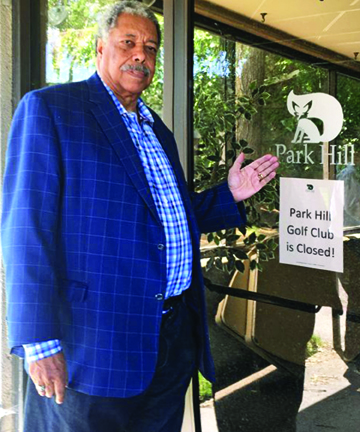
There he defiantly stood on the veranda of the public Park
Hill Golf Course, the three-time former mayor of Denver, Wellington Webb, who
is still very much a political powerhouse in the city. He had called an
emergency press conference to give out a clarion call to all citizens to save
155-acre Park Hill Golf Course as open space against the ravages of one more
rapacious high-density developer, this time Westside Investment Partners, Inc.
and its unctuous CEO and snake oil salesman Andrew Klein.
Former Mayor Wellington Webb
Webb was eloquent and passionate about a subject near and
dear to his heart. After all, as he pointed out, as mayor he had done more than
any other recent mayor for parks and open space in the City and County of
Denver. Moreover, his critique of what is happening in Denver as a result of
the Hancock administration was absolutely spot on. He accurately noted the
destruction the Hancock administration had brought and was continuing to bring
to the Queen City of the Plains. He declared:
“As our city has transformed drastically in the last few
years, we cannot allow precious open space to become another casualty of
development.
“Once developers chip away at this open space, there will be
no excuses to go after more, including our parks.
“I think open space and park space is one of our most
important commodities. If we allow this park space to be sold and redeveloped
into a concrete jungle, I believe no park in Denver is safe.
“Because what do we get in its place? Housing like that
across the street, where you walk out the door and you’re on the sidewalk with
no greenspace.”
Park Hill Golf Course
“Once this is gone, it’s gone for good. It’s gone forever —
gone for our children, our children’s children. Gone for what?
“That’s not the Denver I remember. But when I came here from
Chicago, I didn’t want Denver to be Chicago. I wanted Denver to be Denver.”
We could not have said it better ourselves. Westside’s
Founder and Managing Principal Klein tried to con Webb and the public by
asserting that he would build “affordable housing” and maybe if the neighbors
begged pathetically enough, a grocery store with a nice large parking lot. Webb
correctly understood that such claims by Klein were little more than “a trick
to garner support.” Klein will brutally rape Park Hill for every penny he can
get out of it, while buying off whatever neighborhood quislings he can to mimic
lines that he feeds them.
But there is one big problem with what Webb did, and it
shows that he doesn’t really care about what is happening to Park Hill Golf
Course or Denver as a whole. Michael Hancock and his merry band of destructive
high-density developers would not be in power today if it were not for
Wellington Webb. If Webb had given the same Park Hill speech and call to action
just a few weeks before the June mayoral runoff between Michael Hancock and
Jamie Giellis, then Jamie Giellis would be mayor and Park Hill Golf Course
would have been saved.
What is, in fact, important to Webb is that all of his
friends and acquaintances got their concessions at DIA renewed resulting in
millions in profits for them. His daughter Stephanie O’Malley was appointed
early on by Hancock to be Manager of Safety, an all-powerful position that
oversees the police, fire and sheriff departments. This post was one that she
was totally unqualified for. When her ineptitude became too embarrassing, he
gave her the odd title of simply “Mayoral Appointee” with no responsibilities
or job requirements for which she brings down a six-figure salary. She has the
ultimate no work job all thanks to his Honor and his administration.
Webb lives in Park Hill and his neighbors have been begging
him to speak out and oppose the sale for months. He has come out now when it
simply doesn’t matter anymore. The sale to Westside took place a little over a
week later for $24 million. Westside’s only problem is that in 1994 under the
Webb administration, the Clayton Trust took $2 million in return for a
conservation easement keeping the open space for perpetuity. Westside and Klein
must get the easement cancelled and the property rezoned by the City Council.
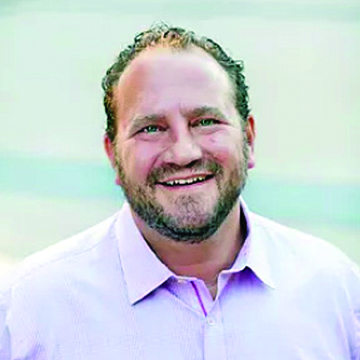
Predatory Developer Andrew Klein
Webb has urged citizens to petition, protest and pressure
the mayor and the City Council not to lift the easement and/or grant the
rezoning. He notes that incumbent council members including two of the mayor’s
strongest allies lost re-election bids largely in reaction to the excessive
development scheme in their districts.
But Webb knows the three new council members will make no
difference whatsoever in a 13-member City Council filled with corrupt lackeys
of the mayor. Going to City Council meetings in Denver is a joke. The elected
officials couldn’t care less what the public thinks. Klein and Westside would
not have paid $24 million for the property if the fix was not already in with
the mayor’s office and the City Council and Webb knows it.
Webb’s entire charade concerning Park Hill Golf Course was
done so he can tell his neighbors and friends that he did “all he could do” to
prevent the destruction of the neighborhood when, in fact, he did nothing when
it really mattered. If you live in Park Hill and see the old mayor wandering
around you may want to note to him the saying attributed to Abraham Lincoln,
that: “You can fool all the people some of the time, and some of the people all
the time, but you cannot fool all the people all the time.” He has been caught
this time in his sham defense of Park Hill Golf Course and at least some of his
neighbors now know it.
Even Wellington Webb should be ashamed of himself.
Over the 45 years of my actually being able to do morning
radio, afternoon or evening radio, and occasionally all night radio in Denver,
Colorado, I’ve had the incredible experiences of people getting up and walking
out of the studio when they were scheduled guests.
One of the first was Abbie Hoffman; remember “Steal This
Book” Abbie? On trial in Chicago, they ran Pigasus the pig for president. He
took a hike out of the KHOW studio because, even though it’s unimaginable that
you could offend Abbie Hoffman, I accomplished that. The next one was President
hopeful Marianne Williamson, arguably the smartest person to appear in two
nights of that great Dem coffee klatch. She also took a hike. Then Sydney
Biddle Barrows, the Mayflower Madam, closed her book and walked off when I
asked her the difference between what she did for a living and a pimp. She
caught a case of the shark jaws and with a sniff said, “I never,” and headed
for the exit.
Shining moments all. But the one that was the most laugh out
loud obvious, I was working at Brand X, aka KHOW radio and I had a couple of
prairie dog saviors come into the studio. “Welcome to my parlor,” said the
spider to the fly. And I asked these two little cello shaped activists how they
felt about abortion because they were trying to stop the deaths of these
prairie rats. They also pulled a hot foot and left in a huff.
So, using all of those experiences I thought to myself why
don’t we make a bunch of prairie dog costumes and put them on the Wash Park
geese? You see where this is headed.
The City of Denver and the feds swooped down in an illegal
raid and confronted these honkers who were molting, lacked any ID cards or
papers and forced them into big plastic pens to be crated and carted off to
some very questionable locations.
Does this whole scenario sound familiar? I’m told people saw
geese drinking out of toilets.
That one goose being delivered on the flatbed truck was me
when I was a little boy. And now the only reason the Denver media can look the
other way is we’re being told these geese will become dinner for “some hungry
families.”
Now as I’ve said many times, my parents raised many ugly
children but not a lot of dumb ones. Does anyone think for a minute that people
were going be delivering cooked geese to welfare recipients, homeless junkies
or, for that matter, anywhere? Just think of how much it costs to swoop down on
geese in an early morning raid, round them up into pens, put corn oil on the
eggs, another form of abortion, put these geese in crates and then ship them
off in trucks to gander heaven to be processed and cooked and kept USDA
approved until they are delivered to John Hickenlooper and Michael Hancock’s
road home? I’ll bet there ain’t no minimum wage employees, including the
government workers, touching one of these birds once.
How much do you think it costs from start to finish to
process one of these quackers? If you look at the curtain that Julie Hayden is
pointing to, you’ll see a magical figure. I’m guessing three hundred bucks a
goose. Any takers?
Anybody think between now and Thanksgiving you’re going to
meet anyone who actually ate a goose? At that moment I’ll throw open the window
and say, “What day is this little boy?” and he’ll say, “It’s Christmas.”
This is another thing we’ve learned to watch in Denver.
Wasn’t the media great? Weren’t the elected officials wonderful? What about the
people who gathered in the park to mourn the geese? The woman who said she
actually knew two of those geese personally? How can you tell the damn things
apart?
You gotta love the city we live in. Its press corps, the
elected officials and the federal government came in like a SEAL team raid to
get a bunch of geese and the most frightening thing of all, mother nature hates
a vacuum. There will be geese up the wazoo next year at this time.
See you same bat time same bat channel tomorrow.
— Peter Boyles
P.S.: If I caught a fish in Wash Park lake or City Park lake
would you eat it? Come on. Things are bad enough for the homeless, we don’t
need to start this.
The June municipal election runoff is over and the Denver voters in their inestimable wisdom have decided they want four more years of Mayor Michael Hancock and the crony capitalists that control him. Political newbie Jamie Giellis ran a spirited campaign and the mayor had to strongly rely on the race card to besmirch her for his victory. He was greatly aided in his race baiting by The Denver Post, Colorado Springs Gazette, Channel 9, Channel 7 and Channel 4. Giellis had no money to counter the endless ads and mainstream stories calling her a bigot.
Park Hill Golf Course
Somewhat contradictorily the voters threw out Hancock’s
closest allies on the City Council, Albus Brooks and Mary Beth Susman, along
with Wayne New. The mayor’s people also tried to save Brooks by sending out a
flyer with Candi CdeBaca’s logo on it urging Latinos to vote, and that it is
“Time for this monkey to go!” [African American]. The trouble with that tactic
was that CdeBaca is both Hispanic and African American and the racist flyer was
clearly the work of the Hancock/Brooks slander machine that worked so
successfully to smear Giellis. This time it didn’t work. CdeBaca, for that and
many other reasons, probably will not be a lackey for the Hancock
administration.
There will be five new faces on the 13-member City Council
and the question is whether the new council will have any more of a backbone
than the old one to stand up to the high-density developers that run the
mayor’s office. That question will be quickly answered as it has just been
announced that the 200-acre Park Hill Golf Course will be sold to the worst of
the worst high-density developers, Westside Investments LLC, a firm that is
also planning the destruction of the Loretta Heights campus.
The seller of the property is the Clayton Trust which runs
the Clayton Early Learning Center. The Clayton Trust was set up after the death
of real estate mogul George Washington Clayton in 1899. He left his entire
estate to help orphan boys between the ages of 6 and 10 but has been a tempting
target of municipal and corporate corruption ever since. The Clayton Trust was
originally administered by the City and County of Denver but was turned over to
an independent board after city officials were caught selling various parcels
of land to their friends at far below market value. No, Michael Hancock did not
invent municipal corruption in the City and County of Denver, but his
administration has only helped to bring it to new heights.
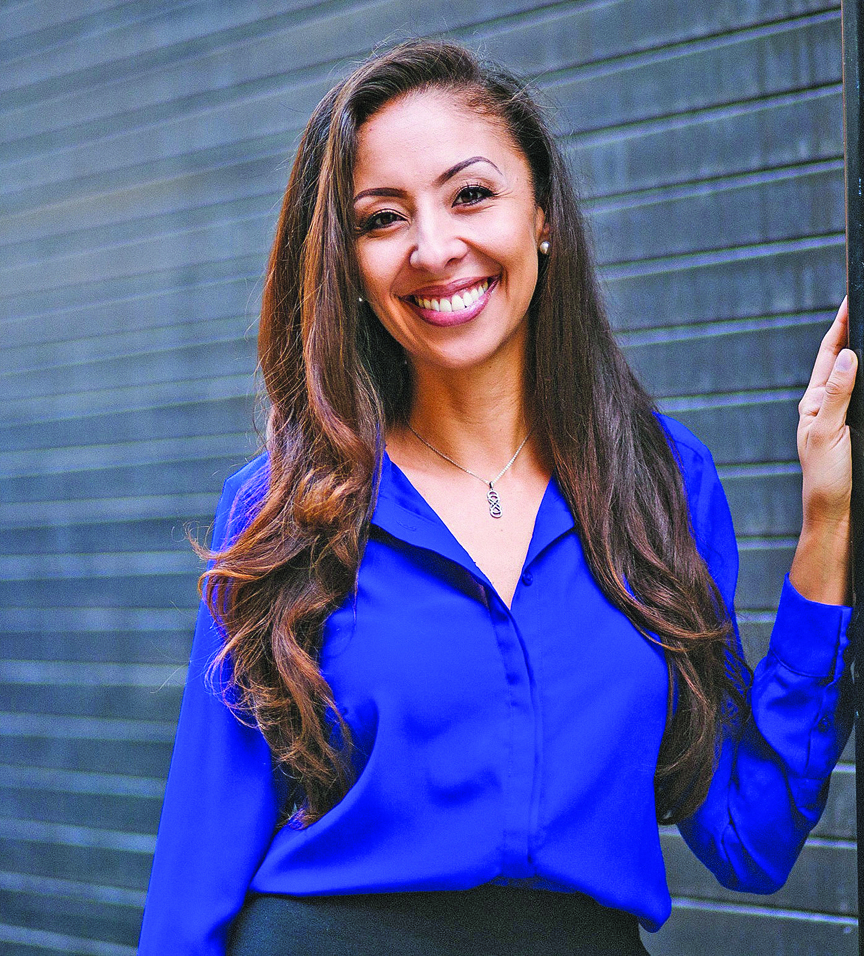
Candi CdeBaca
Of course, the trustees could not be trusted not to loot the
Trust so in 1997 the city gave the trust $2 million to mandate the remaining
land to be open space. The money and other funds of the Trust have been
utilized to run the Clayton Early Learning Center on the grounds. There appears
to be no reason to have the Center other than to enrich the rapacious women who
run the Center, exploiting poor minorities with very young children who are
grateful for whatever handouts and care the Early Learning Center can provide, and
who are in no position to protest their contemptible treatment.
The new City Council will have to approve the sale, negate
the open space constriction and approve high density development with a
fraudulent claim of improving “affordable housing.” It will be interesting to
watch how District 10’s newest councilman Chris Hinds responds. Hinds was able
to overthrow incumbent Wayne New by pointing out how New failed to criticize
the Hancock Administration and let development go on unabated in Cherry Creek North.
Hinds was greatly aided in his victory by various unions and the far-left
Working Families Party which got its start in New York City and was
instrumental in getting Alexandra Ocasio-Cortez elected to Congress. Hinds
pounded New for being the only city council person who was not a registered
Democrat (New is registered as an independent.)
Less emphasized by Hinds was a position that he was a great
proponent of high-density development with the standard caveat that he would be
for it as long as it would assist “affordable housing.” It is assumed he would
be the poster boy for the destruction of one of the largest open spaces in
Denver so long as he could fraudulently claim it assisted “affordable housing.”
Chris Hinds
Candi CdeBaca was also greatly assisted in her victory by
the Working Families Party and is a professed Marxist. It is a sign of the
times that we endorsed CdeBaca. As a practical matter we are willing to take an
honest Marxist like CdeBaca who actually cares about Denver over an absolute
crooked crony capitalist like Albus Brooks. Our fear is that Hinds will combine
his far-left politics with the sleazy, crooked, crony capitalism of Albus
Brooks to become just one more Hancock lackey. His actions regarding the sale
of the Park Hill Golf Course will indicate early on whether our fears are well
placed or not.