With the first day of fall coming up on September 23, 2019,
it will be about that time again when the state of Colorado transforms into a
vivid array of color, from the dense aspen groves in the high country to the
fiery red sugar maples in the city of Denver.
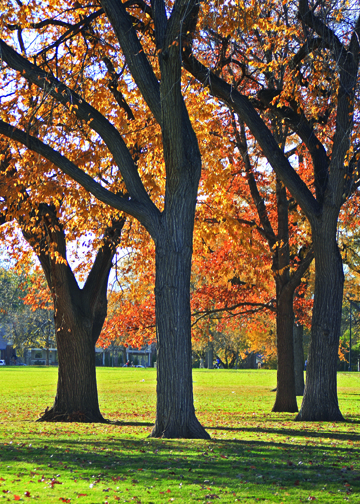
Washington Park: Over 70 varieties of trees are within the park’s boundaries. {Faina Gurevich}/{creative collections} via Getty Images
While most think of aspens providing the front-row seat to
the color show that happens every fall in Colorado, there are plenty of other
trees in the Denver metro area that provide the complementary shades of red,
orange, and a sprinkling of purple. As the color starts to fade in the
mountains, continue the fall season with these places to leaf peep in and
around Denver.
Washington Park
Washington Park’s 155 acres of manicured gardens, two lakes,
shade trees, and a 2.5-mile gravel path make a classic choice for leaf peeping
this fall. With over 70 varieties of trees within the park’s boundaries, a
diverse color display shades visitors and offers a beautiful complement to any
walk in the park.
Sloan’s Lake
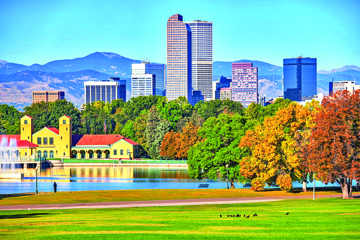
Sloan’s Lake: Colorful trees fill the park offering a picture-perfect scene with views of the Denver downtown providing the backdrop. {Jeremy Janus}/{Creative collections} via Getty Images
Sloan’s Lake is a great place to people watch, enjoy outdoor
activities, and leaf peep in the fall. Rumored to have been created by accident
when a local homesteader hit an aquifer when digging a well, the lake today
lures in SUPers, water-skiers, and fishers, while the 2.6-mile path brings in
runners, walkers, and even roller-bladders. In the fall, colorful trees fill
the park offering a picture-perfect scene with views of the Denver downtown
providing the backdrop.
Drive Down University Blvd.
A simple drive or walk down University Blvd., starting just
north of the 1-25 exchange up to Cherry Creek shopping district, will make you
want to stop and say, “awe.” The canopy of trees that seems to encircle the
street provides much-needed shade in the summer and a beautiful color display
in the fall.
Highline Canal Trail
Reconnect with nature right in the middle of the city and
explore the 71 miles of gravel trail that make up the Highline Canal Trail.
Towering Cottonwood trees, low-lying brush and a wide variety of plants make
the perfect pallet for a spectacular fall color explosion. The stretch between
Orchard Road and East Belleview Avenue creates a classic fall scene with
distant mountain views to complete.
City Park
Denver City Park: City Park is home to a variety of color-changing trees, including a beautiful ash varietal. {benedek}/{creative collections} via Getty Images
What’s more iconic than a walk around Denver’s City Park on
a crisp fall day? With an ideal blend of wooded areas and open lawns, City Park
is home to a variety of color-changing trees, including a beautiful ash
varietal, creating the perfect playground for fall. So, pack a picnic, take a
stroll, and take in the fall color.
Cherry Creek Trail
From downtown Denver to Cherry Creek State Park, the 40
miles of the Cherry Creek bike trail offer plenty of colorful hues every fall.
The tree-lined (mostly) paved path offers bursts of different colors at almost
every turn, but the most notable sections are up near the Cherry Creek Mall and
near downtown.
Platte River Trail
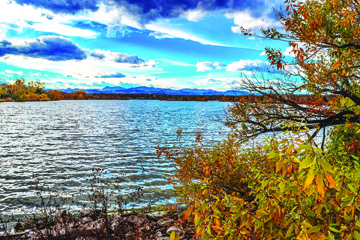
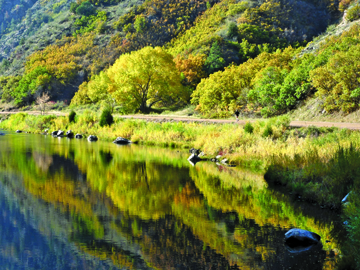
South Platte River Trail: Following the Platte River, the trail provides mountain and lake views, coupled with an exceptional presentation of reds, yellows, and oranges along the way. {milehightraveler}/{creative collections} via Getty Images
Extending from downtown Denver and south to Chatfield State
Park, for more than 40 miles, the Platte River Trail meanders through much of
Colorado’s front range. Following the Platte River, the trail provides mountain
and lake views, coupled with an exceptional presentation of reds, yellows, and
oranges along the way. Extend your time and continue into Waterton Canyon where
the fall show continues and almost always promises a bighorn sheep sighting, or
two.
University Of Denver Campus
Get your fall fix and maybe learn a thing or two with a walk
through the University of Denver campus. With the bustling sidewalks back in
full swing with students walking to and from class, the feel of fall is all
around, from the campus’ large oak trees and maples. Set against the beautiful
architecture of this prestigious campus, you can’t help but feel excited about
fall in Denver.
For optimal viewing, Denver’s color show typically begins
early October and can last through mid-November.
With the rising costs of airline tickets and all of the
expenses associated with traveling out of town, families are turning to more
economical trips to get away from the mountain of laundry and the yard work.
But what if you don’t want to spend seven hours in the car to take pictures of
the largest ball of twine in the U.S.? Consider the Gaylord Rockies Resort
& Convention Center which is less than 30 minutes away from central Denver.
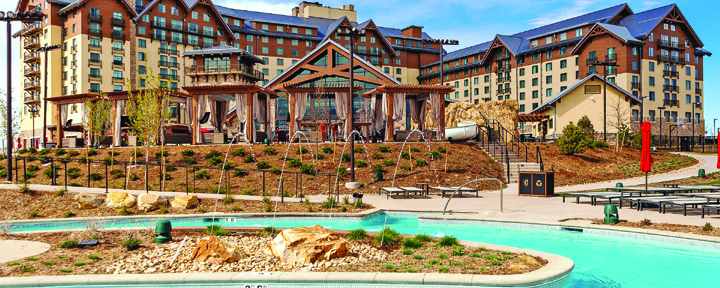
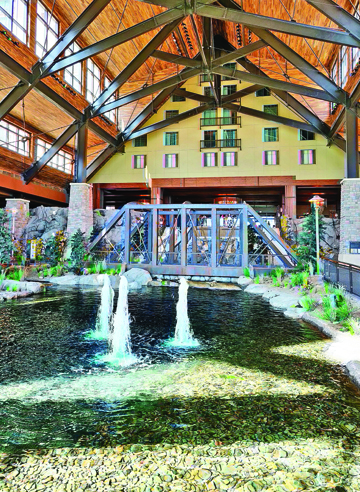
Large Atrium: It is hard not to notice the Grand Lodges’ centerpiece the moment you walk in — the 75-foot-tall (eight stories high) atrium window offering spectacular views of the Rocky Mountains.
The Gaylord Rockies Resort & Convention Center is near
Denver International Airport and is a Marriott property that opened in December
2018. The 486,000 square feet of convention space makes it the largest combined
resort and convention center in Colorado. It is the fifth Gaylord property to
open with the others located in Washington D.C, Nashville, Orlando, and Dallas.
Even though this rustic resort focuses on the business
traveler during the week, families are welcome as this hotel boasts 1,501 rooms
including 114 suites. The rooms start at $249 per night which is a bargain
considering you eliminate airfare and car rental expenses.
Sprawling Resort: Gaylord Rockies is situated on 85 acres and never feels crowded.
When you first walk into the resort, you will notice the
Grand Lodges’ centerpiece, a 75-foot-tall (eight stories high) atrium window
offering spectacular views of the Denver skyline framed by the Rocky Mountains.
Consider upgrading to VIP status as the check-in process is
smooth and the “Celebrity Services” staff are able to make reservations at one
of the eight restaurants with priority seating. The on-site restaurants serve
steak and American, Asian and Italian fares.
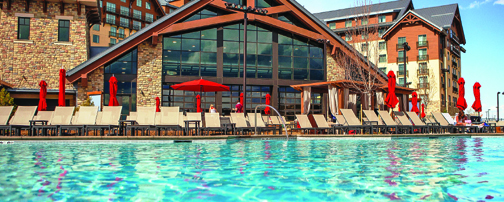
Lazy River: The 22,000 square foot water park features an outdoor lazy river.
This resort’s main attractions are the indoor and outdoor
pools (which includes an infinity pool), an outdoor lazy river, and three water
slides. This water park is spread out over 22,000 square-feet. The entire
resort is situated on 85 acres of land so it never feels crowded. Guests can
reserve a cabana if they want their own dedicated space. Or, they may snag a
chair by the lazy river and relax.
Inside the Mountain Pass Sports Bar is a 75-foot viewing
screen, the largest in the state. This screen plays cartoons on Saturday
morning during the Character Breakfast. The breakfast features a buffet of
breakfast foods and characters from the book, Alice’s Adventures in Wonderland
walking around to greet guests and pose for photographs. It is definitely worth
it for the little ones.
Sticking with the Wonderland theme, there is an escape room
which is fun for the entire family to experience. The “Hatter” gives clues while
people work as a team to solve the clues and escape the room. It runs $14.99
per guest. The resort also features an arcade, miniature golf, bike rentals,
pickleball, a market and more.
When you check in, be sure to ask about the free root beer
floats that are served daily. The Gaylord Rockies Resort & Convention
Center is located at 6700 North Gaylord Rockies Boulevard. For more information
about the resort or to make a reservation, visit www.gaylordhotels.com.
Sleek, Modern Townhomes Coming To Creek’s Newberry Brothers Greenhouse Plot At 2nd & Garfield
by Glen Richardson
Development activity is finally getting underway at the last
of the large assemblages of land in Cherry Creek North — a rare corner with six
contiguous lots at 2nd Ave and Garfield. It was January 2016 when Newberry
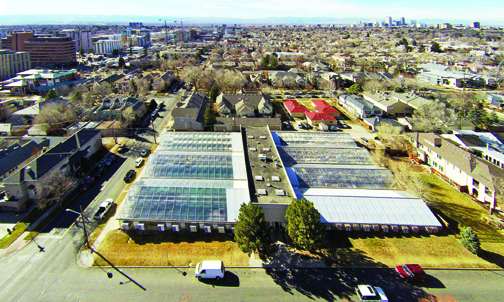
Brothers Greenhouse & Florist relocated to Leetsdale Drive from the six
large greenhouses they had operated on the site since just after World War II.
More than three years later not only has work started at the site but high-end
townhomes are being pre-sold along the street as “the ultimate oasis of luxury
living.”
Property owner Paula Newberry-Arnold and her son Kien Arnold
had initially planned to develop the site into “garden court” row homes titled
Garfield Row. However density of the proposed development raised objections
from Cherry Creek residents. Approximately 500 signed a petition against the
proposal — primarily because they felt the proposed 36 parking spaces would not
be sufficient and would clog the surrounding neighborhood with parked cars.
Those concerns ultimately scuttled the Arnold plan.
Not long thereafter
the Arnolds had the property under contract to a potential buyer but the deal
eventually fell through. Then at the beginning of last year Garfield
Development LLC formed by Michael Fancher of Denver-based Iconic Investments
purchased the 0.86-acre site. Greenhouses on the site had already been
demolished months earlier. He paid $7.65 million for the property located on
the northwest corner of Garfield and 2nd Ave.
Fabled Site
Just after World War II Weldon Newberry and two of his
brothers purchased a greenhouse located on Garfield St. at the time. They initially
devoted the business to the wholesale of “Colorado Carnations,” the first
trademarked flower in the United States. A few years later Weldon and his wife
Elizabeth purchased full ownership from the brothers.
Fabled Site: The 0.86-acre Cherry Creek North property was home for Newberry Brothers Greenhouses from shortly after World War II until recently.
However, as fuel prices skyrocketed, carnations were being
shipped into the U.S. for less than they could grow them in Denver. The
greenhouses were then used to grow a variety of plants and flowers and
Elizabeth Newberry focused on developing the floral and wedding party side of
the business. She continued to work in the business on Garfield until her death
in 2011, at the age of 89.
Weldon and Elizabeth’s daughter, Paula Newberry-Arnold then
became owner of the business along with her son. She developed the business
into one of Denver’s top floral and décor shops specializing in a variety of
large themed events and daily custom floral designs. The business remained on
Garfield St. until relocating to Leetsdale three years ago.
Slow Stride
Once Garfield Development LLC purchased the site — it went under
contract in April 2018 — the pulse of Cherry Creek North residents quickened.
They were thrilled that the former Newberry Nursery site “would soon have
high-end residential homes.” However the pace has been slow as Michael Fancher,
President of Iconic Investments, didn’t reveal details of the plan to the
Cherry Creek North Neighborhood Assn. until November 27 of last year.
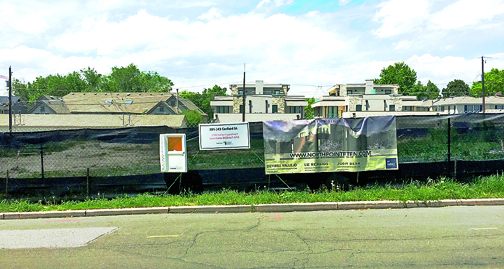
Finally Fenced: First signs that construction is getting underway the property located on the northwest corner of Garfield and 2nd Ave. has finally been fenced.
It has been approximately another five months before the
property was fenced off and work seemingly was getting underway. Furthermore,
some observers are suggesting it could be as long as two more years before
homes in this planned oasis of luxury living will actually be occupied.
To address parking concerns during construction, the
developer will reportedly encourage workers to park onsite for the first phase
of construction. Phase two however is likely to require some neighborhood
parking. Fancher is aware of the resident concerns and hopes to minimize the
impact. It felt sincere. A phone and email hotline for area residents to call
in and log concerns is being planned.
Popular & Pricey
The luxury real estate market in Cherry Creek North is awash
with million and multimillion-dollar homes. Luxury, of course, is a relative
term when it comes to Cherry Creek, where the median sales price is $895,000.
Homes in the district have been priced above $13 million. There’ve been a few
incidents of townhomes priced in the $1-3 million range prompting a bidding
war.
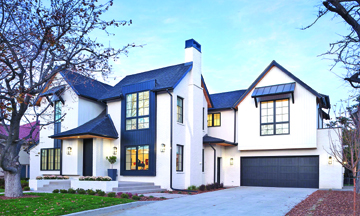
Special Style: Designer Alvarez Morris Architectural Studio created this Denver Designer Show Home in the Hilltop Neighborhood.
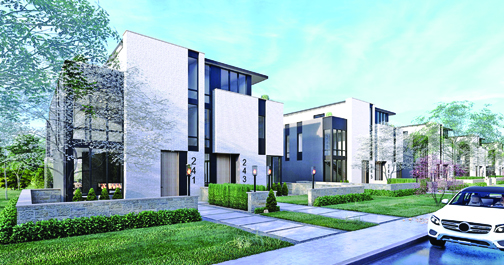
Being launched as North Pointe Ten, the project will consist
of 10 attached homes, each measuring about 4,600-sq.-ft., standing three
stories tall with a rooftop deck of approximately 700-750-sq.-ft. Expected to
be priced at $3 million or more, they are currently being pre-sold by LIV
Sotheby’s International Realty at $2,695,000.
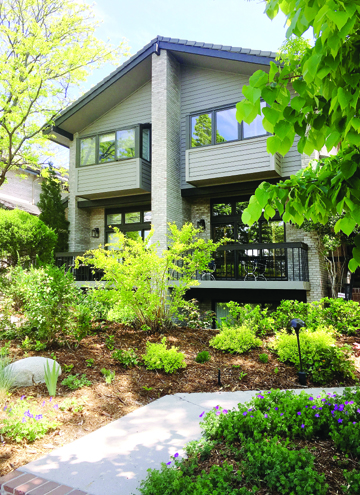
Condo Connection: This is what the condos directly across the street from the North Pointe Ten development on Garfield look like.
The Denver Business Journal reported that Ryan Tedder — the
lead vocalist in Colorado pop-rock band OneRepublic — is a main investor in the
townhouse project.
Super-Sized
Designed by Alvarez Morris Architectural Studio on S.
Broadway, each home includes a basement level with abundant storage, a media
room, plus a bedroom and a bathroom. Take the elevator to the first-floor
level, which includes an open layout living area, kitchen and dining, plus a
powder room, mudroom and patio.
Continuing through the home, the second floor features a
master suite, another bedroom suite and laundry. The third level includes a
flex space, another bedroom-bathroom, plus a rooftop patio with a fire pit.
“Never before has a project been introduced to Cherry Creek
that will combine this level of finish, size and aesthetic,” claims Josh Behr
of LIV Sotheby’s Cherry Creek office. “These truly will be 10 unique residences
that will evolve and propel forward the level of quality in Cherry Creek real
estate.”
Developer & Designer
Albeit developer Michael Fancher is somewhat new to the
Denver market, in the last eight years he has become one of the largest student
housing landlords at the University of Colorado in Boulder. He also assembled
the 4.4-acre site in the heart of Boulder that is being developed into Google’s
regional headquarters.
Garfield Grandeur: This former greenhouse site at 2nd Ave. and Garfield will become 10 attached homes being launched as North Pointe Ten.
In 2015 his company Iconic partnered with Craft Companies on
several large development projects, including the 1,000-acre master planned
Independence community in Elbert County.
Alvarez Morris Architectural Studio on S. Broadway excels in
creating inviting and innovative spaces around the world. The combined
experience of Carlos Alvarez and Carolyn Morris cultivates a comprehensive
knowledge and a unique perspective, placing AMA at the forefront of design
excellence.
Win One Of Seven Dream Golf Vacations To America’s Top Golf
Destinations
by Ed Mate, Executive Director, Colorado Golf Association
If you’ve ever dreamed of playing the best golf courses in
America, the Colorado Golf Association (CGA), might just have a ticket with
your name on it. This golf season, the CGA, home to more than 60,000 members,
is conducting their Dream Golf Vacation Raffle — Presented by BMW. The 2019
raffle features seven grand prize packages including six Stay-and-Play packages
at top golf resorts in the country, which feature 12 of the top 50 public
courses in the United States, as ranked by Golf Digest. In addition to the
Stay-and-Play packages, a grand prize winner will attend the 2019 BMW
Championship at Medinah Country Club in Chicago.
This unique raffle supports youth golf programs conducted by
the non-profit Colorado Golf Association at its own premier golf facility,
CommonGround Golf Course, ranked #4 “Best public places you can play in
Colorado” by Golfweek. Programs conducted by the CGA are Youth on Course, the
Solich Caddie & Leadership Academy, Hale Irwin Player Program and Community
and Wellness program which welcomes organizations such as Special Olympics, Big
Brothers/Big Sisters and Denver-area Boy & Girl Scouts.
The grand prize trip to the BMW Championship — the
penultimate event of the PGA Tour’s FedExCup Playoffs, set for Aug. 15-18 —
will include first-class roundtrip airfare to Chicago, a three-night stay at a
host hotel (Thursday to Sunday, including transportation from there to the
course) and a $500 gift card for food and beverage. The prize allows the winner
to walk inside the ropes with a featured group on Friday of the event, and
provides two 18th-hole VIP Hospitality access at Medinah for Friday and
Saturday’s rounds.
The featured resorts and courses in the raffle include:
• Bandon
Dunes Golf Resort in Oregon (3 nights, 6 rounds of golf for winner and a guest,
including caddie fees). Four courses ranked #2, #7, #12 and #14.
• Destination
Kohler Resort’s Whistling Straits and Blackwolf Run courses in Wisconsin (2
nights, 3 rounds of golf). Whistling Straits will host the 2020 Ryder Cup.
• Streamsong
Golf Resort in Florida (3 nights, 3 rounds of golf for four people).
• Sand Valley
Golf Resort in Wisconsin (2 nights for winner and a guest, 3 rounds of golf).
• Fairmount
Scottsdale Princess and TPC Scottsdale, Champions and Stadium Course which is
home of the Waste Management Open in Arizona (3 nights, 2 rounds of golf).
• The Peaks
Resort and Telluride Golf Club Sept. 6-8 (2 nights, 2 rounds of golf), with a
2019 BMW X7 courtesy vehicle to drive to and from Telluride.
All of the stay and plays include $1,000 worth of gift cards
for travel, food and beverage, and except for Telluride they can be redeemed
through at least the first half of 2020.
Additional raffle prizes include rounds at 40-plus Colorado
golf courses, as well as golf merchandise and other goodies. Among the rounds
are those offered by Aspen Glen Club, The Club at Cordillera, The Club at
Pradera, The Pinery Country Club, Valley Country Club, Eagle Vail Golf Club,
Meridian Golf Club, Inverness Golf Club and the Keystone courses.
To purchase tickets and a list of all raffle prizes visit
ColoradoGolf.org. Tickets for this state-licensed raffle are $40 each, with no
limits placed on the number of tickets that can be bought. The BMW Championship
Prize winner will be selected on Aug. 2 and all other winners will be selected
on August 22. Contact Ryan Smith for more information at 303-366-4653.
The sun is shining, the birds are chirping, and except for
the occasional “bomb cyclone,” it is finally springtime. Springtime means
outdoors to us Coloradans … skiing being the exception to that rule of course.
We hop on those bicycles, we tie on those jogging shoes and we welcome the sun
on our face and the wind in our hair. But before you plug in those headphones
and tune-out for your exercise therapy, a few reminders as you embrace spring.
Living in Denver is to live in a never-ending heart health
ad. A bicyclist or a jogger at every corner and in between every corner, a
steady stream of Denverites walking their dogs. As motorists in this community,
we know, or should know, to share the road with those on bicycle or foot.
Though there is nothing healthier than heading out to exercise this spring, the
reality is that the danger is real.
Foster Graham Milstein & Calisher, LLP represents
injured cyclists and pedestrians, the number of which has increased at an
alarming rate each year. The injuries that we see with these clients are
catastrophic. The simple truth is that a cyclist or a pedestrian is no match
for a car. According to the National Highway Traffic Safety Administration, in
2017 there were 5,977 pedestrians and 783 bicyclists killed in crashes with
motor vehicles in the United States. No doubt pedestrians and cyclists are
vulnerable on the road and the danger is increasing. For example, U.S. traffic
fatalities in 2003, pedestrians and bicyclists represented 12.6 percent of
total traffic fatalities, but in 2017 they accounted for 18.2 percent of
fatalities. Head injuries account for 75% of all deaths and permanent
disabilities in bike crashes. Before you say to yourself, “Wait, this is
Colorado. The roads are filled with fit, like-minded, protein bar eating Subaru
drivers … with their rescue dogs riding shotgun. Colorado drivers are
harmless.” Not true. In 2018, Colorado had the second highest rate of fatal
road rage crashes nationwide.
The good news? You can be safe and well … stay alive. Hands
down, the safest choice when you are the bicyclist or the pedestrian, is to
protect yourself. When you got your driver’s license in Colorado you entered
into a contract, with the state of Colorado, to follow the rules of the road.
Remember the Colorado Driver’s Manual? Much like motorists, bicyclists and
pedestrians must follow the rules of the road. Yep, Colorado has a manual for
that, too. Check out Colorado’s Bicycling Manual put out by the Colorado
Department of Transportation.
A few tips:
Distraction is not just a problem for motorists. Electronic
devices for bicyclists and pedestrians mean eyes (and ears) are off the road.
Never assume a driver sees you. In fact, the safest choice is to assume they do
not. According to the Center for Disease Control, every day nine people are
killed and more than 1,000 people are injured in crashes from distracted
driving in the U.S.
You are not above the law. Bicyclists and pedestrians must
obey traffic signs and signals. Stop at stop signs. Follow the “WALK” and
“BIKE” signals, look at the lights — obey. It is simple because the statistics
confirm that we get busy and we are not safe.
Stay in your lane. Pedestrians should use a sidewalk or path
when available and if one is not available, use the shoulder, facing traffic.
Use crosswalks when crossing the street; if a crosswalk is unavailable, find
the most well-lit spot on the road to cross and wait long enough for a gap in
traffic to make it safely across the street. Cyclists, look for the bike signs,
stay in your bike lanes and bike boxes. The majority of pedestrian fatalities
(73 percent) and bicyclist fatalities (58 percent) occur at non-intersections.
Lastly, though pedestrians have the ultimate yield status, i.e., all on the
road must yield to a pedestrian, why take the risk? The safest choice my fellow
pedestrians and cyclists, is to never assume. Never assume you have the
right-of-way and certainly never assume others are following the law.
These safety tips are just tidbits. Most of them are
straight up common sense. For the full education, take the time and read the
full rules of the road for pedestrians and cyclists from the Colorado Bicycling
Manual. If life and limb is not reason enough to pick up the manual, then
consider it from a financial perspective.
If you are injured as a cyclist or a pedestrian, you may be
able to recover for your injuries, damages and losses. If you are injured by
someone driving a car, you may be able to make a claim against the insurance
carrier for the vehicle that hit you, as well as any uninsured or underinsured
motorist coverage you may have with your own automobile insurance (remember to
maximize those insurance policies for the most coverage available. This
protects you if you hit someone or are a victim). If you are injured as a
pedestrian or cyclist by another cyclist, you may be able to recover from the
at-fault cyclist’s homeowner or rental policy. When it comes time to attempt to
recover in your claim with any insurer, whether or not you followed the rules
of the road as a pedestrian or a cyclist may reduce the amount of your recovery
or even completely prohibit your ability to recover. You may not realize you
are not following the law as a pedestrian or cyclist so take a quick moment to
learn the rules of the road.
As a final note, you probably know many drivers don’t drive
with auto insurance, or their policies are minimal. Protect yourself, check
your automobile and homeowner/rental insurance policies, talk to your agent,
and ensure you have adequate insurance coverage, especially uninsured/
underinsured motorist coverage.
Now, quit being lazy, get out there on your bicycle, put on
those jogging shoes and hit the pavement. It is simple, be smart and be safe.
#stayingalive.
Kari Jones Dulin is a partner at Foster Graham Milstein
& Calisher, LLP. Ms. Jones Dulin’s practice is exclusively devoted to
plaintiff personal injury work. Whether a client was injured in car crash,
injured by a dangerous product, injured from a dangerous condition on someone’s
property or from medical negligence, Ms. Jones Dulin represents those who have
been injured because someone broke the law.”
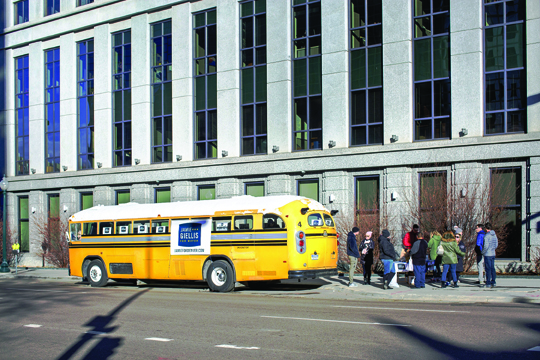
Jamie Giellis, candidate for Denver Mayor, has announced the All Together Now Neighborhood Tour keeping her promise of her commitment to neighborhoods and mixed-use districts. Over the next several months, Giellis will visit all 78 neighborhoods across Denver to meet residents, listen and learn about the issues and opportunities of each neighborhood and share her leadership vision for the City of Denver.
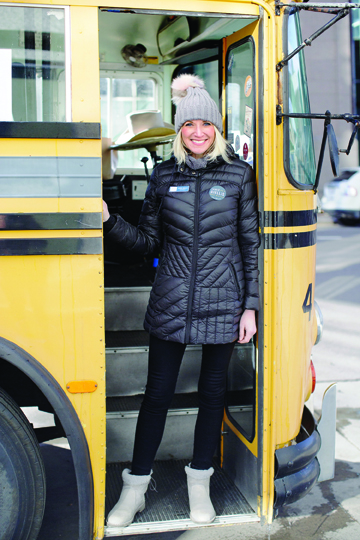
Bus Tour: Jamie Giellis, candidate for Denver Mayor, has announced the All Together Now Neighborhood Tour which will pay a visit to all 78 neighborhoods in Denver. Photo courtesy of Anna Phillips Photography
Giellis kicked of her tour at Denver’s National Western Stock Show Parade of longhorn steers and she will be adding event locations at coffee shops, breweries and local businesses across the metro area. Meet Giellis outside at Park Burger in Hilltop on February 2 from 1 to 2 p.m., and South High School in Cory Merrill from 11 a.m. to 4:30 p.m. Find the full schedule of events at jamiefordenver .com and her Facebook page @jamiefordenver.
“Denver’s government is moving to enact legislation to manage its growth at a glacial pace, while the city is growing at break-neck speed,” Giellis says. “Infrastructure and inclusivity are falling behind at an alarming rate, and the neighborhoods are suffering most,” said Jamie Giellis. “A city is its people. Its neighborhoods. Without a plan that focuses on and protects neighborhoods, the very best of what Denver offers will be lost.”