by Mark Smiley | Dec 17, 2018 | Feature Story Bottom Left
by Danny Foster, Esq.
As 2018 ends and 2019 peeks its head around the corner I
have a news flash that should not come as a news flash: raising kids is damn
hard! It appears as if raising kids in 2019 will be as challenging as raising
kids in 2018. As a father of three teenagers I face the daily struggle of
limiting phone time, arbitrating sibling arguments, and trying to figure out
where the heck they are all the time and who they are with.
Teenagers can really test a parent’s patience and sanity.
Don’t get me wrong, I like my kids. A lot. But parenting is really hard. And
now that my kids are knee deep in high school and middle school we have to
address the alcohol and marijuana issue. You know, that issue.
It’s a balancing act talking to your kids about the dangers
of drugs/alcohol and at the same time letting them know that IF they choose to
indulge that we absolutely do not want them to be afraid to let us know if they
need a safe ride home or need our help if they are struggling with substance
issues.
On the one hand we cannot, as mature, law-abiding parents,
condone our kids engaging in illegal and self-destructive behavior, but on the
other hand we don’t want to see their bad choices have deadly consequences. Our
law firm has for years hosted a free community seminar titled “High School Boot
Camp” for parents and students to address the dangers associated with
alcohol/drugs as well as a host of other issues. Even with all my knowledge and
training I am often frustrated by the complexities of how to raise kids.
Telling our kids that we will be there for them, no
questions asked, if ever they need our help during such a drug/alcohol crisis
is a mixed message. However, it is a mixed message that is entirely reasonable
in light of the fact that teenagers’ decision making can often be suspect. I am
willing to say that in this case a mixed message is pragmatic and essential to
the well-being of our children.
But the mixed messages our children face are even more
complicated now that marijuana has become ubiquitous in Colorado. What once was
taboo a few years ago is now mainstream. And now just in time for 2019, the
City of Denver is making it even harder for parents to teach our children correctly
with the nation’s first legal heroin injection sites. Yes, you read that
correctly.
Just this past month the Denver City Council voted 12-1 to
legalize heroin injection sites with city support. Call me old-school but I
don’t think we should be making it easier to shoot heroin; yet the Denver City
Council thinks that the benefit of being able to provide “safe places” for
heroin addicts to get high outweighs the negative impact this will have on the
City. This is the city’s attempt to play parent to the teenager. Except we are
not talking about being too drunk to drive home from a party and getting a safe
ride home, we are talking about engaging in highly illegal and self-destructive
behavior that ruins lives and destroys neighborhoods.
Trying to rationalize this city ordinance in any context is
dangerous. I applaud the city council’s desire to save lives, but this proposal
normalizes and essentially condones heroin use, with zero evidence that it will
save lives. Further, the crime and homeless problem will only get worse. Been
to Civic Center Park lately? Neither have I. It has become a mecca for heroin
abuse and violent encounters. That problem will only worsen. If you build it,
they will come.
While it is highly unlikely this heroin ordinance will survive
the state legislature’s ratification or U.S. Attorney’s challenge, the fact
that the city council wants to make our beautiful city more enticing to heroin
abuse is a sad commentary on what we deem to be permissible nowadays.
Thankfully councilman Kevin Flynn voted against this ordinance and I urge
everyone to call his office and thank him for his courage to do the right
thing. I also urge everyone to call their state representative and urge them to
vote against this bill if it comes up for discussion in 2019. It is an
unreasonable and dangerous response to a national epidemic. There are not a lot
of easy solutions to the opioid epidemic, but this is certainly going in the
opposite direction.
So parents, I hope 2019 brings joy, peace and lots of love to
your families. I hope you can devise a way to discuss these complicated issues
with your teenagers because I for one am tired of seeing good kids suffer
because their parents refused to engage in these challenging discussions. And I
hope the state legislature puts a swift and resounding end to Denver’s decision
to normalize heroin use in our city.
Danny is a managing partner of Foster, Graham, Milstein
& Calisher (FGMC). His practice focuses on personal injury. The law firm of
FGMC, located in Cherry Creek, is a full service law firm focusing on: criminal
defense, personal injury, real estate, litigation, liquor licensing,
construction law, tax/estate planning, bankruptcy and zoning. This article does
not create an attorney-client relationship and is for informational use only
(what do you expect from an attorney!)
by Mark Smiley | Nov 19, 2018 | Feature Story Bottom Left
DeGette Announces Run for Democratic Whip
By Congresswoman Diane DeGette
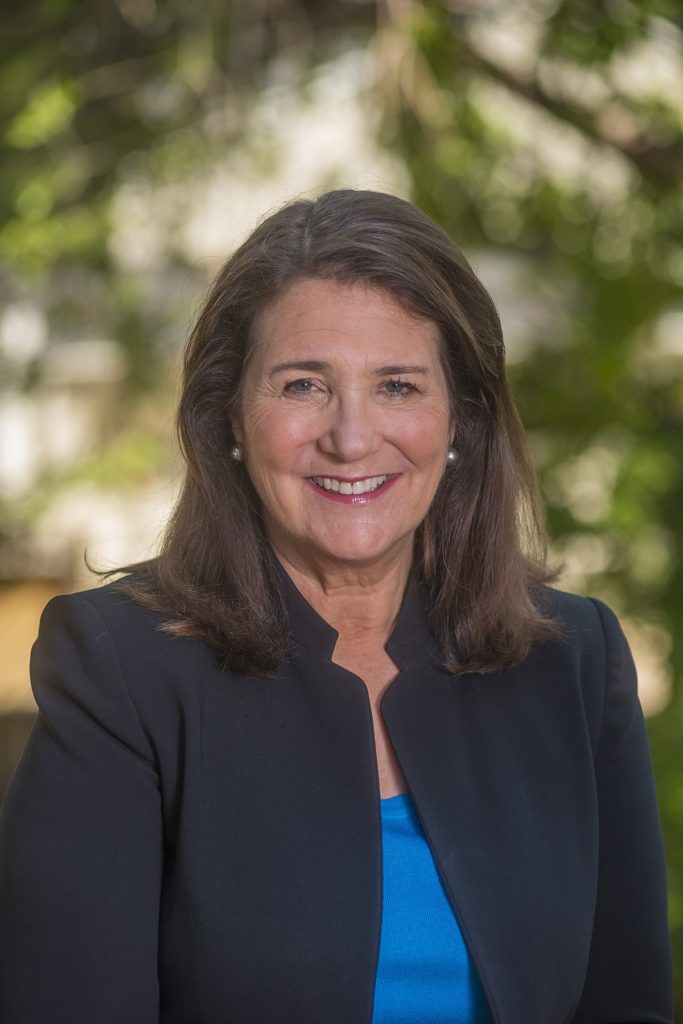 I am running to serve our caucus as Democratic Whip and hope to count on your support.
Thanks to your tireless work and the energy and enthusiasm of Democratic voters across the country, we will enter the 116th Congress with a Democratic House majority for the first time in eight years. This will be an awesome responsibility as we fight to deliver on the promise of bold action for the American people – even while Republicans continue to hold the Senate and the White House. In this tough environment, I am confident my years of whipping experience will help us win the key floor votes that we will need to advance our agenda.
Success for House Democrats in the coming years will require strong unity to stand for our core shared values, while appreciating we only reach that unity by understanding the perspective of every member and his or her district. The Whip must empower each member of our caucus to serve as a full partner, bringing his or her energy, passion, and expertise together with others’ to meet our common goals. It will also require the institutional knowledge and legislative savvy to go toe-to-toe with Senate Republicans and the White House.
Having served for seven congresses as Chief Deputy Whip, I have a strong track record as an effective strategist, precise vote counter, and experienced, bipartisan negotiator. I have passed major bipartisan bills, like the 21st Century Cures Act, rallied Republicans to support ethical stem cell research, forged agreements in our caucus on the Affordable Care Act, and held Democrats together on close energy and environmental votes. For nearly two decades as co-chair of the Pro-Choice Caucus, I have whipped countless tough votes in an effort to successfully stop the Republicans’ radical anti-choice agenda. You can count on me to deliver for our caucus.
We also must do more to ensure our leadership reflects the diversity of the caucus and our constituents. Eighteen years ago, our caucus voted to elevate a woman to the top levels of leadership, and it is past time for us to do so again—I would be only the second woman to hold this post. I would also be the first Whip from the Mountain West, and our path to a lasting majority must include broadening the caucus’ geographic appeal.
As Whip, I will reinvigorate all aspects of the current operation to ensure we draw upon the full potential of our members. This means bolstering the existing operation to more deeply involve bill sponsors, issue experts, and committee chairs and members when a bill moves to the House floor. It also means partnering with our messaging arm, so that our work resonates throughout the country and shows the American people that our actions can live up to our words.
I will continue to campaign on behalf of Democratic candidates across the country, from the most vulnerable incumbents to promising new challengers. I also understand the responsibility the Whip has to raise the money necessary to communicate effectively. I have raised millions for candidates and the DCCC, and I was on the host committee for the 2008 Democratic National Convention in Denver, which raised more than $60 million.
This is an important moment for our caucus to move smartly on behalf of the American people. Together, we can protect American values and enact positive change for the country that rallies the public to our cause. I look forward to discussing how I can work with you as Democratic Whip during this effort.
by Mark Smiley | Nov 12, 2018 | Feature Story Bottom Left
Density vs. The Neighborhood Balancing Affordable Housing And Community Safety
by Amanda Sawyer, Candidate for Denver City Council, District 5
All eyes have been on the November elections, but now the focus shifts to May 2019, when Denver will choose who should fill the 15 spots that will make up our next Mayor, City Council and County Clerk. There are already 45 candidates running for those 15 positions, so you can tell people in Denver are not happy with the current leadership. And the biggest issue on everyone’s mind is affordable housing.
When it comes to the cost of living in Denver, we are a city in crisis. Historically, “affordable housing” is defined as one third of average median income. This is a particularly big deal in neighborhoods with high incomes, because middle income earners like teachers and first responders can’t afford to live there. And there are not enough local housing options for retirees on fixed incomes when they are ready to cash out of their homes and move. We need more affordable housing, especially in these neighborhoods. But where should it go? And, what are the other unintended consequences such as traffic and infrastructure issues?
City planners will tell you that the solution is to build high-density developments along transit corridors. We have already seen this in East Denver in developments like 9th & Colorado and Boulevard One. The problem with this solution is the streets that the City considers to be “transit corridors.”
Let’s look at Holly Street. It is considered a transit corridor, so planners want to add density there. To be fair, there may be places on Holly where added density could work. But to make a blanket generalization that all of Holly Street — a two lane road that runs through neighborhoods filled with families, small businesses and schools — should be developed because the City considers it a transit corridor? That doesn’t make sense.
Take, for example, the Green Flats proposal, on Holly between Cedar and Alameda. The design is attractive, and I appreciate the developer’s attention to green building. He has also been generous with regards to privacy, setbacks, and the number of parking spaces. In another location, this is an excellent project. But, it’s not a good fit for this particular block.
The current development plan provides for 35 parking spaces, accessed solely via the alley that runs from Alameda to Cedar. There are approximately 11 vehicles using that space now, so this would add 24 cars. According to neighbors, the southern entrance to the alley is dangerous because people drive Alameda at high speeds and the alley isn’t clearly visible. They already have to wait for a red light at Alameda and Holly before they can pull out. Their other option is to use the northern entrance to the alley at Cedar between Hudson and Holly. The businesses on that block offer amenities specifically to draw families to the location, so there are always kids at that entrance. The bike racks and cornhole games are located no more than 20 feet from the alley that would be the only vehicle access to this development. It’s already a dangerous situation and 24 more cars will make it worse.
Adding more cross-traffic at Cedar and Holly is also a bad idea. There is no logical way to put a stoplight at this intersection. It would cause a bottleneck that would back up northbound traffic on Holly down onto Alameda and Leetsdale. The City already acknowledged there is essentially no solution to this problem when it installed a flashing crosswalk at this intersection. I’ve personally seen multiple people almost killed in that crosswalk. The proposed development and the additional 24 more cars it will bring to this already highly congested area don’t make sense.
Holly will also be virtually unusable dur-ing the construction phase of this project. While that is temporary, it will force drivers to use the neighborhood streets as our main north-south roads. This will create a safety risk for the neighborhood kids, especially on streets like Fairfax and Dahlia that connect Alameda to 6th Avenue. And, remember, this project is proposed three blocks from the playground of a Denver Public Elementary School which families with young children use every day as their main entrance to the school grounds.
In addition to traffic and safety issues, the proposed development has had the unfortunate effect of driving out other residents. One neighbor has already moved. The property immediately to the south is for sale. Other neighbors have told me they will move if the project is approved. In this case, even the beginning proposal stage has already caused at least two residents to leave the neighborhood, which is a shame.
Finally, I’m concerned that this developer wants to seem like he’s compromising without actually compromising. I experienced this attitude personally while researching the Green Flats project. and I’m not alone. When concerns about the project size were brought up in mediation, the developer’s concession was to lower the number of units from 27 to 23. This seems like a fair compromise; except as I understand it, he intends to combine units that were originally designed as single units into larger units with more bedrooms. If true, this would lower the officially measured density of the project without actually altering its size. As I write this no one has seen revised plans for the project so the truth of that remains unclear. But if the information is correct, the post-mediation “change” is a distinction without a difference.
And, more importantly, it is indicative of a concerning business culture among the development community, where a spirit of camaraderie and partnership with the neighborhoods seems to be lacking. It’s time to change the conversation. Solving Denver’s housing crisis is the most important issue we face. Denver has to add density. We need to come together to find creative solutions. But do we have to add to our existing traffic issues, give up the character of our neighborhoods and the safety of our children, to do it? The final hearing for the Green Flats Project is scheduled for November 7.
To comment, attend the final hearing for the Green Flats Project November 7 at 3 p.m. at 1437 Bannock St. #379. Amanda Sawyer is a licensed Colorado attorney and MBA. She and her husband are raising their kids in East Denver, and she is running for Denver City Council District 5 because she believes we need fresh eyes on the issues that face our neighborhoods. You can find out more about her platform at www.sawyerforfive.org.
by Mark Smiley | Oct 24, 2018 | Feature Story Bottom Left
by Shideh Kerman, BS, MBA
AFC Urgent Care Denver
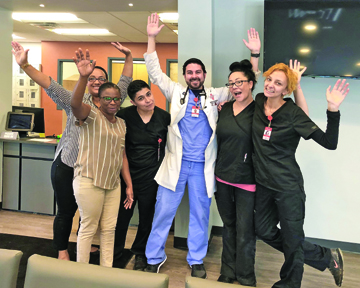
Members of AFC Urgent Care Denver’s experienced medical staff.
Approximately 152 million Americans depend on employer-sponsored coverage for their healthcare needs. According to a new report published by the Henry J. Kaiser Family Foundation, employer-sponsored premiums increased across the board in 2018.
The findings show how healthcare costs have changed in just the past seven months, and review some of the major trends of healthcare costs in recent years.
Trend Alert: Premiums For Employer-Sponsored Health Insurance Plans Increased In 2018
The Kaiser Family Foundation Employer Health Benefits Survey assessed 4,070 randomly selected, non-federal public and private firms with more than 3 employees between January and July of this year. They found that employer-sponsored family health coverage rose by 5% to a dollar average of $19,616. Coverage for single premiums rose 3% to a dollar average of $6,896.
Unfortunately, increasing healthcare costs do not appear to stay in pace with other factors including wages and cost of living. According to the report, average family premiums have increased by over half (55%) since 2008, despite earnings increasing by only 26% and inflation increasing by 17%.
It’s not just premiums that are on the rise, either. 85% of employees covered by employer-sponsored health insurance have to pay a deductible (up from less than 60% one decade ago). And the average single deductible is now $1,573, almost 50% greater than a single deductible back in 2008 ($735). 25% of all covered workers are now expected to pay deductibles of at least $2,000.
This burden can have a significant impact on a person or family’s ability to manage bills associated with medical care.
Changes To Individual Health Insurance Plans Expected In 2019
The open enrollment period for 2019 begins on November 1. At that time, individuals living in the state of Colorado will be able to sign up with one of several different health insurance plan options, whether these are procured through employers or offered on the exchange.
Individual health plan options from major providers including Anthem BlueCross BlueShield, Bright Health, Kaiser Permanente CO, and Rocky Mountain Health Plans include HMO or Health Maintenance Organization, PPO or Preferred Provider Organization, HSA or Health Savings Account plans, Tier Plans and/or Catastrophic Plans which are a type of high-deductible health plan for people under 30 or those who qualify for a “hardship exemption.”
Coloradans who may be interested in new individual health plans include those who are self-employed, those who work for an employer who does not offer group plans, those whose benefit needs have recently changed, or those who are enrolled in a group plan or health plan that does not cover spouse or dependents or has high premiums.
Some Coloradans can expect some extra assistance in premium payment in 2019. That is, monthly premium tax credits for individuals in Colorado are expected to increase by 10% in 2019, from $212 in 2018 to $233. This is based on baseline hypothesized data from a 40-year-old non-smoker making $30,000 per year.
Prior to tax credits, 2019 monthly premiums for individuals in Colorado are projected to decrease by 6% for low-tier bronze plans, increase by 6% for middle-tier silver plans, and decrease by 5% for high-tier gold plans.
Employers Strategies In Combating Rising Health Insurance Costs
Many employers plan to incentivize employees to opt for high-deductible insurance plans as a way to control costs. An additional cost-effective approach may include incentivizing healthier life choices, e.g., many employers may contribute to health savings accounts or reimburse employees for gym memberships. Individuals and families can do their part to minimize healthcare costs by taking advantage of employer-sponsored incentives and adopting healthy behaviors as a lifestyle. Research indicates that preventive measures such as proper nutrition, regular physical activity, and disease screening can save thousands of dollars in medical costs.
Some other employers might cover some services offered in low healthcare costs settings. Reports indicate that three quarters (76%) of large companies cover healthcare services that are offered in retail clinics, such as urgent cares. Even a small number of companies provide financial incentives for workers to use these clinics. At AFC Urgent Care Denver with a new location just opened off of Speer Blvd., experienced medical staff is continually doing what they can to stay up-to-date with current changes in the socioeconomic dynamics of this country.

by Mark Smiley | Oct 2, 2018 | Feature Story Bottom Left
by Ed Mate, Executive Director of the Colorado Golf Association
Serena Williams’ latest display at the U.S. Open was… (blank). You tell me. As I watched this bizarre finish to a grand slam tennis final unfold, I know several adjectives came to mind. Rather than defending or criticizing her behavior in this forum, I would rather look at what this incident says about today’s athletes and the broader attitude toward referees in our culture. And as executive director of the Colorado Golf Association and a student of the rules of golf, I am interested in looking at how the uniqueness of the rules of golf are more and more at odds with our “modern” attitude toward sport and specifically toward the enforcement of rules.
For the past several weeks the Colorado Golf Association has been releasing a series of videos highlighting the upcoming changes to the rules of golf that will take effect on January 1, 2019. The rules of golf have been completely rewritten in the past six years and the much-anticipated 2019 rule book has been released. This project was the most far-reaching and ambitious rules project ever undertaken at one time by the United States Golf Association and Scotland’s Royal and Ancient in the many years the two organizations have co-authored the rules. The moniker that has been attached to this project has been “Rules Modernization.”
The term “modernization” was not the first choice to label this top-to-bottom rewrite of golf’s ancient code. The term emerged during the process as a reaction to the first choice of “simplification.” As the project unfolded it became very clear that the end result would not produce a “simple” rule book. The game of golf is played on the most varied and complex “court/field / arena” in all of sport. No two golf courses are the same, all circumnavigate hundreds of acres and are cut through forests, deserts, sand dunes and any other natural topographical features that lend themselves to chasing a white ball. As a result, the rules have to accommodate for infinite nuance and eventualities that can come into play when a ball is turned loose and allowed/required (unless you are Phil Mickelson — see  2018 U.S. Open — but that is another story) to come to rest with only the forces of nature and fate determining its final resting place. So, since simple was not possible, the term modern was chosen — and it stuck.
Personally, I think “modern” is the perfect word to describe the new rule book, but not necessarily for the reasons you might think. For most, the first meaning that comes to mind for the word “modern” is “in step with the times,” “relevant to today’s world,” “up-to-date.” Unless you are a stick-in-the-mud “modern” is good … right? When you look at the changes to the 2019 rules of golf you will find a kinder and gentler game of golf. Many one-stroke penalties have been eliminated in the name of “fairness” and “equity.” This is most certainly a “modern” concept. The word “unfair” has come to mean “anything that happens to me that I don’t like.” I have had many conversations over the past two decades with my two children who have certainly grown up with this notion. Taking responsibility for your actions and accepting the results of tough situations is as en vogue today as churning your own butter. Call me a curmudgeon, but there is a lot to be learned from accepting what life hands us with dignity and resiliency. Despite the softening of this concept in the 2019 rules of golf, I believe the game continues to test us in this manner better than any other sport. The simple fact that in golf we have to allow a ball to come to rest without intervening (see helicopter parents) is a great metaphor for life. And most importantly, golf is the one sport where you call penalties on yourself. There is no referee looking over your shoulder to throw a flag or blow a whistle.
Which brings us back to Serena. If you listen to her tirade (I am sorry that is what it was) the one word she used over and over was “unfair.” Was it? Was it “unfair” that an umpire enforced a rule based on his observations from the chair, a job he was doing to make sure the skill of the players determined the winner? Based on the reaction of the N.Y. fans, it seemed clear to me that most of us “modern” folk are on Serena’s side. Oh well, I’ll leave it there — I have some butter to churn.
Ed Mate served on the USGA Rules of Golf Committee for the past three years as a member of the committee who helped develop the updated and revised rules of golf that will become effective on January 1, 2019.

by Mark Smiley | Aug 24, 2018 | Feature Story Bottom Left
Show In New Colfax Space Has Stunning Photomontages, Exquisite Geometric Images Plus Paintings, Glass Sculpture
Reopening on East Colfax in June, the Robert Anderson Gallery will debut its second show in the new space Sept. 14 with an opening reception from 5 to 8 p.m. On display through October, the exhibition is featuring the unique photomontage work of Patti Barry Levy, the exquisite geometric images of Lauri R. Dunn, and the striking paintings and glass sculptures by Ana Maria Botero. Located in Cherry Creek for several years, the galley reopened in a much larger space at 3321 East Colfax adjacent to the historic Bluebird Theater.
The apparent emptiness of the grasslands east of artist Patricia Barry Levy’s Denver home hints at intriguing tales, possible and impossible scenarios. With degrees in history and photography she has been using her computers to make images since 2005. Show attendees will see how she uses photomontages to merge reality and fantasy to tell stories that give viewers a voyage into the imagination. Viewers will be equally entertained by the geometric images of artist Lauri R. Dunn. With a BFA in Photography from Maryland Institute’s College of Arts, she teaches art in Jefferson County Public Schools.
Also on display are striking paintings and glass sculptures by Ana Maria Botero. A wife, mother, architect and artist, she was born in Bogotá, Colombia, where she lived and worked as an architect until 2001 when she relocated to Florida. Moving to Colorado in 2015 she started painting. Although she still loves architecture, her hobby is now her passion. Also on display will be selected vintage images by Carleton Watkins, Nick Brandt and others. Information: 303-257-0684.
Landscapes-Garden Show
Old South Gaylord’s popular gallery Arts at Denver is showing the work of four guest artists in September. The exciting show titled “American Fauves: the Wild Ones,” features American Landscapes and Gardens.
Three are out-of-state artists plus Colorado’s David W. Mayer from Lafayette. The other artists are Erin Hanson from California, Cynthia Rosen from Vermont, and Heather Arenas from Florida.
Attendees will discover the contemporary im pressionism oil painting of California-based Hanson. She developed the Open Impressionism movement that is now taught in art schools worldwide. Also on display will be work by gallery artists Michael Clark and Margaretta Caesar. Information: 303-722-0422.
Antique Maps & Prints
Cherry Creek North’s Philadelphia Print Shop West has relocated from Fillmore St. to 2830 E. 3rd Ave. The new location is on the 2nd floor of the building housing Cherry Creek Framing where they share space.
Visitors can browse through a collection of more than 10,000 antique maps and prints. There is also an array of related reference works, rare plate books and atlases.
Owner Christopher W. Lane was a partner in the Philadelphia Print Shop until he moved to Denver when his wife, Dr. J. Lindsey Lane, took a job at Children’s Hospital. He continues to appear as an expert appraiser on the PBS program Antiques Roadshow. Information: 303-322-4757.
Quick Sketches
The Truth of Nature, the biggest Claude Monet exhibit in decades, is coming to the Denver Art Museum in October 2019.
* * *
CRUSH — the largest independent graffiti and street art project and event in the Valley — is recipient of the Arts & Culture Innovation Award. Founded by Denver graffiti artist Robin Munro, CRUSH has been on the streets of the RiNo neighborhood since 2010. Originally centered within the EXDO Event Center, the event relocated three years ago to the long alley between 26th and 27th St. and Larimer and Walnut St., n ow dubbed Art Alley.
* * *
The Art Institute of Colorado closed Aug. 28 eliminating 160 jobs. The school on Lincoln St. was among 50 being shut down nationwide. The campuses have been sold to an affiliate of Los Angeles-based Pentecostal organization.
* * *
The largest gift of European Old Masters since receiving the Kress Collection in the 1950s has been donated to the Denver Art Museum. The donation of British masterworks is from the Berger Educational Trust. The donation of 65 works will enhance the North Building set to reopen in 2021.