
by Charles Bonniwell | Dec 17, 2021 | Editorials
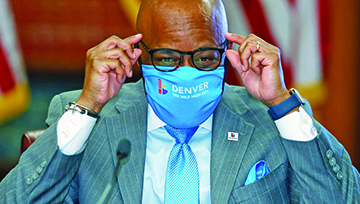 Now is the winter of Denver Mayor Michael Hancock’s discontent. A pitiable individual who has been deserted by all but the developer vultures and others that feed off his political carcass for fun and profit. Even his wife of 28 years, Mary Louise Lee, has deserted the philandering mayor and is seeking a divorce. His Honor’s biggest problem is that his final day isn’t officially until July 23, 2023.
He has told friends that he plans to move to Florida once his term is over. Who could blame him? In places with traditional corruption like Mexico, you pay a politician off upfront and then get the actions from the politician you need. In this country it’s just the opposite. The politician does not get paid off until after he leaves office in the form of consulting contracts, board positions, and other sinecures. That form of payoff is deemed perfectly acceptable in America. Still, it’s better off to retire to Florida before getting your just rewards. That way it will be done far from the probing eyes of the Denver media.
Still, every day left in political office, Hancock must take one more humiliating bite of the proverbial sh*t sandwich. After waiting weeks for Governor Polis to reinstitute statewide COVID-19 mask mandates, and after surrounding counties did so, Hancock finally acted. Then Polis announced that the pandemic is over and there is no need for mask mandates. Polis then goes on a triumphant national media blitz on his “courageous” announcement while Hancock once again looks clueless.
Governor Polis seems to take delight in embarrassing this Denver mayor. When Major League Baseball decided to move the All-Star Game from Atlanta because the Commissioner didn’t like new Georgia voting laws, the Colorado Governor’s Office announced that: “The Governor will be burning up the phones the next few days to see if there is an opening to bring the All-Star game to Denver.” Other notable Colorado politicians like Denver Congresswoman Diana DeGette and Secretary of State Jena Griswold encouraged MLB to come to Denver. Notably absent was the mayor of Denver. Why would anyone care what the useless politically inert mayor thought?
Polis isn’t the only one who likes to humiliate Hancock. Hancock has put all his political might and a lot of the Denver taxpayer’s money behind the effort by Westside Development to get rid of the conservation easement on the Park Hill Golf Course area, and destroy the open space with a development. Denver’s first African American mayor Wellington Webb decided to take on Westside Development and behind the scenes Hancock.
The white developers who support Hancock love to play the race card. They successfully turned Hancock’s opponent in the last election, Jamie Giellis, into a caricature of a white supremist. For the November Initiative 301 and 302 which initially determined the Park Hill Golf Course area fate, they tried to make believe, as stated by Wellington Webb, that “Park Hill is inhabited by racist bullies.” But Webb was a more formidable force than Giellis and this time Hancock’s race baiting failed overwhelmingly at the polls.
Hancock’s own City Council also likes to kick him around these days. For Hancock’s first two terms the extraordinary powers of the mayor in the city charter kept the Councilmembers at bay, but not for the third term. The Council put three proposals on the November 2020 ballot, opposed by Hancock, that expanded the Council’s powers and limited those of the mayor. The first allowed the Council to hire their own professionals, including legal council, without the approval of the executive branch. The second, which was even opposed by former Mayor Webb, mandated Council approval for 14 mayoral appointments. The third one gave the Council the power to initiate appropriation of new and excess revenue. The voters gleefully approved all three and for the first time in over 100 years the strong mayor form of Denver government was not so strong.
Having lost the voters, his City Council, and his wife, Hancock appears to do little more than spend his days working out at the Denver Athletic Club getting his “beach body” ready. Perhaps the City Council should pass a provision whereby he could move to Florida and work virtually as mayor of Denver from the beach. It would cheer him up and it is doubtful anyone in Denver would notice.
— Editorial Board
by Regan Bervar | Nov 19, 2021 | Editorials
“There’s always an easy solution to every problem — neat, plausible and wrong.”
 by Luke Schmaltz
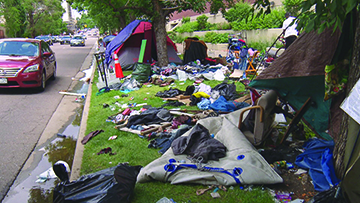
Although camping in public areas has been “illegal” in the city of Denver since 2012, the homeless presence is expanding, tent cities are widespread, and the encampments are perpetuating crime, illegal drug use, and wholesale danger to everyone in the immediate vicinity.
A 2019 attempt to overturn the urban camping ban was unanimously voted down by 83%. Yet, while the sporadic sweep of encampments continues, often it is not until a deadly situation has arisen such as with the Morey Middle School encampment last year, and the encampment at 11th and Ogden on Capitol Hill, which was recently dismantled after a gun battle within the camp finally inspired action by the Denver Police Department.
In a June 30 public statement outside a women’s homeless shelter at 4600 East 48th Avenue, Denver Mayor Michael Hancock stated, “An episode of homelessness should be no more than a brief, one-time circumstance, and we must do everything in our power to stabilize our most vulnerable neighbors,” he said. “House keys have more power to change lives than a tent.” During this speech, the mayor also announced a new housing and homeless strategy — a five-prong plan which includes purchasing motels and hotels and turning them into supportive housing, extending housing voucher programs, adding more sanctioned camping sites, increasing the availability of housing, and adding more eviction protection and rental assistance.
Multiple Culprits
Homeless In Neighborhoods: It is widely known that anyone can camp out on the streets of Denver without legal consequences.
The City of Denver is allocating more funds than ever before to deal with the homeless crisis; the solutions, however, seem to be missing the mark. Although there is some truth to the observation that homelessness is caused by an inability to afford a place to live, it is far likelier that the situation is the result of a more complex combination of circumstances.
If housing was the sole issue, then the myriad sanctioned shelters offering beds, showers and meals would be — at the very least — having somewhat of an impact on the growing problem. Yet, contrary to the expected result, the solution at hand seems to be having a reverse effect. Perhaps it is not working because it is not accurately addressing the problem. The current policy is akin to a Band-Aid on an ax wound, a cup of water on a forest fire, a moldy biscuit into the hand of a starving person in a country with no shortage of food.
You Don’t Say
Once it is accepted that the causes of homelessness run deeper than a simple lack of places to live, the discussion can continue. Among the many possibilities are four standouts which deserve consideration: Drug addiction, the lack of healthcare for the mentally ill, an experimental (and failing) approach to law enforcement policy, and a populace that is vastly divided on the imminent threat and what it means to self-police.
Just Take Two
The prescription drug boom of the early-to-mid 2010s created millions of addicts as doctors, using the tried and true “misdiagnose and overprescribe” approach, made handsome amounts of money in kickbacks from pharmaceutical companies. Finally, under intense pressure from the DEA and the public at large, the FDA began imposing tighter regulations in 2014. In the case of the near 50 million patients who were prescribed opioids in 2013 alone, this created a growing tide of addicted users of painkillers such as Demerol, Vicodin, and Oxycontin.
A June 2021 report published by drug abuse.gov cites extensive studies which link heroin use to prescription pills and their increasing unavailability. The report explains, “… almost half of all opioid deaths in the U.S. now involve a prescription opioid … Research now suggests that misuse of these medications may actually open the door to heroin use. Some also report switching to heroin because it is cheaper and easier to obtain than prescription opioids.” Someone addicted to opioids who turns to street drugs may not have both feet in the gutter, but they have definitely begun to step off thanks to the medical/pharmaceutical industrial complex.
It’s All In Your Head

Refuse To Be A Victim: Most people living near an illegal encampment do not understand the level of potential danger they are in.
The saying “homelessness causes addiction and addiction causes homelessness” gets thrown around a lot in discussions like this, and the term “mental illness” can be substituted for “addiction” with great accuracy. It has long been acknowledged that mental instability is an underlying contributor.
In fact, a report published in July 2009, by the National Coalition for the Homeless states, “Serious mental illnesses disrupt people’s ability to carry out essential aspects of daily life, such as self-care and household management. Mental illnesses may also prevent people from forming and maintaining stable relationships or cause people to misinterpret others’ guidance and react irrationally. This often results in pushing away caregivers, family, and friends who may be the force keeping that person from becoming homeless. As a result of these factors and the stresses of living with a mental disorder, people with mental illnesses are much more likely to become homeless than the general population (Library Index, 2009). A study of people with serious mental illnesses seen by California’s public mental health system found that 15% were homeless at least once in a one-year period (Folsom et al., 2005). Patients with schizophrenia or bipolar disorder are particularly vulnerable.” Yet, nowhere in Mayor Hancock’s five-prong plan to address homelessness is there mention of mental health services.
Police Paralysis
 Intense public pressure and widespread scrutiny after the 2020 Downtown protests have forced Denver police officers and those in surrounding districts to adopt a hands-off approach to fighting crime. Police departments are having to operate in a fire department-type capacity where they respond only if a citizen calls rather than use proactive tactics such as patrol, stop, search, etc., to reduce crime. This policy has placed normally actionable crimes such as drug dealing, drug using, assault, theft, and public evacuation of one’s bodily wastes on “low priority” — sending a signal to campers that there is a new era of lawlessness afoot, it’s a free-for-all drug party and there are no consequences for committing many types of crimes.
What’s more, a new group of policy influencers are at work known as The Denver Task Force to Reimagine Policing and Public Safety. This group is comprised of activists and youth ministry leaders as well as individuals from civil rights, faith-based, policy advocacy, and youth services organizations. They have put together a 53-page report of a total of 112 recommendations on how the police at large can better serve the communities in which they work. Strangely, not one of the 140+ members is a police officer or has any experience whatsoever in the business of fighting crime.
Their recommendations were recently submitted to Denver City Council, who will review and determine the next course of action. Movements such as this reinforce the message to the criminal element that more bureaucratic red tape is on the horizon, police will have to continue to “look the other way,” and the consequence-free camping, drugging, stealing, and raping party can continue indefinitely.
It Takes A Village

Opioid Addiction: A prescription for painkillers can lead to opioid addiction, to illegal drugs, and then to living on the street.
It is unfair and inaccurate to label someone as a criminal because they are homeless. As stated above, they could be suffering from addiction, mental illness, or economic hardship which resulted in them not having a place to live. Yet, it is downright ignorant and just plain stupid to think that homeless encampments do not contain a criminal element. As anyone who has had a camp pop up on their block can attest — theft, harassment, assault, muggings, and the widespread presence of hypodermic needles all increase in the area exponentially.
Yet, citizens are divided on taking a unified stance that these phenomena are bad for the neighborhood, and some go so far as to verbally attack their housed neighbors who are not in favor of the denigration of the community. What’s more, without an overt police presence, citizens must protect themselves from predators and the sad fact is that most people do not know how to fight, or even the basics of self-defense. The lack of a unified community mindset and the clear signs that most people cannot defend themselves send yet another signal to people living in illegal camps that it is ok to do as they please because nobody on the block is willing or able to do anything about it.
So, as you drive past the camps in your city, in your neighborhood and on your block and wonder why it is happening, you may want to look past the obvious conclusion of economic hardship and take a further glimpse into causal factors. Instead of blaming the homeless, blame the doctors and pharmaceutical companies, blame inherent human craziness, blame the bureaucrats, and yeah — blame yourself.

by Regan Bervar | Oct 22, 2021 | Editorials
by Luke Schmaltz
Seven Officers who hold this badge may soon be left empty handed.
An embattled Denver Police Department is learning firsthand what it means to operate under a mayor who insists on politicizing a private medical issue.
On August 2, 2021, Denver Mayor Michael Hancock issued an edict declaring that all city employees as well as some key private sector workers had until September 30 to get vaccinated for Covid-19. This, of course, includes police officers — seven of whom have refused to comply with the vaccination order. The group is currently taking legal action against the mayor’s office while facing disciplinary measures as well as termination of their employment.
Thinning Out A Skeleton Crew
Court documents show an injunction filed against the city by officers Dewayne Rodgers, Les Tucker, David Curtis, Bart Stark, Jonathan Christian, Nick Elliot, and Rich Ziegler. The suit was an 11th-hour attempt to dispute the vaccine mandate which, if not complied with, will result in 10-day unpaid suspensions followed by dismissal if not followed by the end of that time. At a time when theft, vandalism, assault, break-ins, drug trafficking, and trespassing have reached a fever pitch in the downtown area — it seems rather counterintuitive to sanction the wholesale termination of police officers who are making a choice which they consider to be a private medical matter.
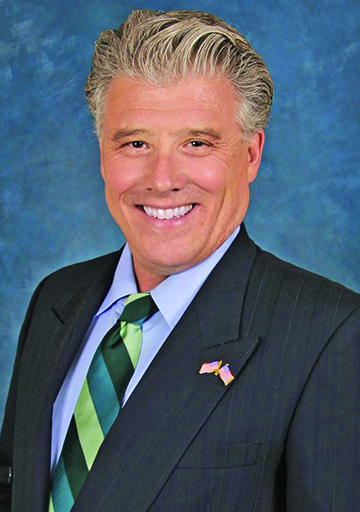
Attorney Randy Corporon, PC represents the seven Denver cops disputing the vaccine mandate.
Attorney Randy Corporon, PC, represents this group of police officers. He moved to block the mandate before District Court Judge Shelley Gilman on Wednesday, September 29. Judge Gilman dismissed the case, however, stating that the court had no authority over the issue because the officers did not exhaust all of their administrative remedies before taking the matter to court. Specifically, this would have been to first petition to the Denver Department of Public Health to overturn the mandate.
Red Tape Blues
In the meantime, Corporon has filed an administrative complaint with the Denver Department of Public Health (DDPH), and he is currently awaiting notice of a hearing being set. “The only thing they told us,” he begins, “is that they will set a hearing and they will let us know 10 days before that hearing.” Corporon feels that DDPH is deliberately hindering the appeal in order to goad the defiant officers into compliance. “The mystery of their process is whether they will expedite this or drag their feet,” Corporon explains. “The thing about these government entities and these big companies is that the longer they drag it out, the more people will just cave and get the shot.” Corporon explains why he took the matter to court before all administrative remedies were exhausted. “We believed that we had legal exceptions based on the exigency and the urgency, [as well as] the futility of going through that petition process first, but the judge disagreed.”
The immediate, blaring, disconcerting issue is the loss of qualified, able-bodied police officers at a time when the circumstances call for all hands on deck. When asked if he thinks the mandate will spur a mass-migration of police officers from the DPD, Corporon explains, “As much as I hate the practical result of it, I hope so. I don’t see any [other] way to stop this incredible, omnipotent, growing government power grab unless people don’t bite the bullet, accept the consequences and move on,” he says. “Some of these police officers are great cops with tons of experience and I’m sure they would be welcomed in other places like Texas or Florida or in cities that don’t try and force an untested treatment into people’s bodies.”
No Pain No Gain

Many contend that the COVID vaccines are experimental drugs which can cause adverse reactions.
Corporon further explains why resistance from the people in the trenches is the best way to counteract government overreach. “The short-term pain will be worth the long-term gain if more and more people stand up,” he says. He then goes on to explain the collective concerns among his colleagues and clientele about the vaccines, “I worry about the long-term effects. If somebody has the vaccine and new strains of the virus come on, is their body going to react improperly? We have heard about risks to reproductive systems, and for people who are giving this to their kids … God almighty,” he attests. “I have cases in my office now where divorced parents and even parents who are still together are fighting legally whether to vaccinate their kids as young as 10 years old.”
Corporon goes on to express his outrage about the wholesale public adoption of these untested treatments. “I am baffled by the media propaganda, the fear and the blind trust in unelected bureaucrats and so-called scientists who change their own positions constantly,” he says “I just had a news crew over here interviewing me about the Eric Coomer defamation case. Of course, they show up masked and they wouldn’t come inside my building because they found out I was unvaccinated. I’m not sick, plus, they have masks on, and we are maintaining a distance of six feet apart. OK — we can stay out here in the rain, it’s fine with me.”
While the charge to overturn the mandate seems daunting, Corporon maintains that a positive outcome for his Denver police officer clients is not out of the realm of possibility. “The best outcome would be an agreement that the orders were issued in error and that they would be rescinded. Of course, you can’t un-vaccinate people but, at the very least, you could restore cops who’ve lost their jobs and you could restore their pay.”
The counterproductivity of the issue is typical of Denver politics where counterintuitive policies and backward thinking are the order of the day. It would seem that in an effort to “protect” citizens from harm by mandating vaccination for police officers, the populace is being left even more exposed to danger by firing the cops who want to be there to serve and protect.
by Regan Bervar | Sep 27, 2021 | Editorials
If anything is good for pounding humility into you permanently, it’s the restaurant business. — Anthony Bourdain
by Luke Schmaltz
By the end of 2019, the Mile High City’s hospitality industry was humming at a fever pitch. The slave-wage, cutthroat, desperation-driven, mercenary mindset which has driven this profession for decades was charging forth at full steam. This pulsating, sweat-drenched beast, however, was unaware that it was about to splat face down onto the floor like a piping hot pizza that was dropped by an underpaid line cook who showed up to work sick.
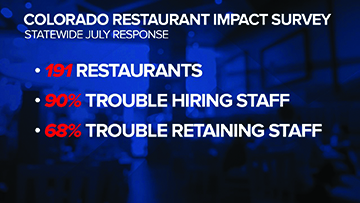
Research by the Colorado Restaurant Association shows restaurant worker employment numbers are below pre-pandemic levels. Colorado Restaurant Association image
By late March of 2020, the industry was being systematically gutted by circumstance. In the span of several very long months, many once-coveted, hard-to-land FOH (front of the house) and BOH (back of the house) positions had become vacant and were up for grabs. The “Great Reopening” had revealed a vacuum in the workforce. Much of the previous labor pool, while locked down and on unemployment, have seemingly discovered other options — perhaps pursuits offering better compensation, lower stress and even (gasp) employee benefits.
Surf’s Down
 In May of this year, at the onset of patio season, the Colorado Restaurant Association reported that nine out of 10 restaurants were having trouble hiring. Meanwhile, the Bureau of Labor Statistics recently reported that between February of 2020 and June of 2021, a restaurant labor pool of 234,500 had recovered to a mere 223,600 — nearly 11,000 workers lower than the previous tally. This begs the question, “Where did they all go?”
In some instances, highly valued, seasoned professionals with years of FOH and/or BOH experience have pivoted and moved onto other pursuits. For example, 14-year Denver industry worker Nolan Ackerman (Southside, Goosetown Tavern) says, “I used the pandemic to finish my bachelor’s and get an internship. I’m out, for now.”
Meanwhile across town, Denver industry veterans and wife/husband team Casey Keller and Roy Benoit have pivoted inward, courageously becoming restaurant owners in late summer of 2020 (Wendell’s, 3838 Tennyson St.) Thus far, attracting qualified help has been somewhat of a challenge, “Overall volume and quality of applicants has been… discouraging,” Benoit explains. When asked about where the talent pool of qualified workers has gone, Benoit has a revealing perspective. “I feel that a lot of previously full-time industry folks often have skills or education that makes them marketable in other fields… and the last year has given many of those people the opportunity and/or impetus to pursue those things,” he begins. “There are certainly some people still collecting unemployment; we’ve physically seen this in people scheduling or coming to interviews for the admitted sole purpose of required work searches. I will say, I feel more of those lingering on unemployment may not be industry ‘professionals,’ if you will, but rather newer or shorter-term industry workers.”
Rather than spend time waiting for external circumstances to improve, however, Keller and Benoit have curated their own strategy for cultivating and maintaining a solid crew. “We believe in paying our people well to begin with and ascribe to quality over quantity when it comes to staffing,” Benoit says. “We currently have a very talented and dedicated staff and have done our best to compensate them accordingly. Now, it is possible we’re shorting ourselves some applicants by not openly advertising above industry norm pay, but even with the current pool, we’d prefer to be choosy and give ourselves the opportunity to pay quality staff what they’re worth and continue to do so.”
On the front lines across Denver, newer industry recruits are having to shoulder heroic workloads as people are coming out in droves to rekindle the beloved American pastime of “going out.” Crews of veritable “newbies” are facing hordes of guests in the FOH and torrents of orders in the BOH that would give the most hardened of veterans the heebie jeebies. In some instances, in order to avoid staff burnout, some establishments are having to cut their hours of operation or to simply remain closed on certain days.
Not Always The Case

Bull & Bush Restaurant/Brewery has largely avoided staffing woes. Image courtesy of David Peterson
Other establishments such as the beloved Bull & Bush on Cherry Creek Dr. have managed to circumvent the labor shortage. Bar-tender Dave Hummel explains the company policy of starting FOH personnel as hosts/hostesses and requiring them to work their way into the higher paying positions of waiting tables and tending bar. This may explain their FOH employee retention rate — even amid the current climate. “The only [labor] shortage we are really having is in the BOH,” he says. Restaurant co-owner David Peterson (with brother Erik) confirms this, saying, “There were a bunch of people chomping at the bit to get back to work. There were a few who opted to stay away and collect unemployment. But, for the most part, we managed to keep most of our staff.” Peterson goes on to explain with a rare tone of optimism, “We have been so busy, unbelievably so, we are breaking record sales.”
This new climate, however, has given rise to a novel phenomenon previously unheard of by most restaurateurs — even a lifelong professional like David Peterson. Recently, an employee of his kitchen staff lobbied for a raise by saying that he could simply go to another restaurant in Cherry Creek and get paid $20 an hour to do far less work because the place would be half as busy. Peterson was unfazed, however, explaining, “Yeah, I get where the guy was coming from. But what he doesn’t realize is that if the place is slow, they might give you the same amount of money, but they are going to cut your hours.”

Bar Car retains a core staff through superior treatment of employees in a preferred establishment in which to work. Jeremy Matzke image
Just across Colorado Boulevard to the North, another long-cherished mainstay establishment has a similar story. Bar Car is a one-of-a-kind blink-and-you’ll-miss-it type of place. Owner Jeremy Matzke believes their company policies helped them deflect the post-shutdown woes. “Speaking strictly from a small, well established locally owned bar, our reputation has held strong, [as] we are a desired place to work,” He begins. “We firmly believe in treating our employees as humans with opinions and feelings and make extra efforts to treat our employees with grace and [as] part of our family … we feel this philosophy is much stronger than most incentives.”
A Nationwide Phenomenon
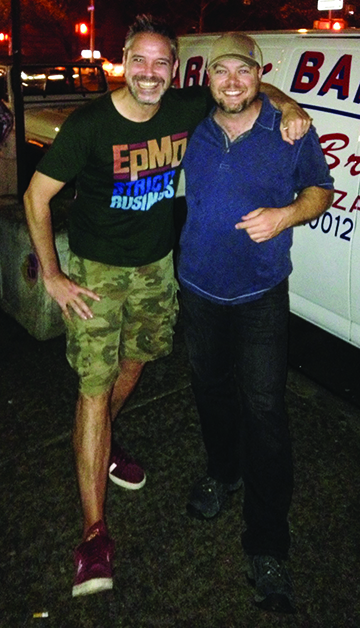
Former Denver bartender-turned NYC drink slinger Donald Murphy, left, believes the service industry labor shortage is a nationwide problem. Donald Murphy photo
Shifting focus to the nation as a whole, it is becoming clear this is not just a Denver phenomenon — but something possibly taking place from coast to coast. Former Denver bartender Donald Murphy aka “Murph” (Splinters from the Pine, Pasquini’s Uptown) now works as senior drink-slinger and art curator at Upper East Side Manhattan’s esteemed Merrion Square. “This is a nationwide problem,” he attests. “All of the career people who had time off during Covid decided to collect their UI benefits as though they were finally recouping the would-be tips from every time they got stiffed,” he begins. “A lot of people realized, with all that time off, they never really wanted these jobs in the first place. In order to thrive in this industry, you have to truly enjoy serving people, helping guests have a good time, and talking shit with strangers.” Murph goes on to explain that amid the political/presidential madhouse that began in 2016, working in the FOH is not nearly as fun because of a combative, general populace that is divided by social ideals like never before. Many people, when out in public, are either intentionally rude or overly sensitive. This might explain the unattractiveness of the service industry to many entry-level people. “Social division has made working in restaurants and bars not nearly as enjoyable,” he says.
Lopsided Demographics
Back in Denver, the labor shortage seems to be prevalent in some areas and nonexistent in others. For example, many businesses in the LoDo district, the Highlands and the RiNo district are short staffed while outliers in more suburban areas are not. This might also be explained by the average restaurant worker wage compared to the costs of living in these areas. After all, who wants to commute into a congested area, search for parking (if you even have a car), wait on people who live in the neighborhood and make more money than you (entitled a**holes), and then commute back home to your meager dwelling every day?
To combat this, restaurant owners, at least some, are adopting new business models with a variety of adaptations. Some feature higher hourly wages while others offer profit sharing for untipped workers and others are doing the unheard of by offering benefits to part-time, tipped employees. Yesterday’s service industry professionals who have moved on may catch wind of this and be taken aback in utter disbelief. Whether it brings them back into the fold, however, seems rather unlikely — but only time will tell.
by Regan Bervar | Aug 27, 2021 | Editorials
“Courage is grace under pressure.” Ernest Hemmingway
by Luke Schmaltz
Not since the heyday of Gonzo Journalism has a Colorado writer immersed themselves in a story to such a degree, they become temporarily synonymous with the subject of their investigation.
This level of dedication explains why author Julian Rubinstein is laying low. Because for now — he is responsible for introducing oblivious residents of the Mile High City and the world at large to “Invisible Denver.”
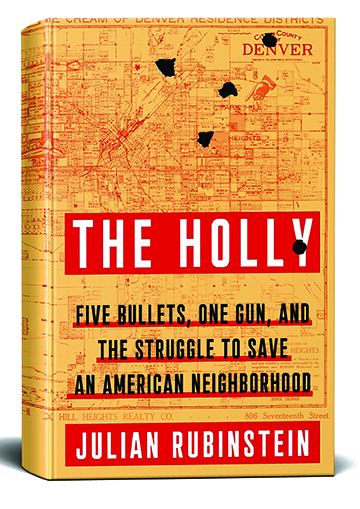
Book: The Holly, an epic saga about “Invisible Denver,” is available at julianrubinstein.com.
Rubinstein recently published a book titled The Holly — a factual, multi-generational account of people, events, and places in and around a specific sector of Northeast Denver. This residential and commercial district is home to a variety of small businesses, community centers, a library, post office, the Center for African American Health, and more, Holly Square is also the site of countless gang-related incidents and deadly encounters over the last 30+ years.
A Work In Progress
The area is well known for conflict between Denver gangs and the DPD. Yet, Holly Square also bears the fruits of the efforts of former gangster-turned activist Terrance Roberts and various philanthropists and community outreach groups. On the surface, there is evidence of an influx of big money bolstering new development such as the Nancy P. Anschutz Center/Boys & Girls Club which opened in 2013. This has a seemingly synergistic effect on long-established neighborhood institutions, namely the shops and businesses in the Park Hill Center. On a deeper level, however, linger the ghosts of a community long-affected by civic dysfunction and gang warfare.
The Promised Land
Beginning in the 1950s, Rubinstein reports, this area was the Plymouth Rock of a migrating African American populace fleeing the Jim Crow South in search of a better life. Among them was Terrence Roberts’ grandmother, Ernestine Boyd, who was soon followed by most of her immediate family — whom she managed to move to Denver one by one from an Arkansas cotton plantation. “Most people don’t associate Denver with having much of an African American population or culture,” Rubinstein begins. “But of course, there is a very strong one that begins very early,” he explains. The Holly is the de facto epicenter of what Rubinstein’s book reveals as “Invisible Denver” a subculture extending across multiple neighborhoods that most folks beyond the zip codes therein are unaware of.
The Story That Hit Home
The germ for The Holly was planted in 2013, when a national news piece caught Rubinstein’s attention (a Denver native) while he was living in New York City. It involved former Bloods gang member-turned anti-gang activist Terrance Roberts, who was involved in a shooting incident in Holly Square that nearly claimed the life of then-active Bloods gang member Hasan Jones.
Over the next seven years, Rubinstein would immerse himself in the subculture of The Holly. “I didn’t know what I was going to find, and I didn’t expect to find what I did,” he explains. “It ended up feeling like a responsibility that I didn’t always want.” The book is an opus driven by equal amounts journalistic curiosity, humanist compassion, and nerves of pure steel. He documents in great detail how he was able to gradually befriend Roberts, Roberts’ father George (a funeral preacher), and an extended network of characters who don’t normally associate with Caucasian journalists.
Dysfunction Junction
Perhaps the most disturbing set of circumstances Rubinstein uncovers are those demonstrating the monumental failure of Denver law enforcement to address and reverse the ongoing crisis of gang violence. His reporting reveals that active gang members were recruited by city-appointed officials and placed on payroll to perform “outreach” to the community’s at-risk youth. “For much of the time I felt like I was doing government oversight work,” Rubinstein explains. Rubinstein refers to this as the “urban war industrial complex,” and he demonstrates that as certain government-sponsored “anti-gang” programs were implemented, the violence only increased.
Internal Perspectives, Conflicting Opinions
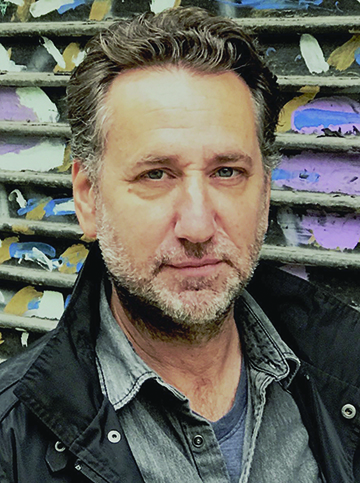
Author: Julian Rubinstein is a Denver native who was compelled to return home and uncover the truth about “Invisible Denver.”
Rubinstein’s story presents a comprehensive, multi-generational account of local African American history, gang culture, activism, anti-activism, and urban development. Folks who want to get to know “Invisible Denver” can start by reading The Holly.
Like many journalists, Rubinstein is not without detractors. One such figure is Jeff S. Fard — founder of Brother Jeff’s Cultural Center, and a well-known figure in the Northeast Denver community. He is a lecturer, multimedia journalist, and community organizer. He is also a regular guest on a local radio show hosted by longtime Denver on-air personality Peter Boyles.
Brother Jeff’s outspoken criticism of Rubinstein on Boyles’ 710 AM KNUS radio show has brought more than a few questions to the fore. When asked about his ire toward Rubinstein’s reporting in The Holly, he replied with a litany of misreported facts such as incorrect ages, school attendance statuses, and gang affiliations, and more. Brother Jeff attests, “ If these basic facts are not correct, how much can larger facts be trusted?”
Infractions, Minor And Otherwise
Rubinstein has taken note of these oversights, and vows to correct them in future editions. “Well, thankfully these are minor infractions,” he explains.

Brother Jeff: While Brother Jeff credits Rubinstein with making some good points, he has far more critical bones to pick with The Holly.
Brother Jeff has bigger fish to fry. “Initially, I thought The Holly was a product of journalism and reporting,” he states. “It only took me a few pages … to realize the book is more of Terrance Roberts’ story as told to Julian Rubinstein. I have many questions for Julian. For example, does Roberts receive any royalty payments from the book? Was he paid? If so, that departs from any journalistic effort I am familiar with. I have been around Roberts long enough to hear his voice and tone in much of The Holly.
Brother Jeff continues his invective, “Flames burned down The Holly, and now, the opening of unresolved issues and wounds are tearing the community apart again. In fact, after 400 pages most walk about asking, what is that book all about?”
One of Rubinstein’s main revelations in The Holly is evidence of police corruption. Specifically, in the claims that active gang members are recruited by DPD and other official agencies to, ironically, work in the capacity of anti-gang outreach for at-risk youth. Rubinstein cites numerous sources and instances to support this claim, yet Brother Jeff has a different story to tell concerning this issue.
An Ongoing Debate

Focus: Terrance Roberts, seen here rallying for the community, is the primary focus of The Holly.
When asked about police corruption, as reported in The Holly, Brother Jeff states, “Initially, community and city collaborations regarding youth were done through a program known as Safe City. Mayor Webb placed this within the Manager of Safety office. That office is more than the police. It is Sheriff, fire, and even the Independent Monitor. Later GRID and Safe City kinda merged and Safe City became Safety Programs. This work is also under the Manager of Safety. I don’t know too much about police recruiting anyone from community based programs,” he explains. “They may have recruited confidential informants etc…, but no one I know would know anything about that.”
Meanwhile, Rubinstein denies having a partnership with Roberts, and is quick to defend his revelations about misappropriation of government funds for anti-gang, community outreach. “Because Brother Jeff didn’t hear of any DOJ funding doesn’t mean it wasn’t there,” he explains.
As with most polarized issues, the complaints are many and the grudges run deep — indicating the disputes arising from The Holly will smolder on. Which, alas, may help make Invisible Denver not so invisible.

by Mark Smiley | Jul 23, 2021 | Editorials
Multi-Sensory Art Experience In The Hangar Until Sept. 26
by Mark Smiley
Van Gogh Alive: Playing at The Hangar at Aurora’s Stanley Marketplace through September 26. Buy tickets at denvercenter.org.
The Denver Center for the Performing Arts, Stephen Lindsay & Brett Sirota and Andrew Kay Management in partnership with Grande Experiences present Van Gogh Alive, a large-scale, multi-sensory experience that is promoted as entertaining for the entire family. Van Gogh’s works have been displayed and enjoyed around the world for over a century. For a limited time only — through September 26 in The Hangar at Aurora’s Stanley Marketplace — audiences have an opportunity to experience Van Gogh’s artistry and venture into his world.
With a career that ran a little over a decade, he produced an astonishing amount of work: 1,000 drawings, 150 watercolors, 9 lithographs, an etching, and over 900 paintings. Van Gogh is today one of the most popular of the Post-Impressionist painters, although he was not widely appreciated during his lifetime. He is now famed for the great vitality of his works which are characterized by expressive and emotive use of brilliant color and energetic application of impastoed paint. The traumas of his life, documented in his letters, have tended to dominate and distort modern perceptions of his art. This experience walks you through the different paintings and the mood and year in which they were painted. Pay particular attention to the quotes from Van Gogh that appear throughout the exhibit during the show.
 Created by Grande Experiences, Van Gogh Alive, a large-scale, COVID-Safe, multi-sensory digital art experience, gives visitors the unique opportunity to immerse themselves into Van Gogh’s artistry. Traditions of tiptoeing through silent galleries and viewing paintings from afar in quiet contemplation are forgotten as visitors find themselves interacting with art in ways they never imagined. From start to finish, visitors are surrounded by a vibrant symphony of light, color, sound and fragrance that has been called an “unforgettable” multi-sensory experience. Van Gogh’s masterpieces come to life, giving visitors the sensation of walking right into his paintings, a feeling that is simultaneously enchanting, entertaining and educational. Adults and children delight in the super-scale show, viewing artworks from new angles and discovering unique perspectives. But don’t just take their word for it: experience it for yourself!
Van Gogh Alive is a multi-sensory art experience that involves high-level cinema-quality sound, large scale moving images, theater level lighting and at times loud abrupt sounds. Individual visit times vary, but most visitors anticipate spending approximately 60 minutes in the experience. The main feature of the exhibition lasts around 45 minutes.
 The Denver Center for the Performing Arts, denvercenter.org, is the only authorized ticket provider for this production. There is no minimum age requirement and all attendees need a ticket. The experience is open Sunday, Tuesday, Wednesday, and Thursday from 10 a.m. to 8 p.m. and Friday and Saturday from 10 a.m. to 9 p.m. Follow this experience on social media: #VanGogh Alive and @DenverCenter.