
by Jessica Hughes | Feb 18, 2026 | Glendale City News
Book Review —
by Jessica Hughes
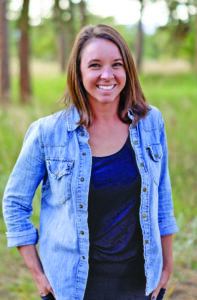
Katie Vieira is an educator, wife, mother of three, and now a published author. Into the Field is Vieira’s first book.
Monitoring children’s screen time has become one of the most pressing challenges facing parents today, often compared to regulating sugar intake or substance exposure. Where the 1990s urged families to “D.A.R.E.” kids to avoid drugs, today’s battle is often centered on limiting time spent in front of screens. Which is why, Katie Vieira, an educator, wife, and mother of three wants to help children and their parents combat screen addiction by turning to the outdoors with her debut book, Into the Field.
Vieira began noticing the impact of that struggle firsthand when her two daughters showed increasing dependence on digital devices. “I started to notice my kids were constantly asking for it. That’s all they wanted to do,” says Vieira. “No matter how many times I would give the warning to turn off screens, they threw tantrums and became completely distraught.”
She recalls frequent power struggles, especially with her oldest daughter, over getting outside — an early warning sign that prompted concern. “They showed symptoms of digital addiction like difficulty disengaging from technology, mood swings, declining interest in offline activities, compulsive asking for the technology.”
Digital Addiction, as defined by the National Institutes of Health, is identified as functionally equivalent to all addictions, characterized by the compulsive, habitual, and uncontrolled use of digital devices and an excessively repeated engagement in a particular online behavior.
Wanting to help combat her kid’s digital addiction, Vieira focused on creating structures around screen time while intentionally prioritizing outdoor time. They avoid using iPads for education, treat screen time as shared family time, and use technology as a tool for connection rather than distraction. She acknowledges that balance is difficult to maintain. “It’s hard. It’s a slippery slope because it’s easy to say, ‘just put a show on’ but we can’t necessarily get away from it.”
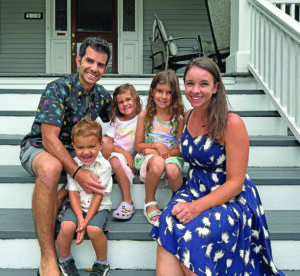
Katie Vieira and her family.
The idea for the book emerged during one of the busiest seasons of Vieira’s life. She was pregnant with her third child while moving across the country before settling in Colorado. During that transition, as her daughters adjusted to a new home and homeschooling, Vieira noticed signs of digital addiction becoming more pronounced. Determined to help them form connections and spend more time outside, she discovered the 1,000 Hours Outside Challenge, which encourages families to match screen time with outdoor time. The challenge responds to data showing children spend roughly 1,000 hours per year on screens — about 2.5 hours per day.
Into the Field is a nature-based adventure story designed to help kids and their parents combat screen addiction through outdoor play. It follows two young sisters — modeled after Vieira’s daughters — who embark on an outdoor adventure to save a friend from screen addiction. Vieira describes the story as portraying an extreme version of the problem. “They are having to save their friend from the video game.” Colorful illustrations by Vieira’s cousin bring the adventure to life, with scenes set amid the landscapes of Tennessee.
The writing process became a family affair. “My girls not only inspired the story, but they actually played a role in writing it,” says Vieira. “I would jot down chapters based off hikes we had just done, after the kids went to bed, and the next morning I would read them the chapter I wrote. They would give some insight on what the kids should wear and sometimes say in certain situations.”

Into the Field is an adventure story designed to help kids and their parents combat screen addiction through outdoor play.
As former classroom teacher with a master’s degree in education, Vieira homeschools her children and emphasizes that technology itself is not the enemy. “I am aware that it is 2026 and still have to use the technology,” she says. “It’s about learning to keep it in their lives in a balanced way.”
She describes the book as magical, adventurous, and family-focused, with a central goal of inspiring outdoor play and creativity. “We have to allow for boredom and force them to be creative without their screens,” she says. “Going outside, allows them to tap into those creative outlets. Allowing them to be imaginative without the stimulus of screens.”
Into the Field is Vieira’s first book, and she has already begun work on the second installment — called Colorado Campground. She plans for the project to become a series, with each book set in a different state. Inspired by her educational background, Vieira also sees Into the Field as a classroom-friendly resource for teachers and parents alike. “My goal is to try and showcase the different biomes across the country, from beaches to mountains,” says Vieira. “I want to weave in social studies and science without the kids really knowing or realizing.”
Through storytelling, geography, and outdoor exploration, Vieira hopes the book series will quietly blend multiple curricula — reading comprehension, science, social studies, and social-emotional learning — while encouraging families to step away from screens and back into the natural world.
Alongside the book, she is also releasing compilation guides and accompanying activities that relate back to each chapter via her Instagram page. You can follow her at @intothefieldbook.
She will also be at the Barnes & Noble in Glendale for a book signing on March 22, from 1-3 p.m. You can also reach out to her directly at intothefield@gmail.com.
by Valley Gadfly | Jan 16, 2026 | Glendale City News
From Botanic Garden’s Orchid Showcase To Sista Soul At Dazzle, There’s Loving Possibilities
by Glen Richardson
 Thanks to love songs, poetry, music, movies, and art, the language of love seems to be constantly expanding, and what better time to brush up on the myriad ways to express your love and affection than this year’s holiday?
Glendale-Cherry Creek, and metro Denver offer a romantic, picture-perfect place to celebrate your love relationships. There’s a variety of romantic events and date activities all month long. Choose from music and performing arts, plus places to dine with your partner, kids, family, or loved ones to show them how much you care.
For romantic things to do with your loved one this month, the Denver Botanic Gardens offers great choices. Make a date to view exotic orchid blooms during the Denver Botanic Garden’s Orchid Showcase Feb. 10-17, 9 a.m-5 p.m.
Captivating Colors

Musical Glamour: Pink Martini and the Colorado Symphony entertain at Boettcher Concert Hall Feb. 13-14.
Pops of purple, bursts of buttery yellow, flashes of fuchsia — orchids are bright, charismatic, and just a little strange. These botanical wonders are as diverse as they are dazzling, and their vibrant blooms are the perfect antidote to the winter blues.
Dive into the captivating world of orchids on view in the Botanic Garden’s Marnie’s Pavilion and the Orangery. You’ll view hundreds of spectacular blooms from all over the world, including specimens from the Gardens’ collection. The Orchid Showcase is a visual feast of shapes, color, and texture, not to be missed in the dead of winter.
Connect with your kids during the Garden’s Make & Take Valentine event, Feb. 10-14. You’ll learn the shapes, textures, and colors of dried flowers, leaves, and seeds, plus how to use them to decorate a Valentine’s Day ornament. Information: 720-865-3500.
Pink Martini
Spend time with your Valentine enjoying Pink Martini and the Colorado Symphony at Boettcher Concert Hall Feb. 13-14, 7:30 p.m. Brimming with “fizzy spirit and breezy sophistication,” Pink Martini is a glamorous and global phenomenon.
The exhilarating evening will feature a mix of Brazilian samba, Parisian café music, cabaret, and vintage jazz. The show will feature Storm Large as lead singer.
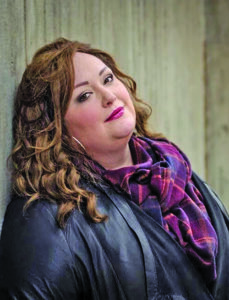
Romantic Recital: Grammy winning soprano Heidi Melton sings “Love Stories,” at the Newman Center Feb. 13.
Now in their 31st year of performing, Pink Martini was founded by bandleader-pianist Thomas M. Lauderdale in 1994 to provide beautiful and inclusive performances at fundraisers and galas. The musical style was inspired by Latin, big band, classical, and the Golden Age of Hollywood. With the Colorado Symphony and Christopher Dragon on the podium, this promises to be a Valentine’s Day weekend to remember. Information: 720-865-4220.
Sista Soul At Dazzle
Titled “Reflections of Love,” Sista Soul and her band plays a blend of R&B and soul with modern hip-hop, as Dazzle celebrates Valentine’s Day Feb. 13, 6:30 to 10:30 p.m.
Backed by her band, she delivers a captivating mix of R&B grooves, heart-stirring ballads, and timeless classics that invite you to sing along and reminisce. The evening features tracks from her Grammy album Soul Reflections, plus fan favorites from Celebration, and iconic R&B songs, along with a few surprises.
With a voice that is both powerful and tender, Sista Soul transforms each performance into a deeply moving experience filled with love, healing, and joy. This Valentine’s weekend, head for Dazzle in the DCPA complex on 14th Street to feel the music, share the moment, and leave with your heart full and your spirit lifted. Information: 203-839-5100.
Soprano Melton
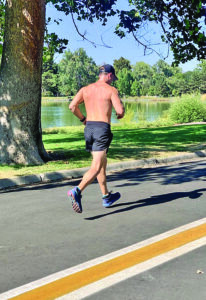
Love Jogging: If running is your love language, participate in the Valentine’s Day 4 Mile at Wash Park Feb. 8.
On the eve of Valentine’s Day, join Grammy winning soprano Heidi Melton and pianist Sahar Nouri for “Love Stories,” a recital of passion, longing, and devotion. Performing in the Hamilton Recital Hall at the Newman Center, the program features Wagner’s radiant “Wesendonck Lieder” alongside other works that explore the many shades of love Feb. 13, 7:30-9:30 p.m. Information: 303-871-7720.
With a voice that is “big, gleaming, and tonally resplendent,” Melton has sung at the Metropolitan Opera, the San Francisco Opera, the Deutsche Opera Berlin, plus many more. She has also performed with the Vienna Philharmonic, the Scottish Symphony, and many others.
Iranian pianist Sahar Nouri, has been Music Director of Lamont Opera Theater at the University of Denver since 2019. She has also served at Opera Colorado as chorus master-assistant conductor since 2016.
Dakota Blonde Concert
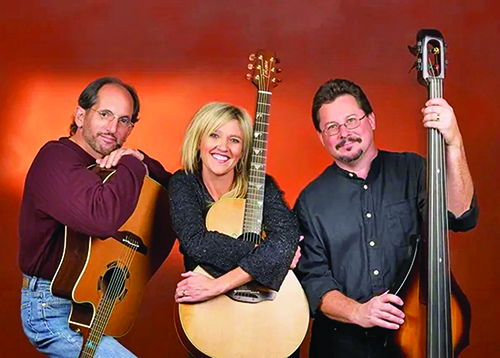
Sweet Sounds: Dakota Blonde — dubbed the “Front Range darlings,” — do their Valentine Concert at Swallow Hill Feb. 14.
Dakota Blonde — dubbed the “Front Range darlings,” — do their annual Valentine Concert at Swallow Hill’s Daniels Hall Feb. 14, 8 p.m. Made up of Mary Huckins, Don Pinnella, and Tony Raddell, they have received honors for their songwriting, CD projects, and performances across the country and internationally. Information: 303-777-1003.
Also known as “the sweetest acoustic sound around,” the group met through their careers in Music Therapy, working with children and adolescents. All three come from musical families, and their charm stems both from the music they play and from the family feeling they bring into any concert hall or venue. Their shows are very personal and sincere.
They will be joined for the concert by “The Valentine Band,” made up of some of Colorado’s finest musicians. The group includes Ernie Martinez, Gordon Burt, and Kristi Bartleson. Recently honored as the International Western Music Association’s Instrumentalist of the Year, Martinez plays mandolin, banjo, and dobro. Gordon Burt is on fiddle and viola. He has played, toured, and recorded with many Colorado artists. Harpist Kristi Bartleson has performed with the Eastman Symphony in Carnegie Hall and for the Heidelberg Opera Festival in Germany. She has also played with the Colorado Symphony Orchestra and with the Colorado Ballet.
Other Options
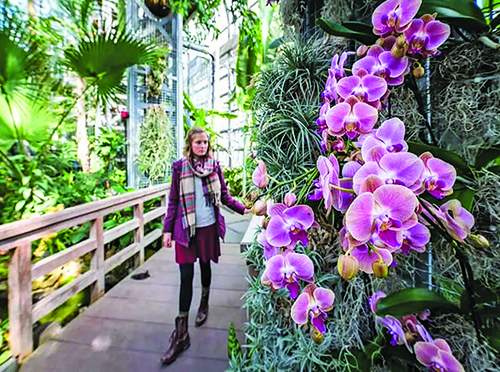
Love Blossoms: Make a date to view exotic orchid blooms during the Denver Botanic Garden’s Orchid Showcase Feb. 10-17.
There’s also a Valentine’s Day Concert playing the best of Mozart and Beethoven at Trinity United Methodist Church February 6, 6:30 p.m. In addition, Wings Over the Rockies features string quartet the Range Ensemble on Feb. 15, 6:15 and 8:30 p.m.
Guitarist and vocalist Lorian Bartle celebrates Valentine’s Day playing popular traditional and classical favorites at the Lone Tree Arts Center Feb. 19, 1:30 p.m. Information: 720-509-1000.
If running is your love language, you won’t want to miss the Valentine’s Day 4 Mile at Wash Park Feb. 8, 9 a.m. to 11 a.m. Event includes a Cupid’s Kids Fun Run. A costume contest begins at 10 a.m. followed by awards.
by Valley Gadfly | Nov 17, 2025 | Glendale City News
District Is Bustling With Fun, Excitement; Santa’s In The Loop For Saturday Night Lights
by Glen Richardon
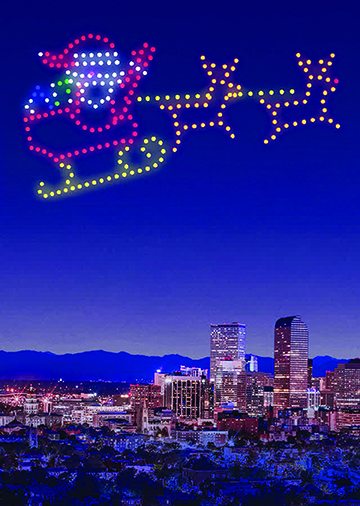
Santa Sightings: Santa and local landmarks are among the sights you’ll see as drones soar across the sky all month long, 7 p.m.
There’s no place like Glendale-Cherry Creek North, and the Mile High City during the holidays. Cherry Creek’s over-the-top festivities are bright and jolly enough to convert even the biggest grinch.
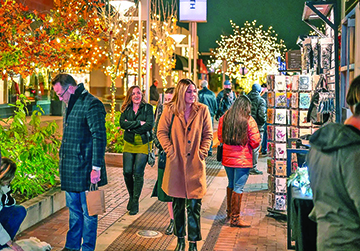
With a cup of hot chocolate or mulled wine in hand, take in the decorative window displays, dazzling lights, holiday markets, and family-friendly activities happening in Cherry Creek and throughout the Mile High City.
Whether you’re indulging in festive Cherry Creek dining, cozying up with a cocktail at the Mistletoe Lounge on Fillmore Plaza, or simply taking in the view, the district is a must-see holiday destination. A million dazzling lights are wrapped around more than 600 trees, illuminating the entire neighborhood.
Holiday Market
Creek Magic: Take the family to Cherry Creek North to see the decorative window displays, dazzling lights, and holiday market.
As December blankets Cherry Creek in a frosty glow, the district comes alive with the spirit of the holidays. Christmas, Hanukkah, and New Year’s celebrations that are nothing short of magical. Experience the joy of the season with Winter Wanderland, a collection of free outdoor events for all to enjoy.
The Cherry Creek Holiday Market is open on Fillmore Plaza through Dec. 24. Spend the day shopping under dazzling lights, listening to live music, and getting into the seasonal spirit.
You’ll discover one-of-a-kind pieces from 50+ local makers, designers, and creators. There’s also “Giving Machines” through Jan. 4 that don’t dispense snacks or drinks, but instead, opportunities to donate to those in need. It’s also where the Mistletoe Lounge — a Christmas bar with festive drinks — is located.
Festivities also include “Saturday Night Lights,” Dec. 6, 13, and 20. On those dates you can enjoy complimentary treats, and the kids can meet Santa and Mrs. Claus. There’s also a Chanukah Celebration on Sunday, Dec. 14 hosted by Chabad of Cherry Creek. Families and guests of all ages will enjoy a fun “festival of lights” with face painting, fire juggling, festive treats, and crafts.
Blossom Of Lights
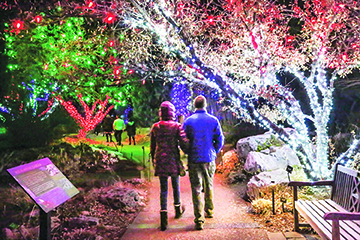
Bright Nights: Blossoms of Light at the Denver Botanic Gardens through Jan. 11 is one of the nation’s top light shows.
While in the Cherry Creek area, don’t miss the Blossoms of Light at the Denver Botanic Gardens, Nov. 21-Jan. 11. It’s consistently lauded as one of the top holiday light shows in the nation. Wander a mile-long path through immersive, luminous displays that accentuate and highlight the plant collections. A cherished holiday tradition for nearly four decades, Blossoms of Light is constantly evolving to inspire wonder and delight for visitors.
Zoo Lights, the Denver Zoo’s 30th annual “wildest winter wonderland” is Nov. 23-Jan. 5. A holiday treat for the kids and grown-ups alike, the zoo has some 3,500 animals, including almost 650 species. During the festival, the zoo is decorated as a winter wonderland where you can stroll illuminated paths enjoying holiday entertainment, music corners, warming stations, plus food and drinks.
Stroll over to the City & County Building in Civic Center Park to watch the lights display running all season long! The light and music show repeats nightly from at 5:45 pm and 6:45 pm, except for December 6 and December 21. Added dazzle: Look up in the sky now through Dec. 31 for this year’s Mile High Drown Show “Grand Illumination.” The display of 400 drones will soar across the sky every night from the Tivoli Quad at 7 p.m. You’ll see everything from Santa and his reindeer, to iconic Denver landmarks like the Mile High Tree and Union Station.
Dashing Thru LoDo
Just steps apart, Dairy Block, McGregor Square, and Union Station are brimming with festive activities, dazzling lights, and family fun. Celebrate the magic of the season with Holiday on the Block, an extensive line-up of festive events on the Dairy Block including a local makers market, entertainment, live music, plus winter art installations.
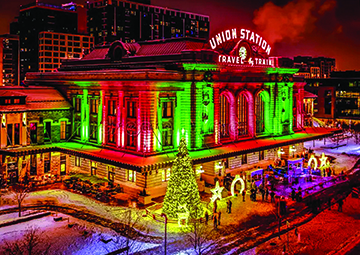
Festive Sights: With a 40-ft.-tall Christmas tree out front, Denver’s Union Station is a popular holiday destination.
Over at Union Station, the Grand Illumination is a can’t-miss spectacular, lighting up the historic landmark. The sparkling displays are perfect for capturing holiday memories, and the ongoing lights make every night feel like a celebration.
McGregor Square is also a winter wonderland this season, offering ice skating under the twinkling lights, festive cocktails to warm your spirits, and special visits with Santa himself. It’s an ideal spot to soak up the holiday magic with friends and family.
Hanukkah
The Jewish holiday “Festival of Lights” known as Hanukkah — also spelled Chanukah — is December 14 to 22 this year.
The Jewish Community Center’s annual “Latkes & Lights” is Dec. 7, 10 a.m. to 1 p.m. The event will feature themed games, jamming to live music, and tasting latkes from Denver restaurants, plus those made by community members. There will also be voting by attendees on handmade menorahs.
Chanukah @ The Capitol is also on Dec. 7, 5 p.m. to 11:50 p.m. The event features a 10-foot Menorah, a Dreidel Drop, plus free barbecue. Temple Emanuel hosts Hanukkah Hoopla Dec. 27, 5 p.m. to 8 p.m. There’s a community menorah lighting followed by service, a dinner, and a concert. Finally, Chabad of Cherry Creek is hosting a second Chanukah Celebration Dec. 29, 3:30 p.m. to 5:30 p.m. There will be Chanukah activities at participating neighborhood stores, a Grand Menorah lighting, plus Fire Show.
New Year’s Eve
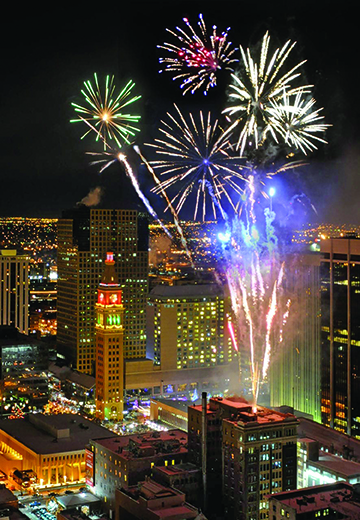
Mall Fireworks: See fireworks on the 16th St. Mall New Year’s Eve, 9 p.m. and again at midnight.
The two-night electronic dance music festival Decadence is at the Convention Center Dec. 30 and 31. Zeds Dead, Subtronics, and Tape B will perform together for the first time ever Dec. 30.
Noon Year’s Eve returns to the Children’s Museum featuring the glitz and glam of New York City’s Times Square before bedtime! There’s a ball drop at the top of every hour from 10 a.m. to 3 p.m., plus music, and treats. Dazzle’s New Year’s Eve extravaganza “Nostal-Jazz” rings in the New Year at the Performing Arts Complex downtown 10 p.m.
The New Year’s Eve bash “Fire & Ice” is at the Fire Restaurant’s outdoor rooftop patio in the Art Hotel, Dec. 31, 8 p.m. A Night in Vienna returns to Boettcher Concert Hall New Year’s Eve playing rousing polkas, waltzes, and marches, 7 p.m. See the New Year’s Eve Fireworks on the 16th St. Mall Dec. 31 at 9 p.m. and again at midnight.

by Jessica Hughes | Oct 20, 2025 | Glendale City News
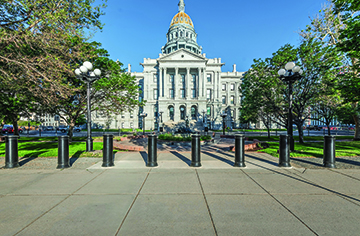
Photo taken by Jessica Hughes with Mountain Light Photography Denver City Council approved the Vibrant Denver bond package and will appear on the November ballot.
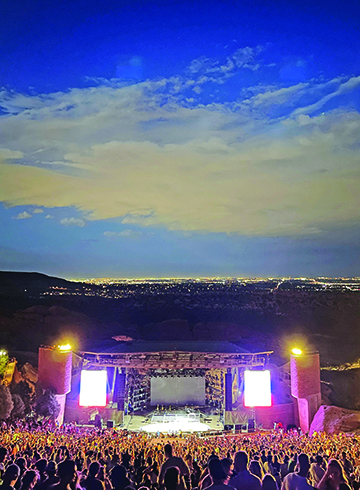
The Vibrant Denver Bond addresses infrastructure needs to some of the city’s most iconic places such as Red Rocks Amphitheatre. Photo taken by Jessica Hughes with Mountain Light Photography
by Jessica Hughes
In November, Denver voters will be able to vote on the $950 million “Vibrant Denver” bond package that was recently approved unanimously by the Denver City Council.
Mayor Mike Johnston’s ambitious bond is the largest bond ever put forward in the city’s history and proposes “to repair and improve Denver’s infrastructure and community space — including roads, bridges, parks, playgrounds, recreation centers, and libraries.”
This comes on the heels of several recent moves to improve Denver’s downtown, including the 16th Street Mall Project, which celebrated its completion this summer, as well as rejected city improvements, such as Governor Polis’s $29 million pedestrian bridge project. At the same time, Trump threatens to decrease federal funding for some programs, the city also faces massive budget cuts worth $250 million, which recently included firing nearly 170 employees and eliminating hundreds of vacant positions. But when you add all of this up, can the city really afford nearly $1 billion in debt?
Johnston says the bond would be fully funded from property tax income, without adding any new taxes. “The Vibrant Denver bond package allows us to come together to decide our priorities for our neighborhoods and families,” said Mayor Johnston. “This bond will help us build the Denver of the future, without raising taxes, while also ensuring the protection and preservation of critical infrastructure already in place. It will also allow us to control our own destiny by creating a local funding source for needed local projects.”
According to the City of Denver, they “set general obligation (GO) bond programs intentionally every 4-10 years so that as previous bonds are paid down, new bonds can be issued without new taxes — allowing the city to keep pace with infrastructure improvements.”
Th
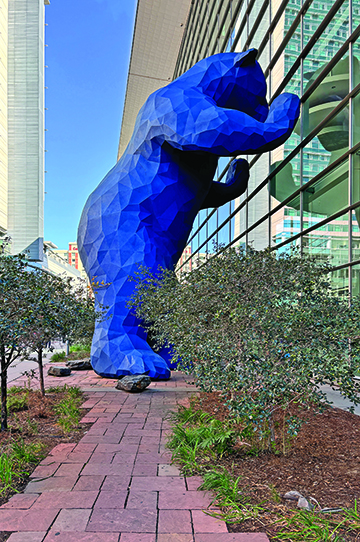
The Vibrant Denver Bond is the largest bond ever proposed in the city’s history. Photo taken by Jessica Hughes with Mountain Light Photography
e mayor’s office said each of the approximately 60 projects can be completed over the next six years within the city’s existing bond capacity, since previous bond programs are almost complete. According to the city’s 2024 comprehensive financial report, the city has about $1 billion in existing debt from previous bond packages voters approved, including the Elevate Denver, a 10-year, $937 million general obligation bond program approved by voters in 2017, and RISE Denver, a five-year, $260 million general obligation bond program approved by voters in 2021.
“In North Denver over the past several years, we’ve seen improvements to recreation centers, parks, fire stations, libraries, playgrounds, and less noticeable but equally important infrastructure like irrigation, street repairs, and bridges. Almost all the infrastructure we rely on daily is built or maintained through our bond programs — critical investments that do not raise taxes but create lasting, tangible benefits for our communities,” said City Council President Amanda P. Sandoval. “General Obligation Bonds allow us to build and maintain the spaces that define our city, ensuring Denver’s legacy of strong, community-driven infrastructure continues for generations to come. The 2017 GO Bond included funding for pedestrian safety improvements along Federal Boulevard, an issue I advocated for, to make one of our city’s busiest corridors safer for everyone. I look forward to working with residents to shape our next bond program and invest in the future of our neighborhoods.”
But before Denverites vote no to avoid adding more debt, it’s important to note the city can only use property tax revenue to fund GO bonds and pay off bond debt. If Vibrant Denver isn’t approved, the city will have a surplus of property tax revenue in the coming years, since it’s on schedule to pay off its current debt, and bonds cannot be used to pay for any operational costs like staffing or services, only for the construction of public infrastructure and facilities. Ultimately, the city would be left with a surplus of money that they couldn’t use for any other cause. So, while it may seem like bad timing, the City of Denver is keeping up the pace of regularly scheduled bond issuance and maintenance.
Each of the bond projects is categorized into five separate sections, which voters will be able to approve or reject. Nearly half of the funding will be allocated toward transportation and mobility, including streets, bridges, and traffic safety improvements. Here is a snapshot of the five categories voters will get to vote on, with the top few most expensive projects within each category.
Transportation and Mobility —
the largest category by far at $441 million
- 8th Avenue Viaduct & Multimodal Improvements | $89,200,000 — The most expensive item on the ballot at almost $90 million is the repairs to the 8th Avenue bridge near Burnham Yard. Despite the City of Denver’s claims that repairs are long overdue, it seems coincidental with the recent rumors of the new home of the Denver Broncos stadium.
- Globeville Elyria-Swansea Connections: Marion Underpass | $75,000,000 — this plan completes the final connection linking Globeville to Elyria and Swansea. It also provides Globeville direct access to the RTD N Line station and several other structural improvements.
- 6th Avenue Viaduct Repairs & Mobility & Access Improvements | $50,000,000 — This project addresses one of the busiest roads in Denver, 6th Avenue, by completing the critical structural repairs, additional access points and a complete re-design for the future replacement of the bridge.
City Facilities
- First Responder & Public Safety Training Center | $75,000,000 — This project would combine the sheriff, fire, and police training needs into one facility to provide greater efficiencies in training recruits, expand the number of trained public safety personnel, and bring training resources up to competitive standards.
- Red Rocks Backstage Expansion and Accessibility Improvements | $35,100,000 — The backstage renovation and expansion would address ADA accessibility (which has been a hindrance to growth for Red Rocks in recent years), additional parking, as well as facility improvements backstage.
Parks and Recreation
- Park Hill Park Buildout | $70,000,000 — After the city announced, earlier this year, its plans to acquire the former Park Hill Golf Course, it comes as no surprise that there is a proposal to build out the park’s new facilities. The plans include steps to ready the park with proper irrigation, landscape, walkways, and parking lots.
- Southeast Recreation Center & Skate Park | $20,000,000 — Money for this project would support acquisition ONLY for the SE Skate Park Hub, which would provide access to skateboarding, roller-skating, etc., to the existing DPR Sports Complex. Development of the recreation center would require additional funding.
Housing and Sheltering
- Affordable Housing Project Development | $45,000,000 — Money for this project allows the city to invest in land, buildings, and/or site preparation to provide affordable housing and to mitigate displacement.
Health and Human Services
- Denver Health Sam Sandos Westside Family Health Center Replacement | $20,000,000 — If approved, the money would support construction of a new clinic in the Westside neighborhood that will increase access to healthcare for the people of Denver. This comes as the Big Beautiful Bill is set to slash healthcare funding in Colorado. The bond is only expected to provide funding for a portion of the entire project.
For more about what’s included in the Vibrant Denver bond, visit Denvergov.org
by Amber Wyatt | Sep 22, 2025 | Glendale City News
by Amber Wyatt
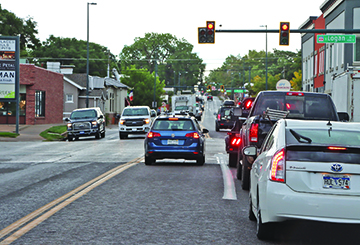
Intersection at Alameda and Franklin westbound where two lanes expand into four lanes.
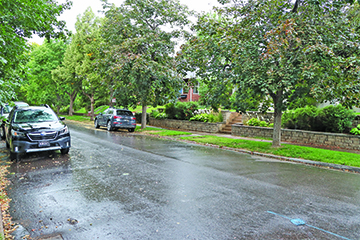
Neighborhoods west of Alameda between Corona and Downing.
Residents of the Washington Park area are voicing strong opposition to a city plan that would reduce traffic lanes on Alameda Avenue. The proposal, spearheaded by Denver’s Department of Transportation and Infrastructure (DOTI), aims to reconfigure the busy corridor between Downing Street and Franklin Street. But neighbors argue the changes will worsen congestion, harm local businesses, and push traffic deeper into residential streets.
At the heart of the plan is a major reconfiguration of Alameda’s lanes. Currently, the road has two lanes in each direction. DOTI intends to cut that down to a single lane each way, adding dedicated left-turn lanes in certain stretches and installing medians with bollards to restrict some left turns altogether.
“They’re going to take out two traffic lanes,” explained Jill, a member of the grassroots coalition Act for Alameda. “So it will be one lane, east and west. And then with the space they gain in some places, they’re going to put left turn lanes.”
The city’s rationale is safety. By slowing traffic and streamlining turn lanes, DOTI believes the project will reduce accidents. But residents say the plan ignores how much traffic Alameda carries — especially as a vital east-west connector to and from I-25.
“This is a super heavy section,” Jill said. “When they’re taking traffic lanes out, it is going to be a lot busier. So you’re going to have a lot more cars squeezed into one lane. We’re basically worried that congestion will get significantly worse.”
The Act for Alameda group formed in May after learning of the project, which was initially scheduled to begin in June but has since been delayed to September. The group’s website includes a letter for residents to sign, directed to the mayor, outlining their concerns.
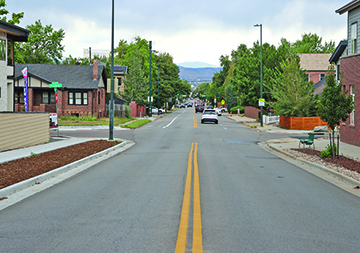
Preexisting turn lanes on Alameda between Logan and Franklin.
One major worry is neighborhood traffic diversion. If Alameda becomes choked with cars, drivers may opt for narrower residential streets. “We’re very worried about the number of cars that’ll be diverting through the neighborhoods,” Jill said. “Maybe Alameda itself gets slightly safer, but you’re shifting the safety problem into these narrow streets where you’ve got a lot of dogs and kids.”
Safety for emergency responders is another concern. “There’s a fire station right on the northeast corner of Wash Park,” Jill noted. “We’re worried that if Alameda just becomes gridlock during peak times, it also makes those emergency response times a lot slower.”
The group isn’t opposed to all aspects of the plan. In fact, they welcome certain safety improvements. “We are all for better school zone markings. They want to lower the speed limit — we’re fine with that. They want to put in a flashing crosswalk. All of those things directly point to making pedestrians safer,” Jill said. “It’s really the removal of the lanes, reducing road capacity, that just does not compute for us.”
Adding to frustrations, residents point out that the stretch of Alameda west of Broadway is already under heavy construction, with lane reductions and bike lanes being installed. Business owners in both areas worry that prolonged projects will drive customers away.
Jill suggested that if DOTI wants to spend its bond dollars, it should focus further west, where accident rates are higher. “This section of Alameda is considered part of the high injury network, but it is in the lower tier,” she said. “The higher risk, less safe areas are further west. We would love to see them do stuff there.”
Complicating matters is Denver’s rapid growth. A massive residential project is already underway on the site of the old Bed Bath & Beyond at Cherry Creek Mall, with plans for roughly a thousand apartments. “It’s not like there are signs there’s going to be fewer people needing Alameda,” Jill said. “It’s going to be more drivers in five years, not less.”
For long-time residents like Jill, who has lived in Wash Park for nearly 20 years, the plan feels like déjà vu. She recalled that the city tried a similar lane reduction about 15 years ago, only to quickly reverse course. “They have tried to make changes in this area before,” she said, “but it’s essentially been the way it is now.”
With construction looming, Act for Alameda continues to push for dialogue. “We have not heard directly from DOTI,” Jill said. “The only indication we have that they’re hearing us is that they’ve already delayed the project once.”
For Wash Park neighbors, the fight is far from over. As Jill put it, “We just think that it’s too significant of a constriction of the road to actually make things safer. They’re going to spend all this money, make all these changes, and just create new safety issues.”
by Laura Lieff | Aug 22, 2025 | Glendale City News
By Laura Lieff
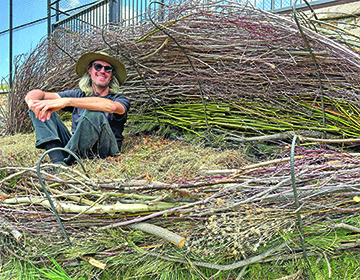
In the gardening world, just because something is decaying does not mean it’s unusable. Constructed in less than a week by Kevin Philip Williams, Manager of Horticulture at Denver Botanic Gardens (DBG), the dead hedge installation can be found in the Pollinator Garden at Betty Ford Alpine Gardens.
Comprised of various layered, locally- sourced materials — including branches, plant debris, and small logs that are in different stages of decay, as well as willows from Vail, alpaca wool from McCoy, and trees cut in the Gardens — the installation was executed with a great deal of intention. “With the help of some friends and volunteers from both Eagle County and Denver, Kevin’s piece was constructed very quickly,” says Gardens Education Director Gabe Starr. “We appreciate Denver Botanic Gardens ‘lending’ us Kevin for the week!”
Since mountain landscapes differ from city landscapes, the materials differ as well. At the Gardens, Williams incorporated brush piles, dead hedges, and log walls into the exhibit space in ways he says are “ascetically accepted by the public.” He goes on to explain that “there are many practitioners who are elevating garden design horticulture to a level of fine art” and that his work is “new, experimental, and different than traditional horticulture.”
Visitors will notice that the installation resembles an animal habitat — except it is a much more upscale, artistic version. By mixing the log walls into the woven structure — which is comprised of rolled and bound branches, as well as the aforementioned materials — his installation connects with this summer’s theme of Habitat in conjunction with the installation of our exhibit from the Smithsonian Gardens and Smithsonian Institution Traveling Exhibition Service.
In addition to the Habitat theme, Williams explains that many aspects of the project were inspired by the long, narrow space provided. “I try to bring new elements to each install and this space allowed us to play with length and dimensionality,” he adds. In fact, he describes it as a “calcified exoskeleton type of structure that features crevices filled with grasses, branches, and leaves held by the harder outer structure.”
Williams has an MS in Public Horticulture and is a naturalistic garden designer who uses active and passive materials to create dynamic and climate-appropriate gardens. His work includes the Denver Art Museum Sensory Garden, the Alien Dream Worlds and Hello Food Forest at Meow Wolf, and the Abstract Expressions installation at the Clifford Still Museum. He also co-wrote a book called Shrouded In Light: Naturalistic Planting Inspired by Wild Shrublands.
Williams adds, “These installations take an incredible amount of material to create and the Gardens staff did a good job saving materials from around town which allowed us to give discarded branches and forgotten debris a second life as art. In nature, nothing is ever truly waste — it’s simply matter waiting for its next beautiful purpose.” For more information, visit bettyfordalpinegardens.org.