
by Valley Gadfly | Oct 20, 2025 | Main Articles
November, December Create Sales Buzz; Holiday Decorations Add Appeal For Buyers
by Glen Richardson
Is a new house for the holidays on your wish list?
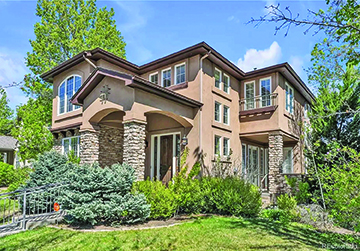
Lowry Living: Stylish community of green spaces offers a blend of urban convenience and suburban tranquility.
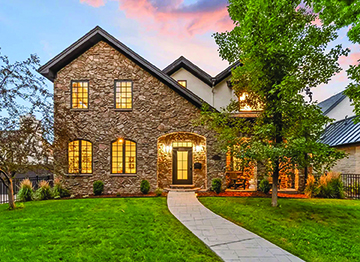
Belcaro Beauty: Belcaro is known for its curvy, leafy streets dotted with classic bungalows and stately mansions.
Winter Wonderland: Homes on the market this time of year attract serious buyers and often result in quicker sales.

Cherry Creek Charm: Beyond central district condos, the surrounding area has homes in a variety of sizes and styles.
This time every year, homeowners who want to sell their home have a decision to make, sell now, or wait until after the holidays. Sellers often take homes off the market until the new year. Nonetheless, many buyers want to purchase a home for the holidays. Buyers are motivated to close deals quickly, whether due to job relocations, family changes, or the desire to settle into a new home before the year ends.
Fact is, the desire to own a home doesn’t stop during the holidays. Furthermore, homes decorated for the holidays appeal to many buyers. Of the 329,578 occupied housing units in Denver, 49.1% are owner-occupied, while 50.9% are lived in by tenants. Meanwhile, 8.5% of all homes on the local market sit vacant.
Quicker Sales
Anyone shopping for a new home between Thanksgiving and New Year’s is likely to be a serious buyer. Upshot: Homes on the market this time of year attract serious buyers and result in quicker sales.
Sellers are also often motivated to close deals quickly due to job relocations, family changes, or they’ve already purchased a new home.
The overall median home price in metro Denver sits at around $599,000 according to the Denver Metro Association of Realtors. Detached single-family homes are averaging between $650,00 and $666,000. Prices for condos and townhomes average between $390,000 and $400,000.
Open House Timing
Cooling from pandemic peaks, prices are down 3% to 5% from the highs of 2022. Due to inventory growth, more homes are on the market, giving buyers more options. Well-priced homes still sell quickly, but buyers have more negotiating power than in past years.
Plan holiday open houses early in the season, from late November to early December. That’s late enough in the year to take advantage of festive decorations, plus early enough not to be squashed by holiday social schedules.
Albeit prices are still high, recent softening means buyers have better opportunities. That’s particularly true in the condo and townhouse market. Negotiating for seller concessions is becoming more common. Nevertheless, homes that are priced competitively and marketed well are still moving. Overpricing can lead to longer time on the market, especially in the attached home segment.
Year-End Tax Gains
Closing on a home before the end of the year can create valuable tax benefits. New homeowners may be eligible to deduct mortgage interest, property taxes, and loan origination fees when filing taxes. These deductions can significantly reduce taxable income and may lead to a better refund or lower tax bill. By buying in December, buyers also position themselves to take advantage of any local or federal tax incentives that might be expiring at year-end, making the purchase even more financially beneficial.
Just as sellers are motivated to close before the new year, lenders often push to meet their year-end goals as well. This can work to the advantage of a buyer as some lenders may offer competitive rates, special promotions, or reduced fees in December.
Additionally, with fewer loan applications compared to the spring and summer rush, lenders often provide more personalized service and faster processing times. Pre-approval is still essential, but buyers can expect a smoother financing process during the quieter holiday time.
Variety Of Choices
Even though fewer homes may be listed in November-December, Denver’s real estate market remains active. Buyers can still find a variety of properties available, from modern condos downtown to family-friendly homes in the suburbs. The key is to work closely with a real estate agent to identify new listings and hidden gems that buyers may be looking for.
Additionally, properties that didn’t sell during the fall might still be on the market, with sellers becoming more motivated as the year comes to an end. This creates opportunities to find a home that aligns with preferences and budget.
Closing on a home during the holidays means buyers will be settled in the new home and ready to start the new year fresh. Moving during the winter may sound challenging, but with the right planning, it can be a smooth experience. Plus, moving companies are often less busy, meaning potentially better availability and lower rates. With the move complete before January, buyers will have a chance to enjoy their new home and start the year on the right foot.
District Price Trends

Belcaro Beauty: Belcaro is known for its curvy, leafy streets dotted with classic bungalows and stately mansions.
In August 2025, Cherry Creek North home prices were down 53.2% compared to last year, selling for a median price of $2.8 million. On average, homes in Cherry Creek North sell after 49 days on the market compared to 10 days a year ago. There were six homes sold in August this year, up from five last year.
In August 2025, Washington Park home prices were up 46.2% compared to last year, selling for a median price of $1.95 million. On average, homes in Washington Park are selling after 38 days on the market compared to 24 days last year. There were 45 homes sold in August this year, down from 49 last year.
In August 2025, Belcaro home prices were up 6.5% compared to last year, selling for a median price of $1.4 million. On average, homes in Belcaro sell after 26 days on the market compared to 27 days last year. There were 37 homes sold in August this year, up from 30 last year.
In August 2025, Lowry home prices were up 4.0% compared to last year, selling for a median price of $586,000. On average, homes in Lowry sell after 33 days on the market compared to 20 days last year. There were 46 homes sold in August this year, down from 60 last year.
by Mark Smiley | Oct 20, 2025 | Main Articles
Food Banks, Pantries, Soup Kitchens Need Volunteers, Donors To Help Feed Denver’s Hungry
by Glen Richardson

Turkey Trot: United Way’s Thanksgiving four-mile walk-run is Nov. 27 at Wash Park.

Kid-Friendly: Most Mile High groups needing Thanksgiving help are kid friendly.

Dessert Rescue: Denver Rescue Mission server is all smiles as she serves dessert to Denver homeless.
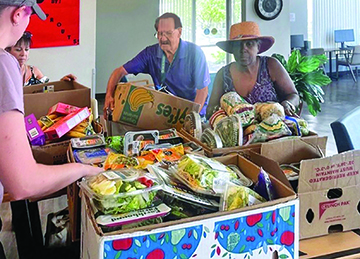
Banking On Boxes: Many food banks provide free food boxes allowing receivers to make their own meal.

Angel’s Deliver: Project Angel Heart needs 400 volunteers to help deliver on Nov. 26.
As Thanksgiving approaches this month, we eagerly anticipate the warmth of family gatherings, and the smell of a delicious Thanksgiving meal.
As you look forward to the food holiday, however, remember there are many in metro Denver worrying about where their next meal will come from. The greatest challenge on this special day for the head of many households is being able to afford food to feed their families.
Amid food price inflation, and a 10% increase in Denver metro area homelessness, food banks, food pantries, soup kitchens, and faith groups are calling on volunteers and donors to help feed the community this holiday season.
Joy Of Serving
These holiday food providers help to make Thanksgiving and the holiday season in Denver a time of joy and togetherness.
A free turkey may be provided in a Thanksgiving food box, or families may also get a gift card to use to buy a turkey from a grocery store.
Many food banks have a schedule of Thanksgiving food distribution on their website. Individuals and families can also call to ask about hours, and any requirements. Some require signing up early for a Thanksgiving basket or meal.
Lunch, Dinner Options
Some food pantries and soup kitchens also serve a free Thanksgiving lunch or dinner. They may serve this meal on Thanksgiving, the day before Thanksgiving, or the day after. Some locations may provide meals to-go rather than dine-in.
Denver Rescue Mission partners with the Denver Metro community to provide Thanksgiving meals to families in need. Boxes are distributed at Empower Field at Mile High, home of the Denver Broncos, every year on the Tuesday before Thanksgiving.
Check Websites
Many food banks have a schedule of Thanksgiving food distribution on their website. Individuals and families can also call to ask about hours, and any requirements. Some require signing up early for a Thanksgiving basket or meal.
Many food banks provide free baskets or boxes with food to allow individuals and families to make their own Thanksgiving meal. These boxes include a turkey, and sides like cranberries, gravy, and vegetables. Boxes are often available at drive-thru pantries or contact-less pickup can be scheduled.
Food Banks
Food banks act as a grocery store of sorts for community partners and are responsible for ensuring that partners have the resources they need to feed those seeking help. A food pantry is an independent community site that distributes food and other products directly to those facing hunger.
Food Bank of the Rockies, located on East 45th Ave., is Denver’s largest food bank. “There are many ways to volunteer, and every bit helps us help others,” the organization says. As volunteers, all you have to do is show up, adding that they provide the training, a safe environment, and “communal fun.” Information: 303-371-9250.
Located on Pecos St., Bienvenidos Food Bank provides emergency and supplemental food assistance for individuals and families “in a safe, welcoming place.”
Through partnerships with grocery stores and other food providers they say they are able to turn every $1 cash donation into more than $9 worth of food, including fresh meat and produce. Information: 303-433-6328.
Food Pantries
Jewish Family Services on S. Tamarac Drive operates the Weinberg Food Pantry through collaboration with Food Bank of the Rockies. They provide all the ingredients for a traditional Thanksgiving meal. Families and individuals, however, must register for the program.
They receive a large box of Thanksgiving food including a turkey, potatoes, green beans, cranberry sauce, stuffing, gravy, pumpkin pie supplies, plus milk and eggs. Donations of nonperishable food items are needed. Information: 202-597-5000.
Denver Food Rescue on York Street says volunteers are at the heart on everything they do. From redistribution of fresh food across Denver to supporting community-led grocery programs, and keeping their work organized, there are volunteer opportunities for everyone. There is a Denver Food Rescue Volunteer Form on their website. Information: 720-510-9139.
Fast Paced, Fun
Denver Inner City Parish on Mariposa St. has a weekly in-person pantry serving up to 160 people, plus five mobile pantries operating throughout metro Denver. Anyone can come to one of their pantries, no ID is required. The pantry is open for donations on Mon.-Tue., 9 a.m. to 5 p.m. and Fri. 9 a.m.-3 p.m. Information: 303-629-0636.
Metro Caring Fresh Foods Market-Food Pantry on E. 18th Ave. says volunteers work side-by-side in a fast-paced and fun environment. Their Fresh Foods Market is a free grocery store stocked with produce, meats, dairy, and pantry staples. They say they need you, your friends, or your team from work to volunteer. 303-860-7200
Boulder-based Colorado Pet Pantry allows pet owners to feed and protect their furry family members They distribute about 100,000 lbs. of food to pet owners each month. They need donations of adult dog and cat kibble, plus canned dog food. There is a donation drop off list on their website. They have a pet food bank at Bienvenidos Food Bank. Information: 303-818-0618.
by Valley Gadfly | Sep 22, 2025 | Main Articles
Furious Growth Has Bulldozer-Cranes In The District Again; But Citywide Sales Taxes Keep Dropping
by Glen Richardson

Line Of Fire: Mayor Mike Johnston reveals that he has laid off 171 city workers at a Denver press conference.
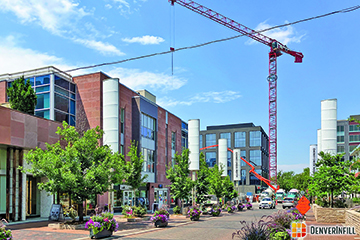
Cranes In Creek: With Cherry Creek North’s latest development boom, cranes are again being used to hoist, move, and lower heavy loads.
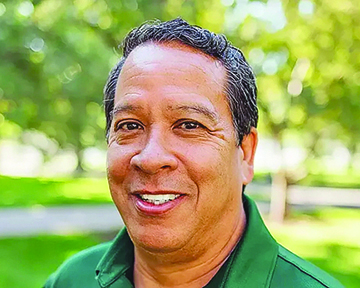
Political Ploy: Deputy Parks & Recreation Director Scott Gilmore was among city employees laid off. His wife, Councilmember Stacie Gilmore, says, “it was an act of political retaliation.”
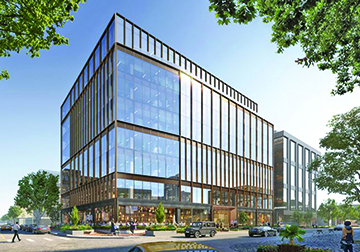
Super Single Site: This eight-story 201 Fillmore office building will have first floor retail, an outdoor terrace on the second floor, plus a rooftop patio.
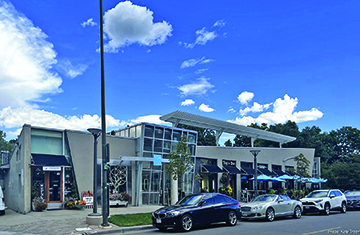
Land Banked Plot: The four-tenant strip from 3035 to 3041 E. Third Ave. where Cucina Colore is located recently sold but the buyer doesn’t have development plans.
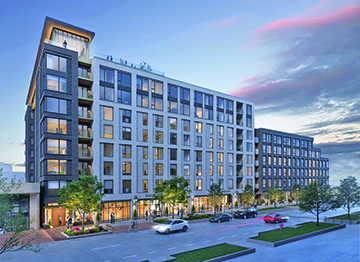
Third & Milwaukee: The eight-story Oasis Apartments project is underway at 299 Milwaukee St in the district. The building will have 25,000-sq.-ft. of ground-floor retail.
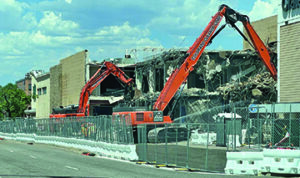 As downtown continues to struggle — $600 million less commercial construction in 2024 — Cherry Creek North’s latest construction surge is pushing the district into becoming the epicenter of metro Denver.
Cherry Creek attracts major real estate investment, with developers managing to pre-lease buildings long before the projects reach completion. Six major site projects are currently underway and another eight are in the pipeline, securing Cherry Creek’s position as one of the most sought-after commercial real estate submarkets in Colorado and the country.
Or, as the Denver Infill Blog bluntly put it: “If developers and office workers get weak at the knees when they think about Downtown Denver’s office and retail market, post-pandemic, they’re-voting with their feet in favor of Cherry Creek.”
Unfortunately for city employees the opening of the projected stores and their sales tax revenue will not come fast enough to save their jobs.
Reduced City Workers
It’s been 14 years since the last major layoffs of city employees, and it is the first time in living memory that the firings were not based on seniority to the dismay of city employee unions. Workers of all ages have been laid off, including about 20 who served more than 15 years with the city.
Perhaps the most surprising layoff was that of Scott Gilmore who spent more than a decade as the deputy executive director of Denver Parks & Recreation. He is the spouse of City Councilwoman Stacie Gilmore who accused the City Administration of acting in political retaliation against her.
One hundred and seventy one were laid off while another 665 open positions or 7.6% of the total city workforce were eliminated. Denver’s Department of Transportation & Infrastructure was hard hit with 31 people losing their jobs. The largely reviled Community Planning & Developm
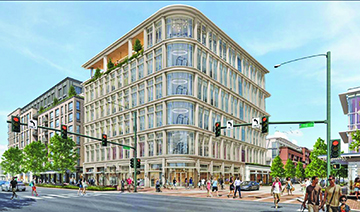
Sears Site Makeover: Rendering of building planned at the recently demolished Sears site along 1st Ave. as you enter Cherry Creek North.
ent lost 19 employees. Those two agencies’ cuts may reflect the City’s apparent decision to let private developers control much of the city’s future development.
Unless places like Cherry Creek up the continuing slide in city wide sales tax revenues, more city employee layoffs can be anticipated in the future.
Citywide Benefits
Cherry Creek’s prosperity, of course, spreads benefits to all of Denver. The area employs more than 16,500 workers and is one of the top drivers of retail activity in Denver.
With a high concentration of small and local businesses, it’s no wonder Cherry Creek is the region’s go-to shopping destination. Indeed, retail sales tax is a significant source of revenue to the City of Denver at $60.1 million in 2024. Adding up all tax revenue sources, Cherry Creek contributed more than $115 million to Denver in 2024.
Amid the latest development boom, the City & County is hosting monthly construction coordination meetings with Cherry Creek contractors. Streets affected include North University Blvd. to North Steele St. and 1st Ave. to 3rd Ave. Officials work with contractors to cross-check and coordinate specific street projects within the district. Goal is to not have streets inaccessible to motorists or pedestrians at any one time. Parking, however, is often limited and lane closures are likely.
Low Office Vacancy
While Cherry Creek is a standout submarket in many ways, one of our brightest areas of “exceptionalism” is office real estate.
With an extremely low office vacancy rate of 6.6% in 2024 — down 0.6% from 2023 — Cherry Creek is bucking the national trend of rising vacancy.
The U.S. saw its average office vacancy rise to nearly 14% in 2024. Upshot: Cherry Creek is setting an example for the nation of what “back to office” success looks like. Nowhere is the potential for a strong future for Cherry Creek clearer than new developments.
Sears Site Sway
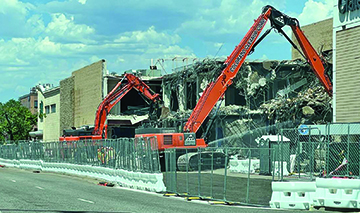
The largest Cherry Creek redevelopment location is the recently demolished Sears —the store sat empty from 2010 — and Crate & Barrel buildings. The project is adding a new eight-story building to the street wall along 1st Ave. as you enter Cherry Creek and a smaller office building to the intersection of Clayton and 1st. There will be 453 homes and a live-work-play community known as “Cherry Lane.”
The development will feature 379 apartments and 59,000-sq. ft. of office space, according to developers. The parking garage on the block is being renovated, with several floors added to the top of it. There will also be more than 132,000-sq. ft. of luxury store space on the ground floor, as well as a rooftop space open for lease.
“When Cherry Lane is completed, we will have created the anchor for Cherry Creek,” claims Matt Joblon, founding partner and CEO of BMC Investments. He asserts the site will set a new standard for high-end street retail, restaurants, elevated living, and community gathering spaces.
East Side Growing
While much of the building action has been on the west end of Cherry Creek, completion of Modera Cherry Creek — five stories with 95 apartment homes — adds a new eastern extension to the district’s development boom. In a neighborhood where residents live in townhomes and duplexes, apartments are needed. The site has studio, one-, two-, and three-bedroom units. They add a somewhat lower-priced entry point for a household to begin living within the district.
The biggest potential redevelopment site on the east-end of central Cherry Creek is the northwest corner of Third Ave. and St. Paul St. where restaurant Cucina Colore is located. The Italian restaurant has operated there since 1994 and has multiple years left on its lease.
There are a total of four tenants along the 7,000-sq.-ft. street plot from 3035 to 3041 E. Third Ave. The 0.43-acre site recently sold albeit the local buyer says they have no immediate plans to redevelop. “We’ll probably just land bank it for the time being,” they said. The site is zoned for up to four stories.
Fillmore Office Bldg.
The largest single site currently under construction is the 201Fillmore office building. Completion is scheduled for the third quarter of 2026, albeit it appears site work could finish sooner.
At eight-stories, it will total 140,000-sq.-ft. with first floor retail, an outdoor terrace on the second floor, plus a rooftop patio. There will be five levels of below grade parking for both office and retail use.
Restaurant “The Henry” — with locations in Phoenix, Miami, and Dallas — will feature a restaurant and a bar on either side of the lobby. The bar will be situated on the lobby’s north side, while the restaurant will be on the corner of 2nd Ave. and Fillmore St.
Milwaukee Oasis
Another eight-story project underway in the district is The Oasis Apartments at 299 Milwaukee St.
Located on one of the last large parcels in the neighborhood, this residential building will add 158 high-end apartments. The building will have 25,000-sq.-ft. of ground-floor retail plus 277 parking spaces.
Moreover, the project will add a 6,000-sq.-ft. public park with fountains on the corner of Third Ave. and Milwaukee. It will span nearly the entire west side of Milwaukee between Second and Third Ave. Vertical construction is expected to begin early next year, with completion projected in 2027.
by Mark Smiley | Sep 22, 2025 | Main Articles
by Mark Smiley
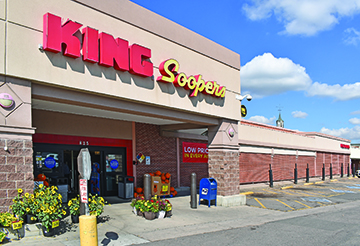
Leaving Soon: The popular Belcaro King Soopers will close in 2026. What will replace it is presently being reimagined by the Kentro Group after its original plans had fierce opposition by neighborhood groups due to height and density concerns.
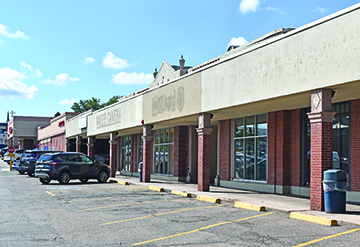
Empty Center: All of the stores in the Belcaro Center with the exception of King Soopers have been closed for months awaiting redevelopment.
Neighbors in Denver’s Belcaro community are breathing a sigh of relief after developers dropped plans for a 12-story residential tower on the site of the former King Soopers. Plans to redevelop the former King Soopers property have been scrapped after strong pushback from nearby homeowners. City planners, who had been reviewing the rezoning request, said the withdrawal halts the process for now. The future of the prominent corner lot remains uncertain.
Many blame the Denver Community and Development Department for the debacle. Critics of that Department are blaming it for constantly harassing developers to add more and more density and height to virtually all projects in contrast to the residents living in the project areas.
Earlier this year, the Kentro Group, Denver based developers, unveiled a plan for a mixed-use building that would have brought apartments, shops, and a few retail shops to the 7-acre property. Kentro admitted it was the city that pushed the proposal and not the developer. One resident proposed that it should be “defund Commu nity Planning” rather than” defunding the police” She also wondered “who exactly does Community work on behalf of? It is certainly not the residents of Denver.”
Many nearby homeowners worried the project was simply too tall and dense for the neighborhood. At packed community meetings, residents spoke out about traffic, parking, and blocked views, demanding the developer to rethink their and the city’s approach.
“This isn’t about being against growth,” said longtime resident Carol Simmons. “It’s about keeping the scale of development in line with the character of Belcaro.” Councilwoman Amanda Sawyer, who represents the district, said she was glad neighbors’ voices were heard. “This site is important, and it deserves thoughtful planning,” Sawyer said. “We need solutions that both address Denver’s housing needs and respect the character of existing neighborhoods.” She did not appear to have weighed in or supported residents until Kentro withdrew its plans.
This is the second major victory for neighborhood groups this calendar year. The first of which was the battle over the Park Hill Golf Course (February 2025 edition of the Chronicle, “Park Hill Golf Course Miracle”). It is rare for neighborhood groups to claim such victories as some people call it a David vs. Goliath atmosphere with city planners appearing to attack residents and their concerns. That is why this second victory in the span of six months is monumental.
In a statement, the developer confirmed it has pulled its rezoning request and will go back to the drawing board. Representatives said they still see the site as a strong candidate for housing and retail but want to work more closely with the community before moving forward.
Kentro Group’s full statement is as follows:
“With the proposed zoning change, we had hoped to create a friendly neighborhood gathering spot with personality generated from new residents mixed with retail, restaurants, and services, and combined with green space that all could enjoy. But we listened with care to current neighbors who didn’t prefer the additional zoning heights required to achieve this vision and decided not to pursue a zoning change. We remain committed to delivering a great project.”
King Soopers, a division of Cincinnati based Kroger Company, has operated a grocery store at the aforementioned 7-acre site, 825 South Colorado Blvd., for over 65 years. It elected to sell the property to the Kentro Group and build a new 113,000 square facility a mile south in the Virgina Vale neighborhood. The 13.5-acre site once housed the CDOT campus headquarters between Arkansas and Louisiana Avenues and was purchased by the Kentro Group in 2018 for $19.3 million.
The proposed project, which included a 12-story residential tower with ground-floor retail, was introduced earlier this year as a way to repurpose the vacant grocery store site near Colorado Boulevard and Exposition Avenue. Developers pitched the building as a mixed-use hub designed to bring housing, shopping, and new energy to the aging retail corridor.
But neighborhood residents quickly mobilized, citing concerns about traffic congestion, blocked mountain views, and the scale of a high-rise in an area dominated by single-family homes and low-rise apartments. At recent community meetings, dozens of homeowners voiced frustration over what they called a lack of transparency and compatibility with the surrounding neighborhood.
“The density and height simply didn’t fit the character of Belcaro,” said one resident during a public forum. “We’re not opposed to development, but we want something that respects the scale of our community.”
Neighbors and city leaders alike have debated what should replace the longtime grocery store once it closes (sometime in 2026). While some residents have pushed for a new market, others say the area is overdue for fresh housing and retail options — but on a more modest scale.

by Valley Gadfly | Sep 22, 2025 | Main Articles
Spooky Trunk Or Treat Returns; Halloween Parade Hikes On Broadway
by Glen Richardson

Ghostly Gardens: Denver Botanic Gardens has indoor displays such as this, plus Open Air Scare Oct. 10-12, 17-19, & 30th.
Perfect Pumpkins: Pick your perfect pumpkin during Four Mile Park’s annual Pumpkin Harvest Festival, Oct. 18-19.

Fright Friday: Fearsome holiday falls on a Friday this year. The last time Halloween fell on a Friday was in 2014.

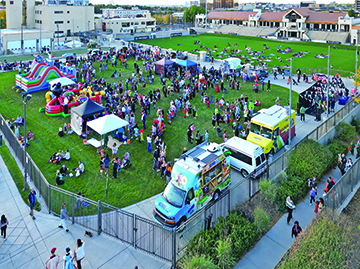
Trunk Or Treat: Plan to take the family to Glendale’s Halloween Trunk or Treat at Infinity Park Oct. 13, 4:30 p.m.
Black cats will prowl and pumpkins will shine on Halloween 2025. That’s because the frightening, fearsome holiday falls on a Friday this year. The last time Halloween fell on a Friday was in 2014.
This year’s “Fright Friday” is sure to send shivery shivers down your spine. Ghosts and goblins will ring your door chime. Beware and be scared! It’s a night when anything can happen.
You’re not going batty; the moon does hang low in the sky like a ghostly lantern. Dogs guard, and cats watch during grave’s delight night. Ghosts and demons frighten people the most in local cemeteries. Around Halloween, some locals even claim to hear footsteps and voices when visiting boneyards.
Trunk Or Treat
Get an early start to this year’s Halloween holiday happenings by taking the family to Glendale’s Halloween Trunk or Treat at Infinity Park Oct. 13, 4:30 p.m. No, it isn’t Friday the 13th, but there are games, a costume contest, plus candy for the kids. Don’t forget to bring a picnic blanket and chairs. Food trucks will be on site. Free parking is in the P1 lot at the NE corner of Kentucky Ave. & Cherry St., in Glendale.
The evening includes Movie Night featuring the film Monsters, Inc. starting at
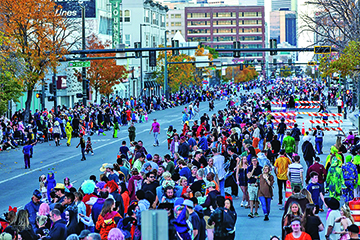
Parade On Broadway: Denver’s 9th annual Halloween parade steps off on Broadway, October 25, beginning at 6 p.m.
6 p.m. It’s a great film because of its original and creative concept, which reverses the typical monster-under-the-bed trope to show monsters who are afraid of humans and power their city with scream energy.
The movie features strong, well-developed characters like Mike and Sully. Plus, a humorous and witty script has memorable one-liners. The groundbreaking animation still impresses today. It’s a heartfelt story with relatable themes of overcoming fear, the power of laughter, and combating fear of the dark.
Broadway Parade
For charming, family-friendly fun, plan to attend the Broadway Halloween Parade hosted by the Broadway Merchants Association and City Council District 7. The 9th annual parade steps off on Saturday, October 25, beginning at 6 p.m.
The parade attracts more than 30,000 people — many in creative costumes — to see the pageantry and view the floats. The parade runs along Broadway from 5th to Alameda. Viewing areas are available along the entire route on both the East and West sides of Broadway.
It features a variety of spooky floats, cars (including a flame-shooting 1971 Cadillac Fleetwood Hearse), lively bands, and marchers. Event organizers say the parade spotlights the good in the neighborhood, connecting people to businesses they never would have known were in the area. Viewing areas are available along the entire route on both the East and West sides of Broadway. Many of the restaurants and bars along Broadway say the parade is their busiest night of the year. Be wise and get there early for best viewing and a spooktacular good time for all ages.
Four Mile Park
Enjoy the annual Pumpkin Harvest Festival at Four Mile Oct. 18 & 19th, followed by Halloween Haunt on October 28th, 4:30 to 6:30 p.m. At the Harvest Festival you can pick your perfect pumpkin. There will be 40 vendors on site, plus live music and performances.
Haunted Halloween will be in a heated building and heated tent. This enchanting evening features creepy crafts, pumpkin decorating, face painting, crawly critters, and games to fascinate both kids and adults. Don’t miss the double feature — Halloweentown & Halloweentown II, Kalabar’s Revenge — under the tent.
Hankering for even more chills and thrills? Join the women of Denver’s XX Paranormal Communications as they investigate Four Mile House Oct. 31, 8:30 p.m. to 12:30 a.m. You’ll wander the grounds of the 1859 historic house, and learn about the lives of those who once lived there. Moreover, in the Bee House you can speak with the spirits who remain. A unique evening of history and mystery.
Botanic Gardens
Celebrate 10 years of magic at Denver’s most luminous Halloween celebration, Glow at the Gardens™ annual Open Air Scare Oct. 10-12, 17-19, & 30th from 5:30-10:30 p.m.
The spooky outdoor event features hundreds of hand-carved jack-o-lanterns lighting the way through the garden’s dark paths. A perfect spooky experience for a date night, a friends’ outing, or family fun (especially for older kids and teens!).
The Botanic Gardens are stunning in the daylight, but at night they come alive with glowing displays and soft, atmospheric lighting that guide you through each eerie stop. Along the way, storytellers share the chilling tales of the gardens’ legendary ghosts, making the experience both spooky and fun.
Boettcher Concert
If you are a music fan or concert-goer, don’t miss the Colorado Symphony’s Halloween Spooktacular at Boettcher Concert Hall Oct. 26, 2:30 p.m.
A spooktacular event for all the boys and ghouls, this family-friendly concert features spooky classical favorites alongside music from films and television. Costumes are encouraged, making this a ghastly good time for every little monster and their mummy.
Featuring witches, pirates, and skeletons, you’ll hear music from Dream of a Witches’ Sabbath (Berlioz, Symphonie fantastique) plus Danse macabre (Saint-Saëns). The afternoon also includes The Flying Dutchman Overture (Wagner), and the Medley from Pirates of the Caribbean.
Bloody Mary Festival
Finally, taste the craftiest, most delicious Bloody Marys at the 9th annual Bloody Mary Festival at RealWorks October 26, 12:15 to 2:20 p.m. Featured are unlimited Bloody Marys, food and drink samples, plus one vote for the People’s Choice Award. Event includes selections of the best Bloody Marys from the metro area’s finest bars, restaurants, and craft bottled mixes.
Also included are food tastes for local eateries. But if you’d rather skip the lines and the crowds, you can always head to Sam’s No. 3 in Glendale or downtown.
by Valley Gadfly | Aug 22, 2025 | Main Articles
City Council Updates Denver’s Derelict Property Laws; Non-Compliance Under Update Can Reach $5,000 Per Day
by Glen Richardson
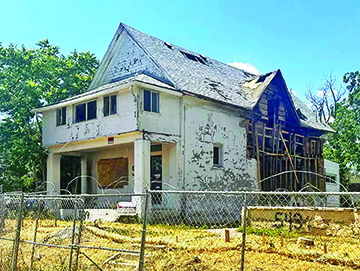
Neighborhood Nightmare: Abandoned properties span the entire city. Denver is currently tracking more than 100 neglected-derelict buildings. Photo: Matt Geiger
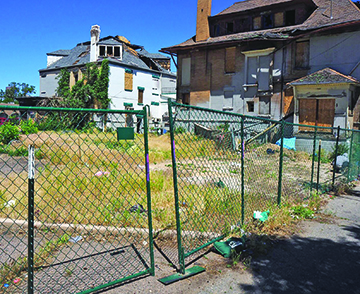
Potential Possible: Unappealing properties in Denver offer tremendous potential for redevelopment or renovation.
Denver is a city of contrasts. It’s known as an outdoor city with vibrant neighborhoods, and a rich cultural history. Yet, there’s another side to the town. The Mile High City is grappling with a growing number of vacant, abandoned homes and buildings. These abandoned properties are more than just neighborhood eyesores, they’re symbols of lost opportunities, economic struggles, and community challenges. It’s a problem that spans the entire city. Denver is currently tracking more than 100 neglected-derelict buildings.
Councilmembers Paul Kashmann, Amanda Sawyer, and Jamie Torres sponsored new rules. “This updated ordinance streamlines enforcement, enhances public safety, and is a good governance measure. We could not be prouder of the collaboration and work done by everyone on this bill,” the councilmembers declared.
In 2024 alone, Denver added 160 buildings to the city’s “Neglected & Derelict” building list. It’s a catalog of properties that sit vacant and cause problems for neighbors. Fires, squatters, and debris are among the dangers abandoned properties can trigger. City officials say there are currently 127 neglected-derelict structures across the city. Moreover, 15 buildings have been on the list for more than seven years. Community Planning & Development suggests that initiating the new rules will require two new full-time employees. That, however, will be difficult for a department facing layoffs as Denver tries to fill a $250 million budget gap.
Fines Surge
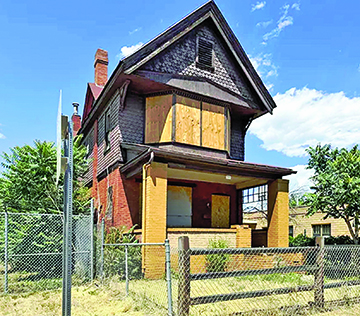
Shrunken Street Appeal: Vacant and boarded-up homes on a street can threaten property values in the neighborhood.
The new rules change how Denver will deal with abandoned homes and buildings. Previously, there was a required “show-cause hearing,” which often took months. That changes to a “remedial plan assessment” meeting. If a property owner does not meet with the city within 60 days, that property can be issued citations.
Additionally, fines surge from $999 per day to $5,000 per day for violations. Offenders are those that violate the terms of remedial plans or ignore meeting requests from the city.
The change requires an annual report to city council from the Denver Department of Community Planning & Development. It also establishes a fee of $5,000 per response from fire, police, or emergency services when three or more calls for service occur within a six-month period.
City Wide Issue
As of this April (2025), there were 285 neglected and derelict structures within Denver. That list involves properties from every city council district. Most are single family
homes, but the list also comprises commercial properties, plus 40 historic sites. Denver has seen an increase in neglected-derelict properties since the pandemic. Prior to that, interest rates were more favorable and m
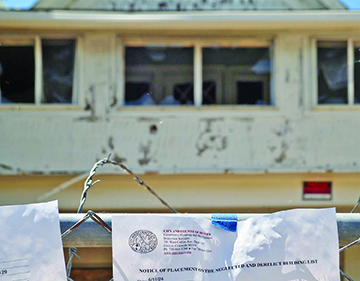
Flagged By City: Denver documents that a home or building has been added to city’s neglected and derelict properties list.
any property owners were redeveloping homes-buildings and improving neighborhoods. But derelict properties are more often associated with streets rather than neighborhoods. Over a dozen properties that have been flagged sit along Colfax. Speer has eight, most of which are bunched up near 3rd Avenue.
Owning a property is often an individual’s greatest investment and financial asset. Research has consistently shown that vacant, abandoned, and deteriorating properties reduce the value of surrounding properties, decreasing the owners’ equity and personal wealth.
Even Denver’s upscale neighborhoods have appeared on the list. In Cherry Creek, three adjacent properties clustered on Jackson Street qualified. Neighboring Hilltop has had two on the list. Belcaro had a single-family home on S. University Blvd. meeting the mark. LoHi has had as many as three on the list.
Report Problems
If a city inspector judges a property to be in violation, the owner is required to submit and implement a remediation plan to address the issues. For example, locks, fences, clean-ups, or other physical security could be ordered. The significant change to the ordinance is the size of the fine if the owner does not correct the problem.
In hazardous cases, emergency abatement measures can be initiated by the city. Reimbursement to the city, however, is required from the owners.
Residents can report a suspected derelict home or building through Denver’s 311 system. Or they can contact the Community Planning & Development Department’s online portal. Photos and the addresses can also be sent to gilvon2001@gmail.com.
Remedial Plan
If you own a property listed by the city as neglected and derelict, you’re required to complete a “remedial plan form” telling the city when and what you will do to correct the problem.
Owners of properties on the list may be fined $1,000 annually if no remedial plan is submitted. The fine is not assessed as long as the owner completes the remedial plan, stays code-compliant, and has paid any outstanding fees and fines.
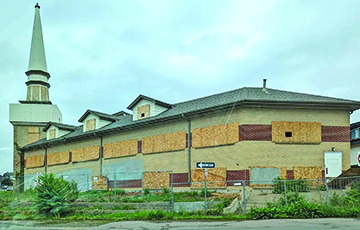
Throughfare Eyesore: This boarded-up old church was a long-time eyesore along Colorado Boulevard before it was finally demolished.
Property owners with questions about a home or building they own can contact Neighborhood Inspections. The phone number is 720-865-2505.
Creating Equity
In addition to faster remedial plans, the ordinance’s supporters believe the new law should allow for more equity. They point out that “some properties are owned by bad actors that took advantage of Denver’s lack of enforcement tools.” Of course, often properties are owned by people struggling to afford upkeep. Circumstances such as disabilities can make home upkeep difficult.
City leaders say the tougher stance responds to neighborhood frustrations over safety hazards and declining property values caused by vacant eyesores. While most of the targeted properties are single-family homes, the list also includes commercial and historic buildings. Officials estimate the changes could generate a 30% increase in administrative citations, adding revenue to Denver’s strained general fund. However, enforcing the ordinance will require extra staffing, a tough challenge as Denver has a $250 million budget deficit.
“Stronger enforcement tools for Community Planning & Development, earlier collaboration with property owners, and additional requirements for city agency cooperation will dramatically increase Denver’s ability to address the public health and safety concerns these buildings pose to our city,” Councilman Kashmann concludes.