by Mark Smiley | Aug 20, 2026 | Main Articles
Jobs, Housing, And Redevelopment Form City’s Strategy For Reviving Urban Core
by Mark Smiley
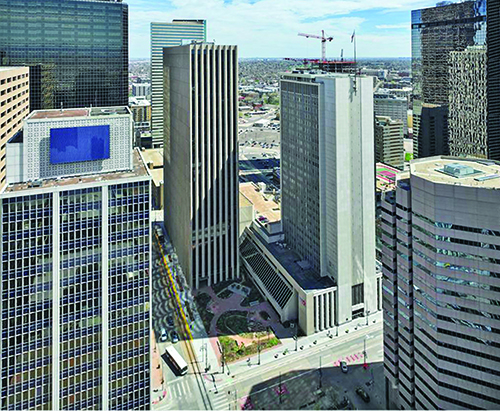
 Denver leaders are confronting a downtown economy that looks markedly different from the one that existed before the pandemic. Office towers remain partially empty as hybrid work continues to reshape the workplace. Restaurants and retailers have had to adjust to reduced weekday foot traffic, while declining commercial property values have created additional concerns for property owners, lenders, and city government.
The Johnston administration’s response is an ambitious combination of job creation, business recruitment, housing development, and public investment designed to help downtown adapt to those changes. In July, Mayor Mike Johnston unveiled the Denver Jobs Agenda, a $100 million economic development initiative with a goal of creating 10,000 jobs over three years. The program includes workforce development, incentives for businesses, and a $40 million effort to attract major employers to Denver or encourage existing companies to expand.
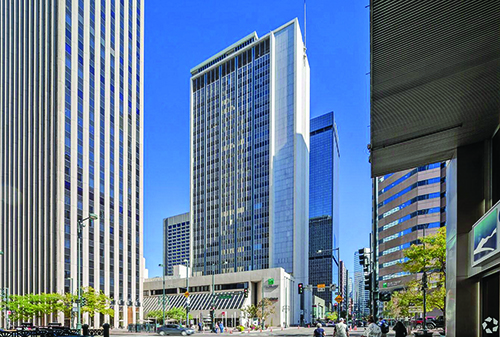
At the same time, Denver is supporting efforts to give obsolete or underused office buildings a second life as housing. One of the most prominent examples is High Fidelity Plaza, where the Downtown Denver Development Authority approved a $63 million low-interest loan toward the redevelopment of two largely vacant office towers at 621 and 633 17th Street. Plans call for the buildings to be converted into a mixe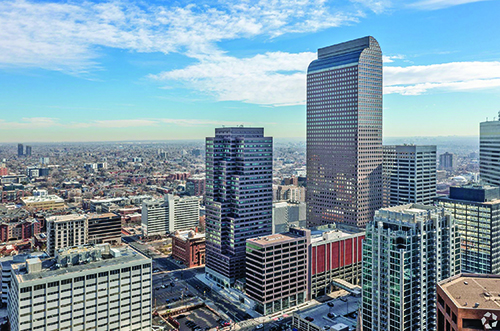 d-use development containing more than 700 apartments as well as restaurants, retail, childcare, and other amenities.
The two initiatives illustrate Denver’s broader strategy: attract more employers and workers while simultaneously creating a larger residential population downtown. City officials believe those goals can complement rather than contradict each other. More employers could increase daytime activity and support downtown businesses, while additional residents could create demand for restaurants, stores, and services during evenings and weekends. A more diverse mixture of workers, residents, and visitors could also make downtown less dependent upon the traditional five-day-a-week office population.
That dependence became a significant weakness after 2020. Denver’s downtown office market continues to struggle with elevated vacancies as employers reconsider how much space they need in an era of hybrid work. Properties that once commanded significant prices have changed hands at substantially lower valuations, creating challenges for building owners and lenders and potentially affecting the city’s commercial property tax base.
The situation has left Denver facing a question confronting downtowns throughout the country: What should a central business district become if office workers no longer fill its buildings five days a week?
The Johnston administration has chosen to take an active role in answering that question. Rather than relying exclusively on private investment and market forces, the city is using incentives, loans, and economic development programs to encourage both employment growth and redevelopment.
Office values in downtown Denver have fallen dramatically since the pandemic, with some properties selling for a fraction of their previous value. City officials hope redevelopment incentives and office to residential conversions will help reverse the trend.
Supporters argue that government involvement is warranted because allowing large portions of downtown to deteriorate could have consequences extending well beyond individual property owners. Vacant buildings can reduce surrounding property values, weaken nearby restaurants and retailers, and diminish tax revenue. Those conditions, supporters contend, can discourage additional private investment and create a cycle that becomes increasingly difficult and expensive to reverse. From that perspective, public investment today could help protect a much larger economic asset over the long term.
The strategy nevertheless raises legitimate questions about how much financial risk taxpayers should assume. Critics question whether public money should be used to provide incentives to corporations or financing for privately owned real estate developments, particularly when Denver faces other demands on city resources. Homelessness, public safety, aging infrastructure, and neighborhood services remain significant concerns throughout the city.
There is also debate over whether office-to-residential conversions will meaningfully address Denver’s housing affordability problem. Many apartments created through such projects are expected to rent at market rates rather than being dedicated primarily to lower-income residents. Supporters of the conversion strategy counter that adding residents at a range of income levels can still strengthen downtown by increasing the number of people patronizing businesses and using the area outside traditional office hours.
The debate therefore extends beyond whether individual projects are worthwhile. It centers on what role city government should play in reshaping downtown during a period of unusually rapid economic change.
At first glance, spending money to attract office employers while simultaneously helping convert offices into apartments can appear contradictory. The city’s approach, however, reflects an acknowledgment that downtown Denver will probably need both. Not every office tower is obsolete, and employers will continue to require office space. At the same time, the pre-pandemic model in which tens of thousands of commuters arrived downtown each morning and departed each evening appears unlikely to return in exactly the same form.
A successful downtown of the future may therefore need a broader mixture of employment, housing, entertainment, restaurants, retail, and public spaces. The Denver Jobs Agenda represents an effort to strengthen the employment side of that equation, while office conversions such as High Fidelity Plaza are intended to strengthen the residential side.
Whether those investments will generate enough private development and economic activity to justify their cost remains uncertain. That makes accountability and measurable results particularly important.
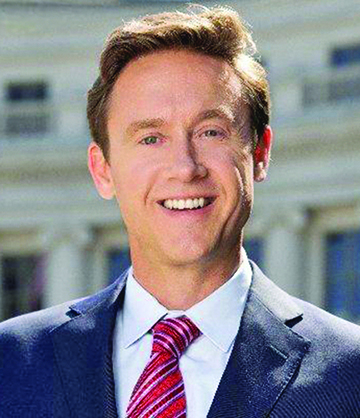
Mayor Mike Johnston has made downtown revitalization a major focus of his administration, combining job-creation programs, business incentives, and redevelopment financing in an effort to attract employers, residents, and investment to Denver’s urban core.
The Denver Jobs Agenda comes with a clearly stated target of creating 10,000 jobs over three years. Redevelopment projects can likewise be evaluated by the housing they produce, private investment they attract, occupancy they achieve, and economic activity they generate. Other measurements will take longer to assess, including commercial property values, retail occupancy, downtown foot traffic, and tax revenue.
Those benchmarks should eventually provide a clearer picture of whether Denver’s strategy is producing a lasting recovery and whether the public investments are encouraging economic activity that otherwise would not have occurred.
Denver’s leaders are betting that a combination of jobs, residents, and private investment can create a downtown that is less dependent on the traditional office economy. Supporters see public involvement as necessary to accelerate that transition and prevent further deterioration. Critics question whether taxpayers are assuming too much of the cost and risk for projects involving private businesses and property owners.
Both sides agree on at least one point: downtown Denver remains an important economic and civic center whose future will affect far more than the property owners and businesses located within its boundaries.
What is clear is that Denver is no longer waiting for downtown to return to its pre-pandemic form. City leaders are committing significant public resources to help shape what comes next. The next several years should determine whether that investment succeeds in creating a more active and resilient downtown, and whether Denver taxpayers receive an adequate return on one of the city’s most ambitious economic development efforts in years.
The 28-story office tower at 621 17th Street is one of two historic downtown buildings slated for conversion into housing as Denver attempts to revive its struggling central business district after years of elevated office vacancies.

by Charles Bonniwell | Aug 20, 2026 | Main Articles
Both City Councils Extract Major Additional Concessions From Xcel Energy
by Charles C. Bonniwell

Safe & Reliable Energy: Xcel Energy crews work from bucket trucks to repair and maintain electrical equipment on a utility pole. The work is part of ongoing efforts to maintain reliable electric service and infrastructure in the area.
Once every 20 years certain utility companies are required to get the approval of municipalities to use their streets, rights of way and other easements for their transmission lines and the repair of the same. Both cities require the approval of the respective city councils and the voters of each jurisdiction.
Both Denver and Glendale last approved these contracts back in 2007. The municipalities receive in exchange for use by Xcel important financial compensation over the 20-year period, which in the case of Denver alone is $180 million in the form of general revenue, dedicated underground funds, and infrastructure savings.
But cities also view the negotiations as a rare opportunity to extract additional concessions from the public utility. Last year Mayor Johnson’s administration took the lead in the negotiations to obtain additional concessions.
Last year, by a 7 to 6 vote, the City Council refused to refer the proposed Franchise Agreement for various reasons, including the failure of the Johnson administration to include council members and their staffs in negotiations with the utility.
The council members who were against referring the Franchise Agreement to the voters said they wanted to have additional time to receive public input. They also believed that not enough was accomplished for clean energy and climate resilience goals.

Minimum Disruptions: It was important for Glendale during negotiations to get assurances that repairs would not interrupt the flow of traffic and have the least amount of disruptions.
Moreover, some council members wanted better equity guarantees and utility cost protections for working-class and low-income households.
After months of tough negotiations, a new Franchise Agreement was presented to the Denver City Council on July 27th, which was composed of a Franchise Agreement as well as a companion document titled “Energy Partnership Agreement,” which encompassed many of the new concessions regarding the transaction.
The revised agreement sailed through the city council vote by a 10 to 2 margin, apparently fully satisfying even many of its former vociferous critics.
In Glendale the negotiations were somewhat smoother but not without sticking points. Of significance to Glendale was obtaining broader discretion on how the so-called 1% fee to underground utilities could be utilized by the city. After a great deal of back and forth, a compromise acceptable to Glendale was provided by Xcel.
Glendale stressed Xcel reimbursing the city for its maintaining smooth surfaces on city streets, as well as expert coordination on repair of outages and mandating the quick updating of Xcel’s electric and gas network as it applies to Glendale.
Moreover, Glendale insisted on methods to ensure the mitigation of traffic delays when Xcel is working on streets in Glendale.
The vote was unanimous at the August 4th meeting of the Glendale City Council to send the Franchise Agreement to the voters. In addition, the Greater Glendale Chamber of Commerce approved a resolution urging Glendale voters to approve the submitted Franchise Agreement.
With a broad consensus that the Franchise Agreements are positive developments for both Glendale and Denver, it is anticipated that the voters of both municipalities will approve the Franchise Agreements. Those agreements will go into effect on January 1, 2027.
by Mark Smiley | Aug 20, 2026 | Main Articles
Longtime Denver Talk Radio Host And His Close Friend Alan Berg To Join 2026 Class Honoring Some Of State’s Best Known Broadcasting Voices
by Mark Smiley

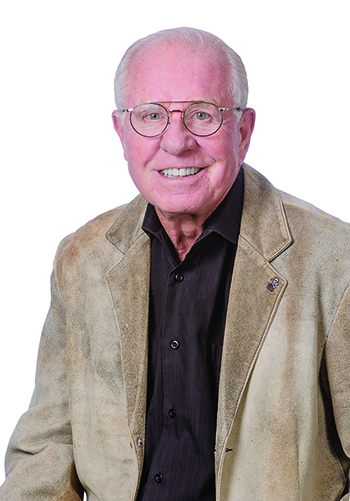
Peter Boyles
For decades, Peter Boyles has been one of the most recognizable, provocative, and enduring voices on Denver radio. This fall, his long career behind the microphone will receive one of the Colorado broadcasting industry’s highest honors.
The Colorado Broadcasters Association has selected Boyles for induction into the 2026 Colorado Broadcasters Hall of Fame, recognizing a career that has made him a fixture of Denver talk radio and a familiar voice to generations of Colorado listeners. The induction ceremony will be held Friday, October 23, at The Dome at AMG in Greenwood Village.
Boyles initially refused the honor unless his good friend Alan Berg was also admitted. Berg was a Jewish Attorney and highly abrasive liberal host on KOA radio who liked to tease and confront callers. He was assassinated by his home in 1984, machine gunned down by the white supremacist group called the Order; his murder became a national cause célébre.
The Broadcasters and Boyles reached an accommodation where Boyles would induct Berg after his own admission.
Boyles is one of nine broadcasters selected for the 2026 class. Joining him are Alan Berg, Bob Gourley, Stu Haskell, Steve Kelley, Bob Martin, Reyn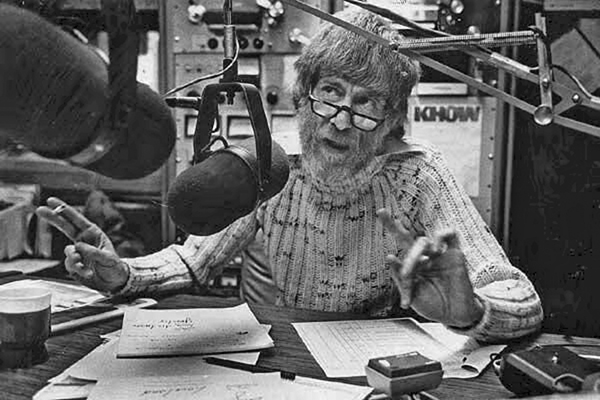 elda Muse, Roger Ogden, and Ron Zappolo. The group represents a wide cross-section of Colorado broadcasting, including radio personalities, television anchors, sports broadcasters, and industry executives.
For Boyles, the honor recognizes a career built largely on a willingness to ask uncomfortable questions and take on controversial subjects.
Long before podcasts and social media gave virtually anyone an opportunity to broadcast an opinion, Boyles was doing it live on Denver radio. His programs became known for lengthy interviews, spirited exchanges with callers, and discussions of subjects ranging from local politics and crime to national controversies and Colorado history.
Listeners did not always agree with him, and agreement was rarely a prerequisite for listening.
That confrontational style helped make Boyles both popular and controversial. Admirers have viewed him as an independent voice willing to pursue stories and opinions other broadcasters might avoid. Critics have objected at times to his rhetoric, conclusions, and choice of subjects. Through both praise and criticism, however, Boyles remained part of Denver’s public conversation for decades.
His best-known tenure was at KHOW 630 AM, where he hosted a long running morning drive program until 2013. He later returned to Denver radio and currently hosts a four-hour Saturday morning program on 710 KNUS.
The Hall of Fame recognition is significant because the Colorado Broadcasters Association created the institution specifically to recognize broadcasters whose work has had a lasting effect on the industry, their communities, and Colorado audiences. The Hall honors not only prominent personalities heard or seen on the air, but also executives and behind the scenes figures who helped build broadcasting in the state.
Boyles’ induction also places him alongside several names closely associated with Denver broadcasting history in addition to Alan Berg.
Bob Martin was a longtime KOA sports director and the voice of the Denver Broncos for 499 broadcasts. Reynelda Muse broke barriers in Colorado television and later became one of CNN’s founding anchors. Ron Zappolo became one of Denver television’s best-known sports personalities and anchors.
The diversity of the class illustrates how dramatically broadcasting has changed over the decades. Radio once dominated the way people received immediate news and commentary, while local television anchors became some of the most recognizable personalities in Colorado. Today those traditional broadcasters compete with podcasts, streaming video, social media, and an almost unlimited number of digital information sources.
Yet personalities such as Boyles and Berg developed their audiences in an era when the relationship between a broadcaster and listener could last for years or even decades.
Boyles’ career is particularly associated with the intimacy of talk radio. Unlike a television newscast built around relatively short reports, his format allowed subjects to unfold over extended conversations. Guests could be questioned at length. Callers could challenge the host. A local issue that might receive a few minutes elsewhere could occupy an entire segment or program.
It was sometimes contentious, occasionally unpredictable, and unmistakably Boyles.
The Colorado Broadcasters Association describes its Hall of Fame as recognition for broadcasters who have left an enduring mark on Colorado. CBA President and CEO Justin Sasso said this year’s honorees helped connect communities and build the broadcasting industry that exists in the state today.
This Hall of Fame itself is relatively new and supercedes the Hall of Fame sponsored by the Colorado Broadcasters Association but run by the Broadcast Pioneers of Colorado from 1998 to 2019. This new Hall of Fame launched it in 2025, with its inaugural class including longtime Colorado broadcasters such as Murphy Huston, Denise Plante, Tom Green, and Mark Cornetta. The first induction ceremony was held last October in Greenwood Village. Members admitted to the new Hall of Fame include individuals like Reynelda Muse who are already in the Hall of Fame conducted by the Broadcast Pioneers of Colorado.
The October 23 ceremony honoring Boyles and the other members of the second class begins with doors opening at 6:30 p.m., followed by the induction ceremony at 7:15 p.m. A portion of the proceeds will support the CBA’s Broadcast Education and Development Scholarship Fund, which assists the next generation of broadcasting professionals.
For Boyles, whose career has been defined by conversations, arguments, interviews, and an unmistakable presence on the Denver airwaves, the Hall of Fame selection represents recognition from the industry in which he has spent much of his professional life.
Listeners may have loved what Peter Boyles had to say or vehemently disagreed with him. Sometimes they managed to do both during the same program.
But after decades on Denver radio, few could argue that they didn’t know who he was.
On October 23, Peter Boyles will officially take his place among the broadcasters recognized for helping shape the history of Colorado radio and television.
by Jessica Hughes | Jul 23, 2026 | Main Articles
by Jessica Hughes
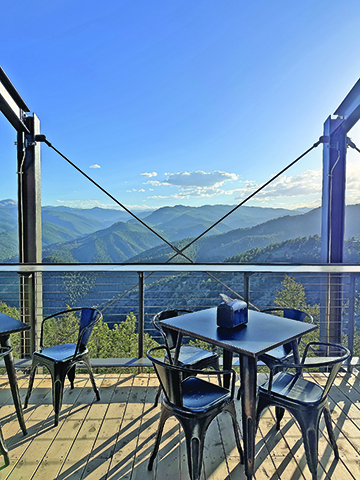
Views from The Outpost observation deck. Photo by Jessica Hughes
If you’ve ever made the weekend trek along I-70 heading west, you may have stopped in Idaho Springs to grab a beer or pizza at Tommy Knocker’s, but the town’s newest addition may give you another reason to stay and linger a little longer. This summer, one of the world’s largest and best-preserved historic gold mills enters a new chapter, with the debut of the Mighty Argo Cable Car.

Panoramic mountain views from 8,800 feet in elevation at Miner’s Point. Photo by Jessica Hughes
It’s been more than 130 years since the Argo Mill and Tunnel sat at the center of one of Colorado’s most notable mining operations. When completed in 1910, the five-mile tunnel was the largest in the world. It served as both a drainage system and an underground railway, connecting numerous mines and helping transform Idaho Springs into an integral mining hub. And while floods, mine closures, and the construction of I-70 eventually shifted the town’s role from a mining center to a roadside stopover, the Argo’s multi-level, rustic-red structure has endured.
This summer, a new project hopes to restore the town’s shine and claim its place as a destination for travelers. This past Memorial Day weekend, the Argo revealed a $71 million redevelopment anchored by the debut of the Mighty Argo Cable Car.
The vision for the Argo’s revival began years ago, when Idaho Springs resident Mary Jane Loevlie saw the historic landmark as a natural addition to her growing portfolio of local properties. Purchasing the site in 2016 with the help and advice of her friend and business partner, legendary Colorado developer Dana Crawford, together, they acquired the Argo with an ambitious vision for its future.
“The Mighty Argo Cable Car has been a long-time vision for Idaho Springs and the Argo property,” says Rose Miller, the Events and Marketing Coordinator for the Mighty Argo. “The idea was first developed to bring new life to the historic Argo Mill & Tunnel while creating a year-round mountain experience that connects history, recreation, food and beverage, events, and the incredible views above town.”
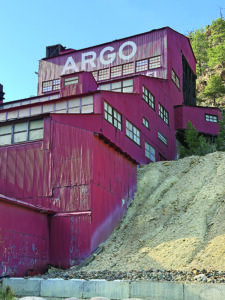
The historic Argo Mill is also now open for tours. Photo by Jessica Hughes
But after years of environmental remediation, including the removal of abandoned metal debris and hazardous materials, the project turned into a nearly decade-long undertaking, with the official groundbreaking taking place on July 25, 2024. After years of planning, investment, construction, and partnership with the City of Idaho Springs and local stakeholders, the Mighty Argo opened to the public this past Memorial Day weekend. Yet the extended timeline ultimately allowed for a more thoughtful transformation — one that carefully preserved the site’s historic character while creating a new future for one of Colorado’s most storied landmarks.
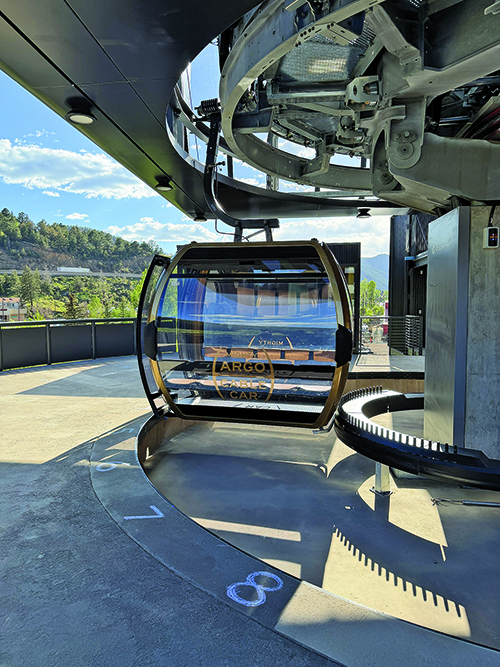
The high-speed, year-round gondola carries visitors 1.2 miles from the historic Argo Mill up Rosa Gulch, climbing roughly 1,300 feet in elevation. Its spacious interior and floor-to-ceiling glass golden-hued cabins showcase the area’s mountain views, making the short 10-minute ride to the top feel like it’s not nearly long enough.
Miller says the experience is designed to connect Idaho Springs’ mining heritage with the outdoor adventure that defines Colorado today. “The Mighty Argo is not just a ride. It is becoming a full experience for Idaho Springs,” says Miller. “It brings together the town’s mining history, mountain views, live music, food and beverage, family activities, events, and outdoor access all in one place.”
The Mighty Argo’s 27 cable cars glide along a 1.2-mile ride to the top of Miner’s Point. Photo by Jessica Hughes
Visitors can begin with a tour of the historic Argo Tunnel and Mill, where original equipment and underground passageways tell the story of the miners who once worked these mountains. From there, the Mighty Argo elevates the journey — both literally and figuratively — offering a bird’s-eye view of the landscape that shaped the town’s history.
At the summit, the ride culminates at Miner’s Point, where The Outpost features observation decks, pedestrian plazas, an amphitheater, and food and beverage offerings from the Sun and Moon Saloon. But what shouldn’t be missed, nor could you miss, are the views from Miner’s Point, where mountain top views stretch as far as the eye can see, across the Continental Divide and four of Colorado’s fourteeners.
And for those who like to experience the mountains instead of just looking at them, visitors have direct access to more than 15 (up to 28 come 2027) miles of hiking and biking trails, all thanks to a partnership with COMBA (Colorado Mountain Bike Association), reopening the Virginia Canyon Mountain Park, with additional attractions still to come.
Building on the town’s mining history, the Mighty Argo Cable Car offers a new perspective on the landmark, connecting Idaho Springs’ rich mining history with scenic mountain views, outdoor recreation, and a new way to experience one of Colorado’s most historic destinations. “For us, the goal is to create something that feels exciting and new while still honoring the history and character of Idaho Springs,” says Miller.
More information and tickets can be found at mightyargo.com.
by Mark Smiley | Jul 23, 2026 | Main Articles
City Hall Pushes Sweeping Zoning Changes Despite Growing Opposition
by Mark Smiley
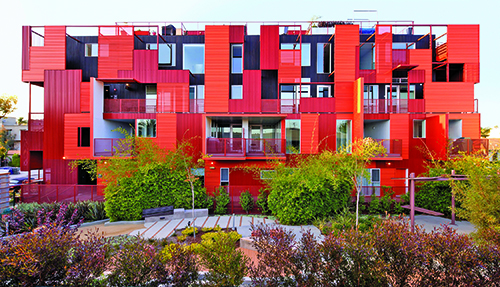
Once defined by tree-lined streets and neighborhood character, many Denver communities are now facing waves of dense apartment development. Critics call it overdevelopment that ignores residents’ concerns and forever changes the neighborhoods they chose to call home all in the name of “affordability.”
Denver’s next major political battle will not be over homelessness, crime, or downtown redevelopment. Instead, it will be fought block by block in neighborhoods where homeowners believe City Hall is preparing to rewrite decades of zoning policy with little assurance that the changes will actually make housing more affordable.
Mayor Mike Johnston’s administration continues to move forward with its Unlocking Housing Choices initiative, one of the most significant proposed overhauls of Denver’s residential zoning code in decades. The proposal would allow more duplexes, triplexes, fourplexes, and other forms of “middle housing” in neighborhoods that have traditionally been reserved for single family homes. City planners argue the changes are necessary to increase housing supply, improve affordability, and provide more housing options as Denver continues to grow.
Throughout 2026, the city has hosted public meetings, conducted financial studies, and worked with a 26-member advisory committee to refine the proposal before it reaches the Denver City Council. Officials describe the process as transparent and collaborative, saying community feedback is helping shape the final recommendations.
Many residents, however, remain skeptical.
An effort by the City of Lakewood to drastically alter single family zoning in the name of “affordability.” Lakewood went through a many month investigation to support its rezoning of the city to allow for more duplexes, triplexes, fourplexes and other multi-family structures. It caused an uproar in the Lakewood and after months of litigation citizens rejected the rezoning in a city wide election by a wide margin earlier this year.
Homeowners across Denver argue that City Hall is using the housing crisis as justification to dramatically increase density in established neighborhoods without proving the changes will actually lower housing costs. Instead, they fear increased traffic, crowded street parking, additional pressure on aging infrastructure, and the gradual loss of neighborhood character that attracted families to these communities in the first place.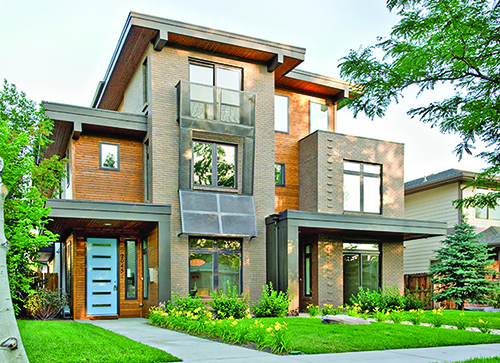
The skepticism is fueled by Denver’s recent track record. Over the past several
years, the city has expanded affordable housing programs, encouraged higher density development, and adopted new incentives intended to increase housing production. Yet home prices remain out of reach for many middle income families, while rents continue to strain household budgets.
That has led many residents to ask a simple question. If previous housing initiatives have not made Denver significantly more
affordable, why should homeowners believe another sweeping zoning overhaul will accomplish what earlier policies could not?
City officials respond that Denver simply has not built enough housing to meet demand. They also point to recent state housing legislation that encourages municipalities to expand housing opportunities and remove barriers to development. From the city’s perspective, increasing supply remains the best long term solution to improving affordability.
Critics argue the issue is not that simple.
Increasing density does not automatically create affordable housing. Developers build projects that make economic sense, and in many of Denver’s most desirable neighborhoods, newly constructed duplexes and townhomes often sell for prices approaching or exceeding $1 million. Replacing one expensive home with several expensive homes may increase inventory, but it does little to help teachers, police officers, firefighters, or young families purchase their first home.
Many neighborhood organizations also question whether public input is truly influencing the outcome. While City Hall continues to hold meetings and solicit feedback, some residents believe the administration has already decided to pursue higher density and is now focused primarily on determining how to implement the changes rather than whether they should occur at all.
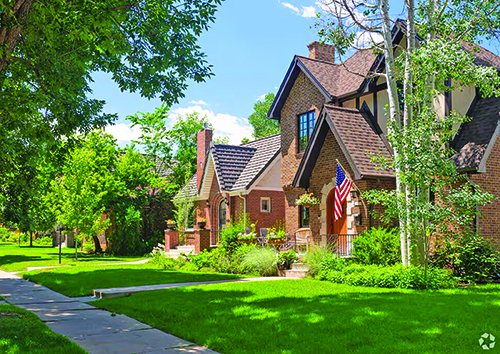
Many Denver homeowners fear proposed zoning changes could permanently alter established neighborhoods such as Washington Park, Belcaro, and Hilltop by allowing higher density housing on lots currently occupied by single family homes.
The debate reflects a broader frustration with City Hall. Denver’s housing shortage developed over decades as population growth, rising construction costs, restrictive zoning, and policy decisions combined to reduce affordability. Now, many homeowners feel they are being asked to bear the burden of correcting those mistakes while receiving few assurances that the proposed changes will actually solve the problem.
There is little disagreement that Denver needs more housing. The real question is whether the city’s approach will deliver the affordability residents have repeatedly been promised.
Changing zoning regulations is relatively easy. Creating housing that working families can actually afford is far more difficult.
As Denver moves closer to adopting its recommendations, City Hall should recognize that homeowners are not simply resisting change. They are asking elected officials to demonstrate, with evidence rather than projections, that permanently changing established neighborhoods will produce measurable improvements in affordability.
Until that case is made, opposition to Denver’s zoning overhaul is unlikely to fade. For many residents, the debate is no longer about housing. It is about whether City Hall is asking neighborhoods to sacrifice their character without proving the promised benefits will ever materialize.

by Valley Gadfly | Jul 23, 2026 | Main Articles
Would Like Dallas Developers And Others Brought In
by Glen Richardson
Glendale Resident Tim Dickey
For many years longtime Texans have been moving to Colorado for a change of pace and lifestyle. Most have been positive additions to the state, but there has been a prototype that has had a long tradition of being despised by many natives of the Centennial State.
The prototype is a person who comes from one of Texas’ big cities (i.e. Dallas, Houston, Austin) to a smaller Colorado community and informs the inhabitants that they are rubes and that he or she believes that the inhabitants have been doing things the wrong way for a long time and insists they change and do it the “Texas Way,” whatever that may be.
Glendale has the misfortune, in many people’s minds, of attracting Dallasite Tim Dickey who recently made the upscale 4550 Cherry Creek Residences his permanent domicile. He appeared at the Glendale monthly City Council meeting on June 2, 2026, and announced, sua sponte, that Glendale has too many residents who are young and single and “live in complexes-built decades ago as ‘singles only’ apartments.”
The 74-year-old Dickey apparently believes young singles are somehow by their very nature inferior to residents who are older and have spouses and children. It is true Glendale has been a Mecca for younger residents and renters since the 1970s. According to the U.S. Census median age of Glendale is roughly 30.8 years compared to Denver’s 35.3 years and the national average of 38.9. Glendale is heavily dominated by young professionals in their 20s and 30s, who comprise 57% of its total population.
That is apparently unacceptable to Dickey who wants “high quality, family friendly, Low Income Housing Tax Credit projects” like those he is familiar with from his many years in Dallas. He even brought in for the City Council brochures from Dallas low-income project developers although he noted that there are about 200 low-income multifamily developers in Colorado.

Kids Programs: Mr. Dickey is apparently unaware of enormous resources and programs available to Glendale children at the Glendale Sports Center at Infinity Park.
What would happen to the young professionals in their 20s and 30s that he would kick out of Glendale in favor of federally subsidized low-income families is apparently of no concern to Dickey. According to Zillow, renting in Glendale is roughly 18% to 33% more affordable compared to neighboring Denver. Glendale has managed to be one of the most affordable cities in all of Colorado with virtually no federal subsidies in the form of federal tax credits. A relatively free market system adopted by Glendale is apparently anathema to Dickey.
Dickey from his vantage point on the 21st floor of 4550 Cherry Creek thinks he lives in a town that bears little resemblance to the actual Glendale. He sent a highly condescendin g letter to Glendale Mayor Mike Dunafon after Glendale City Council turned down his application to be on Glendale Planning Commission in favor of a candidate they believed was better qualified and a longer-term resident of the town.
The recently arrived 74-year-old Texan appointed himself advocate for the poor children of Glendale. In that role declared: “One in four children under 18 lives in poverty with almost no amenities for children.”
He seemed unaware that there are only about 360 children living in Glendale and even if his statistics are correct that is a total of 90 kids and there is arguably no better place for them to live than Glendale in Colorado.
Glendale, under Mayor Mike Dunafon built Infinity Park Sports Center that includes basketball, volleyball, and tennis courts as well as a state-of-the-art weight room and equipment along with access to the pool facilities at Schlessman Y on Colorado Boulevard. There is a plethora of programs for kids and teenagers run by the YMCA under contract with the city. At Glendale Sports Center individual membership for Glendale residents is only $10 a month and only $22 per month for a family of any size which includes all offspring under the age of 24. If for any reason a family can’t afford even those low prices there are generous scholarships available for Glendale residents.
For all kids in school there is an after-school program where the city takes care of kids after school until 5:30 p.m. absolutely free of charge. Kids in Glendale go to the Cherry Creek School System, considered one of the best in the country. After school Cherry Creek District school buses go directly from the schools to the Sports Center and drop the kids off.
Glendale is also known as RugbyTown. Kids living in Glendale starting at age 5 and through age 18 can play organized rugby with top coaches free of charge including all equipment, uniforms, and transportation they might need.
The affluent Dickey appears to be willing to destroy all of that so he can bring high density developers while throwing out and replacing the 57% of the population that are young professionals.
Dickey acted as the campaign consultant for Glendale Planning Commissioner Elizabeth Bonney who ran for City Council last Spring. Under Dickey’s tutelage she garnered only 28 votes and finished last in the election. He now wants the City’s general elections which have been held in Spring since the town’s incorporation 74 years ago changed to November.
Apparently, he believes if Bonney runs two years from now (and presumably himself) they will somehow have a better chance of succeeding if the election is in November and not April.
Knowledgeable insiders have trouble understanding how a Dallas transplant in his seventies will appeal to Glendale voters 57% of which are young professionals who he wants thrown out of town whatever season elections are held.
Dickey apparently has not made very many friends over at 4550 Cherry Creek. There is a rumored effort afoot to get Dickey kicked out of the development. He did not enamor himself to the management of the building when he called over to the city demanding that the city cite the building for federal Americans with Disabilities Act violations for repairs it was making at the building claiming he was expert concerning the Act. The city found no merit in his assertions.
During the Spring election he outraged his fellow residents by littering the halls with Elizabeth Bonney campaign literature and blank absentee ballot applications in direct violation of building rules and regulations.
It is unclear whether the elderly white Texan also objects to the racial demographic diversity of Glendale with 26% being Hispanic, 12% African-American, and only 51% to 65% White. His redevelopment of the city would likely drastically alter those demographics.
Dickey is expected to be at the next Glendale City Council meeting on August 4 to demand the city council approve a ballot initiative to change its elections from spring to fall.