
by Mark Smiley | Jan 30, 2017 | Main Articles
Stunning Win Of Prestigious Prize Puts Valley’s Young Artists In National Spotlight
by Glen Richardson

The Denver Young Artists Orchestra and conductor Wes Kenney has received the 2016-17 American Prize. Selected by a panel of judges from across the U.S., the DYAO has been honored with the Ernst Bacon Memorial Award recognizing performances of music by American composers. The youth orchestra is the state’s first musical ensemble to earn the cash prize Bacon award from the national nonprofit administered by the Hal City Music Theater, Danbury, CT.
Formed in 1977 under the auspices of the Denver Symphony Orchestra (now the Colorado Symphony Orchestra), it was started as a means for the Valley’s most talented young musicians to rehearse and perform together under demanding professional standards. With headquarters on South Colorado Blvd., the organization’s five orchestras train nearly 250 students ages seven to 23 annually.
Now in his third season with the DYAO, Wes Kenney won the 2007 Grand Prize at the Varna (Bulgaria) International Conducting Competition. Last August he started his 13th season as Music Director of the Fort Collins Symphony and Director of Orchestras at CSU. He is also Music Director of Opera Fort Collins and conducts three professional operatic productions as well as many concerts in Northern Colorado. He has been guest conductor for the Denver Philharmonic, Colorado Symphony and the Colorado Music Festival. This July he will travel to Korea to conduct the Changwon Philharmonic. Previously he has been a guest conductor with the Vidin State Philharmonic and Stara Zagora Opera Company in Bulgaria as well as at the Edinburgh (Scotland) Music Festival.
Five Ensembles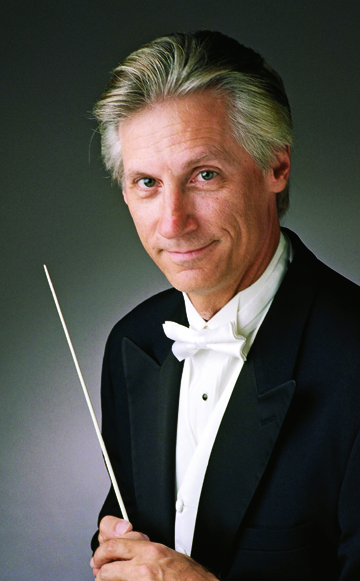
The Denver Young Artists Orchestra includes five ensembles. In addition to the original orchestra or DYAO there are four training ensembles: two Conservatory Orchestras and two String Ensembles. Auditions take place every spring. Local concerts are held in metro area venues including Boettcher Concert Hall, Gates Concert Hall at DU’s Newman Center plus the Macky Auditorium in Boulder. DYAO has performed with many prominent soloists over the years, including Wendy Warner, Antonio Pompa-Baldi and Edgar Meyer. In addition, DYAO has toured internationally several times, including Europe and South America.
The youth orchestra has become well known through the annual Painted Violi
n fundraising project exhibited each year throughout the Cherry Creek Valley. Over the past 13 years it has grown from a handful of pieces to more than 22 total pieces in a given season. Other instruments have also become a part of the collection including cellos, violas, basses and a mandolin. Nearly 160 pieces have been featured in numerous galleries plus larger venues, such as Boettcher Concert Hall and the Lakewood Cultural Center.
Members of the orchestras graduate into colleges and universities across the country. Alumni can be found studying in various fields including engineering, medicine, music, and law. They attend prestigious institutions including Brown University, The Eastman School of Music, The Juilliard School, Harvard, Stanford and Yale. Alumni who continued on to professional music careers now perform in major orchestras including the Atlanta, Boston and Chicago Symphony plus the Cleveland Orchestra and Metropolitan Opera.
Support Young Superstars
Valley families hankering to hear and support these young American Prize winners have a trio of opportunities within the next 60 days. On Feb. 12 the Young Artists Orchestra performs Peter and the Wolf side by side with the Colorado Symphony at Boettcher Concert Hall, 1 p.m. The Prokofiev classic is a fantastical tale in which Peter and a myriad of unruly animals are brought to life by the instruments of the orchestra to tell a tale in which good triumphs over evil. It is a wonderful opportunity to introduce children to instrumental music through storytelling. Children will hear the music and learn about the instruments. They will also be inspired seeing these young DYAO musicians as they play with the Symphony.
Then on March 5 the Denver Young Artists Orchestra fundraising dinner is at the Wellshire Inn Event Center on South Colorado Blvd., 7 p.m. Theme for this year’s gala is Stories in Music and will allow these American Prize winning young students to tell moving and inspiring stories through music. In addition to live performances by the students there will be auctions, dinner and dessert.
Finally on March 12 there’s a DYAO Spectacular featuring all of the orchestras performing at Boettcher Concert Hall, 2:30 p.m. This program includes Rimsky Korsakov’s Scheherazade, excerpts from Beethoven Symphony No. 1, plus m

uch more. In addition to Music Director and Conductor Wes Kenney, attendees will hear the work of Conservatory Orchestras Conductor Gal Faganel and String Ensembles Conductor Carmen Wiest.
DYAO’s American Prize Honors Composer Bacon
DYAO’s American Prize is for performing music by American composers. It is named in honor of Ernst Bacon (1898-1990). He was a pioneering composer, pianist and conductor who, along with Thomson, Copland and Harris, found voice for American music. He composed more than 250 songs over his career. Winner of a Pulitzer Scholarship for his Symphony in D minor and not fewer than three Guggenheim Fellowships, he set out to create compositions that expressed the vitality and affirmative spirit of our country.
by Mark Smiley | Jan 30, 2017 | Main Articles
Personality Of Areas Is Being Destroyed To Build Bigger Homes, Duplexes And Pop-Tops
by Glen Richardson
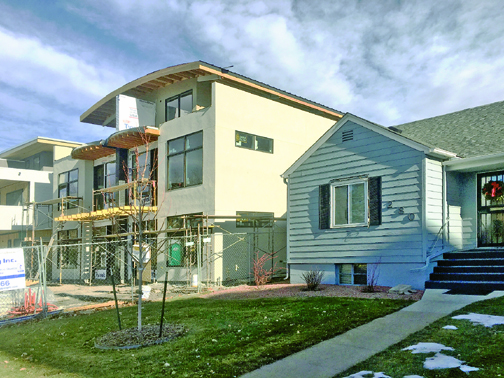
From Hilltop to DU and other unique sections of our metropolis, angry neighbors are fighting back against “hummer homes” cropping up in the Valley’s established neighborhoods as the wealthy crowd moves into their hoods. Duplexes, starter homes, bungalows and small ranches are being demolished and replaced by faux estates as affluent people move closer into the city but don’t want to live in smaller, older houses.
To critics, these new homes look out of place compared to the rest of the neighborhood and clash with the existing architectural styles of other properties.
Furthermore, in many cases a luxurious interior comes at the expense of the exterior. Many have tiny lawns, cookie-cutter designs and are closely packed to neighboring homes. Garish designs often feature garages nearly as big as the homes. Frequently the “McMansions” under construction end up blocking the view of homes that have been in the neighborhood for decades.
Scrapes Soar
Residential scrapes have returned to Denver, hitting levels that haven’t been seen in decades: During the mid-1990s, slightly more than 100 demolition permits were filed annually in the city. The number of demolition permits, however, has shot up since then: In 2014, there were 373 demolition permits issued followed by 326 in 2015; By this last October another 318 had already been issued.
Denver’s DU neighborhood is ground zero for scrapes and rebuilds, with the most permits issued of any area in the last two years. Small wonder, this neighborhood is full of classic beauty with old trees, timeless architecture, attractive gardens and college-priced eating-places. Homes run the gamut from new, contemporary townhomes and duplexes, to old apartment buildings and condos, to classic frame-and-siding and brick bungalows. Scrapes become a problem when owners of these small, aging properties sell their houses to developers who put in duplex or triplex units that aren’t in character with the surrounding homes. The new units offer space and amenities that homeowners want but distort housing prices and leave charming, older homes worth less than the land they sit on.
In Hilltop where scrapes and remodels continue at a furious pace, Sunset transformed a 1954 mid-century brick ranch house into a two-story, 5,100 sq. ft. re-imagined home during the summer of 2015. “When we chose the 1950s house to remodel, the response was passionate and mixed,” the magazine admitted. “Some people said we should leave a good thing alone. Others pointed out that the house, which wasn’t exactly iconic, could use the update.” Design-build firm Design Platform created a remodel that left intact the best of the existing details (like the fireplace) while adding more space and some of the mid-century features (like custom built-ins) the original home lacke d.
d.
More Square Footage
“Scrapes are most frequent in the Valley’s most popular neighborhoods,” says Caryn Champine, director of planning services for the city. Moreover, Denver is seeing unprecedented demand for building permits, she adds. Additionally there is a growing demand in the market for single-family homes that provide more square footage than the older homes that are currently in many neighborhoods.
“Neighborhoods are just being destroyed,” suggests Mayfair resident Cynthia Kemper, where scrapes are common. She claims builders and homeowners aren’t honoring the homes next to them. Quickly adding, however, that no one is suggesting people can’t do scrapes or pop-tops. Her point: “What we’re saying is look at what’s around it and don’t destroy the continuity, the context or the feel of the community.”
Champine, however, reminds residents that the city’s codes don’t have provisions that dictate the scale of a new house based on the size of the home next door. “We had that conversation during the zoning update in 2010, but at the end of the day, there was no support to have an adjacent home trigger restrictions on a new home being built,” she explains. “Property rights were held very dear during that process.”
Spurring Condo Sales
Denver has recently enacted so-called construction defects reform. The City Council approved a proposal from the Mayor’s office that makes it harder for homeowners to file defects claims relating to sinking foundations, moldy walls or leaking roofs. The rationale is that developers will build more if they’re not so scared of being sued all the time.
Undeniably, the measure was crafted to spur a segment of Denver’s housing boom that’s been lagging behind the rest: New, for-sale condominiums.
Denver officials believe that the shortage in condominium construction is a direct result of recent trends in construction defect litigation brought by some condominium homeowners associations against home-builders. Until the recently enacted measure the costs and risks associated with high-rise condominium projects made the construction of those projects prohibitive, except at the very highest price point.
Big Home Boom
What makes people want to build a big house? Because they can! The rich and famous have always enjoyed lavish estates. From the Hollywood Hills to the Hamptons, those who have money have enjoyed the benefits that come with affluence. Despite the critics and the cost of energy, big homes remain popular. True, some buyers are moving toward smaller homes, but they remain in the minority.
However, choosing a property that has some land around it goes a long way toward making the house look like it belongs where it sits. Even communities that would like to limit or ban the construction of big homes don’t tend to have a problem when a builder puts a large home on an equally large plot of land. In a Denver neighborhood known for historic houses, for example, a buyer purchased and scraped two homes to assemble the land to build a 5,300 sq. ft. residence on a third of an acre overlooking the Denver Country Club.
Those who can afford luxury have always been attracted to it and, if history is indication of the future, beautiful homes in ideal locations are always going to attract builders and buyers. Furthermore, even for those who may want to downsize in the future, a big house is likely to put a big check in their pocket.
Shrinking Households
The age of the buyer doesn’t seem to matter. About 43% of 2,000 adults surveyed nationally would prefer homes bigger than what they live in now, the real estate search engine Trulia found. Baby boomers preferred bigger by a narrow  margin, while millennials and those considered Generation X favored larger in even greater numbers.
New single-family homes had three feet of yard space for every one foot of finished indoor space in the early 2000s. Fast forward to the end of 2014 and there is just less than two feet of yard space for every one-foot of finished indoors.
The inflated home size is coupled with the persistent shrinking size of households. In 2012 the average household contained a record low 2.55 people — basically 1,000 sq. ft. per occupant of the newly constructed home. Compare that to 40 years ago, when there were 3.01 people per household and the average new home size was 1,660 sq. ft., or 550 sq. ft. per occupant.

by Mark Smiley | Dec 22, 2016 | Main Articles
by Megan Carthel
 House Bill 15-1204 was signed into law on April 24, 2015, creating a Distillery Pub Alcohol Beverage License, and a man who had a large hand in the creation of that bill is opening a distillery pub in Park Hill, but not without some pushback.
Kevin Settles, owner of Bardenay, a restaurant and distillery originating in Idaho, looked to expand to Colorado because of the beverage-friendly atmosphere and the soaring economy. But, much like Idaho used to be, Colorado did not allow for distillery pubs to operate, until last year.
Settles hired the lobbying group that got HB 15-1204 passed, lobbied himself and even helped write some of the verbiage, which includes that 15 percent of a brew pub’s gross income must be from restaurant food. Getting a Bill passed to open a business seems like hard work, and enough push-back for most, but Settles carried on, looking for a location along the front range that could house his business.
“A building that had ceilings approaching 20 feet in height and that was 6,000 feet, would’ve been the perfect building, but we couldn’t find it. We did find a space in Park Hill where we can work our way into that building,” Settles said.
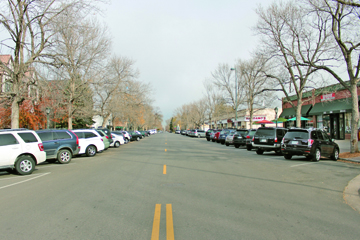
That building currently sits vacant as it has for years, living previous lives as a movie theater and Korean church. Nestled on Kearney Street, the commercial block resembles the Gaylord or Wash Park neighborhoods with commercial streets with small restaurants, local businesses and a few condos. Some residents of the area think the quaint and quiet atmosphere will be disrupted by Bardenay going into the building, according to Marcin Biegunajtys, HOA president and owner of the condos next door to the proposed Bardenay.
“Everything about it scares me, from traffic, from increased activity which is going to potentially cause more car theft, any number of things, to drunk driving,” Biegunajtys said.
The block has 70 parking spots with residential street parking surrounding the area. Settles said his restaurant and distillery is proposed to have 226 seats with about 20 employees on shift at a time.
While those for the business have left many positive reviews on social media sites like Facebook and Nextdoor, the opposition has been very vocal, posting anonymous fliers and writing a letter to the editor in The Denver Post and colle cting 138 signatures for a petition that calls for the restaurant distillery to be no more than 125 seats, 25 percent larger than the neighborhood’s largest restaurant, according to the petition, and a commitment to off-street parking solutions for at least 50 percent of its driving guests.
Diana Buirski, Park Hill resident, said many of her neighbors signed initial polling documents from a third party polling firm attorneys for Bardenay hired. Later some neighbors regretted signing, not knowing the true size of the establishment. According to neighborhood hearing documents, the polling company Bardenay hired acquired 148 signatures.
“What I’m hearing in Denver is nothing compared to what I got in Idaho because they are anti-alcohol,” Settles said.
In addition to parking, those who oppose th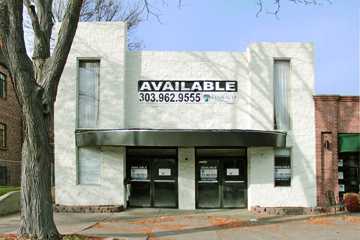 e current Bardenay proposal are worried about drunk driving, as the location is near a middle school and gymnastics gym. Marianne Rinehart, Park Hill resident and E.R. nurse, is particularly concerned about drunk driving and said “safe serve” is not enough to keep drunks off the street.
“That doesn’t work,” Rinehart said. “I work at University [hospital]. We see 300 patients a day. You have people who come that are drunk drivers that think they are fine — that they’ve had three drinks. I mean, the stuff that I’ve seen is just … you can’t look at someone and say that person is okay.”
Settles said his business has a “tremendous” reputation in Idaho.
“Based on 17 years in the business, I don’t think we’re going to have the problems the neighbors are worried about,” Settles said. “We’re not a noisy joint. We’re not a drunks’ bar. We’ve never had an infraction against our liquor license. We never over-serve.”
Todd Johnson, part owner of the building, grew up in Park Hill and said he would not put a tenant in his building that would harm the neighborhood. Johnson said the space is large and has high ceilings in the back, perfect for a brewery or distillery, in fact many of the potential tenants were breweries, but Johnson felt the neighborhood needed something more unique.
“I’m very excited for Park Hill. We were very selective on having a tenant that would be a very positive business that would be creative to the lifestyle and property values and all together be a benefit to Park Hill. I care about that as a former Park Hill resident and as a son of folks that live two blocks away on Kearney Street,” Johnson said.
Tommy Gilhooly, former owner of Oblio’s Pizzeria and Park Hill resident, said this type of pushback is familiar to him.
“I also had some pushback when I became the sole owner … and applied for the full liquor license,” Gilhooly said. “We had some local neighbors that were concerned. It’s pretty crazy how history is repeating itself because the concerns that are being voiced now like parking, like crowding, people getting in their car and driving drunk from a community establishment, those were concerns that were voiced about our liquor license application about 10 years ago, and none of it came to fruition.”
The neighbors said they are excited about a new restaurant going in the building, but the size of the establishment is the main issue, and they are hoping to work together across the aisle to create a perfect fit for the neighborhood.
“Initially when I heard there was a restaurant moving in I was all for it. I was all for having something there, not a 240 seat distillery,” Rinehart said.
“We’re proposing that we work together on a scale that’s more appropriate to the district and no one is suggesting that they don’t open or that we don’t want development, no one wants a vacant building either, that raises safety concerns too,” Buirs ki said. “I think to have something the size of a Chili’s [with no onsite parking] suddenly on a one-block neighborhood retail area, I just don’t see how they’ll do it without everything else having to change to fit that.”
Still waiting on some permits, Settles said his casual restaurant distillery is “possibly close, but not a done deal.”
by Mark Smiley | Dec 22, 2016 | Main Articles
Scorched-Earth Legal Campaign Suddenly Collapses
Glendale Emerges Triumphant In Federal And State Courts
by Charles C. Bonniwell
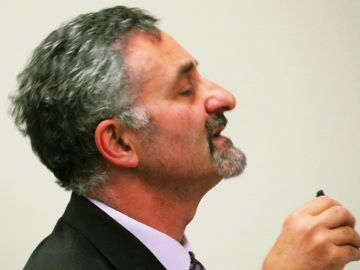
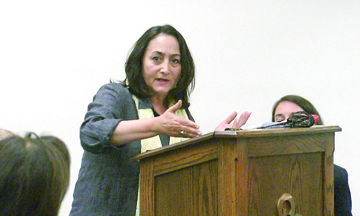
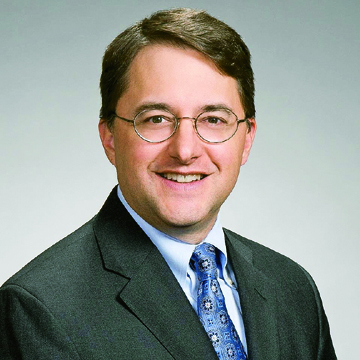
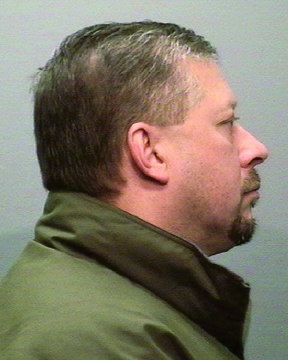
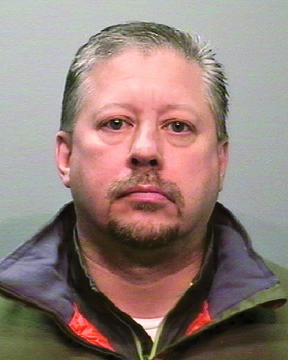
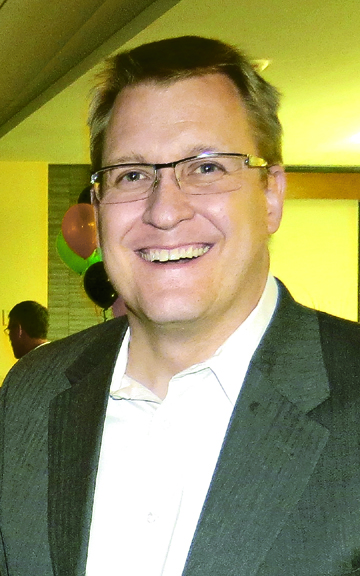
 The extraordinary scorched-earth legal and public relations campaign by Mohammad Ali Kheirkhahi, his family members and the corporation named for his initials M.A.K. Investments LLC (M.A.K.) against the City of Glendale, its employees and elected officials has come to a sudden and shocking end.
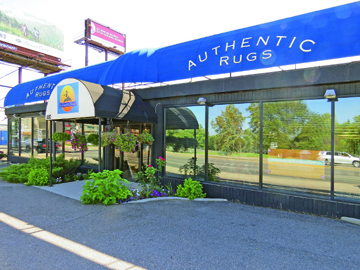
Kheirkhahi and his family members own Authentic Persian & Oriental Rugs at 550 South Colorado Boulevard as well as associated 3.8 acres of developable land between E. Virginia and Cherry Creek where they want to build a massive apartment high-rise. The high-rise would be in contravention of Glendale’s Master Plan and zoning laws as well as the apparent overwhelming sentiment of residents of Glendale and adjoining Denver neighborhoods.
On November 21, Federal District Court Judge R. Brooke Jackson dismissed all the federal claims brought by M.A.K. against the City of Glendale and related entities. Colorado District Court Judge Charles Pratt had previously dismissed four sets of claims brought in state court by M.A.K. in different proceedings, but one claim remained relating to an alleged violation of the Colorado Open Meetings Act scheduled for trial this January.
On the eve of a highly expensive deposition scheduled in Houston, Texas, M.A.K.’s attorneys contacted Glendale’s City Attorney Jeff Springer stating that M.A.K. might be willing to dismiss this final claim provided Glendale waived any right to attorneys’ fees and costs relating to all the litigation. Glendale refused. M.A.K.’s attorneys were forced to file a Motion to Dismiss with Prejudice for their lawsuit noting Glendale reserved the right to seek attorney fees and costs against them.
It is believed that M.A.K. has spent somewhere between a half million and a million dollars in attorneys’ fees and costs and associated public relations expenses in its campaign against Glendale over the last 18 months without a single claim ever even going to trial. How a relatively small rug shop on Colorado Boulevard could possibly afford such a massive amount of expense in such a short space of time remains a mystery to many. What M.A.K., Kheirkhahi and his in-laws intend to do next is not known. Their actions over the last 18 months, however, have brought them the enmity of not only many of the citizens of Glendale but also residents of Denver and the entire Cherry Creek Valley.
The March On City Hall
It all began on May 12, 2015, when Kheirkhahi, his brother-in-law Saeed Kholghy, and his sister-in-law Nasrin Kholghy launched a wholly unexpected and unanticipated “shock and awe” march through the streets of Glendale ending at City Hall for a regularly scheduled Tuesday night City Council meeting.
Heading up the march along with the threesome was nationally feared paramilitary militia group “The Oathkeepers” who were an integral part of the Bundy Ranch standoff and the Ferguson, Missouri, fiasco. Joining them were hundreds of other extended family members and M.A.K. supporters. Minority and other citizens of Glendale who were simply anticipating attending a regular City Council meeting were forced to run a gauntlet of glaring and chanting Oathkeepers and other militant supporters to be able to get into City Hall itself.
Kheirkhahi had also engaged public relations firm Stratton Carpenter and Associates who convinced all the major Denver stations with camera crews to cover the meeting. The meeting for Kheirkhahi was orchestrated by Phillip Applebaum of the Virginia based Institute for Justice. Oathkeepers and other speakers declared that if the City Councilmembers did not immediately give in to the demands of Kheirkhahi and his family, they would have them all recalled from office.
The City Councilmembers and city staff initially reeled under the attack. All were at a loss over what was happening. The City had for almost two decades wanted to build an eating and entertainment district initially called “The Riverwalk” and later retitled the “Glendale 180 Project” as envisioned for in the city’s Master Plan. Kheirkhahi and the family had acquired the land in 2006 after reading an article in The Denver Post outlining the dreams and aspirations of the city to build the Riverwalk.
According to city officials, at all times prior to the “shock and awe” march, Kheirkhahi and family had supported the Riverwalk/Glendale 180 concept and they were integral in its planning. Glendale had asked M.A.K. what it thought its land was worth for the purpose of obtaining bonding for the project. At the May 12 meeting representatives claimed that the request was tantamount to a threat of condemnation which once again baffled city officials. The city repeatedly tried to assure M.A.K the city had no intention of condemning the M.A.K. land, but that appeared not to matter.
Thinking that M.A.K. simply wanted Glendale to buy the land at above market rate, the city gave M.A.K. a formal offer for $11 million and indicated a willingness to negotiate. M.A.K. summarily dismissed the offer and rebuffed any negotiations. It then began an avalanche of lawsuits in state and federal court with some of the highest priced lawyers, both locally and nationally, with reputations of never settling and virtually always taking cases to trial.
The Light Goes On
What M.A.K. and Mohammad Ali Kheirkhahi and family really wanted, according to the city, was finally revealed at the start of 2016 when they brought iconic Denver developer Dana Crawford and an all-star cast of consultants to Glendale City Hall for a meeting with staff that was openly recorded by the city. They showed pictures of massive, up to 60 story, high-end apartment buildings in Tehran, Iran, and Austin, Texas. (See “Wealth Rug Merchants Plans Exposed,” March 2016 Glendale Cherry Creek Chronicle).
Crawford was recorded stating that the proposed building “could be just sensational and observable from almost the entire metropolitan area.” She appeared to believe the numerous lawsuits and negative publicity directed at the city made it uniquely amenable to M.A.K.’s grand plan stating that in Glendale, unlike Denver, you would “be able to do things that are not going to get people hysterical about blocking their views.” Another consultant, Bill James, deminimized the likely massive parking and traffic concerns on Colorado Boulevard stating that people have “been sort of seduced by the car — we’re moving away from that.”
Crawford went on to assure city officials not to worry that “there is, you know, there’s some sugar in it, a special sugar in it for the community . . . taking care of some that need a little care.” Consultant David Tryba pointed out with massive density the M.A.K land could be worth as much as $750 a square foot which translated to $124 million for the M.A.K property. Considering that M.A.K. had bought the land for $6.5 million in 2006 the potential payday to M.A.K. was enormous. Glendale officials now believed they finally understood the purpose of the “shock and awe” march on City Hall, the unrelenting negative publicity campaign and the avalanche of extraordinarily costly litigation all orchestrated by Mohammad Ali Kheirkhahi and his family.
They believe the purported fear of possible condemnation was little more than a ruse to garner initial public sympathy. They surmise that Kheirkhahi knew that Glendale would not give in to the demands for super high density in contravention of city planning for at least the last two decades absent extraordinary pressure. That pressure would be accomplished through lawsuits from high-priced attorneys and a sophisticated, and at times stealthy, P.R. campaign which would threaten to destroy the reputation of the city and individual members of the City Council as well as members of city staff.
The tape of the meeting with Dana Crawford was obtained by the Chronicle from Glendale pursuant to a Colorado Open Records request and posted on the website of the Chronicle. The tape turned many prior supporters of M.A.K. against them including the Editorial Board of The Denver Post, as well as, the local television stations. What M.A.K., Kheirkhahi and his Kholghy in-laws were really up to became apparent to almost everyone.
Local citizens and neighborhood groups began to attend Glendale City Council meetings demanding that Glendale hold firm and not give in to the demands of M.A.K. (see “Glendale Residents and Denver Neighborhoods Pour Into Council Meeting To Oppose ‘Death Star,’” May, 2016 Glendale Cherry Creek Chronicle). M.A.K.’s inchoate building plan started to become known locally as the “Tehranian Death Star.”
More Pressure
Nothing, however, seemed to phase M.A.K. whose only response was to turn up the heat even more. Jeanne Price, a Denver blogger, suddenly appeared at Glendale City Council meetings to excoriate city staff and City Council members claiming they were engaging in unlawful conduct. She requested thousands of pages of city documents pursuant to the Colorado Open Records Act which she hoped could be used to bring claims or charges against individuals. (See “Persian Rug Merchants Have Denverite Jeanne Price Digging Hard For Dirt” February 2016 Glendale Cherry Creek Chronicle).
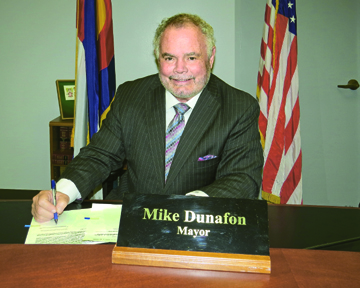
What M.A.K. had not counted on was how resolute Glendale Mayor Mike Dunafon could be. Dunafon finally had enough of Price and exposed that much of what Price was claiming at public meetings was patently and demonstrably false. (“Jeanne Price Exposed — Tapes Caught Her Allegedly Dissembling in Front of City Council” November 2016 Glendale Cherry Creek Chronicle).
But the documents dug up by Price were apparently being used also by other outlets to defame City Council members. On February 6, 2016, Colorado Ethics Watch filed an Ethics Complaint against Mayor Mike Dunafon and later M.A.K.’s lead attorney Russell Kemp of the law firm Ireland, Stapleton, Pryor & Pascoe P.C. filed an Ethics Complaint against then-Councilman Jeff Allen. Both claimed that the individuals should not have voted on certain different matters. Both complaints were eventually found to be frivolous and without any basis but both complaints had their intended effect of unfairly harming the reputations of the councilmen involved.
The Ethics Complaint against Mayor Dunafon was put out on the Associated Press wire and picked up nationally in papers across the United States. Dunafon noted after the Ethics Complaint against him was dismissed as frivolous that although the accusation went out nationally his exoneration was picked up by no one.
Enter The FBI
Even more ominously persons associated with M.A.K. also allegedly went to the Denver office of the Federal Bureau of Investigation to claim that any opposition in Glendale or Denver neighborhoods to its plans for a massive high-rise was a form of “Islamophobia.” The United States Department of Justice under Attorney General Loretta Lynch was then engaged in an extensive campaign to intervene in local municipal zoning decisions on behalf of landowners wanting to build mosques. Moreover, it is believed that M.A.K. sought investigations against local Glendale officials and elected office holders asserting corruption based in large part on the discredited allegations of Jeanne Price among other claims.
The Glendale Cherry Creek Chronicle began to receive panicked calls from individuals who were quoted in the paper in opposition to M.A.K.’s apartment project. They were being harassed by a thug-like private investigator from Tennessee, by the name of Charles Johnson. He had attempted on a Saturday night to gain entrance to the apartment complex where Glendale City Clerk Sherry Frame lived. Various individuals filed harassment complaints with the Denver and Lakewood police against Johnson. Johnson would later claim he was under contract with a female writer/journalist whose name he would not reveal. Persons associated with M.A.K. including Jeanne Price vehemently denied that they had hired Johnson.
Johnson was arrested by the Glendale P.D. when he later returned from Tennessee to harass and intimidate readers of the Glendale Cherry Creek Chronicle. He was charged with acting as a private investigator in Colorado without a license. Johnson had on him three current driver’s licenses from three different states and it was discovered that he was not even registered as a private investigator in Tennessee.
To the astonishment of all, the Denver FBI then demanded that Arapahoe District Attorney George Brauchler dismiss all charges and quash all warrants against Johnson “for reasons that can’t be disclosed.” (See “Phony P.I. — FBI Mole Or Worse? All Charges Dismissed Per FBI” June 2016 Glendale Cherry Creek Chronicle).
D.A. Brauchler refused to do so unless the FBI demanded the same in writing which he made public thereby disclosing that Johnson’s real employer was the FBI Fox 31 News Denver also discovered during an interview with Chronicle columnist and 710 KNUS radio host Peter Boyles that the Chronicle’s offices were under surveillance by a cameraman in a car. Moreover, citizens who filed complaints against Johnson were hauled before the FBI where it was revealed that the FBI was monitoring Boyles’ daily radio show. The matter reminded many of the Scott Lee Kimball case where a local FBI operative tortured and murdered at least five women from Glendale and elsewhere all while under the control and protection of the Denver branch of the FBI.
The Special Agent in Charge of the Denver Office, Thomas P. Ravenelle, was subsequently removed from his position and the constant camera surveillance of the Chronicle’s offices ceased. Moreover, it is doubtful that the new Attorney General replacing Loretta Lynch will continue the DOJ’s foray into local zoning matters under the guise of combatting Islamophobia. But many feel that the threat of the local FBI against anyone in Denver and Glendale residents who opposed Mohammad Ali Kheirkhahi and M.A.K. may potentially continue for a long time.
Responses
If anyone anticipated that M.A.K. or Kheirkhahi or his in-laws would offer an olive branch to anyone they attempted to destroy and/or defame they would be disappointed. Nor is there any acknowledgment of the economic harm the avalanche of dismissed lawsuits caused to the City of Glendale and its businesses and the proposed Glendale 180 Project.
As with all prior legal losses, M.A.K. claimed victory through family spokesperson Nasrin Kholghy with an email to the Chronicle which stated in part:
“In a federal lawsuit challenging the constitutionality of the Colorado blight law and its notification process, a second judge recently ruled that M.A.K. could file a suit if the City of Glendale ever tried to condemn. These two court decisions greatly boosted M.A.K.’s confidence that the cloud of condemnation has finally been removed.
“We still believe that Colorado law should be changed so that private property owners are adequately informed of the impact of a blight findings on their property. When private lands can be seized after a finding of blight and there is no individual remedy, due process and adequate notification requirements should be guaranteed.”
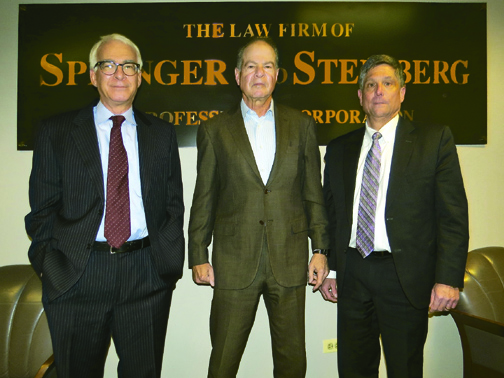
However, Glendale City Attorney Jeff Springer of the law firm Springer and Steinberg stated to the Chronicle: “The City of Glendale respects the right of citizens to unfettered access to the courts to air grievances and to pursue legitimate appeals. On the other hand when lawsuits are filed with ulterior motives or as a means to obtain leverage and when the claims are frivolous and groundless that is not consistent with obtaining justice and due process. The city is exploring its options in seeking reimbursement for its substantial costs and attorneys’ fees in defeating the claims filed by M.A.K.”
Glendale Mayor Mike Dunafon in turn noted: “This is not just a win for the businesses and citizens of Glendale, but a win for all communities in the state . . . What is unfortunate is the tremendous cost and waste to a community in defeating a scorched-earth campaign by a greedy and unscrupulous few in a town that otherwise has an enormous number of really caring and giving individuals who want to do positive things that benefit everyone.”
by Mark Smiley | Nov 21, 2016 | Main Articles
by Glen Richardson
As first shockingly disclosed by the Washington, D.C., based news publication The Hill, the highly prominent and powerful Denver based law firm of Brownstein Hyatt Farber Schreck, LLP has filed under the federal Foreign Agents Registration Act to represent the Ministry of Foreign Affairs of the Kingdom of Saudi Arabia. A copy of the Fee Agreement between the Brownstein firm and the Kingdom was leaked to 710 KNUS radio host Peter Boyles (who writes a column for the Glendale Cherry Creek Chronicle and found on page 2 each month).
Under the Fee Agreement the Kingdom is paying Brownstein $100,000 per month for a minimum of four months “to act as policy counsel . . . in connection with legislative issues of importance to the U.S. – Saudi Arabia bilateral relationship.”
The representation according to The Hill is to reverse the rights of the victims of 9/11 just granted under the Justice of Against Sponsors of Terrorism Act (JASTA) to sue the Kingdom of Saudi Arabia for its alleged complicity in the 9/11 attack. Fifteen of the 19 hijackers on 9/11 were from Saudi Arabia.
The Brownstein firm is not just any law firm in Denver. It was started in 1968 by  Norm Brownstein, Jack Hyatt and Steve Farber fresh out of the University of Colorado Law School. Both Brownstein and Farber grew up from highly humble beginnings on the west side of Denver. The firm has grown into the second largest firm in Colorado and the second largest lobbying firm in Washington, D.C. The firm has over 250 attorneys and has offices in 11 cities across the United States.
Nationally the firm is known for its political connections and locally for its philanthropic activities. It represents The Denver Post, Mayor Michael Hancock, and Governor John Hickenlooper. Both Brownstein and Farber are highly active in the Jewish community in Denver, and in the Cherry Creek Valley.
But Brownstein himself has not escaped scandal in recent years. His son Drew “Bo” Brownstein was forced to pay a $4.7 million fine in June 2012 by the Securities and Exchange Commission for insider stock trading for securities purchased in h is and his father’s names. He was later sentenced to one year and a day in federal prison by U.S. District Judge Robert Patterson, but Norm himself managed to escape any punishment.
What is so alarming to many is the fact that the Brownstein firm came to prominence as a lobbying powerhouse in Washington, D.C., due to its strong connections with the American Israeli Public Affairs Committee (AIPAC). It is a highly powerful group that lobbies for pro-Israel policies to Congress and the Executive branch.
JASTA was passed over the veto of President Barrack Obama on September 28 by a 97 to 1 vote with the only dissenting vote being Senate Minority Leader Harry Reid, and passed the House by a 348 to 77 vote. It is expected to be the only veto overridden during Obama’s eight years in the Presidency.
Notwithstanding the overwhelming votes in the Senate and the House it has been speculated that after the November 8 election and during the lame duck session, a way would be found to amend and render the legislation moot. The Kingdom of Saudi Arabia hired at least 13 other lobbying firms to get the legislation reversed including such other heavyweights as the Podesta Group and Patton Boggs.
Under the Fee Agreement the lobbying would be headed up by Alfred Mottur, Marc Lampkin and two non-lawyers. Mottur and Lampkin are among the 2016 top Washington, D.C., “hired gun” lobbyists as ranked by The Hill. Mottur works the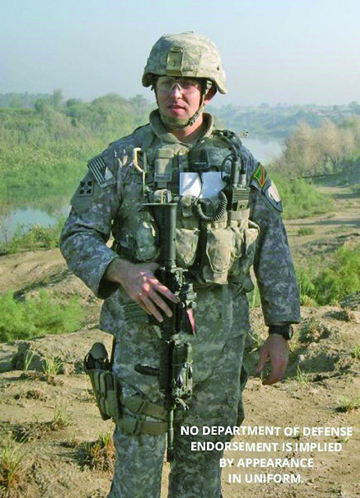 Democratic side of Capitol Hill having been a senior staffer for Senator Ernest F. Hollings (D-SC). Conversely, Lampkin is called a part of “Team Boehner” named after the recently retired Republican Speaker of the House John Boehner, as well as having been Deputy Campaign Manager for the George W. Bush for President Campaign.
Mottur called into the Peter Boyles Show on 710 KNUS and somewhat quixotically attempted to assert that the Kingdom of Saudi Arabia had hired him to protect U.S. servicemen abroad from possible lawsuits. Retired Army veteran George Athanasopoulous who served four tours in Iraq as an infantryman was in studio when Mottur called. He later called Mottur’s dissembling on air who and what he was hired to lobby for “comical if it wasn’t so tragic.”
He went on to note, “He was destroyed on air by Peter [Boyles]. I don’t know how anyone would want the Brownstein firm to legally represent them knowing that they were registered foreign agents for the Kingdom of Saudi Arabia working to screw over the 9/11 families. Mr. Brownstein and Mr. Farber should be ashamed of themselves.”
by Mark Smiley | Nov 21, 2016 | Main Articles
Local Judges Provide ‘Get Out Of Jail Free Cards’ To Honduran And Mexican Drug Cartel Members
by Charles C. Bonniwell
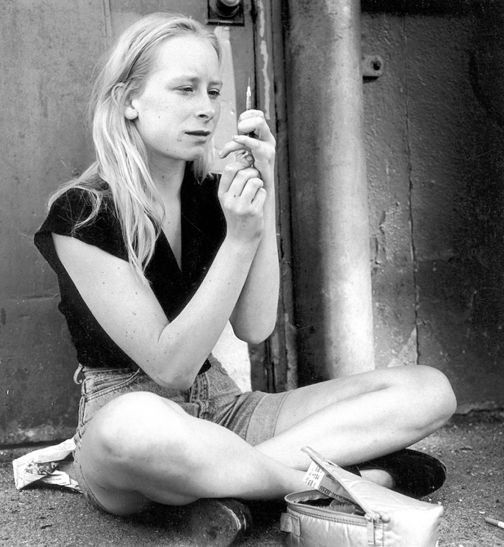
The City and County of Denver has become, according to federal law enforcement authorities, one of the leading centers of heroin distribution in the entire western United States. One need only walk along the Cherry Creek Bike Path which is littered throughout with used heroin needles to bolster this assertion.
Colorado Attorney General Cynthia Coffman has declared, “Heroin use in Colorado has reached epidemic proportions, as witnessed by a thriving market for brown powder heroin and criminals willing to risk a lifetime in prison to profit from the demand in opioids.” Local authorities state that there has been a tenfold increase in heroin addiction and deaths in the last several years in Denver.
Local and federal drug enforcement agents also inform the Chronicle that the portion of Ms. Coffman’s statement concerning “a lifetime in prison” is not factually correct. In fact, in the City and County of Denver, Honduran and Mexican drug dealers have virtually no risk of any jail time even after having been arrested for heroin dealing multiple times due to bail procedures adopted by Denver courts as they apply to individuals in the United States illegally.
According to Barbra Roach, Special Agent in Charge of the Denver Region for the federal Drug Enforcement Agency, the Sinaloa drug cartel based in northern Mexico and once run by El Chapo Guzmán controls hero in distribution in Denver and throughout Colorado. Roach states that “the Sinaloa cartel is in control of the Denver area.”
The cartel utilizes 17- to 20-year-old Honduran and Mexican nationals it transports to Denver to distribute the deadly drug. If a cartel member is arrested for heroin distribution by the Denver police he is taken to the City and County jail where bail is determined by the Denver County Court system headed up by Presiding Judge John Marcucci. At the bail hearing it is deemed irrelevant that the cartel member is in the country illegally, that he has no known address or any valid identification or even the severity of the crime. Given the fact that most cartel members are taught to state that they are indigent, no bail is req uired of any amount and the cartel drug member is released on his own personal recognizance (PR) which one drug enforcement agent called it little more than a “pinky swear” to return to court.
The cartel members, of course, seldom show up for their next hearing. While many of those arrested would then be moved on to another city by the cartel to distribute heroin the situation has gotten so egregious in Denver that few bother. The mere fact that you have failed to previously appear for a court hearing is also not considered at the subsequent bail hearing if you are arrested once again. Thus cartel members are regularly arrested for heroin distribution, released on personal recognizance bond, fail to appear for the next hearing, be arrested again and then released again in a never ending revolving door.
Since Denver is a “sanctuary city” legal status of someone arrested is never sought to be determined and if known never conveyed back to federal immigration authorities. Thus there are advantages for Sinaloa cartel members to admit they are here illegally and have no permanent address or place of abode in the United States.
According to a report by KDVR Channel 31, over the last several months, 26 heroin dealers have been arrested in Denver and have asserted they were here illegally from Honduras or Mexico. Seventeen of these dealers were released on personal recognizance and 14 of those did not return for their next hearing.
One such person was Armando Diaz, age 21, arrested on April 30, 2016, at a routine traffic stop. Diaz had no ownership paperwork for the vehicle o r any driver’s license and the VIN number on the automobile had been altered. In the car was a bag containing methamphetamine as well as a large quantity of money in separate bundles along with a brick of narcotics. Also there were socks filled with narcotics in the glove compartment. Searched at the jail, Diaz had a small bag of heroin visibly hanging from his rectum. Several hours later Diaz was released on a PR bond never to return.
Another one of those individuals was 20-year-old Sergio Garcia Reyes who was arrested in June of this year with a balloon of heroin in his mouth as well as containers in his glove box. The car he was driving had a fake temporary license plate and the only identification he had was apparently a fake one from Mexico. He did not speak English but through an interpreter stated he had been in the United States for two months. He was quickly released on personal recognizance. He failed to appear for his arraignment, but was rearrested in August. Somewhat amazingly this time bond was set at $2,000 which the asserted indigent Reyes quickly had posted by another apparent cartel member and he has not been heard from since.
Heroin distribution is not a victimless crime. Matt Lazarus, son of Denver resident Chris Lazarus, was sold a lethal dose of heroin by a Honduran cartel member. She stated “they are putting the people that killed my son . . . back on the streets. Why in the world would you let them go?”
Denver term-limited District Attorney (DA) Mitch Morrissey blames the local judges and, in particular, County Court Presiding Judge John Marcucci. He told Channel 31, “It’s the judge that’s responsible for what happens after they give someone a PR bond.” Essentially, the DA argues, the local Denver judges have made heroin distribution legal in Denver if performed by some cartel members here illegally from Honduras or Mexico which in turn fuels
  the heroin in Denver and throughout Colorado.
Judge Marcucci, in turn, apparently blames Denver District Attorney (DA) Mitch Morrissey who he deems to be a duplicitous individual stating that the DA never sends anyone to the bail hearings to demand a fiscal bond even though there are public defenders there demanding that the suspect be released on his own personal recognizance. Marcucci also points out when county court judges were sued in Denver District Court in 2013 for requiring fiscal bonds, Morrissey’s office refused to defend them and left the matter to the largely incompetent City Attorney’s Office who lost the case.
Both blame the system stating that the Colorado State statute determines what can be considered in a bail hearing. Moreover, the United States Justice Department has argued in a federal court case that requiring a fiscal bond of any kind for a person alleging that he is indigent may be a violation of the U.S. Constitution.
But Arapahoe County District Attorney George Brauchler points out in no other judicial district other than the City and County of Denver are heroin dealers routinely let go on personal recognizance bonds.
In the meantime, the heroin epidemic grows and grows and an increasing number of young people are dying of lethal heroin dosages in the City and County of Denver and throughout Colorado. As stated about the ever increasing death toll from the AIDs epidemic in the 1980s, “the band plays on” while local authorities simply point fingers.