by Mark Smiley | Feb 29, 2016 | Main Articles
by Megan Carthel
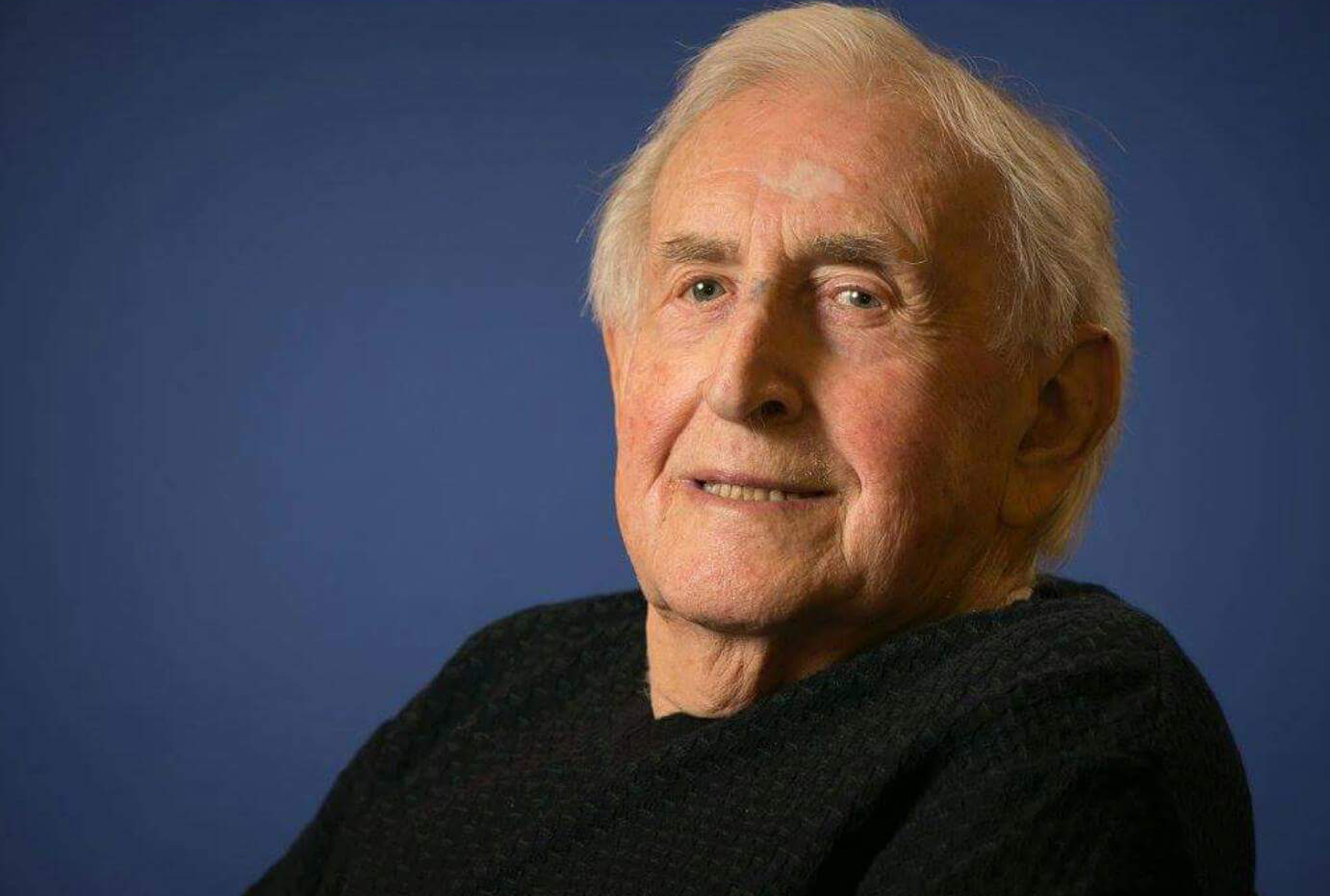
Jack Barton, founder of Kacey Fine Furniture, is proving you’re never too old to start over. The 92-year-old successful businessman is now a stand-up comedian.
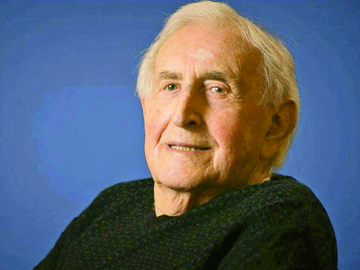
Barton was Governor Hickenlooper’s landlord when Hickenlooper first opened Wynkoop Brewing Co. in lower downtown Denver in 1988. Before Hickenlooper turned the brick building into Denver’s first brewpub, it had been a warehouse for Kacey Fine Furniture. Barton became Hickenlooper’s landlord and equity participant in Wynkoop Brewing Co.
Barton has always been a Denver man, growing up on the west side, and graduating from West High School. Later he attended college at D.U. Barton sold insurance for one year before he spotted a business opportunity he couldn’t pass up — furniture. Barton said he saw no “brain surgeons” in the furniture business, so he opened up his own store in in 1948 which grew to five locations. One of his daughters, Leslie Fishbein, joined the business in the mid-1970s after graduating from the University of Colorado. She was president of Kacey Fine Furniture when she tragically died in 2008.
But out of all of Barton’s accomplishments, comedy is his true passion. “I should have done this years ago,” Barton said.
Now, Barton is proving you’re never too old to start over. “My friends ask me why I’m doing this, and I said to them, ‘you know it’s like putting your penis in a fan, but this is more painful,’” Jack said starting off his set at Noonan’s Sports Bar and Grill in Aurora.
Jack’s journey to comedy has been a life-long one. Comedy and a lovingly sarcastic humor has always played a role in his and his family’s lives. In fact, comedy is a family affair. His daughter, Terri Barton Gregg, is also a stand-up comedian. So when Barton Gregg’s dad decided he wanted to be a comedian, she encouraged him to chase his life-long dream.
“I said if it’s on your bucket list, you better take it off pretty fast,” Barton Gregg said.
Pulling from his recent experiences and adventures, Jack writes all of his own jokes and material — recalling them effortlessly and confidently on stage. “It seems like magic,” Barton said. “All of a sudden you’re there and the crowd is out there and you become very calm. And the thing is, you hate to give up the mic. You want to be there all the time.”
And, Barton does want to be on the stage all the time, occasionally doubling his stage time, but no one minds. Barton’s set is not only engaging and seriously funny, it’s also very apparent he’s having fun — a contagious smile and spirit that adds to his show and radiates through the audience. His material is original, comparatively clean and classic. Barton first debuted his stand-up comedy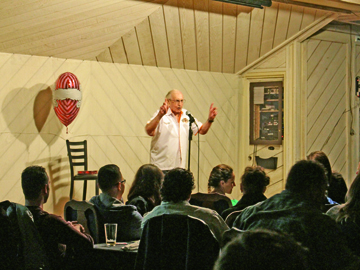 in November 2015, close to a year after having two brain surgeries. It’s obvious Barton has lived his life to the fullest, and with that, amassed wisdom.
“If you can’t laugh at something, really you’re a very sad person. You have to be able to laugh at yourself,” Barton said. Barton often pokes fun at himself during his sets, but never at the audience. He said he doesn’t like to go for the “shock treatment” that some comedians use to get the audience’s attention. Instead, Barton’s cool demeanor, quick wit and smart presentation grab the audience. He’s even gotten four standing ovations in 11 shows. Comedy, Barton said, has always been his hidden talent.
“Most my life I’ve been able to convince somebody with humor,” Barton said.
Barton’s wife, Shirley, is a little shyer than her comical family members, but she is a regular at both Barton and Barton Gregg’s shows. She said she won’t be joining her husband on stage anytime soon, and not only fully supports his decision to be a comedian, she’s thrilled about it. “I think it’s wonderful. I think a person who can find himself a second time is really lucky,” added Shirley.
Shirley isn’t the only one who thinks what Barton is doing is wonderful. Fellow comedian Brent Gill thinks Barton is pretty awesome. “It’s the best thing you could ever see,” Gill said. “He crushed it.”
Gill describes Barton’s style of comedy as the classic and great old-school one-liners. “He comes from a different era of life and a different era of what he finds funny and what comedy is to him,” Gill said. “It’s fun to see that again. It’s like a throwback to old school comedy.”
But comedy, to its core, never gets old according to Barton. Funny is still funny, and after all, old is a relative term and age just a number. Barton Gregg said her dad truly has found his purpose, something that everyone needs.
And who is Barton’s favorite comedian? His daughter, Barton Gregg. To that, she said, “He’s my favorite dad.”
by Mark Smiley | Jan 29, 2016 | Main Articles
Thrust From 40-foot High Rocket Ship Expected To Ignite Huge Crowds, Create Carnival Atmosphere But That Doesn’t Thrill Some Residents
by Glen Richardson
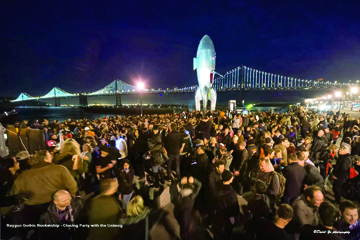
 A rocket originally built in California and first tested on Nevada’s Black Rock Desert is taking aim at Denver. Target is the Lowry neighborhood, site of the nation’s first Titan Missile Base. Ground zero is Hangar 2 on the corner of East Academy Blvd and Rampart Way.
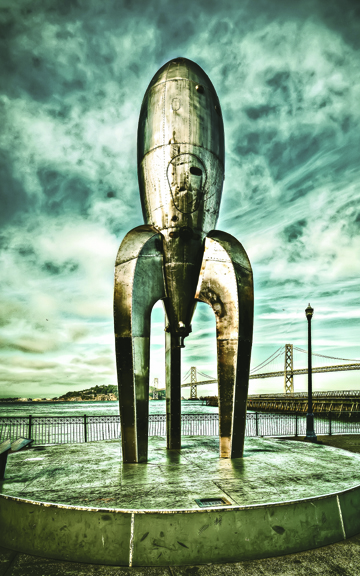
Holy Moses! Luckily this isn’t a High Velocity Aircraft Rocket — such as those the armed forces nicknamed Holy Moses — but instead is a sculpture identified by the moniker of Raygun Gothic Rocketship. It was built by a group of artists, geeks and inventors in the San Francisco Bay area, not rocket scientists.
 Jim Hartman of Boulder-based Hartman Ely Investments — partner with Larimer Associates in Lowry’s Hangar 2 development — is behind the orbital maneuver to land the spacecraft here with expectations of hooking a lucrative payload of sightseers. A circular kiosk is proposed on the corner of E. Academy Blvd and Rampart Way, with the rocket ship sculpture installed on top. Height of the kiosk would be 10 feet, 10 inches and measure 10 feet in diameter. Overall height of the kiosk and rocket ship combined would be about 50 feet. The kiosk and sculpture together would be shorter than the highest point of the hangar building and comparable in height to the tailfin of the airplane at the adjacent Wings Over the Rockies Museum.
Space Disaster?
The rocket ship, according to Hangar 2 Partners, has a realistic cockpit and other “theatrical” features. The cockpit would be accessed on a custom ladder during periodic supervised events. The retail kiosk would serve as the site’s visual launch pad. Sales of ice cream, rocket models, t-shirts and other items would help to repay the cost of acquiring, shipping and installing the rocket ship. “Like the existing B-52 Airplane at Wings, the rocket ship will be an iconic image of space and flight that will not only be a significant public amenity, but will bolster the Wing’s educational programs,” the partners suggest.
Some residents in Lowry, however, say 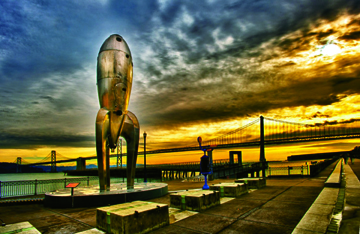 the location and environment at Hangar 2 just isn’t right and believe the ship would create a space disaster. “Of course, beauty is in the eye of the beholder, but to us the sight of this rocket ship has as much appeal as the Blue Monster at DIA,” say Michael and Irina Merson. “By no means do we imply the same karma as befell the creator of the Blue Monster. But it simply does not fit visually and aesthetically with the surroundings that already include four restaurants. It just doesn’t belong here, it belongs somewhere else.” Local homeowner Yvonne Olson adds, “The concept of an outdoor sculpture is a good idea, but only if the size fits with the area.”
Johanna Hermanson labels the piece an “ice cream rocket” and says she is amazed the developers would consider installing it at Hangar 2.” It looks as if it belongs at a carnival. Even more disturbing,” she worries, “is the amount of traffic it will produce.” She isn’t sure input from residents will have much influence on the outcome, “but I hope that Lowry rethinks the repercussions.” Betsy Herrick admits that the rocket ship is fascinating. She cautions, however, “that the proposed location
would be a distraction to drivers at the busy intersection, given its size and surprising look. Add kids climbing on it and the staff supervising them, and the distraction is even greater. Insert buyers at the ice cream shop, and there’s more congestion. All in a small space.” She is also dismayed that the developer looked outside Colorado for artists.
Science Fiction
Intended to invoke the romantic notion of space travel before it became reality, the ornate and futuristic ship is a highly stylized vision of space travel circa 1930s-1940s science fiction, according to the organization behind the piece. Using colloquial language, the Raygun Gothic Rocketship website declares, “It is between yesterday’s tomorrow and the future that never was.” To everyone else, it’s a 40-foot tall metallic silver rocket ship.
Artists claim the piece was once launched off the ground. That claim, however, is doubtful considering the sculpture doesn’t have an engine.
It initially landed at Burning Man 2009, a festival for academics, geeks and suburban parents that gather on the Nevada Desert each year. It was then installed at Pier 14 in San Francisco where it was a huge success and remained on exhibit for more than two years. Subsequently it was displayed at NASA’s Ames Research Center, Moffett Field, Calif. Most recently it landed at a five-day Arts, Science & Engineering event in Calgary, Alberta, Canada. It would become a permanent art piece should it land in Lowry.
Flight Gone Awry
Anthony Romeo — a former WWII Na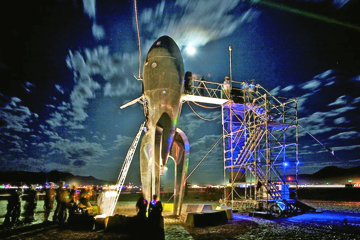 vy and United Airlines pilot who retired from United after 31 years — tells the Chronicle, “I am concerned about the Dining District property.” He admits that installation of the a
 musement park quality rocket ship will not directly affect him since he and his wife live in the west building at Luce Condominiums that is out of the line of sight. Still, he says, “To my way of thinking, it is totally out of character with the existing ambience of that complex.”
A volunteer at the Wings Museum for more than 10 years, he remembers the site as originally being a bleak looking property. “Over the years I have seen the museum property survive a number of ill advised redevelopment proposals. Then, fortunately, Mr. Hartman saved it and created the very desirable complex that we all presently enjoy. Why he would now change course and destroy his well done project puzzles me,” he wraps up.
Resident Marge Mahoney agrees. Also from an aviation family — her husband and son are Captains for American Airlines — she believes Hangar 2 is a bad place for the cold looking rocket ship. “Why not a beautiful tree in that location? It would warm up the area and be much less expensive.” She says she is also appalled Lowry voted for the extensive building now underway at Quebec, First Ave. and Monaco Parkway.
Hovering At Hangar
A rocket flying toward the ground is usu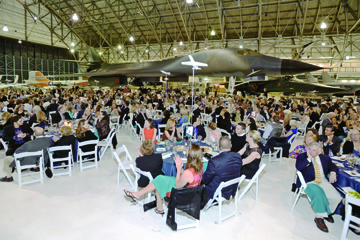 ally a bad precursor, especially for those living at ground zero. That’s the situation faced by the 66 residents living in the Luce Condominiums, a mid-rise condo development adjacent to Hangar 2. “Depiction of this corner as quiet and spacious is far from accurate. Many times it’s not,” clarifies Luce HOA President David Allen.
He understands that the perception of the aesthetic and historical value of the Raygun Gothic Rocketship will differ. However he contends that the negative impact of drawing children and others to the site is undeniable, especially considering they already border on chaotic in good weather months.
“Opening of the fifth dining district restaurant, increasing participation at the fitness center, and a housing complex just across the street will serve to exacerbate an already safety-challenged, pedestrian-dense location,” he warns. The ice cream/t-shirt retail outlet at the base of the rocket ship with cars parked everywhere plus a line of children and others is a formula for accidents. “All neighbors are asking for is an opportunity to have a voice at an early juncture in the process of selecting a more benign art piece for our corner,” Allen concludes.
Hartman Ponders Response To Luce Condo Owner Concerns
As the February issue of the Chronicle was going to press, David Allen, HOA President at the Luce Condominiums adjacent to Hangar 2, received the following reply from Jim Hartman of Boulder-based Hartman Ely Investments:
“Our team wants Luce to know that we have definitely heard your concerns and are looking at a couple of potential ideas that you might like better. Those ideas will take at least a few weeks to analyze completely but I will be back in touch when we know more.” — Jim Hartman
by Mark Smiley | Jan 29, 2016 | Main Articles
by Mark Smiley
 The lawsuits, both state and federal, filed by M.A.K. Investment Group LLC, owned by Mohammad Ali Kheirkhahi, Mozafar Hemmati, Saeed Kholghy and Nasrin Kholghy, against the City of Glendale concerning the five acres of land the corporation owns on East Virginia Avenue appear to be going so poorly that the Iranian family has decided to resort to other methods to pressure the city to buy the corporation’s land for a price the city believes is clearly excessive or be allowed to build on the land in violation of the Glendale zoning laws and Master Plan.
“They appear to be going down and dirty,” declared former Glendale City Councilman R. Wayne King. “They appear to want to find dirt on anything or anyone to bring pressure on the City Council.”
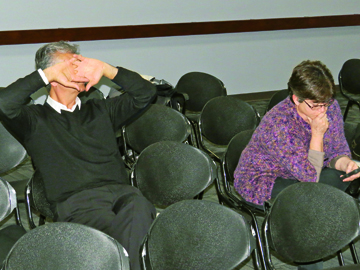
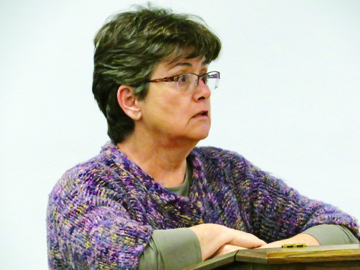
The agent for digging up possible skeletons is Denver resident Jeanne Price who describes herself as a “freelance columnist.” She makes consistent and massive Public Information Requests to the City of Glendale, notwithstanding the fact that the city has provided to M.A.K.’s attorneys over 100,000 copies of city documents. She appears at virtually every City Council meeting sitting by Mohammad Ali Kheirkhahi, the registered agent for M.A.K. At many meetings she addresses the City Council accusing them and the city of purported misdeeds and wrongful actions she claims she has discovered.
“It’s strange,” stated Glendale businessman Scott Brock who regularly attends Glendale City Council meetings, “you have a Denver resident with zero connection with Glendale who makes outrageous statements at every council meeting with little or no factual basis. But I guess it’s the way the Kholghys do business. They wonder why so many people in Glendale despise them and do not wish to have any connection with them. I hope Mohammad and the rest of them pay Ms. Price a lot of money to make a fool of herself on a monthly basis. It really is an embarrassment to any town to have someone like that around.”
At the City Council meeting on September 15 of this year she declared:
“Having read four or five years of your [Council] minutes that this Council spends more than half of its time in executive session. And that is a unique situation in my experience.”
At the following City Council meeting Mayor Mike Dunafon reported back to the Council that he had no idea where Ms. Price obtained her information. At the instruction of Mayor Dunafon, the City Clerk tabulated executive session frequency over the last five years. Her report indicated the City Council had not a single “executive session” in 2011, 2012, 2013, or 2014. In 2015 the only “executive sessions” held were those required to be provided legal advice from the City Attorney regarding lawsuits filed by her client M.A.K. which cannot be held publicly in order to preserve attorney client privilege.
“The woman is a disgrace,” stated Glendale resident Melissa Jauregui. “She almost never gets her facts right and her claims are wild and unsubstantiated. If she actually found something that the city did wrong she would have gone to the City Attorney, the County Attorney or the U.S. Attorney or to a court. But she doesn’t. She just tries to make herself as unpleasant a human being as possible at every City Council meeting. That is apparently her purpose as the agent for this group.”
Glendale resident Doug Stiff noted, “She is a technique used by Mohammad Ali Kheirkhahi and the Kholghys. Make life as miserable as possible until people are so worn down that they are given their demands no matter how terrible it would be for the city. This must have worked for these people before, but they certainly know how to get a whole city to dislike them. They brought in the racist paramilitary group the Oath Keepers who intimidated minorities and others at a City Council meeting. When that didn’t work they flooded the city with lawsuits, and now Ms. Price. I believe no city, and I mean no city in the world, would want Mohammad Ali Kheirkhahi and the Kholghys as part of their community.”
Ms. Price was contacted by the Chronicle regarding an accusation that she had followed Councilmember Jeff Allen after a public meeting, and was asked who was paying for her time and why she, as a Denver resident, speaks at Glendale City Council meetings. She responded, “This is ridiculous, I don’t think I have anything to say to you. It’s absurd.” She then hung up the phone. Calls to Mohammad Ali Kheirkhahi have not been returned.

by Mark Smiley | Dec 17, 2015 | Main Articles
City Of Glendale Takes Extraordinary Measures
by Mark Smiley
While 2016 is the Year of the Rat in the Chinese calendar, the City of Glendale is trying to ensure that 2016 becomes the Year of No Rats in Glendale. Construction up and down Leetsdale Drive the last few years has disturbed rat nests — in both Denver and Glendale. An infestation of rats has dominated portions along Leetsdale Drive including North Glendale and  surrounding Denver neighborhoods. These demolitions, tear downs and new developments cause the rats to look for new havens. Rodents run to the nearby buildings, producing a deep howl of rage from the residents.
In a small city like Glendale a problem doesn’t take long to move up the food chain to the mayor of the city, Mike Dunafon. “Residents from complexes in North Glendale would approach me and call me informing me of the rat problem,” said Dunafon. “I realized we needed to take immediate action along with the Glendale Police Department. I even got calls from various complexes that are in Denver, but I had to refer those over to the appropriate persons in Denver.”
The reason the problem cannot be ignored or overlooked is because rats are dangerous. Besides being simply unpleasant, they are frequent carriers of many diseases. Dr. Matt Perzanowski, a professor at Columbia University’s Mailman School of Public Health, whose research is focused on understanding the exposures that lead to allergy and asthma, said that rats and mice have special protein that could be a culprit in allergic reactions and, though it is less studied, probably to asthma as well.
Rats like to live where people live. They quickly adjust to the neighborhood. Rats can thrive on just an ounce of food and water daily, so when they enter a neighborhood and gain access to meat, fish, vegetables and grains, they will stay. Rats prefer to feed in and around homes, restaurants and businesses. But they will settle for scraps from trash bags and cans, private yards and what they find at the community refuse disposal and transfer station. Rats get the shelter they need from tall weeds and grass, fences and walls, rubbish piles and abandoned appliances.
Rats move freely in and out of buildings in the neighborhood, so any steps that neighbors take to control rats will encourage them to move into a nearby building. A community effort works best, where everyone in the neighborhood takes steps at the same time to prevent rats from entering the buildings and to remove their food and shelter.
Managing rats comes down to three things: food, water and shelter. Eliminating these three goes a long way to solving  a rat problem. The City of Glendale’s goal is to make the necessary changes to remove food and eliminate harborage that is attracting rats to sites around Glendale and surrounding Denver neighborhoods.
Currently, the City of Glendale has contracted with Checkmate Pest Control and its owner Russell Carter. “The rats are most likely coming from Cherry Creek and they are able to move freely up and down the creek,” said Carter. “They are very good climbers, jumpers, runners, and hiders. They multiply faster than rabbits so you have to be proactive like Glendale.”
Mayor Dunafon has worked with city officials including Josh Bertrand, Director of Public Works, to help North Glendale residents feel safe again. Their efforts over the last couple of months have paid off. Glendale Public Works and Checkmate Pest Control regularly monitor city parks and sites with trash p
roblems, potential nesting areas, and adjacent problem areas in order to prevent the rat population from becoming out of control.
“We have seen a significant decrease in the amount of rats,” said Dunafon. “We are removing them and residents are once again feeling like there is progress. I am proud of how Josh [Bertrand] has helped manage this problem.”
“The mayor and Officer [Korbie] Perkins were helpful in limiting the rat situation in the best matters that were within guidelines of the city,” said Ali Langworthy, Assistant Manager of Urban Phenix. “They are still working with us diligently to continue to help us to eliminate these little creatures as quickly and efficiently as possible.”
Cities such as New York hav e been dealing with rats for hundreds of years. Fast forwarding to 2014, YouTube videos of rats on subway tracks and in a subway car in New York City went viral, as did videos of rats in a Dunkin’ Donuts in Manhattan. In June 2014, residents at adjacent Upper West Side buildings demanded an end to the rat problem they said had reached epidemic proportions, and started a rent strike.
In 2015, another YouTube video of a rat carrying a slice of pizza in the subway went viral. Within 15 hours of the YouTube upload, the video was trending worldwide on Twitter and Facebook, and within two days, the video garnered five million views.
The City of Glendale is actively taking steps to make sure they do not end up the subject of a youtube video. The key to success is to preserve public safety and kill the disease carrying rats. Rodenticides are being used in this case and have been properly applied into the burrow systems so they cannot be reached by children and animals. The battle continues along Cherry Creek but the City of Glendale is taking strides to hopefully eliminate the problem completely.
by Mark Smiley | Dec 17, 2015 | Main Articles
Hundreds Of Millions In New Developments In Glendale And Denver
by Glen Richardson
After more than two decades of coasting in idle, the portion of Leetsdale Drive that is in Glendale has shifted into overdrive. Spurred by Glendale’s growth plans, plus several ambitious adjoining construction projects in Denver, this major Cherry Creek Valley roadway is undergoing an amazing redevelopment renaissance.
Growth along this highway corridor appears to have shot out of the blocks following the redevelopment of the old Cub Foods location at Leetsdale and South Cherry Street by King Soopers. The site stood vacant 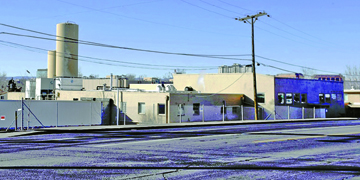 for over a half decade as the City of Glendale demanded a high end store and adjoining retail liquor establishment as a pre-condition to its approval of development plans. King Soopers unsuccessfully sued Glendale in Arapahoe County District Court prior to acceding to the city’s pre-conditions.
The highly successful new King Soopers store attracted other developers to the area. In mid-November Natural Grocers opened a new store at Alameda and Leetsdale at the old Gunther Toody’s location. Shortly thereafter the Greek Orthodox Church located at the intersection of Leetsdale and Alameda in Glendale agreed to a long-term land lease with the next- door JCC (Robert E. Loup Jewish Community Center) for property a long Leetsdale. That lease will allow the JCC (the J) to bulldoze its existing indoor tennis facility and rebuild it across Dahlia Street in Glendale.
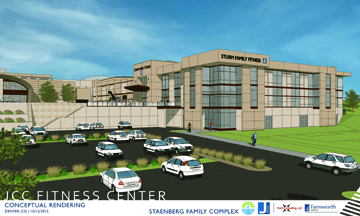
With that lease agreement in place, the JCC is launching a $50 million three-to- four-year construction project with plans to build a half dozen new facilities. First to break ground will be a new Sturm Family Fitness Center along Leetsdale where the current tennis center is located. The 87,000-square-foot, three-story facility will be the largest in the metro area and will have two full size basketball courts plus an indoor running track. There will also be nine fitness studios for personal training, yoga, group exercise, CrossFit, Pilates and spinning. Also included will be a cardio room with mountain views plus a large weight room. In addition the project includes a café plus 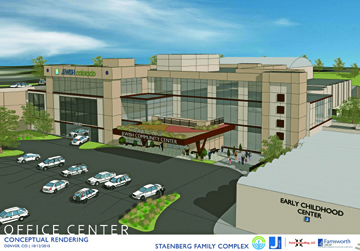 a 15,000 square foot outdoor field, lit for nighttime.
At virtually the same time period the 1.5 acres across Leetsdale that housed Four Mile Bar and a couple of homes was sold and redeveloped as a Rite Aid Pharmacy as well as a Noodles and Company restaurant.
Corridor Blossoms
With relocation of Natural Grocers to the Gunther Toody’s site in Glendale, the former location on Leetsdale Drive was purchased by Newberry Brothers for $2.4 million. The buyer has been in the greenhouse and florist business at 2nd Avenue and Garfield in Cherry Creek North for nearly 70 years. The company will use the 12,046-square-foot building on the site when it relocates to the 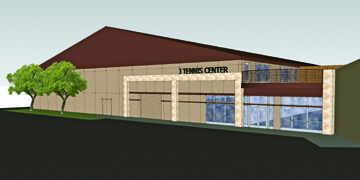 Leetsdale location later this year. The floral business also purchased the strip center at 5301-5307 Leetsdale Drive, directly adjacent to the former Natural Grocers property for an undisclosed price. That site has a roomy 1.36-acre lot that could be used for building another structure or additional parking.
Paula Newberry-Arnold, daughter of Weldon and Elizabeth Newberry who started the firm, now co-owns the business with her son Kien. She has developed the business into one of the Valley’s top floral and décor shops specializing in a variety of large themed events along with daily custom floral designs.
Near the time period last year when the grocery property transactions took place, the Hilltop Retail Center at 5512 Leetsdale Drive sold for $7.05 million. Further east on the southwest corner of Leetsdale and Holly, the 4.42-acre Dillon Dairy site at 5512 Leetsdale Drive sold for $3,950,000. Southern Food Group’s Meadow Gold Dairy closed the milk processing, packaging and filling plant that once had annual revenue of more than $20 million and employed a staff of up to 40. Equipment in the plant was auctioned off in Sept. 2014. The unnamed buyer reportedly plans to redevelop that site into retail space and possibly add a self-storage facility. Current zoning and building codes allow for a three-story or 45-foot vertical structure.
Volley Of Growth
The JCC’s new year’s develo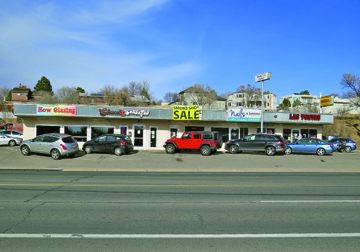 pment plan is also a driving engine for growth along Leetsdale. The J revealed it will construct a new Tennis Center on the currently vacant Greek Church property along Leetsdale.
The new tennis center will be a climate controlled fabric and metal structure featuring six ATP-approved tennis courts plus a pro shop and locker rooms. There will also be a party deck and an indoor viewing area. Players and followers will have 100 dedicated parking spaces at the center across Dahlia Street.
The JCC also plans to build a functional, fun indoor-outdoor Aquatics Center. It will feature an “Outdoor Lazy River,” plus a zero entry pool with water slide. Also included will be an indoor family pool with water slide. An indoor six-lane lap pool plus a year-round outdoor four-lane lap pool will be included.
Family Focused
The JCC’s current Fitness Center will be changed into a Family Center allowing for increased children’s programming. It will feature a large gymnastics facility with raised viewing area. There will be two large rooms for celebrations and birthday parties plus eight summer camp rooms. Also planned is an Arts Center with designated space for pottery and other media. An indoor play area for children and two dance studios will also be added. The Mizel Arts & Culture Center currently located on the JCC campus will be renovated.
In addition a new Early Childhood Center — a key portion of the J’s business and mission — will be built. The new ECC will be constructed to licensing regulations and with best practices in mind. It will include 13 updated classrooms with a centralized and secure child drop-off area.
Among the final buildings set for construction is a two-story, 42,000-square-foot office building that will house the J’s administrative offices, JEWISHcolorado and other Valley Jewish agencies. This will allow for increased efficiencies, collaboration and economies between the organizations involved. The office building will house a parking garage for added accessibility. Also planned is a space for seniors to meet and socialize as well as a Beit Midrash (House of Study), accessible to the entire community for learning and meeting. The redeveloped property will add 250 wider parking spaces. Additionally, overflow parking for large events will be available across Dahlia at the new tennis facility. Information: 303-399-2660.
Traffic And Parking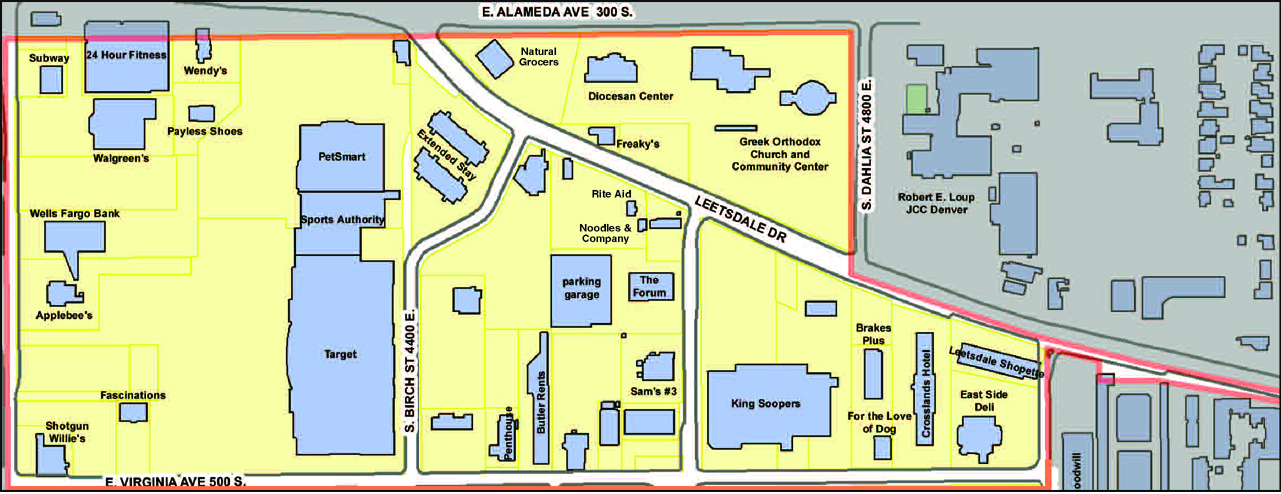
As with new developments along Colorado Boulevard and Cherry Creek North the new Leetsdale projects bring into question traffic and parking concerns. Glendale has much higher parking requirements than Denver and Glendale is generally unwilling to compromise on those requirements. In addition Glendale does consider and attempt to address traffic concerns which Denver, as a matter of public policy, refuses to consider or address. Glendale, in cooperation with the Colorado Department of Transportation, has demanded from developers land and easements to address concerns about traffic flow at the major intersection of Leetsdale Drive and South Cherry Street. To address general traffic levels on Leetsdale Drive as a whole will take Denver’s participation which at the present time Denver is not willing to undertake.
by Mark Smiley | Nov 23, 2015 | Main Articles
50-Year Park Hill Tradition Lights Up The Neighborhood
by Megan Carthel
Between 19th and Montview Boulevard on Leyden Street is an average Park Hill neighborhood. Trees line the block while the sounds of children playing fill the air. But, this neighborhood has a unique tradition.
 For every child’s birthday on the block, 86-year-old Hal Weber grabs his ski poles, a pouch full of cards and makes the march around Leyden, placing a personalized birthday card on all of the 15 homes, specific for each of the 23 children and one dog. He then lights up a “celebration tree” in honor of each birthday, a tradition he’s had since 1965.
The tradition began after Hal and his wife, Lois, purchased a pine tree and planted it in their yard. During Christmas of 1964, they colored the tree with lights — the first of many lightings of the celebration tree. Though they didn’t know it at the time, this would become an important tradition for the whole block.
“We like celebrating. We like color. We like lights. We like fun,” Weber said. “So after Christmas, it seemed foolish to me to have to wait another 11 months before we got that tree lit up out there.”
So the Webers decided to light the tree up any time their family was celebrating an occasion. When their daughter’s friend, Wendy, had a birthday in February 1965, Hal decided to light up the tree. Since then, Hal has made sure every child on the block has a special birthday.
“It was all by accident,” Weber said. “It pretty much just evolved.”
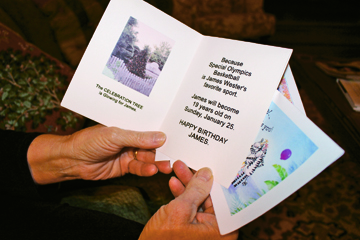
His accident has touched the hearts of many of his neighbors, including Chris Wester who has three kids. Weber has lit the tree every year for each child. Wester has kept every single card Weber has given her children. Weber normally stops the cards at age 16, poking fun at the new teen drivers, but for Wester’s youngest child James, Weber has kept the tradition alive. James has a mental disability and does not understand the concept, but Weber makes his day special every year.
 “I have to believe that somewhere inside of him, that is just a warm fuzzy for him,” Wester said. “It has to be.”
James loves basketball and plays every year in the Special Olympics with the Denver Parks and Recreation Department. Weber personalized his last birthday card with a basketball theme.
“Hal is just the most humble man, but he is so special, thoughtful, kind and gentle,” Wester said.
Wester recalls a special moment when her daughter Annie was 10. The family walked down to the celebration tree the evening of her birthday and sang happy birthday to her.
“It was so cool. I mean, how sweet can that be,” Wester said.
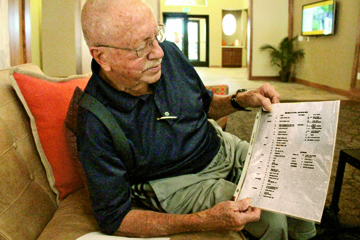
Wester said Weber is like a grandfather on the block — an extension of the family. Weber keeps a categorized list of every child on the block. The children are divided by months and a note on the side indicates the year they were born. However, Weber and his wife moved out of the neighborhood this fall and into a senior living facility — difficult news for many on the block. Weber broke the news in typical Hal fashion, a note placed on each door.
“It just kind of broke my heart,” Wester said with tears in her eyes. “I am sure he heard from every single one of us how important this has been to us. Every time I see that card on the door, I just smile.”
But Weber does not plan on ending his tradition. He plans on surprising the neighborhood with his birthday cards, ensuring that the memory of the celebration tree is still glowing bright. The tree is gone now, but he’s premade many of the birthday cards, halfway through January.
“In December it’s going to be Luke, he was born in ’99. It’s going to be his last year. He’s going to be a driver,” Weber said. “Then Jack who’s a baseball fan, so I’ll have something relative to that, then his sister. Then it’ll be Rebecca, Becky.”
Weber’s simple act of celebrating birthdays has brought the entire block together.
“There’s just something about if your kid is celebrating a birthday, and I’m driving down the street, I’m going to wave and go happy birthday,” Wester said.
The entire block has a list of each other’s names, phone numbers and email addresses. Many families have lived on Leyden for over 10 years. The new family on the block has been there for three.
“I don’t think there’s another block in Park Hill like this,” Wester said. “It’s the nicest feeling of family in a neighborhood that I could ever imagine.”
Indeed, Weber has seen many of the kids grow up.
“I’ve seen them when they were a pouch of water in their mother to a point when several of them are in college and maybe out of college by now,” Weber said.
Weber has worked and been around kids his entire life. Working as a pediatric audiologist, he started the Colorado Department of Health’s state-wide hearing program, which helps kids with hearing loss solve their problems. In a way, Weber said, overcoming obstacles has always been his direction.
“I love life,” Weber said.
Weber has made sure the card and celebration tree continued, even after having two hip replacements and a pinched nerve in his back. To this day, Weber has a recumbent bike he still rides.
“He just makes me want to be a better person and keep going,” Wester said.
And for his birthday, how does he celebrate?
“Nothing special,” Weber said.