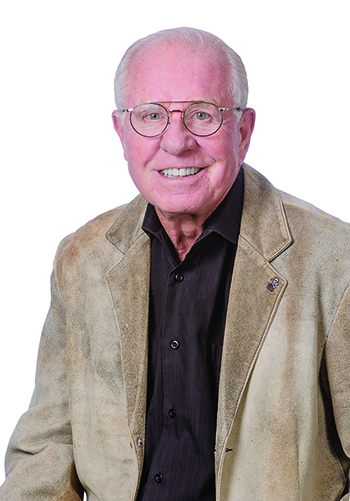
Longtime Denver Talk Radio Host And His Close Friend Alan Berg To Join 2026 Class Honoring Some Of State’s Best Known Broadcasting Voices
by Mark Smiley
Peter Boyles
For decades, Peter Boyles has been one of the most recognizable, provocative, and enduring voices on Denver radio. This fall, his long career behind the microphone will receive one of the Colorado broadcasting industry’s highest honors.
The Colorado Broadcasters Association has selected Boyles for induction into the 2026 Colorado Broadcasters Hall of Fame, recognizing a career that has made him a fixture of Denver talk radio and a familiar voice to generations of Colorado listeners. The induction ceremony will be held Friday, October 23, at The Dome at AMG in Greenwood Village.
Boyles initially refused the honor unless his good friend Alan Berg was also admitted. Berg was a Jewish Attorney and highly abrasive liberal host on KOA radio who liked to tease and confront callers. He was assassinated by his home in 1984, machine gunned down by the white supremacist group called the Order; his murder became a national cause célébre.
The Broadcasters and Boyles reached an accommodation where Boyles would induct Berg after his own admission.
Boyles is one of nine broadcasters selected for the 2026 class. Joining him are Alan Berg, Bob Gourley, Stu Haskell, Steve Kelley, Bob Martin, Reyn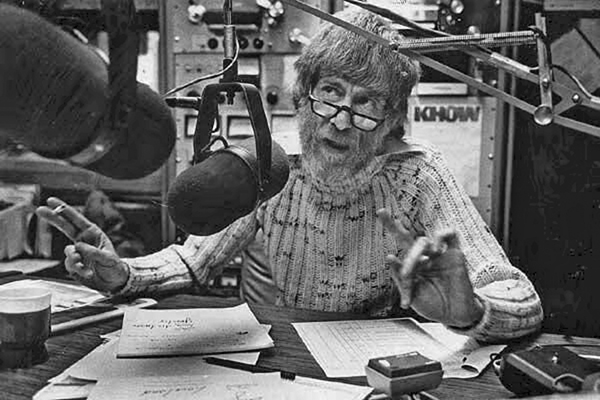 elda Muse, Roger Ogden, and Ron Zappolo. The group represents a wide cross-section of Colorado broadcasting, including radio personalities, television anchors, sports broadcasters, and industry executives.
For Boyles, the honor recognizes a career built largely on a willingness to ask uncomfortable questions and take on controversial subjects.
Long before podcasts and social media gave virtually anyone an opportunity to broadcast an opinion, Boyles was doing it live on Denver radio. His programs became known for lengthy interviews, spirited exchanges with callers, and discussions of subjects ranging from local politics and crime to national controversies and Colorado history.
Listeners did not always agree with him, and agreement was rarely a prerequisite for listening.
That confrontational style helped make Boyles both popular and controversial. Admirers have viewed him as an independent voice willing to pursue stories and opinions other broadcasters might avoid. Critics have objected at times to his rhetoric, conclusions, and choice of subjects. Through both praise and criticism, however, Boyles remained part of Denver’s public conversation for decades.
His best-known tenure was at KHOW 630 AM, where he hosted a long running morning drive program until 2013. He later returned to Denver radio and currently hosts a four-hour Saturday morning program on 710 KNUS.
The Hall of Fame recognition is significant because the Colorado Broadcasters Association created the institution specifically to recognize broadcasters whose work has had a lasting effect on the industry, their communities, and Colorado audiences. The Hall honors not only prominent personalities heard or seen on the air, but also executives and behind the scenes figures who helped build broadcasting in the state.
Boyles’ induction also places him alongside several names closely associated with Denver broadcasting history in addition to Alan Berg.
Bob Martin was a longtime KOA sports director and the voice of the Denver Broncos for 499 broadcasts. Reynelda Muse broke barriers in Colorado television and later became one of CNN’s founding anchors. Ron Zappolo became one of Denver television’s best-known sports personalities and anchors.
The diversity of the class illustrates how dramatically broadcasting has changed over the decades. Radio once dominated the way people received immediate news and commentary, while local television anchors became some of the most recognizable personalities in Colorado. Today those traditional broadcasters compete with podcasts, streaming video, social media, and an almost unlimited number of digital information sources.
Yet personalities such as Boyles and Berg developed their audiences in an era when the relationship between a broadcaster and listener could last for years or even decades.
Boyles’ career is particularly associated with the intimacy of talk radio. Unlike a television newscast built around relatively short reports, his format allowed subjects to unfold over extended conversations. Guests could be questioned at length. Callers could challenge the host. A local issue that might receive a few minutes elsewhere could occupy an entire segment or program.
It was sometimes contentious, occasionally unpredictable, and unmistakably Boyles.
The Colorado Broadcasters Association describes its Hall of Fame as recognition for broadcasters who have left an enduring mark on Colorado. CBA President and CEO Justin Sasso said this year’s honorees helped connect communities and build the broadcasting industry that exists in the state today.
This Hall of Fame itself is relatively new and supercedes the Hall of Fame sponsored by the Colorado Broadcasters Association but run by the Broadcast Pioneers of Colorado from 1998 to 2019. This new Hall of Fame launched it in 2025, with its inaugural class including longtime Colorado broadcasters such as Murphy Huston, Denise Plante, Tom Green, and Mark Cornetta. The first induction ceremony was held last October in Greenwood Village. Members admitted to the new Hall of Fame include individuals like Reynelda Muse who are already in the Hall of Fame conducted by the Broadcast Pioneers of Colorado.
The October 23 ceremony honoring Boyles and the other members of the second class begins with doors opening at 6:30 p.m., followed by the induction ceremony at 7:15 p.m. A portion of the proceeds will support the CBA’s Broadcast Education and Development Scholarship Fund, which assists the next generation of broadcasting professionals.
For Boyles, whose career has been defined by conversations, arguments, interviews, and an unmistakable presence on the Denver airwaves, the Hall of Fame selection represents recognition from the industry in which he has spent much of his professional life.
Listeners may have loved what Peter Boyles had to say or vehemently disagreed with him. Sometimes they managed to do both during the same program.
But after decades on Denver radio, few could argue that they didn’t know who he was.
On October 23, Peter Boyles will officially take his place among the broadcasters recognized for helping shape the history of Colorado radio and television.