by Amber Wyatt
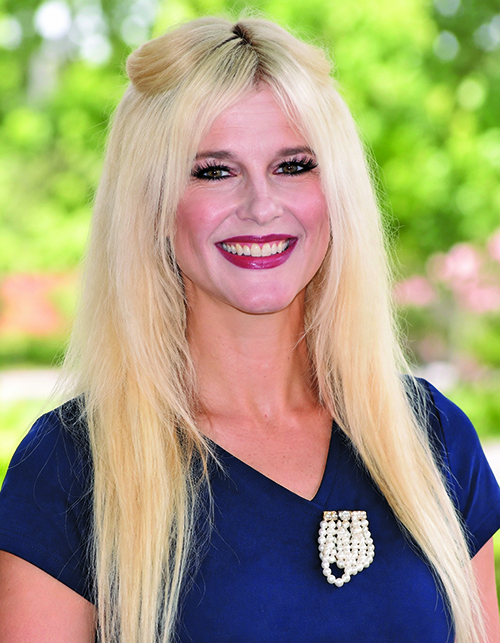
Republican Candidate for CD1: Christy Peterson
For the first time in nearly three decades, Denver voters will choose a new representative for Colorado’s 1st Congressional District this November. But the contest is about more than replacing longtime U.S. Rep. Diana DeGette.
It also raises a question that has dogged Republicans in overwhelmingly Democratic Denver for decades: Can Republicans, unaffiliated voters, and Democrats uncomfortable with their party’s nominee ever coalesce around a single alternative?
This year, they will not have only one alternative.
Democratic nominee Melat Kiros, Republican Christy Peterson, and unaffiliated candidate Dr. Shimon Blau headline a crowded November ballot that also includes Libertarian Chad Humphrey and Unity Party candidate Christopher “Critter” Milton. The multiple candidacies mean voters who do not support Kiros have several places to go — rather than a single challenger around whom they might consolidate.
That dynamic is particularly notable this year because Kiros is not a conventional establishment Democrat. The 29-year-old first-time candidate identifies as a democratic socialist and is a member of the Democratic Socialists of America. In June, she defeated DeGette, one of Colorado’s longest-serving elected officials, by more than 13 percentage points in the Democratic primary.
Kiros has said democratic socialism, to her, reflects a belief that government has a responsibility to meet people’s basic needs. Her platform includes Medicare for All, universal child and elder care, the Green New Deal, and making utilities publicly owned.
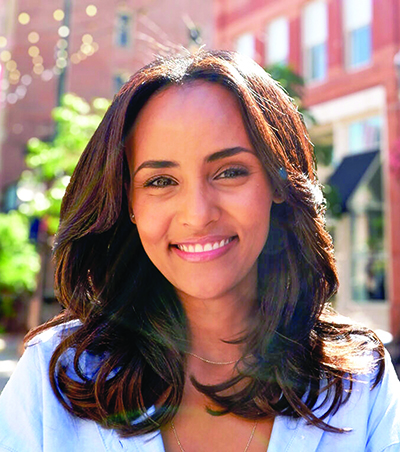
Democrat Candidate for CD1: Melat Kiros
International affairs have also become a significant part of the discussion surrounding her candidacy. Kiros has taken positions on Israel and Gaza that have drawn criticism, including from some Democrats. Axios reported in August that Democratic congressional nominees Dwayne Romero, Eileen Laubacher, and Jessica Killin said they would not endorse Kiros, while U.S. Rep. Jason Crow congratulated her on winning the primary but had not endorsed her campaign at the time of the report.
That makes the 2026 race an unusual test for Denver Republicans and political independents. A Democratic nominee well to the left of DeGette might appear to create an opening for voters looking for a more centrist alternative. Instead, those voters have multiple choices.
Peterson, 41, was the only Republican seeking her party’s nomination. The South Denver resident works in office management and accounting for a construction company and has centered much of her campaign on fiscal issues and public safety.
“I will work on reducing federal debt while helping our American farmers & ranchers sustain long-term production,” Peterson says.
“Supporting our local Police Departments with funding, training, and resources is my top priority,” Peterson says. She argues that improving public safety is important to Denver’s economic health and that a stronger business climate can create jobs and greater economic self-sufficiency. She also connects crime with some of the increasing costs confronting residents, including automobile and property insurance.
Her stated goal is “to make Denver a safer, more prosperous city for everyone.” But Peterson is not alone in trying to attract voters who want an alternative to Kiros.
The race changed significantly in July when Blau, a Denver physician specializing in pain management, qualified for the ballot as an unaffiliated candidate. Blau gathered more than 2,200 signatures in only a matter of days. State election officials determined that 1,918 were valid, comfortably exceeding the 1,500 required to qualify.
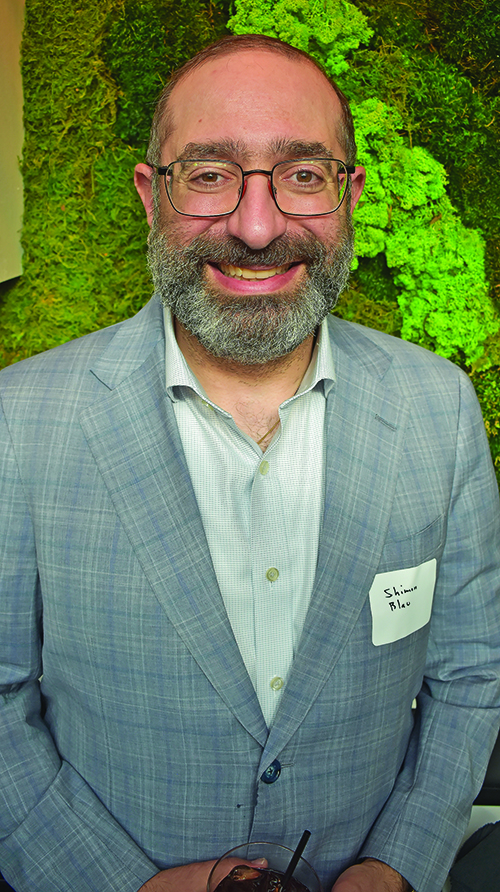
Independent Candidate for CD1: Shimon Blau
Born and raised near Sloan’s Lake, Blau is explicitly presenting himself as a more moderate alternative. He has described himself as leaning left on social issues and right on fiscal matters and has made affordability a central issue.
“Working families are being squeezed and having to make difficult choices between healthcare, housing, and food,” Blau told the Chronicle.
His platform also demonstrates why the contest does not break neatly along traditional partisan lines. According to Colorado Public Radio, Blau supports a long-term path toward universal health care, free childcare, and removing corporate money from politics, while saying he differs sharply with Kiros on other issues.
A Republican Drought Dating To Nixon
Perhaps the most striking historical fact about the race is just how long Democrats have controlled the 1st District.
A Republican has not represented Colorado’s 1st Congressional District since January 1973 — more than 53 years ago.
Republican Mike McKevitt won the seat in 1970 and served one term, from January 1971 until January 1973. Democrat Pat Schroeder defeated McKevitt in the 1972 election with 52% of the vote. She would go on to represent the district for 24 years.
When Schroeder retired, DeGette succeeded her. DeGette was first elected in 1996 and took office in January 1997. Thus, with the exception of McKevitt’s single two-year term, the district has been continuously represented by Democrats since 1951: Byron Rogers from 1951 through 1970, Schroeder beginning in 1973, and DeGette beginning in 1997.
That history helps explain the challenge facing anyone running without the Democratic nomination.
The district, which encompasses virtually all of Denver along with Glendale and portions of Arapahoe County, has become one of the most reliably Democratic congressional districts in Colorado. In 2024, for example, DeGette defeated Republican Valdamar Archuleta by 55 percentage points.
One Alternative, or Several?
That history also makes the presence of both Peterson and Blau particularly interesting.
Republicans seeking to compete in the district face a mathematical and political problem: Their traditional base alone has not been enough to win. Any serious challenge to Democratic control would therefore require support beyond registered Republicans, including unaffiliated voters and potentially Democrats dissatisfied with their nominee.
Yet the 2026 ballot provides those voters with several alternatives rather than one.
Peterson offers voters a traditional Republican candidacy emphasizing public safety, federal spending, and economic issues. Blau is trying to occupy a different lane, presenting himself as politically independent and more moderate while agreeing with Democrats on some social and economic policies. Libertarian and Unity Party candidates offer still more choices.
That leaves an unusual political picture: Kiros has critics to both her right and within the broader Democratic coalition, but those critics are not represented by a single opposing candidate.
Kiros, meanwhile, has demonstrated that her politics have substantial support among Democratic primary voters in Denver. Her victory was not merely the product of an incumbent stepping aside. She defeated DeGette, who had represented the district since 1997, after building a grassroots organization that her campaign said knocked on approximately 100,000 doors.
The primary also provided evidence of a broader progressive constituency in Denver. An analysis reported by Axios found significant support for progressive candidates across several Democratic primary contests, while candidates associated with the Democratic Socialists of America have increased their influence in the city’s politics.
So the general election presents competing political stories. One is the remarkable durability of Democratic control of Denver’s congressional seat. Another is Kiros’ successful challenge to Denver’s Democratic establishment and the ideological change her nomination represents. A third is whether voters who consider themselves somewhere between democratic socialism and traditional Republican politics see Blau’s independent candidacy as an alternative.
And hovering over all of it is 1972. Richard Nixon was president. The Watergate break-in had occurred only months earlier. “The Godfather” was in movie theaters. And Mike McKevitt was the Republican congressman representing Denver.
Pat Schroeder defeated him that November. No Republican has represented Colorado’s 1st Congressional District since.
More than half a century later, Denver voters will decide whether the district continues its long Democratic tradition under a very different kind of Democratic nominee, or whether one of the alternatives on a crowded ballot can break that streak.
Election Day is Nov. 3.