by Amber Wyatt | Oct 19, 2026 | Main Articles
by Amber Wyatt
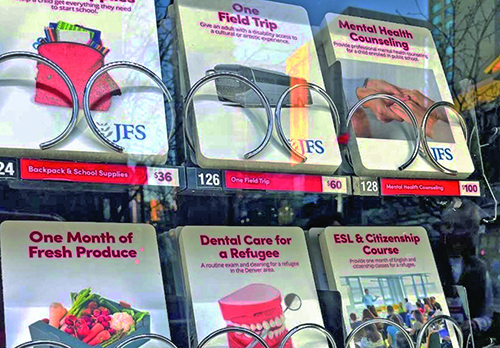
Some of the Giving Machine’s offers. Photograph by #LightTheWorld
A unique holiday tradition is returning to Cherry Creek North this November, offering Denver residents and visitors a memorable way to give back while enjoying the holiday season. The famous Giving Machines are set to open November 19, bringing a creative, interactive approach to charitable giving to the heart of one of Denver’s most popular holiday destinations.
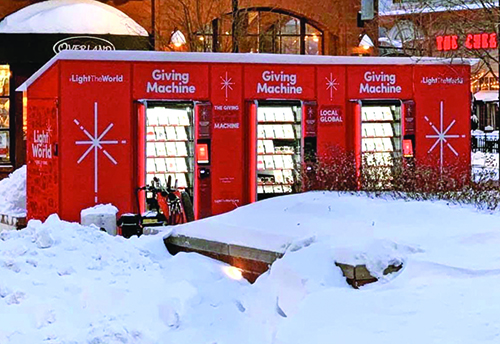
Located at the entrance to the Cherry Creek Holiday Market on 2nd Avenue and Fillmore Plaza, the colorful, vending-machine-style displays will operate 24 hours a day, seven days a week, giving shoppers and passersby an opportunity to make a difference at any time.
Unlike traditional vending machines that dispense snacks or drinks, the Giving Machines allow visitors to purchase meaningful items for people and communities in need. Options may include warm meals, blankets, livestock, and other essential resources, with donations supporting participating local and global charitable organizations.
Popular Giving Machine location at 105 Fillmore St., Denver, CO 80206. Photograph by #LightTheWorld
The concept is simple: Choose an item displayed on the machine, make a payment and help provide that resource through a participating nonprofit. Rather than taking a physical product home, donors contribute toward providing the selected item to someone who needs it.
It is a straightforward way to turn an everyday holiday outing into an opportunity for generosity.
A Different Kind Of Holiday Shopping
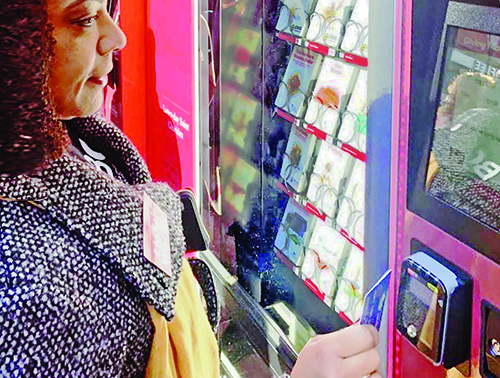
Donor makes a donation to one of the offerings at the Giving Machine. Photograph by #LightTheWorld
The Giving Machines offer a visual and interactive experience that stands out among the seasonal decorations, storefronts, and festivities throughout C
herry Creek North. Their placement at the entrance to the Cherry Creek Holiday Market makes them a natural stop for visitors browsing holiday vendors, searching for gifts, or simply enjoying the neighborhood’s seasonal atmosphere.
For families, the machines can also provide a hands-on way to introduce children to charitable giving. Instead of donating money without seeing how it might help, visitors can select a specific need and connect their contribution to a tangible resource.
A warm meal can help someone facing food insecurity. A blanket can provide comfort during cold weather. Livestock can help support livelihoods and food security in communities where animals provide a source of income, nutrition, or agricultural support.
Each selection offers a reminder that even a small act of generosity can contribute to a larger effort to improve lives and visual aids on each option help children easily understand their impact.
The machines also offer a convenient option for people who want to support charitable organizations but may not have time to research individual causes or arrange donations themselves. With the displays available around the clock, visitors can stop by whenever it fits their schedule.
Giving Locally And Globally
The Giving Machines initiative is known for connecting donors with participating nonprofit organizations that address a variety of humanitarian needs. Depending on the participating charities and available selections, contributions can support assistance ranging from basic necessities to longer-term community development.
The initiative provides an alternative to traditional gift-giving, encouraging people to direct some of their holiday spending toward the
community. Visitors can choose a donation that benefits a family, individual, or neighborhood in addition to gifts purchased for their own. Those interested in participating should review the available selections and charitable organizations at the machines to learn which causes their contributions support.
As the holiday season approaches, the return of the Giving Machines adds another opportunity for the Cherry Creek community to embrace the spirit of generosity. Their prominent location makes charitable giving accessible to residents, tourists and holiday shoppers alike.
The Giving Machines are schedu
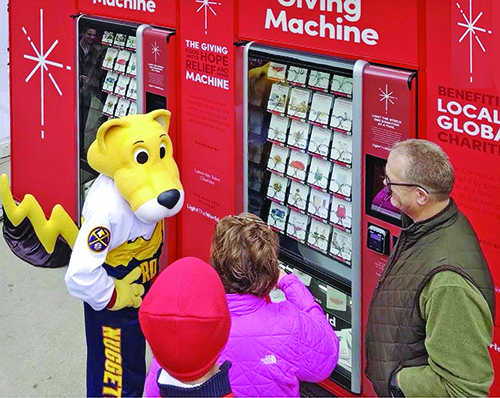
Denver Nugget’s Rocky attends Giving Machines opening in 2019. Photograph by #LightTheWorld
led to open November 19, 2026, at the entrance to the Cherry Creek Holiday Market on 2nd Avenue and Fillmore Plaza. Operating 24/7, they invite visitors to stop by, select a meaningful contribution, and help make the holidays brighter for someone else.
This season, consider adding a different kind of purchase to your holiday list: one that gives to your city, to your country, or your planet.
by Amber Wyatt | Sep 29, 2026 | General Featured
by Amber Wyatt
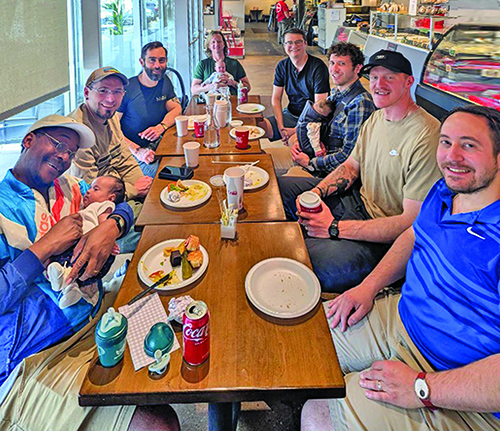
Abbas and Babbas participants meet on a Sunday at Zaidy’s Deli.
For many new parents, the first years of raising a child can be both joyful and isolating. While mothers often have access to a variety of support groups and parenting networks, fathers can find it more difficult to connect with others navigating the same stage of life. The Staenberg-Loup Jewish Community Center (JCC Denver), located at the intersection of Leetsdale Drive and South Dahlia Street, is working to change that with the launch of Abbas & Babbas, a free community program created specifically for dads of infants and toddlers.
The program is part of the JCC’s expanding First 36 initiative, which supports families from pregnancy through a child’s first three years. While many of the organization’s prenatal and postnatal offerings have traditionally focused on mothers and caregivers, Abbas & Babbas recognizes that fathers also benefit from dedicated spaces to build friendships, exchange advice, and navigate the challenges of early parenthood together.
The name combines the Hebrew word “Abba,” meaning father, with the familiar English word “Baba,” creating a welcoming title that reflects both Jewish tradition and the diverse families who make up the Denver community.
The program alternates between two types of gatherings every other week. Tuesday evening sessions feature facilitated conversations led by a licensed therapist, giving fathers an opportunity to discuss topics ranging from sleep deprivation and work-life balance to relationships and the emotional transition into parenthood. These conversations are designed to create a supportive, judgment-free environment where participants can openly share both successes and struggles.
On alternating Sundays, the group trades the meeting room for more casual outings. Fathers and their babies gather at parks, museums, restaurants, and other locations throughout the Denver metro area, providing opportunities to socialize while spending quality time with their children. Babies are welcome at all events, and no registration is required, although advanced sign-ups help organizers plan attendance.
The program reflects a growing understanding that fathers play an increasingly active role in raising young children and also benefit from meaningful peer support. Research has shown that strong social connections can improve parental well-being, reduce stress, and ultimately strengthen family relationships. By creating intentional spaces where fathers can connect with one another, the JCC hopes to foster lasting friendships that extend well beyond the early years of parenting.
Although rooted in Jewish values of community, kindness, and inclusion, Abbas & Babbas welcomes fathers of all backgrounds. The JCC has long positioned itself as a community resource serving the broader Denver population through educational, recreational, cultural, and wellness programming, regardless of religious affiliation.
The addition of Abbas & Babbas complements a growing lineup of family-focused offerings at the JCC, including prenatal education, breastfeeding support, caregiver-and-child classes, early childhood education, cultivating sleep routines, and the Community Baby Closet, which provides essential supplies to families without excluding fathers. Together, these programs aim to support parents through every stage of early childhood, from pregnancy through the toddler years.
As Denver continues to attract young families, initiatives like Abbas & Babbas demonstrate how community organizations are adapting to meet the evolving needs of modern parents. By recognizing that fathers also need connection, encouragement, and community, the JCC is helping ensure that no parent has to navigate the challenges of early childhood alone.
Abbas & Babbas meets every Tuesday evening at the JCC Denver, 350 S. Dahlia St., with alternating Sunday social gatherings held throughout the metro area. Participation is free, and fathers with babies or toddlers are encouraged to attend.
by Amber Wyatt | Sep 29, 2026 | Glendale City News
by Amber Wyatt
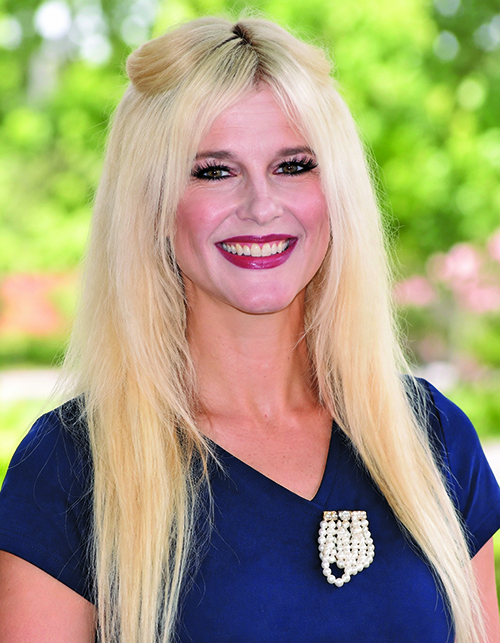
Republican Candidate for CD1: Christy Peterson
For the first time in nearly three decades, Denver voters will choose a new representative for Colorado’s 1st Congressional District this November. But the contest is about more than replacing longtime U.S. Rep. Diana DeGette.
It also raises a question that has dogged Republicans in overwhelmingly Democratic Denver for decades: Can Republicans, unaffiliated voters, and Democrats uncomfortable with their party’s nominee ever coalesce around a single alternative?
This year, they will not have only one alternative.
Democratic nominee Melat Kiros, Republican Christy Peterson, and unaffiliated candidate Dr. Shimon Blau headline a crowded November ballot that also includes Libertarian Chad Humphrey and Unity Party candidate Christopher “Critter” Milton. The multiple candidacies mean voters who do not support Kiros have several places to go — rather than a single challenger around whom they might consolidate.
That dynamic is particularly notable this year because Kiros is not a conventional establishment Democrat. The 29-year-old first-time candidate identifies as a democratic socialist and is a member of the Democratic Socialists of America. In June, she defeated DeGette, one of Colorado’s longest-serving elected officials, by more than 13 percentage points in the Democratic primary.
Kiros has said democratic socialism, to her, reflects a belief that government has a responsibility to meet people’s basic needs. Her platform includes Medicare for All, universal child and elder care, the Green New Deal, and making utilities publicly owned.
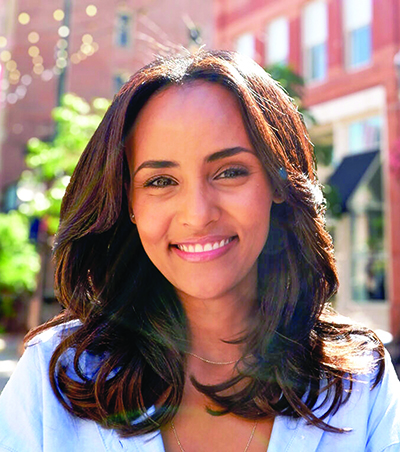
Democrat Candidate for CD1: Melat Kiros
International affairs have also become a significant part of the discussion surrounding her candidacy. Kiros has taken positions on Israel and Gaza that have drawn criticism, including from some Democrats. Axios reported in August that Democratic congressional nominees Dwayne Romero, Eileen Laubacher, and Jessica Killin said they would not endorse Kiros, while U.S. Rep. Jason Crow congratulated her on winning the primary but had not endorsed her campaign at the time of the report.
That makes the 2026 race an unusual test for Denver Republicans and political independents. A Democratic nominee well to the left of DeGette might appear to create an opening for voters looking for a more centrist alternative. Instead, those voters have multiple choices.
Peterson, 41, was the only Republican seeking her party’s nomination. The South Denver resident works in office management and accounting for a construction company and has centered much of her campaign on fiscal issues and public safety.
“I will work on reducing federal debt while helping our American farmers & ranchers sustain long-term production,” Peterson says.
“Supporting our local Police Departments with funding, training, and resources is my top priority,” Peterson says. She argues that improving public safety is important to Denver’s economic health and that a stronger business climate can create jobs and greater economic self-sufficiency. She also connects crime with some of the increasing costs confronting residents, including automobile and property insurance.
Her stated goal is “to make Denver a safer, more prosperous city for everyone.” But Peterson is not alone in trying to attract voters who want an alternative to Kiros.
The race changed significantly in July when Blau, a Denver physician specializing in pain management, qualified for the ballot as an unaffiliated candidate. Blau gathered more than 2,200 signatures in only a matter of days. State election officials determined that 1,918 were valid, comfortably exceeding the 1,500 required to qualify.
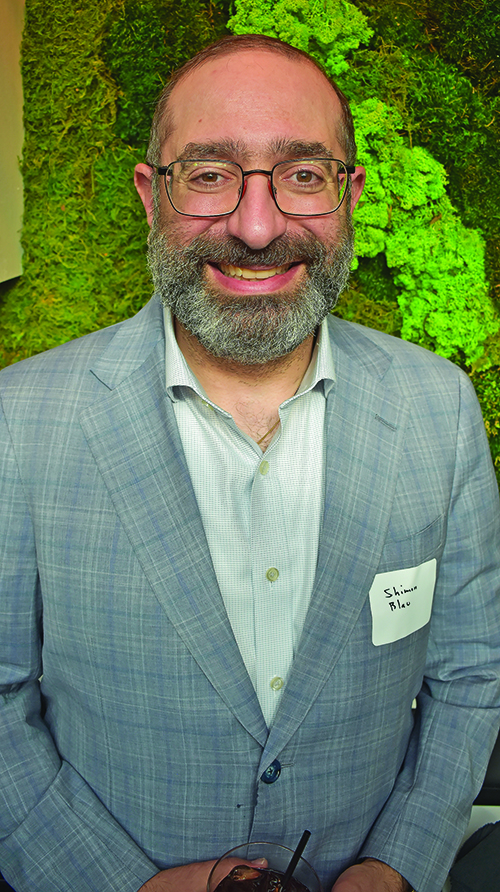
Independent Candidate for CD1: Shimon Blau
Born and raised near Sloan’s Lake, Blau is explicitly presenting himself as a more moderate alternative. He has described himself as leaning left on social issues and right on fiscal matters and has made affordability a central issue.
“Working families are being squeezed and having to make difficult choices between healthcare, housing, and food,” Blau told the Chronicle.
His platform also demonstrates why the contest does not break neatly along traditional partisan lines. According to Colorado Public Radio, Blau supports a long-term path toward universal health care, free childcare, and removing corporate money from politics, while saying he differs sharply with Kiros on other issues.
A Republican Drought Dating To Nixon
Perhaps the most striking historical fact about the race is just how long Democrats have controlled the 1st District.
A Republican has not represented Colorado’s 1st Congressional District since January 1973 — more than 53 years ago.
Republican Mike McKevitt won the seat in 1970 and served one term, from January 1971 until January 1973. Democrat Pat Schroeder defeated McKevitt in the 1972 election with 52% of the vote. She would go on to represent the district for 24 years.
When Schroeder retired, DeGette succeeded her. DeGette was first elected in 1996 and took office in January 1997. Thus, with the exception of McKevitt’s single two-year term, the district has been continuously represented by Democrats since 1951: Byron Rogers from 1951 through 1970, Schroeder beginning in 1973, and DeGette beginning in 1997.
That history helps explain the challenge facing anyone running without the Democratic nomination.
The district, which encompasses virtually all of Denver along with Glendale and portions of Arapahoe County, has become one of the most reliably Democratic congressional districts in Colorado. In 2024, for example, DeGette defeated Republican Valdamar Archuleta by 55 percentage points.
One Alternative, or Several?
That history also makes the presence of both Peterson and Blau particularly interesting.
Republicans seeking to compete in the district face a mathematical and political problem: Their traditional base alone has not been enough to win. Any serious challenge to Democratic control would therefore require support beyond registered Republicans, including unaffiliated voters and potentially Democrats dissatisfied with their nominee.
Yet the 2026 ballot provides those voters with several alternatives rather than one.
Peterson offers voters a traditional Republican candidacy emphasizing public safety, federal spending, and economic issues. Blau is trying to occupy a different lane, presenting himself as politically independent and more moderate while agreeing with Democrats on some social and economic policies. Libertarian and Unity Party candidates offer still more choices.
That leaves an unusual political picture: Kiros has critics to both her right and within the broader Democratic coalition, but those critics are not represented by a single opposing candidate.
Kiros, meanwhile, has demonstrated that her politics have substantial support among Democratic primary voters in Denver. Her victory was not merely the product of an incumbent stepping aside. She defeated DeGette, who had represented the district since 1997, after building a grassroots organization that her campaign said knocked on approximately 100,000 doors.
The primary also provided evidence of a broader progressive constituency in Denver. An analysis reported by Axios found significant support for progressive candidates across several Democratic primary contests, while candidates associated with the Democratic Socialists of America have increased their influence in the city’s politics.
So the general election presents competing political stories. One is the remarkable durability of Democratic control of Denver’s congressional seat. Another is Kiros’ successful challenge to Denver’s Democratic establishment and the ideological change her nomination represents. A third is whether voters who consider themselves somewhere between democratic socialism and traditional Republican politics see Blau’s independent candidacy as an alternative.
And hovering over all of it is 1972. Richard Nixon was president. The Watergate break-in had occurred only months earlier. “The Godfather” was in movie theaters. And Mike McKevitt was the Republican congressman representing Denver.
Pat Schroeder defeated him that November. No Republican has represented Colorado’s 1st Congressional District since.
More than half a century later, Denver voters will decide whether the district continues its long Democratic tradition under a very different kind of Democratic nominee, or whether one of the alternatives on a crowded ballot can break that streak.
Election Day is Nov. 3.

by Amber Wyatt | Aug 20, 2026 | Glendale City News
by Amber Wyatt
Large-scale intricately designed sculptures crafted by hand.
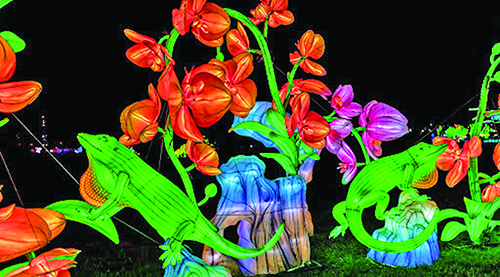
From the Houston Lanterns installation.
When Bright Nights illuminates Four Mile Historic Park, visitors enter a world of glowing color, towering forms, and intricate displays. Yet behind the spectacle is another story, one measured not only in lights, but in hundreds of hours of skilled human labor.
Produced by Tianyu Arts & Culture, the large-scale illuminated installations are the result of a painstaking process that combines a centuries-old Chinese lantern-making tradition with modern engineering and contemporary artistic design.
Long before the lights are switched on, artisans begin with hand-developed concepts that must ultimately work within a real landscape. Designs move from sketches into steel-frame construction, followed by electrical wiring, fabric application, detailed painting, and final assembly. According to Tianyu, a single display can require more than 200 hours of work and involve approximately 25 skilled artists.
The result is an art form that remains strikingly dependent on human hands at a time when automation and digital tools are transforming creative industries. Among the artists carrying that tradition forward is Jiang Guanghong, a Tianyu master artisan with more than two decades of experience in lantern design, fabrication, artistic direction, and international project leadership.
For Jiang, creating an illuminated installation involves far more than reproducing a drawing at a larger scale. Artists and fabricators must understand how a structure will appear from different angles, how fabric will behave when stretched across a steel framework, and how light will change the colors and details once the sun goes down. Those skills are only developed through years of hands-on practice.
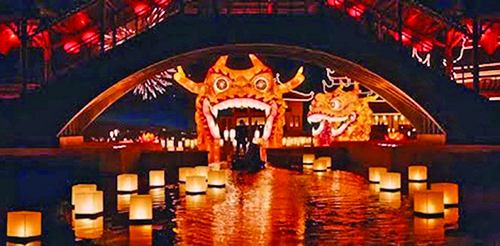
The casino scene in James Bond’s Skyfall featuring Jiang Guanghong’s work.
The tradition at the center of Tianyu’s work is closely associated with Zigong, China, a city internationally known for elaborate lantern-making. While the materials and technology used in modern installations have evolved, the process still draws heavily on skills passed from one generation of artisans to the next.
Today, those techniques are being applied to installations created for audiences far beyond China. Tianyu’s projects have appeared across the United States, Europe, and Asia, requiring artisans to consider not only artistic traditions but also the architecture, terrain, and character of each location. That means a display created for a historic Denver landscape may require different artistic and structural choices than one installed in a European garden or a modern urban setting.
Jiang’s career illustrates how far the tradition has traveled. His international work has included major installations on several continents, and one of his award-winning lantern creations was selected for use by the art department of the James Bond film “Skyfall.”
Despite that international reach, the underlying process remains intensely physical. Steel must be shaped into complex forms. Electrical components must be carefully integrated. Fabric must be fitted to perfectly engineered frames, and painted details must hold their visual impact before and after illumination. It is a balance of art and engineering, with technology supporting rather than replacing the craft of the artisan.
That balance may be part of what gives Bright Nights its appeal. Visitors experience the finished displays as immersive environments, but each glowing figure represents countless individual decisions made by designers, welders, electricians, fabric artists, and painters. At Four Mile Historic Park, the spectacle offers Denver audiences an opportunity to encounter a tradition that has crossed generations and continents while continuing to evolve.
Bright Nights may ultimately be remembered for what visitors see after dark. But behind every illuminated structure is something less visible: a network of skilled craftsmen keeping a living cultural tradition alive, one piece of steel, stitch of fabric, stroke of paint, and flash of light at a time.
by Amber Wyatt | Jul 23, 2026 | General Featured
by Amber Wyatt
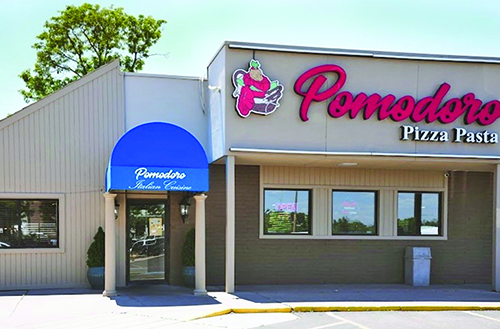
The family’s latest location and a Virginia Village staple in Monaco Square, at 962 S. Monaco St. Pkwy., Denver, CO 80224.
Nestled in the heart of Virginia Village, Denver’s newest Italian standout, Pomodoro Pizza Pasta, isn’t just another neighborhood trattoria, it’s a warm and loving ode to family, from the owners to the tables they welcome.
The dream behind Pomodoro began in New York City, where the founding family, New York City immigrants in the early 1980s, worked in restaurants where they crafted an idea rooted in what they value most, teamwork and camaraderie. Their first restaurant, located in Aurora, aimed to serve a diverse range of quality Italian fare, catering to Coloradans of finer tastes.
Founders Luis and Gloria Enriquez, along with Gloria’s cousin, Jesus, combined decades of experience in both the front and back of house to create something truly special. Together, they form the restaurant’s heart and soul: Luis and Jesus crafting fresh dishes and signature sauces with remarkable precision, while Gloria welcomes guests with the warmth and hospitality that have become synonymous with the restaurant itself.
What makes this team exceptional goes beyond the food. Gloria is more than a founder, she is the face of the restaurant and the reason so many customers feel like family. She greets regulars with warm hugs, remembers names and favorite orders, and makes every guest feel seen. She never forgets a face, and it’s not uncommon for her to remember the smallest details about you, like serving my ice water with two lemons without ever being asked.
In the kitchen, Luis and Jesus move with the rhythm and confidence that comes only from years of experience. Every dish is prepared with care, consistency, and pride. Together, the Enriquez family has built more than a successful restaurant; they have cultivated a community. Their dedication to authentic Hispanic hospitality, hard work, and genuine human connection has helped redefine the dining experience in Southeast Denver, bringing warmth and heart to an area that was longing for both.
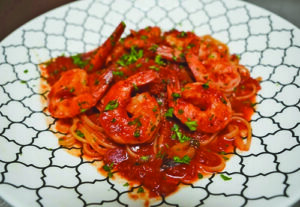
Shrimp Arrabiata (with a spice).
After the collapse of the Soviet Union in 1991, while the Enriquez family found stability in the glow of the New York City lights, Denver became home to growing communities of immigrants from Russia, Ukraine, Belarus, and other former Soviet republics. Many settled in southeast Denver and nearby Aurora because of affordable apartments and access to public transportation. As those communities grew, businesses followed and over time, Monaco Square, home to the latest Pomodoro location, became one of the area’s informal cultural hubs.
Its current identity developed organically as southeast Denver became one of the city’s largest centers of immigrant communities, which not only created demand for specialty eateries but a warm and inviting rustic culture of connection that still gives the area its distinctive character today. The reality of immigrant families landing here was never part of the mission but a beautiful, well fitting irony, especially for the owners of Pomodoro.
That mission: good food and real people, followed them west in 2024. Where they opened their second Italian joint in Virginia Village, at the infamous Monaco Square plaza, it instantly blew up. The 750 sq ft space could not contain all of the foodies flooding in to try their menu. When the opportunity arose to open a second Pomodoro in Denver, they seized it, as the Aurora location, loved for its intimate atmosphere, simply couldn’t contain all of the Colorado love it was receiving. What makes this new spot special isn’t just the red sauce or the freshly-made pastas though, it’s the family behind the stove.
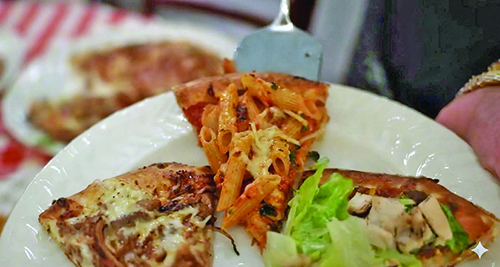
Sebastian, Nicolas, and Angel – Pomodoro’s specialty pizzas.
Pomodoro is a family affair: from behind-the-scenes prep to front-of-house smiles, everyone shares an important role and a promise. A restaurant regular I caught on his way out, reflected on the origin story, recalling the family’s New York dream as driven by “an immigrant’s desire to make delicious and affordable Italian food for the working people of Denver.” That mindset didn’t fade and they’ve carried it into every corner of the Denver space.
Look around the dining room and you’ll catch genuine moments: the matriarch and owner Gloria checking each table’s satisfaction, the youngest member skipping between stations with a cheeky grin, and diners greeted not as customers, but as part of the weekly feast. Regulars already describe the scene as “like visiting an aunt’s house”, where hugs replace handshakes, and unfinished wine glasses are refilled before they have to ask.
The Menu:
Hearty, Homemade, Heartfelt
While the ambiance exudes familial comfort, the kitchen’s offerings shine with rustic simplicity and fresh quality ingredients. Expect all the classics done right:
- Cheese Tortellini Carbonara – A love letter to the restaurant’s ethos, this salt-cured pork belly in a creamy guanciale sauce envelops perfectly al dente rounds, with a sprinkle of parmigiano-reggiano.
- Penne Alla Vodka – From their custom menu, and my personal favorite, this creamy, with a hint of spice, dish reflects the “freshest and finest ingredients” philosophy that the family lives by.
- Famous Pizzas – A humble marriage of savory, each named in honor of the founding family’s grandchildren.
– Sebastian’s Pizza – Pizza with penne, vodka sauce, and sun-dried tomatoes
– Nicolas’ Pizza – Pizza with fresh chicken caesar salad topped with parmesan
– Angel’s Pizza – Pizza with an alfredo sauce base, topped with a medley of bacon, meatballs, and onions
Community, One Meal At A Time
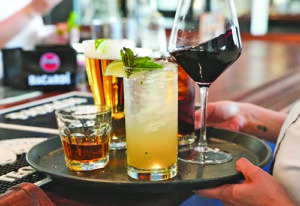
The Virginia Village location hosts a full service bar in the warm and charming ambiance.
Pomodoro’s appeal lies in more than just delicious fare, it’s the simple but powerful way the owners forge connection. They greet newcomers like old friends and catch familiar faces by name. One Denver foodie remarked over their opening weekend, “This feels less like a dinner out and more like coming home.” That connection reminds us that food doesn’t just fill us; it roots us.
Under their roof, tables aren’t just seats, they’re places where conversations happen, stories are shared, and strangers leave feeling part of something warm. The founders remember replicating this vibe in Aurora, saying early on that “every customer gets to leave with memories curated in the pride of a homestyle atmosphere.” Now in Virginia Village, that signature consistency and haven of familiarity is fully intact.
Pomodoro nails the tactile, sensory markers of Italian comfort:
- Checkerboard tablecloths – a visual throwback to family-run pizzerie of the 1950s.
- Evening candlelight and soft jazz – just enough to lean in and laugh with your dining companion over the soothing flicker of natural light.
- Fresh floral centerpieces – echoing those old NYC trattorias full of calming aromas.
It’s here you’ll toast a “salute” to family.
Why It Matters
In a neighborhood rich with independent immigrant-owned eateries, Pomodoro stands out by rewriting what it means to treat customers like kin. You don’t just dine here, you belong. Their secret isn’t in an ingredient list either, it’s in the sum of all parts: heartfelt hospitality, traditions rooted in New York immigrant drive, and food cooked with open hands and open hearts.
For Denver diners craving authenticity, simplicity, and a sense of belonging, Pomodoro is more than another pasta stop, it’s your extended family’s kitchen away from home.
Stop in for a plate of rigatoni, leave carrying a food wallop and a memory. As the family behind Pomodoro would say: Everyone’s welcome, come as you are.