
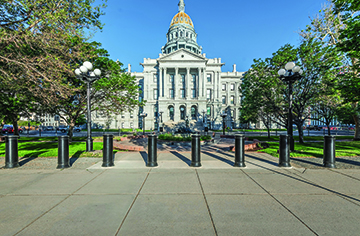
Photo taken by Jessica Hughes with Mountain Light Photography Denver City Council approved the Vibrant Denver bond package and will appear on the November ballot.
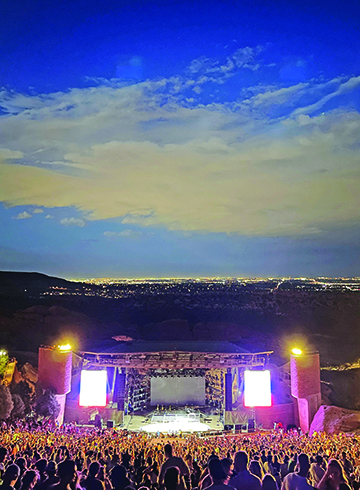
The Vibrant Denver Bond addresses infrastructure needs to some of the city’s most iconic places such as Red Rocks Amphitheatre. Photo taken by Jessica Hughes with Mountain Light Photography
by Jessica Hughes
In November, Denver voters will be able to vote on the $950 million “Vibrant Denver” bond package that was recently approved unanimously by the Denver City Council.
Mayor Mike Johnston’s ambitious bond is the largest bond ever put forward in the city’s history and proposes “to repair and improve Denver’s infrastructure and community space — including roads, bridges, parks, playgrounds, recreation centers, and libraries.”
This comes on the heels of several recent moves to improve Denver’s downtown, including the 16th Street Mall Project, which celebrated its completion this summer, as well as rejected city improvements, such as Governor Polis’s $29 million pedestrian bridge project. At the same time, Trump threatens to decrease federal funding for some programs, the city also faces massive budget cuts worth $250 million, which recently included firing nearly 170 employees and eliminating hundreds of vacant positions. But when you add all of this up, can the city really afford nearly $1 billion in debt?
Johnston says the bond would be fully funded from property tax income, without adding any new taxes. “The Vibrant Denver bond package allows us to come together to decide our priorities for our neighborhoods and families,” said Mayor Johnston. “This bond will help us build the Denver of the future, without raising taxes, while also ensuring the protection and preservation of critical infrastructure already in place. It will also allow us to control our own destiny by creating a local funding source for needed local projects.”
According to the City of Denver, they “set general obligation (GO) bond programs intentionally every 4-10 years so that as previous bonds are paid down, new bonds can be issued without new taxes — allowing the city to keep pace with infrastructure improvements.”
Th
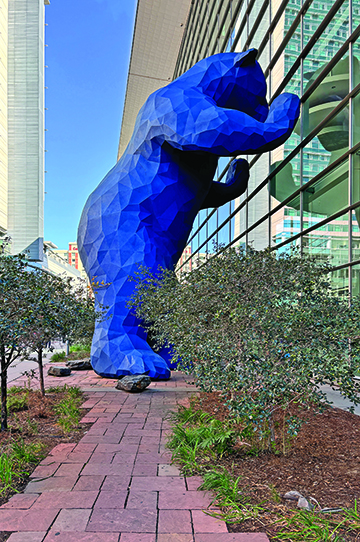
The Vibrant Denver Bond is the largest bond ever proposed in the city’s history. Photo taken by Jessica Hughes with Mountain Light Photography
e mayor’s office said each of the approximately 60 projects can be completed over the next six years within the city’s existing bond capacity, since previous bond programs are almost complete. According to the city’s 2024 comprehensive financial report, the city has about $1 billion in existing debt from previous bond packages voters approved, including the Elevate Denver, a 10-year, $937 million general obligation bond program approved by voters in 2017, and RISE Denver, a five-year, $260 million general obligation bond program approved by voters in 2021.
“In North Denver over the past several years, we’ve seen improvements to recreation centers, parks, fire stations, libraries, playgrounds, and less noticeable but equally important infrastructure like irrigation, street repairs, and bridges. Almost all the infrastructure we rely on daily is built or maintained through our bond programs — critical investments that do not raise taxes but create lasting, tangible benefits for our communities,” said City Council President Amanda P. Sandoval. “General Obligation Bonds allow us to build and maintain the spaces that define our city, ensuring Denver’s legacy of strong, community-driven infrastructure continues for generations to come. The 2017 GO Bond included funding for pedestrian safety improvements along Federal Boulevard, an issue I advocated for, to make one of our city’s busiest corridors safer for everyone. I look forward to working with residents to shape our next bond program and invest in the future of our neighborhoods.”
But before Denverites vote no to avoid adding more debt, it’s important to note the city can only use property tax revenue to fund GO bonds and pay off bond debt. If Vibrant Denver isn’t approved, the city will have a surplus of property tax revenue in the coming years, since it’s on schedule to pay off its current debt, and bonds cannot be used to pay for any operational costs like staffing or services, only for the construction of public infrastructure and facilities. Ultimately, the city would be left with a surplus of money that they couldn’t use for any other cause. So, while it may seem like bad timing, the City of Denver is keeping up the pace of regularly scheduled bond issuance and maintenance.
Each of the bond projects is categorized into five separate sections, which voters will be able to approve or reject. Nearly half of the funding will be allocated toward transportation and mobility, including streets, bridges, and traffic safety improvements. Here is a snapshot of the five categories voters will get to vote on, with the top few most expensive projects within each category.
Transportation and Mobility —
the largest category by far at $441 million
- 8th Avenue Viaduct & Multimodal Improvements | $89,200,000 — The most expensive item on the ballot at almost $90 million is the repairs to the 8th Avenue bridge near Burnham Yard. Despite the City of Denver’s claims that repairs are long overdue, it seems coincidental with the recent rumors of the new home of the Denver Broncos stadium.
- Globeville Elyria-Swansea Connections: Marion Underpass | $75,000,000 — this plan completes the final connection linking Globeville to Elyria and Swansea. It also provides Globeville direct access to the RTD N Line station and several other structural improvements.
- 6th Avenue Viaduct Repairs & Mobility & Access Improvements | $50,000,000 — This project addresses one of the busiest roads in Denver, 6th Avenue, by completing the critical structural repairs, additional access points and a complete re-design for the future replacement of the bridge.
City Facilities
- First Responder & Public Safety Training Center | $75,000,000 — This project would combine the sheriff, fire, and police training needs into one facility to provide greater efficiencies in training recruits, expand the number of trained public safety personnel, and bring training resources up to competitive standards.
- Red Rocks Backstage Expansion and Accessibility Improvements | $35,100,000 — The backstage renovation and expansion would address ADA accessibility (which has been a hindrance to growth for Red Rocks in recent years), additional parking, as well as facility improvements backstage.
Parks and Recreation
- Park Hill Park Buildout | $70,000,000 — After the city announced, earlier this year, its plans to acquire the former Park Hill Golf Course, it comes as no surprise that there is a proposal to build out the park’s new facilities. The plans include steps to ready the park with proper irrigation, landscape, walkways, and parking lots.
- Southeast Recreation Center & Skate Park | $20,000,000 — Money for this project would support acquisition ONLY for the SE Skate Park Hub, which would provide access to skateboarding, roller-skating, etc., to the existing DPR Sports Complex. Development of the recreation center would require additional funding.
Housing and Sheltering
- Affordable Housing Project Development | $45,000,000 — Money for this project allows the city to invest in land, buildings, and/or site preparation to provide affordable housing and to mitigate displacement.
Health and Human Services
- Denver Health Sam Sandos Westside Family Health Center Replacement | $20,000,000 — If approved, the money would support construction of a new clinic in the Westside neighborhood that will increase access to healthcare for the people of Denver. This comes as the Big Beautiful Bill is set to slash healthcare funding in Colorado. The bond is only expected to provide funding for a portion of the entire project.
For more about what’s included in the Vibrant Denver bond, visit Denvergov.org