by Jessica Hughes
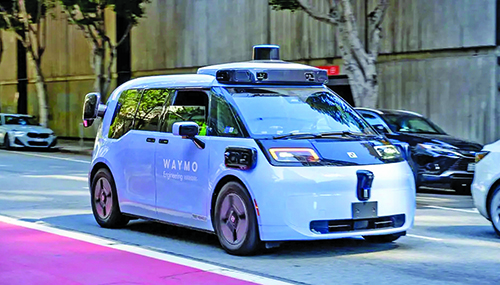
New Kid In Town: The distinct Waymo autonomous vehicles have been hitting the streets of Denver and Glendale since September 1.
While you may not be ready to hand over the keys quite yet, driverless cars have officially arrived in Denver. Waymo began welcoming its first public riders in Denver and Glendale on September 1, 2026, bringing fully autonomous ride-hailing service to the Mile High City and putting the Cherry Creek Valley at the forefront of a rapidly changing transportation industry.
The rollout places Denver and Glendale among a growing number of American cities where residents can hail a vehicle using a mobile app and travel across town without a human driver behind the wheel. Waymo launched public rides in Denver and Glendale simultaneously with San Diego and Tampa, and has continued expanding into additional markets.
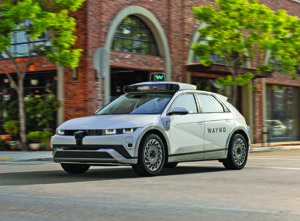 For some, the sight of a car navigating busy city streets with nobody sitting in the driver’s seat may still look like something out of a science-fiction movie. But Waymo’s arrival is the culmination of more than 15 years of research and development.
The technology began as Google’s self-driving car project in 2009. Waymo later became a separate company under Google’s parent company, Alphabet, and has spent years testing autonomous vehicles on public roads and gradually introducing commercial ride-hailing service.
The Cherry Creek Valley presents a particularly interesting challenge. Unlike many of Waymo’s earlier markets, the Mile High City experiences snow, ice, freezing temperatures, and rapidly changing weather conditions. Denver therefore offers an important proving ground for autonomous vehicles operating in a four-season climate.
Waymo announced its arrival to the area in September 2025, initially bringing a mixed fleet that included Jaguar I-PACE vehicles equipped with its fifth-generation autonomous driving technology and newer vehicles using its sixth-generation system. The company said its newer technology had benefited from previous winter-weather testing in Michigan, upstate New York, and the Sierra Nevada.
During the months leading up to the public launch, Waymo vehicles became an increasingly familiar sight on Denver-area streets as the company validated its technology under local driving conditions.
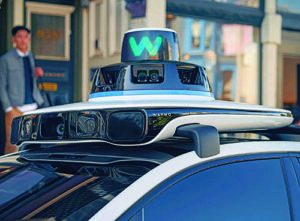
Rather than relying solely on GPS to determine where a vehicle is and where it needs to go, Waymo vehicles use a sophisticated combination of cameras, radar, and lidar sensors to continuously monitor their surroundings. The company’s autonomous driving system, known as the “Waymo Driver,” is designed to recognize other vehicles, pedestrians, cyclists, traffic signals, construction zones, and unexpected obstacles while making driving decisions in real time.
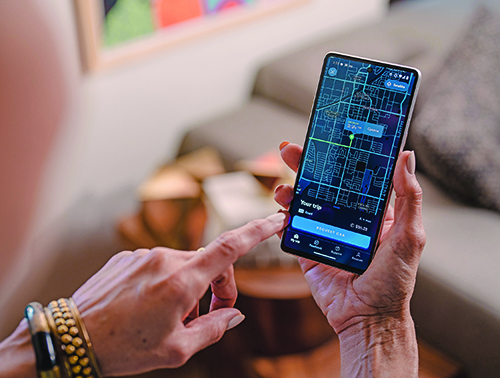
Ride At Your Fingertips: A rider uses the Waymo app to request an autonomous vehicle. Similar to other ride-hailing services, the app allows passengers to request a trip, locate their vehicle, and follow their ride — with one major difference: there is no human driver.
For passengers, however, the experience is designed to feel surprisingly ordinary. A rider requests a vehicle through the Waymo app much like requesting a ride through Uber or Lyft. When the vehicle arrives, there is no driver to greet the passenger. Riders can identify their assigned vehicle through the app and use features such as displaying their initials on the vehicle or remotely sounding its horn to help locate it.
Once inside, passengers buckle up, select their destination, and let the vehicle do the driving.
There is also no awkward question about how much to tip at the end of the trip. Because there is no human driver, tipping is not part of the Waymo experience.
The Appeal Of A Driverless Ride
Supporters of autonomous vehicles see considerable potential in the technology, with safety at the top of the list. Unlike human drivers, computers don’t get tired, distracted by text messages, angry at other motorists, or impaired by alcohol. Autonomous vehicles are also designed to monitor their surroundings continuously in every direction.
 Waymo says its safety data shows its autonomous driving system has been involved in substantially fewer serious crashes than comparable human drivers. The company reported at the Denver launch that its vehicles had experienced 94 percent fewer serious-injury-or-worse crashes compared with human drivers traveling comparable distances.
Those figures come from Waymo’s own analysis and will undoubtedly continue to receive scrutiny as autonomous vehicles accumulate more miles and expand into more cities. Another potential advantage is mobility.
Driverless transportation could eventually provide greater independence for people who cannot drive because of age, disability, or certain medical conditions. Older residents who have stopped driving, for example, could potentially maintain greater independence without relying entirely on family members, public transportation, or traditional ride-hailing services.
There are lifestyle benefits as well. Passengers don’t have to make small talk with a driver, worry about a driver canceling a trip, or wonder whether the person behind the wheel has been driving for too many hours. Some riders may simply prefer the privacy of having the vehicle to themselves.
Autonomous vehicles could also provide another option for people who have been drinking. A readily available driverless ride could give someone leaving a restaurant, bar, sporting event, or concert another alternative to getting behind the wheel.
Waymo’s vehicles are electric, adding another transportation option for cities attempting to reduce vehicle emissions.
Not Everyone Is Ready
For all of those potential advantages, there are also legitimate questions surrounding driverless cars. Perhaps the biggest is a simple one: What happens when something goes wrong?
A human driver can encounter a police officer directing traffic around an accident, a construction worker giving unusual hand signals, an unexpected road closure, or any number of situations that require judgment and communication. Autonomous vehicles must interpret those situations through software and sensors.
And the Denver area adds another variable: weather. A sunny September afternoon is considerably different from a January morning following eight inches of snow. Lane markings can disappear beneath snow and ice, visibility can deteriorate quickly, and residential streets may remain snowpacked long after major roads have been cleared.
The Denver area could therefore become an important real-world test of whether autonomous vehicles can operate as reliably in difficult winter conditions as they do in the warmer climates where much of the technology was initially deployed.
There are economic concerns, too.
Uber and Lyft created an enormous gig economy built around human drivers. If autonomous vehicles eventually capture a significant portion of the ride-hailing market, fewer human drivers could be needed. Taxi drivers, rideshare drivers, and eventually workers in other transportation industries could face increasing competition from vehicles that don’t collect wages, take breaks, or call in sick.
Privacy is another consideration. Autonomous vehicles necessarily rely on numerous cameras and sensors to understand their surroundings. Riders may reasonably want to know what information is collected during a trip, how long it is retained, and how it is used.
There is also the question of accountability. When a conventional vehicle crashes, responsibility typically rests with one or more human drivers. A crash involving a fully autonomous vehicle raises more complicated questions involving the vehicle operator, software developer, manufacturer, and insurance companies.
Those issues will likely become increasingly important for lawmakers and regulators as autonomous vehicles become more common.
Waymo Versus Uber And Lyft
Although Waymo, Uber, and Lyft can all get a passenger from Point A to Point B, the experience is fundamentally different.
The most obvious distinction is the empty driver’s seat.
Waymo’s vehicle is operated by an autonomous driving system rather than a rideshare driver using his or her personal vehicle. That means there is no driver to tip, no conversation unless the passengers are talking among themselves, and no individual driver deciding whether to accept a particular trip.
Pricing can vary depending on the trip and demand, much as it does with other ride-hailing services, so Waymo will not necessarily always be cheaper than Uber or Lyft.
The companies are not necessarily destined to be competitors everywhere, either. Waymo has already partnered with Uber in some markets, demonstrating that autonomous vehicles could eventually become another type of vehicle available through existing ride-hailing networks.
Denver And Glendale
Become A Testing Ground
Waymo’s arrival does not mean the Denver area’s streets will suddenly be filled with thousands of driverless vehicles. Access is being introduced gradually. When Waymo launched public rides in Denver, San Diego, and Tampa on September 1, the company said tens of thousands of people in each city had already expressed interest in riding. Waymo said it would steadily add riders as it worked toward opening service more broadly.
The company has also said it intends to expand its service areas over time as the technology and operations develop. That gradual approach means residents are likely to see more Waymo vehicles on local streets even if they haven’t yet taken a ride themselves.
And that may be the most significant part of Waymo’s arrival. For decades, the driverless car was one of those technologies that always seemed to be just around the corner. Engineers promised it, futurists predicted it, and automakers demonstrated prototypes, but most Americans continued to get into vehicles with a person sitting behind the wheel.
That is beginning to change. There are still important questions involving safety, employment, privacy, regulation, winter-weather performance, and public acceptance. Some residents will undoubtedly download the app at the first opportunity, while others may need considerably more convincing before they are comfortable climbing into a car with an empty driver’s seat.
Either way, the Cherry Creek Valley is now part of that experiment. The future of the driverless automobile isn’t simply coming anymore. It’s already navigating our streets.
High-Tech Driver: Waymo’s fifth-generation autonomous driving system sits atop an all-electric Jaguar I-PACE. Cameras, radar, and lidar sensors allow the Waymo Driver to continuously monitor its surroundings and navigate without a human behind the wheel.