
Central City Opera


Reforms To Help Homeowners Blocked By Powerful Lobbyist CAI
by Ruthy Wexler
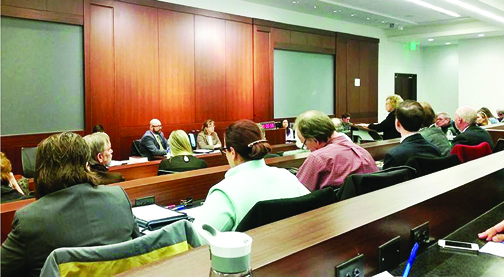
LAC: Members of CAI’s Legislative Action Committee, which acts as lobbyists for HOAs and their supporters, meets with Colorado lawmakers to discuss upcoming bills. CAI has repeatedly blocked all reform legislation to aid homeowners.
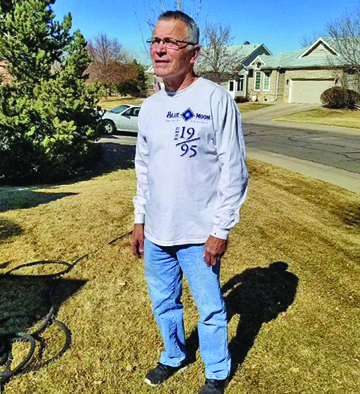
Advocate: Stan Hrincevich started the Colorado HOA Forum, his advocacy group for homeowners. An HOA Town Hall with lawmakers is scheduled for Tuesday, May 22, 2018, 5:30-8:30 p.m., Aurora Central Library, 14949 E. Alameda Parkway, Large Community Room.

Voices For Reform: Notwithstanding important and influential community voices such as former Colorado Senate President Morgan Carroll, left, and former longtime news anchor and now author Ward Lucas, right, demanding that reforms be made to the abusive power of Colorado HOAs, CAI has prevented any and all reforms to aid homeowners. Some highly frustrated advocates have begun discussing strategies to bring suit against CAI or organize boycotts against the Rocky Mountain chapter.
Homeowner Associations (“HOAs”) are of increasing importance to homeowners in Denver and across Colorado. HOAs are set up to govern condominium associations and the common areas within condominiums. In single family home areas HOAs are set up to enforce covenants and to oversee common areas such as pools, tennis courts etc. which may be owned by the association as a whole.
Denver HOAs are also set up to advocate for neighborhood concerns even where the homes in the neighborhood are not covenant restricted or have common areas to oversee. These unique type HOAs in Denver may have their own challenges, but are not the subject of this article.
In Colorado, over 60 percent of the population lives with common interest HOAs, but in Colorado and across the country individuals and families have discovered that these HOAs can be highly oppressive with individuals and families having little recourse under Colorado law to prevent or limit those abuses. Any and all reforms advocated by individual homeowners to curb abuses are shot down at the Colorado legislature by a power lobbying group titled Community Association Institute — Rocky Mountain Chapter (“CAI”).
Catch-22
At first glance, it seems that Colorado has made progress in protecting homeowners. In 1992, after years of complaints, the state passed The Colorado Common Interest Ownership Act (CCIOA), a comprehensive package setting guidelines for HOA conduct, adding more statutes in 2005. In 2013, after a particularly high wave of grievances, CO lawmakers considered the “HOA Reform Act,” which Denver’s television station CBS 4 predicting the legislation would “rein in the powerful HOA industry.”
Resulting laws set stricter standards in matters like debt collection and foreclosure, as did additional 2015 statutes.
But all these laws lack one essential piece: any enforcement mechanism for individual homeowners.
No Exit
HOAs do not fall under any regulatory a gency or higher authority. Even Colorado’s “HOA Office” (HOA Information and Resource Center, established inside Department of Regulatory Agencies [DORA] in 2011 to help homeowners) is authorized only to receive complaints, not act on them.
Thus, an aggrieved Colorado homeowner’s only option is still: hire an attorney and take your HOA to court.
Not only is court very expensive, says former state senator Morgan Carroll, but “because HOA attorneys have access to unlimited funds (including homeowners’ dues and reserves),” homeowners have been given short shift in most Colorado courtrooms.
Shocked Into Advocacy
In 2012, Stan Hrincevich, suspecting financial irregularities, requested records from his HOA, which refused. Knowing CCIOA gave homeowners the right to view all records, Hrincevich sued his HOA. In discussions, HOA lawyers deemed Hrincevich’s position correct. “But the only way they’d agree to rectifying the situation was if I paid court costs. Then, back in court, the judge ruled in favor of the HOA. And told me to pay the costs!”
Galvanized, Hrincevich started Colorado HOA Forum, an advocacy group whose website offers a wealth of information, most of which Hrincevich can spout on a dime. The issue he speaks about most is enforcing existing laws — by installing, under DORA, “an out-of-court, binding dispute resolution process.”
It’s not just Hrincevich asking. The HOA Office has received “thousands” of homeowner requests for some “affordable, non- adversarial” way to get justice.
In their 2013 Report to the Legislature, the HOA Office showed that such processes work well in the two states, Florida and Nevada, that have installed them. The report concludes, “To restore equality “[Colorado] should establish a binding Arbitration Program for HOA disputes.”
In 2013, Hrincevich urged lawmakers to incorporate the report’s recommendation. So did then-Senator Carroll, who, with colleague Su Ryden, proposed an Ombudsman solution. “We tried to get an enforcement piece [in those laws]. We couldn’t get the votes.”
Hrincevich recalls, “I’d go down to the Capitol [in 2013] and tell [lawmakers], ‘There’s nothing accessible and affordable for the homeowner to enforce a complaint.” Fighting him, however, was the powerful lobbying group the Rocky Mountain chapter of the national CAI. The CAI was founded in 1974 by the National Association of Homebuilders, the Urban Land Institute, federal governmental agencies, savings and loan associations and 23 builders/developers. It has chapters across the United States and internationally. Today it is viewed by critics as an avowed enemy of everyday homeowners and citizens and just one more special interest behemoth to which many legislators appear beholden across the county.
Who Is CAI?
CAI is who State Senator Angela Williams meant when she said, “Dispute resolution is tricky in Colorado. There’s a lobby.”
“CAI is one of the most powerful lobbying groups in the country,” explains longtime Denver investigative journalist and television new

Widely Despised Organization: Homeowners throughout Colorado have come to loathe the Rocky Mountain Chapter of the Community Associations Institute as an unscrupulous special interest group harming families and individuals throughout the state.
s anchor Ward Lucas, “benefitting lawyers and [management companies] t
hat work for HOAs.”
“CAI is down at the Capitol all day, every day,” says Carroll. “Especially if they don’t like a bill.”
“If you have legislation that even hints of regulatory oversight,” says Carson Horton of Capital Reserve Consultants, “[CAI] is there … fight[ing] it to the death.”
Hrincevich says he finally got lawmakers to understand that CAI does not represent homeowners. “But they still allow CAI to write legislation.”
Asked if that were true, Colorado CAI Board President Denise Haas replied, “Our Legislative Action Committee interacts on a day to day basis with lawmakers to protect HOAs. We … help craft legislation that gets the most for HOAs.”
Flawed
Haas insists that the system works for homeowners because homeowner-elected boards make decisions.
In his book, Neighbors at War: the Creepy Case Against Your Homeowners Association, Lucas lists many the pitfalls that make homeowner boards a “fundamentally flawed” system. “Neighbors shouldn’t have that much power over neighbors,” says Lucas, who describes how the board’s unlimited power often results in “rogue” boards that leave homeowner interests far behind.
Most board members begin sincerely, says Professor Evan McKenzie, author of Privatopia, “but are unprepared to make complex construction or financial decisions.”
If boards “make decisions,” what do management companies do?
“They educate and guide boards,” replied Haas. “… put the right people in front of them.”
In one Aurora condominium complex, a management company “guided” the board to sign a contract giving the company 3-5 percent of any construction project done on the property (supposedly for “supervision” but no qualified staff ever showed up). In a Denver condominium complex, the management company repeatedly recommended the same disappointing landscaper.
“People need to understand, it’s a business,” Haas explains.
It’s A Business
HOAs are a very big business. The number of HOAs in the U.S. jumped from 10,000 in 1970 to 338,000 in 2015. In 2016, $10 million in Transfer Fees alone flowed from 9,200 Colorado HOAs, with $85 billion in Assessments collected from U.S. homeowners. CAI’s website brims with financial opportunities for HOA vendors — while the list of homeowner horror stories grows.
“We lost all our health and wealth,” said an Englewood, Colorado couple, their home foreclosed due to $9,000 in HOA penalties over a misplaced trash can.
A frightened Denver woman received continual “cease and desist” letters from attorneys after she criticized her HOA.
A Texas woman was foreclosed upon when she couldn’t pay a $15,500 “special assessment” — though just previously, her HOA spent $650,000 on new manager and guest suites, including furniture bought from the board president’s business.
How do HOAs get away with such?
“The way HOAs are legally structured, they can do pretty much anything they want,” says Carroll, explaining that HOAs function exactly like governments but “are exempt from the checks and balances we expect — because they’re set up as corporations.” People have trouble absorbing this, says Lucas, because we grow up believing that if we purchase a home, we’re safe inside it.
Fear
CAI insists trouble comes only from homeowners who “don’t obey rules.”
“Ten percent of homeowners create controversy,” says Haas, adding that unhappy homeowners can simply vote in a different board.
Not so simple, says an elderly Denver woman. “Everyone here is busy working or old and tired like me.”
“I bought this condo to retire,” says a businesswoman, who, like others, refused to be named for fear of reprisal. “Now I can’t relax, waiting for the next crazy rule they make up.”
There are many HOAs that don’t abuse power. Some, like Windsor Gardens, hire a professional General Manager.
But buyers who don’t want HOAs will have a hard time in Colorado, where almost all new construction, even upscale single-family, is registered by developers as HOA.
Cities love HOAs, says CAI’s Dawn Bauman, “because they save a lot of money … transferring municipal obligations to the homeowner association.” Plus “the 2.3 million workers [volunteer board members] we give cities for free.”
Hrincevich and other homeowner advocates believe that the Colorado legislature needs to look beyond powerful lobbying groups like CAI and provide rights and remedies to individual homeowners to address the abuses of HOAs as have happening in many other states.
For information about Hrincevich’s homeowner group, visit www.colorado hoaforum.com. For information about the Rocky Mountain Chapter of the CAI, visit www.cai-rmc.org.
by Glen Richardson
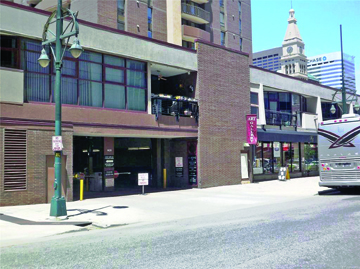
Tower Price Power: Soaring parking cost isn’t just in new high-rise condos. A space in the Brooks Tower on 15th St. sold last year for $67,000, the third highest. The 42-story condo tower is the city’s first high-rise residential building.
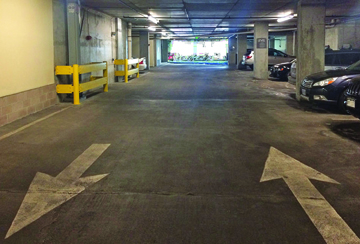
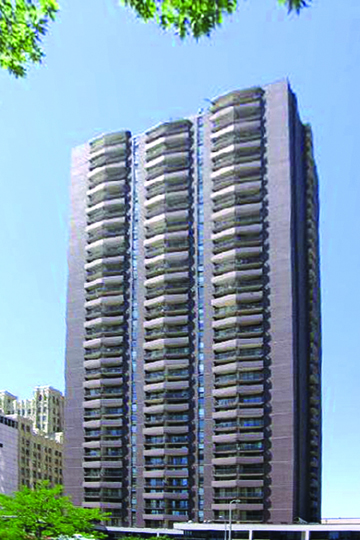
Spire Price Spiral: The height of living in this 42-story condo building downtown comes with soaring prices. A single parking space in the garage at the high-rise on 14th St. has sold for $74,000, a new record price to park and live downtown.
A single parking space in the ritzy 42-story Spire high-rise downtown on 14th St. has sold for $74,000. The outlay sets a new record for the price to park and live in a condominium home in the heart of downtown.
Space 131 in the garage of the condo tower — a chic retreat in downtown’s Theatre District — topped the previous $70,000 price tag set last June for another Spire space, according to BusinessDen who first reported the sale. The city’s homepage for business news said broker-owner Mark Trenka of Century 21 handled both Spire deals. The third priciest was a $67,000 sale last May in the Brooks Tower on 15th St., the city’s first high-rise residential building. Trenka also represented the buyer in that deal.
While Valley residents regularly confront parking predicaments, most hope to get lucky on the street or opt to rent a spot. People who have condos in the heart of downtown, however, in certain cases have the option of buying a space in their building’s parking garage. They just have to be ready to shell out what you would pay for a 2017 Maserati Ghibli S Q4 for the privilege.
Parking Poker
Pricey parking — spaces on the resale market regularly sell for from $25K to upwards of $55K — provides a metaphorical look at how the price for parking is adding to the cost of living under the city’s Denver Moves transportation arrangement. Mile High’s bike and pedestrian plan has installed dedicated bike lanes throughout downtown thoroughfares, a move that’s gobbled up scores of parking spaces created for residents and tourists on Denver’s streets.
Then there’s Cherry Creek North: Apartment towers, condos and hotel construction in the once swanky shopping district forced the Cherry Creek Shopping Center to implement a paid parking system to protect the mall’s parking for its own customers. Commuters, construction workers and people living or shopping in Cherry Creek North used the 5,001 mall parking spaces, making it tough for mall patrons to find a spot.
Most residents literally pay for parking even if they don’t use it. If you live in a condo or apartment that includes parking, that parking comes with an extra fee or is tucked into your mortgage or rent. Moreover, many multi-family residential buildings have more parking than their residents require. Someone has to pay for those spaces. Someone also has to pay for the fact that a $75 monthly parking fee doesn’t fully cover the cost of creating it.
Spending Spiral
Spire originally offered no parking spaces to potential buyers despite having seven levels of parking. Thus, today when buyers look at condo resales they might find two, one or no parking spaces for any given unit. This trend in parking is allowing sellers to experiment with how they sell their units. It’s possible to break apart a condo from the parking space to seek an increased total sales price. This becomes especially true when a buyer is willing to spend $70K for a particular single parking space where they live.

Privileged Parking: Buyers at the under construction Laurel Cherry Creek won’t have to contend with the street parking crunch as the purchase includes parking. The 11th floor penthouse buyer will get three parking spaces for just under $4 million
It can, however, be difficult to get a mortgage for just a parking space. Most non-cash buyers opt for a loan on the value of another property they own, or reappraise the condo based on the addition of a parking space, and then get a mortgage based on that new figure. Individuals who purchase a parking space will likely owe more in HOA fees since they will then own a slightly greater percentage of the building. According to Century 21’s Trenka, a space in Spire’s garage comes with $22.68 in monthly HOA fees. At Brooks Tower that figure is $79.36 a month.
Many buildings assign at least one parking space to a unit, but often offer additional spaces as sales incentives once site sales begin. That’s why future buyers at a particular condo may only find one space offered. In some cases, of course, the original buyer may have opted out of purchasing a second space. At Denver’s Glass House condos in LoDo additional parking spaces originally sold for $15K, but were later increased to $40K. Pricey condos, nevertheless, typically include parking spaces. In Cherry Creek North at the still under construction Laurel Cherry Creek Condos, the 11th floor penthouse comes with three parking spaces for just under $4 million ($3,999,467).
Density’s Price
How much does a parking spot add to a condo mortgage or an apartment’s rental fee? Experts say there is no single answer to the question. Construction costs are affected by soil conditions, zoning requirements, site constraints and the type of parking to be built. Furthermore, initial capital cost varies based on property taxes and cost of financing. For rental properties, resident turnov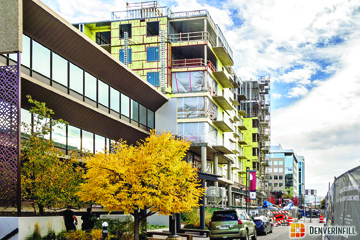 er and delinquency rates are added factors.
Seemingly cheap parking at apartment complexes can be costing renters as much as $250 a month. The point: an apartment with parking space costs more to build than one without. The typical fees for apartment buildings don’t generally cover that difference. In many cases developers create more parking than a building actually needs so they have the option to convert to condos as the market changes.
Bottom line: parking spaces are becoming more valuable as density downtown and throughout the Valley builds up and parking options become limited. This is exposed by the increase in the resale prices for parking spaces and the lack of supply. Residents — whether owners or renters — are increasingly likely to see “Parking Space wanted” signs on the building message board. Moreover, as the price of parking spots soars condo “Parking Space for sale” signs are increasingly likely to also be listed.

by Sandra Stratton-Rusch
 Every day, people are wandering into Pilates studios, situating themselves on gliding tables, and experiencing a workout that leaves them refreshed and happy. What is this exercise and why is it becoming so popular?
First, taking the mystery out of Pilates
Many people are intimidated when they think of Pilates. There’s the strange table with springs and pulleys. There are moving components and straps of different lengths and widths. It can be unnerving.
In explanation, Pilates is a system of controlled movements on a specially designed apparatus. Participants position themselves on the chairs and tables, and use the pulleys and straps to pull their body weight, working and toning the entire body evenly. Created by Joseph Pilates, the method improves flexibility, builds strength, and develops control and endurance for a full-body workout.
That sounds positive and great. But what does that really mean? And why do people love it? The reasons are plenty!
Unlike traditional weight lifting, Pilates strengthens both the large muscles and the tiny muscles surrounding them. This lengthens the appearance of muscles and improves overall alignment. Imbalances go away, posture improves, and people actually feel taller.
When Joseph Pilates’ contraptions were first being developed, they were discovered by dancers, who quickly realized that Pilates movements could both build strength and help them recover from injuries. Because of this, Pilates fell into the dance family, and as such, it’s been practiced in studios, it’s appealed to more women than men, and it’s often grouped with classes like Yoga or aerobics.
Since then, Pilates has evolved to become more of a means of fitness and athleticism. People are recognizing that it’s not just for dancers — it’s for all people who want to be fit.
With any fitness routine, it can be difficult to keep going, stay motivated, and not get burned out. In my 30 years of teaching Pilates, I can say that Pilates stands apart from other approaches. It’s an experiential exercise, which means you have to experience it to know what it’s like, and once you do, it’s easy to get hooked. People find it fun and invigorating. The movements are soothing and stress-relieving, and people work muscles — large and small — without realizing it.
Another thing people love about Pilates is that there are options in how the classes are offered. Pilates Reformer uses the power of the tables, chairs, and towers to guide people through the exercises and provide support for doing specific movements and stretches.
Pilates can still be practiced without the Reformer through Mat Pilates. Mat Pilates involves the same movements, just without the additional support of the equipment. Which one you pick is a matter of preference and budget. (At the YMCA, Pilates Reformer classes involve additional fees, whereas unlimited Mat Pilates classes are included with YMCA membership.)
Finally, the biggest reason people love Pilates is that it simply makes them happy. It alleviates pain and perfects imbalances. It aligns the mind and body and promotes better sleep. Pilates routines change regularly, so it continues to be a challenge. Yet it’s not a daunting workout that turns people away. I see it every day when I teach. People are happy to come to class, and even happier when they leave feeling healthier and taller!
For me personally, Pilates has helped me recover from a serious car/bike crash. And it’s helped me stay strong and fit throughout my adult life — I’m 65! I love to do it, I love to teach, and I love to share the power of Pilates with others. If you’ve ever considered giving it a try, do not let the tables and pulleys intimidate you. Come into a studio, and discover all the reasons you’ll love it too.
Sandra has been introducing people to the benefits of Pilates for over 25 years. She is a Certified Precision Nutrition Coach, Certified ACE Personal Trainer, and Certified PMA Pilates Instructor. Sandy teaches at the Littleton Family YMCA.