
by Mark Smiley | May 19, 2026 | General Featured
by Mark Smiley
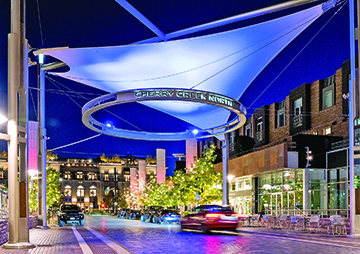 Cherry Creek continues to solidify its position as one of Denver’s strongest economic engines, according to a newly released State of Cherry Creek report highlighting continued growth in development, retail, tourism, office space, and small business activity throughout the district.
Released May 15 by the Cherry Creek Alliance, the report paints a picture of a thriving mixed-use neighborhood that continues to outperform many national and regional trends despite broader economic uncertainty in commercial real estate and retail sectors.
The report found that Cherry Creek welcomed more than 16.8 million visitors annually and currently supports 1,694 businesses and more than 16,800 workers, reinforcing its reputation as one of Denver’s premier destinations for shopping, dining, business, and tourism.
One of the most notable findings involved office space performance. While office vacancies remain a challenge nationwide, Cherry Creek’s office market continued to outperform many competing urban districts. Cherry Creek North’s office vacancy rate dropped to just 1.3% in 2025, while the broader Cherry Creek office market posted a 10.5% vacancy rate — figures significantly stronger than many major U.S. markets.
Retail performance also remained exceptionally strong. The report cited a retail vacancy rate of just 1.9% along with average lease rates of $36.05 per square foot triple net, demonstrating continued demand from retailers seeking a presence in the high-traffic district.
Development activity throughout Cherry Creek also continues at a rapid pace. According to the report, eight projects are currently under construction while another eight developments have been announced. Major projects include the highly anticipated Cherry Creek West development, the Waldorf Astoria Residences, and Cherry Lane, all of which are expected to further reshape the neighborhood in the coming years.
The district also generated more than $119.3 million in tax revenue for the City and County of Denver in 2025, including $62.1 million in retail sales tax revenue, $44.7 million in property taxes, $7 million in lodger’s tax revenue, and $4.9 million from parking revenue.
Small businesses remain a major component of Cherry Creek’s economic identity. The report found that the district supports more than 462 ground-level retail and service businesses, with 87% classified as small businesses and 60% qualifying as micro businesses with fewer than 10 employees. More than half of the area’s small businesses are locally owned.
Employment and wages also continued to rise in 2025, with Cherry Creek posting 1.7% employment growth and 3% wage growth. Professional and office sectors contributed significantly to the gains, while the average annual wage in the district reached $102,266.
Tourism and hospitality indicators also remained strong. Hotels within the Cherry Creek North Business Improvement District posted a 72.78% occupancy rate with an average daily room rate of $295.51 and revenue per available room reaching $216.61, outperforming citywide and statewide averages.
“Cherry Creek continues to prove that it is a vibrant, walkable mixed-use district and a powerful driver of economic growth and community vitality,” said Nick LeMasters, president of the Cherry Creek North Business Improvement District, in the report. “The momentum we’re seeing today reflects years of thoughtful collaboration between businesses, developers, residents, and community leaders.”
The Cherry Creek Alliance said the findings underscore the district’s continued role as a major contributor to Metro Denver’s economic growth and long-term development strategy.
Photos courtesy of Cherry Creek North
by Mark Smiley | May 19, 2026 | Main Articles
by Mark Smiley
Father’s Day is more than another date on the calendar. It’s a chance to slow down, reconnect, and celebrate the fathers, grandfathers, mentors, and father figures who shape our lives. In Denver, there’s no shortage of ways to make the weekend memorable. Father’s Day 2026 falls on Sunday, June 21.
From Rockies baseball and classic car shows, to mountain adventures, brewery patios, and family festivals, the Mile High City offers something for every kind of dad.
Whether your father is happiest outdoors, behind the grill, at a concert, or simply spending quality time with family, here are some of the best ways to celebrate Father’s Day around Denver this year.
Catch A Rockies Game At Coors Field
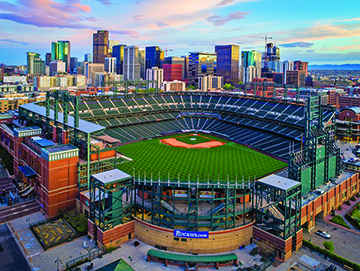
For sports-loving dads, few traditions beat an afternoon at Coors Field. The Colorado Rockies are scheduled to play the Pirates during Father’s Day weekend, making baseball one of the city’s top family outings. Fans can enjoy skyline views, stadium snacks, and a classic Denver summer atmosphere.
Many families make a full day of it by exploring LoDo before the game or stopping at one of the nearby restaurants and breweries afterward.
Explore Denver’s Car Shows
And Cruise Nights
Classic cars remain a Father’s Day favorite, and Colorado hosts dozens of automotive events throughout June. Local calendars feature everything from “Cars & Coffee” meetups to larger community car shows across the metro area.
Northglenn’s Father’s Day Car Show & Market and Denver-area cruise nights are expected to draw enthusiasts from across the Front Range. Families can stroll through rows of restored classics, muscle cars, hot rods, and vintage trucks while enjoying food vendors and live music.
Also, Sabers Hot Rod Car Show in Wheat Ridge runs from 10 a.m. to 2 p.m. All proceeds go to support The Children’s Miracle Network. Food trucks, awards, Hot Rods, Muscle Cars all years all makes and models are welcome.
Head Outdoors
June is one of Colorado’s best months for outdoor recreation, and many families use Father’s Day weekend to enjoy the state’s natural beauty.
Popular ideas include hiking the trails around Red Rocks, biking through Washington Park, fishing in nearby mountain towns, taking scenic drives into the foothills, or spending the afternoon at Denver Botanic Gardens.
Denver tourism guides also recommend outdoor festivals, park picnics, and local food truck gatherings as easy, family-friendly options.
Enjoy Denver’s Food And Brewery Scene
For foodie dads, Denver’s dining scene shines during Father’s Day weekend. Restaurants across the city often feature special brunch menus, steakhouse promotions, barbecue events, and brewery tastings.
Dining guides highlight experiences ranging from upscale filet flights to local craft beer pairings and patio dining throughout the metro area.
Denver’s brewery culture also offers plenty of low-key options for families wanting a relaxed afternoon together.
Concerts, Festivals, And
Live Entertainment
Father’s Day weekend also brings a packed entertainment calendar. Red Rocks Amphitheatre, Mission Ballroom, Ball Arena, and other venues host major concerts and comedy performances throughout June.
Families can also enjoy summer festivals, local rodeos, and cultural celebrations happening across Colorado during the holiday weekend.
The Best Gift May Simply Be
Time Together
While gifts are always appreciated, many dads say the best Father’s Day moments are often the simplest: a family meal, a walk through the park, a baseball game, or a quiet afternoon spent together.
Denver’s mix of urban energy and outdoor adventure makes it easy to create those moments, whether your celebration is big or small.
This Father’s Day, the Mile High City offers countless opportunities to honor the dads who make a difference every day.
Coors Field: Families can celebrate Father’s Day at Coors Field as the Colorado Rockies take on the Pittsburgh Pirates during a weekend filled with baseball and sunshine.

by Mark Smiley | May 19, 2026 | Editorials
by Mark Smiley
 The Denver Center Theatre Company (DCTC) has unveiled an expansive lineup for its 2026/27 season, featuring a mix of classic works, world premieres, and audience favorites that promise to deliver a dynamic year of live theatre.
Artistic Director Chris Coleman described the upcoming season as “a vibrant celebration of theatrical imagination,” highlighting a slate that blends reimagined classics with bold new storytelling.
The season opens September 11, 2026, and includes eight mainstage productions staged across the Denver Performing Arts Complex.
A Season Of Variety And Innovation
The lineup kicks off with Destiny of Desire, a lively telenovela-inspired play with music, running September 11 through October 4 at the Wolf Theatre. The comedic story follows two girls switched at birth, weaving melodrama, humor, and live music into a high-energy theatrical experience.
Shortly after, Shakespeare’s The Tempest takes the stage from October 2 to November 1. Directed by Coleman, the production explores themes of revenge, forgiveness, and identity through one of the Bard’s most magical works.
The new year brings fresh voices to the forefront with two world premieres. Bogfriends (January 15-February 21, 2027) delves into connections across time and memory, while How to Conquer America: A Mostly True History of Yogurt (February 5-28, 2027) offers a humorous yet heartfelt look at culture and identity through the lens of a 1970s marketing campaign.
Music, Memory, And Mystery
Spring programming includes the Tony Award-winning musical Once (April 2-May 2), known for its emotionally resonant folk-rock score and intimate storytelling.
Also featured is And So We Walked (April 16-May 23), a powerful solo performance by Cherokee artist DeLanna Studi chronicling a personal journey along the Trail of Tears.
Closing out the mainstage season is Dial M for Murder (April 30-May 30), a suspenseful adaptation of Alfred Hitchcock’s classic thriller, promising intrigue and unexpected twists.
Holiday Tradition And New Works
In addition to the subscription series, DCTC will present its annual holiday favorite, A Christmas Carol, running November 25 through December 27. The production remains a staple of Denver’s seasonal celebrations.
The 21st annual Colorado New Play Summit, scheduled for February 20-21, 2027, will once again offer audiences a behind-the-scenes look at new theatrical works in development.
Tickets And Subscriptions
Season subscriptions are now available through the Denver Center for the Performing Arts, offering benefits such as discounted pricing, priority seating, and flexible exchanges. Single tickets will be released at a later date.
With its blend of beloved classics, innovative premieres, and culturally resonant stories, the Denver Center Theatre Company’s 2026/27 season is poised to be one of its most compelling yet, inviting audiences across the region, including Glendale Cherry Creek residents, to experience the transformative power of live theatre.

by Mark Smiley | May 19, 2026 | Glendale City News
by Mark Smiley
 Denver families will have a chance to step into the worlds of Frozen, Encanto, Moana, and other Disney favorites later this year as Disney On Ice brings its newest production, Find Your Hero, to Ball Arena for a three-day run in November.
The traveling ice show will perform six shows from Nov. 13–15, offering a mix of classic Disney storytelling, figure skating, music, and large-scale stage production designed for family audiences.
The production features appearances from Mickey Mouse, Minnie Mouse, Donald Duck, and Goofy, who guide audiences through scenes inspired by some of Disney’s most recognizable films. This year’s show includes characters from newer hits such as Encanto and Moana, alongside longtime favorites including Beauty and the Beast, The Little Mermaid, Tangled, Frozen, and Lilo & Stitch.
Organizers say the show focuses on themes of courage, family, perseverance, and self-discovery. Audiences will follow Mirabel’s efforts to save her family’s magical home in Encanto, Moana’s ocean voyage with Maui, and Anna and Elsa’s journey to protect Arendelle in Frozen.
Disney On Ice productions have remained a longtime family attraction in Denver, regularly drawing large crowds to Ball Arena during holiday and winter entertainment seasons. The performances combine professional skating with theatrical lighting, digital effects, oversized set pieces, and elaborate costumes.
Showtimes are scheduled for 7 p.m. on Friday, Nov. 13; 11 a.m., 3 p.m., and 7 p.m. on Saturday, Nov. 14; and 10:30 a.m. and 2:30 p.m. on Sunday, Nov. 15.
Tickets go on sale to the general public May 19 through Ticketmaster, with presale opportunities already available for Disney On Ice subscribers and preferred customers.
In addition to standard admission, attendees can purchase a VIP Magical Pass package that includes premium seating, early venue access, a character meet-and-greet before the performance, and commemorative merchandise.
Ball Arena is located at 1000 Chopper Circle in downtown Denver.
For additional information and ticket availability, families can visit DisneyOnIce.com/find-your-hero/denver-co-ball-arena.
Feld Entertainment photos

by Mark Smiley | May 19, 2026 | Uncategorized
by Mark Smiley
 In Denver, where backyard grilling, patio cooking, and hands-on craftsmanship are part of everyday life, having the right tools can make all the difference. Two standout thermometers, the MEATER Pro Duo and the ThermoWorks Industrial IR Gun, offer distinct approaches to temperature tracking, each designed to meet the needs of serious users. These serve as perfect Father’s Day gifts which is coming up on Sunday, June 21.
For home chefs and grill enthusiasts, the MEATER Pro Duo delivers a high-tech, wire-free cooking experience. The system includes two fully wireless probes that monitor both internal meat temperature and ambient heat, allowing users to track multiple dishes at once, whether it’s a steak and chicken on the grill or different sections of a large roast.
The probes connect to a charging block that doubles as a WiFi gateway, enabling cloud-based monitoring through the MEATER app. That means cooks can step away from the grill, whether to prep side dishes or relax with guests, and still keep tabs on their food in real time. The app also includes guided cooking programs, alerts when target temperatures are reached, and estimated cook and rest times, making it useful for both experienced grillers and those still refining their technique.
In practical terms, the dual-probe setup is especially valuable in a typical Colorado setting, where multiple cooking methods might be in play at once. A user could monitor a tri-tip on the grill while keeping an eye on chicken wings in a smoker, all from a smartphone. The probes are built with durable materials designed to handle high-heat environments, an advantage when grilling at altitude or searing at higher temperatures.
Still, the MEATER Pro Duo does come with considerations. It relies on a strong WiFi connection at the cooking site, and its advanced features may be more than occasional grillers need. At around $199.95, it’s an investment best suited for those who regularly cook multiple items and want a more connected, hands-off experience.
On the other end of the spectrum, the ThermoWorks Industrial IR Gun is built for speed, durability, and precision in measuring surface temperatures. Ra ther than monitoring internal cooking, this infrared thermometer provides instant readings of surfaces, from a hot griddle to industrial equipment, without direct contact.
Known for its rugged construction, the IR Gun features a comfortable grip, a bright backlit display, and a dual-laser targeting system that clearly defines the measurement area. Its adjustable emissivity allows users to fine-tune readings across different materials, whether shiny metal or matte surfaces.
Performance is where the tool shines. It delivers near-instant readings with high accuracy and offers a wide temperature range suitable for food safety, automotive work, brewing, and HVAC applications. The 50:1 distance-to-spot ratio allows users to measure from a safe distance without sacrificing precision, particularly useful when working with hot or moving equipment. Additional features like high and low alarms and MAX, MIN, and AVG modes provide further data insight for professional use.
While priced around $79, higher than basic consumer models, the IR Gun is positioned as a long-term investment for those who value reliability and performance in demanding environments.
Ultimately, the two devices serve different but complementary purposes. The MEATER Pro Duo is ideal for connected cooking and multitasking in the kitchen or backyard, while the ThermoWorks Industrial IR Gun excels in delivering fast, accurate surface readings across a range of professional and practical applications.
For Cherry Creek Valley residents, whether hosting a weekend barbecue or working in the field, these tools reflect a growing trend toward smarter, more precise technology that helps users work more efficiently and with greater confidence.