Denver’s Newest GID Launches Amidst Sceptism And Hope
by Heather Brecl
Screenshot
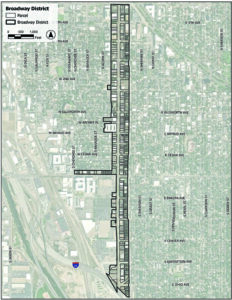 When Denver business owners on the Broadway corridor look carefully at their tax bill this year, they may or may not be surprised to see yet another line item for a new tax called the General Improvement District (GID). Though it should come as no surprise, especially in Denver, in November of 2025 the people of Denver with businesses and residences along Broadway through the Baker and Speer areas (stretching about two miles from 6th Avenue south to I-25) voted for an additional self-imposed tax (“assessment”) in the hopes of improving the well-being of their commercial corridor. GIDs have become the latest phenomenon, mechanism and often “bad word” in Denver created to compensate for the City of Denver’s shortcomings and mismanagement of affairs and efforts in making Denver a desirable place to work and live. With few checks and balances, and the small margins by which a GID can be voted into existence, Denver residents and business owners have a bad taste in their mouths. From the GIDs voted in from RiNo to Ballpark to Cherry Creek, where residents defeated the measure recently to get it on the ballot, many view GIDs as an unnecessary additional taxing mechanism to handle issues that should’ve already been addressed by the City and that it was presented with misleading and weaponized surveys, ads and slanted community meetings to gather support.
While the vote for the Broadway GID was passed by a “majority” of voters, as is required, the margin was slim, the vote passed by a mere 23 votes out of 1,200 eligible voters and many business owners lament that they weren’t accurately or fully informed during the election process about what a GID actually means to their future. Out of the 1,200 eligible voters, only 261 people actually voted. Only 51.5% of the voters approved a mill levy tax, meaning that only 126 people wanted a tax increase. Because of TABOR (Tax Payer Bill of Rights), the question for the vote had to be broken up into three questions with the first one specifically asked if voters wanted a tax increase – that passed by a very narrow margin. While the new GID assessment replaces the former assessment that businesses already paid to the LMD (Landscaping Metro District) it is higher than before and is in place for a decade, causing those who were not in favor of the GID grave concern about accountability and that the GID will represent the needs of all in the District.
Broadway GID Election Results
(November 2025)
Formation of the GID
YES 69.3%
NO 30.7%
181 votes 80 votes
Property Tax Increase
YES 51.5%
NO 48.5%
137 votes 129 votes
Debt Authorization
YES 60.4%
NO 39.6%
157 votes 103 votes
Broadway Merchants Association
Call For Revitalization
Known for its eclectic, artsy, trendy vibe with a plethora of independent stores, vintage shops and a strong restaurant and bar scene, the Broadway stretch from the Wizard’s Chest on the north end to the long-standing Army Surplus store on the south side encompassing the South Broadway (SoBo) neighborhoods of Baker, Wash Park, and Platt Park now comprises the new GID. There is a vibrant smattering of music venues, tattoo shops, antiques, and local boutiques, churches, and local businesses that have long been a part of the community. And with heavy car and pedestrian traffic up and down the street and around establishments, there is a pressing need to revitalize the district.
The Broadway Merchants Association “BMA” – a Registered Neighborhood Organization and 501(c)6 non-profit organized a campaign focused heavily on safety, cleanliness, branding, events, and economic support for South Broadway businesses in an effort to pool and leverage resources and make the corridor an attractive place for visitors, residents and business owners alike.
“The Broadway GID brings new energy and real resources to the corridor: more safety, cleaner streets, exciting events, and marketing that puts Broadway on the map. Broadway’s three existing Local Maintenance Districts (LMD’s), created back in the 1970s, have kept the lights on – but their funding only stretches so far, leaving no room for the investment and activation our community deserves.” – www.denverbma .com/broadway-improvement-district
Businesses Question
The Initial Phase Of The New GID
Enticed by the promise of safety, cleanliness, branding, events, and economic support for South Broadway businesses, a handful of business owners now question that the outcome fits the dream. Some business owners express deep concern that the new regime is not following through so far with the promises of a safer, cleaner community but are hopeful that things are moving in the right direction. As they walked up and down the sidewalks along West Alameda Avenue, they pointed out the weeds, dying trees, overflowing trashcans, and graffiti that now mark the public areas in front of their establishments that they say were well-maintained in the previous LMD. They argue that the recently neglected landscaping is causing patrons to question if they are even still open. Other businesses that have been a staple of the community such as the MDLDC (Metro Denver Local Development Corporation) are no longer in business with the change of the new guard. The MDLDC had to close its doors when they lost the contract for the new GID, having been responsible for not only landscape maintenance up and down Broadway in the LMDs but also instrumental in the creation of the districts almost 50 years ago. With the dissolution of the LMDs, those who had contracts to do maintenance were paid through March by initial funds from the GID.
Substantial operating budget changes are also a concern by a handful of business owners who wonder how a GID that is now more than twice the size of the initial three LMDs can possibly serve as adequate to address all of the maintenance and safety issues with a budget that is smaller than before.
The Broadway GID’s Response
To Community Pushback
Running the newly incepted Broadway GID from a small unassuming building off Broadway is former bartender, hospitality expert, and area resident Caitlin Braun, the first paid employee of the GID. Serving as the Executive Director with 10-12 full-time employees being trained to properly handle the workload and demands, Braun speaks vigorously of her commitment to the small businesses and residents of the GID. Known locally for her outspoken grassroots advocacy of the new organization, Caitlin prides herself on both working and living in the community that she promises to help revitalize. She stands firmly behind her conviction in creating a safer cleaner Broadway neighborhood and invites members of the community to bring their concerns and dreams to her at any time. Caitlin prides herself on being readily available for feedback, conversation, and debate, welcoming engagement with the community which she steadfastly believes in. Caitlin pointed out candidly that May is the very first month of fully operating and like all young organizations, there are growing pains but that they are firmly committed to its success.
“We are a Board made up of local entrepreneurs who work with the District and residents who believe firmly in making the neighborhood somewhere we all want to live and do business. We are not like other GIDs – we have our own identity. Every penny that we collect through the GID stays within the neighborhood we serve. We worked tirelessly to get the word out about the GID to voters through tons of outreach and doorknocking. Now we want to hear your ideas and input and welcome engagement. We will have a hotline that we can be reached on in order to stay on top of whatever critical issues need to be addressed in the community. Give us a chance to show you what we can do.” – Caitlin Braun, Executive Director of the Broadway GID.
In regards to budget discrepancies and the switchover to new service providers, Caitlin remarked that there is a new approach to doing business to more efficiently use resources and address the main two areas of focus – a Safe Clean Broadway. The Broadway GID hired a national company called Block by Block, based out of Louisville, KY to take over the reins from the MDLDC. Block by Block specializes in handling the bundle of services including both maintenance and safety for over 200 special districts across the country, including the Ballpark District. Braun shared that their expertise and experience is efficient in not only maintaining the safety, landscaping and maintenance, but also creates some relief for the overall budget.
Braun and the Board encourage everyone to visit their website to stay informed and bring any concerns or questions their way.
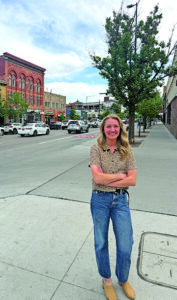
Tucked inside an unassuming building off South Broadway, Executive Director Caitlin Braun is the face of the new GID. Advocate, organizer, and neighborhood ambassador, Braun is betting that transparency, accessibility, and visible results will win over even the district’s toughest critics.
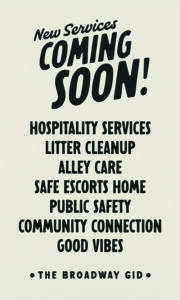
Coming Soon is easy. Delivering is the test. Business owners are already asking if those promises will be a reality.
The South Broadway corridor is now a crossroads of old Denver and new development. Is the new Broadway GID part of the solution — or another layer of bureaucracy? Business owners haven’t seen the results yet but Braun says they are just getting started.
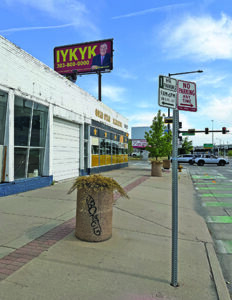
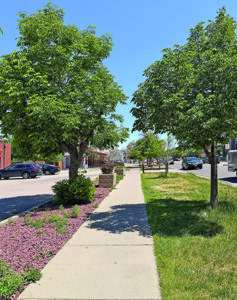
Near the heart of the new Broadway GID, areas that merchants say were once carefully maintained in the previous Landscaping Metro District have become a symbol of the district’s growing pains with the return of graffiti, neglected walkways, and trash, making patrons wonder if businesses are even open.
“Safe and Clean Broadway” is the GID’s rallying cry. Business owners say the reality has yet to catch up with the marketing. The GID says they’ll deliver.