
by Charles Bonniwell | Dec 16, 2022 | Editorials
Winter is just beginning but come spring the quadrilateral event of electing a new mayor for the City and County of Denver will arrive. Denver almost never throws out an incumbent mayor so it’s the only chance a person seeking the position will have for the next 12 years. The incumbent mayor Michael Hancock is almost universally deemed the worst mayor in the city’s 164-year history beating out even Mayor Wolf Londoner who was removed from office for corruption in 1891. Nonetheless, we Denverites have elected him three times including once unopposed. Thus, once you are elected as mayor of Denver you are unlikely to leave office with the exception of term limits.
Since this is a once in 12-year opportunity, 22 individuals have announced their candidacy covering an extraordinarily diverse group, including a Republican. City politics is basically a Democrat only event these days. The candidates are divided between the corporatists who backed Hancock for three terms, and the radicals who helped elect various councilmembers two years ago.
The radicals have a large group to pick from, including: Lisa Calderón, the Executive Director of Emerge Colorado, an organization that promotes left-wing women candidates for office, and who ran four years ago for mayor; Deborah Ortega, a term limited councilwoman for the city at large who has served in government for almost 40 years; and Leslie Herod, a term limited state representative from Denver.
The leading corporatist candidate is Kelly Brough, the former longtime President and CEO of the Denver Metro Chamber of Commerce, and former chief of staff for then mayor John Hickenlooper. To the great annoyance of Channel 9News’ Marshall Zelinger, some white men have also announced they are running, including: Chris Hansen, who represents both Denver and Glendale in the state senate; and Mike Johnston, who also has represented northeast Denver in the state senate and ran for governor until John Hickenlooper entered the race. Zelinger indicated that he did not feel “comfy” with white men running when women and persons of color had already entered the race. More than a few Channel 9News viewers noted that, as a white man himself, Zelinger should resign to provide an opportunity for women and persons of color to occupy a “comfy” position at Channel 9.
Do any of the candidates care about the ever-increasing cost of living in Denver beyond housing? Do any of them care about the quality of life for the average Denverite and not just the ever-growing army of the homeless? Do any of them care about the ever-diminishing parks and open space? Do any of them have any plans to bring back downtown from the wreckage that it has become?
Denver was once a beautiful city with an enormous number of parks and open spaces, as well as wonderful neighborhoods. Denver was far from perfect, but it took only 12 years of Hancock to destroy much of it. Will the next mayor be just another mayor like Lori Lightfoot of Chicago, or another developer whore like Hancock? Or will someone arise who is better and different? Over the next 90 days we will be looking intently if such a person exists and we hope you will do the same.

Thomas Wolf
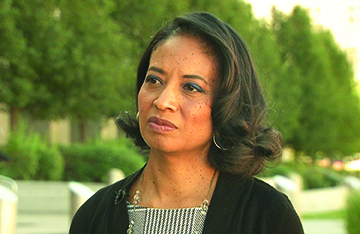
Lisa Calderón

Terrance Roberts

Leslie Herod
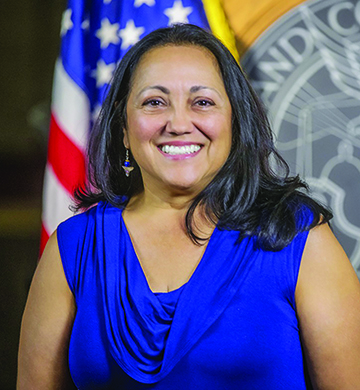
Deborah Ortega
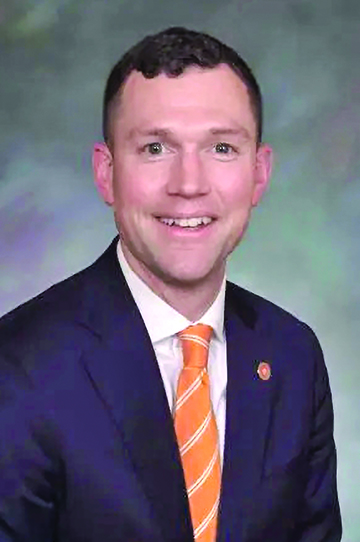
Chris Hansen

Kelly Brough
by Charles Bonniwell | Nov 17, 2022 | Editorials
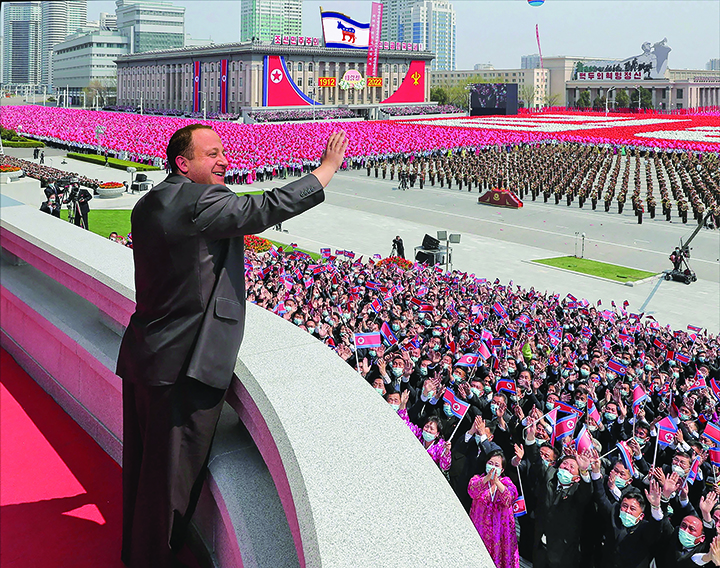 It took 20 years of hard work and persistence by a bi-partisan coalition of the Democrat Party and moderate establishment Republicans, headed by Colorado’s richest man, Phil Anschutz, to accomplish one goal. The election returns from the 2022 midterms are in and Colorado, at long last, has one-party Democrat rule. Incumbent Governor Jared Polis won by 20 plus points over Republican Heidi Ganahl. It’s not that Mr. Polis is so uniquely popular. Every Democrat candidate for statewide office in Colorado won close to double digits.
The State Senate went from 21 to 14 in Democrats favor to 24 to 11. In the State House it went from 41 to 24 in the Democrats favor to 48 to 17. In a terrible economy with high inflation and a Democrat President with low approval numbers how could this possibly be true? It’s easy. In over 20 years, as pointed out in last month’s editorial, we have gone from same day voting with 30-day registration requirements to same day registration, universal mail-in ballots with an almost month election period. Only the Democrats ballot harvest. They urge their members to cast their ballots immediately. That leaves Democrats three weeks to go house to house to harvest ballots and cure any faulty ballots.
Republicans are told by its leadership to all vote in person on election day and not to allow anyone to collect their ballots. Even without the enormous fraud that universal mail-in ballot and ballot harvesting encourages, there is no chance a Republican can win a statewide campaign under such circumstances.
Yet not a single prominent Republican has publicly protested this inherently unfair election process. In 20 years, they have not objected to any of more than a score of election process changes that have assured a one-party state from now to eternity. Former Republican state party chair and leading Republican Colorado Congressman Ken Buck has declared the process “the Gold Standard.” Former Republican Secretary of State Wayne Williams cut an advertisement with present Secretary of State Jena Griswold to the same effect, paid for with taxpayer dollars, which was continuously in the run up to the election.
Why would Phil Anschutz and the Republican establishment want to hand the state over permanently to the Democrats? Because it assures them, they will be permanently controlling the Republican party even if it is a permanent minority party. They can make deals with Polis for their own benefit. The Republican establishment cannot let the grassroots out of the bag because if they did, they could take over the state Republican party, and maybe even the state, which is exactly what has happened in Wyoming and Nebraska. All Anschutz has to do talk is talk to fellow billionaire Pete Ricketts, the two-term governor of Nebraska and president of the National Republican Governors Association, about what happens if everyday citizens get hold of a state party. It’s July 14, 1789, all over again.
Anschutz can also appreciate why Mitch McConnell withdrew money from the Republican senate candidates in Arizona and Nevada, so the Republicans lost by close margins and lost any chance of becoming the majority in the Senate. McConnell may have assured that Republicans are a minority in the U.S. Senate, but helped guarantee he would be the leader of that minority party.
So welcome to the one-party state of Colorado. Like all one-party states from North Korea to Cuba, the citizens will suffer greatly but the leaders of the uni-party will prosper extraordinarily.
Governor Polis celebrates one party rule in Colorado.
by Charles Bonniwell | Oct 21, 2022 | Editorials
 There is an old saying in politics that there are two major parties in America and one is the party of evil and the other is the party of stupid. The Republican Party is viewed as the party of stupid and that is particularly true in Colorado. The Republican Party in 2001 was on a roll looking like it would be the dominant party in the state. The Democrats then began changing the election rules to their benefit.
First, they put on the ballot a requirement for all mail-in ballots, which was overwhelmingly rejected by the voters in 2002. But then, with the help of the Republican Secretary of State, no excuse absentee balloting was instituted in 2004. In 2013 with Democrats in control of the Governor’s office, the Senate, and the House, they adopted all mail-in balloting even though the voters had previously rejected it. Did the Republicans then put on the ballot a rejection again of all mail-in balloting? No, of course not. Then in 2016 they had the voters approve semi-open primaries where independents could vote in either major party primary (although not in both).
By 2018, the Democrats and gubernatorial candidate Jared Polis began widespread ballot harvesting, and no Republican has since won any statewide election. It is well known that ballot harvesting is an invitation to voter fraud. What is more shocking is what is allowed with ballot harvesting. Did Colorado Republicans then go to court like in Delaware which found it unconstitutional? No. Did the party support closing its primary by ballot or by the courts? No. Did they support a ballot initiative to outlaw ballot harvesting? No.
Instead the changes have resulted in primaries where independent voters choose semi-Democrats as Republican standard bearers like Joe O’Dea for U.S. Senate and Pam Anderson for Secretary of State. Conversely, Democrats often have single person primaries, and their candidates tend to appeal to their base of voters.
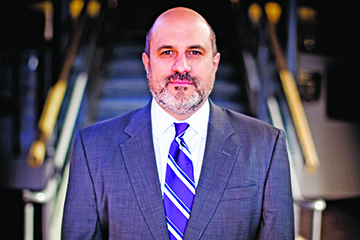
Jon Caldara, The One-Eyed Man in the Party of the Blind
Republicans, like former state party chair and Congressman Ken Buck, call the Colorado system the “gold standard.” Former Republican Secretary of State Wayne Williams goes on television in an ad, paid for by the taxpayers’ COVID-19 funds praising the system, and the spot acted as a political advertisement for Democrat Jena Griswold for Secretary of State.
What have Republicans done to protest the clearly one-sided political system? They have told all their voters to wait until election day and vote in person. Brilliant! It guarantees a lower turnout by Republicans and Republican leaning independents, as with only one day to vote, all type of emergencies can develop preventing even the most ardent person from voting that day.
Conversely, the Democrats urged their voters to vote as soon as possible and give their ballots to trusted Democrat ballot harvesters. Thus, Democrats have a three week Get Out the Vote (GOTV) to get their voters to the polls. Essentially the Republicans have no GOTV as they can’t canvass recalcitrant Republican voters who say they intend to vote in person.
Republicans think ballot harvesting stinks and so they won’t do it. Jon Caldara, head of the Independence Institute, a free market think tank, is at least a one-eyed man in the party of the blind. He wrote a column for the Colorado Gazette (which is controlled like the Independence Institute, by Phil Anschutz) titled “Embrace a Vote Harvesting System.” He makes the obvious point that if one side ballot harvests and the other doesn’t, the one that doesn’t will lose.
But the head of the Colorado Republican Party Kristi Burton Brown doesn’t get it. She has done nothing with ballot harvest or GOTV, at least nothing that is in any manner effective.
Watching elections in Colorado is like watching a heavyweight boxing fight with the Republican Party voluntarily tying one hand behind its back and getting pummeled.
It’s looking more and more like there will be a red wave nationally. But we don’t think it will wash up through the Colorado Rockies. With probably the dumbest state Republican Party in the country, Republicans will likely at most make some minor gains and perhaps win the new 8th Congressional District. It has been said that if Republicans can’t make major gains in Colorado in 2022 it probably will never do so. When you let your opponents write all the rules in their favor and then call it “the gold standard,” you probably don’t deserve to win.
by Charles Bonniwell | Sep 30, 2022 | Main Articles
Zoning War Possible Between Cities
by Charles C. Bonniwell

High Density King: David Tryba, Principal of Tryba Architects. His firm has submitted a “Concept Site Plan” for an area that borders Glendale along Cherry Creek Drive South that includes 15 and 20 story apartment buildings. In 2016, his firm proposed buildings to be constructed in Glendale that would have been the tallest in the state. Glendale officials rejected the concept.
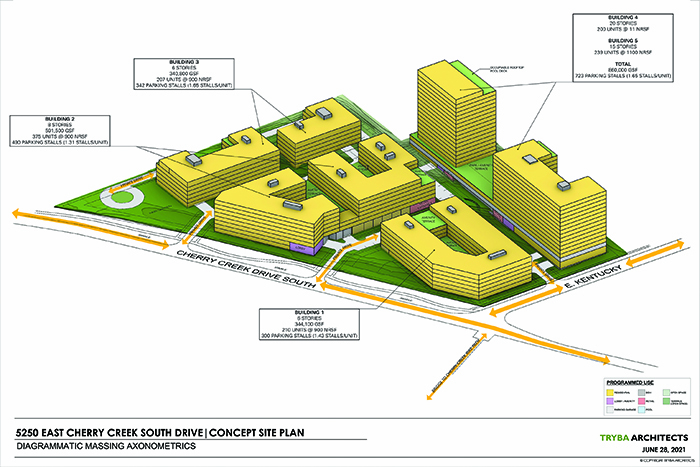
Site Plan: The concept site plan submitted to the Denver Planning Department by Tryba Architects includes five buildings along Cherry Creek Drive South and East Kentucky Avenue with buildings 4 and 5 bordering Glendale and totaling 20 and 15 stories respectively.

Tall Buildings: The red lines in the above photo illustrate how tall the proposed buildings would be if approved by Denver’s Planning Department. They would be 157 feet and 210 feet respectively and block out any views East along Cherry Creek Drive South from Glendale.
The massive density along Cherry Creek within the City and County of Denver appears to be continuing unabated with the creek being canyonized by tall buildings. High density developers’ favorite architectural firm, Tryba Architects, has submitted a “Concept Site Plan” for 5250 East Cherry Creek Drive South to Denver Planning and Development that has surrounding neighborhoods and the City of Glendale in an uproar.
David Tryba, the head of Tryba Architects, had come along with Dana Crawford, to Glendale City Hall in February 2016, to convince city officials to allow a massive tower of luxury apartments/condominiums. The building would have been potentially the tallest building in Colorado and located along 3.8 acres acres of land owned by the proprietors of Authentic Persian and Oriental Rugs on Colorado Boulevard. At his meeting with Glendale officials, Tryba
Continued on page 4
Continued from page 1#
noted how landowners could make a great deal more money the more density they can squeeze on a property. He stated that they had come to Glendale because they were “frankly interested in having more flexibility than they could have in Denver in terms of being able to go vertically.”
Community And Glendale Objections
Glendale was not impressed and did not approve the concept, but Denver in the waning days of the Hancock administration has become more “flexible” than it was previously. The Glendale City Council directed its staff to oppose the 5250 East Cherry Creek Development due to its extreme density and asked them to point out “the serious negative impacts to traffic, parks, and the surrounding lower density Denver and Glendale neighborhoods, and encouraged a development that is “more compatible adjacent zoning and density.”
Glendale did not object to a redevelopment of the present site which has 328 units and a density of 28 units per acre. Glendale notes the redevelopment would drastically increase the number of units to 1,232 with 196 units per acre — a fourfold increase. The redevelopment would be comprised of five buildings with the two tallest being 15 and 20 stories and back up to one and two-story buildings in Glendale. In one property in Denver, there would be 40% of all residential units in Glendale combined.
Both Cherry Creek Pediatrics and the Board of the Cedar Pointe Condominiums have sent objection letters to the Denver Planning Department pointing out many of the problems that the size and mass of the buildings could effectively destroy the existing landscaping in Glendale.
Parking And Traffic
Glendale in its correspondence noted the enormous parking and traffic problems that the project would bring. Denver allows as little as 1.5 parking places per unit while Glendale requires much more plentiful parking but does not allow on street parking. Adjacent Cedar Point Condominiums has 573 off-street parking for 270 units. The overflow parking from the project would therefore be forced into Denver’s Virginia Village neighborhood streets and overwhelm them.
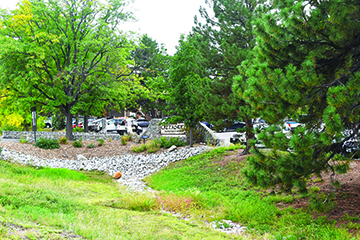
Proposed Site: Creekside Apartments, which has 328 units, currently sits on the property that is most likely going to give way to a massive development sprawled over 11.632 acres.
Traffic created by the redevelopment would create bottlenecks on Cherry Creek South during rush hours and double the traffic on East Kentucky Avenue. The redevelopment does not provide a full signalized intersection with pedestrian crossings. Glendale points out that the redevelopment is not consistent with the 2010 Blueprint Denver which provides for low to medium residential development for the area.
Rezoning And Possible Zoning War
The property had been zoned R-2-A with height limitations but in 2006 rezoned to R-3 with no height limitations. To obtain the rezoning the property owner, Apartment Income REIT Corp agreed to waive its unlimited heights rights to protect the R-2-A Denver property to the south but no protection for any Glendale property to the west. The setback on the Glendale side is proposed to be only 20 feet dwarfing the Cherry Creek Pediatric Center in Glendale. Denver appears to be allowing massive density adjoining Glendale properties. This could result in Glendale in turn rezoning its properties along the Denver border with massive density.
Such a zoning war would hurt both cities, but Glendale may have little choice given Denver Planning Commission’s seemingly willingness to badly damage Glendale.
by Charles Bonniwell | Sep 28, 2022 | Editorials
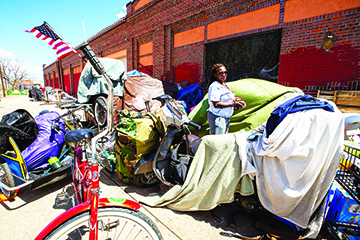
We now know that Denver Mayor Michael Hancock is planning to leave the City and County of Denver for Miami, Florida, at the end of his 12 years of wreckage. It also appears that large sections of the Denver business community have decided to abandon the city as well. The Denver Post reported on August 23rd of this year that restaurants are leaving Denver due to rent hikes and labor shortages. A report from the Downtown Denver Partnership shows the downtown workers are refusing to return to work, with only half the number of office workers coming to downtown compared to 2019, thereby badly hurting Denver’s business district.
Roughly a quarter of the office building space is empty and there are even proposals to turn office buildings into apartment houses. Denver police report that arrests are down 64% over 14 years but crime is up by 50%. The homicide rate is on track to break Denver’s all time high of 100 homicides set in 1981. According to the real estate firm Redfin (and reported in the Denver Business Journal) one in every four Denver homeowners are looking to relocate out of the Denver metropolitan area. Over half of that relocation was due to concerns over, crime, as well as cost of living, taxes, and quality of schools.
Quality of schools is always a key indicator of the future health of a city. There was white flight out of Denver in the 1970s and 1980s over the school issue. The business community began to becom e involved in Denver School board races so that the teachers’ union was not the only voice in an election. Denver began to start and implement charter and specialized schools which were highly popular with Hispanic and Asian communities. But several elections back the business community stopped funding races. As a result, the Denver School Board and the Denver schools are a mess as reported by Glen Richardson on the front page of this month’s Chronicle.
Denver’s 710 KNUS radio host Stephan Tubbs has declared that Denver is “irretrievably lost.” We are not quite so pessimistic. But we do believe that the mayor’s race this spring is, however, absolutely critical. The truly horrific Michael Hancock is finally term limited. If the choice is between a destructive social justice warrior or another high-density whore like Michael Hancock, then Denver will be in real trouble. The business community (sans high density real estate developers) needs to coalesce behind a candidate that actually cares about the many wonderful Denver neighborhoods (and not just how to destroy them); cares about downtown Denver (and not just how to make it a homeless encampment); cares about the parks and open space (and not just how to blow them up for high density projects); understands that ever increasing fees and taxes make the city ever more unaffordable to live in; understands that many Denver cultural institutions are worth preserving; and, most of all, will cause all Denverites to feel welcomed and not just always dividing everything into identity politics.
Is there such a candidate in Denver and will the business community support him or her? The future of the city is depending upon it.
— Editorial Board