
by Charles Bonniwell | Feb 19, 2026 | Main Articles
by Charles Bonniwell
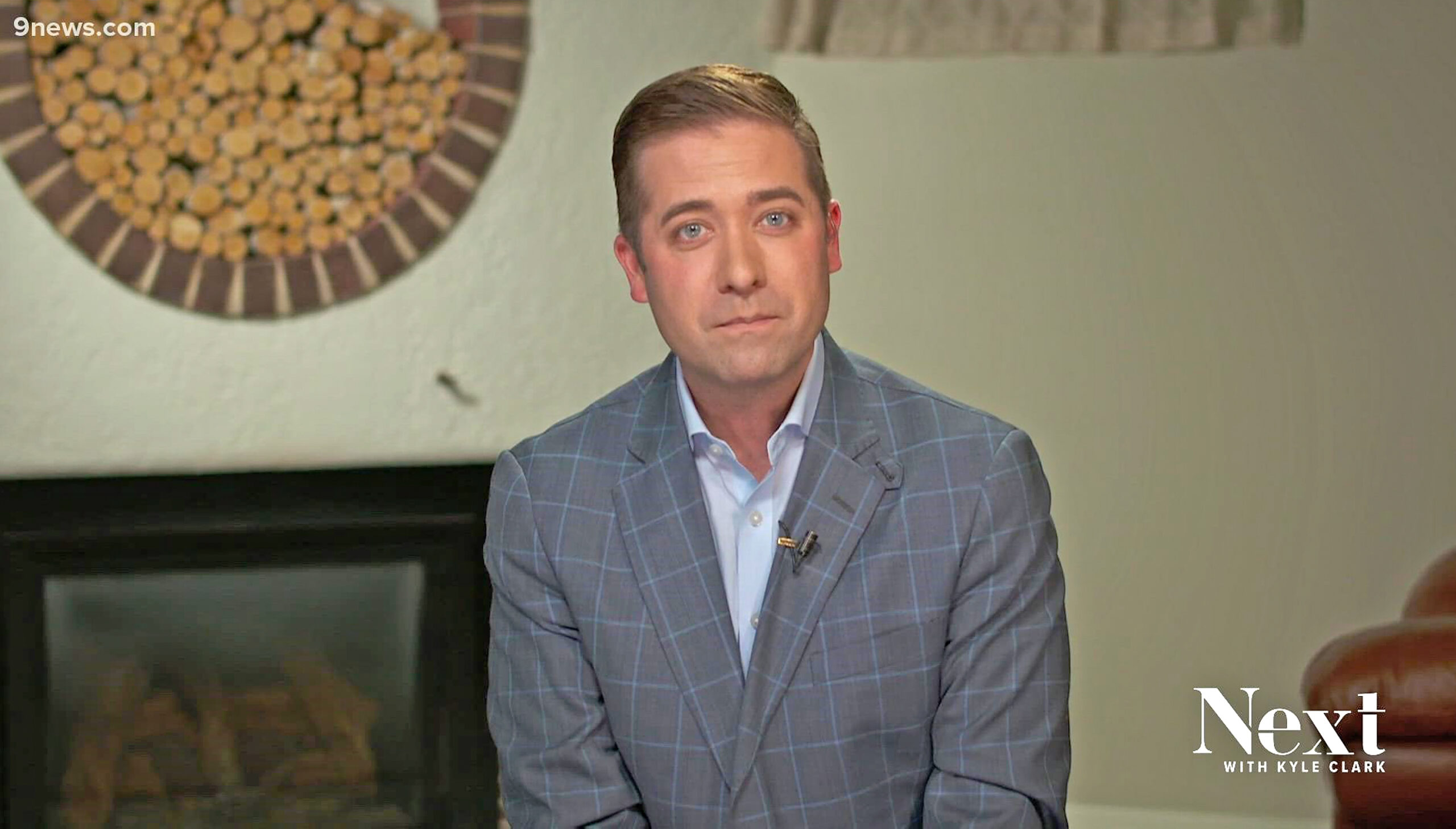
Divider: Critics say Channel 9 News anchor Kyle Clark has instigated class warfare over Alameda Avenue in order to boost his slumping ratings.
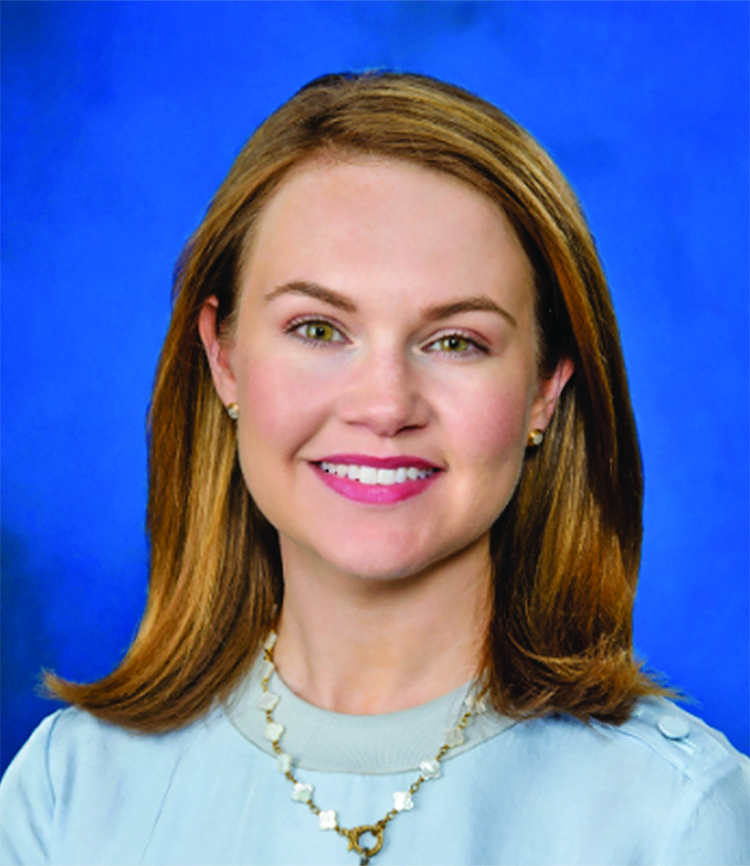
Unlikely Hero: Jill Anschutz, daughter-in-law of Colorado’s richest man, has become a surprising popular advocate for many everyday Denverites.
Denver’s hard progressive left and its media advocates, headed by Channel 9’s Kyle Clark, have decided to flex their increasing muscle to go after and try to crush the middle-class homeowners, small businessmen, and everyday commuters who once were important voices in the city, all over a relatively short one-mile, 10-block stretch of East Alameda Avenue in the East Washington Park area.
Opposing Clark and his powerful allies is an unlikely voice for the middle class, Jill Anschutz, the daughter-in-law of Colorado’s richest man, Phil Anschutz. Although she married into a rich family, she herself did not come from a wealthy background.
She graduated magna cum laude with a journalism degree from Taylor University, a small Christian liberal college in Indiana, before moving to Denver, where she met Christian Anschutz around 2015. They have several children together.
Repurposing Project
“While my name might stand out, this is not about me,” Anschutz has indicated. “It is about hundreds of neighbors and businesses who are concerned about negative unintended consequences from the initial design of the Alameda Lanes Repurposing Project.”
The war between the two sides relates to the Department of Transportation and Infrastructure (DOTI) “Alameda Lane Repurposing Project” for Alameda Avenue between Franklin and Downing streets.
On November 7, 2025, DOTI came out with its plan for public comment, with implementation to begin in late 2026. The existing road has two lanes in each direction. It acts as a major thoroughfare for east-west traffic in that portion of the city. The plan would have cut the street down to a single lane each way. It would add dedicated left-turn lanes at various intersections and install medians and bollards at others to eliminate left turns altogether.
DOTI declared the goals of the plan were to reduce crashes, provide pedestrian safety, and improve accessibility, and of course no one believed them. Critics of the city administration believe that many, if not most, of the city’s plans have a real purpose hidden behind politically correct bromides.

Busy Traffic: The one-mile stretch along Alameda Avenue that is subject of DOTI’s repurposing project has many fender bender accidents but no reported fatalities or serious injuries.
The idea that “safety” is the overriding concern of Kyle Clark or his adherents is somewhat ridiculous. Given the number of lights and stop signs on this one-mile track of roadway, cars drive very slowly. While there are various accidents reported, they are overwhelmingly fender-bender-type accidents; there have been no reported fatalities or serious injuries.
The real fight is about competing visions of what kind of city Denver should be.
Ideal Choked-Up City
Some members of the Denver City Council and the City Administration believe cars are a baneful influence on a city. By reducing cars and car traffic, they believe it would help in fighting climate change and create a more egalitarian society where everyone is made to ride bicycles, walk, or take public transportation in the form of buses or trains. That would create an idealized “15-minute city.”
But what about middle-class families for whom cars are an enormous benefit to their lives, along with small businesses that depend on car traffic? To the hard progressive left, they are what the “kulak” farmers were to Stalin’s Russia in the 1920s — an impediment to true progress that needs to be liquidated.
If given their druthers, the hard left would simply ban cars within the confines of the city, but that is not politically viable at the present time. Instead, in the name of “safety,” “sustainability,” “accessibility,” “affordability,” etc., driving in Denver must be made as unpleasant as possible to get people to cease using cars.
One method is making parking as difficult as possible, so Denver did away with an all-parking requirement for any new project. Another method is making driving as unpleasant as possible by creating as much traffic congestion as can be imposed.
On many major thoroughfares in Denver, including Colfax Avenue, Federal Boulevard, and Colorado Avenue, DOTI and/or CDOT have ongoing projects whereby the number of traffic lanes is to be reduced and substituted with bus or bike lanes.

Pitch Battle: Admirers of Jill Anschutz have come to view her as a modern day Molly Pitcher in Anschutz’s battle against what they view as the Godless mercenary hords of Kyle Clark. Shown above is Molly Pitcher in the revolutionary war battle of Monmouth in 1777.
For other thoroughfares such as Alameda Avenue, in the name of “safety,” the number of lanes is reduced to create a left-turn lane and create congestion on the remaining lanes.
Opposition Arises
After the city’s proposed plan was issued in November 2025, a group headed by Jill Anschutz entitled Act for Alameda was formed, representing homeowners in the area, small businesses along Alameda Avenue, and commuters who used Alameda as an east-west corridor to get across the city.
The group sent a letter to Denver Mayor Mike Johnston opposing the plan, indicating that the project would potentially create massive traffic congestion, pouring cars onto residential side streets where families and children would be walking. Moreover, to the extent that safety was actually a concern, there were less disruptive ways to lessen the fender-bender accidents on the road.
Jill Anschutz, who owns a home just off Alameda Avenue, was a logical person to lead the group. She had been a long-time marketing, public relations, and messaging consultant, and was now a freelance communicator and project director. She even hired a lobbyist for the group with experience dealing with DOTI.
Anschutz and Councilmember Kevin Flynn were able to point out that in 2012 the exact same lane reduction was implemented by DOTI and was so disastrous that the road was quickly adjusted back to its present configuration.
Plan Modification
DOTI then came up with a modified plan that kept all four lanes but converted some spans into “turn pockets” for drivers turning left. Advocates indicated the modified plan would provide less congestion while still making the road “safer.”
Normally that would have been the end of the matter, but Channel 9’s Kyle Clark latched onto the fact that Act for Alameda was headed up by Jill Anschutz, a born-again Christian and the daughter-in-law of Colorado’s richest man, Phil Anschutz.
Kyle Clark Weighs In
Channel 9 was for many years Colorado’s leading television station and was dubbed “mommy news” for its female-oriented soft news orientation. But over the last decade, ratings for local television news have dropped precipitously, particularly for Channel 9 News.
In 2016, NBC affiliate KUSA-TV decided to stop being “mommy news” and go hard left, with long-time employee Kyle Clark being the anchor not only for the 9 o’clock and 10 o’clock news but also for his own weeknight show, Next with Kyle Clark. With a hard-left agenda, the station and Clark attracted national attention, appearing on Jimmy Kimmel Live, and Clark was featured and interviewed on MSNBC by Rachel Maddow and on CNN.
But in recent times, Clark and Channel 9 News fell significantly behind FOX31 KDVR in ratings. Clark reveled in being called “a virulent anti-Christian bigot” and a “commie.” Clark, in order to regain ratings, had to return to his progressive hard edge, and evoking class warfare over Alameda Avenue seemed like a perfect avenue to do so.
His virulent attacks on Anschutz and her use of a lobbyist to plead the homeowners’ case caused a media frenzy. The Denver Post, in an article with a headline “PR Nightmare for Mayor Mike Johnston,” revealed that Clark and Alameda Avenue helped “trigger a maelstrom of critical media coverage, the resignation of a member of the Transportation and Infrastructure Advisory Board and, late last month, a formal letter of protest from a majority of the City Council.”

Official Under Fire: DOTI Executive Director Amy Ford seen here at a recent contentious city council meeting in Denver.
But the ugly onslaught on Jill Anschutz did not make her back down as Clark had expected. Her friends indicate that, growing up in a strong Christian family, she was taught that when you stand up to a powerful bully like Clark, you can expect to be persecuted.
One More Plan
Clark, by trumpeting that the city, in coming up with a revised plan, had bowed to Jill Anschutz because she had married into a rich family and therefore the city was “lifting certain voices over others,” used a class warfare tactic that worked to cause DOTI to announce in January that it would backtrack again into demonstrating one, if not both, of the proposals.
But testing the “safety” of both of the proposals is, of course, somewhat useless since safety was never the actual issue. The Alameda Avenue controversy is a clash of political wills between the hard left, who ultimately want a car-free Denver to the greatest extent possible, and middle-class homeowners and small businesses that want a livable city for families, particularly those with children.
For the hard left, Clark is their champion. For everyday Denverites, they finally have their own hero, Jill Anschutz.
by Amber Wyatt | Feb 18, 2026 | Editorials
by Amber Wyatt
Second from left, Susan McCullough playing French Horn.
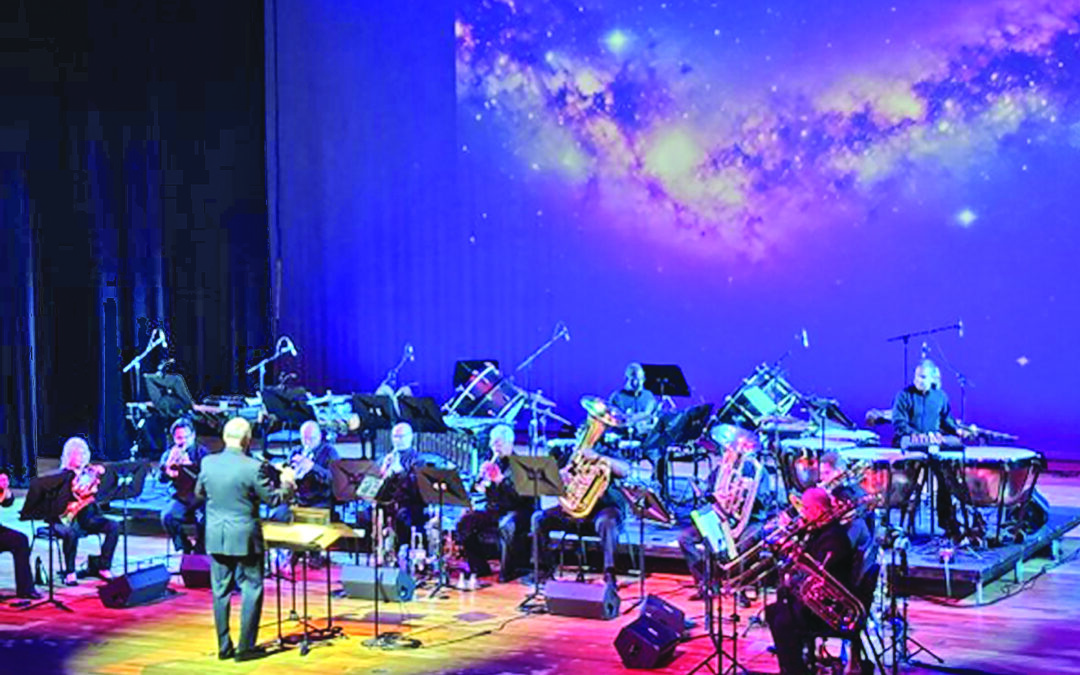
By any measure, Rhythms of the Cosmos is not your typical brass concert. Presented by the Denver Brass, the multimedia performance blends bold brass sonorities, percussion, lighting, and cosmic imagery into an immersive experience that feels as much like a journey as it does a concert. For a group celebrating more than four decades of music-making, the show is a striking reminder of why Denver Brass continues to captivate audiences across the Front Range.
Founded in 1981 by Kathy Brantigan and her husband, both tuba players, the ensemble was born from a simple desire to make music together. “We founded Denver Brass because we both played tuba,” Brannigan recalled with a laugh. “We wanted to play together. So we had to multiply out from two tubas, how many trumpets do you need to balance out? How many trombones? How many horns?” That playful curiosity ultimately grew into one of the region’s most distinctive musical organizations.
Brantigan believes the ensemble’s longevity stems from both its sound and its spirit. “Brass players have kind of a unique fraternity,” she said. “We all have similar personalities, and we love the power and the heroic sounds that brass makes. It’s really special to play with all brass, it’s a unique sound.” Far from being one-dimensional, she emphasizes that the ensemble 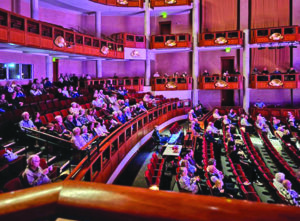 can move seamlessly from delicate and romantic to bold and triumphant. “I’ve always said goosebumps are guaranteed,” she added. “There are moments at our shows you don’t forget when you go home.”
One of the musicians who has experienced the entire arc of the ensemble’s history is French horn player Susan McCullough, the only remaining original member. “As long as we’ve been in existence, around 45 years,” she said when asked how long she’s played with the group. McCullough describes Denver Brass concerts as constantly evolving. “Everything we do is completely different from the last. One show it’s classical, the next time it’s jazz, then funk. What style is your show? Everything,” she shrugs.
That stylistic freedom is on full display in Rhythms of the Cosmos, which features music inspired by space, time, and motion. Trumpeter and composer Sean Schaffer Hennessey contributed original works to the program, including Guardians of Time. “It’s a tough show,” he admitted. “Brass players get tired, but it went really well.” For Hennessey, the appeal of Denver Brass lies in its emotional breadth. “Each show is kind of a roller coaster through emotion,” he said. “There’s a heart to this group. We take music that’s often orchestral and bring it into a whole different realm.”
The concert’s cohesion owe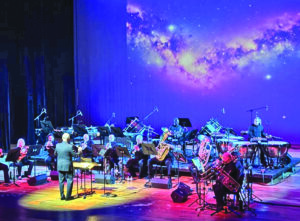 s much to conductor Warren Deck, former principal tubist of the New York Philharmonic, who joined Denver Brass after moving to Denver in 2002. Deck’s path to conducting was unconventional. “I never conducted anything,” he said. “I just sat in orchestras and watc
 hed my conductors. One day these guys said, ‘Why don’t you conduct?’ and I heard ‘yes’ come out of my mouth.” His approach reflects the ensemble’s adventurous spirit. “You never know what you’re going to get,” Deck said. “That versatility is worth checking out.”
Behind the scenes, Executive Director Becky Wilkins helps shape the show’s narrative arc with Kabin Thomas and Andy Wolfe. “It starts with the theme,” she explained. “For this one, we were talking about rhythm, and we added space.” From there, she works on sequencing the music and layering theatrical elements that curate an experience, lighting, imagery, and sound design, support the audience’s emotional journey. “It’s more than just a concert,” Wilkins said. “It’s a show. You experience all these elements and let the music really sink in, it becomes an almost spiritual event.”
One of the most striking moments features ambient sound recordings from Mars, paired with imagery that evokes isolation and discovery. “The images really took me there,” Wilkins said. “They’re the frosting on the cake, helping convey the story.” Kabin Thomas, narrator of Rhythm of the Cosmos and on-air morning show host and producer at Colorado Public Radio’s Classical station, drives each work to the next, “Space,” Thomas leads, “The final frontier.”
As Denver Brass looks ahead, that spirit of innovation continues with their fans that follow every show. One attendee I spoke with during intermission named Ginny, remarked “I can’t wait for Celtic Mania! The Cosmos is quite different for Denver Brass.” “Rhythms of the Cosmos stands as a powerful reminder of what the ensemble does best,” attendee Richard tells me, “Challenges expectation, stirs emotion, and invites audiences into unforgettable moments.”
If you missed Rhythms of the Cosmos, there’s still plenty to look forward to. Denver Brass continues its season with Celtic Mania on March 7th and 8th at 2:30 p.m. at the Newman Center, followed by Pulse of America on May 17th at 2:30 p.m. at Bethany Lutheran Church. Each performance offers a distinct musical experience, showcasing the ensemble’s precision, and unmistakable energy.
As Brantigan put it simply, “There are magical moments you remember from our shows, and they last.”
by Amber Wyatt | Feb 18, 2026 | General Featured
by Amber Wyatt
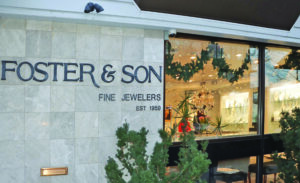
The iconic facade of Foster & Son Jewelers where craftsmanship, heritage, and brilliance meet.
By any measure, Cherry Creek North has changed dramatically over the past decade. New mixed-use developments rise where parking lots once sat, national brands rotate in and out, and office foot traffic ebbs and flows with rapidly growing technology. Yet tucked between luxury storefronts and minimalist façades are artisans who have quietly shaped the district’s character for decades. Their stories reveal not just resilience, but a deep commitment to community.
Few businesses in Cherry Creek can trace their roots as deeply as Foster & Son Jewelers, a family-owned institution that has been serving the neighborhood since 1959. Long before Cherry Creek became a nationally recognized retail destination, Patricia Foster, known to most as Patty, opened a small jewelry shop in Cherry Creek called “The 14 Karat,” an ode to the 1859 Gold Rush to the Rockies. At the time, the area was still defining its identity, and Patty’s shop quickly became a trusted fixture for craftsmanship, honesty, and glamour.
As Cherry Creek grew, so did the business. Patty’s son, Brien Foster, joined the team in 1987, bringing a new generation of expertise, with his wife Cindi. Together they worked hard to preserve the values that built the shop’s reputation like reliability, community-involvement, and elegance. With the duo’s involvement, the store evolved into Foster & Son Jewelers, a name that reflects both its family roots and its long-standing commitment to quality. Today, Brien’s son Tucker and his wife Katie Foster continue to lead the business, the third generation of the Foster family to work behind the counter.

Brien and Cindy Foster on their wedding day.
Last week, I spent about an hour catching up with Tucker Foster at Foster & Son Jewelers, along with his wife, Katie, and it was one of those conversations that reminds you how much heart and history live inside a family business. Tucker lit up talking about his specialty, Cuban link chains and studded-out grills, and even showed me a few custom pieces he’s currently crafting for a local celebrity whose name, of course, could not be disclosed. A testament to how times have changed.
We also talked about the importance of lineage and carrying the Foster legacy forward, a tradition that has shaped the brand for generations. The couples’ daughter Sadie proudly holds the title of dynasty princess for now, but Tucker assured me that role is only temporary and that an heir to the Foster throne is very much in the plans. Katie shared many of the family anecdotes with me, like the tale of Brien assembling the glistening centerpiece of the store, a chandelier Patty ordered in China which came entirely with Chinese instructions.
Tucker not only has a hand in shaping the business, because, “In many ways,” he admits, “the business shaped him.” Tucker shared stories from his childhood that felt like something out of a movie: making bows for the gift-wrapped jewelry pieces customers bought for their loved ones, then sneaking around the corner to the old Wizard’s Chest location to hunt for Pokémon cards. Today, he and Katie are building their own chapter of the Foster story keeping both the craftsmanship and the family tradition alive but adapting effortlessly to the changes 67 years in the making.
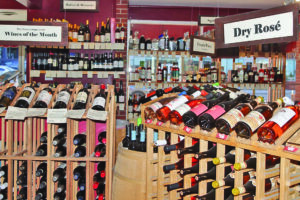
An eclectic selection of wines.
 In an era when many jewelry purchases are made online or through national chains, Foster & Son remains a traditional, full-service jeweler, offering custom design, repairs, appraisals, and fine jewelry curated with care. “While it’s awesome to go to Tiffany and Co and the blue box is absolutely stunning,” Tucker said, “you can get a better experience that’s more personalized and less expensive working with a family jeweler.” Their relevance lies not only in longevity, but in relationships. Many customers have been coming to the store for decades returning for engagement rings, anniversary gifts, family repairs, and milestones that span generations.
“In the past, value was in effort. Today, it’s in a brand name,” Tucker says. Oftentimes that brand is a symbol of something. People who shop with Foster and Sons wear the symbol of community, importance of family, and supporting a legacy. Brands like Tiffany & Co, however, charge customers substantial amounts just to wear the name.
That sense of trust has allowed Foster & Son to adapt as Cherry Creek’s retail landscape has shifted. While the neighborhood has seen luxury brands come and go, the Foster family has remained anchored by personal service and expertise that cannot be replicated online. Their in-store experience emphasizes conversation, education, and comfort, values that resonate in a district increasingly focused on experience-driven retail.
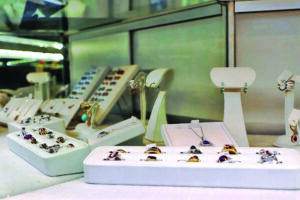
Front counter display of various jewelry types.
Foster & Son’s continued presence also reflects Cherry Creek’s evolution from a neighborhood shopping area to a dynamic cultural district. Through decades of development, economic shifts, and changing consumer habits, the store has remained a constant, quietly shaping the character of the area as much as responding to it.
The story of The Vineyard Wine Shop begins with its founder, Robbie Wilson, who established the shop in 1971 after falling in love with wine while living in California. As Clif Louis explains, “Robbie Wilson was the original owner, he got moved over to San Francisco, fell in love with wine, came back to Denver and said, ‘I want to open a wine store!’”
What began as a modest basement operation, accessible only through an alley, quickly became something special. “In 1971 to get to the front door, you’d come down the alley, go through the door, and down the stairs. It was only 500 feet of space to put wine,” Louis recalls, adding that Wilson’s wife Val handcrafted the stained glass windows and shelving that remain in the shop today. From the start, The Vineyard offered a thoughtful, intimate environment focused on discovery and quality rather than convenience.
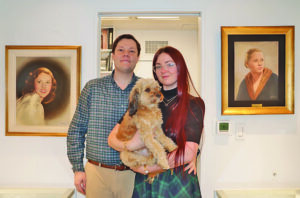
Tucker, Katie, and Sadie Foster.
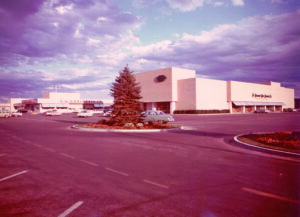
The Cherry Creek Mall photographed around 1960.
The second chapter of The Vineyard’s history began when a young Clif Louis entered the picture in the early 1980s. Driven by a lifelong appreciation for wine sparked by his father who “was stationed over in France, he fell in love with French wines, we always had wine at dinner, and dad let me pick the wine.”
Louis approached Wilson looking for work. “I said, ‘I’ll do anything. I just want to learn about wine.’ So he hired me as the stock boy for $4 an hour,” Louis says, noting how quickly he realized how much there was to learn about the industry. After just a year, Wilson offered a life-changing opportunity. “He said, ‘Clif, why don’t you buy me out?’ and I bought him out slowly over three years.” Louis explains.
From that point on, Louis carried forward the same philosophy of accessibility, warmth, and expertise that Wilson had built. “We weren’t the big box mentality. We didn’t want to force customers to buy a $100 bottle when a $20 bottle was just as good,” he says. “We weren’t snooty wine people. We like to sell wine to drink it.”
Under Wilson and Louis’ leadership, The Vineyard became deeply rooted in Cherry Creek’s retail culture as a staple of high society. Louis’ wife Rosella owned The Brass Bed for decades, and today their children continue the multi-generational tradition with White Peacock just down the street. “We both got into retail, and then my kids got into retail, so it really became a family thing here in Cherry Creek,” Louis shares.
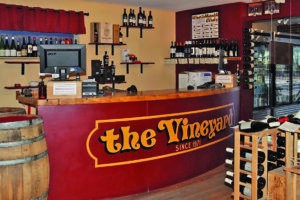
The Vineyard Wines original front counter.
Today, The Vineyard remains anchored by the kind of personal service that can’t be replicated online. “Everyone who works here is taking wine classes, they’re trying to get their degrees in wine,” Louis explains. “When a customer comes in, they talk to somebody. We help them find exactly what they like.” And despite assumptions about Cherry Creek pricing, value remains central. “People think we only sell $100 bottles of wine, and that’s not the case. Most of our wines are around $20,” he says, emphasizing the shop’s commitment to quality at every price point.
That personal connection has helped The Vineyard weather major shifts in retail, including grocery stores entering the wine market. “When they passed the law allowing wine in grocery stores, that hit our sales pretty bad, probably down 30%,” Louis admits, yet he remains confident in what sets The Vineyard apart: “In the big box stores you just pull wine off the shelf. Here, everyone’s an expert. We talk, we educate, we connect.”
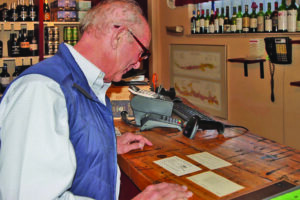
Clif Louis looks back on old mailers the company distributed.
Despite evolving development and competition, Louis has no plans to leave. After more than four decades, what keeps him rooted isn’t foot traffic or trends, it’s loyalty, history, and relationships built bottle by bottle. “We’ve had very loyal customers. A lot of them know my first name,” he says simply.
As Cherry Creek continues to modernize, The Vineyard stands as proof that progress doesn’t have to erase craftsmanship. Behind its shelves of carefully curated wine is a legacy built on curiosity, community, and conversation, one that continues to carry forward the spirit Robbie Wilson first poured into a small basement shop back in 1971.
Below: Current heiress of the Foster family business, Sadie Foster, daughter of Tucker and
by Valley Gadfly | Feb 18, 2026 | Main Articles
New Development Will Bring Some Of Cherry Creek’s Largest Office Floorplates
by Glen Richardson
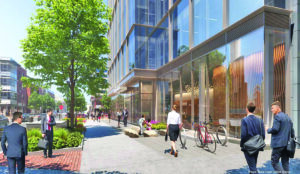
Street Style: Artist rendering shows how development will give Clayton a more commercial business look.
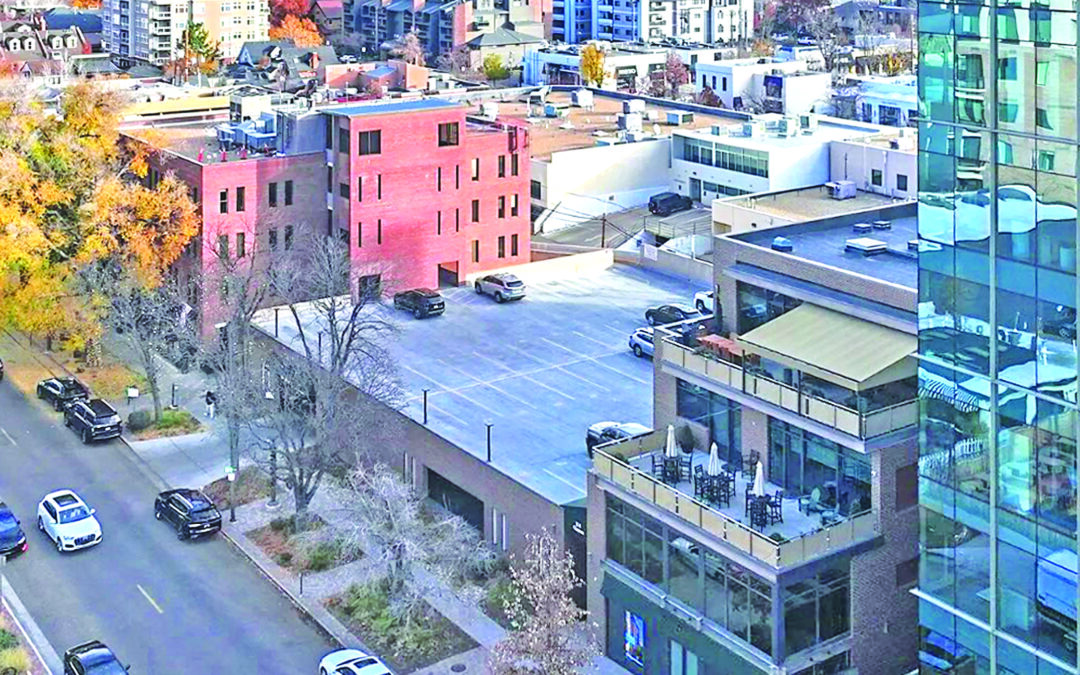
The Broe Group has launched the second phase of its $200 million Cherry Creek North development with construction underway on a new 175,000-sq.-ft. Class A office tower at 250 Clayton St. Completion is expected in the second quarter of 2028.
The building will serve as the new headquarters for The Broe Group, Broe Real Estate Group, and OmniTRAX. The entities are controlled by controversial businessman Pat Broe who is dispised by many in the Denver business community. The site is directly across from the Clayton Members Club and steps from the proposed Timber 225 tower.
After the full leasing of phase one at 200 Clayton, this second phase will bring some of the largest office floorplates in Cherry Creek North, with sizes from 25,000 to 30,000 sq. ft. The Beck design-build development also includes 10,000 sq. ft. of ground-floor retail.
Home For Affiliates

Outdoor Patio: Project’s many amenities include this 7th floor outdoor patio. Building will also have multiple rooftop features.
The first phase of the Cherry Creek North development comprises 200 Clayton, a 76,000-square-foot office building. The eight-story facility came online in 2023 and is fully leased.
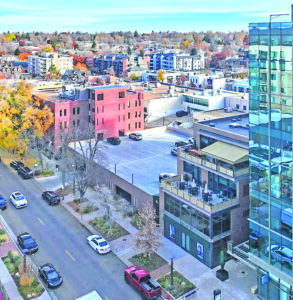
Changing Cherry Creek: The building’s fresh approach will enhance the neighborhood, adding to popularity of the district.
When complete, Broe’s Cherry Creek holdings will exceed $1.5 billion in value. The new building will become the home to key Broe affiliated companies, including OmniTRAX, which collectively account for 24% of the project.
“We continue to invest in our home market and see strong sustained demand for what has become Denver’s top urban market,” suggests Broe Real Estate Group CEO Douglas Wells. “250 Clayton will deliver an unrivaled tenant experience that will redefine Cherry Creek office space,” he declares.
Community Connection
The Broe Group’s core portfolio companies
have already committed to occupying 24% of the new development.
Brianna Broe, a member of the Broe Family Board, reflected on the firm’s long connection to the community.
“For five decades and three generations, The Broe Group and the Broe family have called Cherry Creek home,” she said. “We have taken great care to create a high-quality project that adds to Cherry Creek’s well-earned reputation and inspires what’s to come.”
Amenities

New Headquarters: The building will become the home to key Broe affiliated companies which will collectively account for 24% of the project.
Amenities include outdoor spaces, a building lounge, multiple rooftop features, and a drive-through visitor entry.
The eight-story building will boast floor-to-ceiling windows to showcase the vibrancy of Cherry Creek North.
Advanced sustainability and energy efficiency measures in the project are designed to exceed City of Denver codes
Parking Provided
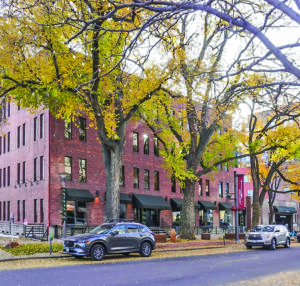
Transition: The quiet of the older Clayton Street neighborhood look is being updated by the latest Broe development project.
Phase two is larger than phase one, covering 175,000 sq. ft. with 10,000 sq. ft. of ground-floor retail in addition to office spaces. There will be nearly 100 spaces in both above-ground and subterranean parking structures.
In addition to modern office spaces, 250 Clayton will offer tenants curated amenities, including outdoor areas, a building lounge, and rooftop spaces. Projects by the Broe Group in the neighborhood include 200 Clayton, Country Club Towers, and The Seasons of Cherry Creek.
Businesses looking to set up shop in Cherry Creek can also take advantage of the Colorado market’s relative affordability within the U.S. office sector. According to the national office report, Denver is one of just a few markets where listing rates were typically below the national average of $32.81 per sq, ft. in October 2025.