by Mark Smiley | Oct 19, 2026 | Main Articles
Denver Audit Questions City Oversight, Bidding, And Contract Practices During Massive Downtown Renovation
by Mark Smiley
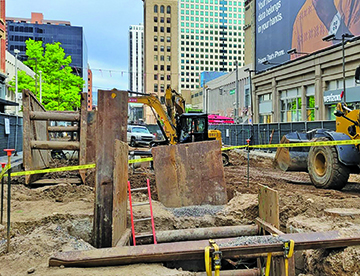
Unexpected Discovery: A historic brick sewer discovered beneath Denver’s 16th Street contributed to construction delays and an $18 million settlement with PCL Construction Services. Denver auditors found the sewer had not been adequately considered during planning for the massive downtown renovation. Photo courtesy of PCL Construction.
A historic brick sewer buried beneath Denver’s 16th Street added $18 million in unexpected costs and nearly a year to the downtown corridor’s massive renovation project, according to a new audit that also raises questions about City Council oversight and the city’s handling of the construction contract.
Denver Auditor Timothy M. O’Brien’s office found that the discovery ultimately resulted in an $18 million settlement with contractor PCL Construction Services and extended the project schedule by 301 calendar days.
But the sewer itself was only part of the problem identified by auditors.
The audit found that contract changes involving millions of dollars took effect before the Denver City Council was notified. Auditors also raised concerns about the Department of Transportation & Infrastructure’s competitive bidding process, its oversight of subcontractors, and its enforcement of contract provisions.
Denver City Council initially approved $149 million in renovation costs for the 16th Street project in 2021.
What Was Under The Street?
The trouble began in 2022 when PCL crews encountered a brick sewer beneath 16th Street, bringing construction to a halt.
According to the audit, the city had con- ducted an environmental assessment as part of the federally funded project, but had not adequately investigated the sewer system during project planning.
Transportation & Infrastructure limited its investigation of underground utilities after consultants advised that a more extensive examination would require removing pavers and rerouting shuttle service.
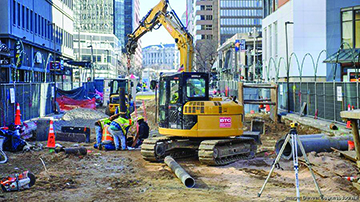
Long Road To Completion: Construction crews work along Denver’s 16th Street during the multi-year renovation of the downtown corridor. The discovery of an underground brick sewer extended the project schedule by 301 days, according to the Denver Auditor’s Office.
Complicating matters, Denver does not have a comprehensive map showing the location of all of the city’s historic brick sewers.
The potential for problems involving brick sewers was also not disclosed when the city solicited proposals from contractors, according to the audit.
PCL subsequently sought changes to its contract to cover the additional work and delays associated with the sewer. The city initially resisted, maintaining that the contractor had assumed those risks under the agreement.
The dispute eventually resulted in a settlement and an $18 million change order covering additional costs and schedule impacts.
“Because the city did not consider the sewer while planning the 16th Street Improvement Project, businesses on 16th Street had construction lingering outside their doors for nearly a year longer than expected,” O’Brien said.
The audit did not examine the economic impact of the prolonged construction on businesses along the corridor.
Council Left Out Of The Process
Auditors also questioned how such a significant financial change could occur without prior City Council approval.
According to the audit, council members were not notified about the increased costs and delays until after the changes between the city and PCL had already taken effect.
The City Attorney’s Office maintained that council approval was unnecessary because the agreement was handled as a “change order” rather than an amendment to the contract.
Transportation & Infrastructure said City Attorney guidance recommends change orders for changes involving scope, time, or budget unless the alteration represents a “cardinal change” to the original contract.
The department said the PCL agreement resulted from delays and a contractor dispute rather than a fundamental change in the project’s scope.
O’Brien warned that the distinction could create a loophole allowing expensive changes to major city contracts to escape council scrutiny.
“If there is no mechanism allowing change orders to become amendments, construction projects can continue circumventing City Council review for costly contract alterations,” O’Brien said. “When strong oversight is absent, budget transparency is reduced, and public trust in responsible city spending is lost.”
The Auditor’s Office recommended creating a process under which sufficiently significant change orders could become contract amendments and therefore receive additional review. Transportation & Infrastructure disagreed with the recommendation.
Questions About Bidding
The audit also found problems with the process Denver used to select a contractor.
Auditors said Transportation & Infrastructure did not maintain sufficient documentation to demonstrate a transparent competitive bidding process, making it unclear why PCL was selected over another company.
Three contractors initially participated, but one dropped out after becoming aware of potential utility issues, leaving two bidders.
The audit also criticized the city’s oversight of subcontractors. Transportation & Infrastructure took the position that because its agreement with PCL was a lump-sum contract — with a fixed scope and price — it had limited ability to obtain information about subcontractors.
As a result, auditors said the city has little documentation concerning companies that performed subcontracted work on the project.
$1 Million In Damages Waived
Another finding involved more than $1 million the city could have collected for missed completion deadlines.
According to the audit, Transportation & Infrastructure leaders chose to waive $1.03 million in damages associated with delays because they wanted to support the city’s relationship with PCL.
Auditors recommended stronger documentation of quality-control procedures and contract compliance. The department disagreed with that recommendation as well.
Transportation & Infrastructure did, however, accept several recommendations.
The department agreed to formalize what information about major projects should be provided to the City Council beyond what is legally required. It also agreed to maintain documentation of each step in the competitive bidding process for capital projects and develop a strategy for dealing with unexpected underground discoveries on future federally funded construction projects.
O’Brien said the findings do not mean the city’s overall project management system is ineffective, but they demonstrate areas where additional safeguards are needed.
“Our audit found that— while the city’s project management is generally effective — it can be strengthened,” O’Brien said. “I hope the Department of Transportation & Infrastructure implements our recommendations to make improvements. We will follow up in a later audit to see what they achieve.”
For a project intended to remake one of Denver’s most prominent public spaces, the audit provides a costly reminder that some of the biggest construction problems can be the ones no one sees until the street is torn open.
by Amber Wyatt | Oct 19, 2026 | Main Articles
by Amber Wyatt
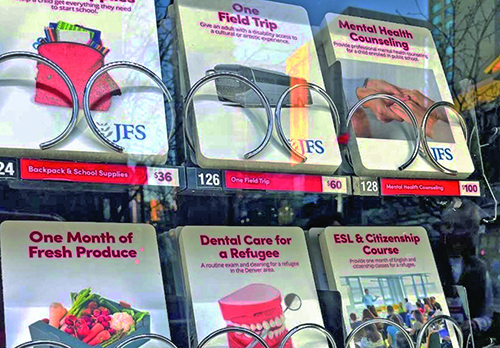
Some of the Giving Machine’s offers. Photograph by #LightTheWorld
A unique holiday tradition is returning to Cherry Creek North this November, offering Denver residents and visitors a memorable way to give back while enjoying the holiday season. The famous Giving Machines are set to open November 19, bringing a creative, interactive approach to charitable giving to the heart of one of Denver’s most popular holiday destinations.
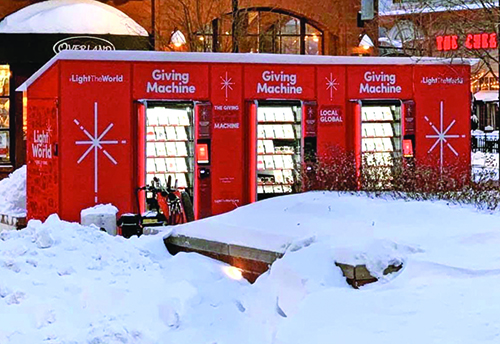
Located at the entrance to the Cherry Creek Holiday Market on 2nd Avenue and Fillmore Plaza, the colorful, vending-machine-style displays will operate 24 hours a day, seven days a week, giving shoppers and passersby an opportunity to make a difference at any time.
Unlike traditional vending machines that dispense snacks or drinks, the Giving Machines allow visitors to purchase meaningful items for people and communities in need. Options may include warm meals, blankets, livestock, and other essential resources, with donations supporting participating local and global charitable organizations.
Popular Giving Machine location at 105 Fillmore St., Denver, CO 80206. Photograph by #LightTheWorld
The concept is simple: Choose an item displayed on the machine, make a payment and help provide that resource through a participating nonprofit. Rather than taking a physical product home, donors contribute toward providing the selected item to someone who needs it.
It is a straightforward way to turn an everyday holiday outing into an opportunity for generosity.
A Different Kind Of Holiday Shopping
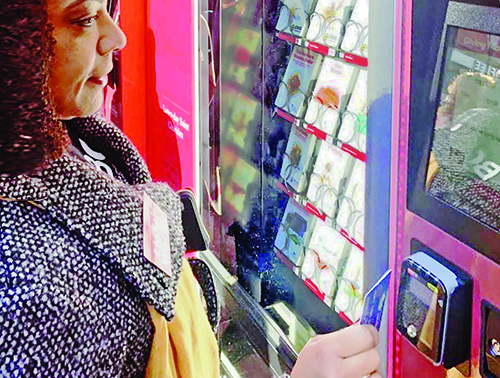
Donor makes a donation to one of the offerings at the Giving Machine. Photograph by #LightTheWorld
The Giving Machines offer a visual and interactive experience that stands out among the seasonal decorations, storefronts, and festivities throughout C
herry Creek North. Their placement at the entrance to the Cherry Creek Holiday Market makes them a natural stop for visitors browsing holiday vendors, searching for gifts, or simply enjoying the neighborhood’s seasonal atmosphere.
For families, the machines can also provide a hands-on way to introduce children to charitable giving. Instead of donating money without seeing how it might help, visitors can select a specific need and connect their contribution to a tangible resource.
A warm meal can help someone facing food insecurity. A blanket can provide comfort during cold weather. Livestock can help support livelihoods and food security in communities where animals provide a source of income, nutrition, or agricultural support.
Each selection offers a reminder that even a small act of generosity can contribute to a larger effort to improve lives and visual aids on each option help children easily understand their impact.
The machines also offer a convenient option for people who want to support charitable organizations but may not have time to research individual causes or arrange donations themselves. With the displays available around the clock, visitors can stop by whenever it fits their schedule.
Giving Locally And Globally
The Giving Machines initiative is known for connecting donors with participating nonprofit organizations that address a variety of humanitarian needs. Depending on the participating charities and available selections, contributions can support assistance ranging from basic necessities to longer-term community development.
The initiative provides an alternative to traditional gift-giving, encouraging people to direct some of their holiday spending toward the
community. Visitors can choose a donation that benefits a family, individual, or neighborhood in addition to gifts purchased for their own. Those interested in participating should review the available selections and charitable organizations at the machines to learn which causes their contributions support.
As the holiday season approaches, the return of the Giving Machines adds another opportunity for the Cherry Creek community to embrace the spirit of generosity. Their prominent location makes charitable giving accessible to residents, tourists and holiday shoppers alike.
The Giving Machines are schedu
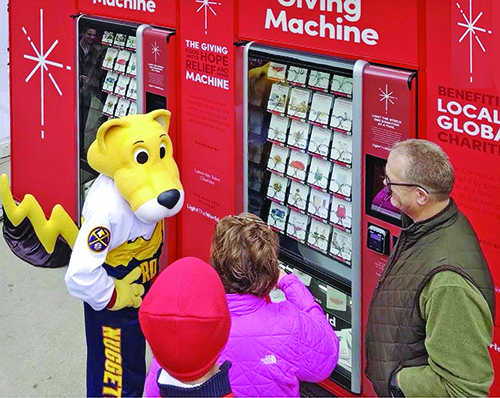
Denver Nugget’s Rocky attends Giving Machines opening in 2019. Photograph by #LightTheWorld
led to open November 19, 2026, at the entrance to the Cherry Creek Holiday Market on 2nd Avenue and Fillmore Plaza. Operating 24/7, they invite visitors to stop by, select a meaningful contribution, and help make the holidays brighter for someone else.
This season, consider adding a different kind of purchase to your holiday list: one that gives to your city, to your country, or your planet.

by Valley Gadfly | Oct 19, 2026 | Valley Gadfly
Valley Gadfly
November has arrived in the Cherry Creek Valley, bringing shorter days, colder nights, and the annual realization that Christmas decorations have appeared in stores before we’ve even finished the Halloween candy.
The Gadfly remembers when the holiday season began after Thanksgiving. Apparently, that tradition has gone the way of affordable groceries, inexpensive parking, and a quick drive through Cherry Creek.
Speaking of Cherry Creek, anyone who hasn’t visited the neighborhood in a few months might need a map to figure out what happened. New buildings continue to reshape the landscape, bringing luxury residences, hotels, restaurants, and office space to an area that once seemed perfectly content with boutiques and neighborhood watering holes.
The transformation has been remarkable. Cherry Creek has become one of Denver’s premier destinations for shopping, dining, and upscale living. The Gadfly applauds the investment while wondering whether the neighborhood will eventually require valet parking just to visit the valet parking stand.
Meanwhile, just down the road, Glendale continues maintaining its independent personality while surrounded by a metropolitan area that seems determined to become more complicated by the day.
There is something refreshing about a city where you can travel from one end to the other without packing a lunch. Glendale may be small geographically, but its restaurants, businesses, and community events give it a presence considerably larger than its footprint.
And then there’s traffic. Colorado Boulevard remains one of the region’s most reliable sources of frustration. What should be a simple trip can turn into an extended opportunity to contemplate life’s mysteries or listen to an entire podcast.
The Gadfly is particularly fascinated by modern traffic signals, which apparently have developed the ability to sense when a driver is in a hurry and immediately turn red.
Perhaps one day Denver officials will unveil a revolutionary transportation strategy called keeping traffic moving. The Gadfly suspects it would be enormously popular.
But November is also a time to appreciate what we have. Despite the traffic, construction, and rising cost of practically everything, the Cherry Creek Valley remains a remarkable place to live and work.
We enjoy beautiful parks, excellent restaurants, thriving businesses, and neighborhoods filled with people who care about their communities. We also have dedicated small business owners, volunteers, and first responders who make our corner of Colorado special.
Thanksgiving reminds us that the most important things in life generally aren’t found in a shopping mall or luxury condominium. They’re found around the dinner table with family and friends.
Of course, a properly prepared turkey, excellent stuffing, and a generous helping of mashed potatoes contribute significantly to the holiday spirit.
Before we know it, the holiday lights will be glowing throughout Cherry Creek, restaurants will be filled with seasonal celebrations, and shoppers will be searching for parking spaces with the determination of prospectors hunting for gold.
So here’s to a wonderful November, a happy Thanksgiving, and a holiday season filled with good food, good friends, and a minimum of traffic delays.
As for the Gadfly, he’ll be enjoying a second helping of pumpkin pie while wondering why the Christmas music started playing in October.
Some traditions are worth preserving. Others could stand to wait until December.

by Mark Smiley | Oct 19, 2026 | Glendale City News
Festival Moves Outdoors For The First Time As Colorado Breweries Bring Home National Honors
by Mark Smiley
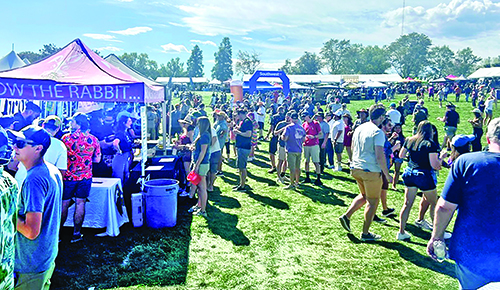
Beer Festival Under The Sun: Craft beer enthusiasts enjoy sunny skies while sampling beers from breweries across the country at the 2026 Great American Beer Festival.
The Great American Beer Festival traded convention center walls for Colorado sunshine this year, marking a dramatic change for one of the nation’s most celebrated craft beer events. Held October 10 and 11, 2026, at Denver’s Levitt Pavilion, the festival moved from its longtime home at the Colorado Convention Center to an outdoor setting featuring live music, craft beer, and a more relaxed atmosphere.
The change represented one of the most significant transformations in the festival’s history. Rather than navigating the enormous exhibit halls of the convention center, attendees experienced a festival designed around the outdoor venue, with an emphasis on connecting directly with the brewers behind their favorite beers.
A New Era For The Great American Beer Festival: The official artwork for the 2026 Great American Beer Festival celebrates the event’s move to Levitt Pavilion in Denver’s Ruby Hill Park. Held October 10–11, the festival embraced Colorado’s outdoor culture while showcasing award-winning craft beers from across the country.
The Brewers Association, which organizes the event, said the move was intended to create a fresh experience that better reflected Colorado’s outdoor culture. “Taking the festival outdoors lets us reimagine what’s possible,” said Ann Obenchain, vice president of marketing and communications for the Brewers Association, when the new location was announced.
Colorado Breweries Strike Gold
While the venue attracted considerable attention, Colorado breweries once again demonstrated why the state remains one of the country’s premier craft beer destinations. The competition attracted 7,267 beer and cider entries evaluated by 225 judges over three days. Nationally, 243 breweries and cideries earned a combined 336 medals.
Among the Colorado winners was Glendale’s own Bull & Bush Brewery, which captured a gold medal for its Pineapple 3 Way in the Belgian-Style Fruit Beer category. The recognition adds another prestigious national honor to the longstanding brewery’s accomplishments.
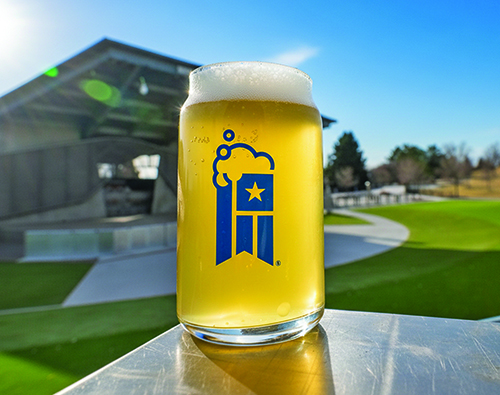
A New Home For Beer Lovers: A glass bearing the Great American Beer Festival logo overlooks Denver’s Levitt Pavilion, the festival’s new outdoor home at Ruby Hill Park. The 2026 event marked a major departure from its longtime location at the Colorado Convention Center.
Other Colorado gold medal winners included Los Dos Potrillos Cervecería in Parker for Agua Fresca in the American Fruit Beer category, Cannonball Creek Brewing Co. in Golden for Mindbender in the American-Style Strong Pale Ale category, and Verboten Brewing in Loveland for Grow Old With You in the Barley Wine or Wheat Wine category.
Denver’s Sandlot Brewery at Coors Field earned gold for Calamansi Wheat in the Fruit Wheat Beer category, while The Empourium Brewing Co. took gold for Honey Panda in the Specialty Beer category.
Bent Barley Brewing Company in Aurora also captured gold for its Dry Irish Stout, and Dostal Alley Brewpub & Casino in Central City won gold for Jacob Mack Mild Ale in the Craft Malt Beer category.
More Colorado Breweries
Earn Recognition
Colorado’s success extended beyond the gold medals. New Belgium Brewing in Fort Collins earned silver for Trippel, while Avery Brewing in Boulder took silver for White Rascal in the Belgian-Style Witbier category. River North Brewery in Denver received bronze for Quandary, and Golden’s Cannonball Creek added a bronze medal for Trump Hands in the Session India Pale Ale category.
Colorado cider producers also enjoyed success. Aurora’s Haykin Family Cider captured gold and silver in the Experimental, Barrel-Aged or Specialty Cider category, while Snow Capped Cider in Austin, Colorado, swept all three medals in the No/Low Tannin Cider category.
A New Chapter For A Denver Tradition
Founded in 1982, the Great American Beer Festival has grown into one of the country’s most prestigious beer competitions and tasting events. Its annual gathering has helped establish Denver’s reputation as a national center for craft brewing.
The 2026 festival also reflected changes in the industry, introducing competition categories for rice lager, hop water, and additional gluten-free beer styles.
Moving outdoors was a bold departure from the familiar convention center experience, but it also gave organizers an opportunity to rethink the event’s format and create a stronger connection between brewers and attendees.