by Mark Smiley | Jul 23, 2026 | Main Articles
City Hall Pushes Sweeping Zoning Changes Despite Growing Opposition
by Mark Smiley
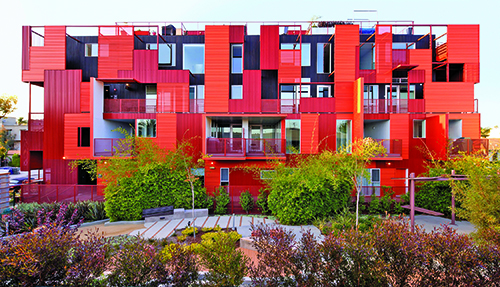
Once defined by tree-lined streets and neighborhood character, many Denver communities are now facing waves of dense apartment development. Critics call it overdevelopment that ignores residents’ concerns and forever changes the neighborhoods they chose to call home all in the name of “affordability.”
Denver’s next major political battle will not be over homelessness, crime, or downtown redevelopment. Instead, it will be fought block by block in neighborhoods where homeowners believe City Hall is preparing to rewrite decades of zoning policy with little assurance that the changes will actually make housing more affordable.
Mayor Mike Johnston’s administration continues to move forward with its Unlocking Housing Choices initiative, one of the most significant proposed overhauls of Denver’s residential zoning code in decades. The proposal would allow more duplexes, triplexes, fourplexes, and other forms of “middle housing” in neighborhoods that have traditionally been reserved for single family homes. City planners argue the changes are necessary to increase housing supply, improve affordability, and provide more housing options as Denver continues to grow.
Throughout 2026, the city has hosted public meetings, conducted financial studies, and worked with a 26-member advisory committee to refine the proposal before it reaches the Denver City Council. Officials describe the process as transparent and collaborative, saying community feedback is helping shape the final recommendations.
Many residents, however, remain skeptical.
An effort by the City of Lakewood to drastically alter single family zoning in the name of “affordability.” Lakewood went through a many month investigation to support its rezoning of the city to allow for more duplexes, triplexes, fourplexes and other multi-family structures. It caused an uproar in the Lakewood and after months of litigation citizens rejected the rezoning in a city wide election by a wide margin earlier this year.
Homeowners across Denver argue that City Hall is using the housing crisis as justification to dramatically increase density in established neighborhoods without proving the changes will actually lower housing costs. Instead, they fear increased traffic, crowded street parking, additional pressure on aging infrastructure, and the gradual loss of neighborhood character that attracted families to these communities in the first place.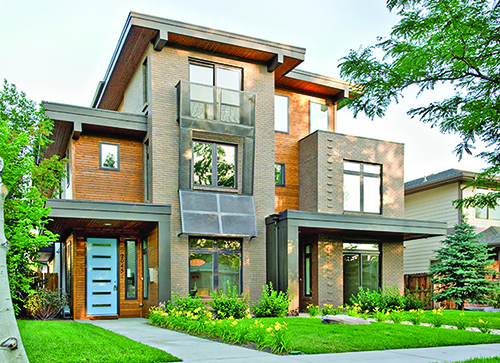
The skepticism is fueled by Denver’s recent track record. Over the past several
years, the city has expanded affordable housing programs, encouraged higher density development, and adopted new incentives intended to increase housing production. Yet home prices remain out of reach for many middle income families, while rents continue to strain household budgets.
That has led many residents to ask a simple question. If previous housing initiatives have not made Denver significantly more
affordable, why should homeowners believe another sweeping zoning overhaul will accomplish what earlier policies could not?
City officials respond that Denver simply has not built enough housing to meet demand. They also point to recent state housing legislation that encourages municipalities to expand housing opportunities and remove barriers to development. From the city’s perspective, increasing supply remains the best long term solution to improving affordability.
Critics argue the issue is not that simple.
Increasing density does not automatically create affordable housing. Developers build projects that make economic sense, and in many of Denver’s most desirable neighborhoods, newly constructed duplexes and townhomes often sell for prices approaching or exceeding $1 million. Replacing one expensive home with several expensive homes may increase inventory, but it does little to help teachers, police officers, firefighters, or young families purchase their first home.
Many neighborhood organizations also question whether public input is truly influencing the outcome. While City Hall continues to hold meetings and solicit feedback, some residents believe the administration has already decided to pursue higher density and is now focused primarily on determining how to implement the changes rather than whether they should occur at all.
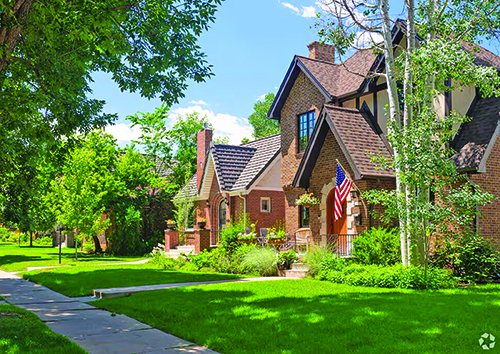
Many Denver homeowners fear proposed zoning changes could permanently alter established neighborhoods such as Washington Park, Belcaro, and Hilltop by allowing higher density housing on lots currently occupied by single family homes.
The debate reflects a broader frustration with City Hall. Denver’s housing shortage developed over decades as population growth, rising construction costs, restrictive zoning, and policy decisions combined to reduce affordability. Now, many homeowners feel they are being asked to bear the burden of correcting those mistakes while receiving few assurances that the proposed changes will actually solve the problem.
There is little disagreement that Denver needs more housing. The real question is whether the city’s approach will deliver the affordability residents have repeatedly been promised.
Changing zoning regulations is relatively easy. Creating housing that working families can actually afford is far more difficult.
As Denver moves closer to adopting its recommendations, City Hall should recognize that homeowners are not simply resisting change. They are asking elected officials to demonstrate, with evidence rather than projections, that permanently changing established neighborhoods will produce measurable improvements in affordability.
Until that case is made, opposition to Denver’s zoning overhaul is unlikely to fade. For many residents, the debate is no longer about housing. It is about whether City Hall is asking neighborhoods to sacrifice their character without proving the promised benefits will ever materialize.

by Valley Gadfly | Jul 23, 2026 | Valley Gadfly
Valley Gadfly
August arrives wrapped in golden sunshine, lazy afternoons, and lingering laughter. Summer doesn’t end with a bang. It slowly slips away with backyard barbecues, baseball under brilliant blue skies, mountain escapes, and evenings made for patios and peaceful strolls.
The season’s final full month reminds us to savor every sunset, every scoop of ice cream, every concert under the stars, and every adventure before autumn comes calling.
As students sharpen pencils and athletes lace up their shoes, here are our sizzling selections for shopping, dining, and entertainment throughout the Cherry Creek Valley:
Experience the dazzling Bright Nights at Four Mile Historic Park, where immersive light displays transform Denver’s oldest standing structure into a magical evening adventure for the entire family. Information: fourmilepark.org.
Catch Chicago and Earth, Wind & Fire together at Fiddler’s Green Amphitheatre on Aug. 17 for one of summer’s biggest concert events. Information: fiddlersgreenamp.com.
Laugh the night away with nationally touring comedians appearing throughout August at Comedy Works South in the Landmark district.
Spend a relaxing afternoon exploring the boutiques, galleries, and outdoor cafés throughout Cherry Creek North, one of Colorado’s premier shopping destinations.
Beat the heat with handcrafted frozen custard or gourmet ice cream before enjoying an evening walk through one of the Valley’s beautiful parks and trails.
Take the family aboard the historic Georgetown Loop Railroad, where spectacular mountain scenery and vintage steam locomotives create unforgettable Colorado memories.
August is the bridge between carefree summer days and the excitement of a new season. School buses return to neighborhood streets, football fields come alive, and community calendars quickly fill with festivals, fundraisers, and fall traditions. It’s a wonderful time to rediscover the businesses, restaurants, and attractions that make our Valley such a remarkable place to call home.
Expect warm afternoons reaching the mid to upper 80s, cool evenings perfect for outdoor dining, brilliant sunsets, and the occasional late-day thunderstorm rolling across Colorado’s Front Range. Before long, leaves will begin changing colors and pumpkin patches will replace swimming pools.
Until then, soak up every glorious August moment.
Why is August so optimistic?
Because it’s always looking forward to fall without forgetting how much fun summer has been.
— Glen Richardson
The Valley Gadfly can be reached at newspaper@glendalecherrycreek.com.
by Valley Gadfly | Jul 23, 2026 | Main Articles
Would Like Dallas Developers And Others Brought In
by Glen Richardson
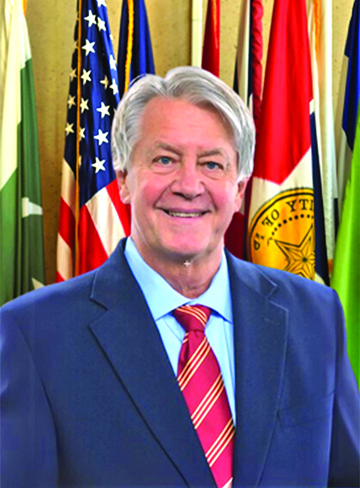
Glendale Resident Tim Dickey
For many years longtime Texans have been moving to Colorado for a change of pace and lifestyle. Most have been positive additions to the state, but there has been a prototype that has had a long tradition of being despised by many natives of the Centennial State.
The prototype is a person who comes from one of Texas’ big cities (i.e. Dallas, Houston, Austin) to a smaller Colorado community and informs the inhabitants that they are rubes and that he or she believes that the inhabitants have been doing things the wrong way for a long time and insists they change and do it the “Texas Way,” whatever that may be.
Glendale has the misfortune, in many people’s minds, of attracting Dallasite Tim Dickey who recently made the upscale 4550 Cherry Creek Residences his permanent domicile. He appeared at the Glendale monthly City Council meeting on June 2, 2026, and announced, sua sponte, that Glendale has too many residents who are young and single and “live in complexes-built decades ago as ‘singles only’ apartments.”
The 74-year-old Dickey apparently believes young singles are somehow by their very nature inferior to residents who are older and have spouses and children. It is true Glendale has been a Mecca for younger residents and renters since the 1970s. According to the U.S. Census median age of Glendale is roughly 30.8 years compared to Denver’s 35.3 years and the national average of 38.9. Glendale is heavily dominated by young professionals in their 20s and 30s, who comprise 57% of its total population.
That is apparently unacceptable to Dickey who wants “high quality, family friendly, Low Income Housing Tax Credit projects” like those he is familiar with from his many years in Dallas. He even brought in for the City Council brochures from Dallas low-income project developers although he noted that there are about 200 low-income multifamily developers in Colorado.
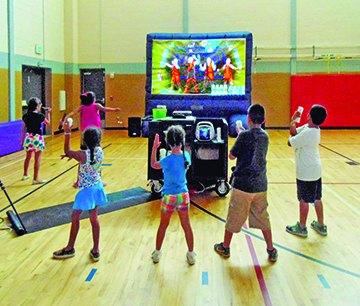
Kids Programs: Mr. Dickey is apparently unaware of enormous resources and programs available to Glendale children at the Glendale Sports Center at Infinity Park.
What would happen to the young professionals in their 20s and 30s that he would kick out of Glendale in favor of federally subsidized low-income families is apparently of no concern to Dickey. According to Zillow, renting in Glendale is roughly 18% to 33% more affordable compared to neighboring Denver. Glendale has managed to be one of the most affordable cities in all of Colorado with virtually no federal subsidies in the form of federal tax credits. A relatively free market system adopted by Glendale is apparently anathema to Dickey.
Dickey from his vantage point on the 21st floor of 4550 Cherry Creek thinks he lives in a town that bears little resemblance to the actual Glendale. He sent a highly condescendin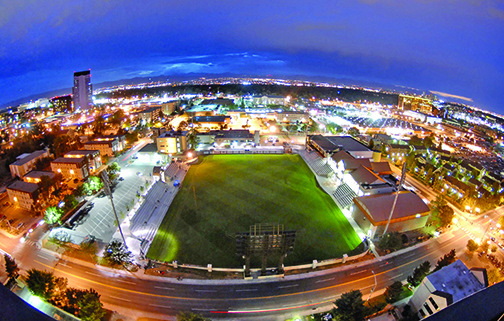 g letter to Glendale Mayor Mike Dunafon after Glendale City Council turned down his application to be on Glendale Planning Commission in favor of a candidate they believed was better qualified and a longer-term resident of the town.
The recently arrived 74-year-old Texan appointed himself advocate for the poor children of Glendale. In that role declared: “One in four children under 18 lives in poverty with almost no amenities for children.”
He seemed unaware that there are only about 360 children living in Glendale and even if his statistics are correct that is a total of 90 kids and there is arguably no better place for them to live than Glendale in Colorado.
Glendale, under Mayor Mike Dunafon built Infinity Park Sports Center that includes basketball, volleyball, and tennis courts as well as a state-of-the-art weight room and equipment along with access to the pool facilities at Schlessman Y on Colorado Boulevard. There is a plethora of programs for kids and teenagers run by the YMCA under contract with the city. At Glendale Sports Center individual membership for Glendale residents is only $10 a month and only $22 per month for a family of any size which includes all offspring under the age of 24. If for any reason a family can’t afford even those low prices there are generous scholarships available for Glendale residents.
For all kids in school there is an after-school program where the city takes care of kids after school until 5:30 p.m. absolutely free of charge. Kids in Glendale go to the Cherry Creek School System, considered one of the best in the country. After school Cherry Creek District school buses go directly from the schools to the Sports Center and drop the kids off.
Glendale is also known as RugbyTown. Kids living in Glendale starting at age 5 and through age 18 can play organized rugby with top coaches free of charge including all equipment, uniforms, and transportation they might need.
The affluent Dickey appears to be willing to destroy all of that so he can bring high density developers while throwing out and replacing the 57% of the population that are young professionals.
Dickey acted as the campaign consultant for Glendale Planning Commissioner Elizabeth Bonney who ran for City Council last Spring. Under Dickey’s tutelage she garnered only 28 votes and finished last in the election. He now wants the City’s general elections which have been held in Spring since the town’s incorporation 74 years ago changed to November.
Apparently, he believes if Bonney runs two years from now (and presumably himself) they will somehow have a better chance of succeeding if the election is in November and not April.
Knowledgeable insiders have trouble understanding how a Dallas transplant in his seventies will appeal to Glendale voters 57% of which are young professionals who he wants thrown out of town whatever season elections are held.
Dickey apparently has not made very many friends over at 4550 Cherry Creek. There is a rumored effort afoot to get Dickey kicked out of the development. He did not enamor himself to the management of the building when he called over to the city demanding that the city cite the building for federal Americans with Disabilities Act violations for repairs it was making at the building claiming he was expert concerning the Act. The city found no merit in his assertions.
During the Spring election he outraged his fellow residents by littering the halls with Elizabeth Bonney campaign literature and blank absentee ballot applications in direct violation of building rules and regulations.
It is unclear whether the elderly white Texan also objects to the racial demographic diversity of Glendale with 26% being Hispanic, 12% African-American, and only 51% to 65% White. His redevelopment of the city would likely drastically alter those demographics.
Dickey is expected to be at the next Glendale City Council meeting on August 4 to demand the city council approve a ballot initiative to change its elections from spring to fall.
by Ashe in America | Jul 23, 2026 | Feature Story Bottom Left
ASHE IN AMERICA
— OPINION
There is a shift happening in Colorado that no one is talking about.
There are 4,022,433 registered voters in Colorado, according to the Independent Voter Project. Unaffiliated voters — those claiming no party affiliation — more than double the totals from either party. Democrats comprise 991,920 voters, or 24.7%; Republicans comprise 894,209 voters, or 22.2%; and Independents comprise 2,038,329, or 50.7%. Another 97,976 voters, or 2.4%, are listed as “other”, ostensibly a consolidated bucket of the other available affiliations.
The parties, and their media partners, will tell you that the “unaffiliated” voters are mostly still partisans whose lack of affiliation is a form of protest. The implication is, “Don’t take them too seriously, they still vote with the parties.”
The latter part of that implication is largely true, but only in that the two major parties, despite representing less than half of us, still enjoy a premium on ballot access, and its amplification by all the “trusted institutions.”
The former part of the implication, I argue, is false.
Colorado is not two parties. It is many factions, organized largely around causes. What unites these diverse factions is a distinct rejection of the two-party system, in part because that rejection is required to drive change in Colorado. That is, 2,136,356 voters in the state reject the two-party system but ostensibly lack the organizing apparatus to scale something new.
The parties brand this as partisans in protest, a framing that allows them to dismiss it and remain focused on the 1,886,129 voters attached to the two parties.
That brings me to the shift and the current political moment.
I attended the Colorado Citizenry event on July 8th hosted by Jonathan and Deborah Flora in Castle Rock. At one point, I found myself at a table discussing the Governor’s race. Two people at the table were committed to Lopez, two declared for Weiser, and one was considering under voting the contest — leaving the race blank on his ballot. Of those five, two were Republicans, two were unaffiliated, and one was a Democrat.
The discussion was robust, fact-based, and unemotional. There were no personal attacks and, importantly, there was zero discussion about parties for the simple reason that party discussions are irrelevant. That didn’t need to be said. It’s understood. The event was a blast. If there is a Colorado Citizenry event in your area, you should go.
I recently connected with Erin Brantley who is building “Independent Majority” to (my characterization, not hers) combat the party premium on the viability of non-party sanctioned ideas and initiatives. Like the Floras, Brantley is connecting and collaborating with individuals and groups of all political persuasions to imagine and organize something post partisan. Something new.
During the 2026 primary season, a group of local bloggers and podcasters began collaborating and sharing information and ideas in back channels. Like the other examples, those involved run the spectrum of political identity and content and audiences. During the primary, the group comprised support for all three candidates in the race. Local content is better for it, more grounded and balanced in the exploration of issues and ideas facing the electoral franchise before the November election.
There is nothing partisan about any of these anecdotes. The people involved represent many factions, platforms, goals, and movements. These efforts are unemotional and post partisan and they’re growing — despite the parties’ contention that 2,136,356 of us are just partisans in protest.
Now consider that inside the 46.9% that are affiliated with the two major parties, there are many factions. The problem with those guys is that they chase their tails fighting to control the party instead of the government. It’s our 250th birthday month, so let’s get George Washington’s take:
“The alternate domination of one faction over another…is itself a frightful despotism. But this leads at length to a more formal and permanent despotism… the common and continual mischiefs of the spirit of party are sufficient to make it the interest and duty of a wise people to discourage and restrain it. It serves always to distract the public councils and enfeeble the public administration. It agitates the community with ill-founded jealousies and false alarms, kindles the animosity of one party against another, foments occasionally riot and insurrection. It opens the door to foreign influence and corruption, which finds a facilitated access to the government itself through the channels of party passions.”
Spot on, President Washington. This is literally why we’re post partisan. Something new can be something old. Something new can be whatever we want it to be as long as we’re willing to build it.
People just need to be brave. 53.1% of us are more rightly oriented for change than the minority.
I think that change is happening now. The share of post partisan voters will increase.
“What truly matters is not which party controls our government,” President Trump said in his 2017 inauguration speech, continuing, “but whether our government is controlled by the People.”
Whatever you think about the President, that speech was a strategy statement, and the People are responsible for its execution. The two major political parties are a barrier to self-governance and gatekeepers of political support and advocacy. The moment for change is now.
Bright side: While the rest of the nation writes off the Centennial State as a communist lost cause, the People of Colorado are the tip of the spear for what comes after the people abandon the parties to the point they don’t matter.
The Golden Age of America isn’t something we’re going to inhabit and occupy. It’s something we’re going to build.
A Republic for the next 250 years.
Happy Birthday, America!
Ashe Epp is a local writer, host, and activist. Find all her work at linktree.com/asheinamerica.