Monaco Inn

by Sue Glass, President & CEO, YMCA of Metropolitan Denver
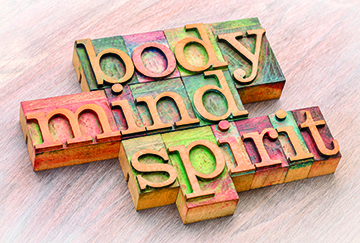
body, mind and spirit word abstract in letterpress wood type against grained wood
This spring, I marked my 50th birthday, and I declared to the world my intention to complete an IRONMAN to commemorate my milestone birthday. It has been a couple of months now, and my training is in full gear. In the last 30 days, I completed 2,160 exercise minutes (36 hours!). My longest distance ride was 41 miles, run 9 miles, and swim .71 of a mile.
Why would I subject myself to such insanity, you might ask? The answer is simple, yet complex.
Throughout my life I have faced many hardships and life-altering circumstances. Looking back, I never expected to be where I am today, leading a committed team at one of the most inspiring organizations in the world. Those grueling, painful, lonely, and harrowing circumstances I endured produced in myself grit and determination to overcome obstacles. They taught me how to push through pain and discomfort, to rise above the challenges, and to not be defined by my circumstances but be defined by my God-given purpose. It was a long faith journey — filled with pain and forgiveness, perseverance and resilience, healing and self-acceptance.
Reflecting back, my journey was incumbent on three interdependent critical factors: my faith, my mindset, and my physical health. My spiritual journey led to my physical and mental transformation. That is why I’m passionate about the mission of the YMCA, which is all about developing healthy spirit, mind, and body.
Wellness is a full integration of physical, mental, and spiritual well-being. Today, we are in the middle of a mental health crisis. Over the past 10 years and during the COVID-19 pandemic, people have experienced high levels of isolation, grief, and a shift in their normal routines. The Y can be a transformative place where we can learn and practice resilience, as well as adapt and cope despite tough and stressful times. We can practice connecting with ourselves and others, and learn new coping skills that help us thrive.
To support the mental health of people in the Denver metro area, the Y is investing in programs and creating caring spaces to help our community spend time together, have fun, and feel connected to something greater than themselves. These “third places,” a place to belong in addition to home and work, are so essential when navigating the ups and downs of life!
So, what does all of this have to do with IRONMAN? The journey to the IRONMAN parallels our life’s journey: it is grueling, painful, and in some respects lonely. Yet going through the training, we learn skills to push ourselves out of our comfort zone, face our own insecurities, overcome failures, test our resilience, push our limits, and test our physical and mental state. And when the race is complete, we emerge triumphant, stronger, more confident, and limitless. The key is caring for our spirit, mind, and body. The Y is there to support your journey.
I encourage you to check-out the YMCA Metro Denver’s offerings (denverymca.org) to see how our programs can benefit you both physically and mentally. Beyond our numerous fitness class offerings, the Y also provides many programs to help individuals develop and maintain positive mental health, helping to enable individuals to cope with stress, be productive, and contribute in a meaningful way to their families, workplaces, and communities. The Y is here for you!
City Hosting Jaw-Dropping Show From Infinity Park July 1; Concerts, Park Hill Parade, More Fireworks During Weekend
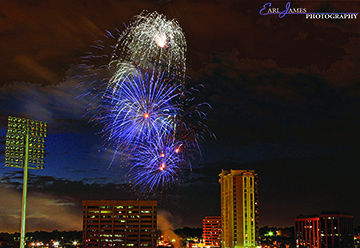
Fireworks From The Park: Glendale’s annual July 4th fireworks — one of region’s oldest and largest — is allowing families to view the mesmerizing show from Infinity Park stadium and turf field for the first time.
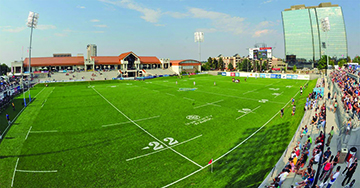 Glendale’s jaw-dropping fireworks — considered the Valley’s premier display — will once again light up the Valley. Blazing into the skies at dusk on July 1, the Glendale Independence Day celebration is for the first-time allowing families and friends to view the mesmerizing free pyrotechnics show from Infinity Park stadium, or on the turf field outside the stadium.
One of the oldest and largest fireworks shows in the region, the 2022 show is adding a new format: Gates will open at 7:30 p.m. and the fireworks show will be preceded by movie shorts and videos on the stadium’s jumbo screen, plus food trucks will be on site. Attendees may also bring food and beverages (no glass containers or grills). Changes are the result of closure of Creekside Park — the long-time launch site — to make way for construction of the new Four Mile Entertainment District.
The fireworks will flash and flicker into the sky beginning at about 9:15 p.m. The dazzling aerial display will create bright, colorful shapes that spin, spiral, whirl, whisk, spurt, spray, and splatter to outbursts of ooohs and aaahs from the close-up crowd. Information: InfinityParkat Glendale.com.
More Ways To Celebrate
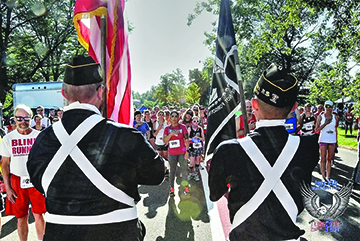
Sprint Spirit: Families can get in the holiday spirit by participating in the four-mile Liberty Run-Walk in Wash Park on July 4th, 8:30-11:30 a.m. There’s also a Kids Firecracker Fun Run.
The Glendale blast off launches the biggest weekend of fireworks, concerts, art shows, and new Independence Day festivities in recent memory. From Friday through Monday July 4th, you’ll have no trouble finding fun activities to enjoy. Beyond picnics and backyard BBQs, there are baseball games, parades, musical performances, and onetime get-togethers to share with family and friends. Here’s the Chronicle’s day-by-day guide of things to do to make this the best 4th Of July holiday ever:
July 1
Concert & Fireworks: For longer than Colorado has been a state, the Denver Municipal Band has been delighting Valley audiences. Take the kids, dogs, and picnic gear and go to Cranmer Park on E. 1st Ave., 5-6:30 p.m. The free concert is followed by fireworks. Information: denvermunicipalband.org.
Cherry Creek Arts Festival: Start the holiday celebrations rolling by attending the annual Festival that opens July 1 and runs through July 3, 10 a.m.-8 p.m., Sun. to 6 p.m. The festival is returning to the streets of Cherry Creek North where you’ll enjoy art, music, and cuisine that is free to the public. Information: 303-355-2787.
Dzirae Gold Dazzles: Her sultry vocals described as “smooth as liquid gold,” soul singer is at Dazzle@Baur’s, 7 p.m., followed by jazz musicians Nostal-Jazz at 10 p.m. Information: 303-839-5100.
Fan Expo: Activities and attractions for the entire family, event opens at the Convention Center July 1, 4 p.m.- 9 p.m.; Sat. 10 a.m.- 7 p.m., Sun. until 5 p.m. Fans meet their favorite superheroes, princesses, and actors. Information: 303-228-8000.
Punx Unite Festival: Known as a blend of various band and music cultures, musical experience is July 1 & 2 at the Bluebird Theater on E. Colfax Ave., 5 p.m. Information: 303-377-1666.
July 2
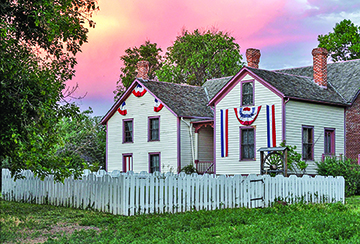
Four Mile 4th: The annual Independence celebration at Four Mile Historic Park will feature music, crafts, historical re-enactors, and live demonstrations July 2, 10 a.m. to 4 p.m.
Four Mile Park Independence Celebration: A fun-filled day of music, crafts, historical re-enactors, and live demonstrations at Four Mile Historic Park, 10 a.m.-4 p.m. Event has live music, prairie games, crafts, plus food trucks. Information: 720-865-0800.
Colorado Rockies Fireworks: Nothing says America like a baseball game and some fireworks. Watch the Rockies face the Houston Astros July 2 and 3 followed by fireworks. Information: 303-292-0200.
Super Cruise Saturday: Car lovers gather along South Golden Road to watch vintage vehicles, hot rods, and custom cars of all kinds. Sponsored by Golden VFW Post 4171, the cruise is from 8 a.m. to 1 p.m. Information: 303-279-2119.
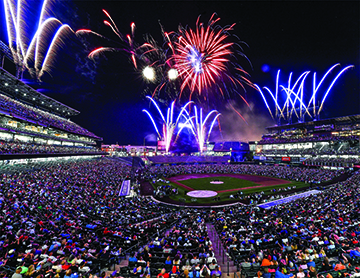
Holiday Hit: Valley baseball fans can watch the Colorado Rockies play the Houston Astros on July 2 and 3, followed by fireworks.
Roots & Rhythm: The group that just opened for four-time Grammy singer Dianne Reeves entertains at Inga’s Alpine Tavern, 7 p.m. Information: 720-389-6203.
Broomfield 4th of July Carnival: If the kids want to go to a carnival this holiday, take them to FlatIron Crossing. Rides are from 6-9 p.m. today, Sat.-Sun. & the 4th, 3 p.m. to 6 p.m. Information: 720-887-9900.
July 3
Independence Eve: Enjoy the sweet sounds of the Colorado Symphony plus local artists in Civic Center Park downtown. Music starts at 6 p.m., Colorado Symphony performs at 8:15 p.m. followed by the light show on the City-County Bldg. The fireworks finale will begin about 9:30 p.m. Information: 303-861-4633.
Stars & Stripes Forever: Enjoy holiday music by the Arapahoe Philharmonic in the Farm House Restaurant at the Breckenridge Brewery in Littleton, 7 p.m. You’ll hear symphonic classics like the “1812 Overture” and “Stars and Stripes Forever” plus film-TV favorites including the theme from “The Mandalorian.” Fireworks end the evening. Information: 303-803-1380.
July 4
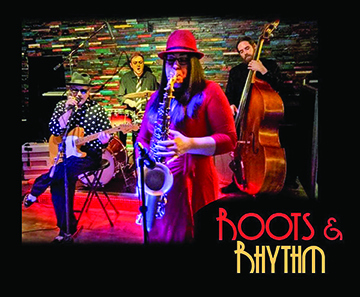
Patriotic Playlist: Roots & Rhythm gets residents tuned-up for the holidays at Inga’s Alpine Tavern in Glendale July 2, 7 p.m.
Park Hill 4th Of July Parade: Marching bands, floats, classic cars, and costumed characters, starting at 1:30 p.m. Denver’s largest Independence Day parade runs along 23rd Ave. for approximately one mile from Dexter St. to Krameria St. A street fair concludes the parade on the 2200 block of Kearney St. (between 22nd and 23rd Aves.), with food, music, and kids’ activities. Information: 303-918-6517.
Aurora 4th Of July Spectacular: Musical performances and food trucks on the Aurora Municipal Center’s Great Lawn beginning at 5 p.m. Entertainment is from 6-9:30 p.m., followed by fireworks show at 9:30 p.m. Information: 303-739-6702.
The Dream Maker: The Denver Botanic Gardens becomes even more magical as magician and former Cirque du Soleil performer Xavier Mortimer entertains, 6 p.m. Information: 720-865-3500.
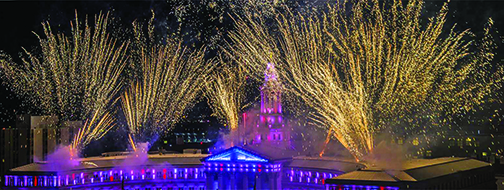
Government Glitter: The Colorado Symphony performs at Civic Center Park at 8:15 p.m., followed by a light show on the City-County Bldg. and a fireworks finale downtown on Independence eve. Photo credit: denver.org
DeadBeats Backyard Jamboree: Zeds Dead & friends, including Blunts & Blonds, and So Tuff So Cute entertain in Civic Center Park, 3-5 p.m. There’s BBQ and lawn games, plus special viewing area off main stage. Information: 303-861-4633.
Liberty Run & Kids Firecracker Fun Run: A Four Mile Run-Walk in Wash Park, 8:30-11:30 a.m. Attendees can also provide talent on the Liberty Run’s Got Talent stage. Ice cream and apple pie provided. Information: 303-522-4387.
Lindsey Giffey: Acoustic guitarist plays and sings at The Morrison Inn on Bear Creek Ave. in Morrison, 11:30 a.m.-3:30 p.m. Information: 303-697-8850.
Lake Dillon Symphony Spectacular: Celebrate the stars and stripes at Lake Dillon as the Colorado Symphony plays scores from the “Armed Forces Salute,” “God Bless America” and other 4th of July favorites at the Dillon Amphitheater, 4 p.m. Information: 970-468-2403.
Ice Chests To Consider For Your Summer Pleasure
by Mark Smiley
The summer months are upon us and it is time to keep your drinks and food cold for backyard barbecues, soccer tournaments, and trips on the lake. Whether you are in the market for a new cooler, want to add to your fleet, or just want an upgrade, there are a few different kinds to consider and none of these three brands begin with the letter Y.
OtterBox Venture 25
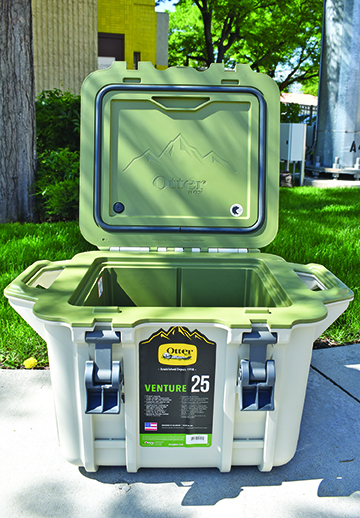
Venture 25: Otterbox is headquartered in Colorado, and its Venture 25 is a versatile and rugged premium cooler.
OtterBox, perhaps best known for its phone cases, has a line of premium coolers that are all made in the United States. OtterBox is based in Colorado and has built a rugged line of Venture coolers in the 25-quart, 45-quart, and 65-quart sizes.
We found the 25-quart size plenty large enough to hold all of the essentials and keep them cold for days. Ice retention on this lasted four days in our test. It was kept in the garage and away from the sun. If kept in a cooler environment with a thermal blanket over it, we are confident it would have lasted for many more days.
The Otterbox Venture 25 is well insulated due to a 2-inch thick, dense foam insulation made of industrial-grade, closed-cell polyurethane. It weighs just under 17 pounds and features silicone seals and latches. We found this cooler to have some of the toughest latches around which is ideal for those using it for camping.
Another feature that separates it from the competition is the durable integrated handles. Most coolers at this size and price point have rope handles. We found carrying this cooler was a bit easier than most of the other models we tested.
Add in a mounting system which allows for added accessories, anti-slide rubber feet, and an attractive design, this cooler should be added to your inventory as it checks the boxes and provides most small families precisely what they are looking for, a cooler that keeps items cold, and is easy to transport.
Visit www.otterbox.com for more information. At press time, the Otterbox Venture 25 was 20% off and selling for $183.99.
GOAT BOXCO
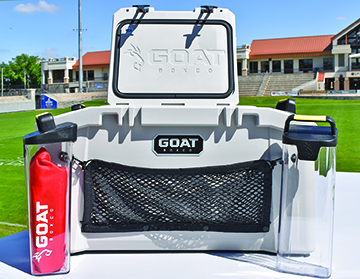
HUB 50: GOAT BOXCO’s HUB 50 is a premium cooler that includes water resistant cans that easily insert into the side of the cooler. The cooler is one that is ideal for just about anything including hunting, fishing, tailgating, or backyard BBQs.
www.GoatBoxCo.com launched their GOAT Cooler System during the COVID-19 pandemic and have created one of the most innovative and stylish coolers on the market. The name GOAT actually means GO AT whatever makes you happy in life according to co-founders Jack Robbins and Gary Dickerson. And building this cooler has been something that has made them happy.
This is another cooler made in the U.S.A., and its rugged design turned heads while testing. It features customizable storage and organization with cans that are designed to hold essential gear for any adventure and slide conveniently into compartments on the side of the cooler. They are built from the same polycarbonate that NASA uses and are water resistant. Whether it be a first aid kit, a place to store can koozies, BBQ essentials, or many other items, it is a creative way to keep items separated and dry.
Ice retention, which most people judge a cooler by, on this model, the HUB 50 (there is also a HUB 70 model), was one of the best on the market, outperforming some of the bigger named coolers. Ice remained ice for six days under warm temperatures and without using the “sacrificial bag of ice” to prep it. This cooler is one you would want to take on a fishing trip, a long weekend, tailgating, or just a backyard BBQ.
GOAT BOXCO strives to improve upon its product and values input from its customers on what could be changed or improved upon. Look for new products and accessories to be launched in the coming year.
To learn more, visit www.GoatBoxCo.com.
Canyon Coolers
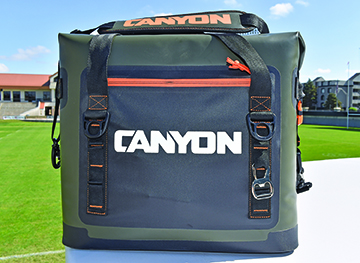
NOMAD 20: Canyon Cooler’s NOMAD 20 is an over-the-shoulder soft cooler with a solid reputation of ice retention and ease of transport.
Finally, the Canyon NOMAD 20 is the only soft sided cooler tested and thus is the most lightweight. The NOMAD 20 is an over-the-shoulder soft bag that is comfortable to transport wherever it is you need to go with the built-in shoulder strap. Ice retention on this lasted three days and would most likely last longer if it were stored in a cooler place and prepped with a bag of ice the day before using.
Based in Flagstaff, Ariz., Canyon Coolers launched in 2010 and has one of the best warranties of any cooler company. It features a lifetime, no-fault, no-hassle warranty. They stand behind their products and it is easy to see why, with the NOMAD 20 outperforming the Yeti Hopper Flip in ice retention.
The NOMAD 20 is ideal for transporting food and drink for a quick staycation, your kid’s soccer game, or as a guest for a backyard BBQ. It even features a built-in bottle opener. This cooler is durable, stylish, and holds quite a bit of product for being an over-the-shoulder soft-sided cooler.
There are plenty of five-star reviews from users making this a popular choice that won’t break the bank. For more information, visit www.canyoncoolers.com.
The three coolers reviewed here are all different from one another. They have different designs and features that separate them from their competition. They share at least one thing in common and that is, they all keep your items cold for days. What more can you ask from a cooler?