by Mark Smiley | Apr 27, 2018 | Main Articles
by Glen Richardson

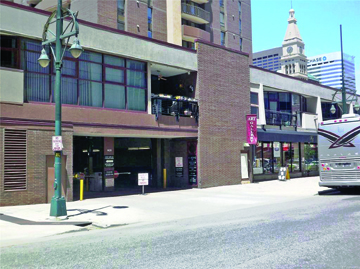
Tower Price Power: Soaring parking cost isn’t just in new high-rise condos. A space in the Brooks Tower on 15th St. sold last year for $67,000, the third highest. The 42-story condo tower is the city’s first high-rise residential building.
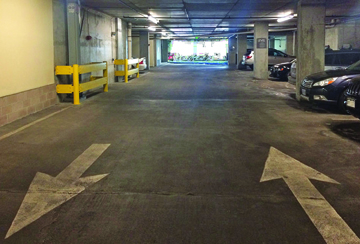
Spire Price Spiral: The height of living in this 42-story condo building downtown comes with soaring prices. A single parking space in the garage at the high-rise on 14th St. has sold for $74,000, a new record price to park and live downtown.
A single parking space in the ritzy 42-story Spire high-rise downtown on 14th St. has sold for $74,000. The outlay sets a new record for the price to park and live in a condominium home in the heart of downtown.
Space 131 in the garage of the condo tower — a chic retreat in downtown’s Theatre District — topped the previous $70,000 price tag set last June for another Spire space, according to BusinessDen who first reported the sale. The city’s homepage for business news said broker-owner Mark Trenka of Century 21 handled both Spire deals. The third priciest was a $67,000 sale last May in the Brooks Tower on 15th St., the city’s first high-rise residential building. Trenka also represented the buyer in that deal.
While Valley residents regularly confront parking predicaments, most hope to get lucky on the street or opt to rent a spot. People who have condos in the heart of downtown, however, in certain cases have the option of buying a space in their building’s parking garage. They just have to be ready to shell out what you would pay for a 2017 Maserati Ghibli S Q4 for the privilege.
Parking Poker
Pricey parking — spaces on the resale market regularly sell for from $25K to upwards of $55K — provides a metaphorical look at how the price for parking is adding to the cost of living under the city’s Denver Moves transportation arrangement. Mile High’s bike and pedestrian plan has installed dedicated bike lanes throughout downtown thoroughfares, a move that’s gobbled up scores of parking spaces created for residents and tourists on Denver’s streets.
Then there’s Cherry Creek North: Apartment towers, condos and hotel construction in the once swanky shopping district forced the Cherry Creek Shopping Center to implement a paid parking system to protect the mall’s parking for its own customers. Commuters, construction workers and people living or shopping in Cherry Creek North used the 5,001 mall parking spaces, making it tough for mall patrons to find a spot.
Most residents literally pay for parking even if they don’t use it. If you live in a condo or apartment that includes parking, that parking comes with an extra fee or is tucked into your mortgage or rent. Moreover, many multi-family residential buildings have more parking than their residents require. Someone has to pay for those spaces. Someone also has to pay for the fact that a $75 monthly parking fee doesn’t fully cover the cost of creating it.
Spending Spiral
Spire originally offered no parking spaces to potential buyers despite having seven levels of parking. Thus, today when buyers look at condo resales they might find two, one or no parking spaces for any given unit. This trend in parking is allowing sellers to experiment with how they sell their units. It’s possible to break apart a condo from the parking space to seek an increased total sales price. This becomes especially true when a buyer is willing to spend $70K for a particular single parking space where they live.

Privileged Parking: Buyers at the under construction Laurel Cherry Creek won’t have to contend with the street parking crunch as the purchase includes parking. The 11th floor penthouse buyer will get three parking spaces for just under $4 million
It can, however, be difficult to get a mortgage for just a parking space. Most non-cash buyers opt for a loan on the value of another property they own, or reappraise the condo based on the addition of a parking space, and then get a mortgage based on that new figure. Individuals who purchase a parking space will likely owe more in HOA fees since they will then own a slightly greater percentage of the building. According to Century 21’s Trenka, a space in Spire’s garage comes with $22.68 in monthly HOA fees. At Brooks Tower that figure is $79.36 a month.
Many buildings assign at least one parking space to a unit, but often offer additional spaces as sales incentives once site sales begin. That’s why future buyers at a particular condo may only find one space offered. In some cases, of course, the original buyer may have opted out of purchasing a second space. At Denver’s Glass House condos in LoDo additional parking spaces originally sold for $15K, but were later increased to $40K. Pricey condos, nevertheless, typically include parking spaces. In Cherry Creek North at the still under construction Laurel Cherry Creek Condos, the 11th floor penthouse comes with three parking spaces for just under $4 million ($3,999,467).
Density’s Price
How much does a parking spot add to a condo mortgage or an apartment’s rental fee? Experts say there is no single answer to the question. Construction costs are affected by soil conditions, zoning requirements, site constraints and the type of parking to be built. Furthermore, initial capital cost varies based on property taxes and cost of financing. For rental properties, resident turnov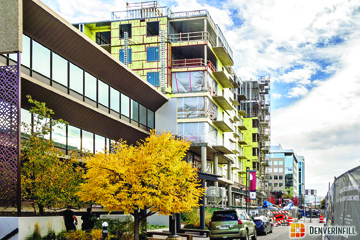 er and delinquency rates are added factors.
Seemingly cheap parking at apartment complexes can be costing renters as much as $250 a month. The point: an apartment with parking space costs more to build than one without. The typical fees for apartment buildings don’t generally cover that difference. In many cases developers create more parking than a building actually needs so they have the option to convert to condos as the market changes.
Bottom line: parking spaces are becoming more valuable as density downtown and throughout the Valley builds up and parking options become limited. This is exposed by the increase in the resale prices for parking spaces and the lack of supply. Residents — whether owners or renters — are increasingly likely to see “Parking Space wanted” signs on the building message board. Moreover, as the price of parking spots soars condo “Parking Space for sale” signs are increasingly likely to also be listed.

by Mark Smiley | Apr 27, 2018 | Feature Story Middle Left
by Sandra Stratton-Rusch
 Every day, people are wandering into Pilates studios, situating themselves on gliding tables, and experiencing a workout that leaves them refreshed and happy. What is this exercise and why is it becoming so popular?
First, taking the mystery out of Pilates
Many people are intimidated when they think of Pilates. There’s the strange table with springs and pulleys. There are moving components and straps of different lengths and widths. It can be unnerving.
In explanation, Pilates is a system of controlled movements on a specially designed apparatus. Participants position themselves on the chairs and tables, and use the pulleys and straps to pull their body weight, working and toning the entire body evenly. Created by Joseph Pilates, the method improves flexibility, builds strength, and develops control and endurance for a full-body workout.
That sounds positive and great. But what does that really mean? And why do people love it? The reasons are plenty!
- It strengthens and lengthens
Unlike traditional weight lifting, Pilates strengthens both the large muscles and the tiny muscles surrounding them. This lengthens the appearance of muscles and improves overall alignment. Imbalances go away, posture improves, and people actually feel taller.
- Pilates is fitness based, Not dance based
When Joseph Pilates’ contraptions were first being developed, they were discovered by dancers, who quickly realized that Pilates movements could both build strength and help them recover from injuries. Because of this, Pilates fell into the dance family, and as such, it’s been practiced in studios, it’s appealed to more women than men, and it’s often grouped with classes like Yoga or aerobics.
Since then, Pilates has evolved to become more of a means of fitness and athleticism. People are recognizing that it’s not just for dancers — it’s for all people who want to be fit.
- It’s easy to be consistent
With any fitness routine, it can be difficult to keep going, stay motivated, and not get burned out. In my 30 years of teaching Pilates, I can say that Pilates stands apart from other approaches. It’s an experiential exercise, which means you have to experience it to know what it’s like, and once you do, it’s easy to get hooked. People find it fun and invigorating. The movements are soothing and stress-relieving, and people work muscles — large and small — without realizing it.
- There are options — Mat or Reformer
Another thing people love about Pilates is that there are options in how the classes are offered. Pilates Reformer uses the power of the tables, chairs, and towers to guide people through the exercises and provide support for doing specific movements and stretches.
Pilates can still be practiced without the Reformer through Mat Pilates. Mat Pilates involves the same movements, just without the additional support of the equipment. Which one you pick is a matter of preference and budget. (At the YMCA, Pilates Reformer classes involve additional fees, whereas unlimited Mat Pilates classes are included with YMCA membership.)
- It makes people happy
Finally, the biggest reason people love Pilates is that it simply makes them happy. It alleviates pain and perfects imbalances. It aligns the mind and body and promotes better sleep. Pilates routines change regularly, so it continues to be a challenge. Yet it’s not a daunting workout that turns people away. I see it every day when I teach. People are happy to come to class, and even happier when they leave feeling healthier and taller!
For me personally, Pilates has helped me recover from a serious car/bike crash. And it’s helped me stay strong and fit throughout my adult life — I’m 65! I love to do it, I love to teach, and I love to share the power of Pilates with others. If you’ve ever considered giving it a try, do not let the tables and pulleys intimidate you. Come into a studio, and discover all the reasons you’ll love it too.
Sandra has been introducing people to the benefits of Pilates for over 25 years. She is a Certified Precision Nutrition Coach, Certified ACE Personal Trainer, and Certified PMA Pilates Instructor. Sandy teaches at the Littleton Family YMCA.

by Mark Smiley | Apr 27, 2018 | Glendale City News
by John Arthur
Writer for and on behalf of the City of Glendale

Glendale Raptors Lock Ben Landry powers through the Austin Elite defense as he aims to score a try with back row player Connor Cook in support. (Photo by Seth McConnell)
Under cloudy skies and with intermittent rain and snow, the Glendale Raptors hosted Austin Elite Rugby at Infinity Park for both teams’ inaugural professional match on Saturday. The typically fickle spring weather in Colorado didn’t dampen the spirits of either team, with both displaying the high-level competition and poise that will be a mainstay of professional rugby in the United States. With temps in the high 30s throughout the first half, the inaugural season of professional rugby got underway. The season-opening game of the week, Saturday’s match was broadcast live on CBS Sports Network.
The Raptors Fan Zone, a tailgate-style party that begins two hours before kickoff, was also full and swinging despite the weather. The first thousand fans through the doors even received a free gift. Those in attendance had to split their time between a number of popular activities: the young and young-at-heart had their faces painted and got temporary Raptors tattoos, as well as enjoying trying their hand at the rugby toss game.
Fans of all ages looked on in wonder at the real birds of prey brought by special guests HawkQuest to further the Raptor-themed activities, interacting with eagles, hawks, and owls at close range. A highlight of their visit was the outstretched and nearly six-foot wingspan of a mature bald eagle, spread gracefully during the National Anthem. A professional photo booth also meant that fans could memorialize the historic day.

A young rugby supporter enjoyed face painting during the pre-game Fan Zone at Infinity Park before kick off of Major League Rugby between the Glendale Raptors and Austin Elite. (Photo by Seth McConnell)
Boggy Draw Brewery’s tent was a popular stop as well, fans enjoying the local craft suds while washing down empanadas from Lazo Foods and wraps from the California Wrap Runner food truck. With the Raptors official sports performance partner Arcanum on scene to share their unique product line, and DJ RIPM spinning tunes, the excitement for kickoff began to build.
In the opening moments of the match two Raptors players were shaken up, a portent of the hard, aggressive play that would characterize the day. Austin was issued a yellow card 10 minutes in, but the Glendale side was unable to capitalize on the advantage. The Texas side drew first blood, touching down for five points 14 minutes in, and converting to take an early 7-0 lead: the points would prove the only ones Austin would put up in the opening half. Raptors flyhalf Will Magie converted a penalty attempt 21 minutes in to cut into the Austin lead. Plenty of penalties were seen throughout the day, as the two teams felt out their debut on the professional stage. Austin made its own penalty attempt at 30 minutes in, but was unable to convert.
The Fan Zone wasn’t the only place jumping for the Raptors home opener. The team’s VIP area was completely sold out, packed with longtime fans, members of the Raptors owners group, and anyone looking for Infinity Park’s royal treatment. The Raptors media room was also full, the season opener for Major League Rugby having attracted local and regional news personnel by the dozens, including longtime Denver news anchor and local celebrity Tom Green. The team’s new mascot, Rudi the Raptor, seemed to pop up all o

Glendale Raptors back row player John Quill takes the ball into contact against Austin Elite during opening day for Major League Rugby on April 21, 2018 at Infinity Park. (Photo by Seth McConnell)
ver Infinity Park on Saturday: dancing in the stands, giving high fives, patrolling the Fan Zone, and posing for photos. The O’Brien Rugby Shopping Maul was also packed to the rafters, with official Raptors merchandise flying off the shelves and into the waiting arms of excited fans, new and old.
Glendale responded to the initial Austin try in the 32nd minute, with a try of their own by back row Connor Cook — the conversion after by Will Magie seeming to give the Colorado squad new life. Rallying powerfully late in the first half, Raptor back row John Quill found the try zone at 37 minutes, converted again by Will Magie to increase the Glendale lead. Raptors Head Coach David Williams noted that the team seemed to gain momentum as the game progressed: “Once we gained some pressure through multi-phase attack and created opportunities, we did well. We let ourselves down a bit in the first half, giving Austin the ball back in easy territory.” Playing into injury time, veteran Raptors lock Ben Landry touched down for more points in the 41st minute. Magie went into the break perfect on kick attempts, giving the Raptors a 24-7 advantage at the break.
Official Raptors sponsors attended the game en masse, enjoying the atmosphere of the team’s professional debut. Official credit union Westerra had representatives on site, encouraging fans to open a Raptors VISA card the next time they stop by a branch, as were ambassadors for the team’s official hotel, Hampton Inn & Suites. Not just in the Fan Zone, Arcanum Sports Performance stayed on to watch the Raptors do battle with Austin as well, informing curious fans about their line of products. One of the team’s newest sponsor partners, historied distiller Tullamore Dew, hosted a tasting station where VIPs could sample their blended Irish whiskey.
The Raptors looked in form entering the second half, with fullback Maximo de Achaval touching down a try four minutes in. Magie converted to put the team up 31-7. Glendale’s Harley Davidson, who plays both winger and fullback, found the try zone again at 47 minutes, and with the successful conversion, further extended the Raptors lead. A minute later, the Raptors would lose Ben Landry for the remainder of the match, as he was red carded for a dangerous tackle. Austin capitalized on the penalty, finding the try zone at 52 minutes and converting to cut into the Glendale lead. The Texas team would put more points up at 59 minutes, converting to bring the match within striking distance.
A missed penalty kick by Will Magie in the 64th minute kept things even, and a flurry of penalties in the minutes that followed saw Austin again knocking on the door. The rough and tumble match again came to a head 72 minutes in, when Raptor Connor Cook was red carded for a tackle the ref deemed too dangerous. A yellow card on Raptor prop Kelepi Fifita just two minutes later would further Austin’s numbers advantage, meaning the Glendale side would finish the match three men down. Austin touched down for five in the 75th minute, but missed the conversion, bringing the score to 38-26 in Glendale’s favor. With time quickly running out, the Raptors secured victory off the foot of Will Magie. Burning precious seconds, Magie converted a penalty attempt to push the

The Glendale Raptors secure possession at a lineout in front of their home crowd at Infinity Park against Austin Elite Rugby during the opening Major League Rugby match. (Photo by Seth McConnell)
Raptors advantage to 41-26 in the 80th minute, sealing the team’s first professional win.
Raptors Assistant Coach Ted Browner was happy with the victory: “It was great to get the win. Austin brought the physicality and that was a great wake up call for us. We’re all excited about the remaining season.”
Raptors Head Coach David Williams was also glad to secure the early season win, though acknowledged that conditions were not ideal: “Weather was an issue and both teams had to play to the conditions,” he said. “Once we stuck to our game plan and forced Austin to kick the ball back to us, we gained some momentum and turned it into points.” John Quill was named Man of the Match, the veteran back row man looking composed in his first professional Major League Rugby match. A longtime Raptor, Quill holds 25 USA Eagles caps. The Raptors second game of the regular season will see the team on the road, traveling to Seattle to take on the Seawolves in a sold-out Starfire Stadium on April 28 at 8:30 p.m. Mountain Time. The match will be broadcast on CBS Sports Network.
Throughout the inaugural MLR season, CBSSN will broadcast the game of the week, with AT&T Sports or Cox Communications broadcasting non-game of the week matches along with ESPN+. Check out the complete regular season schedule, and purchase tickets to the rest of the home matches at Infinity Park. Be sure to follow the team on Facebook, Twitter, and Instagram.

by Mark Smiley | Apr 27, 2018 | Travel
Scholarships Will Help Fund YMCA Summer Camp Programming
by Mark Smiley
Finding high-quality, affordable childcare can be a challenge for any family. Every year, the YMCA of Metro Denver serves more than 2,700 children in summer day camps as a leading child services provider. By offering scholarships to those in need, parents have found a safe, nurturing environment without the high price tag.
In 2017, the YMCA distributed over $750,000 in scholarships across the metro area. This year in Glendale alone, the YMCA estimates they will award $30,000 in scholarships for child care at the Glendale Sports Center. For one working father, these scholarships have been invaluable to his family.
“The Y offers a helping hand when you need it,” said Jdell Garner, father to 9-year-old Rosa Garner, who attends YMCA summer camp and after school programming at the Glendale Sports Center. “The extra funding has been a blessing. Without them doing that, Rosa wouldn’t be here.”
YMCA summer camps feature field trips, fun physical activities and educational weekly themes which allow kids to learn, play and thrive in a secure environment. Rosa Garner said, “I look forward to being here and I feel safe at the YMCA.”
Since enrolling Rosa in childcare at the Y nearly five years ago, Garner has noticed a change in her character. He said, “Rosa is learning how to be a leader and a young adult when she’s at the YMCA. She interacts with supervisors, stays organized and welcomes new kids.
He continued, “It’s a very uplifting experience to have her here. She normally comes home very happy and as long as she’s happy, I’m happy.”
The YMCA is recognized as a leader in childcare not only for the safe environment but the imaginative activities that nurture a child’s spirit, challenge their minds and strengthen their bodies. There is also a strong sense that anyone and everyone is welcome and respected.
“The YMCA of Metro Denver believes everyone should have the opportunity to participate in YMCA membership and programs regardless of their ability to pay,” said Nicole Limoges, Executive Director of the YMCA Sports Branch and Glendale Sports Center at Infinity Park. “Luckily, we are able to provide the amount of financial assistance we do because of the generosity of our donors.”
The YMCA of Metro Denver manages the Glendale Sports Center, a state-of-the-art fitness facility featuring programs that support physical, intellectual and spiritual strength. Glendale summer camp scholarships go quickly each year. Limoges recommends applying for 2019 programming in early February. For more information on child care at the Glendale Sports Center managed by the YMCA, visit www.denver ymca.org/glendale/child-care-day-camps.