by Valley Gadfly | Mar 1, 2017 | Valley Gadfly
Ah March is finally here! Albeit we enjoyed an unusually mild February, March conjures thoughts of spring and warmer days, with the spring equinox just three weeks away. As the season begins changing think of ways to make this month meaningful and thus all the more memorable. From Latin, memorable was first used in the 15th century.
Spanx founder Sara Blakely says life should be a stretch: “It’s important to be willing to make mistakes. The worst thing that can happen is you become memorable.”
Here are our catchy, clever and captivating choices for shopping, dining and entertainment to make this month march ahead in momentous, memorable ways:
3 Who doesn’t remember the Beatles and their music? See Rain, a multi-media event showcasing their music and songs in high definition imagery at the Ellie Caulkins Opera House, March 2-3. Information: 720-865-4220.
3 Join and play a part in MSU’s listening and learning Music For Stage & Screen classes March 7-14, 6-8 p.m. Information: 303-556-5095.
3 Make St. Paddy’s Day memorable by joining the Runnin’ of the Green 7K plus party in LoDo March 12, 10:15-2 p.m. Information: 303-297-0408.
3 Join laddies and lassies at Augustana Church to hear St. Mary’s College Women’s Choir March 17, 7:30 p.m. Information: 303-388-4962.
3 With few Irish eateries left, the Monaco Inn Restaurant has become the Valley’s St. Paddy’s Day corned beef and cabbage connection. Served for lunch and dinner March 17, it’s luscious. Information: 303-320-1104.
3 Spruce up for Easter and Spring with upholstery, drapery, cushions and pillows from Boris’s Upholstery. Now offering 20-50 percent off on home decor fabrics to fit any home and budget. Information: 303-751-2921.
3 Hear Rabbi Joe Black play and sing at the Mercury Café Habitat Interfaith Alliance benefit March 18, 6:30 p.m. Information: brownpapertickets.com.
3 Kiss March goodbye at Stage Kiss — a tale about lovers sharing a stage kiss at the Bug Theatre, March 24-April 15. Information: 303-477-9984.
3 For action, drama and madness there’s nothing like the Men’s College Basketball Semifinals. See the games at Infinity Park Event Center on full room wrap-around screens April 1, 3:30 p.m. Event benefits Morgridge Academy for chronically ill children at National Jewish Health. Attendees will enjoy a gourmet buffet, open bar, plus Basketball Pop-A-Shot, shuffle golf and arcade games. Information: 303-728-6576.
To make the month of March memorable one needs to consider the words of great thinkers like Joshua Foer, author of the international best seller Moonwalking with Einstein. His advice to us: “If you want to live a memorable life, you have to be the kind of person who remembers.” Gosh, oh my golly, why didn’t I think of that?
Foer’s book reminds us all that, in every way that matters, we are the sum of our memories. For us then the task is to change our understanding of human memory.
Remember? “If you don’t stop and look around once in a while, you could miss it.” — Matthew Broderick in Ferris Bueller’s Day Off. One more: “There’s no place like home.” — Judy Garland in Wizard of Oz. The Chronicle’s choice: “Make it simple. Make it Memorable. Make it inviting to look at. Make it fun to read.” — Ad man Leo Burnett.
— Glen Richardson
The Valley Gadfly can be reached at newspaper@glendalecherrycreek.com.

by Mark Smiley | Mar 1, 2017 | Editorials
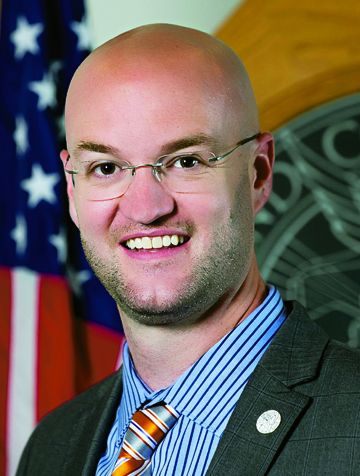 Old Abe Lincoln had sage advice for people like Denver City Council President Albus Brooks to wit:
“You can fool all people some of the time, and some of the people all the time, but you cannot fool all the people all the time.”
Brooks has aspirations to succeed the developer controlled Michael Hancock as mayor of Denver and he knows the best way to do so is to do the bidding of those exact same developers.
Of course, it is not smart to let your constituents know that you are bought and paid for so Brooks is always coming up with highly inventive ways of pretending to be a man of the people. Case in point is his incredibly duplicitous work on “Small Lot Parking Exemption” scam that former print company owner and now real estate developer Barry Hirschfield and others are unleashing on Denver’s neighborhoods. We highlighted this controversy in our lead story last October titled “Humboldt Neighbors And Allies Take On Barry Hirschfeld.”
Back in 2010 the Denver Zoning Code was revised to exempt lots of 6,250 square feet or less from parking requirements when redeveloped. As stated by Councilman Jolon Clark the exemption “was to catalyze business on small retail and commercial parcels along major arterials such as Colfax Avenue and Broadway, where there were empty store fronts and there was a real threat of a loss of neighborhood character by small lots being assembled.”
But the ever greedy Denver real estate developer community saw the exemption as another opportunity to stick it to the local neighborhoods. The exemption does not expressly limit itself to small retail and commercial uses and does not expressly prohibit assemblages for application of the exemption, but it would appear clear that such was the intent. Thus people like Hirschfeld came up with an idea of building coffin-like micro units on assembled lots and rent them to the ever ripped off millennials pouring into Denver, but with absolutely no parking provided. Of course, the majority of the millennials do in fact have at least modest cars. Thus in areas that these units are built, everyone in the neighborhood will find it difficult if not impossible to find any street parking at times.
The problem was that the developers’ incredibly strained interpretation of the exemption might not stand up in court even in Denver’s sad sack judicial system. The developers and their bought and paid for Denver Cit y Councilmembers needed time to amend the Zoning Code to remedy the problem, but they didn’t want to slow down any existing projects. And of course the citizens in various neighborhoods such as Cherry Creek North, Curtis Park and Humboldt Street were also screaming bloody murder about was being done to them.
That is when the evil genius of Albus Brooks took hold. He told the citizens that he would demand that the Council impose a moratorium on all such projects until a Steering Committee could be formed charged with coming up with a consensus solution. All interested parties would have a seat at the negotiating table. The citizens were thrilled when the City Council passed the moratorium unanimously.
They did notice that all actually existing plans including all of Hirschfeld’s projects were exempted. Also when a Denver city councilman says he wants to bring everyone to the table what he really means is that he will form a committee that is stacked in favor of the developers and their allies and citizens will be in a distinct minority. As a result, citizen representatives agree either to be browbeaten into submission or they will be simply outvoted by the developers and their allies. This is, of course, exactly what happened with Brooks’ Steering Committee which was chaired by the distinguished City Council President himself as an “honest broker” between the two sides.
The citizens quickly discovered that Mr. Brooks was being led around on a relatively short lease by Mr. Hirschfeld who was of course prominently placed on the committee. Brooks after listening to all sides proposed an amendment to the Zoning Code which specifically made clear that the Small Lot Parking Exemption did in fact apply to micro apartment units and as well as to assemblages like Hirschfeld’s. If approved by the City Council, the amendment would solve the developers’ greatest danger of a legal challenge to the City’s interpretation of the existing exemption. The amendment also allowed the full exemption for small lots for the first two floors of an apartment building and three floors within walking distance of rail stations and frequent transit corridors (whatever that phrase means). Even more importantly the City Council could waive any and all restrictions at any time for their favorite developers without specific notice to the affected neighborhoods. It was a compromise in which the Hirschfeld side gave up nothing and the neighborhoods gave up everything as was intended by Councilman Brooks from the very beginning.
But “surprise, surprise, surprise” as Gomer Pyle would exclaim, the neighborhoods were not taken in. Abe Lincoln’s admonition cited above in fact came true. In the Steering Committee all four neighborhood representatives voted “no” along with one real estate business representative. Of course, the developers and their allies had locked in eight votes so the “consensus compromise” passed eight to five. The neighborhoods groups had now caught on to the stacked voting trick and they also demanded parity in the voting rights between developers and the neighborhoods in all future deliberations, if any, of the Steering Committee.
Brooks tried another fast one by having representatives of the Orwellian named “Denver Community Planning and Development Department” try to con the Inter Neighborhood Cooperative (the umbrella group of neighborhood associations and others in Denver) into voting in favor of the “consensus compromise” but even they were shot down by a unanimous 32 to 0 vote.
With his con job falling apart along with his reputation, Brooks was even struggling at the City Council level with the honest city councilmembers led by Jolon Clark raising questions. Brooks had to postpone City Council approval of the scam and request an extension of the building moratorium.
Next time the neighborhood groups meet with Council President Brooks on matters such as parity in voting on the Steering Committee they quietly, but visibly, should have with them a pulled Recall Petition pertaining to Mr. Brooks. It will help to clarify the issues and the stakes for everyone involved.
— Editorial Board
by Peter Boyles | Mar 1, 2017 | Blasting with Boyles
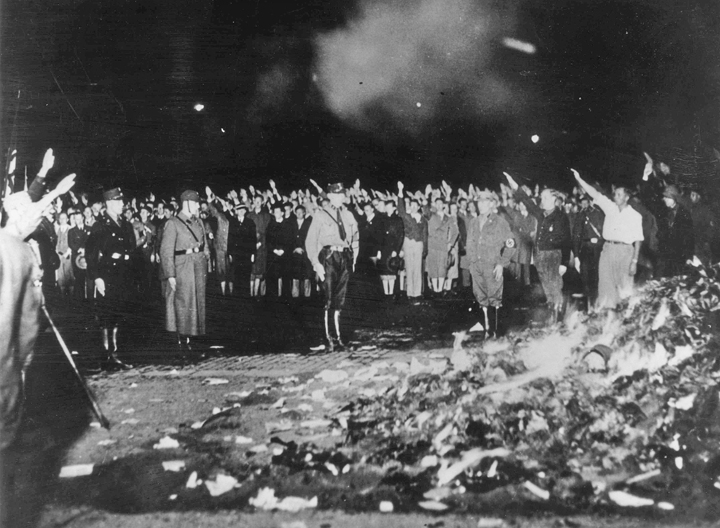 All across America today, and no longer just contained on colleges and campuses, spread the new Brown Shirts, the politically correct.
Book burning began in Germany in April of 1933. The Brown Shirts of the “German Student Union” proclaimed a nationwide “action against the un-German spirit.” It was called a cleansing to rid Germany of ideas that did not follow the party line. They had to attack intellectualism and rid libraries and schools and people’s homes of what they dubbed “un-German books and ideas.”
And now jump ahead in time. Books are ideas. Books are people’s voices. Campus protesters, pussy-hatters, Black Lives Matter chapters, anarchists, anti-Trumpers, progressives, and Democrats have formed a coalition in this country to stop free thought, boycott stores, silence ideas and speakers and shout people down. Public school voices are silenced, people are shoved and shouted at and beaten simply for wearing the wrong t-shirt or baseball hat. The questions are how many times has this happened before and how did it all end.
On major universities today when you need police officers to escort people to a stage, you now know that free speech is under attack. People now have chosen to be silent for their fear of reprisal. These attacks are very real, not the “Reischstag Fire” like self -inflicted attacks of the politically correct — remember Tom Tancredo has offered a reward of $1,000 to anyone who can solve or arrest these “hate crimes” that readily appear in The Denver Post. Don’t you find it interesting that no one has ever been arrested for these alleged crimes?
The Nazis would stand outside of shops and stores that they would claim were owned by Jews or stores that would carry merchandise that the Nazis would claim was manufactured by Jews and tell good Germans not to go in. Now, look at the stores: Macy’s, Nordstrom’s, Home Shopping Network and Burlington Coat Factory will no longer carry merchandise associated with certain individuals or groups. Are you starting to see the repetitive pattern?
Students in Elizabethtown College, in a campaign launched by the Elizabethtown College Democrats, are urging people to wear white puzzle-piece-shaped pins to remind them of their white privilege. Once again we cross back in time, Jews wore yellow Star of David arm bands — and in some Muslim countries are required to this day wear a yellow strip of cloth, homosexuals wore pink triangles, and political prisoners wore a red bar over his or her star or triangle arm bands.
Jewish shops were marked with distinctive signs, Jews wore badges and I think you can see what we are beginning to witness, the repetitiveness of history.
This may be a naïve question, but exactly how did the Nazis know who was or who wasn’t Jewish when they began the roundups? Regardless of language and last names or jobs performed or even documentation, the real crime was always the blood.
One of the most amazing things that has happened recently is State Senator Joe Salazar, State Representative District 31, accusing fellow State Representative Dave Williams as a “half Latino” as a pejorative term. The equivalent of pointing and screaming “he is trying to pass as a German” but he is not one of us. Williams’ crime is he is the sponsor of the Colorado Politician Accountability Act. It will allow victims of illegal aliens to sue public officials on civil and criminal grounds for crimes committed in sanctuary cities and states. Representative Salazar, who himself very well may be sued for his political actions if this bill becomes a law, attacks a man for the age old “blood taint.”
As an aside, this really is no different than the Federal Law JASTA (Justice Against Sponsors of Terrorism Act) that allows victims of 9/11 to sue the Saudi Arabians. But we have been over that before. So maybe the Brownstein law firm can receive funds to help shut down the Colorado Accountability Act.
A smart man once said history doesn’t just repeat itself, it rhymes. The politics of the politically correct are alive today in North Korea, Cuba, ISIS, Venezuela and Saudi Arabia. These people, like the politically correct in our country, would stop your First Amendment right to speak, read and listen to ideas, ideology and philosophy that they deem not politically correct. Remember, words mean what they say words mean, not what you think words mean. Be aware — be very aware.
— Peter
by Mark Smiley | Jan 30, 2017 | Glendale City News
by John Arthur
Writer for and on behalf of the City of Glendale
Since the club’s founding more than a decade ago, the Glendale Raptors have been a pillar of community involvement, most notably through their extensive involvement with Glendale youth. Raptors team members and coaches spend time volunteering at Children’s Hospital every year, offer free and low-cost youth rugby clinics and programs, as well as a Rugby Academy where local youth can build rugby skills from kindergarten all the way to the professional level. The Raptors’ commitment to involvement with Glendale is an especially important aspect of the club’s overall mission, and not simply because it engages young people with positive mentors and promotes fun and fitness. Youth rugby programs have the added benefit of increasing awareness for the fastest growing sport in the United States, creating a new generation of players, coaches, and fans.
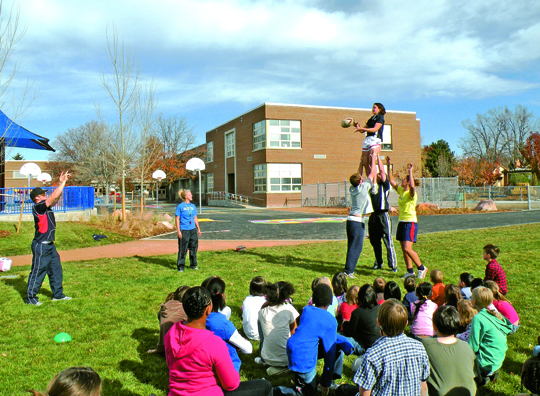 One of the most successful youth programs in 2016 was Rugby in the Schools, an offering spearheaded by Raptors Youth Programs Coordinator Jenna Anderson. Rugby in the Schools introduces the game through Rookie Rugby, a non-contact, educational format, specifically designed for presentations and instruction in school PE classes. Playing games and running drills, Anderson, alongside Raptors players and staff, introduces local schools to rugby’s inclusive nature, ensuring every child participates for the entire program period. Because rugby is often unfamiliar to local youth, everyone starts on an even playing field; as Anderson puts it: “We go in and it’s a clean slate. Everyone participates. Everyone is interested and every single child plays. Learning something new, as a group, is really important and really special.” Students experience the fun and excitement of rugby, as well as the importance of inclusion and good sportsmanship.
Anderson has led youth programming for the nine years since being brought into the Raptors club in 2008, but notes that 2016 was an especially busy year. The Raptors worked with 16 different local schools, and also held eight separate sessions elsewhere, including clinics at Glendale’s Infinity Park and for local nonprofits, as well as field days at local summer camps. According to Anderson, “2016 has really taken off. Teachers have shown a lot of interest in having rugby as part of their curriculum.” In addition to the host of benefits Rookie Rugby offers participating schools and students, the programming is and always has been entirely free of charge.
Rugby in the Schools is focused on communities surrounding Glendale, although dem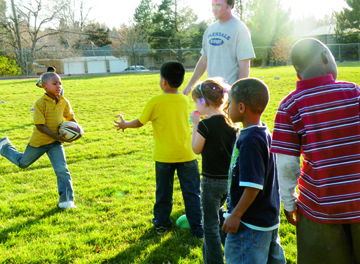 and exists all along the Front Range. In 2016, Anderson and the Raptors were a presence across metropolitan Denver, in both public and private institutions, though she admits the popularity of Rugby in the Schools has forced her to turn down requests from institutions located outside of the metro area. Working in physical education classrooms from kindergarten through 8th grade, she and players from the Raptors Men’s, Women’s, and Under-20 teams interacted with as many as 500 students per school. Engaging every interested student at each school, Anderson and her assistant volunteers spent between one and four days per location completing programming.
It’s difficult to point to any one reason why Raptors youth rugby programs blossomed in 2016. Clearly there are significant benefits for both the young participants and the schools they attend, but there is also something more. Rugby’s meteoric rise in popularity stateside in the last several years has been incredible, with Glendale at the epicenter of the sport in the United States. The reemergence of rugby in the 2016 Olympic games, combined with the Raptors’ successes on and off the pitch, have played a role as well. What is clear is that rugby is, in Glendale and the rest of the country, a sport that’s here to stay — and one that players and fans of all ages take great pride in.
Asked about her favorite part of Rugby in the Schools, Anderson says, “I love going and seeing kids who already play for the Raptors. They know we’re coming and they wear their Raptors shirts and it’s obvious that they’re really proud to be rugby players. It’s wonderful to see kids passionate about the sport.” The growth of rugby’s popularity in the United States shows no signs of slowing, and the work that Anderson and the Raptors are doing in community classrooms demonstrates that the next generation of players and fans is here to stay as well.